Threads from Henry's Web

Category: Christianity

  • Seven Marks: Genuine Relationships

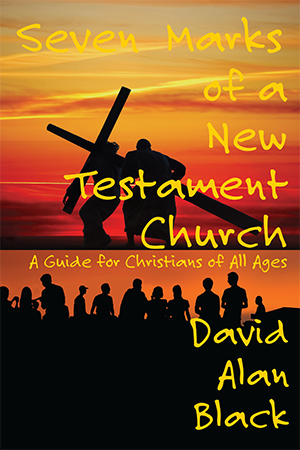
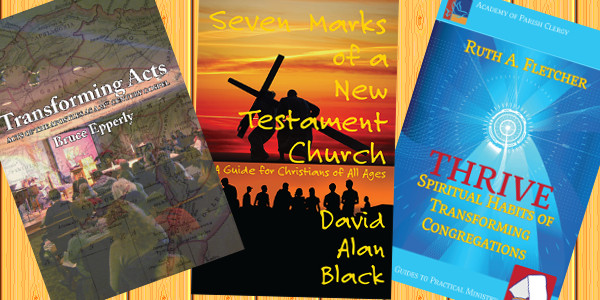
    nt church booksThe fourth mark of a New Testament church that Dave Black finds in Acts he calls genuine relationships. The early believers devoted themselves to the fellowship, to their community. There are so many words for it.

    9781631990465mIn America today we rarely think of the church as a community and even more rarely as our community. Yet much of the New Testament’s teaching on the church centers around things that relate closely to this idea. We go to church for a “service.” We don’t participate in community. We take our children there for some moral education, not so that they can build relationships for their life. Often we barely know one another.

    I’m not trying to make us all extroverts. I’m an introvert. I tend to make small numbers of closer friendships. I’m not talking about the number of friendships we each make. I’m talking about how we fit together into this larger community, one that includes various personalities, a wide variety of gifts, people who are like us, and also people who are not-at-all like us.

    What we think about our community is going to impact everything else we do. Dave’s first mark is “evangelistic preaching.” That’s proclamation of the good news. But is the “good news” of your church the idea that one can join up, provided they’re not too different and become just like everyone else there? Or is the good news that through God’s Spirit we can all, with our various backgrounds, become one in Christ Jesus, contributing with various gifts, and receiving the salvation and healing that Jesus offers?

    I suggest reading 1 Corinthians 12-14. Don’t skip over chapter 13. So frequently people who want to study about spiritual gifts study chapter 12, those who want to look at church order and how to structure your meetings at the church read chapter 14, and those who want to talk about love read chapter 13.

    But that is to miss what Paul is doing. In this book Paul is looking at the various reasons why there are factions in the Corinthian church. When he comes to the start of chapter 12 he’s looking at the great gifted ones who lord it over everyone else. Genuine love, as expressed in chapter 13 is the key. How can one identify genuine gifts in action? It’s by the way they operate under the direction of that one Spirit and the way they carry out love in the church.

    1 Corinthians 13 is not about marriage but about the church. It gives good advice for a marriage because it tells us how genuine relationships work.

    ThriveHow do followers of Jesus work together when the church meets? Chapter 14 tells us they work for “edification.” That’s building. That building is based on the genuine love that is expressed in chapter 13. So these three chapters work together.

    I heartily recommend Dave’s chapter, but I’m going to quote this time from Ruth Fletcher in the book Thrive: Spiritual Habits of Transforming Congregations. Fletcher defines a difference between “friendliness” and “welcome”:

    Friendliness assimilates newcomers into what already exists; welcome integrates newcomers by helping them know they belong. Friendliness says, “We’re glad you came to our table. We hope you feel at home here eating what we like to eat and doing things the way we like to do them.” Welcome goes beyond friendliness to say, “We want you to bring your gifts to this community. We know when you offer those gifts that we will be changed by your presence among us.” (p. 78)

    Fletcher implicitly provides us with a good description of community. Rather than being a place where the current members give and others receive, it’s a place that welcomes people to become part of the giving, whatever it is that they may have to offer.

    9781938434648s
    Bruce Epperly discusses this in his chapter Faith Without Fences

    One of the critical things we need to look at in the church if we are to be such a community is gossip, judgment and criticism. For us to help one another grow, we need to be able to talk about ways to grow. Serious discussion of spiritual growth will not prosper where there is no trust, and gossip destroys trust. Gossip is always followed by judgment and criticism, and it destroys community.

    Losing this spirit of judgment does not mean that one loses the ability to discern between different options, nor that one cannot recognize sin or destructive behavior. It does involve a change in the way we think and talk about these things. Our talking will be impacted by our thinking. Don’t imagine that you can pretend not to be judgmental and nonetheless deal with issues as a community.

    I’m fairly unreceptive of the complaints of those who think that repenting of gossip, judgment, and criticism (three sins endemic in church life) means that we can no longer reform or call others to repentance. Gossip, judgment, and criticism don’t result from a genuine desire to help others find repentance. They result from our desire to feel that we are better than others and to let others in our inside group know that we are better than others.

    A genuine concern for others will result in talking to them and doing it in constructive way. Note that this isn’t a strategy change. It’s repentance from a sinful approach (judgmental) and a turn to a genuinely constructive  approach (edifying/building). If we have genuinely repented of the need to feel morally superior to others, I think we will generally know the difference. Most of us have been helped to find a better approach to some issue by a more experienced or knowledgeable friend. It feels different.

    One critical point is that it comes from relationship. I have friends who help me with my business decisions who can quite comfortable tell me that some idea would be idiotic. We’ll laugh and go on to a better plan. Why can we do that? Because we have a relationship that comes before the correction. I highly value those friends and that correction. It has saved me from many errors.

    “Genuine relationships” open the way to the various elements of community. If you truly want to help those you think are on a wrong path, establish a genuine relationship with them first. As you do so, you may become aware that you also have things in your life that can be improved by what you learn from them.

    I think back on growing up in my missionary family’s home. You could not visit my parents’ church without getting invited to lunch. Not invited to join us at a restaurant, but to come join us for the family meal. My mother always made sure she had enough to feed guests. One never knew who would be a guest.

    In Mexico, when a mother and son needed refuge from violence, she was invited into our home, even though there was a threat of violence to us involved. She was different from us, of the Chamula people, and only spoke a bit of Spanish, much less any English. But she had a home with us as long as she needed it.

    Think about your own church. Would a visitor be welcome? Any visitor? As you bring in new members do you try to remold them after your own image or do they become a genuine part of the church family with their gifts and their warts? Does anyone in your church invite people home to lunch or dinner? Are your homes open? If someone was escaping domestic violence would they get a referral to a nearby shelter or would someone in your church open heart and home to them? If you see young people in your church without parents do you gather in groups to complain about “this generation” or do you decide to welcome the opportunity to get to know them and even mentor them?

    I think becoming a community built on genuine relationships will require a great deal of repentance on the part of the American church. But if we want to truly be disciples of Jesus, carrying out the gospel commission, this is one mark we can’t afford to lack!

  • Quote – Allegiance to God’s Realm

    From Bob Cornwall posting on the Energion Discussion Network:

    I realize that some might find this affirmation of God’s realm a bit disconcerting. They might think that I’m recommending some kind of theocracy. In a way, I am, but not in the usual way of thinking. This isn’t a divine government imposed by an earthly realm. This is instead a recognition that our ultimate loyalty belongs to God, and when loyalties conflict, and they will, we must choose the realm of God. The church is called to be an expression of that realm on earth as a reflection of God’s realm in heaven. So, no I’m not advocating making the United States a Christian nation. I’m advocating that we recognize that God’s realm is present on earth as in heaven!

  • Eschatology: Resurrection and Life after Death

    I’ll be tackling this rather intense topic tonight and likely failing to hold it down and get it under control! Following the event I will post more resources.

    Informational Link: What Does It Mean to Survive Death?

    Google+ Event Page


  • Quote of the Day – Judging the Experience of Others

    Since I’ve been talking about Seventh-day Adventists starting yesterday, due to the date, I thought I’d use an Ellen G. White quote. A friend called my attention to this today in a phone conversation.

    Every association of life calls for the exercise of self-control, forbearance, and sympathy. We differ so widely in disposition, habits, education, that our ways of looking at things vary. We judge differently. Our understanding of truth, our ideas in regard to the conduct of life, are not in all respects the same. There are no two whose experience is alike in every particular. The trials of one are not the trials of another. The duties that one finds light are to another most difficult and perplexing.

    So frail, so ignorant, so liable to misconception is human nature, that each should be careful in the estimate he places upon another. We little know the bearing of our acts upon the experience of others. What we do or say may seem to us of little moment, when, could our eyes be opened, we should see that upon it depended the most important results for good or for evil. (Ministry of Healing, 483, emphasis mine)

    I should note that I have found it much easier to appreciate Ellen White as a writer since I left the SDA church and quit trying to read her as a prophetess. While I think in many cases she was off the mark, she also was quite frequently very insightful.

  • Adventists, Other Christians, and The Great Disappointment

    Adventists, Other Christians, and The Great Disappointment

    Substantially changing beliefs have been a defining characteristic of my life. That may be hard to comprehend. It’s even hard to write in a grammatical form. This admission makes some people uncomfortable. Why should they listen to me now, if I have already changed what I may have believed and advocated decades, years, or even months ago?

    I can definitely understand the question. We seek certainty and safety. It’s thoroughly bred into us. Around the caveman campfire, the Saber Tooth Tiger fundamentalist was king. He knew what to do with that spear. He didn’t dither about whether to put out a side of meat, reach out his hand and say “nice kitty,” or kill the tiger.

    But certainty also is dangerous, both when it is not justified and when circumstances change. Thus I embrace passionate action and enough uncertainty to make me willing to change my mind.

    The largest single change was when I left the denomination I grew up in, the Seventh-day Adventist Church, and became first unchurched, and then finally a United Methodist. There are those who find that change mind-boggling. Others find it obvious, as though anyone with adequate intelligence would have made the move.

    Even in that dramatic change in my life I remained convinced of the value of the people whose views I was rejecting. I became an ex-SDA. There are a few SDAs who consider that horrifying. I have left the truth. I have become an apostate. I am now working for the enemy.

    Let those who are not SDAs not rise up to cast the first stone. The condemnation from the SDA side meets its match on the other in those who say, “See! Just like those cultists! They can’t accept that you’ve come over to an orthodox community!” There’s an ironic twist to this accusation from folks who generally believe they have all the truth, are never wrong, and thus SDAs are cultists, especially because SDAs are, well, intolerant.

    Last night in an interview I mentioned that it was a good thing God could work with people who are wrong. That way God can work with me. If you think God is working with you because you have everything right—I suspect you’re wrong about that! But I still believe God is working with and likely through you.

    I’m an un-angry ex-SDA. I affirm the work of my former denomination in many areas while at the same time I differ, sometimes substantially, with that church in matters of doctrines. Differing in matters of doctrine is, I believe, good cause to find fellowship elsewhere. It is not good cause to belittle and condemn. Many mainliners find it very easy to condemn SDAs for views they, the mainliners, don’t even comprehend. I have lost count of the times someone has told me that they really don’t like SDAs because they have such incredibly false doctrines, then when I ask them just which doctrine they find so wrong, they fall back on, “Well, they’re a cult.”

    And that leads me to Adventists and The Great Disappointment. There’s a great deal of detail around this event in Adventist history. There was a lesser disappointment before the “great” one. Prophetic interpretation was adjusted as people moved on. This happens frequently in many, many groups. This occurred before there was a Seventh-day Adventist Church as such, but SDAs grew out of the Millerite movement and the responses to this great disappointment.

    When and what was this great disappointment? October 22, 1844. The expectation was that Jesus would return in glory and take His children home.

    It didn’t happen. The day passed uneventfully.

    Some Adventists came to believe that the date was right, but the event was different. This interpretation is one of the key elements of the reason why I am no longer an SDA myself. Yes, I can list specific doctrines and the interpretation of Daniel 8:14 is one of them. A rather minor one, that is. I could co-exist in a church with people who are wrong about how to interpret Daniel 8:14. Come to think of it, I manage to hang around a church in which I would be surprised if anyone could name the general topic addressed in Daniel 8.

    It’s easy for mainline Christians to point fingers at those who name times for the coming of Jesus or who express excessive certainty about the end-times, life after death, or prophetic interpretation. After all, we have the perfect solution: Ignore those issues. Maybe nobody will notice.

    On the other hand, the people who have been out on a limb, taken the plunge, made the hard call, and lived with the result may have something to say to us as well. That’s where I see SDAs and also other Adventist groups. They may have been disappointed. I may disagree with some of their interpretations even after the disappointment, but they’re still engaged with the topic.

    And so I’m going to do a few things. Starting tomorrow I’m going to publish some articles by SDA authors, folks who are published by my company Energion Publications, specifically about the Great Disappointment and 1844. What might we learn from the experiences of the SDA church? Are we making any of the same mistakes as we read scripture? They felt they were faithful to scripture. We (and they) know they were wrong at the time. But do we carry on some of the same mistakes?

    Join me Thursday night for a discussion on my weekly video study and then watch here and on the Energion Publications News blog for links as the remaining articles are published. The introductory article is already posted.

  • What Is Biblical Literacy?

    What Is Biblical Literacy?

    Bibles on top of each other
    © Pamelajane | Dreamstime Stock Photos

    We complain about it, write about it, claim it’s important or even critical, design programs to create it, but what is it?

    I don’t mean that none of us know what we mean when we say “biblically literate” or “biblically illiterate,” but do we all mean the same thing? I don’t think we do, and that creates problems in communication.

    Between age10 and 14 I attended a school that was extremely serious about Bible study. We had study guides that took us through the entire text of scripture, asking questions as we went. We memorized substantial portions of scripture, such as the entire Sermon on the Mount and Psalm 119. We also memorized selections of texts on various topics, such as four texts on the Sabbath and the state of he dead. (We were SDA, so these were considered important.)

    I greatly value the knowledge I gained in this way, but when I was done, was I biblically literate?

    This depends, of course, on what one means by biblically literate. Here are some definitions I’ve heard (or experienced):

    1. A person who is acquainted with the key scriptures of his or her specific denomination or group. This type of literacy was provided for me by those “4 text” groups on particular doctrines. I could give a Bible study on any of the major Seventh-day Adventist doctrines as long as you didn’t ask me about context.
    2. One who has a general knowledge of where things are located in scripture.
    3. One who vigorously affirms a particular high view of inspiration.
    4. One who is acquainted with the various higher critical methodologies.
    5. One who knows the original languages.
    6. One who knows the related history and literature along with the Bible story.
    7. One who can place any particular story into the broader story of scripture.

    (No, I didn’t plan to make that seven. It just happened.)

    When I refer to “experiencing” a definition, I mean that I’ve seen someone tacitly dismiss someone else as knowledgeable because they lack one of these elements. I’ve encountrred this attitude about every one of these points. “If he or she doesn’t know x, the person is biblically illiterate.”

    I have encountered this with regard to creation. When someone discovers that I accept the theory of evolution, they will suggest that I am unacquainted with Genesis 1 & 2. I am very acquainted with those chapters. In fact, I had to memorize them as one of those long passages in school. Memorizing them does not mean that I will interpret them the same way others do.

    I fell into the trap myself recently. I was listening to Deanna Thompson respond to her award for book of the year from the Academy of Parish Clergy for her commentary on Deuteronomy in the Belief series. She confessed that she did not read Hebrew. My initial reaction was to think that it wasn’t really possible for someone to contribute to the interpretation of Deuteronomy (of all things!) without reading Hebrew. Yet right within her brief remarks accepting the award, she expressed some rather profound understanding. I mentally took it back and was glad I had only thought it internally.

    This experience does not make me think that learning Hebrew is unimportant. It just makes me think more carefully about what I expect. I have no problem with the value of most of these benchmarks of knowledge. I think they’re important. But what is it that I want the average person in the pew to know? What about my church leaders? Pastors (if we make a distinction)? Seminary professors?

    My own definition would be close to #7. I think hearing the overall story of scripture is critical to everything else. Fit the passage into a broad view of the whole. Of course, this type of knowledge might well look superficial to others.

    My suggestion would be simply that we pay attention to what type of biblical literacy a person has, if any. Far too many people in the church could really claim none of these elements. We should work on that. But we should also recognize other approaches and what kind of knowledge those other approaches support.

  • Seven Marks: Excursus on Change

    Seven Marks: Excursus on Change

    nt church books9781631990465mOne of the most interesting and troubling things I’ve found about myself and my church (any of the churches of which I’ve been a member!) is the number of things we know we should do and even decide we will do, but which never get done. Seven Marks of a New Testament Church is certainly ecclesiology, but is it shelf ecclesiology (that’s nice) or is it practical ecclesiology (let’s do that)?

    In this case I can’t point fingers. In my personal life I need to get more exercise and lose a significant amount of weight. How long have I known this? Well, I’m the son of a doctor who was medical director of a health conditioning center when I was in my teens. And yes, he knew about these things before that time and after that time, and he taught them to me. I cannot claim that I didn’t know what the health effects of a sedentary lifestyle and excessive food intake (biblical gluttony, no?) would be. While I’m working on reforming this now, I do so slowly and under constant temptation to avoid the needed change. It’s not that I’m tempted to do useless things. In fact, I’m tempted to work, and for me work involves being in front of a computer. So one good thing tempts me away from another one. But that doesn’t make it right. I know I should get more exercise. I know I should eat less. Making those changes so that they are a fundamental part of my new normal is very difficult.

    Romans 7 anyone? I know many Arminians see Romans 7 as a description of our pre-Christ experience. I see it as very descriptive of what I and many Christians live every day. The problem comes in when we make Romans 7 into a continuous, hopeless loop about everything. Yes, we all have our Romans 7 experiences, but we’re invited into Romans 8. Not that we’ll live at “Thanks be to God, through Jesus Christ our Lord” (7:25) at all times and on all subjects.

    It’s easy to make excuses. I’m very busy. It’s hard building up a small publishing company. I have a lot of work to do. I’m very healthy, taking no medications and very rarely missing work. I don’t smoke. I don’t drink. I’m a vegetarian, for heaven’s sake! (Ice cream, sweets, lots of butter, bread—they’ll do it even to a vegetarian!)

    But no matter how many excuses I produce, I know this: I need to change.

    There are many reasons why we don’t change, and many excuses for why we can ignore things that we hear.

    1. We find some fault with the messenger. The wrong person is making the suggestion, so it can’t really be right.
    2. We nit-pick the message. There’s something in there that won’t work in our situation, so we discard everything new and go back to what we were doing.
    3. We are change-weary. We’ve tried to make changes so many times and have failed. Why should we try yet another thing?
    4. We don’t see our present problems. We’re so used to the way things are and the level of success we’re having, that we think that’s precisely what should be going on.
    5. Other people are much worse off than we are. The church down the street is so inward-looking. By comparison, we’re outgoing, gospel-oriented, and on fire for missions. (This is like my “I don’t smoke” excuse. I’m better than the person who’s killing himself with cigarettes.)
    6. This change is going to cause problems. Usually this means that the leadership is afraid of losing control.
    7. I don’t have enough guidance. Where is the calendar, worksheet, study guides, long term plan, etc.?

    I could go on, but we’ll stop at seven. Nice number!

    I think, nonetheless, that our bottom line is fear. We are surviving the way we are, but will we survive after we change? The pastor wonders if he’ll lose members. The members wonder if they’ll be happy with the new church service on Sunday morning. The education team wonders if anyone will attend Sunday School. Everyone wonders whether they’ll be annoying their neighbors. And while we might not admit it, we wonder whether we’ll be happy ourselves. So we stay the same.

    One of the great fears is that we will lose control. This has been the bane of the church from very early times, I think. We’re very much afraid of the movement of the Spirit because the Spirit is not under our management. Not that we don’t try!

    In Thrive: Spiritual Habits of Transforming Congregations, the 12th habit Ruth Fletcher mentions is Choosing (p. 123). Here’s a key quote:

    Transforming congregations learn to choose and choose again. They don’t have to get it right the first time around. They can gain insight from any action they take and that insight will aid them opting to take the next step into the future. Transforming congregations acknowledge that when they act with courage, some people may decide to leave, but they would rather decide to do something than to remain lukewarm about everything. (p. 126)

    Bruce Epperly comes at this from another angle in Transforming Acts:

    The spiritual leaders acknowledged that they couldn’t do everything. They confessed that the task of sharing God’s word left no time for taking care of domestic issues. They needed partners in ministry: so they prayerfully chose a group of people to insure that everyone had a share in the community’s resources. They let go of control, and let go of power, so that human needs could be met.

    In ways that are still countercultural, they relinquished the power of the purse for a greater good, the well-being of the whole people of God. They recognized that within the body of Christ, everyone  has a role – their spiritual leadership of the community did not lead to micromanaging or power plays, or a sense of spiritual superiority, but a vision of shared responsibility. Perhaps, their selfless  leadership inspired the Apostle Paul’s vision of the multi-gifted body of Christ in which the well-being of one shapes the health of the whole body and the whole body, operating effectively, provides nurture and support for each constituent part. (pp. 67, 68)

    Giving up control and choosing to act. When we have acted, we choose to learn from that action and act again.

    What has impressed me about the church, not to mention my own life, is what a difference we could make if we simply acted on the things we already know are right. Yes, new information is good, but we have a tendency to collect the information and fail to perform the actions. There are many controversial things. But if we laid those aside and simply acted on what we know to be right, what might happen?

    I doubt that church would like like the church in America at this moment.

  • What Does It Mean to Survive Death?

    What Does It Mean to Survive Death?

    9781938434099sIn my Eschatology study last Thursday (Oct. 15, 2015) I tried to answer an audience question. Here it is:

    Is the sense of the presence of Jesus today dependent on the historical Jesus surviving death? Or, is it more like the presence of a departed parent that lingers after death?

    And here’s the video, set to the point where I discussed the question.

    I’m not terribly satisfied with my answer. What’s more, I am never satisfied with my answer to this and similar questions. What’s even yet more, I doubt I will ever be satisfied.

    I’m sure some will find this surprising. I can certainly talk about heaven in a very present and real sense. I claim that I do not cross my fingers during the Apostles’ Creed when I come to “resurrection of the dead.” On the other hand, those who see life after death more as the presence in our memories as someone after death seem to think this is quite adequate. For me, it is not. Well, it might be.

    A common modern view of life after death sees this as a simple result of our unwillingness to admit that we are truly bound by time and destined to come to an end in the sense in which we live now. Belief in the afterlife is a way to avoid this end. We don’t want to be something that exists in the memories of others or who impacts the universe through the echoes of what we were and did in our physical lives. Thus we imagine an afterlife.

    There is another possibility, one that was mentioned in a recent video interview I conducted with Dr. David Moffett-Moore. I believe he was quoting someone else, but I’ll credit him for the moment. (I haven’t located the precise portion of the interview.) He said we could be seen as spiritual beings having a physical experience rather than physical beings who have spiritual experiences. I want to consider the possibility that the reason many of us see some sort of survival is not that we are carrying out wish fulfilment, but rather that we detect the echoes of this other reality. The reason we sense that the person isn’t gone is that in that spiritual sense, they are not.

    And that leads automatically to what “that spiritual sense” might be. And there the problem gets complicated. Just how do you talk about something for which we have only distant echoes? Plato’s cave and the shadows seem easy by comparison. Then there is 1 Corinthians 2:9, “What no eye has seen, nor ear heard, nor the human heart conceived ….”

    What we tend to do with this, however, is to take what we have already and make what no human heart has conceived be more of what we already have. We have our physical life, our comforts, our friends, and so forth, so in this other realm we will have more of those things. More people, better relationships with them, more stuff (or less need for stuff, but more satisfaction), a bigger, better place. It would be just like moving to the mansion down the road, the one we couldn’t possibly afford, only much, much more! Bigger! Better!

    But what if what we can’t conceive is something we can’t conceive? I don’t mean that the mansion we can’t afford, but can have when we get to heaven, is so large we can’t imagine it that large. What if the concept “mansion” is simply the wrong one? What if no matter how we conceive of that mansion in size, splendor, comfort, or anything else, we’re no closer, because it’s simply the wrong thing to be imagining?

    Here are some questions I tend to hear when talking about this: But is it real? Is heaven a place? Is it just imaginary?

    And here’s the problem with our language. If I say you’re going to live in a new house, but it’s really not something you can understand, you just don’t have the concepts, you’re likely to turn to the most likely alternative: It’s imaginary; it doesn’t exist. So in order to make heaven truly inviting and special, I’m asked to affirm that it is real—just as real as my house that I can see through my office window. Just as real, but better. Well, if that’s the “real” then I can’t possibly tell you that.

    We really can’t conceptualize it. On the one hand I don’t want to limit it to the chemical processes of memory inside physical bodies alone. On the other, I don’t want it to be some place else in three-dimensional space, like a fine housing development out in space somewhere. I think we get echoes from it in our minds and spirits, and we have to tie those echoes to something we can conceive, but that doesn’t mean the concepts we form are the whole story.

    And I’m very dissatisfied with my answer, but it’s the only one I have. With it, I live in continuous hope.

    (Let me recommend the book whose cover I show at the top of this post: The Journey to the Undiscovered Country. Bill Tuck spends some time with the various concepts he finds and looks at the echoes as they occur in scripture.)


  • Hey Folks, I Shrunk the Gospel!

    Well, I didn’t do it alone, but I don’t think I can plead completely “not guilty.”

    Tonight at 7 pm (about a half hour from when I’m posting this), I’ll be interviewing Lee Wyatt, author of the new book The Incredible Shrinking Gospel. Join me!

    Google+ Event page.

    Or watch live on YouTube:

  • Distinguishing Process Theology and Open Theism

    Distinguishing Process Theology and Open Theism

    Garden Time
    © Tonyd | Dreamstime Stock Photos

    I have been asked whether I accept open theism or process theology. The fact is that I accept extreme uncertainty about the way God relates to space and time, but that I think the process theologians come closer to the way the Bible story seems to read while traditional theism seems to come closer to the assertions Bible writers make about God.

    In a way it’s much like my view on the Calvinist-Arminian divide. I think there is scripture on both sides, with the Bible writers moving forward without much concern for resolving the tension between sovereign control and the true free will of creatures, both of which are affirmed in scripture, I believe. God thus remains both outside of time and yet interactive within it; both in control of all that takes place, yet impacted by events chosen by people.

    It seems to me that one cannot read the story of God’s action in this world in scripture without seeing the evidence of interaction. If nothing else, Jeremiah 18, to which I refer frequently in my Eschatology series, which explicitly says that God will speak in one way, yet if the people involved change their minds, God will change his. God repents.

    Now I’ve heard plenty of ways of explaining this, but none of them feel “settled” to me, so I won’t use the word “heretic” anywhere on the spectrum. Well, I rarely use that word other than with intended humor in any case. I’ve been dubbed Henry the Heretic, (usually) in a friendly way!

    Let me summarize these views on God’s relationship to time broadly:

    1. Calvinism – God is sovereign over all and predetermines all that takes place. There are, in fact, a spectrum of views on the details, but this is an intended (over)simplification.
    2. Arminianism – God foresees all, and predestines as he foresees. There are a variety again of ways of seeing the details. This view, along with Calvinism, preserves omniscience in the sense of God knowing every details of what will take place from start to finish, from  the end to the beginning.
    3. Open Theism – God could know all of time, but has created space-time, and us in it, in such a way that he does not. In other words, he limits his own knowledge and therefore can interact with us. There are again quite a number of ways of expressing or explaining this relationship. I owe this one to a conversation with Dr. Richard Rice, author of The Openness of God (no longer in print, reprinted as God’s Foreknowledge and Man’s Freewill), but I am relaying the gist by memory, not quoting any of Dr. Rice’s work.
    4. Process Theology – God is inextricably linked with creation and is not so much in control as we might like to think. Free will is, as I understand it, an integral part of everything and God does, in fact respond. For a bit more detail I’d refer you to Bruce Epperly, Process Theology: Embracing Adventure with God, which I publish.

    My personal position remains in the open theism camp, with a very strong sprinkling of “I don’t really know” thrown in. It’s just that for me those things short of open theism do not adequately express the view of God that the overarching Bible story expresses, while process theology seems to be a bridge too far for me. But as you can see by the fact that I cite a book I edited and published, not to mention requested from the author as a source on process theology, I hardly regard it as the dangerous heresy that many do.

    In fact, one of the things I have become more and more convinced of as I work as a publisher is that people’s actions are not very directly related to their doctrines. I once would have thought that Calvinists would not be that involved in missions, because God has predestined everyone. Yet they carry out missions with vigor. I might have expected Arminians to be less likely than others to “blame God” for every little thing that happens, yet they do precisely that. Both Arminians and Calvinists will talk about their prayers changing the course of hurricanes, surely something at least as predetermined as a human life.

    “Orthodox” theologians, by which in this one quoted instance I mean both Arminians and Calvinists, as they both assert full sovereignty, omnipotence, omniscience, and free will, doubt that process theologians will pray, and certainly, if they pray, will not expect God to act. Yes they do, as do open theists.

    In fact, if we observed behavior, we would likely find ourselves dividing Christians very differently from the way we do with regard to doctrine. I hope, in this case, to have done some distinguishing without further division!