Threads from Henry's Web

Category: Christianity

  • In Defense of the Ordinary

    In Defense of the Ordinary

    In preparing for my Sunday School lesson tomorrow I read some very high sounding words about settling for less: pleasure rather than joy, vengeance rather than justice, sentiment rather than beauty, and so forth. The source was N. T. Wright, quoted in the introduction to the  Cokesbury Adult Bible Studies Uniform Series for the Summer of 2016.

    The idea is not bad. But it is an idea that is easily corruptible. A pursuit of right-doing is a good thing until it becomes perfectionism, judgmentalism, self-righteousness, disdain, or any of a number of other ways in which doing good can become obnoxious and destructive. A love of learning is wonderful as long as it drives one to learn more and make use of that learning. When it leads to a superior attitude or an inability to hear the wisdom that may come from one less learned, it’s not so great. Beauty may be in the eye of the beholder, but so is ugliness, at least when “ugly” is defined as “not living up to my personal standards of beauty.”

    We often express shock at the disciples, who constantly asked who was greatest in the kingdom. Why didn’t they get it? But we do very much the same thing. Constantly. A pursuit of excellence can become a pursuit of “more-excellent-than-ness” and can also result in a narrowing of vision.

    Any work is a vocation
    From OpenClipart.org.

    I was talking to my mother at the end of May, just after she turned 98. She mentioned to me the “sacred four” professions. We had a song in Sabbath School (this was the Seventh-day Adventist Church), and it went, using my name, “Henry can be a missionary doctor, a missionary doctor, a missionary doctor….” Or it could be teacher, nurse (for the girls, of course), and minister (meaning pastor/evangelist, for the boys). Those were the “great” vocations to pursue.

    My mother said she added farmer, janitor, housewife, and so forth. I remember her doing that. She’ bring in tools for each trade, and we’d have a hoe or rake for the missionary farmer, broom for janitor, etc. These were considered ordinary professions, but could be vocations as well. Why talk to your child about being a farmer or a building custodian, or perhaps a garbage collector? Because each of those things is an important vocation, as are many, many more. The real question is whether the person doing them will do them to the best of their ability and be a witness while doing so.

    And that is the question for the “important” professions as well. A seminary professor can be a missionary, but so can every other person out there.

    But we want a comparison scale.

    Now don’t get me wrong. I’m not against pursuing excellence. That’s a good thing. What I’m against is creating these hierarchies as to who and what is the more important thing. Does your pursuit of your concept of beauty mean that you can’t appreciate something simple? Does your pursuit of better theology mean you can’t listen with appreciation to a Sunday School class taught by someone who worked in the fields all week? Does your desire to hear the perfectly-formed, homiletically brilliant sermon mean that you can’t listen to a speaker who wasn’t trained in those things but has a real-life walk with God to testify to?

    I would suggest that a healthy pursuit of excellence leaves one appreciating excellence wherever it is found, not just in one’s little corner. A pursuit of beauty leaves one appreciating beauty in a wide range of places, seeing more beauty than others because one has beauty in one’s eye.

    I like the sentiments from N. T. Wright I noted at the beginning. We do lose when we accept vengeance in place of justice. We need to pursue justice. We need to pursue those great things. But we also need to recognize greatness everywhere. The clerk who rings up your groceries and does it well is absolutely a great person.


  • Let the Children Interrupt

    Let the Children Interrupt

    Children under a tree
    From OpenClipart.org

    This past Sunday the lesson was from Luke 18:15-17, Jesus blessing the children. Saturday evening, as I was thinking about this, a local church was promoting their variety of children’s programs and how that showed their care for the children. I know it’s probably unkind of me, but I was not impressed.

    Yes, having children’s programs is better than ignoring the children. Having something for the children to do while their parents carry out the activities of the older folks is better than doing nothing. When we were overseas, my mother was often asked to donate to church building projects. She would always ask to see the plans. Frequently those plans would involve a church sanctuary and no educational rooms at all. She’d ask where was the space for the children’s programs, and was told they could meet under the trees until the church had the money to build their facilities. She’d suggest instead that the adults meet under the trees and that the space be given to the children.

    Yes, it’s good to provide for the children. But the interesting thing that Jesus did is this: He let the children interrupt the activities of the adults. He didn’t appoint a “children’s apostle” or create a children’s “blessing room” where appropriately gifted leaders could work with the children. No! He invited them to where he was, right to the center.

    I think we are too concerned with having our busy routine interrupted. Perhaps if we let the children get involved some of the super-sacred elements of the order of service might be skipped. Perhaps some of the adults would have to listen to something simple and repetitive.

    Those with special gifts for teaching and for connecting with children and young people are to be treasured and  their talents used in ministry. But children need to spend time with the adults as they learn, and not always be separated out into age segregated groups where six-year-olds learn from six-year-olds and teens learn from teens. Church should be a place where they can practice and learn. I’m in favor of having children and teens give testimonies, speak, and even present the message. Where better to learn than in their own community? Of course, all these activities should be done with the help of people of experience who can mentor and guide without controlling and suffocating.

    I was visiting a small house church overseas and was asked to present a children’s story and also the message for the adults. I hadn’t tried a children’s story in many years. But I gave it a try. For the adults message I had carefully taken a passage and prepared an expository message. It was really pretty good since I say so myself! [Yeah, right.] I was uncomfortable with the children’s story. After I had presented both, and was chatting with my translator immediately after our time together, I noticed the head elder copying my illustration from the blackboard (yes, the old-fashioned slate kind). Then he asked me a few questions through the translator, all about the children’s message.

    The children’s story had caught his attention and had met a need in the church. It was clear from our conversation that he was fine with my expository preaching. It just hadn’t connected. The children’s message had.

    Is it possible there isn’t such a difference between our needs as older members and those of the children and young people in our churches?

  • Pastor Searches and Job Interviews

    Pastor Searches and Job Interviews

    Church politics is necessary. Even those who most avoid it live with it. What we must work toward is a way of making decisions in the church that isn’t just a pale reflection of the way things are done in the world.

    One of the ways we create a pale reflection is by doing what the world does, only doing it less effectively. Growing up, I was informed regularly that the church functioned democratically. I could see, however, that it was much more of an oligarchy. Why? Because while the church wanted to carry out activities by vote, they didn’t want the discussion and potential acrimony that went with it. For a church such as the Seventh-day Adventist Church, which I grew up in, or the United Methodist Church, of which I am a part now, this “peaceful” approach, in which members vote for what the leaders have decided, generally breaks down as you move up the chain. In that breakdown, local church members see a great divide between what they would have wanted and what their church is doing.

    ThriveThe form of democracy, without a lively dialogue and exchange of ideas on issues, doesn’t really function much like democracy. There are doubtless many reasons why we might not want actual democracy in the church, though the priesthood of all believers does tend to imply that more people have influence.

    Thom Rainer, in a post titled FIVE QUESTIONS PROSPECTIVE PASTORS RARELY ASK SEARCH COMMITTEES (BUT SHOULD), perhaps unintentionally highlights this problem with a pastor search. A pastor search is like a job search, only with  spiritual veneer. So we sometimes avoid talking about the things that we really should be interested in and pretend the situation is other than it really is. (I should note that businesses are also very much subject to doing the job badly, though usually for different reasons than the church.)

    In her book Thrive: Spiritual Habits of Transforming Congregations, Ruth Fletcher discusses discernment frequently. She says,

    In transforming congregations, leadership teams meet frequently to talk about what the Spirit seems to be doing in the congregation and to notice where the Spirit seems to be guiding the church to go. They keep their own sand moist by engaging daily in the spiritual habit of prayer, and practice the spiritual habit of discernment in their personal lives. They discipline themselves to open their minds to new understandings, to open their hearts to the plight of their neighbors, and to open their wills by setting aside their own agenda in order to seek God’s new creation. (p. 119)

    Provided the church congregation believes it should have a paid pastor at all, this would seem like a good approach. Talk about what the Spirit is doing. Engage in the “spiritual habit of prayer” and the “spiritual habit of discernment.” Set aside “their own agenda.”

    What would it look like in a church if the process of filling roles or offices in the church was a process jointly of congregational leaders and candidates setting aside their own agenda and discerning what the Spirit is saying to their church?

  • Questions and Parables: Grace in Luke 17

    Questions and Parables: Grace in Luke 17

    From openclipart.org
    From openclipart.org
    Today Pat Badstibner of World Prayr published a post on the World Prayr Devotional blog picturesquely titled The Law Is Not Soggy Cornflakes. In it, Pat finds a number of purposes for the law, even, and perhaps especially, for those living under grace.

    If we look to the law as the means of making ourselves perfect (or even better), or perhaps as a guide to what we must be in order to win God’s favor, it’s going to be bad news. The rules don’t make one good. Making rules doesn’t cause people to live by them.

    The law doesn’t change when it is seen as a mirror. It is our perspective that changes. For one living under grace, the law can be very good news indeed.

    I used this in a sermon two weeks ago at my home church (Chumuckla Community Church), when I preached from Hebrews 12:1-3. I have frequently heard this passage presenting in sermons or Sunday School lessons as a sort of big stick to persuade us to work harder. In my sermon I called this the “Santa Claus gospel.” By this I don’t mean a Jesus who comes down chimneys and leaves gifts, but rather the picture of Santa who is “gonna find out who’s naughty or nice,” who “sees you when you’re sleeping, and knows when you’re awake,” “knows if you’ve been bad or good, so be good for goodness’ sake!” (Pardon me for ripping the song up a bit!

    This view suggests that all the saints of the past are watching, and Jesus did a good job, so we should get with the program and do a good job as well. They’ll see us if we don’t! (My wife summarized some of the message in a blog post if you want more. I titled the message “How Chumuckla Community Church Can Be Perfect.”)

    The very same day my Sunday School lesson was from Luke 17. When I read Pat’s post, I was struck by the viewpoint issue. I think a number of these parables are commonly read and taught in a “law as bad news” mode.

    Luke 17 starts (vv. 1-3a) with talking about anyone tripping up any of these little ones. Bad news in action. But it’s followed (3b-4) with the injunction to forgive.

    Next we have the request for more faith (5-6). How many times have I heard from this verse that because I cannot tell a Mulberry tree to be planted in the sea, I must have a truly minute amount of faith? You’ve heard it. Don’t worry. The preacher can’t do it either.

    Then we have the “we’re worthless slaves” passage (7-9). After a whole day of working, we should call ourselves worthless. We’ve only done what we were asked to do.

    Now in the Sunday School curriculum, that was the last passage for the week, but I think it’s important to note that the very next passage is the healing of the ten lepers. Luke claims to present things in some sort of order, and I think this positioning is important.

    So we could summarize one set of messages as:

    1. Watch out! If you trip somebody up, God’s going to get you.
    2. You better forgive your brother or sister.
    3. Your faith is miserably small.
    4. No matter what you do, you’re just a worthless slave.

    But let’s try changing our viewpoint here. Go to the cleansing of the 10 lepers and work backwards, then forwards again.

    What precisely did the lepers do to receive healing/cleansing? All they did was ask. Let’s put aside what happened to the one leper for a few moments. All the lepers are cleansed.

    So no matter what you do, you can’t earn God’s favor, because doing good things is just that. You’re doing what you were supposed to do. I’m surprised that we often think we should somehow earn God’s favor. If God doesn’t want to do something God doesn’t have to. In what way would it be unjust, for example, for God to create creatures whose life is limited to the frame of their mortal existence? We don’t like it, but what is inherently wrong with it?

    Yet, without doing anything, the lepers were cleansed.

    We have so little faith. Yet without demonstrated any more faith than was needed simply to ask, the lepers were cleansed. Perhaps Jesus was telling the disciples that the quantity of their faith wasn’t the key. (And yes, I’m aware of the cases where Jesus commends faith and of the one leper.)

    We should forgive, yes, but is it not possible that our heavenly Father is capable of forgiving much more than we are able to forgive one another? God’s grace is greater than ours.

    And perhaps the biggest scandal, as we’re back at the beginning of the chapter, is to push someone away from God by telling them they need more faith, greater ability to forgive, or more diligent effort in order to come to God.

    All ten lepers were cleansed, even the ungrateful ones. Yet one came back to Jesus and he gained something more. Seen from within God’s grace, faith, action, gratitude, and yes, the law, can be good news. But the grace came first.

    The call was to bathe in it.

  • They’re Bad so We’re Good

    They’re Bad so We’re Good

    Conflict
    Credit: openclipart.org

    Recent political discourse reminds me of the parable of the Pharisee and the Tax Collector:

    9 He also told this parable to some who trusted in themselves that they were righteous and regarded others with contempt: 10 “Two men went up to the temple to pray, one a Pharisee and the other a tax collector. 11 The Pharisee, standing by himself, was praying thus, ‘God, I thank you that I am not like other people: thieves, rogues, adulterers, or even like this tax collector. 12 I fast twice a week; I give a tenth of all my income.’ 13 But the tax collector, standing far off, would not even look up to heaven, but was beating his breast and saying, ‘God, be merciful to me, a sinner!’ 14 I tell you, this man went down to his home justified rather than the other; for all who exalt themselves will be humbled, but all who humble themselves will be exalted.”

    The Holy Bible: New Revised Standard Version. (1989). (Lk 18:9–14). Nashville: Thomas Nelson Publishers.

    It has been interesting to read articles by partisans of one party or the other explaining how unelectable the candidate of the other party is, and how that party is truly in trouble and going down in flames. “They’re so bad that we’re good,” seems to be the subtext.

    I’m not primarily interested in the politics, however, but in some things in shows about human nature. These articles and conversations point to a dangerous, perhaps even fatal way of measuring ourselves. We do it in church just like we do it in the broader society. If I can point out enough negatives about a church or a group, I will surely have demonstrated the value of my preferred group or position.

    Thus comes the Pharisee. Now I think we should be careful about how we talk about the Pharisees. In many ways they would make excellent Christians. They were good people trying to fulfill God’s law. Nonetheless they suffered from one of the many failures of the righteous—self-righteousness. It’s interesting that when we look down on the Pharisees for their flaws, we generally are participating in the same ones. We’re not Pharisees. Aren’t we special?

    Jesus is here bringing in a character who will be considered righteous by his audience and putting him up against one who will be considered wicked. Note the prayer. “I thank you that I am not like other people.” Face it! We thank God that we are not like other people on a regular basis. We may pretend to be the tax collector who went home justified. But more often we’re looking for the position of the Pharisee. However much contempt we may put into saying the word “Pharisee,” it’s his position we long for. It’s just that we want to thank God that we “are not like other people … or even like this Pharisee.”

    I believe the root, however, is our bad approach to measurement. We want to be “better than.” We want a church that is less unfriendly, more mission minded, more biblical, better structured. If we can say with any justification, even just enough to convince ourselves, that we are better than the church down the street, then we can be happy. As a Methodist, I can give thanks to God that I’m not the frozen chosen as are the Presbyterians or self-righteous like the Baptists.

    I’ve been on the receiving end of this, as someone points out to me the flaws of the United Methodist Church, which are doubtless legion. How can I be a member of a United Methodist congregation? Surely all of these flaws mean that I should instead be a [Baptist, Presbyterian, Reformed (some variety), charismatic, pentecostal, house church, high church, etc.].

    Here’s what experience has taught me: Don’t look at the church down the street. Ask this question: Am I doing God’s will by being where I am? Where can I best do God’s will?

    Every church I have been in has had flaws. If it didn’t have them before I got there, it definitely did after! One of the most dangerous things we can do is determine our value before God by comparing ourselves to other churches. This works in many ways. The church down the street can provide us with an excuse for continuing to behave badly. My Methodist congregation may be comforting itself by noting that it’s better than the Baptists while the Baptists are comforting themselves that they are doing better than we are. We can follow that spiral right to perdition as our errors give others an excuse for theirs.

    On the other hand, we can become extremely discouraged by comparing our performance to others. If the church down the road is growing by 10% per year, what’s our problem? If they have money to build  a new Family Life Center why can’t we?

    We need instead to take the parable to heart. What is God’s will for us? Let’s seek God’s will and God’s mercy as we work that out.

    Here’s a video of a sermon I preached many years ago. I wonder if it’s still relevant.

  • A Classic Quote from My Blog: Being Wrong

    I’ve been wrong before, am quite probably wrong about many things right now, and I suspect I will go right on being wrong until I die.

    From What Embarrasses Me about Christianity.

    Yep. Just checked. No reason to believe I’m not still wrong about bunches of things.

  • The Apologetics of Hebrews – Can You Defend a Dead Church?

    In Hebrews 2:1-4 I believe the author of Hebrews provides a basic apologetic outline, and I think it’s a very useful one to follow. After the first two verses, which start from a platform that was already accepted by the audience, the author emphasizes the importance of the decision. If he is right in what he says, the decision is critical in an eternal sense. The elements are these: 1) It was delivered by the Lord, 2) Affirmed by the testimony of those who witnessed, 3) Given divine witness through (a) signs and wonders and (b) the gift of the Holy Spirit.

    Looking first from the viewpoint of process, this argument, and indeed the general argument of Hebrews, is based on ground that will be accepted by his audience. They believed that the Torah was firmly established, and many, at least, believed that it was delivered by angels. Throughout the book, we have this focus on sourcing material from the Hebrew scriptures. Those who argue a simple supersession should pay attention to the form of the argument. At the same time as the author argues that Jesus is greater than, he also argues that the revelation in existing scripture is great and should be honored. Too often we fail to found what we have to say on what we already hold in common, when that can be supported.

    The first element of his argument has two parts, the words spoken by Jesus, and the affirmation of those words by witnesses. For someone who tends fideistic like myself, this is a bit of a rebuke. It’s not that I don’t believe that Jesus spoke, or that there were those who heard. I’m even optimistic that we can get a picture of Jesus from the gospel record. But I tend to ignore that part of the argument and go straight to the experiential second part. This argument says that the faith is founded on historical realities, and that this is worthy of our attention.

    The second element of his argument again consists of two parts, the signs and wonders that follow the gospel, and the gift of the Holy Spirit, delivered as God wills. I’m of course more comfortable here, as my experience (in particular) has much to do with experience (in general).

    I was reading this from The Learning Bible (CEV) this morning, and saw that their note refers these signs and wonders (semeiois kai terasin) refer to past events (from the viewpoint of the readers), such as the exodus from Egypt. I would disagree. That is an element either of the first part, or more properly of the commonly accepted foundation of the Hebrew scriptures. Rather, this is the miraculous events/signs that followed the apostles as we read in the book of Acts, for example. It was by acting on behalf of his apostles that God affirmed their witness of Jesus, both in terms of the truth of the stories they told, and in terms of its continued relevance to those who heard.

    The second part is the gift of the Holy Spirit, which is, I believe, the life of the church. We can see how critical this is in 1 Corinthians 12-14, for example, and I see this as a loose, but nonetheless real point of connection with Pauline theology.

    It’s this last point that I think is the most important in the church today. I believe all these elements should be part of our apologetic, yet having a faith that truly takes hold of hope and makes it possible for one to live differently is, I think, the most important element, and is also the key point of Hebrews. If the church does not show evidence of the gift of the Holy Spirit I think that all the other elements will tend to fail. It is sort of like one builds a machine to accomplish a particular task, explains the science behind it, then the technology that goes into producing the device, and then finally applies the power. But the machine doesn’t accomplish the task.

    By “evidence of the Holy Spirit” I don’t mean speaking in tongues, as many in the pentecostal movement believe, but rather in terms of bringing people together and empowering new life in the one God has anointed forever. As Paul points out in 1 Corinthians 14, we can do without speaking in tongues; it doesn’t build the church. But we can’t do without building.

  • Seven Marks: Fervent Prayer

    Seven Marks: Fervent Prayer

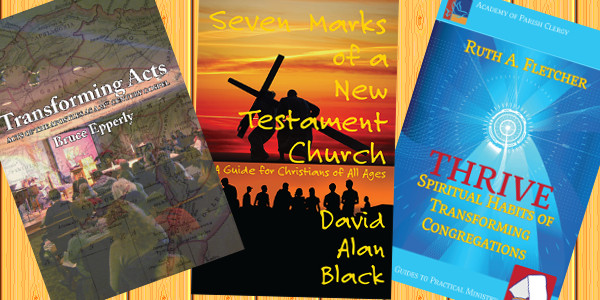
    nt church booksThe sixth mark Dave discusses in Seven Marks of a New Testament Church is fervent prayer (pp. 39-42).

    There are a variety of views of what it means to be “the church” or what it means to be Christian. For some, it’s a matter of holding the correct set of beliefs. One knows that certain things are true and one gathers with other people who know the same things are true, and this is church. Evangelism, in that case, is convincing other people that the things one believes are true and thus they should join this group.

    I exaggerate a little bit here to make a point. I think prayer brings out a problem with this view, and it’s one that has been building through Dave’s book. Notice that all these marks of the church are activities. Dave quotes Acts 2:37-47 on pp. v-vi of his introduction. You might want to read that now. Notice that the description of the church is active. God is acting in the church and so are the people.

    Now I don’t want to suggest replacing believing or knowing with doing. Doing must result from knowing in some sense or from instinct and habit. Even the idea that doing is important involves thought and belief. Often, however, we can tell more about what we actually believe by what we do than by what we claim.

    I recall going to teach about prayer at one church. The prayer coordinator was dismayed at the low attendance of the conference. She told us that the church had determined that prayer was their second priority. In that case how could so few people attend a conference on prayer scheduled by their prayer ministry?

    The answer, I suggested, was to observe what people did, and particularly how money was spent. In particular, look at your property. How is it arranged? What have you spent money on? How much of your money has gone to sports facilities? How much to education? How much to outreach?

    Now I absolutely don’t want you to read that as a negative view of sports facilities. Used well, sports facilities can be a critical element of outreach, and in turn a focus of prayer. The question is what you are actually doing.

    In fact, the measurement of the commitment to prayer should not have been attendance at a prayer conference, but rather time spent in prayer, a prayerful attitude, and ultimately establishing lives of prayer. A conference might help that. Since I have offered a few, I’d like to think so! But one can spend amazing amounts of time in a conference on prayer without actually praying. One can have a nice looking prayer ministry, while neglecting prayer.

    Do we really believe in prayer? I’m not asking what miraculous things prayer can bring, but rather whether we believe prayer can provide communion with God. That, in turn, leads to asking whether we believe God is active in our lives, our churches, and our communities.

    The evidence of prayer in the American church suggests that we don’t. We may believe in prayer as an occasional spiritual discipline on the one hand, or as a means of pushing God into doing things that we want on the other, but as a means of communing with God, either we’re not sure it will work, or not sure we want it.

    Dave talks about an “attitude of prayerfulness” (p. 40). Such attitude is a reflection of belief and practice.

    I want to illustrate this by quoting from one of the other books I’m following through this series:

    Some congregations make a decision by voting; but many churches learn to choose through the process of discernment. Discernment, as it is used in everyday language, has to do with sifting through the information we’ve been given in order to decide a course of action. In the church, discernment describes the prayerful process of making a choice in light of the inspiration, leading, and guidance of the Spirit.

    Discernment can be practiced by individuals or by groups. When transforming congregations make use of discernment as a decision-making tool, they place their choices in the context of God’s transforming activity, assuming that they are called to something larger than self-interest and partisanship. Through discernment, they imagine not just what they want to do, but how they might share in God’s New Creation through the choices they make. (Thrive, pp. 126-127)

    This is a test for belief and practice. Can and will the Spirit guide our discernment? Will prayer help us in discerning what the Spirit is doing and where we can become part of that activity?

    There is a huge difference between having a short prayer at the beginning of a meeting in which you then carry out the normal business of debating (or arguing) and then voting and one in which one seeks to hear the Spirit and come to a consensus. The latter requires a certain amount of trust!

    In discussing the early church’s beginnings and prayer, Bruce Epperly (Transforming Acts, p. 26), under the heading “Don’t Do Something, Wait Prayerfully” says,

    In the wake of the ascension, the apostles return to their meeting place and, for the next several days, constantly devote themselves to prayer. We don’t know the nature of their individual prayer practices. They may have been a blend of quiet contemplation, praise, intercession, celebration of Jesus’ last supper, and thanksgiving. But prayer was their priority as  a community before they undertook any action. They knew that God’s power was coming, and also knew that power without prayer is destructive to us and others.

    “Power without prayer is destructive.” I fervently agree. Fervent prayer is a critical mark because it sets us up for everything else, just as it did the early church.

  • My Church Preferences

    My Church Preferences

    johnny-automatic-church-300px
    From Openclipart.org, johnny_automatic.

    A few months ago a friend, commenting on my approach to publishing, and really to many other things, said, “It’s hard to be both a prophet and a facilitator.” Now he wasn’t talking about the way a prophet might get his or her words from God, but rather that prophets advocate ideas. Facilitators encourage others to do so and to enter into dialogue.

    He’s absolutely right, and this is demonstrated by my post today on the Energion Discussion Network, Toward a Biblical Church. In it you might say I’m advocating for diversity, or perhaps trying to facilitate discussion of our diverse views of church that we have in the Church. I think Paul does a rather good job of this in 1 Corinthians 12. We often read just the sections that talk about us being one. But Paul is talking about how we can be one body while coming from diverse places and backgrounds, and he doesn’t say all those differences are eliminated, but rather that they cease to be central when we’re in this one body.

    We would do well to study 1 Corinthians, and particular chapters 12-14, regularly in the church. Paul is looking at precisely the sorts of problems we have in many of four churches today, and his prescription in chapter 13, applied in chapter 14, is also still quite applicable. I do note that we can only wish that we had some of the Corinthian problems, such as too many people coming to church filled with excitement and a desire to express what they’ve heard from the Lord. But we do have ample portions of the problems of factionalism and self-centeredness.

    Is there a way to advocate changes in our church organizations, whether at the denominational or congregational level, without also implying that everyone else better do it the same way? That’s what I’d like to do. If you’ve read any of the books I linked in my EDN post, or some of my posts on Seven Marks of a New Testament Church, you’ll know where I got these.

    1. I’d like to see a church where Jesus is acknowledged as the senior pastor. I’m not as concerned about what we write on signs or church bulletins, though I’d be pleased to see Jesus listed there. My problem is that I think we might list Jesus on the sign and then keep on living just the way we did before. “What would Jesus do?” has become a slogan, often used just to claim that Jesus would support what we wanted to do in any case, but it’s also a very good question—if we let Jesus answer it.
    2. I’d like to see a reduction of church facilities. In fact, I like the idea of house churches, and one of the major reasons is that we cease to spend so much money on the physical structure. Some churches rent space temporarily, and for them it’s a stepping stone for the time when they can have a real church in a real church building. Perhaps living without a building should become a way of life.
    3. I like a church with accountability outside of itself. This is why I’m not really a congregationalist. But I could be. It’s quite possible for a church to make itself accountable to others, and to live in an accountable way by being open and honest, especially in finances.
    4. I’d like to see a church that empowers youth. “Empower” is often seen as a buzz word, but it’s a good one if it’s actually put into practice. The church can be a safe place for those who are young or inexperienced to learn. This would involve sharing in all aspects of church life, with appropriate levels of support and supervision. That young person in your church who feels called to a preaching or teaching ministry should have the opportunity to practice.
    5. I’d like to see a church where many people share. Many churches center around the pastor and his or her preaching. That’s what brings people in. How about testimonies, short messages from various congregants, presentations by experienced people other than the pastor, and hearing from those who are learning to share? In a seminar on faith sharing I sponsored, I recall that only a small portion of the people who came to the class felt comfortable talking about their faith. Where better to get comfortable than in church?
    6. I’d like to see a church where members could safely explore ideas. Our focus is often on making sure we have good doctrinal statements. What I’ve found, however, is that few people actually know what those statements say. I honestly don’t think that this problem will be corrected by more talking from the front about the doctrinal statement. People’s minds and will must be involved, and that means allowing exploration.

    None of these things require a particular variety of church organization, though in many cases, existing church and denominational structures will work against them. I’d like to emphasize that even though I have a hankering after house churches, I am a member of a regular United Methodist congregation. I’m not trying to beat up on people in regular churches.

    But the Holy Spirit may be. That’s another story!

  • Good Friday

    It’s the evening of Good Friday and I find myself a bit too tired to blog coherently or to come up with some uplifting words. I generally try not to write when I feel this way. No use spreading the weariness around.

    But of course Good Friday was a day that made something like my weariness of the moment trivial and insignificant.

    On the other hand, perhaps, as God participated through the incarnation in our human activities, it has all been elevated to a new importance. It’s a matter of perspective.

    I did find some good reading today. Dave Black talks about looking for what’s real. In Good Friday and Easter God’s integrity and completeness in giving to us calls for such integrity also from us. I was reminded by Dave’s post of a question I was asked shortly after returning to the church. I’d been away for 12 years following graduate school and most people were inclined to think this was because I had found out something about the Bible I just couldn’t live with. So I was asked what was the most important apologetics tool one could have. I said, “A church that is truly following Jesus.” Not the intellectual key to certainty the questioner wanted, but I stick with the answer.

    Then Steve Kindle, editor of our Energion Discussion Network, posted On Warming Ourselves by the Fire. You owe it to yourself to read that and then prayerfully think about what God’s call might be for your life.

    I suspect a bit of weariness truly is a small matter.