I will be putting more material from Bruce Epperly in as I post more on the church, but here’s an exercise he suggests in his book Transforming Acts, pp. 19-20.
Acts of the Apostles is clear that doctrines are symbiotically related to behavior. Our doctrines emerge from spirit-centered experiences. Our experiences are clarified by our beliefs and take shape in practical application. Accordingly, what behaviors might your beliefs inspire in the areas of:
»» Personal stewardship
»» Care of family and children
»» Marriage and other significant relationships
»» Community involvement
»» Political involvement
»» Care of the Earth
»» Response to diverse opinions
»» Ways we respond to personal or global conflict (violence, reconciliation, consensus, peace-seeking balanced by appropriate protection).
»» Involvement in justice issues – first-hand support of vulnerable people and/or political involvement to achieve a social order more reflective of Jesus’ values.
One of the great strengths of Bruce’s book is that he challenges us at the end of each chapter to thoughtfully and prayerfully move to action.
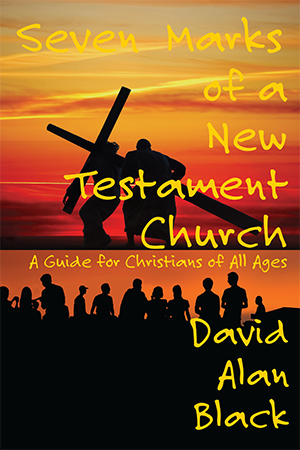
I’m starting a series of posts inspired by my recent interview with Dr. David Alan Black regarding his book Seven Marks of a New Testament Church. He bases this book and the seven marks on Acts 2:37-47. You can see a video of that interview below.
I had the privilege of interviewing Dave while he was visiting Pensacola the weekend of September 6. The interview was recorded by Kyle Hall in the library at First United Methodist Church here in Pensacola. I want to thank Dave for visiting and Kyle for recording the video.
But what does all this have to do with my belief that church pews are unbiblical?
The starting point for Dave’s book is that you can look at the book of Acts, and the activities of the early Christian church, and find things that are normative, or at least very valuable, to modern Christians. Dave isn’t alone in this conviction, but I want to start with the question of how we move from what we find in Acts to what we should do in modern churches. This topic is discussed in the first 4.5 minutes of the video.
We don’t find sound systems or their use in the New Testament. Neither do we find hymnals, organs, pianos, praise bands, orders of service, parking lots, or many other things that are automatically part of our modern life, and often of our church activities. Is it wrong to have something in church that isn’t actually mentioned in the New Testament? There are those who would think so.
On the other hand there are those who would say that church has changed so much that we need to come up with our own unique ways of doing things, that looking back to the early church isn’t going to be enough to deal with our complex world of the 21st century.
I think there is some truth in both points. There are, in fact, critical principles in the New Testament that need to be part of any church that wants to label itself Christian, or more important wants to consider itself a community of disciples of Jesus. (I’d prefer the latter personally.) On the other hand we have situations in the modern world that weren’t a part of the world of the New Testament.
The question is whether the way we choose to meet the challenges of the 21st century is worthy of the good news about Jesus. Do our solutions to modern problems, even when those problems are not directly reflected in some New Testament story or statement, fulfill the principles that Jesus taught? When we make a change does it help us love God and one another? Does it help us to make disciples wherever we go?
So I come to church pews. They aren’t mentioned in the New Testament. They wouldn’t have been needed, though doubtless the various Christian homes that hosted meetings had chairs of some sort. I have a problem with church pews.
Now my problem is that we can’t develop new tools and new practices to meet 21st century demands. The problem is that I don’t think church pews help us love God or one another more and I think they tend to prevent us from fulfilling the gospel commission.
Bicycles are also not mentioned in the New Testament. They’re really good and very helpful in many places. Neither are motorcycles mentioned, but what a blessing they are. I can’t count the number of times I’d head out as a teenager, living with my parents in Guyana, South America, riding on the back of a motorcycle behind an evangelist, holding my trumpet case in one hand. It was the 20th century, true, but it was a very non-1st-century scene. Well, in one way, not 1st century. But in another, the young person heading out to help the evangelist do his work is a very 1st century scene. The tools changed, but the mission didn’t.
But what about those pews? Yes, back to pews. What do pews do for the work of ministry. The very arrangement of our sanctuaries with pews lined up facing a platform where the more important people sit and from which they tell the less knowledgeable what to think tends toward hierarchy. If we’re going to fulfill the hope of Jeremiah 31:34, we need to get more people involved. Our problem is not that our churches don’t have enough order it’s that we don’t have the problems of 1 Corinthians 14. Too many people wanting to speak? On the contrary, just try to get them to do so.
The pews enable this bad behavior and congregational laziness. The people in the pews are there to listen, to receive, not to share and participate.
And then there’s the matter of stewardship. A church “sanctuary” (and what happened to worshiping in spirit and in truth?) is by nature going to be wasted space. There are so many things you can’t do there, because there are very few meetings, other than a totally platform-centered church “service” (who is getting served?), that can take place there.
The same space, made level and filled with movable chairs would be of value for many other purposes. Children could play games. Groups could meet and discuss, putting the chairs in a circle. One might even celebrate communion as a full meal. Yes, I know, we probably have a fellowship hall for that. But why do we do that? Probably because sitting down together and eating isn’t sacred enough to happen in the holy space filled with holy pews.
After we take the pews out, I wouldn’t mind having musical instruments, video, and plenty of parking for those who meet there, none of which are mentioned in the New Testament.
It’s not what’s mentioned and what’s not, but the type of people we are to be and the way we are to behave as disciples of Jesus.
Oh, we could also offer meals to those in need using that space. If it didn’t have pews, that is.
Over the last few years I’ve come to believe that we have two key elements that need to be changed, but more fundamentally, we keep talking about the church too much differently than we talk about individuals. As individuals, we need to be following Jesus, not just appropriating the label “Christian.” As a church, we need to be following Jesus. Those who are following Jesus will be witnesses. A church following Jesus is a witness.
What do I see as the two key elements?
Lack of Bible study and reflection. I see this broadly, as in study that leads us closer to God.
We do not lead lives of prayer. This differs from praying occasionally, or offering pre-written prayers in a church service.
I think that if we were to correct these two elements, others would correct themselves. I need to correct them as well. There are those who commend me on my biblical knowledge and who consider me a man of prayer. (Others, not so much!) But the fact is that I don’t live up to the standards I believe in. While we are, indeed, all imperfect, we can all keep heading in the right direction.
I also think these two elements are much more closely connected than is generally realized. Prayer should be communication, conversation, not a monologue directed at God. Bible study should include the discipline of listening and a constant process of opening one’s self up to what God has for one in scripture.
Last weekend Dave Black was our guest here in Pensacola. I recorded some videos for promotional and educational purposes and Dave also preached and talked about missions (with plenty of pictures) at Chumuckla Community Church. I will be posting some of these videos soon, but they are not quite ready yet.
Dave is a professor at Southeastern Baptist Theological Seminary. I’m a United Methodist with the dreaded ‘L’ word in my blog tagline (“Thoughts on biblical studies, religion, and living from a passionate moderate, liberal charismatic Christian”). Obviously this is some sort of liberal-conservative dialogue.
Not really. I’ve written recently about dialogue and why, as a publisher, I publish books from a variety of perspectives. In a video I produced in the early days of Energion Publications I used a triangle, with the points being charismatic, liberal, and evangelical. I would note that for this to work now it should be “conservative evangelical” as the label “evangelical seems to have lost some cohesion. This will happen to words, especially those that are perceived as positive labels.
But even those three points fail to catch some of the issues, and there’s a bit of a tendency to think of Christians grouped at the points of the triangle. One of the reasons many have trouble with labels is that people don’t fit into the center of the semantic range of a label. In addition, on different issues one may take different positions. I have political views on some subjects that seem very conservative, while on others I seem quite liberal. Similarly on theological issues I don’t try to fit all in one camp.
There are two points (I think!) in all this rambling. The first is that we don’t fit cleanly into one label on all issues. The second is that we may be able to connect with people in other camps on particular issues. In all cases (should this be #3?) this should suggest options for learning from one another.
For example, when many charismatics talk about modern revelation they use theological arguments that are also commonly expressed by liberal or progressive theologians. Not a few of those I’ve talked to want to deny any connection, but behavior and practice tell a different story. There is some theology to be learned here! Similarly many charismatics should—and do—learn biblical studies from their evangelical brethren.
Many liberals or progressives, on the other hand, don’t want to be linked to charismatics because of emotionalism or other extremes. Yet too frequently progressive biblical reflection tends to be more a matter of challenging the conclusions of evangelicals rather than developing a robust theology and application of scripture. Yes, this can be a stereotype. I have several authors in the Energion Publications list, such as Dr. Bob Cornwall, Dr. Bruce Epperly, and Dr. Drew Smith, none of whom fit the picture. And there are many more like them.
One of the interviews I conduced with Dave was about his book Seven Marks of a New Testament Church. Dave goes back to the book of Acts for keys to how the church should behave now, in the 21st century. And this brings up a very different spectrum: church structure.
We could make a spectrum that runs not from conservative to liberal, but from strongly hierarchical to mutually submissive, from high church to low, from central control to local. Similarly we might look for a spectrum of views on who is in charge of the church, how much, and in what way. That could run from Jesus in charge directly to a highly hierarchical view of how the lordship of Jesus is implemented in the life of the church. None of these would exclude people from any liberal-conservative, charismatic-evangelical, or any similar ideological spectrum.
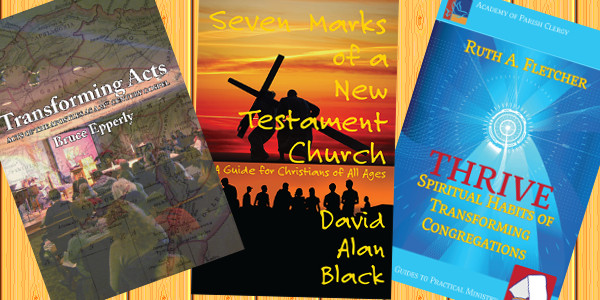
My plan is that as soon as I’ve posted my interview with Dave on his Seven Marks book, I’m going to start blogging through the Marks. As I do so, I’m going to bring in points from some other authors, such as Bruce Epperly, whose book Transforming Acts: Acts of the Apostles as a 21st Century Gospel also goes back to Acts to ask what we can do in the church today. Beside both of those I’m going to reference the book Thrive: Spiritual Habits of Transforming Congregations by Dr. Ruth Fletcher. There are definite differences of approach in these books, but there are also many points of contact.
So I’m going to ask two questions in my series:
Can we find a way to apply these seven marks in other theological and ecclesiological traditions? (I fully believe we can, though there are places where our ecclesiology needs to change, and that’s a good thing!)
More specifically, how can a United Methodist congregation look back to the New Testament and so become a more authentic witness for Jesus in the world today? There are those who would say many of these ideas are not possible under denominational rules, but I wonder. How much would a simple commitment to being “servant of all” on the part of those at the top of the organizational chart might change the reality without altering the paperwork?
So watch here over the next week. I’ll post the video and then begin the discussion. I hope I can find some people to discuss this with me vigorously. My comment policy is largely open. If you don’t threaten the family friendly nature of the blog, you can express yourself.
Pastors and church leaders cringe at the “s” word, because so many members don’t want to hear about it. Sometimes they blame the members for not wanting to dedicate their wallets to the Lord. But is that precisely what we should be asking church members to do?
I think the resources to carry out the gospel commission already exist. Those resources are tied up in our individual wallets, bank accounts, and possessions at the individual level. At the church level they are tied up in buildings and supplies, things we’re sure we have to have. But do you know that there are thousands of churches around the world that get along without the things that we, in American churches, absolutely have to have?
Come to think of it, am I aware that there are people who do without things that I count on every day?
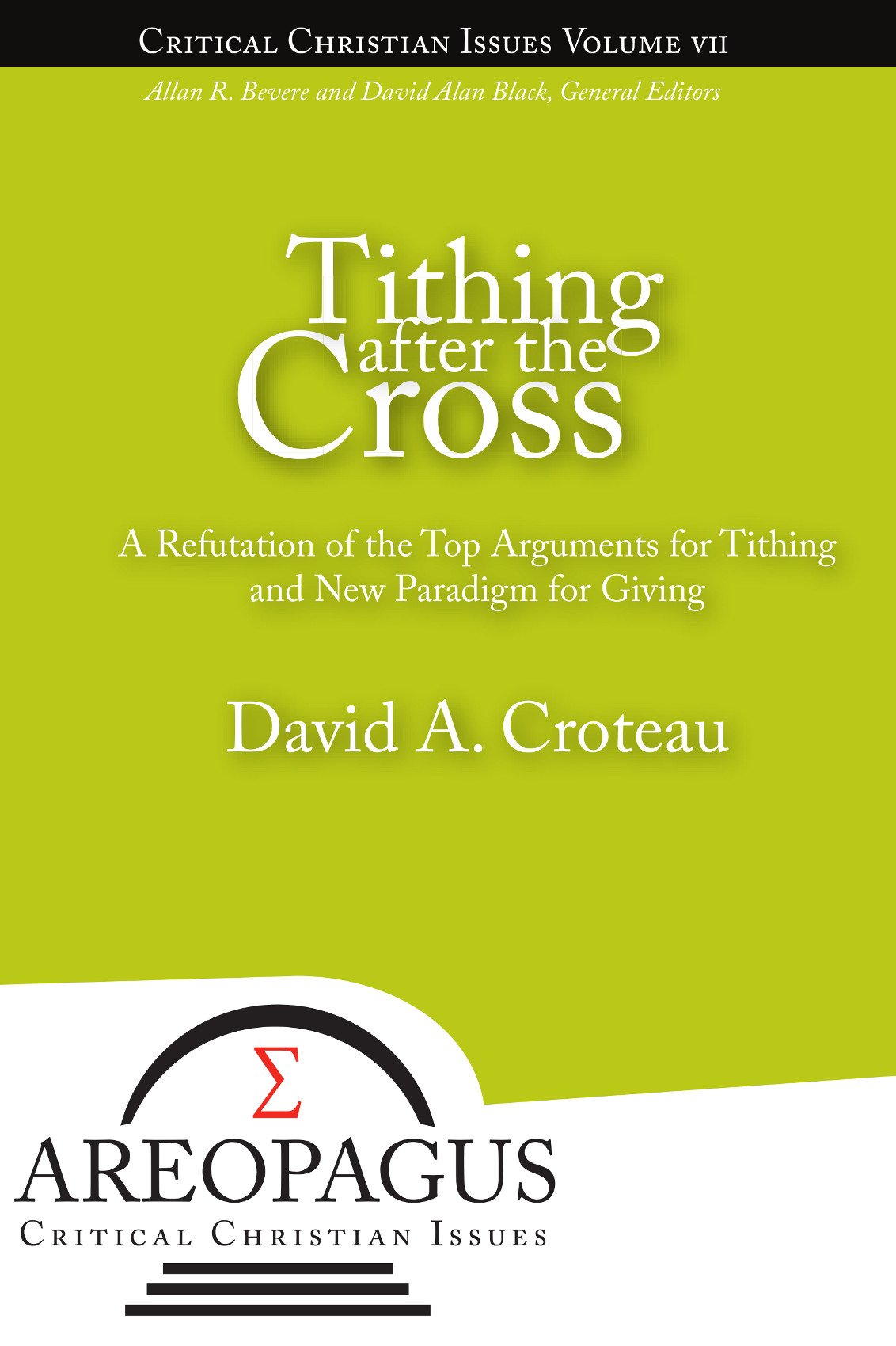
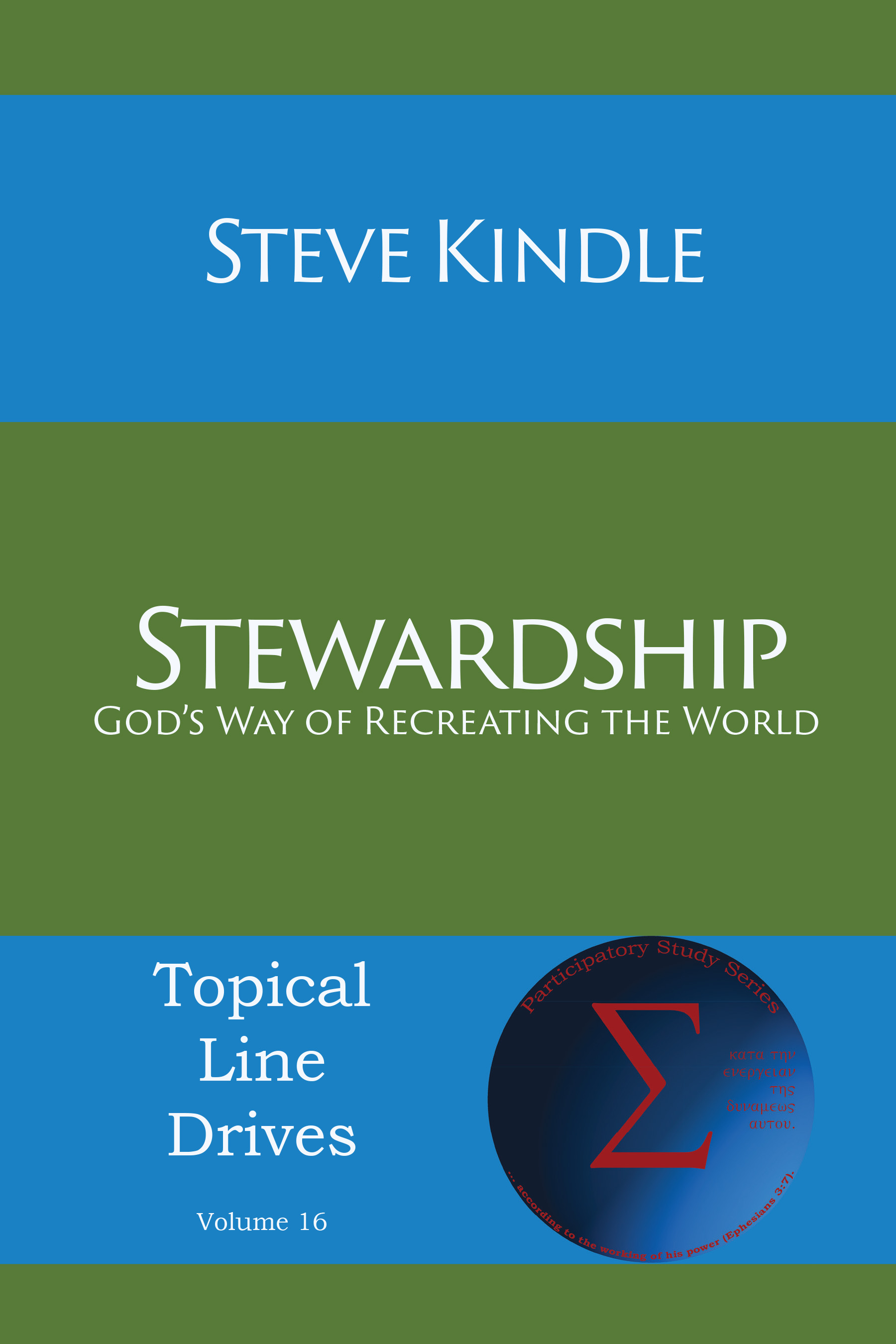
My guests were David Croteau, author of Tithing after the Cross and Steve Kindle, author of Stewardship: God’s Way of Recreating the World. They come from different denominational and theological backgrounds and belong to different generations. Yet in looking at what the Bible says about stewardship, they both come to the same conclusions. You’ll be amazed at the level of agreement.
I have heard many of my fellow Americans say that the government needs to get out of charity and let the church do it. You know what? How about if the government could spend way less on social welfare programs because the church was doing its job? I don’t just mean giving out money; that’s part of it. But giving out money results from letting the gospel change our priorities so that we give ourselves to the Lord (2 Corinthians 8:5), and everything else results from that.
Just think! We might even turn the world upside down (Acts 17:6)!
The United Methodist Church has an approach to assigning pastors. We call it itinerancy, because it grew out of the system of circuit riders, but we Methodists should admit that it bears very little resemblance either in theory or in application to circuit riding. And yes, it has its problems, sometimes serious ones. Bigger churches get preference. Places that are well established and have good income are more likely to get experienced and effective pastors. Places where the ground to be ploughed is hard often get pastors who are tired or inexperienced.
I would also say that quite frequently churches get what they deserve under this system. If a congregation is lively and active and wants to impact its community for good and for God, then it will often get a similarly lively pastor. I once heard a United Methodist district superintendent say she wasn’t going to waste a good pastor on a church that wasn’t going anywhere.
But the system has the bottom line problem of all systems: People. One can write a similar list of problems for almost any system. A call system often results in similar disparities, this time because the same pastors the bishop would have assigned to more active or larger churches are chosen by such churches, while the smaller or less active churches are left to choose between the remnants. On the other hand, pretty much all systems have at least one plus: People touched by God’s grace.
We often believe we can rewrite the rules for church polity and thus solve the church’s problems. But our rules do not solve problems. Our rules provide a framework for us to live in community. Yes, they can encourage or discourage various kinds of behavior, but they will not make a successful church. For the church to be successful, we need to proclaim the gospel and act on it in our community. That will require discernment and listening to the Holy Spirit. There are independent congregations that find their way and there are churches with a pastor assigned by a bishop that do so. There are house churches that proclaim the gospel. There are also house churches that go nowhere. The building, furniture, and human rules won’t make it all work.
So what about those boring sermons. How does that relate?
I’m glad you asked! The sermon is another point at which we hope certain rules or procedures will solve the problem and make the sermon “work.” But like a pastoral call, we get stuck with what happens. If the called or appointed pastor is a good preacher, we’ll get a good sermon. I know there are classes on homiletics and good books on sermon preparation and presentation. I even publish one. But some people simply aren’t preachers. I know more than one person who was a deep thinker, perhaps an excellent discussion leader, certainly someone who did her or his homework, yet the sermon was just not the right medium for the person.
But the pastor has to present a sermon!
And there is our problem with both elements. We have churches that are pastor centered. Why is it that a church cannot function with a change of pastor? Why is it that a church cannot function in the absence of a pastor? Why is it that a change of pastor will bring active ministries crashing down?
In all cases, I would say, the ministries are too pastor-centered. We are the body of Christ (1 Corinthians 12:27). Paul doesn’t tell us that the pastor is the body of Christ and we are the pastor’s minions. Rather, we are the body of Christ and “pastor” is a gifting and calling exercised within that body. A pastor won’t necessarily be a good preacher. And despite those who advocate pastor-teachers (and there are many of those), I believe that the two exist separately as well as together, though the work overlaps. Both pastors and teachers (in one person or not) equip the saints (Ephesians 4:12) for the work of ministry. The means may be different, but the goal is the same: To produce disciples who go forth and minister.
Now teaching and preaching are not necessarily the same, either. One friend of mine told me that the sermon was more a form of art than of teaching. It carried the worship service forward in an artistic way. I don’t really object to this except to say that if this is worship in the form of an art, it shouldn’t be an individually-centered thing, but rather something in which the whole congregation participates.
I would suggest that the needed response to the problems addressed in both these articles is to make our churches less pastor-centered. We need to spread out both the work and the leadership. If a church needs to call a new pastor, they should have continuing, active ministries waiting for the new pastor’s added touch, not for him to revive before moving forward.
Am I against pastors? No! Am I against professional pastors? In some cases. I see a problem when churches that are small spend too much money on having a professional pastor. There is a place for a lay-led congregation or a pastor who is bi-vocational. But whether the pastor is a full-time worker who is paid, or a lay person volunteering part-time, the church shouldn’t center on that one person. Pastoring or teaching should equip others and help them find their place of service in the church and in the community. Further, churches need to recognize this as work. When the pastor sits down in his office with someone for an hour or so, that’s not wasting time. That’s equipping. When the pastor teaches people how to visit and encourage others, that’s not trying to get out of work, she’s doing her job.
I’d further suggest that we, as a church, should not reserve ordination or commissioning for pastors. We should discover the gifts God has given to each member and commission them for that service in the body. Do you have gifts of administration? Let’s pray over you and lay hands on you commissioning you to administer the church office. Do you have the gift of encouragement? Let’s pray over you and lay hands on you, commissioning you to go out and encourage, recognized by and supported by your church.
Recognizing, equipping, sending! Sounds like fun! And we might even find that we had fewer discouraged pastors if we did it.
One of the topics we discussed was Matthew 6:14-15: “If you forgive other people their trespasses, your heavenly father will forgive yours. But if you don’t forgive other people, neither will your father forgive your trespasses.” Interesting and harsh! Well, perhaps just realistic. I wonder if the person who remains unforgiving can ever truly be forgiven. Nick and I discuss this in the video. I think that forgiveness involves reconciliation, i.e., it’s a two way street. This doesn’t mean that an individual can’t get it started, and can’t benefit from a forgiving attitude. On the contrary, I think it’s important to give up the burden of resentment against someone else, even if they will not participate. In addition, someone has to get started. What I’m suggesting is that unforgiveness creates an atmosphere in which it’s hard, or even impossible, to receive forgiveness. Maintaining a separation between ourselves and other people also creates a separation between us and God.
One thing I didn’t have time to bring up in the discussion is a suggested translation in Leviticus 5:17 from Dr. Jacob Milgrom, author of the Anchor Bible commentary on Leviticus 5:17. This passage refers to someone who has transgressed and doesn’t know that he has done so. Milgrom suggests that the Hebrew ‘asham when it occurs without an object, means “feel guilt” as opposed to incurring guilt or being guilty. So this passage would best be rendered: “If a person transgresses, and has committed one of the acts with the commands forbid but he doesn’t know it, when he feels guilt, he will bear his responsibility.” The idea is that this sacrifice is for a time when one feels guilty, but is uncertain of what act may have caused that guilt. Thus we have a sacrifice for making oneself feel better! (This last line is my point, not Milgrom’s.) This is covered in detail on pages 343-345 of Volume 1 of his commentary, part of his comments on the reparation offering. I found his suggestion entirely convincing.
Finally, this morning in my e-mail I received my regular eNewsletter from Rabbi Moffic, who was talking about forgiveness. His particular topic was forgiving ourselves, or receiving forgiveness. His remarks (and the Jewish parable he tells) are well worthwhile. While you’re at his site, consider subscribing to his newsletter. I’ve found it very helpful.
Dave asks some important questions. How do our values impact the way that we live and the way that we serve? I often hear my generation telling the next one how they ought to be careful and make sure that everything is properly cared for before going into service.
On the other hand, my parent’s went overseas to serve in remote areas with all their worldly goods in a station wagon and small trailer, along with four children in the car. Was it risky? No doubt it was. Did they believe they were doing the right thing? Absolutely! I never heard them say that they would have had it any other way. They believed God had called them and they answered.
My mother tells her story in her little book Directed Paths. I’m going to offer a free copy of her book to a randomly selected commenter on this post. I’ll close the contest on Monday. Just make enough of a comment that I know you’re asking for the book and that it’s not spam.

 I will be putting more material from Bruce Epperly in as I post more on the church, but here’s an exercise he suggests in his book Transforming Acts, pp. 19-20.