Threads from Henry's Web

Category: Christian Ministry

  • The Biggest Divide in Christianity

    … according to me, of course!

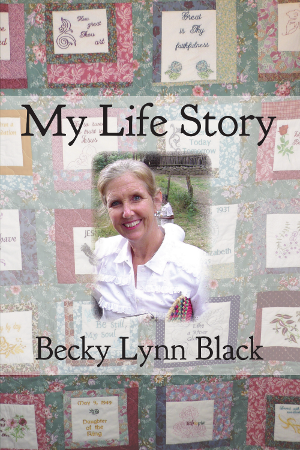
    I’m sitting here doing page layout on My Life Story by Becky Lynn Black. As I was doing that, I read small portions. I don’t read much while I’m doing page layout. What the text says is less important than how it will look, so my brain is in a different mode. I was both appreciating portions of the book that I did read, and asking myself a question: If you didn’t know Dave Black, and just received this manuscript cold, would you have published it? I’ll answer that later.

    In glancing at a page in layout, I saw this:

    … what I found in these Bible majors were men who were as spiritually shallow,
    vain, and frivolous as the rest of civilization!

    She’s talking about the men9781631990007m at a Bible college, a place she hoped to find a husband. (We’re too early in the layout for me to tell you what page that quote will be on.)

    Over the course of the day, I’ve worked on publicity for a philosophy text, I’ve worked on the cover for a book on preparing sermons, and I’ve followed up on items on several other titles under preparation. If my schedule holds, later today I’ll be reading a manuscript on process theology, and laying out a study guide to a book about the Lord’s prayer. The authors of this material vary a great deal in their theological perspectives. Some would consider these differences to be among the essentials of the faith. What is it that attracts me to these manuscripts? I work for myself. (Well, I think God might well challenge me on that, but though I try, I don’t want to claim divine inspiration for my actions.) I don’t have to publish anything I don’t want to.

    Here’s the answer:

    • Passion
    • Commitment
    • They mean it
    • They’re not willing to stay in the shallow end of the spiritual pool
    • Passion

    Oh, I put that one twice.

    I think that if we are truly committed to Jesus Christ and passionate about following him and serving him, he will find a way to teach us.

    What will never work is apathy.

    That’s the biggest divide. Those who really care and those who don’t.

    I want to publish the people who really care. I want to find the readers who really care. I want to help them care more. I want to help myself to care more and be more effective. It’s never enough!

    To answer the question I asked myself, I have no doubt that the answer is yes. I think this is a manuscript that too many editors would look at and say, “Who was Becky Lynn Black?” In the pages of the manuscript I would have found the answer, had I not already known. You can find it too.

    Of course, as a publisher, I want you to buy the book. Take that as given. But what I really hope you’ll do is share your testimony. Tell people what God has done in your life. Place that task above all the theological debates. I don’t mean that you need to compromise your principles. People who are truly committed don’t do that. But make your primary story be about Jesus Christ in your life. I think you’ll find that story does more than anything else.

  • The Scandal of Unprepared Pastors

    In an article titled Why Do So Many Pastors Leave the Church? The Answer Will Shock You, one paragraph stood out to me:

    90% feel they are inadequately trained to cope with the ministry demands and 90% of pastors said the ministry was completely different than what they thought it would be like before they entered the ministry.

    I once taught on prayer at a pastors’ conference. The speakers had been running late, so I kept my talk short—seven points and about 20 minutes.

    After the session a young pastor came up to me and said, “That’s all well and good, but what do I do when a member of my congregation comes up to me and asks for prayer? How do I pray for someone?”

    In the conversation that followed it turned out that in going through the United Methodist process for ordination and completing his Master of Divinity degree he had not taken a single class on prayer.

    Now I could talk about the importance of learning about prayer. I do think it is a critical study. But that’s not really the issue. If this young pastor’s seminary had offered a class on prayer, I still doubt it would have prepared him to meet the needs of a congregation.

    In one church I attended there were many lay speakers. Dozens of them, in fact. The chances of any lay speaker actually getting to speak were essentially nil, however. Why? The people expected the pastor to be in the pulpit.

    And therein lies a solution. The one way to learn how to serve people, how to minister to their needs, how to be a minister, in fact, is to—wait for it—be a minister. Oddly enough, that’s precisely what we are all called to be.

    So if someone gets out of seminary and doesn’t know how to pray with people, perhaps seminary is not to blame. The question I’d want to ask is this: Why didn’t the church have this person doing ministry? All members may be called to ministry, but if they are entering a process that will lead to ordination, they are feeling a call to a special place in ministry. What excuse is there for not having them involved in all aspects of ministry? Let them learn how to preach and teach under the supervision of their pastor and members of the church who have the appropriate skills. Let them listen to people, pray with them, and yes, sit on committees and see the business of the church hashed out.

    Yes, seminaries need to provide training in practical subjects. But much more importantly, the church needs to practice ministry. Nobody should be completely ignorant on how to listen with empathy and lead someone else before God in prayer.

  • Soup Kitchen for the Soul or How I Learn from Authors

    9781893729797I am frequently amazed by our authors at Energion Publications. I suppose that other editors and owners are likewise amazed, but I think we have a very special group. Just the other day I received notice from an author that he had signed his contract, but that he wanted to donate his royalties to our literature fund, a fund we use to send books overseas or to people who can’t afford them. I hadn’t asked. In fact, I don’t ask for funds to support that project. We’re not a non-profit. It’s just one of the ways we try to give back.

    The thing that impresses me most about our authors, however, is the way they live what they believe. I don’t know of any of our authors who doesn’t in some way embody the books they have written. When I hear what they are actually doing, it’s what I would expect based on what they wrote in their books. And that’s a great thing.

    Way back when … well, actually in 2010 … we were contacted by a potential new author who had a story to tell. I like books that tell a story, particularly when that story is a testimony. This was Renee Crosby and her life and vision had been changed by a seminary assignment. She had been asked to serve a certain number of hours in the community as part of an assignment. She spent that time in a soup kitchen. Now as the book will tell you, Renee had become extremely busy in church. She was an active Christian. But that activity was generally in church. When she reluctantly went out to complete her assignment, she encountered Jesus in a new way, right there in the soup kitchen.

    So she wrote her book Soup Kitchen for the Soul to invite other people to this same discovery. I was hooked immediately. I have frequently visited churches that are busy, filled with active members. But if you review their church bulletin or newsletter, the vast majority of what they do is designed to serve the members. It’s people in the church doing things for people in the church. Now there’s nothing wrong with that. People in the church should be doing things for one another, caring for one another, building one another up. But we should also be “provoking one another to love and good deeds” (Hebrews 10:24), and those good deeds should serve those outside the church as well.

    This is a book with a great message. It deserves to be read much more than it has. It deserves to be studied.

    But Renee is now experiencing the next phase of her testimony. As she explains in the video below, she is in treatment for breast cancer. But she’s not taking it lying down. Instead, she’s trying even more to provoke others to love and good deeds.

    We’re also going to donate 5% of our proceeds in addition to what Renee donates as our way of supporting her in this endeavor. In addition, the book is now 30% off with the use of the pink30 coupon. To use that coupon, you need to enter the coupon code on your shopping cart on checkout from Energion Direct. If you need some more help with the coupon, you’ll find it here.

  • Cessation and Continuation

    Dave Black posted some notes on the difference between being a cessationist and a continualist (his term). I agree with his comments.

    Most commonly when we talk about “cessationism” we are talking about the gifts of the Spirit. Do these gifts, particularly the more spectacular of them, continue to operate in the church today? (I know that people divide these gifts differently, but in general, the question winds up whether the more spectacular of them, however, grouped, continue.)

    The fruit of the Spirit is much less controversial on paper, but do we show the evidence of the Spirit working in our churches? I maintain that the sign of the Spirit’s work that Paul was looking for in 1 Corinthians 12-14 was not the gifts, but rather the one Spirit under which those gifts operated. The gifts of the Spirit put some power behind the fruit of the Spirit, but without the fruit, they are not a sign of the functioning of God’s Spirit.

    In my experience, when people are looking for a gift of the Spirit they’re not that interested in gifts of helping or administration. What they want is miracles or prophecy. That is quite often a sign of a very wrong spirit, a spirit that seeks to dominate and stand out rather than to serve.

    So I like Dave’s list of things that need to continue. How many continue in your church? In your life? In mine?

    It leads one to pray, no?

  • The Role of Pastors

    Dave Black writes about a book on 1 & 2 Timothy and notes that Timothy was not a pastor. Historically, this is quite accurate.

    I find it interesting the things that “church folks” think must be done by a pastor. At one conference where Jody and I were invited to teach, there was a call to come forward for prayer at the last session. All the pastors, i.e. the ordained folk, were invited to come forward and pray with people. We, the unordained, were not. Was it an oversight? I didn’t feel any need to be up there with the pastors, but it is a way of thinking, and I think not a way of thinking that is helpful in building the church. All the gifts need to be used and everyone needs to be involved. Prayer is certainly not limited to ordained clergy.

    I want to quote Bob Cornwall, another one of our Energion authors, who is part of my editing work right now:

    In the course of the journey we will take together, we will consider more fully the nature of God’s church, its calling to be in the world, and the gifts of the Spirit that enable us to fulfill our call to ministry. If the phrase “call to ministry,” seems narrow and limiting, it’s important to note that while some among the people of God have been set aside by ordination for specific forms of ministry that center on leadership and teaching, all Christians have been called to share in the ministry of the Spirit, a ministry that pushes us beyond the walls and into the world, for that is where the Spirit is at work. Indeed, we’ve all been given a “manifestation of the Spirit for the common good” (1 Cor. 12:7). And when Paul speaks of the common good, it’s likely that his vision is broader than simply the faith community itself.

    Wouldn’t it be wonderful if the stranger who enters our churches could see God’s presence in such tangible ways that their lives would be turned upside down? This can happen when we open the gates of our hearts and let the Spirit begin to move, bringing to us God’s power and gifts so that our lives will be transformed and we can become agents of God’s reconciling love. In the following pages we will see how God can accomplish this through our churches. (From the introduction to Unfettered Spirit, pp. 12-13.)

    I would go even further and question whether ordination is something limited to only one sort of ministry, but that’s for another post.

  • Renewing (Mainline) Congregations – Again

    I want to call attention to a post I read this morning, Can a Dying Church Find Life? Six Radical Steps to “Yes” (HT: Allan Bevere).

    Then I want to call attention again to a series of responses to a set of interview questions given by some Energion Publications authors on renewing mainline congregations. The two are coming from different directions. The interviews assume a leader who is determined to find renewal, while the article above does not. It indicates that one of the needs is a determined church leader. I don’t think this leader would have to be the pastor, though I suspect there would be problems if the pastor isn’t on board.

    In any case, I think these links are worth checking out.

  • Link: The Gospel and Social Justice

    T. E. Hanna (discovered via Facebook) has a guest post by Dana Bruxvoort titled Why the Gospel Without Justice Isn’t the Gospel. While the title caught my attention, phrases like “filling in the holes in my gospel” and “doing nothing was no longer an option.”

    Missions not optional? Let’s spread that idea far and wide!


  • Quote of the Day: Dan R. Dick on Ecumenically Challenged

    The fact is, we want to be bigger, and we really can’t be bothered with the health and well-being of other denominations — after all, their gain is our loss, right?

    He tells about how he got in trouble with his trustees … and fellow pastors. And I love it! Read the whole thing.


  • Speaking of Dying Churches

    Speaking of Dying Churches

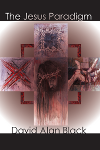
    9781893729568sWhat should a church that grows out of the New Testament witness look like? Dave Black posted a list of items on his blog today, and I, with his blanket permission, extracted the list to the Jesus Paradigm web site. (The site supports Dave’s book The Jesus Paradigm, which I publish.)

    I hope you will go read, think about, and then discuss the ideas Dave presents. They’re similar to the ones he presented in his book. I’d love for you to read the book as well. It’s available in print as well as for Kindle, Nook, iBooks, and Adobe Digital Editions. My greatest disappointment as a publisher is not when a book doesn’t sell or sells poorly, though I want books to sell well, but when a good, challenging book doesn’t reach as many people as I think it should. The Jesus Paradigm is a book that I think has reached far fewer people than it should.

    Now when I say reached, I don’t just mean that people have bought the book, or have read it, or even have agreed with it. What I mean is that people have thought about it. Do you disagree with some of Dave’s points? Fine. Discuss! Much more importantly, do! If a few of us in the church would do more and talk less, it would be great. Talking and listening, writing and reading are great and essential. But action based on good listening, reading, and thinking is better.

    My fundamental idea in choosing what I publish for Energion Publications is to ask whether it will drive people to think and study, and then hopefully to put something into action. I think the most important element of learning to study the Bible is actually doing it. I think the most important aspect of mission and ministry is doing it. That’s why I’m delighted that so many of the Energion authors are active in ministry. One of my authors (my mother) is 94 years old and is still active in the mission of her local church. She gives the children’s stories and she’s involved in sewing, knitting and quilt making in service for the poor. Incidentally, she’d agree with the point Dave makes about having all ages together in the church. What about you?

    9781938434648sIn addition, this is why I have a diversity of authors. Contrast Dave Black with Bruce Epperly. I publish books by both. They both are or have been seminary professors. One is a Southern Baptist, the other United Church of Christ. But Dave wrote The Jesus Paradigm and Bruce wrote a study guide to Philippians that actually has the audacity to suggest we should be applying a bunch of what Paul says to what we do in our local congregations. With that start, I’m hooked on both. Now I’m editing Bruce’s forthcoming book Transforming Acts, in which he again has the audacity to suggest looking back at the early church to see how we can transform the church now.

    Do these books or these authors agree on everything? No. But they’re both taking the step I would like to see readers of this blog or of their books take: They’re looking to the source and listening to the Spirit and asking what this means for the church today.

    This post has a somewhat commercial sound to it, and I don’t deny I hope to sell books. But these aren’t the only people thinking about this and taking action. Our pastoral staff at First United Methodist Church in Pensacola have decided to focus on preaching from acts for the seven weeks leading up to Pentecost. What a wonderful way to spend the season of Easter and prepare for Pentecost! Dr. Wesley Wachob is teaching Wednesday evening classes from Acts. He’s preparing a study guide to the book for me to publish. I’m excited about that opening as well.

    And I suspect each of you have Bibles as well. Turn to the book of Acts as a starting point, read it, and ask yourself how you can build God’s kingdom. Let me suggest that it wouldn’t be a program, a system, or a denomination. Perhaps it will be people on fire, speaking in many languages, in many ways, in many places.

  • Is the UMC Dying?

    I tried not to steal the headline from the article by Rev. Robert Rynders in UM-Insight, The Church Isn’t Dying, It’s Already Dead, but this post is largely to tell you to go read that post.

    After reading his article and thinking about the good things I’ve seen happening in some United Methodist churches — and I see quite a few good things happening — is that most of the good things result from people deciding to just do something good in their own congregation or community rather than spending their time on denominational politics.

    I will confess to being strongly attracted to this idea simply because I simply can’t stand church politics. It’s not that I’m better than all the other people. It’s just that when we get into committees we all seem to turn into some form of alien monsters. So I’m naturally inclined to accept Rev. Rynders’ thesis. It lets me feel better when I ignore the politics.

    What about you? What do you think?