Threads from Henry's Web

Category: Christian Ministry

  • Seven Marks: Fervent Prayer

    Seven Marks: Fervent Prayer

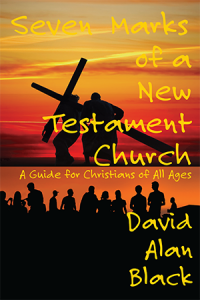
    nt church booksThe sixth mark Dave discusses in Seven Marks of a New Testament Church is fervent prayer (pp. 39-42).

    There are a variety of views of what it means to be “the church” or what it means to be Christian. For some, it’s a matter of holding the correct set of beliefs. One knows that certain things are true and one gathers with other people who know the same things are true, and this is church. Evangelism, in that case, is convincing other people that the things one believes are true and thus they should join this group.

    I exaggerate a little bit here to make a point. I think prayer brings out a problem with this view, and it’s one that has been building through Dave’s book. Notice that all these marks of the church are activities. Dave quotes Acts 2:37-47 on pp. v-vi of his introduction. You might want to read that now. Notice that the description of the church is active. God is acting in the church and so are the people.

    Now I don’t want to suggest replacing believing or knowing with doing. Doing must result from knowing in some sense or from instinct and habit. Even the idea that doing is important involves thought and belief. Often, however, we can tell more about what we actually believe by what we do than by what we claim.

    I recall going to teach about prayer at one church. The prayer coordinator was dismayed at the low attendance of the conference. She told us that the church had determined that prayer was their second priority. In that case how could so few people attend a conference on prayer scheduled by their prayer ministry?

    The answer, I suggested, was to observe what people did, and particularly how money was spent. In particular, look at your property. How is it arranged? What have you spent money on? How much of your money has gone to sports facilities? How much to education? How much to outreach?

    Now I absolutely don’t want you to read that as a negative view of sports facilities. Used well, sports facilities can be a critical element of outreach, and in turn a focus of prayer. The question is what you are actually doing.

    In fact, the measurement of the commitment to prayer should not have been attendance at a prayer conference, but rather time spent in prayer, a prayerful attitude, and ultimately establishing lives of prayer. A conference might help that. Since I have offered a few, I’d like to think so! But one can spend amazing amounts of time in a conference on prayer without actually praying. One can have a nice looking prayer ministry, while neglecting prayer.

    Do we really believe in prayer? I’m not asking what miraculous things prayer can bring, but rather whether we believe prayer can provide communion with God. That, in turn, leads to asking whether we believe God is active in our lives, our churches, and our communities.

    The evidence of prayer in the American church suggests that we don’t. We may believe in prayer as an occasional spiritual discipline on the one hand, or as a means of pushing God into doing things that we want on the other, but as a means of communing with God, either we’re not sure it will work, or not sure we want it.

    Dave talks about an “attitude of prayerfulness” (p. 40). Such attitude is a reflection of belief and practice.

    I want to illustrate this by quoting from one of the other books I’m following through this series:

    Some congregations make a decision by voting; but many churches learn to choose through the process of discernment. Discernment, as it is used in everyday language, has to do with sifting through the information we’ve been given in order to decide a course of action. In the church, discernment describes the prayerful process of making a choice in light of the inspiration, leading, and guidance of the Spirit.

    Discernment can be practiced by individuals or by groups. When transforming congregations make use of discernment as a decision-making tool, they place their choices in the context of God’s transforming activity, assuming that they are called to something larger than self-interest and partisanship. Through discernment, they imagine not just what they want to do, but how they might share in God’s New Creation through the choices they make. (Thrive, pp. 126-127)

    This is a test for belief and practice. Can and will the Spirit guide our discernment? Will prayer help us in discerning what the Spirit is doing and where we can become part of that activity?

    There is a huge difference between having a short prayer at the beginning of a meeting in which you then carry out the normal business of debating (or arguing) and then voting and one in which one seeks to hear the Spirit and come to a consensus. The latter requires a certain amount of trust!

    In discussing the early church’s beginnings and prayer, Bruce Epperly (Transforming Acts, p. 26), under the heading “Don’t Do Something, Wait Prayerfully” says,

    In the wake of the ascension, the apostles return to their meeting place and, for the next several days, constantly devote themselves to prayer. We don’t know the nature of their individual prayer practices. They may have been a blend of quiet contemplation, praise, intercession, celebration of Jesus’ last supper, and thanksgiving. But prayer was their priority as  a community before they undertook any action. They knew that God’s power was coming, and also knew that power without prayer is destructive to us and others.

    “Power without prayer is destructive.” I fervently agree. Fervent prayer is a critical mark because it sets us up for everything else, just as it did the early church.

  • Seven Marks: Christ Centered Gatherings

    Seven Marks: Christ Centered Gatherings

    nt church booksIt has been some time since I posted my last installment of my discussion of the book Seven Marks of a New Testament Church by David Alan Black, along with some commentary from the books Transforming Acts: Acts of the Apostles as a 21st Century Gospel, by Bruce Epperly and Thrive: Spiritual Habits of Transforming Congregations by Ruth Fletcher. My most recent installment was actually an excursus, Is There Such a Thing as a New Testament Church?. (You can find most entries in the series by searching for the words “seven marks.”)

    9781631990465mI find this topic as a whole, and this chapter in particular, are examples of a topic where we should read material from people outside our own tradition. We need to strip away some of the “stuff” that has gathered in our denominations and churches that keeps us from being Christ-centered. It’s easier to be building-centered, tradition-centered, or us-centered. All three of my authors suggest things that would take us away from those three centers and ask us to seek what is Christ-centered.

    Dave Black cites “They devoted themselves to … the breaking of bread.” in the heading to this chapter and indicates he sees this as a reference to celebration of the Lord’s Supper (also called Communion or the Eucharist). I was interested in how many references I had to choose from in all three books. One of the key points Dave makes is this:

    And how often was the Supper observed? If we compare Acts 20:7 (“On the first day of the week, when we came together to break bread….”) with Rev. 1:10 (“On the Lord’s Day….”), it seems that it was observed every Lord’s Day, that is, every Sunday. (p. 33)

    Of course, the frequency is not the most important point. I would suggest that the most important point is that this is something instituted by Jesus which calls us to remember his incarnation and sacrifice for us. It centers the act of worship around the person of Jesus who is, or should be, the center of our faith and worship. Thus, “Christ-centered gatherings.” Now there is more than performing a certain ritual to a Christ-centered gathering. In fact, if your communion service is just an act of ritual, you may well have a problem in your church. Let me bring in Ruth Fletcher on this point:

    ThriveBecause individuals who participate in the worship life of transforming congregations will have an active daily prayer life, images and words they encounter in the corporate worship will connect them with experiences of the Spirit they have had during the week. A phrase in a song, in a reading, or in the proclamation may well remind them of a time in which they experienced a call upon their lives, a clarity of purpose, or an impetus to take compassionate action on behalf of someone else. Those moments of resonance will be what infuse the worship service with a sense of integrity and power.

    Worship in transforming congregations will offer reminders of what the congregation is trying to become. (p. 134, emphasis mine)

    I would note that Dr. Fletcher is part of a denomination that practices communion on a weekly basis at every worship service. The question here is the next step. Why is it that we want to have Christ-centered gatherings? I think it is because of the last line, which I have highlighted above. We come together to center ourselves on Christ, and thus to prepare to be the body of Christ in the world when we leave in whatever way the opportunity presents itself.

    This is critical: If your worship service is not leading you to service, to acting as the hands and feet of Jesus, to being a witness, and to proclaiming the good news, it can hardly be Christ-centered. Certainly we focus on Jesus, but if we do so simply to get a dose of “specialness” for ourselves, to satisfy our own emotional, spiritual, and social needs we will fall short. By this I don’t mean that our spiritual needs are unimportant. They are, in fact, critically important. But they will never be satisfied unless we carry what we experience in worship out to wherever it is we go during the week.

    Now think of your last worship service. How much of the “worship service” led to actual service out in the world? I suspect that it cannot be real worship in the sanctuary of a church unless it leads to the presence of Christ, through you, outside. We tread the room in which we meet as a sanctuary. It even has some architectural similarities to a temple. But it is each one of us as a group, no, better, as a community, who is filled with the Holy Spirit and called the temple of the Holy Spirit.

    I would say that communion then is:

    • Christ-commanded
    • Christ-centered
    • Christ-commissioned

    And we are the body of Christ, commissioned to be his body in the world. What better way can we have to remind us of this than to participate in communion?

    I would like to suggest further that communion, and likely church fellowship in New Testament times was not a large amount of liturgy with a moment when a small piece of bread is provided and dipped into wine or juice, for that one moment of “communion.” Rather, when the saints gathered, they shared a meal. Many of our churches are too large to share a meal on this basis, and that in itself may be a problem. Large churches, of course, can have small groups that gather and have this type of communion. If we are to spur one another on to good works (see Hebrews 10:24), we need to see one another, hear one another, and know one another. In such a circle we can draw our community together and prepare to extend our circle.

    9781938434648sBruce Epperly notes:

    The story of Philip and the Ethiopian eunuch reminds me of the origins of the American denomination, the Christian Church (Disciples of Christ). From the very beginning, Disciples of Christ have practiced open communion and have been a model for the ecumenical movement’s communion hospitality. In the early nineteenth century, Thomas Campbell, a newcomer to the United States from Ireland, was appalled by sectarianism among religious groups in the new nation. Even Presbyterians from different sects would not take communion with one another. Inspired by his vision of the New Testament church, Campbell welcomed everyone to the Communion Table. “Don’t fence the table,” he proclaimed. “Anyone who seeks to follow Jesus as the Christ is welcome, regardless of denominational background.” As early Disciples of Christ proclaimed: “We have no creed but Christ.” Our unity in Christ and our allegiance to Christ compels us to expand the circle of his love to include everyone. (p. 78)

    I think that there should be nothing that does not lead us forward into a new sense of mission. But what happens in our churches? Do we feel a welcome such that we are nearly compelled to share this with others? Some may object that the call is not to the church, but if the church (building) is where the church (the body of Christ) meets, then should it not be inviting people to it as Jesus did? When Jesus Christ was here in the body, people flocked to him. He didn’t have to hunt for them because there was something there that they wanted.

    We need that attractiveness and welcome in the church. Not the excitement of new glitzy programs, entertainment, and excitement, but the welcome that says that here is a place where the longing of my soul can be satisfied. Here there is not just a building but a community of people whose unity and love for one another is so special that I want to be a part of it, and that they welcome me to be a part of them.

    I’ve met people who want to be prophets. Some have asked me to pray that God would call them as such. I always ask them if they are aware of the kind of life led by prophets in scripture. Is this what you really want? Similarly we need to ask ourselves about being the body of Christ. If our gatherings are Christ-centered, they will not be “me-centered.” If we are to be the body of Christ we must remember what happened to the body of Jesus, the Christ. Then, as we look to close our doors to those in need, even to our enemies, to those who hate and would kill us, we need to remember who it was that He gave his life for.

    Christ-centered? We need it. We claim to want it. Do we want it enough?

  • Same-Sex Marriage, Moving Candlesticks, and the Judgment of God

    Same-Sex Marriage, Moving Candlesticks, and the Judgment of God

    kineso ten luchnianMy instinctive reaction when I disagree with people on major issues is to come out swinging. Despite this instinct, I believe I am called to be a facilitator, to try to help people talk intelligently and communicate effectively about controversial topics.

    So if you’re looking for a statement about what I believe regarding same-sex marriage, you’re going to be disappointed. If that’s what you’re here for, go for the “Back” button, mutter about click-bait, and go on to more productive activities. In fact, I’ve been criticized this very day, and on a few others, for not taking a stand on the topic. By “not taking a stand” people mean that I will publish material on either side of the same-sex marriage debate along with a number of other issues.

    Do I have an opinion? Yes I do. Will I make it public? No I won’t. [sarcasm]I will restrain myself from benefitting the world with my great wisdom.[/sarcasm] I will, instead, follow what I believe is my calling. Face it, folks! While there is a great deal that has not been heard on this topic, it’s not because it hasn’t been said. In case you missed it in the previous couple of paragraphs, I believe I am called to be a facilitator. As a friend of mine recently pointed out, it’s difficult to be a facilitator and a prophet at the same time.

    Just after I finished reading my dose of blogs and social media this morning, I joined in a conversation and Bible study, and I was asked an important question. We were looking at some interpretational issues in Revelation 2 & 3, the letters to the churches. There are a number of places where judgment is threatened. I was asked about Revelation 2:5, where the NRSV translates “remove your lampstand from its place.” It sounds a bit harsh. The question was, just what did this mean?

    My answer is that I believe it is symbolic, but only at one remove.

    1. The lampstand is a church.
    2. The church does not repent.
    3. The church is removed.

    I think we likely have many “removed” churches. They’re still sitting there occupying space, but the light has gone out. God is not there. The glory has departed. It’s harsh, but I think it’s true.

    You see, I believe in the judgment of God. In fact, because of the way in which I believe God’s judgment works, I believe God’s judgment can be quite implacable. Mercy holds the door open while there is an opportunity for repentance, for change, but eventually the door shuts. I believe the door shuts, or the voice ceases, when we cease to listen. I would commend Hebrews 6:4-6 (or really, it would be better to read 6:1-12; or hey, just read the whole book!) on this. There comes a time when we no longer hear the call to repentance.

    So my answer was that a church can fail. It can essentially lose its place because it does not listen to God. I think this is important. I’m not a universalist. I believe that God’s freedom gives us responsibility, and with responsibility comes the consequences of our actions. This means that we have a choice. The choice has a result. That result fits the choice.

    I further believe that God has sent the Holy Spirit to guide us and the church. Yes, we start in scripture, but we read and interpret that with the help of the Holy Spirit. This may not result in agreement, but the most important part is the listening. As long as we are listening for the voice of the Holy Spirit, and willing to hear and to do, we have that opportunity to repent, to change direction. Once we are no longer listening, when we no longer have ears to hear, we will no longer hear what the Spirit says to the churches. America is filled with churches that affirm doctrinal statements and action plans, yet do not do what they know.

    As I facilitate discussion, I let many things pass. People seem to get tense mostly about abortion, homosexuality, and evolution. I find myself restraining myself on many other topics, including immigration, care for the poor, spreading the good news of God’s grace, carrying out the mission of the church, and training and empowering our young people (to do all of the above, of course!), all of which I consider of critical importance for the church today.

    Not all of you are to be facilitators however. I can leave definitions undone in a publishing company, but if your church is to do ministry you have to make decisions, and to make good decisions you need to listen for the voice of the one who walks among the lampstands (Rev. 1:9-20).

    Please do listen. “I will remove” is a very harsh phrase.

    But I think it’s very real.


  • Thoughts from the Energion Tuesday Night Hangout: Stewardship and Worship

    Thoughts from the Energion Tuesday Night Hangout: Stewardship and Worship

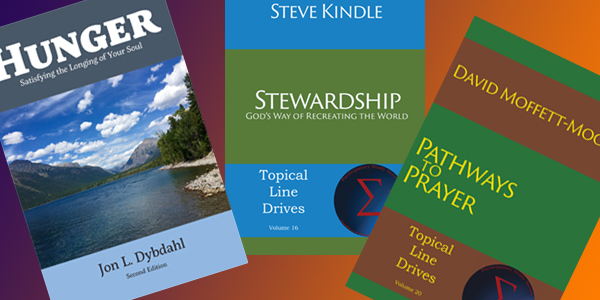
    books tuesday 020216I enjoyed interviewing three different Energion authors last night. The first was Rev. Steve Kindle who talked about stewardship and the importance of starting from an understanding that everything belongs to God. Steve provided some practical steps that a church can use in caring for all of God’s creation. Steve’s book goes into this somewhat more: Stewardship: God’s Way of Recreating the World.

    At about 7:30 pm, a half hour into the program, Dr. Jon Dybdahl joined us. Jon is the author of a newly released book Hunger: Satisfying the Longing of Your Soul. When he experienced this longing as a young missionary he started to pursue the presence of God and co-taught a class in college in spirituality. Jon’s PhD is in Old Testament, but he has a passion for serious worship.

    For the last 15 minutes, he was joined by Dr. David Moffett-Moore. Dave is author of Pathways to Prayer, and has two doctorates, both a PhD and a DMin. It was interesting and challenging to hear two men with so much education of the mind nonetheless tell us that the intellectual paradigm of religion was not enough. Prayer is an essentially. Coming to know the reality of God’s presence and power is essential.

    When I asked Dr. Jon Dybdahl how one would start this in a church as a pastor or other church leader he said the best way was to see your own need and start practicing it yourself. People will sense when your activities in leadership are powered by prayer and time with God whether you’re telling them all about what you’re doing or not. He also suggested a change in terminology that struck me, suggesting we might use “lead worshipper” rather than “worship leader” to take away the separation of the one on the platform from the ones in the pew.

    The video is embedded below:

  • Church as a Social Occasion

    Church as a Social Occasion

    Or perhaps as the social occasion.

    Thom Rainer has a post titled Seven Things Church Members Should Say to Guests in a Worship Service. It comes complete with a header picture of people who, to me, look like they’re forcing excessive smiles. I probably see it that way because I’m an introvert. I suppose that there is nothing wrong with these seven things, though I must note that I prefer that the restrooms be well-marked with signs so that I don’t have to ask someone where they are, and I’m very likely to be the guy who forgets who you are even though you’ve been down the pew from me for months. In fact, I’d just as soon you let me sit there, think, and pray as come try to make a social occasion out of it.

    There’s nothing wrong with being the social person. There’s very much right with being a friendly person. Yet I’m left with several questions. The most important question is just what it is we’re trying to accomplish.

    It seems to me that all of this is aimed at getting more people to attend your church service. The goal is to make people “church-going” and to make sure that an adequate number attend your church. In order to accomplish this we try to make church a great social occasion with a friendly atmosphere (provided one likes that sort of thing).

    I confess that I may be hypercritical here. But all of these lists, and in fact a huge percentage of the talk about church growth seems to center around how many people we have in church. So if you have a church that is a very strong social club, you’re a successful church.

    But in reading the gospel commission I can’t seem to find the part about making sure large numbers of people attend church once per week. That isn’t even mentioned, much less presented as a goal.

    Someone’s going to say that this is the goal. We get them into church and from there we make disciples of them. But I don’t seem to see as many lists of ways to make disciples out of the people you manage to get to attend your worship service. I don’t see nearly as much about getting the people who are good, church-going people to go out and make those disciples. I don’t see nearly as much about getting those people to observe the things Jesus commands.

    I recall a pastor recently who said to the church: The only excuse for a church to exist is to be a witness to Jesus Christ. I’d refocus that to this: The only excuse for us to have a church service is to help us be and become better disciples of Jesus.

    This means that there is a good reason to get people to attend church, provided that church is about becoming better disciples. As I’m been reading about fellowship, I think there’s much more to the idea of communion as a shared meal celebrated regularly. Our church gatherings are not so much services as training and motivation to become active servants. In order to do that we need to be reminded of who we are and of how we are part of a body.

    Perhaps if we built these times around a common meal where interaction involved more than greeting and attempting to remember names, singing a few songs, and listening to someone lecture, we might be able to build the body of Christ as a community that serves, and in fact embodies Jesus Christ for the world. That might mean we need to break up some of our huge congregations and spread out into the community in smaller groups.

    I’m no expert on church organization or church growth. I’m pretty sure that, despite my own tendency, Sunday morning isn’t designed as a time of individual prayer and meditation for me. I can do that many other times. Yet I can’t help but get the impression that our church activities are centered around that Sunday morning worship service. If singing hymns and listening to a lecture of variable quality doesn’t light up your life, you’re just the wrong type of person.

    But do these worship services really help us to be Christians? Do they carry out the gospel commission? Are the spaces in which we do these activities well utilized in pursuit of the gospel? Despite being a person whose habit it is to be in church every week almost without exception, I’m seeing it as less and less productive.

    Perhaps our problem is that the goal is the wrong one. Filling our church sanctuaries on Sunday morning was never the aim of the gospel commission. Making disciples was.

    Is it?

  • Is There Such a Thing as a New Testament Church?

    Is There Such a Thing as a New Testament Church?

    nt church booksI’m planning to finish resume and complete my blog series on Seven Marks of a New Testament Church with added commentary from the books Thrive: Spiritual Habits of Transforming Congregations, and Transforming Acts: Acts of the Apostles as a 21st Century Gospel. This process was interrupted by SBL, by some bug I picked up in Atlanta that slowed me down for several days and by the time taken to catch up afterward.

    In the meantime, I encountered the following:

    There is no blueprint for churches in the New Testament, and to try to form New Testament churches is only to create another system which may be as legal, sectarian, and dead as others. Churches, like the Church, are organisms which spring out of life, which life itself springs out of the Cross of Christ wrought into the very being of believers. Unless believers are crucified people, there can be no true expression of the Church.”—T. Austin Sparks, Words of Wisdom and Revelation, p. 62, (quoted in Frank Viola, Finding Organic Church, p. 19).

    There’s a great deal of truth in that statement, but there is also a great deal of danger. Let me quote a couple of paragraphs from Frank Viola from just before he uses this quote to illustrate:

    Consequently, the “biblical blueprint” model is rooted in the notion that the New Testament is the new Leviticus. Advocates approach the Bible like an engineer approaches an engineering textbook. Study the structural principles and then apply them.

    But church planting is not a form of engineering. And the New Testament isn’t a rule book. It’s a record of the DNA of the church at work. … (Finding Organic Church, p. 19)

    I would love to spend some time discussing this view of Leviticus, which is, in many ways a record of the DNA of Israel as God’s people at work, but I’ll skip over my perennial annoyance with the way Christians handle the Hebrew Scriptures. And Leviticus is definitely closer to a  rule book than is anything we have in the New Testament, however inadequate the term may be in describing the book.

    Again, I would certainly agree that the New Testament doesn’t provide a “rule book” for your church, though we need to consider our understanding of the term “rule book” as well. Even rule books differ in approach! I would also agree with, and even applaud, the characterization of the New Testament as “the DNA of the church at work.” But there’s a certain negative view of engineering involved here, which is just one of the things I think is potentially dangerous.

    There’s an interesting form of binary thinking that seems to go on with the question of whether and how we apply the Bible to anything. Someone asks whether the Bible teaches a certain thing that we believe, and the pious thing to say is that it does. So we say it. Then we’re left trying to find just where it does say it. Take the doctrine of the trinity, for example. Does the Bible teach it or not? Can I discover anything about the Trinity from the Bible? Well, if you want a doctrinal statement of “trinity,” such as you’ll find in any of the Christian creeds (yes, they differ, but take any one), then you’ll have to admit the Bible doesn’t say that. Yet the pieces, or at least the questions, start from scripture. I think you can say something similar about almost any of our doctrines. They are rooted in scripture to various degrees, but we wouldn’t have so many confessional statements if the Bible clearly said what we wanted it to.

    Having grown up as a Seventh-day Adventist, I confronted this problem early. We were a church that believed in the Bible and the Bible only. Anyone could study the Bible for themselves, and the Bible was sufficient. Well, except that people kept getting the wrong things from the Bible. So we had a doctrinal statement and  baptismal covenant. When I was baptized I publicly affirmed a substantial list of doctrines, all of which the church regarded as biblical. But it was not regarded as sufficient that I affirm the Bible; I had to affirm the list.

    I think humans tend to be somewhat binary in our thinking. On discovering that the Bible doesn’t actually have a full list of the “true” doctrines or the “ideal” rules for governing your church congregation, we decide that there’s nothing at all. Let’s get away from talking about characteristics, habits, marks, or even transforming moments. The true church is the one that is produced by people transformed by the gospel.

    And yes, it is. Transformation by the power of the gospel is where it starts and it is the key. But we still read scripture. We still have to decide to meet somewhere. We still are going to do some things during our church service and not others. We’re still going to choose some activities in carrying out the church’s mission and not others.

    The danger, I believe, is that we do this sort of thing without thinking and consideration. Transformed people will be motivated to carry out the gospel commission, but will they know what to do next? Generally there is someone who leads. I have been in churches that claimed that their worship services were run by the guidance of the Spirit and were very free. No rules.

    Well, on paper. In their rule book it was true. But in practice, there was a definitely hierarchy. Who was a prophet who would speak? Who would give the message, which was as long as, if not as organized as, the sermon in any mainline or evangelical church. The “free Spirit” definitely flowed in the way human beings directed.

    In fact, despite my apparently sarcastic description, it is quite possible that the Spirit was flowing precisely as the Spirit wanted to, having chosen to work through those people. But if so, there was more structure than people were willing to admit. There were leaders in the congregation. They were just not acknowledged as formally as they were elsewhere.

    And it’s in this informality that there is a certain danger. If we do not acknowledge and plan our leadership and our actions, then some form of leadership happens. It may be good or it may not. But very frequently in places where structures are not defined, people with forceful personalities, or even people with negative agendas can take over the process. These persons are very hard to move aside to allow the Spirit to actually move, because they will often deny what they are doing.

    So how do you avoid this? More importantly, how do you avoid this without turning the church into a bureaucracy and the Bible into a procedures manual?

    Well, I think you go back to the source. Not just the New Testament, though that should be our starting place as Christians. And not just the Bible, but rather the Bible combined with our discernment and what we can hear from the Holy Spirit as we listen to the Holy Spirit and discern what we need to do as a community of believers in Jesus. I think this will be a constant process as we look at what is around us, at who we are, at our Lord, and how we can be the body of the Anointed One in the world.

    We can even learn a little bit from engineers in this process. Yes, engineers can be very picky people. I’m reminded of something Jody said as she was about to enter the doctor’s office. She was taking a particular action which she wanted the doctor to note because, she said, “Doctors are very much cause and effect kinds of people.” Engineers likewise. Every time I get into my car and every time I get on an airplane, I am very happy that engineers are cause and effect kinds of people. That’s because I really like the causes to get together and produce the effect of my car staying on the road and the airplane staying in the sky as needed. I flew nearly 7,000 hours in the Air Force relying on that sort of thing.

    One thing an engineer can do is study one thing, see how it works, and duplicate the effect by creating a similar machine. Such principles applied to scripture might include looking at the church in the New Testament and asking what caused the church to grow. Can we duplicate that? Of course times and circumstances have changed. In fact, they changed from one moment to another in New Testament times. Engineers can also take a device and adapt it to different circumstances.

    I have a smartphone, for example, that is water resistant. If I drop it in a puddle, I should be able to pull it back out, dry it off, and go on. I haven’t tried this. The prior model of the same phone didn’t have this capability. Some engineers got together and added new capabilities to the ones the previous model had. I used that previous model, and I like the new one better. There are principles that apply to both.

    And that’s important. It’s nice to say that if our church comes forth from people who have met Jesus and been to the foot of the cross (or one of those other common phrases). That must be the foundation, because church will doubtless not work with people who have not been transformed (or better, are being transformed; we are none of us there yes). But this is a principle I get from reading the New Testament. And it’s not the only principle I get.

    The good engineer knows how to look at principles and apply them to a new environment. The good Bible student knows how to look at the church in action in the New Testament and find out how to apply not every action they took, but the fundamental principles by which they tried to live, to our modern times.

    So Seven Marks of a New Testament Church doesn’t provide you with a rule book. It doesn’t replace the New Testament. It certainly doesn’t replace the gospel. But it shows you what one worker in the vineyard has discerned as principles that can be applied. The other two books, Thrive, and Transforming Acts, are doing the same thing.

    The problem isn’t really thinking like engineers. The problem is bad engineering, engineering that applies rules without understanding. Not inflexible engineering that ignores the complexity of human communities. Engineering that ignores reality is just bad engineering. I, for one, think the church could use some genuine, good engineering.


  • Link: Local Church Pastors

    Since I’ve been talking about churches and leadership, I thought it would be useful to point to this article on UMC.org: Local church pastors on the rise. As usual, I think we’re behind. My personal belief is that the whole system of education we’re using, including degrees is well past its prime. If we made use of all the resources available, there would be no reason we couldn’t make better opportunities available for local church pastors to improve their skills.

    But my experience with local church pastors suggests two things: 1) For every local church pastor who has a weakness, there’s very likely an elder who also has a problem, and 2) Local church pastors also have skills in ministry that many of your full elders do not.

    I’m just not that enamored of the wonders of seminary education. But it’s not the education we need to get rid of. What we need to do is restructure the means and time when education is delivered, received and applied.

  • Who Needs Evangelism?

    Who Needs Evangelism?

    nt church books(This continues a series that started here, and continues with part 2 and part 3.)

    Dave’s first mark of a New Testament church is evangelistic preaching. (Book: Seven Marks of a New Testament Church.) I’m a member of a church that’s part of a mainline denomination. I’m a mainliner. In general, we don’t like the word “evangelism” or related terms like “evangelistic.” You can watch Dave’s remarks starting about about 4:45 in the video and runs for about 4 minutes.

    In the book Dave calls this sign “evangelistic preaching.” The word “evangelism” here is used to emphasize that this is not the kind of preaching we normally think of when we hear the word “preach” in modern English. The preacher preaches and sermon and the congregation says “Preach it, brother!” This, on the other hand, is not speaking to the congregation in order to teach them about the faith of which they are already a part. Rather, this is proclamation of the message to those who haven’t heard it before.

    The word “evangelism,” and of course the related word “evangelistic” has a bad reputation in mainline circles. (Remember that I’m thinking about this in the context of being a member of and working in a United Methodist congregation.) I don’t particularly mind if people want to avoid the word, just so long as we don’t avoid the activity. Mainliners have an excellent way of avoiding ineffective or offensive methods of evangelism: We just do no evangelism at all. By offensive I don’t mean offense at the gospel itself. There are those who are offended, for example, if I say that Jesus loves even terrorists. That’s fine. I’m still going to say it. Jesus does love them. On the other hand if I say, “You bigoted moron, Jesus loves terrorists as much as he loves you,” it’s quite possible the hearer will be offended (quite justifiably) at being called a bigoted moron and may never even hear the second part.

    It’s especially important to realize that people can disagree with you without being bigots or morons. It’s even more important to remember that Jesus loves everybody, and that includes bigots as well. In fact, it would be really great if we quit thinking of people in those categories. Challenge their ideas or their actions as dangerous, but value everyone as a person, especially those you find hard to value.

    9781631990465mDave used one way to say “evangelize” in the video when he said “share the love of Jesus with them.” How do I do that? Well, it starts with learning to love them myself. It’s much easier to act from love if you do actually love. Then fit your proclamation, whether in actions, words, or any combination of them, to the particular situation.

    We’re going to share the love of Jesus much more effectively when we do it because we are loving like Jesus, rather than doing it in order to build church membership, build up our personal count of people saved, or justify ourselves and our way of life. If we thought of evangelism as “sharing the love of Jesus” I think we would find that easier to remember.

    Dave starts with this point because that’s where the passage he’s using, Acts 2:37-47, starts. The passage starts there because this is the historic moment. We won’t always find ourselves with an audience that needs to hear words.

    Bruce Epperly, in Transforming Acts: Acts of the Apostles as a 21st Century Gospel, also presents proclamation in his first chapter. The details are different, the text is different (Acts 17), but I think you’ll see the connection (pp. 13-14):

    9781938434648sThe description of Paul’s message at the Areopagus rings a familiar bell for twenty-first century North Americans. Paul is sauntering through the marketplace of spiritualities – it could be Cambridge, Ann Arbor, Berkeley, Madison, or Washington DC where I live. He is gazing at the seat of intellectual, political, and spiritual power and prestige. Statues are everywhere, not unlike Washington DC, London, Paris, or Beijing – to gods and heroes, sacred and secular, known and unknown – each portraying a certain vision of human life and ultimate reality. Paul is both amazed and scandalized at the panorama of diverse and conflicting spiritualities.

    Jewish by upbringing and theology, Paul is overwhelmed by the thought of people worshiping objects that are less alive than themselves. Perhaps, he is amazed that people still worship gods such as Zeus who are not only promiscuous in their dalliances with human beings but also vindictive, angry, and punitive. Why would anyone worship raw power when you can experience God’s love? Why would anyone follow a religion of fear when he or she could experience God’s loving acceptance, grace, and companionship? Why would anyone exalt the gods of violence when the prince of peace welcomed them with open arms?

    He engages in conversation with some of the local spiritual leaders and philosophers of the city. They don’t know quite what to make of his vision of a universal God, whose life cannot be contained by statues or institutions, and whose love was manifest in a suffering savior. “Tell us more,” they ask, because like our culture, they lived with gods aplenty – there as many religious options as there are cable or dish television stations.

    Paul enters into dialogue, honoring their religiosity, affirming their quest, but suggesting another better alternative, the path of salvation and wholeness pioneered by Jesus of Nazareth who was unjustly crucified, but miraculously resurrected to bring healing and wholeness, transformation, and love to all creation. There is an “unknown God,” whose wisdom is luring us forward even when we are unaware of it, and this is the God Paul has experienced through his encounters with Jesus Christ.

    Here we tie a different portion of our modern experience to a different portion of the book of Acts. Does the book of Acts seem more relevant to you with either of these approaches?

    Now let’s get a taste of how Ruth Fletcher talks about this. Remember that she starts from looking at thriving churches and asking: “How did it happen?” The following is from pages 53-54 of Thrive: Spiritual Habits of Transforming Congregations, which talks about Spiritual Habit 5 – Engaging:

    9781631992070sEvery once in a while, those foreign missionaries would visit the congregation, telling tales of difficult living conditions and cultural challenges they had encountered while trying to share the good news of Jesus Christ in some exotic location. Some were doctors who brought healing to those who were sick. Some were teachers who helped young people learn and grow. Some were engineers who helped villages dig wells and install sewer systems. Some were evangelists who established new churches.

    I remember listening to their presentations, being impressed by their stories, and feeling just a little bit glad that they would be returning to the dangers of the mission field while I would go back to putting my change in the offering box in the safety of my own home. Of course, I was not the only one who took comfort in being able to leave the mission work to the professionals; in those days, most members of historic Protestant churches were content to offer their monetary support and prayers for others who would travel to the mission field, out there, over there, while they stayed within the familiar circle of congregational life.

    Yet transforming congregations do not just play a supportive role in the mission of the church; they actively participate in that mission. They see that the mission field of the 21 st Century begins at the church’s doorstep and stretches out into the neighborhood and into an interconnected, interdependent world. They understand themselves to be the missionaries who are called and sent, ready or not, to engage in making real God’s New Creation. [emphasis mine]

    Now Dr. Fletcher is going to get involved in scripture in the next few paragraphs, but again, look at the starting point.

    Also, while the position is different, some focus on mission, evangelism, proclamation, or perhaps we should just say “sharing the love of Jesus” is part of this basic approach for all three authors.

    Now you’ll find differences in many areas. That’s part of what I want to celebrate. I believe that as I move to a new congregation (no, I’m not a church professional, just a member), and try to work with my fellow-members of the body of Christ, the ideas of gotten from learning from these three different authors are going to help. What is it that God is calling me to do to share his love in and with this new church community? I’m sure I’ll be finding out soon!

    I’m embedding below my interview with Dr. Ruth Fletcher. I don’t have a full interview with Bruce Epperly on this topic, though we’ve discussed a number of his other books in various interviews. Just press “Play” to get rid of my picture and see and listen to Dr. Fletcher!

  • Different People See Different Things in Acts

    Different People See Different Things in Acts

    nt church booksIn my current series on the church, starting from my interview with Dr. David Alan Black about his book Seven Marks of a New Testament Church, I’m bringing in material from two other authors: Bruce Epperly (Transforming Acts: Acts of the Apostles as a 21st Century Gospel) and Ruth Fletcher (Thrive: Spiritual Habits of Transforming Congregations). There are three major reasons (other than that I like and publish both books) that I’m using these two books.

    1. These two additional books show significant similarities in what they recommend for 21st century churches.
    2. These two additional books show significant differences in their recommendations.
    3. These two books show significant differences in the approach to finding the answers.

    I want all of these differences and similarities to help stimulate people to their own study. I want to emphasize that though I’m friends with Dave Black and appreciate his work tremendously, I’m not trying to speak for him, nor am I simply trying to reiterate what he has to say in his book. What I’m doing is approaching his book as a member of a mainline congregation (I’m United Methodist), and asking what I should apply to my local congregation and how I should go about doing so. In fact, I hope that as I do this I’ll see more avenues for building up the spiritual life and discipleship of the church community I’m part of.

    I’m not seeking uniformity, and I don’t think Dave is either. Two days after we taped that interview, he was preaching at the United Methodist church I now attend. He never asked any of us to become Baptists. But I’m not going to try to speak for him on any details. Uniformity is, I believe, one of the problems we have in the church. One of the mechanisms of uniformity is the church program. Repeatedly I have seen church members go out and learn about some program and then bring it back to their church. When they get back they are filled with the recommendations of the speaker, which often include the warning that if they don’t follow the program precisely things will go off the rails. So if a church already has an effective ministry to needy people, for example, there’s no option for combining the new things learned at the conference with what is already happening. We have to carry out the program.

    I recall the introduction of a small group related program to a church that already had two different types of small groups. Over a period of years there was constant complaining that the church couldn’t get enough people involved in this new program to make it work. Nobody was willing to consider combining the new program with what was already going on. So people who were leading in small groups felt overwhelmed by the requirement to attend classes, carry out specific activities that didn’t mesh with what they were already doing, fill out reports, and attend administrative meetings. That’s one form of the effort to enforce uniformity. Uniformity can be of practice, of doctrine, of polity, and so forth.

    I’ll outline the differences in recommendations as I go through my series, though I certainly won’t be able to cover all three books. I’ll recommend reading all three, then, as I think all three authors would recommend, prayerfully studying and discerning for yourself and for your community what God’s leading is in your particular case. Then don’t feel the need of reinventing the wheel because you have suddenly become one of the enlightened ones.

    I do want to point out differences in approach. None of this is intended as a critique of any of the authors. These are, in fact, the strengths of each that led me to want to write a blog series based on these books.

    Dr. Black is a biblical scholar, and he is not a pastor, nor does he plan to be. He will tell you that he’s a full time missionary. In churchese, one could say full-time minister of the gospel. In his book you’ll find primarily a study of the text on which the book is based, Acts 2:37-47. For those of us whose thinking is seasoned by the Wesleyan Quadrilateral, he’s on the scripture line and it’s foundational. It’s seasoned by experience, tradition is acknowledged, it’s tied together with reasoning, but it is always scripturally rooted.

    Dr. Epperly is a former seminary professor and a church pastor. He works from the biblical text but spends more time both on theology and sociology. His book is liberally sprinkled with his personal experiences which he ties to the experiences he’s using from the book of Acts. You’ll read lots of texts in his book, but you’ll be asked to think about those text in a much broader context.

    Dr. Fletcher started from the other direction. She looked at churches that were successfully ministering to their communities, churches that were thriving, and asked what were the things they had in common. Her spiritual practices are derived from that. But don’t imagine that there is no theological reflection or scripture involved in the final result.

    I found great joy in publishing all three books and I invite you to reflect on these issues for a few posts. I hope this explains what I’m trying to accomplish.

  • Experience, Belief, Action: An Exercise from Bruce Epperly

    Experience, Belief, Action: An Exercise from Bruce Epperly

    9781938434648sI will be putting more material from Bruce Epperly in as I post more on the church, but here’s an exercise he suggests in his book Transforming Acts, pp. 19-20.

    Acts of the Apostles is clear that doctrines are symbiotically related to behavior. Our doctrines emerge from spirit-centered experiences. Our experiences are clarified by our beliefs and take shape in practical application. Accordingly, what behaviors might your beliefs inspire in the areas of:
    »» Personal stewardship
    »» Care of family and children
    »» Marriage and other significant relationships
    »» Community involvement
    »» Political involvement
    »» Care of the Earth
    »» Response to diverse opinions
    »» Ways we respond to personal or global conflict (violence, reconciliation, consensus, peace-seeking balanced by appropriate protection).
    »» Involvement in justice issues – first-hand support of vulnerable people and/or political involvement to achieve a social order more reflective of Jesus’ values.

    One of the great strengths of Bruce’s book is that he challenges us at the end of each chapter to thoughtfully and prayerfully move to action.