Anything having to do with books, book reviews, current reading suggestions and so forth. This is a catchall for those elements that don’t fit precisely into other categories, but do have to do with books.
I want to keep everyone thinking about social justice. In my view, if more people become more aware about what is going on and take action, whatever action they believe is best, we’ll be better off. Discussing this and related issues can only help.
We have multiple Energion authors who have a variety of views and are addressing these in their own way. The video below is by Renee Crosby, author of The Fringe (and Soup Kitchen for the Soul). The Fringe (a eucatastrophe press title) tells about homelessness in the form of fiction. So take Renee’s challenge seriously. Educate yourself!
As an editor and publisher, I often have the joy of telling an author that their work will become available to the public, because I have decided to invest in it and publish it. That’s very enjoyable.
Then there are the times that I have to reject manuscripts. There are more of these than acceptances. Often I hope that some other editor will decide that the manuscript is worth publishing. Today I sent a rejection notice out for a book with which I agreed almost totally, but which simply seemed to be repeating things that had already been said. Another was simply longer than the subject matter, and readers, would bear.
As one who has written many, many superfluous words, and who can’t even claim to have discarded them gracefully, I want to tell these authors to stick with it. Don’t let a rejection stop you. Many books, and not a few bestsellers have been rejected by publishers.
I try to explain my decision in reasonable detail. If you get a note that gives you advice, take it seriously. Don’t follow it slavishly. I know it’s a shock, but editors are not always right. Another editor may disagree. Give your manuscript a serious look, add some more polish, fix any problems you find, and send it to someone else.
If the editor who rejected your manuscript suggested it might be acceptable with a few changes, then by all means consider making the changes and submitting the manuscript again.
I would like to address one other class of authors, those who don’t read the submission standards. If you’re one of those, you need to take finding a publisher at least as seriously as you took producing your masterpiece. When an editor receives either a generic submission, or one that shows the author clearly did not read what information was available, he or she will often just reject the manuscript out of hand.
As a writer, you don’t just write. You have to market. If you don’t, you might as well not have written.
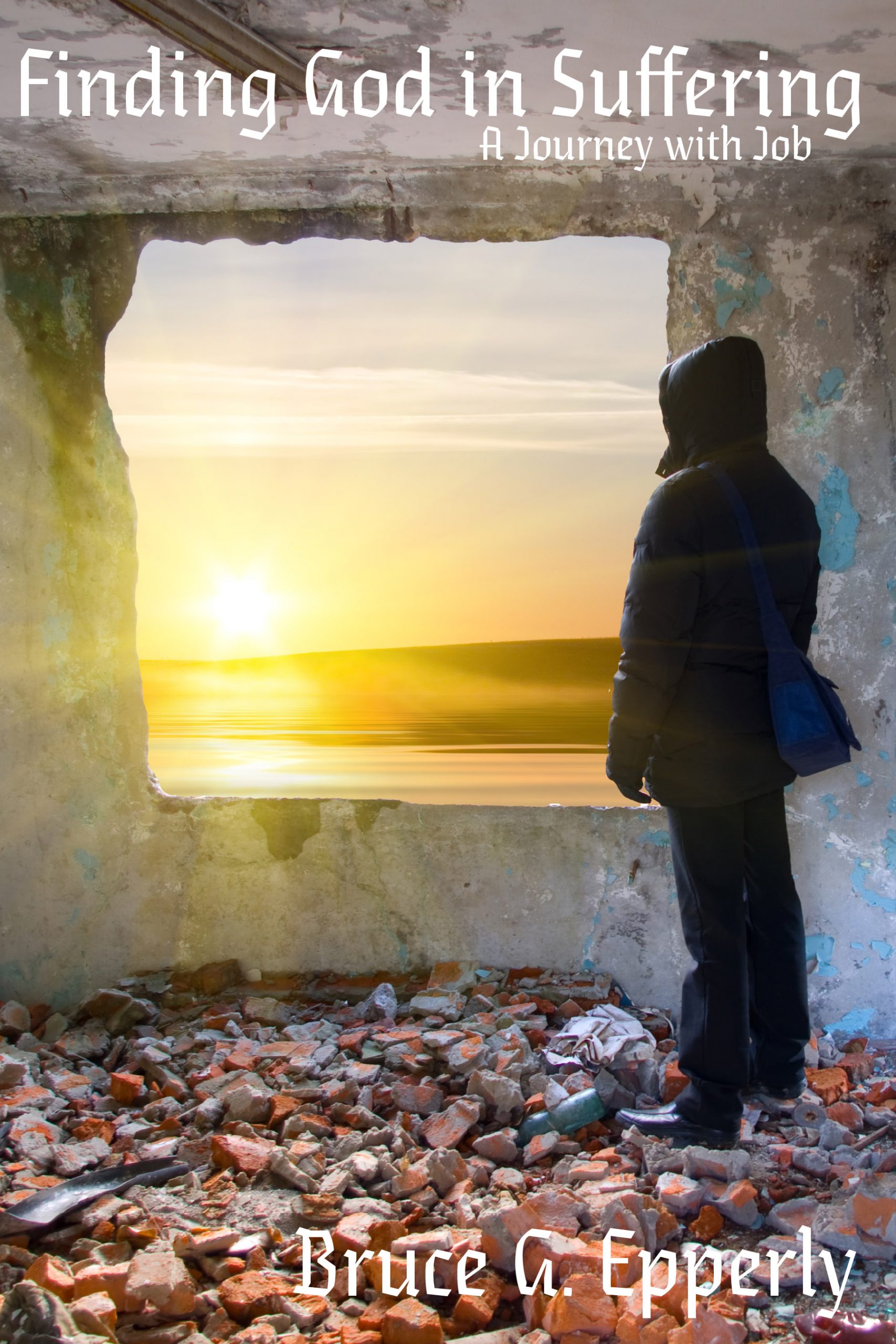
Bruce Epperly, author of the recently released book Finding God in Suffering: A Journey with Job, questions the view that God determines the outcome of football games (or, I suspect, any other sport), rewarding the faithful and punishing the unfaithful. The title to this post includes his money quote from his post, Is God a Seahawks Fan?. Here’s the full paragraph:
I am sure that God was present on the playing field but not as a miracle worker or team mascot; God was there urging the players to achieve their best as team members, to be sportsmanlike, and to remain healthy amid a rough and tumble game. I suspect God was indifferent to the ultimate outcome.
I found this post refreshing. God is involved, but God isn’t there to make your team win–or lose. He’s there with each person.
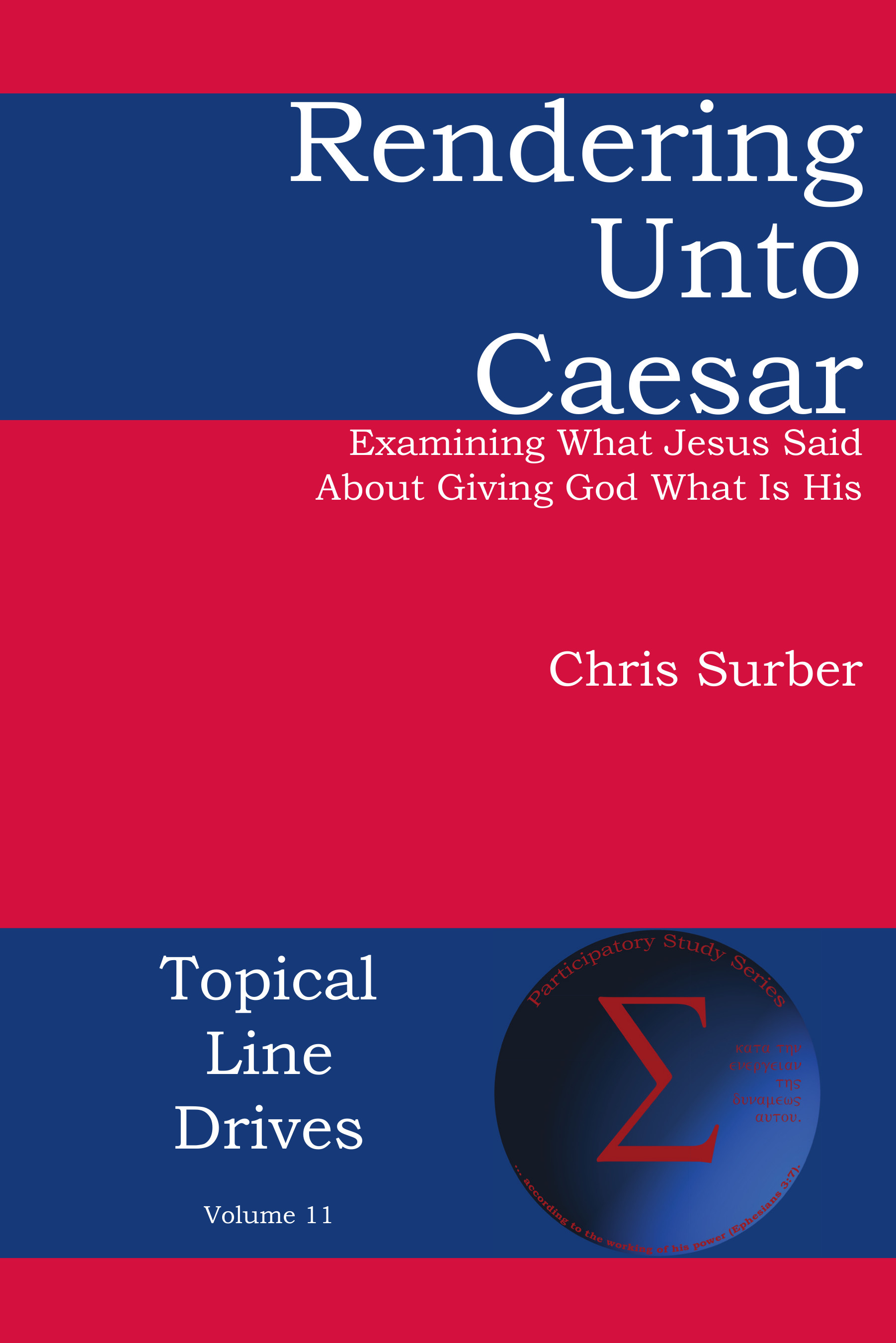
The most obvious conflict with the fusion of Christian and American identity is that it denies the universal nature of the Kingdom of God. When our allegiances are too strongly aligned with any kingdom of this world, be it the relatively benevolent kingdom of America or a malevolent kingdom like Nazi Germany, it takes away from our ability to reflect the unique beauty of Christ in the world through our lives. Discipleship is costly. It costs us the identity that we had before Christ broke into our lives and snatched our affections away from this world for Him.
In order to glorify God, we need a Gospel that preaches everywhere. Our Gospel needs to preach in Beverly Hills and the hills of Haiti. Our Gospel needs to preach to Liberal and Conservative. Our Gospel is for the lost, of which we are all a part. In the hearts of many American Christians there is a subtle and sometimes overt bitterness for the rest of the world. We are Americans. We want to keep our money local. We want to keep the American economy strong. We have fused our identity as Americans with our identity as Christians and consequently we miss the reality of our global Kingdom citizenship. (p. 8)
This little book (Topical Line Drives, 42 pages) is headed to the printer. Pre-order price is $3.49. Regular price will be $4.99. If you order three of them, or order another book or so, you’ll get free shipping as well.
The book of Job invites us to claim our identity as theologians. Job shouts out to us, “You are a theologian” because we have experienced the pain of the world and are trying to make sense of it. Job shouts to us: “Don’t let the word ‘theology’ put you off. By whatever word, we strive to make sense of the senseless and meaning of the meaningless.” We become theologians the moment we begin to ask hard questions about life and the One who creates the universe and gives birth to each moment of experience. Theology asks questions of life, death, meaning, human hope, and immortality. It also raises questions about the meaning and purpose of our brief, and often challenging and ambiguous lives. For Job, theology and spirituality are intimately related. As Episcopalian spiritual guide Alan Jones once asserted, spirituality deals with the unfixable aspects of life – or what I would describe as life’s inevitabilities. Sooner or later even the most fortunate of us must make theological and personal sense of what is beyond our control, while taking responsibility for what we can change.
Tonight in our Tuesday night hangout series, I will be interviewing Christopher J. Freet, author of the newly released book A New Look at Hospitality as a Key to Missions in the Areopagus Critical Christian Issues series regarding the topic of hospitality. We are open to audience questions. You can view this event on the Energion Publications Google+ page or use the embedded YouTube viewer below.
One of my goals as a publisher is to see people from various streams of Christianity talk to one another and learn from one another. I used the labels “liberal,” “charismatic,” and “evangelical” in the home video I made early in the history of my publishing company, Energion Publications. I’m embedding it here for those who haven’t seen it.
That video should answer the most common question I’m asked: Why do you publish books you don’t agree with? It’s not a question that comes up with the big boys, companies like HarperCollins, Zondervan, and so forth. (Oops! Come to think of it, Zondervan is now part of HarperCollins!) With those big companies, one expects that the editorial policy will be cover a bit of ground.
But Energion Publications is owned by one person, and that person (yours truly) is also the chief editor. So what is my goal? Why wouldn’t I look for and try to publish the TRUTH?!
I suppose I could get into epistemology and tell you that while I believe in truth, I do not believe that we, as humans (finite), ever get to know that. Rather, we make our best, and I think often quite workable, attempt at the truth. But my real reason is that I believe we need dialogue. We need sharpening by others. We need that to go on continually, not just in some starting point.
Early in my time online I was in conversation with someone on the Compuserve Religion Forum. I’m pretty sure at the time I was still accessing this by dial-up, but my memory isn’t clear on the timing. Another Christian asked me if, when engaging in dialogue with non-Christians, I were to discover I was wrong, would I change my mind. Let’s ignore the fact that “discovering I was wrong” implies that I already changed my mind. My answer was, of course, “yes.”
“Then you aren’t a real Christian,” he told me. If I was a real Christian, he explained, I would be unable to contemplate the possibility of being wrong. Now I’m a quite convinced Christian. My experience of God suggests to me that while the details may vary, my ultimate faith in God is not in question. It’s not unstable. I’ve seen it challenged. I’ve lived through times that made me question, and that faith is still there. I’m not that strong of an individual. If my faith has held up this long, it becomes evidence to me that there’s something behind it.
But dialogue means listening, and if I listen, I must consider. If I hear something that is better than what I know already, I must accept that. To do anything else would be dishonest with myself and even with the God who is the Object of my faith. Or, well, beyond object, ultimate concern, and so forth.
So I’m an advocate of dialogue because I think it’s both a critical part of how we discover truth and also of how we keep on trying to discover truth. Sharing and listening are important.
So when I decide whether to publish a book, and later when I edit that book, my question is never whether I agree or disagree with the author, but rather it is how well the author has expressed his or her position and how well supported it is. I may disagree profoundly. But is this something that should be considered and discussed? I do place boundaries on what I publish, but that is because a small publisher has to have some definition of what is and is not within its publishing scope. I have rejected manuscripts that I have then, in turn, urged others to read when another publisher released them.
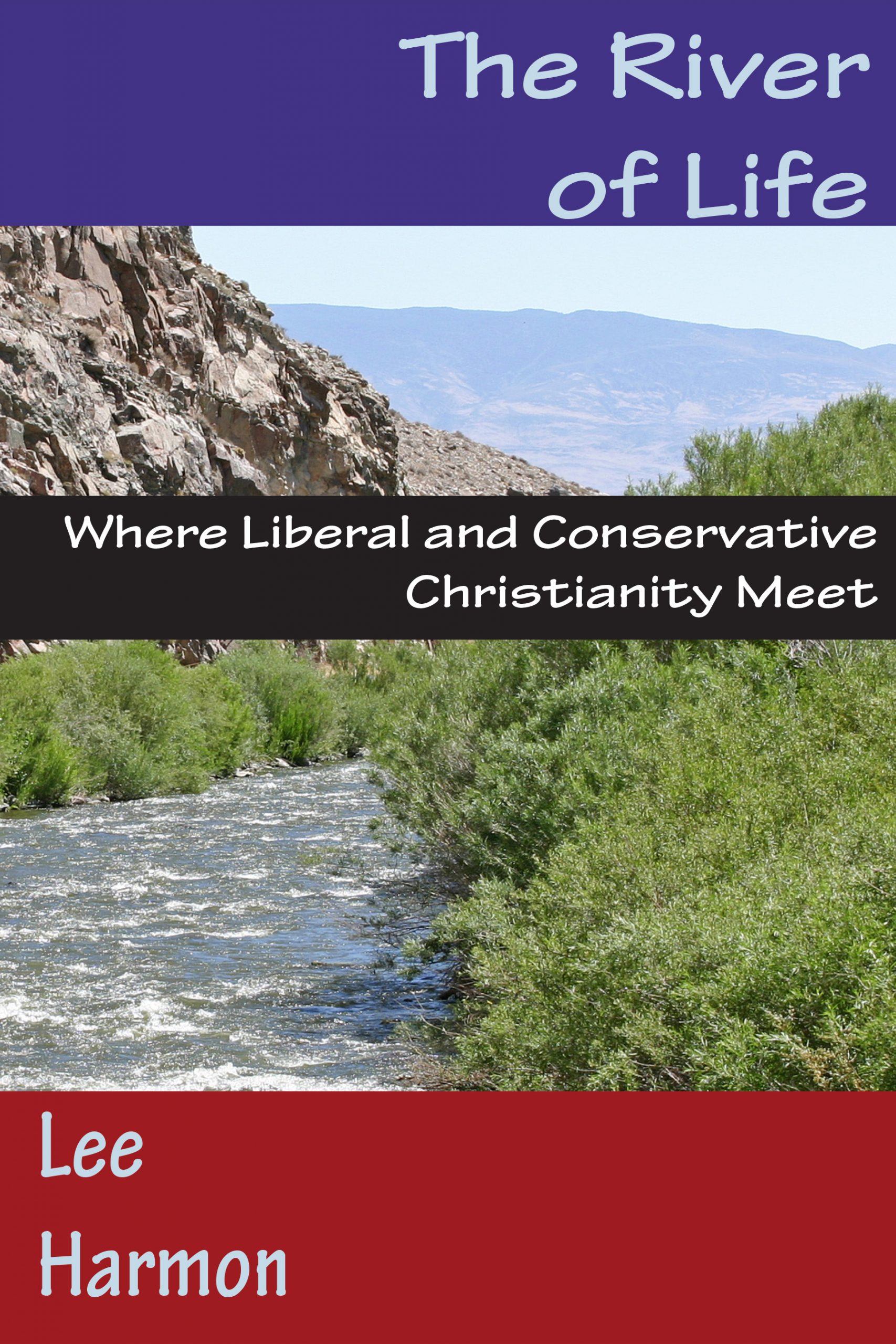
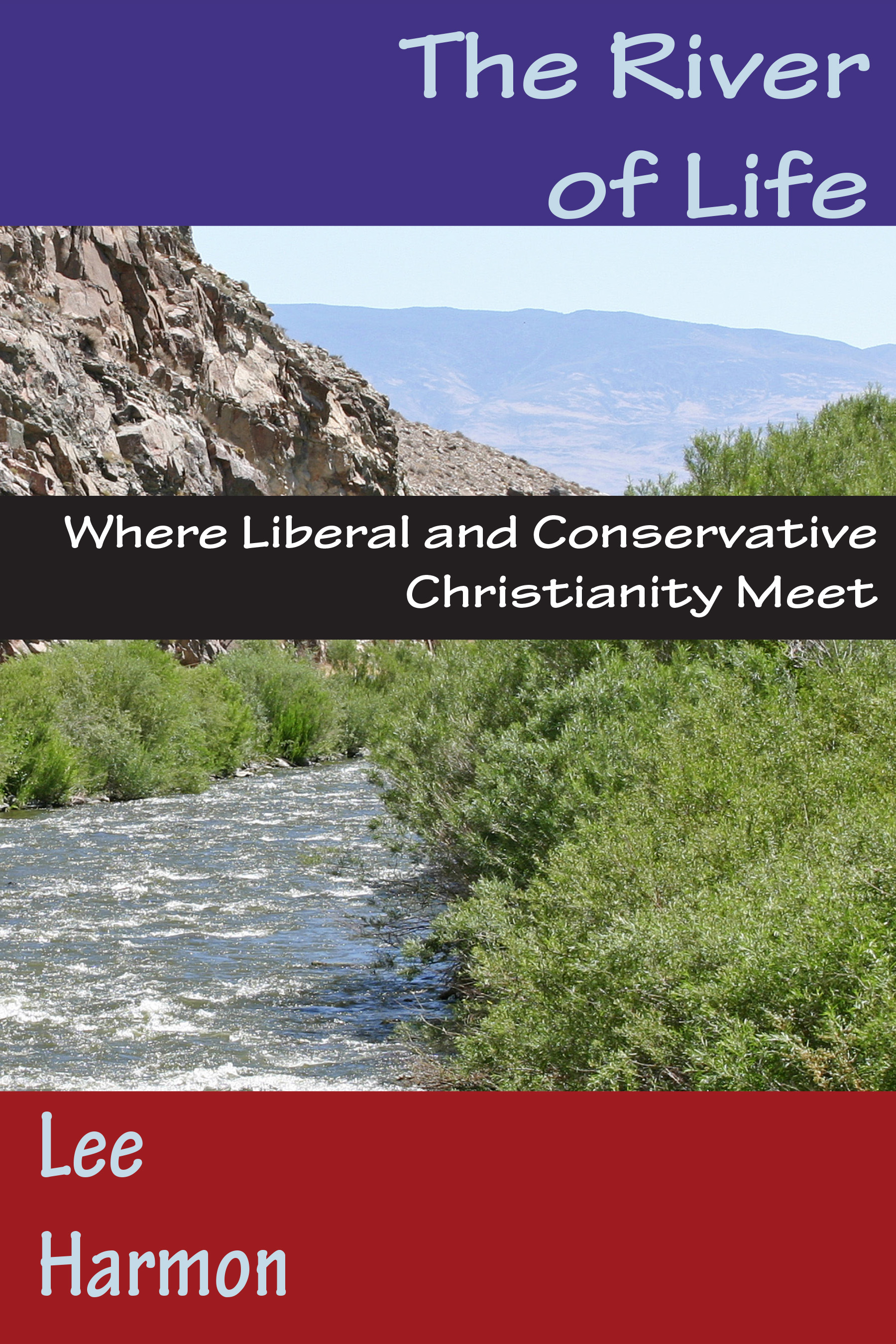
Most of these books advocate one position or another. But my company has just released a new book that is advocating dialogue, precisely the kind of dialogue I established this company to promote. That book is titled: The River of Life: Where Liberal and Conservative Christianity Meet. I’m not trying to say that I like this book better than any other book I publish. To be fair to my authors I must be as strong an advocate for each of them as I can. But I’m highlighting this one on my blog because it speaks to the core of my goals.
Do I agree with every word in this book? I’d like to think nobody would ask me that. My normal answer is that I can’t even say that with confidence about the books I have written myself. In fact, Lee Harmon’s liberal Christianity is more liberal and less charismatic than mine. You can see my book Not Ashamed of the Gospel: Confessions of a Liberal Charismatic to catch the differences.
Here is a sample from the introduction:
I am also a liberal Christian, living in a conservative world. Most of my family and friends are conservative Christians. Conservatives consider apostolic tradition of utmost importance, meaning they seek to emulate the first-century church as best they know how. This is a noble goal, but it can lead to stringent intolerance for diluted beliefs. It’s the right way or the highway. Liberal Christians, on the other hand, find the creedal requirements which develop from such strictness stifling and contrary to observation and experience. We see God in many people and places, not just in Christian circles. This can lead liberals to a violent condemnation of narrow doctrine. Intolerance is intolerable.
And round and round we go. As a liberal Christian, I have both stooped to verbal aggression and felt the sting of attack. Both sides care so dang much that we can’t help squabbling, but this hardly puts a good face on Christianity. If the two sides could merely take one step backward, digging back to the Jesus we both adore, perhaps there could be a unity of purpose. Even though there can never be agreement about religious belief, the Kingdom could nevertheless advance. That is my hope in writing this book. (pp. 1-2)
I know, of course, that not everyone will agree with Lee on what the key points are. Not even all liberals are likely to agree on that. But that’s a good opening point for discussion. In that discussion we can all hope that we’ll hear our Master’s voice and learn to love a little bit more and show a grace that’s just a bit wider and deeper.
Scot McKnight wrote a very interesting post on inerrancy today. I have long rejected use of the term biblical inerrancy, yet have watched as people more liberal (another dangerously slippery term) than I am claim to be inerrantists. This article is very helpful in clarifying the terminology somewhat, though much more could be said, and has been!
My take-away line?
Inerrancy is a disruptive child in the theological classroom.
I wrote more extensively on this in my book When People Speak for God and then published From Inspiration to Understanding by Dr. Edward Vick, which is a senior cousin to mine. I would have footnoted Vick quite a bit had his book been written before mine!
The word “tithing” has undergone quite a substantial change in meaning over the course of my life. Growing up as a Seventh-day Adventist, it meant giving precisely 10% of one’s income to the church. This money had a special use in the SDA church, supporting pastors. For my parents, the tithe was just the starting point of their giving. They put aside an additional 10% and gave that to various other activities of the church. They called this offering. They had an additional fund, I believe around another 10%, that they used to help people personally.
When I started attending Methodist churches, I found that the term “tithe” had a somewhat different meaning. I think I ran into this first in a stewardship campaign, in which people were encouraged to begin to “tithe” at 2%. The idea of a “2% tithe” was somewhat puzzling to me, as I knew the Hebrew word was derived from “10” and was used pretty much exclusively in that sense. (Not 10%, as not every instance of 10th turned out to be precisely 10%, but always related to 10.)
So tithing had the meaning of giving, rather than a specific type of giving, and the number was no longer considered relevant. There was a sort of goal at 10%, but the other amounts were still considered tithing. If one needed to distinguish them, one might say “full tithe” but I rarely heard that.
In my own view, however, there was no obligation for Christians to follow the tithing laws from the Pentateuch, and even SDAs were not doing so. There was a more substantial effort on the part of SDAs to translate, but it nonetheless was not the same thing. It was not that Christians should be less generous. It was just not a law addressed to us. At the time, however, I was afraid to say that I didn’t believe in tithing. Why? I was afraid people would start giving even less, and the giving in Methodist churches (and many others) is rather dismal as it is.
In other words, I didn’t really believe in grace. I didn’t trust grace.
I believe that tithing can be a good starting point or guideline. I don’t believe Christians are called to give less. Rather, we are called to give more. I also don’t believe that we are necessarily called to give all to our local church. But we are called to give it to the kingdom of God, whether in the form of helping our neighbor in trouble, feeding the homeless, carrying out acts of love and mercy, supporting missionaries and all who are working in service to God and others. I believe this should be a response to grace, not a price we pay or a duty we fulfil. All giving, whether to support your local church, your local food pantry, or world missions, should be a joyful response to God’s grace.
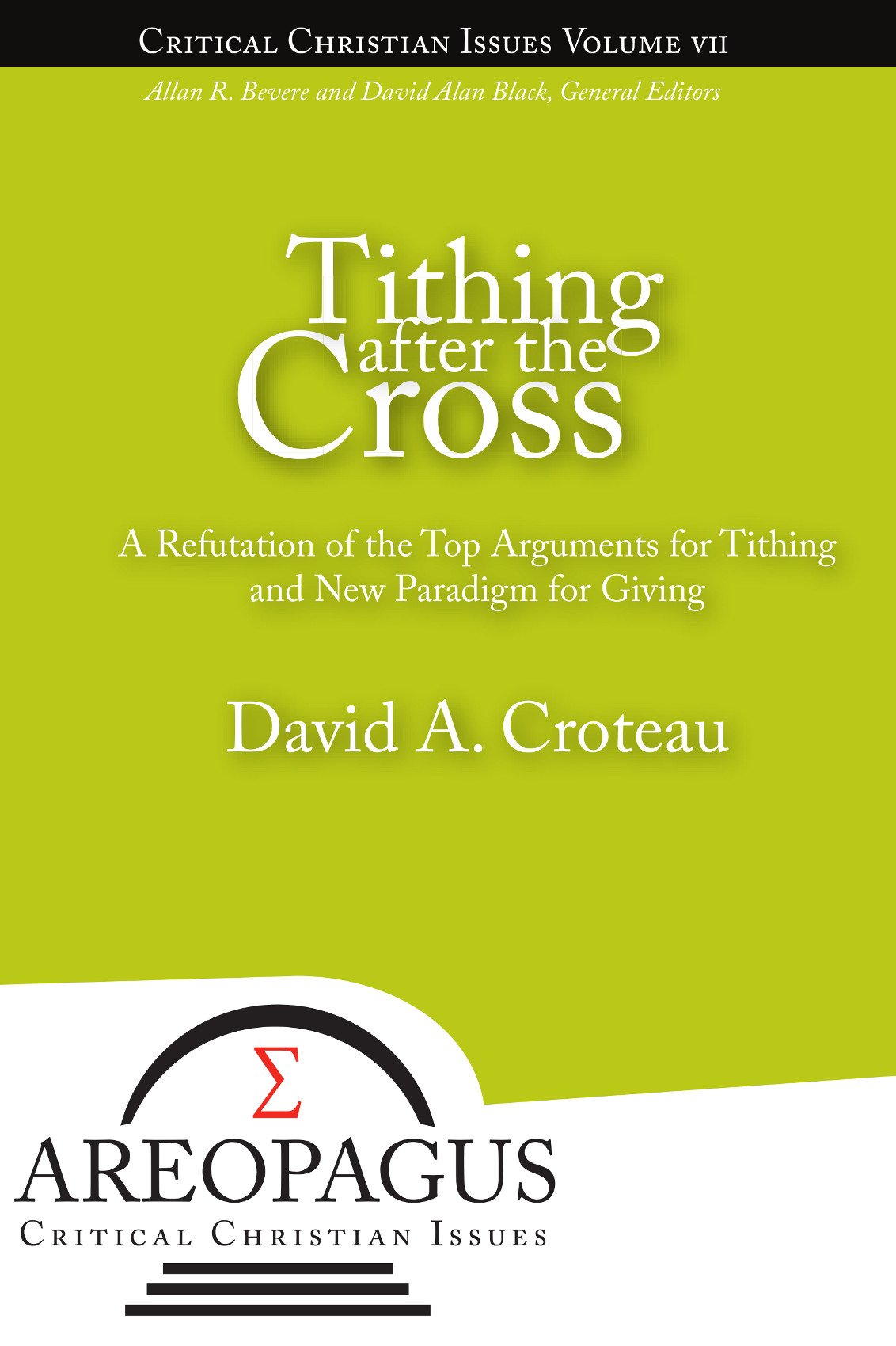
Recently I had the opportunity to publish a small book on tithing, titled Tithing after the Cross by David A. Croteau. He says boldly what I failed to say, and backs it up with a large amount of additional research. While he has written larger works, in this book he distils it into a short volume that anyone can read. Don’t worry! He didn’t “dumb it down.” He made a concise version.

 I want to keep everyone thinking about social justice. In my view, if more people become more aware about what is going on and take action, whatever action they believe is best, we’ll be better off. Discussing this and related issues can only help.