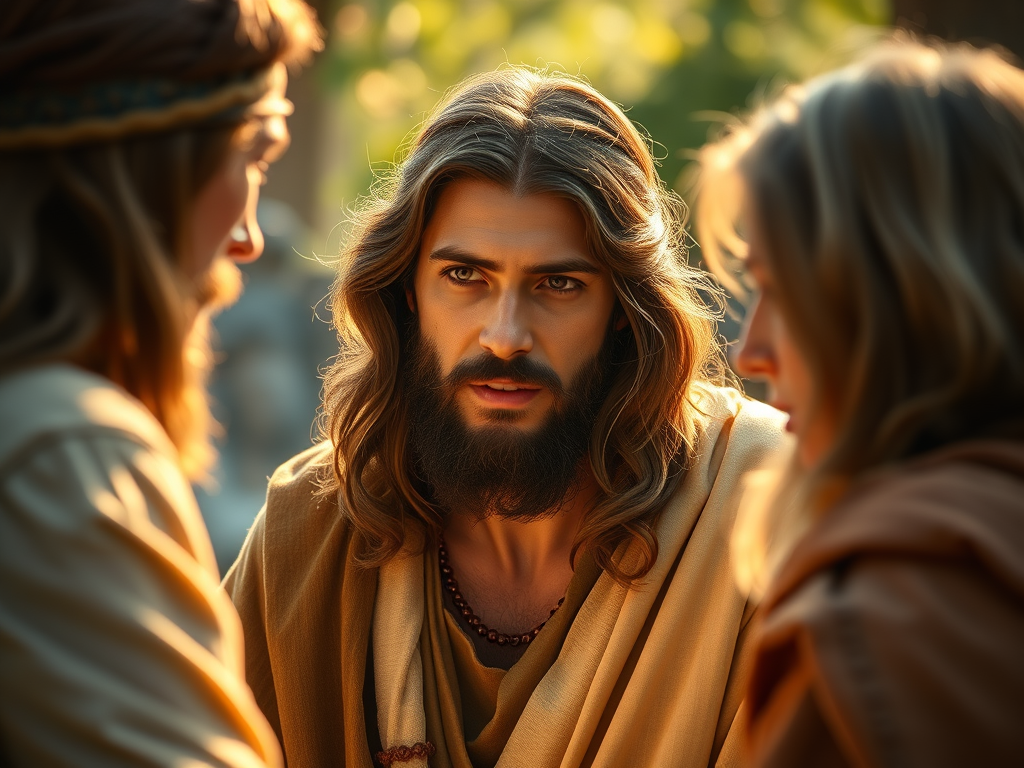
Threads from Henry's Web

Category: Bible Study

  • Psalm 78:5-7 – Generations

    Psalm 78:5-7 – Generations

    5 He established a decree in Jacob,
    and appointed a law in Israel,
    which he commanded our ancestors
    to teach their children;
    6 that the next generation might know them,
    the children yet unborn,
    and rise up and tell them to their children,
    7 so that they should set their hope in God,
    and not forget the works of God,
    but keep his commandments.

    Psalm 78:5-7 (NRSV)

    Jody has given me verses this week that relate to fatherhood. I’m not sure I’m up to the task of presenting a picture of good fatherhood, but I’m going to try.

    I’m not starting with one of the verses she provided, however. I won’t tell you what the final “verse,” better described as a task is, but I’m going to schedule that one to publish on Sunday morning. Today I want to introduce this series with a thought from my Sunday School class yesterday.

    We’re looking at what I call landmarks for Bible study, and the landmark today is the call of Abraham. The call of Abraham provides some interesting thoughts. In working with these landmarks, I point back to the one before, in this case the flood, and forward to the next, the exodus from Egypt. This provides us with parallels, similarities and differences, that help us understand the overall story.

    We sometimes take Bible stories in isolation. This come naturally, because we have an hour for Sunday School (or less), and each story can take up that much time and more. But there are patterns in the broader layout of scripture. In fact, it’s good to look at Bible books in the context in the canon, because the Bible as a collection is what we hold as the standard.

    Now here’s the pattern we observed. We have a perfect creation, and then the fall. Genesis 5 presents 10 generations, and then Genesis 6 tells us that everyone’s thoughts were only evil continually. Noah was found righteous, and chosen for salvation on the ark.

    Following this story we have 10 generations again in Genesis 11, and then in Genesis 12 we have Abram called. God doesn’t make any claims about how righteous Abram is. He just calls him, and Abram goes. But Joshua, in his farewell speech (Joshua 24:2) tells the Israelites that their ancestors, including Abram (or Abraham–Joshua uses the new name God gave him) “worshiped other gods.”

    What does this show us?

    First, please don’t spend time on debating the chronology. Let the story speak. Ten generations lead to a point where knowledge of the true God has almost disappeared.

    It’s worthwhile to consider the difference in God’s response in these two cases, Genesis 6 and Genesis 12. But what interests me here is the way the two genealogies emphasize the loss of the knowledge. This should have been transferred through the patriarchal line, father to son. This was the plan to maintain knowledge of God.

    It didn’t work.

    We observe this throughout the Bible story. The High Priest Eli’s sons were not like him, but were evil, and their father failed to change this (1 Samuel 2). Following this, even though Samuel himself had received a word from God (1 Samuel 3) regarding the situation, Samuel’s own sons did not follow in their father’s steps, but “took bribes and perverted justice” (1 Samuel 8:3).

    The pattern continues in the Kings of Judah. Israel has a fairly steady decline morally. Judah, on the other hand has good kings followed by bad kings. Manasseh, possibly the worst king of Judah, was the son of Hezekiah, possibly the best (2 Kings 21).

    Why doesn’t this work?

    We’re often told that all this was the result of a failure to discipline these children, to make them behave properly. If they had just trained them to strict enough standards, surely they wouldn’t have turned away later. If the patriarchs had just spent enough time making their heirs memorize the full history of their family line, they would surely not have failed.

    History is filled with “disciplined” children turning away from the ways their parents intended to teach them. Passing along ethics and good behavior can be a very difficult task. Indoctrination can fail very quickly when the child is presented with other ways of thinking. Many parents think that secular colleges rip away the faith they have so carefully inculcated in their children.

    In most cases, indoctrination will fall to the opportunity to think freely. More importantly, indoctrination won’t provide a framework for that thinking.

    My parents, when they were in their seventies, came to me and apologized. What for? They said that they had failed to present God’s grace to me in word and action. They regretted this aspect. They did not regret missed opportunities to indoctrinate me more. They regretted to presenting God’s grace to me.

    At the same time, I can testify that they got a number of things right. Most importantly, they lived and publicly testified to their faith.

    Now when I say “lived and publicly testified” I don’t mean that they read me Bible stories and expressed their belief in these stories, though the did that. What I mean is that they not only said they believed in prayer, but they prayed regularly. When I couldn’t find them after lunch, I knew they would be in their room, praying together, as they did three times per day.

    They told their own stories, often interesting stories of their lives, but they testified in these stories to God’s action. I knew that faith was important in their lives because that was how they lived.

    Now please don’t create a checklist of things you need to do to show by your life that your faith is important. That’s where God’s grace comes in. (Well, also before that and after that!) Look to your own experience with God, not to a set of checklist items that will convince others. If God is guiding you, it will be obvious, even in your imperfections.

    And if God is guiding you, if God is important to you, if you’re looking to God’s grace for yourself, it will be obvious to those who observe. Let others observe in you the continued story of God’s grace in action. Most importantly let the next generation observe it.

    And let this not just be about physical generations. Think spiritual generations. We need to be passing on our life’s experience to those younger in the faith or needing spiritual guidance. Too often experienced believers gather with others of similar history and inclination and don’t spend time with the less experienced.

    “Tell your children,” is the call.

    Who will you tell?

    (Featured image generated by Jetpack AI.)

  • 1 Peter 2:1-2 – Pure Milk

    1 Peter 2:1-2 – Pure Milk

    1 So putting aside all evil and every kind of deceit and hypocrisy and jealousy and all slander, 2 like newborn infants, long for the pure spiritual milk, so that you might grow into salvation.

    1 Peter 2:1-2 (my translation)

    This verse is sometimes contrasted with Hebrews 5:13 where the recipients of the letter are chided for not being mature, for needing milk rather than solid food. The two verses are talking about rather different things, however, and thus one should take each metaphor on its own terms, even though “milk” is involved in both.

    After seeing each separately, however, I think there are some lessons to be learned from bringing the two points together. So I’m going to look at that.

    First, the term translated “spiritual” is not usually translated that way, though in this particular verse a wide variety of translations render it as such. I wanted to find a different word, but after looking at it for a while, I couldn’t find a good alternative, and thus bowed to the majority. Perhaps translation committees have made similar searches.

    The word translated here as “spiritual” is also used in Romans 12:1, where it is rendered in a variety of other ways, generally centered around the idea of “acceptable” or “appropriate.” I would like to combine the ideas of “thoughtful,” “logically appropriate,” and “spiritual” into one word in order to translate it well for this context, but I don’t know any word that does that.

    The point of the verse, however, is clear if you look carefully at the context. The meaning of words is determined by the context. This should be a warning against the process of looking in a Greek lexicon or in Strong’s or another concordance keyed to Greek words, and then trying to force one of the definitions into the verse you’re reading.

    In this case, this “spiritual” milk is longed for and taken as nourishment when we put aside all the evil and deceit.

    This reminds me of a military aphorism: In war, most things are simple, but never easy.

    In our spiritual life, the answer can be rather simple, but it never easy.

    Let’s read that into this verse. If we could put away evil, deceit, hypocrisy, envy, and slander, we’d be able to get to that appropriate, acceptable, logical, and spiritual milk. And not only all those things, but pure!

    Now go ahead. Get rid of all of those things from your life.

    Unless you keep deceit–self-deceit–you’ll realize that may be simple, but definitely not easy. Or even possible.

    Yes, if we could just stop deceiving ourselves, we’d be able to get to that pure, nourishing milk. It’s a simple, and hard, as that.

    But Peter isn’t leaving us there. How are we going to get there? Peter, pretty good at messing things up himself, isn’t leaving you there. “If you have tasted that Christ is good” (v3), and if you’ve done that, Christ is going to the the cornerstone.

    There it is. The one and only way to get to this is through Christ. And this is why we have to go back to the basic and simple. One of my authors wrote that there was one way, and only one way to tell if a doctrine is a Christian doctrine, and that was whether it was centered in Christ.

    And that’s where we are right now. People often, with some validity, relate this to the study of scripture. When I identify errors in biblical interpretation, particularly my own, they usually come down to my desire for the text to say something other than what it does. Scripture is not that easy to understand, and the more we look at the big picture, the more difficult it gets. How do all these things fit together?

    It’s so easy to take my agenda, my desires, and put the pieces of the puzzle together in such a way that it pleases me. The deceit involves is most often self-deceit. Self-deceit will corrupt everything you try to understand.

    And that’s where we have to go back to the foundation, in Peter’s words, the cornerstone. Living cornerstone. The question is whether the interpretation you’re creating fits with that living cornerstone.

    Now a short note: I’m speaking hear ultimately about application. A historical understanding of a passage as it would have been heard by those who heard it first is important, and is generally achieved by good historical methodology. But how that applies to my life and the life of the church today requires greater discernment, and this passage provides the basis for this.

    Now let’s relate this to Hebrews 5:13, and the need for solid food. I think it’s a good idea to put the two things together. Getting the pure milk of the word, which results from keeping our eyes on The Living Cornerstone, is a critical foundation. It is also a foundation you can’t cover up as you go on to higher things. If you forget the basics, you’re not going anywhere good.

    At the same time, we are challenged to grow, to get to the solid food, to build up. One of my concerns with Christian education is that we tend to cycle and recycle the same material over and over again. We don’t behave as though we expect anyone to grow and to go on to more advanced material. We’re stuck on the basics.

    Often, we’re stuck on the basics because we aren’t getting the basics. Putting our eyes on Christ is basic, and if we aren’t getting that, more advanced things will tend to get scattered across the landscape. We get into vain arguments when we forget the basics.

    So rather than being contradictory to Hebrews 5:13, the concepts of 1 Peter 2:1-2 are foundational to it. They provide the only path there is to more solid food that doesn’t involve falling back into self-deceit.

    As you read, or meditate, or talk with your Lord today, keep this question in mind: Am I building on the Cornerstone? Is this a fit living stone to put into my structure?

    Let Christ be the center of every thought and act.

  • Romans 12:12 & 15:13 – Hope

    Romans 12:12 & 15:13 – Hope

    Rejoice in hope, stand your ground in the face of trouble, be devoted to prayer (Romans 12:12).
    May the God of hope fill you with all joy and peace as you trust in him, so that you might have abundant hope through the power of the Holy Spirit (Romans 15:13).

    Jody listed these two verses as a starting point for discussing hope. I’m tempted to wander for some time in the immediate context of these verses, but these posts are not supposed to be complete homilies.

    But my mind does wander a bit through various passages, and these reminded me of the end of 1 Corinthians 13, where we have the trio “faith, hope, and love” with the greatest being love. This greatest is not directly mentioned in either of the verses cited above, but you won’t have to look far in the context to find it.

    Now let me tell you that hope isn’t my greatest subject. I’m a realist. I like to know how things really are. I move forward by putting one foot ahead of another, and generally looking most closely at that next step. I’m good with what Jesus had to say, “Sufficient unto the day is the evil thereof!” (Matthew 6:34b). (Note that if you look at the context there, Jesus isn’t talking about hope or lack of hope, but rather about worrying, which he declares useless.)

    I, on the other hand, am very much convinced that every day has its full quota of annoyance. I’m much more likely to preach about duty than about hope. Why get up in the morning? Is it because things are going to be great and I’m going to enjoy them? No, it’s because that’s what I do. That’s what I should do.

    There’s a call here to realists, well, at least my version of realist. And that is to live in the light of hope. This hope comes in two different parts, at least.

    The first is simply the hope of eternity. This life, no matter what it brings, is temporary, and my life is eternal in Christ. That is great news. It is a hope that draws me forward from within the fog of my natural pessimism.

    But that hope seems very far away most of the time. There are mountaintop experiences when I can feel the grass of heaven’s feels under my feet and hands, and I can sense that glory, limited by my feeble vision. Those moments are good. But they are moments only.

    The other kind of hope is that God is with you now. You sense that in Romans 15:13, which speaks of a hope that brings joy as we believe. That this hope is present and not just future is emphasized in Romans 12:12, with three commands together. “Rejoice in hope, stand your ground in trouble, and be devoted to prayer.” Those are all present activities, not things we await in the kingdom.

    And the fact that we are to stand firm in trouble or tribulation suggests that rejoicing in hope is not limited to those times when we are on the mountaintop or otherwise feeling good. Rejoicing in hope is a daily activity that goes right along with the annoyances of daily life. We rejoice, we struggle, we pray, we stand firm. Hope is part of all of these things.

    Paul, we should remember, was no stranger to trouble. He was afflicted on a pretty regular basis. And yet he said to rejoice in hope. Now and in the future.

    Put some prayer and hope into the troubles of your day today!

    (Featured image generated by Jetpack AI.)

  • Matthew 18:1-5 – As Children

    Matthew 18:1-5 – As Children

    1 At that time the disciples approached Jesus and asked, “So who will be greatest in the kingdom of heaven?” 2 He called a child to him and put him in the middle of the group, 3 and said, “I tell you truly that if you don’t turn and become like children, you will not enter the kingdom of heaven. 4 So whoever humbles himself as this child, that is the one who is greatest in the kingdom of heaven. 5 And whoever receives such a child in my name receives me.

    Matthew 18:1-5 (my translation)

    My wife set an interesting task for me in suggesting this text. The reason? It challenges just about everything about the way we tend to think, the way we do church, and the way we do community. In general, we’d prefer not to be challenged in this way.

    A standard question, a good question, is just what aspects of being a child Jesus is pointing to here. Are we to be ignorant, inexperienced, demanding, perhaps a bit spoiled? Are we not to take responsibility for ourselves? I’ve heard every negative, or supposedly negative characteristic of children brought into the conversation.

    But there is a point of context that sets the boundaries. The disciples were looking at who was greatest. They wanted a hierarchy. They assumed there would be a hierarchy. They wanted the best spots in that hierarchy. They would be able to protect themselves by having the places of leadership. They could keep other people in line by use of their positions in the hierarchy.

    At this time the disciples expected Jesus to take over as king, so these positions would be those of political power. They would rule other people, always in Jesus’ name, of course, but taking care of themselves in the process. Everything would be on their side. And each of them wanted to be the one of them that was making the calls. That’s the place of control, the place you can protect yourself.

    And Jesus says to them to become like little children. It’s not what that little child’s behavior that Jesus wants them to imitate, though there are certainly good characteristics of a child-like approach to life. What Jesus is saying is to them is this: “You’re going to have to give up the power and the control to become part of the kingdom of heaven.”

    It’s not even that Jesus is standing at the gate of the kingdom blocking people from entering because they lack a list of characteristics of a child. The problem is that as long as you want the power, as long as you want the control, you really can’t fit into the kingdom of heaven.

    The kingdom of heaven is ruled by One who has absolute control and uses that on behalf of everyone. The glory of God is not that God is powerful. That is really glorious. We worship the power and the glory and we want that for ourselves. We admire it.

    But the One with all the power and the glory went to the cross, enduring all the agony and shame because for the One who is really glorious, the glory is all there for the good of everyone and everything. And if you want to be part of the kingdom you’re going to be losing all that control as well, giving it up for everyone around you.

    You will have to be powerless for all those who are powerless.

    Why? Because the only one who ever had it put that power to work for the benefit of the powerless.

    If you or I enter the kingdom we’ll realize that we actually were “as little children,” as those children would have been in the world of the first century, without their own choice or power. We’re going to receive others who are powerless as Jesus would have.

    And what’s more, we’re going to realize that we are powerless even to do all this, because all power comes from God in the first place. We can only become those little children, and we can only receive those little children through God’s grace working in us.

    God’s strength is manifested in weakness (2 Corinthians 12:9).

    So be weak today. Be dependent. Be helpless.

    Let God.

  • 1 Peter 1:24-25 – Endures

    1 Peter 1:24-25 – Endures

    So

    All flesh is like grass
    and all its glory like a flower in the field.
    The grass has withered and the flower has fallen,
    But the Word of our God lasts forever.

    Isaiah 40:6, 8


    This is the word which was proclaimed to you.

    1 Peter 1:24-25

    I’ve decided to change my way of selected texts for these meditations, but to continue writing meditations. First, I’m going to do these only Monday through Friday, with the option of skipping holidays. Second, Jody is going to send me passages she’d like me to comment on, and I’m going to meditate on those. Today’s passage is the second she’s sent me, after John 16:30-33 yesterday.

    I formatted the text today to show just how much of this passage is actually a quotation taken from Isaiah 40:6 & 8. There it serves as part of the powerful introduction to what is sometimes called 2nd Isaiah. Up to this time we’ve been largely thinking about Judah around the time of Hezekiah, with some passages earlier and some later. In Isaiah 40 we are suddenly transported to the time of the exile and given the proclamation that Judah will return and be restored. This is God’s plan.

    But one of the clearest messages of 2nd Isaiah is that this restoration is a work of God, and not an accomplishment of the people. People fail; God’s word endures and prevails. At a time when many of the people felt that God’s word had already failed, the message is proclaimed that God’s word is still powerful and will prevail.

    We often quote this passage about the Bible. Everything else is temporary, but the Bible will last. This is one of those things that makes us feel very holy, because we can point to a book and call it the word of God. Then we hold something eternal in our hands. You may be getting tense as I speak disparagingly of such a view.

    My intent here is not to minimize the value of the Bible, but rather to maximize the word of God. God’s word is not just the Bible. God’s word is what created everything. God’s word is what saves. God’s word is what acts from creation to new creation and even further, from eternity to eternity.

    At the time these words were written, the New Testament had not taken form. Many of the books, probably most, had been written, but they had not been collected, and were not regarded as part of scripture as we would see it today.

    This passage points to something else that is God’s word–the gospel message proclaimed to the recipients of this letter by which they had been converted. That message was that of a crucified and risen savior, and God’s Spirit empowering and giving life to the church.

    You see, I don’t believe that we elevate the word of God when we try to limit it to written scripture. What we generally intend is to provide a standard against which people can judge ideas, something solid, something widely accepted, something we can know is God speaking. Its good to have the written word in the role of a core standard.

    But all too often what we’re really doing is making sure that we have control of what the Word of God is doing. We want God’s word to be in our hands and under our control. People like me, who have studied the biblical languages can lord it over others by claiming to have a more accurate knowledge of God’s will due to our intellectual knowledge.

    But God’s word is superior to church laws, doctrinal statements, administrative manuals, sermons, and claims to superior knowledge. God’s word is actually eternal, and when people abuse God’s word, when they turn the form into an idol, and make their interpretations into idols, God’s word will still stand.

    It’s important that the events in view in the quoted passage come from the time of exile. You see, religious people had created a doctrine that gave them control over what God could do. They thought that Jerusalem and the temple could not be destroyed. If they were living near the temple, they would be safe.

    The idol of a human interpretation of the text took over from the word of God, in this case presented by Jeremiah. Jeremiah challenged this view in Jeremiah 7, particularly verse 4, but the entire chapter makes the point.

    Here in 1 Peter, we are being told that the gospel proclaimed was also God’s word, and that the gospel proclaimed was and is eternal.

    We like organizations, structures, and documents that settle what the Bible means. Many churches have a history of starting out with a simple statement that they believe the Bible, and then they add doctrinal statements. Why? Because people see different things in the Bible, so they have to specify just how you’re supposed to understand your Bible.

    Soon, verses are being judged against doctrinal statements and interpretations channeled into precise channels previously approved by the theologians.

    But just like the grass and flowers in the field perish, so will everything that is not, in fact, eternal.

    I want to encourage you to study the Bible, because there you will find God’s word. But spend your time primarily in going directly to scripture and not in letting others define you into a corner. There were good “scriptural” reasons not to accept Jesus as God’s son. Yet God’s word proclaimed him so. Read Hebrews 7 to see just how this works. In that chapter we see that Jesus, our High Priest, couldn’t be a priest according to the scripture of the time. Yet, Jesus became our High Priest, by which the author lets us know that God’s word stands forever, even if we have to change our understanding, our cherished understanding , in order to see what’s really going on.

    What in God’s word has become withered and fallen because you’re clinging to the idolatry of your own opinions?

    Let God move you past that dead ground and onto new, eternal ground.

  • John 16:29-33 – We Got This!

    John 16:29-33 – We Got This!

    29 His disciples said, “Now you’re speaking openly, and no longer using difficult sayings. 30 Now we know that you know everything, and there’s no need for anyone to question you. For this reason we believe that you came from God.” 31 Jesus answered, “So you believe now? 32 Take note that a time is coming, indeed has come, when you will be scattered each to his own place and I will be left alone. But I won’t be alone, because my Father is with me. 33 I have told you these things so you will have peace in me. In this world you will have hardships, but take heart! I have overcome the world.

    John 16:29-33 (my translation)

    In the warm up to this passage Jesus tells his disciples that a time is coming when he will no longer speak in “dark/obscure sayings,” but will speak clearly. Jesus states this as a future state, but the disciples quickly assume that they’ve made it, that everything is now clear. One of the characteristics that Jesus points forward to is this: They will be able to approach the Father on their own. Jesus doesn’t have to pray for them. They can pray, and the Father will listen.

    We often read the Bible as those looking down at the characters and judging them. We often speak negatively about the disciples. They are not ideal followers. We discuss why Jesus would have chosen such inauspicious looking people to take his message to the world.

    But if we look honestly around the room when we discuss such things, or look in the mirror, we should ask why Jesus would choose such inauspicious looking and sounding people as we are to take his message now. Because in every room where followers of Jesus are having fellowship, studying, or learning, there is a group of people whom God has chosen to carry the Divine message to the world. All the weaknesses of those original disciples and more are manifest.

    Yet we sometimes think, and even say, “We’ve got it.” We make the claim to such complete understanding that we don’t need to learn from anyone else. God is lucky to have such astute and able ambassadors to take the message out to the world.

    All of which collapses, all too commonly, on the first contact. We discover, suddenly, that we very definitely have not got it!

    Jesus knows this. Jesus is totally unsurprised. I imagine him looking at those disciples much as he looks at us. They think they’re ready, but I know they’re not. They’re in the world and they’re going to have tribulations, trials, troubles, hardships. They’re going to want to quit. They’re going to quit.

    But Jesus knows the answer to this as well. He’s not surprised that they think they understand, but he knows that there is something coming that will show that they don’t understand at all.

    Here’s a key: When you think you’ve totally got it, you don’t.

    The very fact that you think you have everything under control is a danger sign. I don’t care how good you are at what you do, and I am certain many of my readers are much better at navigating life in this world than I am, you will have a moment, or many moments, when you know you didn’t quite have it all.

    The disciples are prepared to go with Jesus the divine, Jesus the all-knowing, Jesus the conqueror, Jesus the one who will take care of everything. They are not prepared to go with Jesus the arrested, Jesus the accused, Jesus the tortured, Jesus the crucified. They really haven’t gotten the idea that any such things can happen.

    They’re seeing things “in the world,” from a worldly perspective. The solution to their problems come in worldly form. Jesus knows that with that vision, that limited, world-bound vision, they will not be able to face what’s coming. There will be tribulation and they will be scattered.

    “You will be scattered,” Jesus tells them, “and I will be alone.”

    Terror! Unimaginable things coming and Jesus will be alone!

    But no, that’s not how it is. Jesus has an answer. He will not be alone. Why? Because the Father will be with him. The Father he has just said loves these very disciples and will hear their prayers. The Father who is the ruler of the universe and knows everything.

    Jesus turns the “aloneness” back on the disciples. They will scatter and leave him alone. But where do they go? “Each to his own place.” The disciples will scatter and abandon Jesus, leaving him alone. But Jesus will not be alone, because the Father is with him. But the scattered disciples will each be alone.

    Isn’t it odd that Jesus tells the disciples that they will fail, and then tells them he said that so that they can have peace? How does prediction of failure point the way to peace?

    And here’s the core of the passage. “I have told you these things so that you will have peace in me.” Jesus is pointing the way to peace. It comes from two concepts: 1) In the world you have trouble, 2) In me you have peace.

    Our problem as Christians is that we live and think and solve (or not) problems in the world. Now there’s a sense, a very important sense in which we are in the world. A bit later (John 17:14-16), Jesus prays not that God would take his disciples out of the world, but that God would keep them from the evil one. This is where we get the saying that we are to be “in the world but not of the world.”

    That “in Christ” (“in me” in our passage, spoken by Jesus), is the key to the peace. Christ has overcome the world, and our task is to be “in Christ.” More accurately, our task is to put our faith in Christ and Christ will see to keeping us in him.

    This applies to all aspects of life. Whether I’m worrying about arranging an intractable schedule, paying bills, trying to work through issues of health, my peace is in Christ. That means knowing that I serve and am held by the one who has conquered the world.

    But it also applies to news of the world. I am here living that life in Christ. What is it that is controlling my thinking and my actions? Is it fear? Is it a resort to the weapons and methods of the world? I am reminded that while I am still in the world, my most important location and orientation is in Christ. That is where peace comes from. That is the only peace.

    I think one of the most important things we can learn from this passage is that it was spoken by Jesus with the knowledge that the disciples were going to think they got it, and that they were very definitely wrong. They were going to fail. Things were going to get very dark for them.

    The message of peace is not for the powerful, the perfect, those who are going to get everything right. It’s for the people who will realize that failure has come to them, but that God’s got it. They are in Christ. They can have peace with that realization.

    It may take some time as it did with the disciples. They did scatter. They did not have peace. Jesus died and was buried. Things were dark. They were alone.

    But then came that moment. He is risen! We are not alone. He is alive. We have peace in the only way we can.

    In Christ!

  • Psalm 23:6 – Pursued

    Psalm 23:6 – Pursued

    Surely goodness and lovingkindness will pursue me all the days of my life,
    and I will love in the LORD’s house forever.

    Well, this is the last verse of Psalm 23. It’s a bit shorter than Psalm 119!

    So which is better? A lot more people quote Psalm 23, and with good reason, but there is value both in something comprehensive and something compact and evocative. That’s why we have different kinds of literature in the Bible. It’s also why we all love different kinds of literature ourselves.

    So what is the impact of the ending of this Psalm? For me, it comes in the second half of the verse. I’ll live in God’s house forever. But I chose the first half to provide my title. I am pursued by God’s goodness and lovingkindness. It reminds me of Psalm 119:176. I may have gone astray like a lost sheep, but I cry out for God to seek me. When I do, I discover that God has been pursuing me all the time.

    Many times, the result of prayer is not a change in circumstances, but rather a change in perspective.

    After crying out to God in my trouble, I hear a voice that says, “Look the other way.” When I do, there God is. God has been there all the time. I can’t get away from God’s mercy and love.

    But the second half of the verse gives me another perspective. I’m going to live in God’s house forever. There are a number of view of this, each of which can help us understand God’s love for us.

    I’m going to look at three.

    First, we can think of this as the privilege of being in God’s presence in a place and time of worship. There is pleasure and comfort in being in God’s presence in such a place at such a time. Often this involves the enjoyment of our relationship to other people as well as our relationship to God. Conceive of a time of peace and joy and then think of that never ending.

    There’s a saying that we can’t live our lives in a spiritual retreat, and that we can’t stay forever on a spiritual high. Psalm 23:6 suggests that this is going to change down the road.

    Second, we can think of this eschatologically, meaning at the end. Yesterday, in writing about the heavenly banquet, I looked at some passages from Revelation. But if you look carefully you’ll see that Revelation is built with sanctuary imagery. In the Israelite temple you had a courtyard, then the holy place, and finally the most holy place, in which the ark of the covenant was kept. It represented God’s presence.

    That presence was separated from the people by that courtyard and earlier room, the holy place. Access was more limited the closer one got to the throne. But in Revelation, starting with chapter 4 and the command to John to “come up here,” we start to see sanctuary imagery all around, and the center of the action is around the throne of God, right in the Most Holy Place.

    Access was limited. Access will be unlimited. We will dwell in God’s house forever.

    But there is a third. If we jump just one verse to the next Psalm, we can learn what it is:

    To the LORD belongs the world and everything in it;
    The inhabited land and everyone living in it.
    For He established it upon the seas,
    Upon the streams he made it firm.

    Psalm 24:1-2, my translation

    You may think you have to wait, but God’s house is here now. You’re living in it. Your house is in God’s house. All your stuff? That’s God’s stuff. You? You’re God’s person.

    Now.

    What we all need is a change of perspective, a new understanding of what belongs to God. I frequently note what I believe is Jesus’ humor when he says, “Render to Caesar the things that are Caesar’s and to God the things that are God’s.” Just what is it that actually belongs to Caesar? There’s some practical advice for life in the saying, but there’s also a pointer to something greater.

    Just as you can turn, look, and find that God is already there seeking you, and was doing so before you called, so you can turn any direction, look, and see God’s house all around you. The change is in you. God was there all the time and will be there forever.

    You live in God’s house, because God owns all the houses and all the stuff.

    Live in God’s house today!

  • Psalm 23:5 – A Table

    Psalm 23:5 – A Table

    You prepare a table for me in front of my enemies;
    You anoint my head with oil;
    My cup is overflowing.

    The imagery of this verse is vigorous and encouraging. All the elements of being cared for by someone else at a meal or social occasion are presented.

    As is often the case, there are many directions one can go in meditating on a passage as rich as this one. For example, one might discuss the importance of all this blessing and care happening in sight of one’s enemies.

    But it occurred to me how this verse illustrates a great deal of scripture.

    At creation, God puts the human he has created in a garden, and in Genesis 2:16 lets him know that all this is prepared for food. The fellowship of God with people centers here not around a meal, but rather around the full supply of all humanities needs.

    Here’s a description from the book Take and Eat by TK Dunn:

    In Genesis 1 and 2, God made humanity in his image and likeness to be his regent over creation, exercising a delegated authority over the created order to ensure that each animal knew its place and had what it needed to survive. God had, in the garden, promised to provide sufficient food for all of creation, and Adam and Eve were told to enjoy it and “take and eat” of his bountiful supplies so that they would have the energy and ability to fulfil their work and tasks in the garden. No matter where they went, there were plants and trees with sufficient nutritiousness for their daily needs. God’s provision was more than enough: It was plentiful. And it was varied so that there would be different tastes, textures, and concoctions to delight the tastebuds and entice the senses. Eden was more than a sinless paradise; it was to be a chef ’s paradise. And God, as a smiling, doting, compassionate father,
    looking down at the creation he deemed “very good” said to Adam and Eve, “take and eat.”

    TK Dunn, Take and Eat, p. 61

    I picture this verse as describing the same sort of relationship between God and humanity, and the same sort of care, comfort, and security.

    Of course, Genesis 2 is followed by Genesis 3, and people find themselves less aware of God’s presence and more seriously impacted by the hardships of life.

    This is one reason I deeply appreciate the sacrament of Holy Communion. In it we are reminded that God is the provider and invites us to partake with him in this meal. It points backward to what we were.

    It also points forward to what we will be.

    Revelation 20 introduces us to the Marriage Supper of the Lamb. We come from a time when we had close fellowship with God in a garden, and we are heading toward a feast.

    You may be wondering about the tie-in to the garden, but just as in the Garden of Eden there was a tree of life so Revelation 22 introduces us to the new Tree of Life.

    In the meantime, we serve a God who prepares a table and offers fellowship.

    Keep looking up today!

  • Psalm 23:4 – With Me

    Psalm 23:4 – With Me

    Even though I’m walking in a deadly dark valley
    I will fear no evil, for you are with me.
    Your scepter and your staff give me comfort.

    The words are few, but the message is deep. Even with God guiding us, we will find ourselves going through times of trouble and darkness. We will be in places where we will wonder what happens next. Journeying with God is not a constant triumphal parade in which everything that happens to us appears and feels glorious.

    God’s scepter and staff (rod and staff – KJV), meaning is authority and his support and presence give us the ability to live through the times of deep darkness and the fear of the shadow of death. God is there.

    This is a message (I think the message) in the book of Job. When God appears, 38 chapters in, God provides no answers to Job’s questions. God dismisses everything from the third through the 37th chapter.

    “Who is this that darkens counsel by words without knowledge?” God asks Job. Then he proceeds to ask Job questions. When the speech is done, Job responds,

    I had heard of you by the hearing of the ear,
    but now my eye sees you;
    therefore I despise myself,
    and repent in dust and ashes.

    Job 42:5-6 (NRSV)

    But even there, God changes the tune as he tells Job’s friends that they have not spoken of him in the right way, as his servant Job has done.

    It’s knowing that God is there that satisfies Job.

    In that deep valley, we can know that God, who, through Christ, is acquainted with our every trial and weakness (Hebrews 2:10-11 & 4:14-16). Like Job, we will try to find reassurance that God is actually hearing us and aware of our situation, but we have the assurance.

    I like the description of God, originated by process philosopher Alfred North Whitehead, as the “fellow-sufferer who understands.” There’s some more to this view of God, however. Let me quote Bruce Epperly, author of the book Messy Incarnation, which I publish:

    God is the fellow sufferer who understands and the joyful heart who celebrates. God cries along with the Bethlehem mothers, mourning the slaughter of their children. God experiences the hopelessness of parents separated from their children to fulfill the campaign promises of a self-interested political leader. God feels the terror of a child running for his life in a war-torn land and the panic of an adult on the streets of Minneapolis, Minnesota, crying for mercy, “I can’t breathe.” God places you on God’s knees in prayerful embracing. God never places God’s knee on your spiritual neck!

    Bruce Epperly, Messy Incarnation, p. 37

    I would like to emphasize here that God suffers with all sufferers, not just those we manage to care about. God loves the world and feels the pain brought about by evil. God’s caring is not limited and conditional as ours so often is.

    Yes, God can even care for me,. one who so often forgets, fails to recognize, and lives as though caring was optional and occasional. Even while writing this, there was a call to care, and it annoyed me. I acted, but not with grace. Yet God still cares and walks with me.

    Who is God calling you to care more for today?

  • Psalm 23:3 – Back to Life

    Psalm 23:3 – Back to Life

    He revives me.
    He leads me in the right paths,
    for his name’s sake.

    I would like to frame this verse between two others.

    So the LORD God formed the human of dust from the ground, and breathed into his nostrils the breath of life, and the human became a living being.

    Genesis 2:7, my translation

    And …

    You hide your face and they are confounded.
    You take back their breath and they perish,
    and the return to their dust.
    You send out your breath [spirit] and they are created,
    and you renew the face of the ground.

    Psalm 104:28,29, my translation

    There are some words that are very much parallel here, and some that are slightly different. Let’s start with what the human became: A living being. In Hebrew, loosely transliterated, nephesh chayyah. This word nephesh is what is to be renewed or revived in Psalm 23:3.

    The word for “breath,” or wind or spirit is neshama in Genesis 2:7, but ruach in Psalm 104. This word harks back to Genesis 1:2, where the ruach of God is blowing over the waters as the starting point of creation.

    In Ezekiel 37, that ruach is called upon many times, and invited to come in and revive the dry bones (see especially 37:9). This is, of course, a great revival.

    Further, in Psalm 104, the word for “they are created” is bara’, the key word for God’s creation throughout Genesis 1.

    Now I’m not claiming that the Psalmist is quoting or alluding to any of these other passages. But these words would bring certain thoughts to someone who is well acquainted with Hebrew scripture.

    In “he revives (or restores) my soul,” or just “he revives me” God’s creative and sustaining power is invoked. The shepherd is the creator of the universe. The creator of the universe is involved in the details of life, and cares about you.

    Then you are led in established paths. The word suggests tracks or even ruts produced on a wagon trail, a path that is well traveled. He does this for his own sake.

    Now I could say, “not for yours,” but in a very real way, when it’s for God’s sake it is for yours, because as your creator God, a good craftsman, cares about the entire creation, including you. God’s direct involvement is all through Scripture.

    Where is God guiding you today?