Threads from Henry's Web

Category: Bible Passages

  • Psalm 119:19 – An Alien

    Psalm 119:19 – An Alien

    An alien am I on the earth.
    Don’t hide your commands from me.

    I frequently teach that there are two elements to the Christian life: Identity and Mission. It’s easy to go off the rails on the side of identity, trying to separate ourselves from the crowd. On the other hand, we can become so much a part of the world around us that nobody knows the difference.

    You can’t influence the culture if you are the culture.

    The Bible story is filled with the stories of those who are aliens in the world in which they live. It’s a critical metaphor of scripture. Much of the laws in the Pentateuch (Torah) are designed to help provide an identify for Israel, something that would show other nations what it meant to be the LORD’s people.

    This alien-ness was to be embraced. Assimilation was not the goal. As the song says, “This world is not my home, I’m just a-passing through.” One of the intentions of laws concerning good treatment of aliens among the Israelites was to reinforce this sense of being alien.

    But the aliens are here for a reason. They are here to serve others and to reflect the One they ultimately serve. Thus we have the second half of the verse.

    I might put it this way. “Lord, I’m yours, and that makes me an alien wherever I am. That’s my identity. I also have a mission. Don’t hide your commands from me. Let me follow the call of that identity.”

    Are you too assimilated to the culture to remember your identity? Are you too alien to be able to perform your mission? Pray that the Lord makes your way clear.

    (Featured image generated by Jetpack AI. It represents the draw of, and also the alienation from, various cultural forces.)

  • Psalm 119:18

    Psalm 119:18

    Open my eyes and I will see
    Wonderful things from your Torah.

    In my infographic on Seven Barriers to Hearing the Word the third barrier is making your Bible study a scholarly, rather than a spiritual pursuit.

    Now let me be clear that I’m not against scholarship. Reading biblical languages and understanding various scholarly areas of study that relate to Bible study are quite valuable. But as a believer, I take a further step. I am looking for God. Not just theology, but relationship. Not just knowledge but understanding and even friendship.

    The Psalmist knows that there is more to be learned in God’s law (here he uses the word Torah), than just knowing the definitions of words, lists of commands, and proper rituals. There is a deeper meaning to be found, and when you’ve found that, there is one even deeper.

    Keep at it, and you’ll realize you’ll never be finished. There’s always something more. Spirituality is not a matter of attainment, but of continued pilgrimage.

    How will you make yourself available to see new, wonderful things?

  • Psalm 119:17 – Order of Operations

    Psalm 119:17 – Order of Operations

    Deal fully with your servant,
    So I may live and keep your word.

    There are numerous translation questions, including differences of opinion about precisely what the word I translate “deal fully with” actually means in this context.

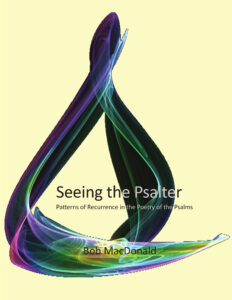
    Another good option is what Bob MacDonald does in Seeing the Psalter:

    Grow your servant
    I will live and keep your word.

    Bob MacDonald, Seeing the Psalter, p. 381

    Again, let me remind you that I’m writing meditations, not expositions on these passages. There are many things one could get from a verse like this, especially considering the larger work that contains it.

    There’s an order of events in scripture that’s important to keep in mind, and it’s reflected in this verse. God grows, completes, matures, blesses, and the result is both life in the physical sense, and a good life, both produced by this initial action of God.

    It is often thought that Hebrew scriptures focus on human action, in which people keep rules, and God’s blessing follows. And there is a natural order that says that living in certain ways results in blessing. The world in which we live works that way. But Hebrew scriptures emphasize the power and action of God, prior to human action.

    “In the beginning God …” and then when there is a world and a garden, people are invited to live within certain parameters. I would suggest that the tree of the knowledge of good and evil represents the ever available option of take the suboptimal path. The fruit metaphorically represents that option. But God’s gift of the whole creation, of the garden, and of life precedes the limitation.

    At Sinai, God comes on the scene as the deliverer from bondage before becoming also the lawgiver.

    Gift comes before requirement; grace before law.

    Are you remembering that gift?

    (Featured image generated by Jetpack AI.)

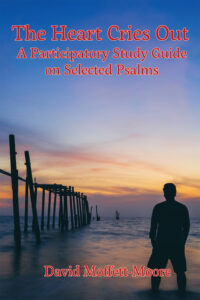
  • Book Extract: The Heart Cries Out on Psalm 119

    Book Extract: The Heart Cries Out on Psalm 119

    Book Extract: The Heart Cries Out on Psalm 119

    Psalm 119 is easily the longest psalm in the Bible, at 176 verses. It is composed as an acrostic, with a stanza of eight verses for each of the twenty-two letters of the Hebrew alphabet. It is a meditation and a teaching on the Law of God as the way of life.

    We tend to think of laws as lists of “thou shalt nots,” defining and confining our liberties. Here are things we are not supposed to do, and if we do them, there will be consequences we don’t like. We get speeding tickets and arrest warrants. A list of 176 things we are not to do seems extreme!

    Augustine said “Love God and do as you will.” The oath of Hippocrates was “Do no harm.” Jesus summarized the law and the prophets with two rules: love God and love your neighbor. These seem simpler and more positive. But it is not the purpose of Psalm 119 to beat us up with rules and regulations. Instead, it is a devotional reflection praising God for the life-giving gift of the divine law. It is even affectionate in its approach. It extols God for the gift of the law and encourages us to live by this law. Several different words are used to describe the law, signifying the intimate and dynamic relationship the author has with it. The law of God is the yearning, longing, desiring of God for us; it is how God expresses God’s love and desire for us. This may be summarized by the words of verse 105, often set to music, “Thy word is a lamp unto my feet and a light upon my path.”

    David Moffett-Moore, The Heart Cries Out, 47

    (Featured image generated by Jetpack AI.)

  • Psalm 119:16 – Ways to Forget

    Psalm 119:16 – Ways to Forget

    In your statutes I delight.
    I will not forget your word.

    If this were not poetry, I might be tempted to talk about the rather optimistic promise of not forgetting God’s word. But then I remember how many times I have said, “I’m not going to forget that” in reference to some planned task or another. Most of the time I forget, but if I never make a conscious effort to remember, forgetting becomes 100%.

    So I got to thinking about different ways to forget God’s word.

    Having memorized large portions of it (not voluntarily) when I was younger, I could say that forgetting God’s word was like forgetting the words I had memorized. That would be literally forgetting, and I have certainly done plenty of that.

    But let’s consider some other ways of forgetting:

    • We can forget the creator when we look at creation.
    • We can forget to consult God’s word when it is applicable to our decision making
    • We can forget that God’s word comes in many ways, and that God’s truth is always applicable, however delivered!
    • We can forget God’s promises
    • We can forget what God has done in our lives in the past
    • We can forget the history of God’s actions in our families.

    How do you forget? Is it time to revive a memory?

  • Psalm 119:15: Looking at God’s Ways

    Psalm 119:15: Looking at God’s Ways

    On your precepts will I meditate;
    I will look at your ways.

    There’s a big difference between meditation and biblical exegesis. I tend to use exegesis to refer to extracting the meaning from a text in the narrow sense of what a particular author meant by a particular statement or passage. Hermeneutics generally refers to the broader process of interpreting and applying scripture. This usage is not universal; frequently you will hear hermeneutics and exegesis used interchangeably.

    But meditation lacks these narrow boundaries. As I read these verses, one per day, while I do some of the work of exegesis, such as looking at the words in a good lexicon and checking other uses and reading the context of that particular verse, I really am letting my mind roam through scripture and experience and also asking what the passage suggests to me. I think poetry is particularly well attuned to this kind of thinking, and Psalm 119 even more than most. The author draws in words for God’s instruction that direct us to think of the law/instruction in the broadest possible sense. It is the entire Word that God has for us that is brought into view through the vocabulary.

    The root word for “precepts” used here goes back to a root word that is often translated “visit.” A visit can be many things. It can be a time of inspection, a time of reward, a time of fellowship and relationship, or a time of judgment. Now it’s not a good idea to determine the meaning of a word by its etymology, i.e., the forms from which it is derived. I’ve already commented on how the use of the various “law” words in Psalm 119 tend to direct us away from being too specific on a single concept. (Bob MacDonald’s post on this Psalm features consistent translations of the terms so that you can see them scattered through the Psalm.)

    But in this case, whether it’s a good idea or not, the etymology of the word for “precepts” led me to think of visiting and relationship (good and bad!), and God in action, rather than as a static lawgiver. After all, the God who said, “I am YHWH your God who brought you up out of the land of Egypt …” (Exodus 20:2) is a God of relationships and actions, with creative and saving/restoring acts featured.

    As we go through the time of advent, symbolizing in our worship the wait for God to be with us as Immanuel, we can certainly relate to this thought. The God who becomes incarnate in a manger is a God of action, of relationship.

    I tend to fellow loosely joined trails in my thinking, and I followed this by focusing on the second half of the verse, looking at God’s ways/actions/behavior. There are many ways to do this. We often approach scripture to discover correct doctrine. There’s nothing wrong with that, but that’s not the whole story. I like to look at scripture for the stories of God’s interaction with people into which we fit these various theological propositions.

    For example, another part of my reading today was from 1 Corinthians, in which we have Paul making a huge number of statements that are turned into theological propositions, sometimes in contradiction to the story that surrounds them. Speaking of the stories of scripture after evoking incidents from the Exodus, Paul says, “These things were written to admonish us” (1 Corinthians 10:11). He has just referenced a number of stories.

    Thus, I’d add to trying to understand to propositions of scripture a need to understand the stories. I think as we understand those stories, we will often find that we’ve been looking at propositions from entirely the wrong perspective. (A favorite example of this comes from 1 Corinthians 14, and worship that is “decent and in order.” I’ve heard this quoted to criticize a pastor for deviating from the bulletin!)

    But there’s another layer or more to go. How about the way in which scripture was composed. There are hints all through scripture of various sources that have been brought together, including the frequently referenced “chronicles of the kings of Israel and Judah” cited as sources in 1 & 2 Kings. Interesting that God provides inspired scripture through someone compiling material from official court chronicles and providing commentary.

    Then there’s the natural world. Some make great efforts to assure us that special revelation, written scripture, is the more reliable source. Nature, they say, is too easily misinterpreted. Sometimes they even attempt to force the natural world to match their interpretation of scripture.

    But the natural world is a direct product of God’s word just as is the written word. I don’t want to detract from the written word, but I think we need to elevate what can be learned from God’s creative activity. The physicist studies some of the most direct products of the mind of God. Or so I suspect!

    I’ve wandered far away from what is explicitly stated in the text of the verse. But in the spirit of this Psalm, I think the author might have understood my thinking, should he have had an opportunity, or at least the spirit behind it.

    Where does thinking about God’s ways lead you?

  • Psalm 119:14 – I Have to Be Joyful Too?

    Psalm 119:14 – I Have to Be Joyful Too?

    In the way of your testimonies I rejoice
    As over great wealth.

    Teachers and preachers often say that Jesus, in the Sermon on the Mount, was moving the law inside and making it of the heart. And that is certainly a theme of that sermon.

    But the fact is that the heart was always the object of the law. We are the ones who tend to look at the statutes, the regulations in modern terms, as the point of the law. It’s a simple path. We look at the law, and we do what we can to do what it says to do. So the point becomes the list of regulations for our lives. Aren’t these regulations wonderful? Shouldn’t we be happy about them?

    Isn’t that what this Psalm is about?

    Let me quote my friend and Energion author Bob MacDonald in the series he has just started on Psalm 119:

    Overall, Psalm 119 is a restful adoration of God and God’s promises.

    Have you thought of it like that?

    I commend his series to you, especially if you are musical. He does studies of the music of the Bible. There is great value in looking at these passages from different perspectives. I try to read a number of these as I meditate on the passage.

    “Restful” and “joy” both represent something internal, a response to the law (remember Torah/instruction), and not an external assent.

    And the Psalmist rejoices.

    I want to quote another one of my Energion authors, Deborah Roeger, author of The Power of Obedience:

    Before we conclude this lesson, we have some personal work to do. We have established that as God’s covenant people we are tailor-made by Him to live by His wisdom not our own! If we would lay down our right to live life on our terms – if we would turn to Him in submission, letting Him rule and reign as the perfect Creator and Lord of life in every aspect of our life – we would then joyfully know by experience what it means to know Him. If there is any area of your life that you have been holding back from Him, would you be willing right now to drop to your knees, bow your heart and your head before Him in complete surrender? Life will never be the same! And praise God for that!

    Deborah L. Roeger, The Power of Obedience, 43.

    This is a conclusion to an extensive lesson, but just on that one paragraph, do you think the Psalmist might well agree?

    (Featured image generated by Jetpack AI.)

  • Psalm 119:13 – Speaking It

    Psalm 119:13 – Speaking It

    With my lips I have recounted
    All the judgments from your mouth.

    We tend to talk, and also write a great deal about speaking. On social media, people take note of the things you don’t speak out about, and consider you apathetic for your apparent silence. On the other hand, there are those who are just waiting for one wrong word so that they can condemn you.

    I has been said that when all is said and done, a great deal more is said than done. This often comes from the one sanctimoniously declaring superiority and completely ignoring the fact that he (or she) is speaking and not doing.

    My first thought about this passage was to emphasize the importance of saying well-selected things, of being willing to be known for what you believe. That would have turned into a tangled post as I would also want to discuss all the good reasons for choosing what you would spend time talking about.

    But for me the more important lesson of this passage was simply how do I source the things I say. Where do these come from? How careful am I in hearing, studying, and applying the things I believe God said?

    This could come down to deciding when to speak and when not to, considering “a time for silence and a time for speech” (Ecclesiastes 3:7). The psalmist intends to declare the judgments that God has spoken. God’s judgments are spoken not only with accuracy but with perfect timing.

    When do you and I speak? Do we consider the “truth” of the time, the timeliness, as well as the factual truth of what we say?

    Let’s conclude with the words of another writer of Hebrew scripture:

    The Lord YHWH has given me the tongue of the learned,
    To speak timely encouragement to one who is weary.

    Isaiah 50:4 (REB)

    Are our words both timely and truthful?

    (Featured image generated by Jetpack AI.)

  • The Importance of Things Left Out

    The Importance of Things Left Out

    As I was listening to 1 Samuel today while walking on my treadmill I was reminded of a comment my mother once made on the story.

    We learn about Hannah and her desire for a son, and her sadness that she was barren. Her husband, Elkanah, somewhat full of himself, wonders why she’s crying and miserable. “Am I not more to you than ten sons?” he asks (1 Samuel 1:8).

    I remember my mother commenting that this missed the point, in fact, it missed all the points. It didn’t deal with a woman’s desire for a child, or the prestige of having sons in that time, or the shame of barrenness, which many would see as a curse of God.

    The writer emphasizes this in a way we are not always aware of in English storytelling: “After they had finished eating …” continues verse 9.

    Hannah’s opinion is expressed in a very meaningful silence.

    Be aware of the silences of scripture!

  • Psalm 119:12 – Teach Me

    Psalm 119:12 – Teach Me

    Blessed are you LORD.
    Teach me your statutes.

    Mark Twain said, “Good decisions come from experience. Experience comes from making bad decisions.” Or something like that. I’ve found a number of variations, all attributed to Twain.

    The prayer, “Teach me!” is one that is pretty much guaranteed an answer, positive at least in the sense that learning will take place. The psalmist asks the Lord to teach him.

    It’s a bit of a dangerous request, looked at from one direction, but then from another, you might as well pray this pray, because God’s gonna get you in any case! The universe can be an unforgiving place, and most of us have some pretty clear places where experience came from bad decisions.

    This is where I like to note that the entire created world informs us of its creator. The person who studies quantum physics studies God no less than the person who meditates on theology. Perhaps even more.

    One big reason to be thankful for Torah in the broad sense–God’s instruction–is that it is evidence of God’s care, a gift that teaches.

    And boy do we ever need that!

    (Featured image generated by Jetpack AI.)