And I will keep your instruction (Torah) continually forever and ever.
For another sense of Hebrew parallelism, note the short 2nd line here, “forever and ever.” This is parallel with “continually” and suggests a combined “all the time for all time.”
If we hadn’t just read a number of verses in which the Psalmist expresses dependence on and trust in God, this would sound somewhat boastful. As it is, I read it as an expression of determination. Now determination is not, in itself sufficient, but there is nothing wrong with it when combined with the other expressions of the Psalm.
Here we again encounter the Hebrew word Torah, expressing God’s instruction. Again, I’m reminded of the variety which is contained in Torah, when that is interpreted as the first five books of the Bible, a variety which is only increased if we see God’s instruction extending past those books. In just those books we encounter poetry, genealogy, stories of divine action, stories of human action, human faults and failings, divine interventions, moral laws, ritual laws, teaching about government, prophecy (in the predictive sense as well), visions, dreams, conversations with God, and case law. And I have doubtless missed something.
I think as Christians we should think of how we should apply this. What is it that we are to do continually? I’d suggest that a great deal can be learned from Torah understood as the first five books of the Bible. But for us, the actions and words of Jesus are also instruction. Just as Torah goes way beyond a list of regulations, as important as those are, so Jesus goes for us well beyond a set of teachings.
I think a critical question for Christians today is this: Can we live according to the teachings of Jesus? Continually? Forever?
Perhaps we need to make a determination, as did the Psalmist. And don’t forget to put your trust in God for the fulfillment of that determination!
Never take the word of truth from my mouth for I place my hope in your judgments.
Tomorrow morning I’ll be leading a discussion of John Wesley in my Sunday School class. The notes in the book we’re using point especially to Wesley’s view of prevenient grace and to Christian perfection. It’s interesting to take these two points together as the key to Wesley’s teaching.
The first deals with God’s action before we ever turn toward him. In a sense, you can think of prevenient grace as God’s call to us. It is important to remember that it is an act of God that takes place before we take any action, including taking any thought.
The second deals with God’s action after we have received prevenient grace. It is the work of God in us to lead us toward and prepare us for his glory.
There is a key point here that is often missed, and that is that both of these, not just prevenient grace but sanctification, are entirely works of God. I find myself in disagreement with Wesley when he suggests that one might become wholly sanctified in this lifetime. But it is wrong to suggest that Wesley believed a human being might attain sanctification. Were a person to become wholly sanctified, that would be a work of God.
One of the interesting things about humans is our ability to hear part of a message. Sometimes there is a genuine misunderstanding. But there is also the possibility, even the likelihood, that we will hear the things that fit in with our existing perception.
I remember once hearing a sermon which, in my view, strongly took a certain point of view. I heard this at the early service, and was teaching a Sunday School class immediately afterward. The members of the class were discussing the sermon and concluding something that the preacher had explicitly stated was wrong. In fact, most of the sermon was intended to say that was wrong.
I went through a 10 minute explanation of what I had heard, following which one of the class members said, “Yes, precisely, he said …” and repeated the misunderstanding.
This led me to wonder whether I had heard the sermon correctly. I had a chance to chat with the pastor during the week and I asked him. He affirmed what I had heard in the first place. Then he said, “You know, sometimes I wonder why I bother.”
Now this is not about my great hearing. Rather, I was quite inclined to hear the message the pastor was presenting, while most members of the class preferred something else. Then they heard something else.
We do that with scripture. This first, for example, is a balance of asking for God’s grace and favor while also pointing to ones own action. “I’m hoping real hard for this, like I ought to. Make it work!” It’s a very human prayer.
But the easy thing to do with a great deal of Hebrew scripture is to hear what we expect to hear. We’ve been told this is all about rule keeping and our personal diligence in doing what God wants. As Christians, we look back at benighted writers of Hebrew scripture as not knowing about grace. But the writers of Hebrew scripture were well aware of God’s action and of the need for God’s action.
We can come to Psalm 119 as a drumbeat of legal requirements and a super-pious, self-righteous expression of the wonder of all these rules. But that’s a bias of our superficial thinking.
We generally like rules. We like to congratulate ourselves for obeying them. We like to feel powerful and express our personal sovereignty by disobeying them. We like to be in control of what we do about them. So we tend to read that into religious texts.
But the Psalmist is very human individual looking with awe, hope, and wonder at a Creator God. He knows it’s God’s action, God’s life in him. I commend Psalm 104 as an indication of human dependence of God as understood in Hebrew scripture.
Similarly, modern followers of John Wesley often take the doctrine of sanctification and treat it as a potential accomplishment of each person, and the attainment of it (supposedly) as a badge of honor and greatness. Getting into heaven is up to God, but being a good, church-going pillar of the community is an individual accomplishment.
That’s false. The dependence on God starts not at birth, but at the first movement of the first subatomic particle that makes up part of your body. With the Psalmist, we put our hope in God and ask that God takes us to these places.
Now I can return my taunter a word, For I trust in your word.
The lesson here is both simple and profound. Some of my background thoughts on it are in my post on Psalm 119:38.
In Hebrew poetry, making a thought parallel by using synonyms is common, as for example in Psalm 119:30, “I have chosen faithfulness as my path. / I’m in place with your judgments. God’s faithfulness and judgments are placed in parallel in the verse. These words are not full synonyms, but they have overlapping semantic ranges, and combine to point us to some of God’s acts, and two aspects of them. Words may also be antonyms, providing a contrast or a more complete picture (what it is, what is opposed to it, or what it is and what it is not).
This verse stands out because the same Hebrew word for “word” is used in both halves. To paraphrase: “I have a word in response to taunts, because my word comes from your word.”
Let me point out a New Testament parallel to this thought. In the temptations of Jesus (Matthew 4:1-11, Mark 1:12-13, Luke 4:1-13) we find Jesus needing a word to respond to a taunter, in this case the taunter. Where does the response come from? From God’s word.
Don’t limit this to quoting scripture. Filling your mind with scripture is good. But filling your mind with truth in all ways at all times is even better. Let your normal life parallel scripture. One thing I noted when studying other ancient near eastern literature as compared to the Bible was the fact that the Bible is perfectly willing to be critical of those in power. There’s no whitewash of God’s friends. They’re presented as they are.
I was struck by this while listening to 2 Kings 15 in Audible the line in verse 5, “David did what was right in the sight of the LORD, and did not turn aside from anything that he commanded him all the days of his life, except in the matter of Uriah the Hittite.” This is stated in the middle of a passage comparing the disobedience of King Abijam. That’s being honest about those in power, even when it would be more convenient to omit some things.
How can you honestly reflect God’s word to others?
(Featured image from Adobe Stock by Munali. Licensed. Not public domain.)
Let your grace (chesed) come to me; Rescue me according to your word.
I’m sure you can see where the “grace” and “rescue” come from in my title, but what is this matter of “response”?
We’ve already talked about grace and rescue, and will do so again before I’m finished with these verse-by-verse meditations. But what struck me today about this verse is its place in the Psalm and the nature of this Psalm as a whole.
I’ve now written 40 of these meditations, 41 when this one is completed. That represents five sections out of an eventual 22. Each section contains eight verses, and all of those verses begin with the same letter of the Hebrew alphabet.
English readers often get the feeling that Hebrew poetry is unstructured or undeveloped. This is because it is difficult to translate poetry from one language to another. It’s even more difficult when the idea of poetry in the two languages differ.
Unlike English, rhyme is not common in Hebrew poetry, though both alliteration and rhyme occur occasionally. The key to Hebrew poetry is a parallelism of ideas and rhythm. The rhythm is next to impossible to translated, though some fairly credible efforts have been made by people with the right skills. Those skills are sadly not mine.
Psalm 119, however, adds a structure in with these 176 couplets, divided as they are into sections and arranged according to the alphabet. Why do you do a thing like this?
The answer, at its root is simple, I think. The psalmist is overwhelmed by the God of Israel who has provided a self-revelation, pointed to glory through laws, signs, and presence, and who leads toward glory.
Most of us have ways in which we react to things that impress us. When that is favorable, we have ways of expressing that praise. This is not merely a religious thing. The psalmist is looking at a body of stories and laws that make up Israel’s Torah. Others might be looking at mountains, or beautiful animals in the wild (or in one’s home!), or gazing at the wonders of the universe through a telescope, or looking at the amazing things, living and otherwise, that are two small for human vision unassisted.
What do you do when you see these things? Well, you can go to church and sing hymns or other songs of praise and worship. I imagine most of my readers find that to be a suitable response, as indeed do I. What I’m suggesting is that we look at what others have done or might do.
Like the psalmist, we might write some incredibly complex and interest poetry suitable for reading, singing, or deep study, an offering of one’s best to the Lord in written form.
Or one might take impressive photographs with an eye for a scene that nobody else imagines.
One might go out and serve others, helping maintain the order and structure of society, for example as police officers, court officials, or military personnel.
A scientist might observe and structure the data into valuable theories, useful for predicting other results, publishing them in often very obscure journals, known by only a few.
An engineer might take those theories and turn them into technology, such as medical devices, aircraft, spacecraft, or even better telescopes and microscopes for someone else to use in greater learning.
Someone else may choose to teach, helping to guide God’s children into better ways of living in God’s world.
A fiction writer might fashion a story of the imagination, opening up vistas of thought.
A mathematician might work out a complex formula, pages filled with symbols and figures.
A musician might represent the glory he can just barely see with sound, lifting our hearts and minds higher through this sound.
The very nature of this response is challenging.
I’ve been asked many times why it was that I memorized Psalm 119 as a child. The bottom line is that I had to do it. It was a requirement. But the next question is why, having been forced to memorize it, I still like it, even love it. “All that dull repetition! How can you stand it?”
For me, it’s because, having spent time memorizing, then studying this Psalm, first in English, but later in Hebrew, I have found it to be an amazing work of literature. It reflects someone’s love and appreciation, but also their hope. Someone is looking for higher ground and this is how that someone presents it.
I’m grateful for the Psalm. I’m enjoying meditating on it. I’m enjoying that various trails it suggests to me that are outside its actual structure.
How will you express your response to the beauty that there is around us?
(Featured image is from Adobe Stock by ckybe, licensed, not public domain.)
Turn away from me my reproach which I fear for your judgments are good.
You’ll find lots of translations for the word I’ve translated as “reproach” if you compare a few versions. That’s because it’s a word with a good range of meanings and the verse doesn’t help a great deal with the context. For example, is the reference to one’s own shame, or is it about taunts (thus REB) that others throw one’s way?
I didn’t stay very tethered to the text in my meditation. I don’t know which the psalmist meant, assuming he didn’t mean multiple things at once. Poetry is such that it can leave you thinking. To good effect!! I chose to think about two meanings, and some connections between them.
When I talk to people about sharing their faith, I find that the most common reason people don’t want to talk about their faith is that people may taunt them about it. Alternatively, they may be offended. I teach gentleness in sharing one’s faith, with the intent that people are not offended at you and your behavior, but if offended, are offended at the message. Yet this fear is real.
My first tendency is a bit of taunting of my own. “Just to think,” I say, “that Christianity has developed from the point where adherents faced hungry lions in standing for their faith to the point where we’re afraid that people will tease us!” That’s a bit of rude behavior on my part, because the fear of ridicule is very real. Further, comparing troubles, as in “there’s someone suffering more,” is an endless and futile endeavor.
People differ in how they endure reproach or ridicule from others. When someone tells me that I need my Christian faith because I’m too weak to stand up to the world on my own, I tend to say, “Just so! I’m glad I have it!” But that is a characteristic of my personality and not a sign of superior spirituality.
The reality is that standing up to ridicule requires that we have a firm sense of our own identity. Too often, we are finding our identity in our strength of character, our accomplishments, our wealth, our intelligence, our wisdom, our physical prowess, our ancestry, or any of a number of other things. When a taunt, such as “you’re weak, so you need your imaginary friend to help you, just like a child” comes our way, it hurts very deeply, because part of our identity is as someone who has a strong character and doesn’t depend on imaginary friends or carry blankies to make us feel better.
While my answer comes from a personality that has contempt for people who make this variety of insults–I seriously consider them to be weak personalities who need to put someone down in order to feel adequate–it’s also what I believe is the correct answer.
The thing that takes away the reproach is an understanding of one’s own identity. My “imaginary friend” and I are getting along quite well thank you. In fact, I find my identity, my reality even, in that “imaginary friend.” I don’t require you to believe in him. I will let you know that I do, but what you do with that, including any taunting you find necessary, is up to you.
For the joy set before him, Jesus endured the cross and despised the shame, and sat down at God’s right hand (Hebrews 12:2, my paraphrase and emphasis). And as I quoted yesterday, “Christ in you, the hope of glory” (Colossians 1:27).
As in our verse today, it is God who can set aside that shame, and it is God who is capable of being gracious, merciful, and just, all at the same time.
I don’t do New Year’s resolutions, but there’s an action you can take right now as a Christian. Don’t just brush aside or patiently endure the shame. Despise it. Be who your are in Christ.
Carry out your word to your servant, the one who fears you.
The Hebrew word I translate “carry out” carries a variety of freight in a variety of uses. One option is simply to build and establish. I might loosely render it as “Make your word real.”
As I study and meditate on scripture, I find more and more that it’s God’s word coming and going and everywhere in between. I think this verse can become a very important and powerful prayer. I don’t mean powerful in the sense of bolts of lightning and claps of thunder, or mountains moving around. Well, at least not in the short term!
I mean it is a fundamental prayer. In creation God spoke (Genesis 1:2). The heavens were made by God’s word (Psalm 33:6-9). God’s word goes out and does not return empty (Isaiah 55:10-11). It’s the call for God’s creative word to be in control.
I’m reminded of Hebrews 4:12-13, which starts with “the Word of the God is alive and active” and ends with noting that all is laid bare to the one to whom we must give account. What’s lost in many English translations is that the “Word” of the first clause is the same Greek word as the “account” of the final clause.
Now many commentators see this differently, saying the two word uses are unrelated. I disagree. I see here this prayer, to raise of God’s word (or promise), and to do so to the one who fears God.
What does God’s Word discover when looking inside to see everything that is there? What is our account to God?
I’d suggest that this is to be the Word of God, taken in. For us as Christians we say that we are in Christ and Christ is in us. “… [T]o whom God desired to make know the riches of the glory of this mystery among the nations, which is Christ in you all, the hope of glory” (Colossians 1:27).
It is God’s Word, which is presented in many ways, but comes from and points to the creator of all things. This is what is to be seen when all is laid bare before God’s Word. That burns away the “scary” part of the fear of God and leaves the awe, wonder, and indeed warmth.
Word of God, speak to me!
(The featured image for this post [not the one immediately above] was generated by Jetpack AI.)
Turn my eyes away from looking at what is futile; Give me life in your pathway.
This one seems pretty obvious. Recently we looked at Isaiah 55:2 – “Why spend your money on what is not food, and your labor for what doesn’t satisfy.” The question becomes exactly what is vain? What is futile?
There are many things that people describe as futile, or not worth spending your time on. It’s very easy for us to start to equate God’s way (the non-futile way) with what we imagine is a good idea. I’ve encountered church people who thought any form of imagination or fiction was vanity and futility, but in turn spent hours gossiping, passing on information which not one of them need, and from which they will never benefit.
There are people who call time spent in prayer futile, because one is not busy making money. You need to take care of that first, they’ll tell you. Others see spirituality as the greatest reality and think any sort of detailed study of scripture is a waste of time because people don’t really need to know all that stuff. God will tell them what they need to know. They’re matched by those who think any time spent in meditation or other spiritual activities is wasted, since they can be misled by all that stuff. They should spend their time on scripture and serious theology.
I know that my parents were told that they were not raising me right because I didn’t get enough social activities, but rather spent too much of my time reading books and playing with electrical equipment. This attitude is often matched by those who argue the balance of social activities, sports, and more intellectual things for students. Some “serious” people think you should get rid of frivolities as art and music. They’re a waste of money, aka “vanity.”
I recall attending a computer show back in 1980 with a friend of mine. The whole show fit in one classroom at the university. My friend and I were discussing the possibility that one day computers would be able to drive cars. Someone at one of the exhibitor’s tables was listening to us and told us we were being frivolous. If we thought such things could happen we really had no understanding of computers at all. If we ever wanted to do anything in the industry, we needed to get serious. For him, “looking at vain things” was imagining a world in which cars might drive themselves.
I wonder what he would have thought if we had expressed a much more frivolous thought, by his standards, and talked about a car that you could summon by pressing a button. We had no such idea at the time. I was watching a discussion about a new beta option from Tesla that can do just that, using GPS to locate you. Ridiculous. Totally ridiculous. And in beta testing. The discussion was about the safety of proving actual customers with beta features. I vote no, but nobody asked me!
The point I’m making here is that a verse of this sort gives us a simple truth. We need to look for God’s way, or more precisely, allow God to “enliven” us in that path. But that simple truth is the door to a great deal more. It’s very easy to dismiss useful things as futile, and embrace futile things as truly important. One key is always just where it is that you’re going.
And that leads me to the next thing. It’s Sunday. I spent some time thinking about this one!
How narrowly do you define “God’s path”? For many, if you’re spiritually oriented, everything has to be about religion. So the pastor is much more spiritual and much more “on God’s path” than say the doctor, or the engineer, the fantasy author, the comedian, or the artist. But all of these are part of God’s world. Futility would be to pursue something that is not your calling.
Don’t assume that you know what is futile. Think about it. Seriously.
What is God’s path for you? Can you think of some job you’ve looked down on as doing something less valuable than you do? Should you reconsider?
(Featured image from Adobe Stock, By Sergey Nivens. Licensed, not public domain.)
Christians frequently speak of the Hebrew scriptures (the Old Testament) as a book of all about law, and even sometimes as a book of legalism, in which salvation is to be earned by energetic keeping of God’s law(s). They contrast this to the New Testament, which is a book of love and of grace received through faith.
I keep wondering whether those who believe this have actually read either. The Hebrew scriptures are filled with God’s grace, and constantly portray God as the one who acts first, while the New Testament speaks a great deal about action, things to do. Paul goes on about salvation by grace through faith, and then goes into a list of good things to do.
The issue in both cases is the role that these things play in our relationship to God. This verse is a prime example. The Psalmist asks God to incline his heart (or mind) to do what God says. He then says the same thing in reverse. Incline me away from ill-gotten gain. Or from just the stuff.
God does the inclining first, and we are inclined away from one sort of actions toward another. God’s action precedes and leads to our action. Scripturally, it is always this way. In fact, the very desire to ask for that inclination is the result of divine action.
This verse points just a bit further than that to what I would say is the most common manifestation of idolatry, and that is the drive to acquisition. I’m not talking about getting things that one needs to live, or carrying out useful and productive work, or even investment. The question is what is the driving force. Why am I doing what I’m doing.
You see, idolatry keeps our vision low. It makes us short-sighted. Do I want to acquire money so that I can accomplish good things with it? Or do I want money or other stuff just to make myself more important? Please don’t read this as merely wanting money for charitable purposes vs for business activities. I include productive activity, including investment, as accomplishing good things.
This can go astray in a couple of ways. First, I can gain things by cheating. Cheating takes many forms, but it usually involves a form of manipulation, such as an employer convincing an employee that they will never get anything better, and that their only hope is to accept what that employer has to offer. Or it could be a worker who manipulates the work situation so as to appear more valuable that he or she really is.
Second, this can take the form of pure acquisition for the sake of possession. I’ve often thought that Ebenezer Scrooge was more to be pitied for the fact that he did not actually enjoy any of his stuff than looked down on for his business practices. He manipulated people in order to acquire, and didn’t even enjoy the possession.
If the stuff drives the bus, it’s going in the wrong direction.
We often fail to see the value in things that God commands, whether through the written word, or simply through the nature of the world in which we live. As humans, we regularly try to live in ways that are not sustainable. We can see this in history time after time, yet we are inclined to act as though the consequences won’t catch us.
Rules are hard to enforce on people who are not inclined to keep them. Just check out the traffic laws and observe the speed and other driving practices taking place on the road. We are inclined to take what shortcuts we think we can get by with. But if we change our inclinations our actions can change. And as the Psalmist demonstrates here, God is the one to ask for that change.
What are you inclined to do? Would you like to see it change?
(Featured image generated by Adobe’s Firefly in Adobe Express.)
Make me walk in the path of your commands, For in it I take delight.
On first read, this verse can sound very strange. Some translations and some interpreters tend to take a less forceful reading of the first verb, the one I translate “make me walk.” We sometimes think that we do what we want to do when we turn of our good judgment and our will and just go with the flow. But often following the path of least resistance leads to regret and to doing things we very much do not want to do.
That sounds a bit complicated. Let me illustrate.
When I was in college and yes, even in graduate school I was a good student getting good grades. The records bear this out. But I had some less than excellent study habits. So I’d end up the night before some assignment was due with nothing in hand and I’d have to work all night. I wanted to have the assignment done earlier. I wanted to work with less tension. I wanted to do a better job.
But I didn’t.
I remember the Monday morning when I had a five page discussion of the literary form of French “fabliaux,” a particular form of poetic short story. I would likely not remember the name except for the way I did this. I woke up, realized I have about an hour to produce five pages, get to class and present it to the class–in French, no less. I read one story, wrote five pages, arrived at class out of breath, and presented the paper. I did OK, but I wonder what I might have discovered had I done more study.
This verse speaks to me in that sort of situation. Following the best path makes everything better, even though I may have to force myself to do it. The path of least resistance may feel good, but it’s not the delight. I join in the Psalmist’s prayer to ask God to put him on that delightful path, the one that comes out with the satisfying result. That call to the best path falls under what we Wesleyans call prevenient grace.
While we may wish for the good result without following the good path, we generally realize that doesn’t work, and we live with the occasions on which we have followed the easy path instead of the best one.
Let this verse be a prayer. Lord help me to get where I really, under the guidance and prompting of Your Spirit, want to go.
Give me understanding, and I will keep your Instruction (Torah). I will guard it with my entire mind.
The heart, in ancient Israel, represented the mind or intellect. I have translated this as “mind.” This goes with the beginning of the verse, “Give me understanding.”
There’s a basic principle here that I find repeatedly in scripture: God gives the power for all we do. God grants the intellectual ability, and with that understanding, the Psalmist promises to keep the entire law.
But I allowed my own mind to wander again through scripture. The time I just spend on my treadmill, listening to Robert Alter’s translation of the Hebrew Bible, led me through the introduction to 1 Kings and then to the first couple of chapters. There are some interesting things that stand out from the story.
Solomon was a wise man. Until he wasn’t.
Solomon was a great king. Until he wasn’t.
He was king of a united Israel, until he wasn’t and it wasn’t.
There’s a lesson here. Intellectual ability is a useful thing. Until it isn’t.
I can’t count the number of times I have figured out that something was utterly impossible, only the find the possibility opening up. More than 10 years ago I returned from a mission trip which had eaten up my resources. I knew I had to stick with my work and guard such money as was coming in to make it through the next few weeks.
While I was thinking these thoughts, I was approached to join another mission trip. I didn’t want to go. I wearily explained that I had just returned from a month overseas and had used up my energy and my resources. But then I continued with the fateful words. “If the resources will be provided somehow, I’ll go. But I don’t expect it.”
It was less than a week before someone had provided the entire cost of the mission trip. I had expected this not to happen, as the group going had a policy of not allowing full scholarships. They believed each person going on the mission should support themselves with at least half of the resources needed. Yet somehow nobody had the slightest objection.
But God wasn’t yet done with me. After setting aside money for my family while I was gone, my pocket was literally empty. I knew food was covered, and I’d be OK, but it wasn’t the best feeling ever. The day before I left, a friend of mine who knew i was going asked me if I had anything for myself for the trip. I said I was tapped out with covering expenses at home. He took out his wallet and handed me $200.
I hadn’t asked. I hadn’t even prayed for it. I had been convinced in my mind that it was impossible.
Let me go back in history a bit to my parents. (I like the four generations idea expressed in the opening verses of Psalm 78. If you aren’t acquainted with that chapter, you could do worse than to stop right now and read it.)
Back in 1971 my parents and I headed to Guyana, South America, not to be confused with Ghana, which is in west Africa, and regularly received our mail! Since I really love that little country, and many people don’t know where it is, here is a map and some information for you!
Guyana world map polygon with a diamond pattern. By kameonline
Within a couple of days of our arrival, my father, a physician, required major emergency surgery. The surgeon who performed this surgery stated that my father would never work again, and wouldn’t live more than 10 years.
For two weeks this seemed to be the verdict. He was just not getting better. The mission board wanted to bring him home. In fact, they were starting to make the arrangements. My parents said that they had gone to Guyana to do a mission and they hadn’t done it yet. I was 14 years old at the time and was dismayed by the lack of progress.
My parents chose to call for the elders of the church and have my father anointed with oil as they prayed for his healing. I was seriously disappointed with the results. There was no miraculous activity, such as him getting up off the bed and heading out to work.
But that was the limits of human understanding again. Two weeks later my dad took over as the medical director of a 54 bed hospital and was on call 24/7 for the next year. He lived another 37 years. Later in his life, he and I had a little joke when I’d call and ask him how he was, and he’d say, “I think I’m xx years overdue to be dead!”
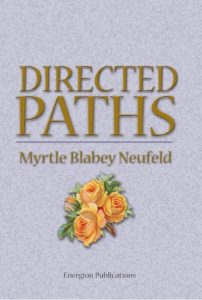
Solomon exemplified this limitation. With many wonderful things taking place and with many demonstrations of wisdom, he still failed as a leader in the end, with the kingdom divided. Perhaps this line from Proverbs gives the right feeling: “In all thy ways acknowledge him, and he shall direct thy paths” (3:6, KJV). In fact, my mother wrote a book about her life experiences with the title Directed Paths.