Threads from Henry's Web

Category: Bible Commentary

  • Psalm 119:14 – I Have to Be Joyful Too?

    Psalm 119:14 – I Have to Be Joyful Too?

    In the way of your testimonies I rejoice
    As over great wealth.

    Teachers and preachers often say that Jesus, in the Sermon on the Mount, was moving the law inside and making it of the heart. And that is certainly a theme of that sermon.

    But the fact is that the heart was always the object of the law. We are the ones who tend to look at the statutes, the regulations in modern terms, as the point of the law. It’s a simple path. We look at the law, and we do what we can to do what it says to do. So the point becomes the list of regulations for our lives. Aren’t these regulations wonderful? Shouldn’t we be happy about them?

    Isn’t that what this Psalm is about?

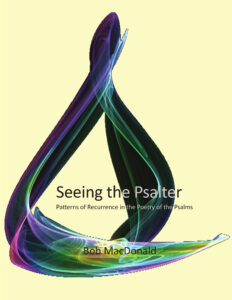
    Let me quote my friend and Energion author Bob MacDonald in the series he has just started on Psalm 119:

    Overall, Psalm 119 is a restful adoration of God and God’s promises.

    Have you thought of it like that?

    I commend his series to you, especially if you are musical. He does studies of the music of the Bible. There is great value in looking at these passages from different perspectives. I try to read a number of these as I meditate on the passage.

    “Restful” and “joy” both represent something internal, a response to the law (remember Torah/instruction), and not an external assent.

    And the Psalmist rejoices.

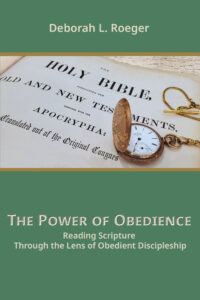
    I want to quote another one of my Energion authors, Deborah Roeger, author of The Power of Obedience:

    Before we conclude this lesson, we have some personal work to do. We have established that as God’s covenant people we are tailor-made by Him to live by His wisdom not our own! If we would lay down our right to live life on our terms – if we would turn to Him in submission, letting Him rule and reign as the perfect Creator and Lord of life in every aspect of our life – we would then joyfully know by experience what it means to know Him. If there is any area of your life that you have been holding back from Him, would you be willing right now to drop to your knees, bow your heart and your head before Him in complete surrender? Life will never be the same! And praise God for that!

    Deborah L. Roeger, The Power of Obedience, 43.

    This is a conclusion to an extensive lesson, but just on that one paragraph, do you think the Psalmist might well agree?

    (Featured image generated by Jetpack AI.)

  • Psalm 119:13 – Speaking It

    Psalm 119:13 – Speaking It

    With my lips I have recounted
    All the judgments from your mouth.

    We tend to talk, and also write a great deal about speaking. On social media, people take note of the things you don’t speak out about, and consider you apathetic for your apparent silence. On the other hand, there are those who are just waiting for one wrong word so that they can condemn you.

    I has been said that when all is said and done, a great deal more is said than done. This often comes from the one sanctimoniously declaring superiority and completely ignoring the fact that he (or she) is speaking and not doing.

    My first thought about this passage was to emphasize the importance of saying well-selected things, of being willing to be known for what you believe. That would have turned into a tangled post as I would also want to discuss all the good reasons for choosing what you would spend time talking about.

    But for me the more important lesson of this passage was simply how do I source the things I say. Where do these come from? How careful am I in hearing, studying, and applying the things I believe God said?

    This could come down to deciding when to speak and when not to, considering “a time for silence and a time for speech” (Ecclesiastes 3:7). The psalmist intends to declare the judgments that God has spoken. God’s judgments are spoken not only with accuracy but with perfect timing.

    When do you and I speak? Do we consider the “truth” of the time, the timeliness, as well as the factual truth of what we say?

    Let’s conclude with the words of another writer of Hebrew scripture:

    The Lord YHWH has given me the tongue of the learned,
    To speak timely encouragement to one who is weary.

    Isaiah 50:4 (REB)

    Are our words both timely and truthful?

    (Featured image generated by Jetpack AI.)

  • The Importance of Things Left Out

    The Importance of Things Left Out

    As I was listening to 1 Samuel today while walking on my treadmill I was reminded of a comment my mother once made on the story.

    We learn about Hannah and her desire for a son, and her sadness that she was barren. Her husband, Elkanah, somewhat full of himself, wonders why she’s crying and miserable. “Am I not more to you than ten sons?” he asks (1 Samuel 1:8).

    I remember my mother commenting that this missed the point, in fact, it missed all the points. It didn’t deal with a woman’s desire for a child, or the prestige of having sons in that time, or the shame of barrenness, which many would see as a curse of God.

    The writer emphasizes this in a way we are not always aware of in English storytelling: “After they had finished eating …” continues verse 9.

    Hannah’s opinion is expressed in a very meaningful silence.

    Be aware of the silences of scripture!

  • Psalm 119:12 – Teach Me

    Psalm 119:12 – Teach Me

    Blessed are you LORD.
    Teach me your statutes.

    Mark Twain said, “Good decisions come from experience. Experience comes from making bad decisions.” Or something like that. I’ve found a number of variations, all attributed to Twain.

    The prayer, “Teach me!” is one that is pretty much guaranteed an answer, positive at least in the sense that learning will take place. The psalmist asks the Lord to teach him.

    It’s a bit of a dangerous request, looked at from one direction, but then from another, you might as well pray this pray, because God’s gonna get you in any case! The universe can be an unforgiving place, and most of us have some pretty clear places where experience came from bad decisions.

    This is where I like to note that the entire created world informs us of its creator. The person who studies quantum physics studies God no less than the person who meditates on theology. Perhaps even more.

    One big reason to be thankful for Torah in the broad sense–God’s instruction–is that it is evidence of God’s care, a gift that teaches.

    And boy do we ever need that!

    (Featured image generated by Jetpack AI.)

  • Psalm 119:11 – The Word in My Heart

    Psalm 119:11 – The Word in My Heart

    In my heart have I hidden your Word,
    That I might not sin against you.

    I was introduced to Psalm 119 in elementary school. I had read a fair amount of Bible before that time, but hadn’t read it through. I went to a small Christian school where Bible memorization was a key component.

    We memorized various verses, chapters, and larger sections, such as the Sermon on the Mount, or a lengthy chapter such as Luke 2. And we memorized Psalm 119, all 176 verses of it.

    People have asked me what I thought about that part of my education. Was all that memorization worth it? Didn’t I resent it? I would add that we didn’t just learn the words, and we were not allowed to stumble through our recitation. Our recitation had to be perfect. We had to be able to write the passage perfectly including punctuation.

    I was so steeped in the language of the King James Version that during my first year in college I acquired the nickname “Therefore.”

    Now there are many ways of approaching Bible study. I’m reminded of the story of Dwight L. Moody, approached by a woman who disapproved of his method of evangelism. He asked her how she did it, to which she replied that she didn’t. His response? “I like my method of doing it better than your method of not doing it.”

    I feel the same way about criticism of someone’s way of doing Bible study. If you’re doing it, encourage others, suggest helpful approaches, but don’t be a critic. Would I run a school in the same way? No. But I don’t regret a moment of my Bible memorization there. I’m delighted to be able to find so many passages quickly because I hid them in my heart when I was young. Even though it wasn’t by my choice!

    What’s your way of hiding God’s Word in your heart?

  • With All the Faults and Failings

    With All the Faults and Failings

    One of the things I find most interesting about the Bible is the way that its stories openly–one might even say brutally–cover the faults and failings of the main characters. Nobody manages to come off all that well in the story. Even Moses, author of the Torah, or perhaps receiver of it, is not presented as a perfect man, though his failings seem rather minor. I’m reasonably certain that I would have done massively worse in his situation!

    I was reminded of this aspect of Bible stories when I listened to the story of Jephthah while walking on my treadmill, and then listening to my pastor’s sermon on Sunday, which was taken from Matthew 1. The sermon was focused on the righteous actions of Joseph, but I couldn’t help looking over the genealogy as he spoke.

    We’re introduced to Jephthah as “a mighty warrior” but he was the son of a prostitute. Yet he’s presented as one of the people who saved Israel. In Judges 11:15-28 he gives quite a recitation of the history of Israel, and in verse 29, the spirit of the LORD comes up him. What struck me in reading the story, besides the always disturbing story of his daughter, is that he is otherwise presented as a solid leader in Israel.

    My mind links things in sometimes odd ways, and what struck me in this story was the mention that Jephthah’s mother was a prostitute. It’s sparse and bold, neither covered up nor overemphasized. It was not, as one can gather from the story itself, something that endeared Jephthah to the good and normal citizens of Israel.

    That, in turn, led me to the genealogy of Jesus in Matthew 1. It’s odd, considering the times, that there are four women mentioned here. Tamar, who seduced her father-in-law while acting as a prostitute (Genesis 38), Rahab, the prostitute from Jericho who saved her family’s lives by helping the Israelite spies escape, Ruth the Moabitess (Deuteronomy 23:3), who was quite clearly a chaste woman, but barred from becoming an Israelite by the law, and finally “the wife of Uriah the Hittite,” the victim of David’s lusts.

    It interested me to consider why the Bible emphasizes these people. And I do the authors of these stories as making these folks stand out. Further, they stand out in some of the most powerful stories in the Bible. Genesis 38 hardly seems a necessary part of the story of the patriarchs, yet it is woven in later.

    I think there’s a point to be made here. The Bible is not a story of spiritual superheroes with superior ancestors. The heroes of the Bible do not stem from noble stock, the sort of people from whom we expect great things. Jephthah had become an outlaw with good-for-nothing men gathered around him. Then he got a call and the spirit of the LORD came upon him.

    And here in Matthew we have a close tie to the stories of Hebrew scriptures in these little hints provided in the genealogy. Jesus is the son of David–such noble ancestry! But look! There are some moments in that story that other people might prefer to tell.

    All that stands between you and me and doing great things is that call and that spirit. Good-for-nothing isn’t really in God’s vocabulary. “Nothing” is waiting for God’s “something.”

    (Featured image generated by Jetpack AI.)

  • Psalm 119:10 – Seeking and Finding

    Psalm 119:10 – Seeking and Finding

    With my whole heart I have sought you.
    Don’t let me wander from your commands.

    The word here translated commands is mitsvot, which is often thought of as good deeds, but Jewish commentators use this primarily of the 613 commands in Torah. In this way, the mitsvot can be considered another way to refer to the entire Torah.

    When I read Leviticus alongside the three volume Anchor Bible commentary on Leviticus by Jacob Milgrom I was struck by his comment that the commands of Torah, and in this case specifically commands regarding the temple ritual were clearly intended as a training ground for Israel.

    And history shows us that in at least one way, this training worked. Israel built up an identity that was difficult to destroy. We can still identify Israelites today, unlike the vast majority of the cultures that existed at that time and for centuries before and after.

    There were two aspects to this identity. One is simply those aspects of behavior and lifestyle that identified one as first Israelite, and in later times as a Jew. This identity kept Jews distinct from the surrounding culture. But there is another identity inherent in Torah, which we can infer from many specific statements, such as the opening for the ten commandments. “I am YHWH your God who brought you up out of the land of Egypt, from the house of slavery” (Exodus 20:2). God claimed the Israelites as his own before giving any law.

    In this verse, we have the two sides of this equation, but not necessarily in historical or logical order. The psalmist has sought God with his whole heart, doing everything he can. But he recognizes the part of that identity that can be summarized as “God’s own person/people.”

    If we belong to God, a claim also made by Christians, we need to be identifiable as people who belong to God.

    Set the boundaries, God!

    (Featured image generated by Jetpack AI.)

  • Psalm 119:9 – Talking about Purity

    Psalm 119:9 – Talking about Purity

    How shall a young man keep to a pure way of life?
    By keeping it in the bounds of your word!

    I have a feeling that some would question the way I translated that verse. It’s OK. Poetry is challenging. In this case I was aiming more for meaning that being faithful to the poetic form. For those who read some Hebrew, let me recommend Psalm 119 as a good way to become more comfortable with these poetic forms.

    There are all kinds of things that we could take from this verse, but through the day today my mind was repeatedly brought back to this: We need to teach sanctification, holiness, integrity in living, truthfulness, and the breadth and comprehensive nature of God’s Word.

    Sanctification is by grace (there’s a big subject), or better, in the words of the Psalm, it’s a path of blessing. I think it’s no accident that Psalm 119 starts with “blessed.” We need to realize that this is God’s work. It’s worked in us, but it is about God both in goal and in method.

    If we don’t talk about living a pure life in the church, people are likely to drift into perfectionism, legalism, arrogance, spiritual pride, and condescension. Those who avoid those issues usually wind up in cynicism and discouragement.

    The one way to go, and I think it is the way of this Psalm, is to recognize that it’s all about God, the creator of all. God sustains us (see Psalm 104, for example) on a constant basis. The way to holiness without arrogance is a profound thankfulness and recognition of blessings received. The best antidote to spiritual pride is to keep our eyes on God’s law.

    That will lead to being blessed and being kept in the pure path.

    For more thoughts about God’s word, see Seven Barriers to Hearing the Word.

    (Featured image generated by Jetpack AI.)

  • Psalm 119:1-8 – Wrapup

    Psalm 119:1-8 – Wrapup

    As I’ve meditated on these first eight verses of Psalm 119, I’ve opened up a number of topics. Let’s put them together, sort of!

    1. Being blessed is a fairly broad and comprehensive thing. It doesn’t necessarily mean that we have everything we want, or accomplish everything we want. It’s being under God’s watchful eye, and that’s positive (God has a purpose/God believes in us), and also negative (if we go off track, there is God). Perhaps we need to redefine “negative.”
    2. God’s law is a great deal more than a list of rules. God’s law is God’s self-revelation. We see this in Judaism in the centrality of the Torah, one of two broad words used in Psalm 119. (The other is Word/words.) When the Psalmist celebrates the law, as many English translations render it, he is celebrating being chosen as one of God’s people and God’s immanence in the self-revelation of the law. This carries over into Christianity (John 1:1-18, Hebrews 1:1-4) with Jesus as the Word, God’s message in human flesh.
    3. There is a joy that shines through the text. This is not poetry written by someone who felt he was obliged to praise God for the Torah. He loves it. He’s thankful for it. He finds joy in it.
    4. We start with blessing, and that’s important. Our temptation is to do things to seek blessing. The reality is that the ability to do and the motivation to do is itself a blessing, from which acts follow. Lead with the blessing!
    5. Sometimes it’s OK to shout “Help!”

    I hope you’re enjoying this journey as I am. Tomorrow morning, I’ll be posting the first verse in the second section.

    (Featured image generated by Jetpack AI.)

  • Psalm 119:8 – I’m Going to Do It; Help!

    Psalm 119:8 – I’m Going to Do It; Help!

    I will observe your statues.
    Don’t completely forsake me!

    Sometime we’re so busy looking for the really holy things and the absolutely correct commands in scripture that we fail to see the human element. But to miss that human element really misses much of the message of scripture. Scripture speaks in the way it developed and was preserved, as well as through the nature of its human authors, as much or even more than it does in propositions.

    This verse is very human. It’s the cry of most religious or spiritual people, or rather those who aspire to be such. I’m going to do this. Here’s my plan. Here are the spiritual practices I’m going to carry out. These practices will help me be truly spiritual, holy, and generally a better person.

    At the same time, there are those moments when we realize we need all the help we can get. Consider my idea of taking Psalm 119 a verse at a time, meditating on it for a day, and then writing a post that evening to be published the next morning. Yes, I’m blogging, but this blogging is based on me carrying out a spiritual practice, simple in structure, and personal.

    Then there was the day when I realized in the middle of the afternoon that I couldn’t even remember the words of the verse I was supposed to be meditating on. Things had gone multiple directions and I don’t handle that well. I had to pull out the text and remind myself.

    Or I could talk about right now. It’s later than I planned to write this. Suddenly I thought, Oh no! I have to write something about that verse. It was another of those scattered days.

    So I’m coming to my computer sort of like the Psalmist to his writing. Lord, I have a plan. Don’t give up on me completely.

    It may not be the best theology in the world, but it’s very human.

    (Featured image generated by Jetpack AI.)