
Threads from Henry's Web

Tag: church

  • Who Needs Evangelism?

    Who Needs Evangelism?

    nt church books(This continues a series that started here, and continues with part 2 and part 3.)

    Dave’s first mark of a New Testament church is evangelistic preaching. (Book: Seven Marks of a New Testament Church.) I’m a member of a church that’s part of a mainline denomination. I’m a mainliner. In general, we don’t like the word “evangelism” or related terms like “evangelistic.” You can watch Dave’s remarks starting about about 4:45 in the video and runs for about 4 minutes.

    In the book Dave calls this sign “evangelistic preaching.” The word “evangelism” here is used to emphasize that this is not the kind of preaching we normally think of when we hear the word “preach” in modern English. The preacher preaches and sermon and the congregation says “Preach it, brother!” This, on the other hand, is not speaking to the congregation in order to teach them about the faith of which they are already a part. Rather, this is proclamation of the message to those who haven’t heard it before.

    The word “evangelism,” and of course the related word “evangelistic” has a bad reputation in mainline circles. (Remember that I’m thinking about this in the context of being a member of and working in a United Methodist congregation.) I don’t particularly mind if people want to avoid the word, just so long as we don’t avoid the activity. Mainliners have an excellent way of avoiding ineffective or offensive methods of evangelism: We just do no evangelism at all. By offensive I don’t mean offense at the gospel itself. There are those who are offended, for example, if I say that Jesus loves even terrorists. That’s fine. I’m still going to say it. Jesus does love them. On the other hand if I say, “You bigoted moron, Jesus loves terrorists as much as he loves you,” it’s quite possible the hearer will be offended (quite justifiably) at being called a bigoted moron and may never even hear the second part.

    It’s especially important to realize that people can disagree with you without being bigots or morons. It’s even more important to remember that Jesus loves everybody, and that includes bigots as well. In fact, it would be really great if we quit thinking of people in those categories. Challenge their ideas or their actions as dangerous, but value everyone as a person, especially those you find hard to value.
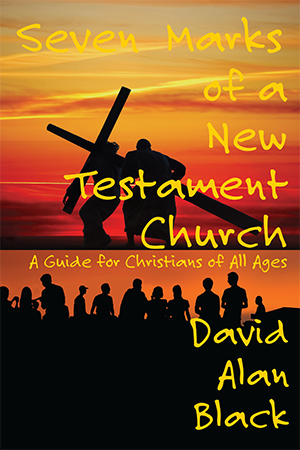
    9781631990465mDave used one way to say “evangelize” in the video when he said “share the love of Jesus with them.” How do I do that? Well, it starts with learning to love them myself. It’s much easier to act from love if you do actually love. Then fit your proclamation, whether in actions, words, or any combination of them, to the particular situation.

    We’re going to share the love of Jesus much more effectively when we do it because we are loving like Jesus, rather than doing it in order to build church membership, build up our personal count of people saved, or justify ourselves and our way of life. If we thought of evangelism as “sharing the love of Jesus” I think we would find that easier to remember.

    Dave starts with this point because that’s where the passage he’s using, Acts 2:37-47, starts. The passage starts there because this is the historic moment. We won’t always find ourselves with an audience that needs to hear words.

    Bruce Epperly, in Transforming Acts: Acts of the Apostles as a 21st Century Gospel, also presents proclamation in his first chapter. The details are different, the text is different (Acts 17), but I think you’ll see the connection (pp. 13-14):

    9781938434648sThe description of Paul’s message at the Areopagus rings a familiar bell for twenty-first century North Americans. Paul is sauntering through the marketplace of spiritualities – it could be Cambridge, Ann Arbor, Berkeley, Madison, or Washington DC where I live. He is gazing at the seat of intellectual, political, and spiritual power and prestige. Statues are everywhere, not unlike Washington DC, London, Paris, or Beijing – to gods and heroes, sacred and secular, known and unknown – each portraying a certain vision of human life and ultimate reality. Paul is both amazed and scandalized at the panorama of diverse and conflicting spiritualities.

    Jewish by upbringing and theology, Paul is overwhelmed by the thought of people worshiping objects that are less alive than themselves. Perhaps, he is amazed that people still worship gods such as Zeus who are not only promiscuous in their dalliances with human beings but also vindictive, angry, and punitive. Why would anyone worship raw power when you can experience God’s love? Why would anyone follow a religion of fear when he or she could experience God’s loving acceptance, grace, and companionship? Why would anyone exalt the gods of violence when the prince of peace welcomed them with open arms?

    He engages in conversation with some of the local spiritual leaders and philosophers of the city. They don’t know quite what to make of his vision of a universal God, whose life cannot be contained by statues or institutions, and whose love was manifest in a suffering savior. “Tell us more,” they ask, because like our culture, they lived with gods aplenty – there as many religious options as there are cable or dish television stations.

    Paul enters into dialogue, honoring their religiosity, affirming their quest, but suggesting another better alternative, the path of salvation and wholeness pioneered by Jesus of Nazareth who was unjustly crucified, but miraculously resurrected to bring healing and wholeness, transformation, and love to all creation. There is an “unknown God,” whose wisdom is luring us forward even when we are unaware of it, and this is the God Paul has experienced through his encounters with Jesus Christ.

    Here we tie a different portion of our modern experience to a different portion of the book of Acts. Does the book of Acts seem more relevant to you with either of these approaches?

    Now let’s get a taste of how Ruth Fletcher talks about this. Remember that she starts from looking at thriving churches and asking: “How did it happen?” The following is from pages 53-54 of Thrive: Spiritual Habits of Transforming Congregations, which talks about Spiritual Habit 5 – Engaging:

    9781631992070sEvery once in a while, those foreign missionaries would visit the congregation, telling tales of difficult living conditions and cultural challenges they had encountered while trying to share the good news of Jesus Christ in some exotic location. Some were doctors who brought healing to those who were sick. Some were teachers who helped young people learn and grow. Some were engineers who helped villages dig wells and install sewer systems. Some were evangelists who established new churches.

    I remember listening to their presentations, being impressed by their stories, and feeling just a little bit glad that they would be returning to the dangers of the mission field while I would go back to putting my change in the offering box in the safety of my own home. Of course, I was not the only one who took comfort in being able to leave the mission work to the professionals; in those days, most members of historic Protestant churches were content to offer their monetary support and prayers for others who would travel to the mission field, out there, over there, while they stayed within the familiar circle of congregational life.

    Yet transforming congregations do not just play a supportive role in the mission of the church; they actively participate in that mission. They see that the mission field of the 21 st Century begins at the church’s doorstep and stretches out into the neighborhood and into an interconnected, interdependent world. They understand themselves to be the missionaries who are called and sent, ready or not, to engage in making real God’s New Creation. [emphasis mine]

    Now Dr. Fletcher is going to get involved in scripture in the next few paragraphs, but again, look at the starting point.

    Also, while the position is different, some focus on mission, evangelism, proclamation, or perhaps we should just say “sharing the love of Jesus” is part of this basic approach for all three authors.

    Now you’ll find differences in many areas. That’s part of what I want to celebrate. I believe that as I move to a new congregation (no, I’m not a church professional, just a member), and try to work with my fellow-members of the body of Christ, the ideas of gotten from learning from these three different authors are going to help. What is it that God is calling me to do to share his love in and with this new church community? I’m sure I’ll be finding out soon!

    I’m embedding below my interview with Dr. Ruth Fletcher. I don’t have a full interview with Bruce Epperly on this topic, though we’ve discussed a number of his other books in various interviews. Just press “Play” to get rid of my picture and see and listen to Dr. Fletcher!
  • Experience, Belief, Action: An Exercise from Bruce Epperly

    Experience, Belief, Action: An Exercise from Bruce Epperly

    9781938434648sI will be putting more material from Bruce Epperly in as I post more on the church, but here’s an exercise he suggests in his book Transforming Acts, pp. 19-20.

    Acts of the Apostles is clear that doctrines are symbiotically related to behavior. Our doctrines emerge from spirit-centered experiences. Our experiences are clarified by our beliefs and take shape in practical application. Accordingly, what behaviors might your beliefs inspire in the areas of:
    »» Personal stewardship
    »» Care of family and children
    »» Marriage and other significant relationships
    »» Community involvement
    »» Political involvement
    »» Care of the Earth
    »» Response to diverse opinions
    »» Ways we respond to personal or global conflict (violence, reconciliation, consensus, peace-seeking balanced by appropriate protection).
    »» Involvement in justice issues – first-hand support of vulnerable people and/or political involvement to achieve a social order more reflective of Jesus’ values.

    One of the great strengths of Bruce’s book is that he challenges us at the end of each chapter to thoughtfully and prayerfully move to action.

  • Why I Believe Church Pews Are Unbiblical

    Why I Believe Church Pews Are Unbiblical

    9781631990465mI’m starting a series of posts inspired by my recent interview with Dr. David Alan Black regarding his book Seven Marks of a New Testament Church. He bases this book and the seven marks on Acts 2:37-47. You can see a video of that interview below.

    I had the privilege of interviewing Dave while he was visiting Pensacola the weekend of September 6. The interview was recorded by Kyle Hall in the library at First United Methodist Church here in Pensacola. I want to thank Dave for visiting and Kyle for recording the video.

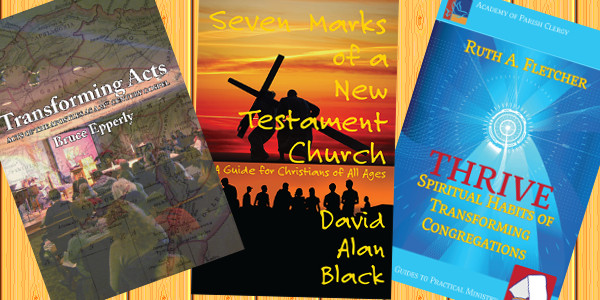
    I have several goals in this series, including discussing how we can learn from people from other tradition streams. I intend to bring in quotes and ideas derived from two other books I publish, Thrive: Spiritual Habits of Transforming Congregations by Ruth Fletcher, a Disciples of Christ regional minister and Transforming Acts: Acts of the Apostles as a 21st Century Gospel by Bruce Epperly, a United Church of Christ pastor.

    But what does all this have to do with my belief that church pews are unbiblical?

    The starting point for Dave’s book is that you can look at the book of Acts, and the activities of the early Christian church, and find things that are normative, or at least very valuable, to modern Christians. Dave isn’t alone in this conviction, but I want to start with the question of how we move from what we find in Acts to what we should do in modern churches. This topic is discussed in the first 4.5 minutes of the video.

    We don’t find sound systems or their use in the New Testament. Neither do we find hymnals, organs, pianos, praise bands, orders of service, parking lots, or many other things that are automatically part of our modern life, and often of our church activities. Is it wrong to have something in church that isn’t actually mentioned in the New Testament? There are those who would think so.

    On the other hand there are those who would say that church has changed so much that we need to come up with our own unique ways of doing things, that looking back to the early church isn’t going to be enough to deal with our complex world of the 21st century.

    I think there is some truth in both points. There are, in fact, critical principles in the New Testament that need to be part of any church that wants to label itself Christian, or more important wants to consider itself a community of disciples of Jesus. (I’d prefer the latter personally.) On the other hand we have situations in the modern world that weren’t a part of the world of the New Testament.

    The question is whether the way we choose to meet the challenges of the 21st century is worthy of the good news about Jesus. Do our solutions to modern problems, even when those problems are not directly reflected in some New Testament story or statement, fulfill the principles that Jesus taught? When we make a change does it help us love God and one another? Does it help us to make disciples wherever we go?

    So I come to church pews. They aren’t mentioned in the New Testament. They wouldn’t have been needed, though doubtless the various Christian homes that hosted meetings had chairs of some sort. I have a problem with church pews.

    Now my problem is that we can’t develop new tools and new practices to meet 21st century demands. The problem is that I don’t think church pews help us love God or one another more and I think they tend to prevent us from fulfilling the gospel commission.

    Bicycles are also not mentioned in the New Testament. They’re really good and very helpful in many places. Neither are motorcycles mentioned, but what a blessing they are. I can’t count the number of times I’d head out as a teenager, living with my parents in Guyana, South America, riding on the back of a motorcycle behind an evangelist, holding my trumpet case in one hand. It was the 20th century, true, but it was a very non-1st-century scene. Well, in one way, not 1st century. But in another, the young person heading out to help the evangelist do his work is a very 1st century scene. The tools changed, but the mission didn’t.

    But what about those pews? Yes, back to pews. What do pews do for the work of ministry. The very arrangement of our sanctuaries with pews lined up facing a platform where the more important people sit and from which they tell the less knowledgeable what to think tends toward hierarchy. If we’re going to fulfill the hope of Jeremiah 31:34, we need to get more people involved. Our problem is not that our churches don’t have enough order it’s that we don’t have the problems of 1 Corinthians 14. Too many people wanting to speak? On the contrary, just try to get them to do so.

    The pews enable this bad behavior and congregational laziness. The people in the pews are there to listen, to receive, not to share and participate.

    And then there’s the matter of stewardship. A church “sanctuary” (and what happened to worshiping in spirit and in truth?) is by nature going to be wasted space. There are so many things you can’t do there, because there are very few meetings, other than a totally platform-centered church “service” (who is getting served?), that can take place there.

    The same space, made level and filled with movable chairs would be of value for many other purposes. Children could play games. Groups could meet and discuss, putting the chairs in a circle. One might even celebrate communion as a full meal. Yes, I know, we probably have a fellowship hall for that. But why do we do that? Probably because sitting down together and eating isn’t sacred enough to happen in the holy space filled with holy pews.

    After we take the pews out, I wouldn’t mind having musical instruments, video, and plenty of parking for those who meet there, none of which are mentioned in the New Testament.

    It’s not what’s mentioned and what’s not, but the type of people we are to be and the way we are to behave as disciples of Jesus.

    Oh, we could also offer meals to those in need using that space. If it didn’t have pews, that is.

  • Keys to a Church Following Jesus

    Before I dig into this series organized around Dave Black’s book Seven Marks of a New Testament Church, I want to make a couple of off-the-cuff remarks.

    Over the last few years I’ve come to believe that we have two key elements that need to be changed, but more fundamentally, we keep talking about the church too much differently than we talk about individuals. As individuals, we need to be following Jesus, not just appropriating the label “Christian.” As a church, we need to be following Jesus. Those who are following Jesus will be witnesses. A church following Jesus is a witness.

    What do I see as the two key elements?

    1. Lack of Bible study and reflection. I see this broadly, as in study that leads us closer to God.
    2. We do not lead lives of prayer. This differs from praying occasionally, or offering pre-written prayers in a church service.

    I think that if we were to correct these two elements, others would correct themselves. I need to correct them as well. There are those who commend me on my biblical knowledge and who consider me a man of prayer. (Others, not so much!) But the fact is that I don’t live up to the standards I believe in. While we are, indeed, all imperfect, we can all keep heading in the right direction.

    I also think these two elements are much more closely connected than is generally realized. Prayer should be communication, conversation, not a monologue directed at God. Bible study should include the discipline of listening and a constant process of opening one’s self up to what God has for one in scripture.


  • Spectrums: Liberal to Conservative Is not Enough

    Spectrums: Liberal to Conservative Is not Enough

    nt church booksLast weekend Dave Black was our guest here in Pensacola. I recorded some videos for promotional and educational purposes and Dave also preached and talked about missions (with plenty of pictures) at Chumuckla Community Church. I will be posting some of these videos soon, but they are not quite ready yet.

    Dave is a professor at Southeastern Baptist Theological Seminary. I’m a United Methodist with the dreaded ‘L’ word in my blog tagline (“Thoughts on biblical studies, religion, and living from a passionate moderate, liberal charismatic Christian”). Obviously this is some sort of liberal-conservative dialogue.

    Not really. I’ve written recently about dialogue and why, as a publisher, I publish books from a variety of perspectives. In a video I produced in the early days of Energion Publications I used a triangle, with the points being charismatic, liberal, and evangelical. I would note that for this to work now it should be “conservative evangelical” as the label “evangelical seems to have lost some cohesion. This will happen to words, especially those that are perceived as positive labels.

    But even those three points fail to catch some of the issues, and there’s a bit of a tendency to think of Christians grouped at the points of the triangle. One of the reasons many have trouble with labels is that people don’t fit into the center of the semantic range of a label. In addition, on different issues one may take different positions. I have political views on some subjects that seem very conservative, while on others I seem quite liberal. Similarly on theological issues I don’t try to fit all in one camp.

    There are two points (I think!) in all this rambling. The first is that we don’t fit cleanly into one label on all issues. The second is that we may be able to connect with people in other camps on particular issues. In all cases (should this be #3?) this should suggest options for learning from one another.

    For example, when many charismatics talk about modern revelation they use theological arguments that are also commonly expressed by liberal or progressive theologians. Not a few of those I’ve talked to want to deny any connection, but behavior and practice tell a different story. There is some theology to be learned here! Similarly many charismatics should—and do—learn biblical studies from their evangelical brethren.

    Many liberals or progressives, on the other hand, don’t want to be linked to charismatics because of emotionalism or other extremes. Yet too frequently progressive biblical reflection tends to be more a matter of challenging the conclusions of evangelicals rather than developing a robust theology and application of scripture. Yes, this can be a stereotype. I have several authors in the Energion Publications list, such as Dr. Bob Cornwall, Dr. Bruce Epperly, and Dr. Drew Smith, none of whom fit the picture. And there are many more like them.

    9781631990465mOne of the interviews I conduced with Dave was about his book Seven Marks of a New Testament Church. Dave goes back to the book of Acts for keys to how the church should behave now, in the 21st century. And this brings up a very different spectrum: church structure.

    We could make a spectrum that runs not from conservative to liberal, but from strongly hierarchical to mutually submissive, from high church to low, from central control to local. Similarly we might look for a spectrum of views on who is in charge of the church, how much, and in what way. That could run from Jesus in charge directly to a highly hierarchical view of how the lordship of Jesus is implemented in the life of the church. None of these would exclude people from any liberal-conservative, charismatic-evangelical, or any similar ideological spectrum.

    My plan is that as soon as I’ve posted my interview with Dave on his Seven Marks book, I’m going to start blogging through the Marks. As I do so, I’m going to bring in points from some other authors, such as Bruce Epperly, whose book Transforming Acts: Acts of the Apostles as a 21st Century Gospel also goes back to Acts to ask what we can do in the church today. Beside both of those I’m going to reference the book Thrive: Spiritual Habits of Transforming Congregations by Dr. Ruth Fletcher. There are definite differences of approach in these books, but there are also many points of contact.

    So I’m going to ask two questions in my series:

    1. Can we find a way to apply these seven marks in other theological and ecclesiological traditions? (I fully believe we can, though there are places where our ecclesiology needs to change, and that’s a good thing!)
    2. More specifically, how can a United Methodist congregation look back to the New Testament and so become a more authentic witness for Jesus in the world today? There are those who would say many of these ideas are not possible under denominational rules, but I wonder. How much would a simple commitment to being “servant of all” on the part of those at the top of the organizational chart might change the reality without altering the paperwork?

    So watch here over the next week. I’ll post the video and then begin the discussion. I hope I can find some people to discuss this with me vigorously. My comment policy is largely open. If you don’t threaten the family friendly nature of the blog, you can express yourself.


  • What Is Really Essential in Christianity?

    On February 24, 2015, I hosted a discussion between Energion authors Elgin Hushbeck, Jr. and Alden Thompson on the topic Biblical Essentials. Here’s the YouTube:

    Today another Energion author, Dr. Allan Bevere, posted an entry on his blog titled Doctrine: The House in which the Church Lives. (Allan Bevere and Alden Thompson will be participating in a discussion of violence in the Bible, particularly the Old Testament, on June 2, 2015. I’ll post more information on that later.)

    Here’s my question: Is the essentials/non-essentials paradigm a good one? If not, why? If so, what does it accomplish?

    I’m well aware that I’ve asked this question and have used this model on this blog many times before. But I’d like a bit of discussion.

    I have always thought this was a good model to help set up one’s fellowship, as in what congregation or organization should I be a part of. An individual congregation might have one set of “essentials,” while a particular Sunday School class within that congregation had another. The denomination (or other organization of which the congregation is a part) would have a broader set, while the concept “Christian” might specify something much looser.

    Having characteristics on which we gather both to learn and to serve seems valuable to me. But I see a problem when we use that same sort of paradigm as a means of inclusion or exclusion, including the attempt to determine who is “saved” and who is not. The participants in our hangout had a simple answer for that, with which I agree wholeheartedly. Since it’s not our job to determine who goes to heaven and who doesn’t (or any one of a number of other ways of specifying the “eternal in-crowd), we cannot use these essentials for that purpose.

    I do think we can use essentials to help define a label. Labels can actually be good things. Without labels I could not write a blog post. Language labels things. The problem is when we force people (or reality in general) to fit the labels rather than looking for the best label to use with reality from a particular perspective.

    What do you think?

    To help you think, here’s Dr. Herold Weiss, answering a similar question in my interview with him this past Thursday:

  • Not Watching the Super Bowl

    No, I’m not. It’s a fact! I’m even a Seahawks fan, to the extent that I’m a fan of any sport. I’ll check the results a couple of times during the evening, but I won’t be watching.

    Now don’t fit me out for a halo. A certain number of people probably figure by this time that I’m diligently demonstrating my holiness by going to church. That’s not the case. I just have other things to do. In fact, we don’t even have regular television available in our home. We get things we want to watch via the internet.

    I’ve seen or heard people complain about Super Bowl. Churches cancel services. People fail to attend Sunday night services. Such disregard for worship! How can they possibly do that? (It would be those people who might want to fit me for a halo since I’m not watching. But since I’ll doubtless be in my recliner, and may even be watching a British mystery, I don’t qualify.)

    There are even those who would claim that canceling church in order to attend the Super Bowl is some kind of idolatry, putting football ahead of God. What it actually is, is putting football ahead of the church’s calendar. One night in the year. Just one.

    The idolatry, I think, is the idea that the church calendar is sacred, that the stuff we do on a regular basis cannot be adjusted for any merely human interest. It goes along with the sacredness of church buildings, church regulations, church furniture, and so forth. It’s not all that sacred, except in our minds.

    So at heart I’m with the folks who are at Super Bowl parties. I really don’t enjoy that sort of thing myself. I certainly don’t go to the actual games. The crowds are way too big for me to be comfortable.

    But I don’t think God has a problem with the folks at the Super Bowl parties. I doubt he was quite as wedded to our schedules as we are. After all, we can easily adjust them to add things to the church program, such as the few days of meetings we inaccurately call “revival” each year.

  • Not Looking for the Perfect Church, but …

    Via Allan Bevere I located this interview with Scot McKnight, in which McKnight makes a number of interesting statements. The one that caught my attention most was:

    … A proper kingdom theology leads people to the middle of the church, not away from it. So it makes a difference when church is on the decline and people are saying they are committed to the kingdom but not so much to the church. You can’t have kingdom without church.

    First let me note that I am a very churchy fellow. Except when I was not a (practicing) Christian, I have been a member of a church congregation, and those congregations have largely been deonominational. I’m the sort of person who finds a church in the phone book when traveling on a weekend, and goes and worships with a local congregation. I’m a member of First United Methodist Church of Pensacola, who, I am sure, would rather not be blamed for what I say! First UMC is not a perfect church. I’m sure that can be said of all the First UMC of ____ congregations around. Nonetheless the gospel is preached there, and much good ministry is accomplished.

    Second, Allan Bevere is a friend, and co-editor of the Areopagus Critical Christian Issues Series published by my company, Energion Publications. I like Allan. What’s more, I agree with him on many things, especially what he said about this topic.

    Third, I found very little that I disagree with theologically in Scot McKnight’s comments.

    My problems are largely practical. It’s all well and good to tell people to connect with the church. I’ve been doing that myself. In fact, I find that most people who are struggling spiritually have one thing in common—they’ve lost that connection.

    But here are some of the reasons I’ve heard just recently for not connecting with local churches:

    1. The church lacks convictions. Face it, fellow Methodists (I’ll leave the rest to check their own surroundings), we’re not a church of terribly strong convictions. When I was looking at joining a United Methodist congregation I was told by one pastor that he didn’t care what I believed. If I wanted to “enjoy their fellowship” I could join. I’m not sure whether he wanted me to abstain or lie during the membership vows.
    2. The church has convictions, but people can’t live with those convictions. I’m not referring to any particular issue or any side of any particular issue. I’ve heard this from people across the theological spectrum. Really!
    3. The church is so little oriented toward kingdom work of any variety (any of the five elements to which McKnight refers) that the person doesn’t how he or she could work for both the kingdom and the church.
    4. The church is so fractured, that people have a hard time identifying what is actually Church.
    5. The church behaves as though it is a kingdom in the throes of a civil war.
    6. The king is, at most, a figurehead.

    I could go on, but I won’t.

    I have personally felt elements of all of those things. Of course the kingdom and the church should overlap, but sometimes I feel that the theologians and preachers are hammering the people who are trying to accomplish something for the kingdom, as problematic as that may be outside of the church, while the churches (to be distinguished from Church) continue to fail to make it possible to accomplish much of anything. It often sounds like people should be able to find and identify a good church, one that will truly be part of the kingdom, without any particular guidance. When they get there, the reason they should stay is that they need the church, whether or not it is functioning for them.

    Now I’m sure readers are going to get all tense about the phrase “functioning for them.” I believe that the primary issue in finding a local congregation is discovering the place where, and from which you can best serve Jesus. This is necessary because we don’t have a single church. Paul didn’t write to the Corinthians about our sort of problems, because we’ve gotten much worse. Not only do we have divisions; our divisions are institutionalized. So I have to locate a church congregation where I can be part of the Church, and thus carry on kingdom work. The followers of Cephas, Apollos, Paul, and Christ have separated themselves into different buildings with signs and trademarked logos.

    Once I find this congregation, I’m as likely as not to be pushed into various congregational or denominational programs to make sure that I’m properly socialized to the way that particular congregation does business. I recall being pursued early in my time in the United Methodist Church by folks from the Lay Speaker program. I needed to be certified before I spoke. I needed to coordinate before I spoke anywhere, because I might be seen as representing the UMC. But I wasn’t being invited to speak for Methodism. I had other things going on. Once I’ve checked off the boxes, the congregation wants to make sure I’m doing things for that congregation. Perhaps we should recognize that people gain skills in other churches, other denominations, and even in their secular occupations.

    Now because I am fully convinced of what Allan and Scot are saying, I will find that congregation and I will be a member, and I will make my kingdom work part of Church. What I won’t do is find myself stuck with that congregation or denomination. If I can get together with other parts of the Church irrespective of denomination, I’ll do so. But we get back to “functioning for them.”

    I’m seeing a great deal of hostility to any notion that a person should get something out of church. But the fact is that if you don’t get something out of church, you’re not going to be doing any ministry from church. No, you shouldn’t be self oriented. You should look for a place where you can serve. But a church congregation (and the whole church), should be a place where we serve one another. We give and we receive. And if we don’t receive, we won’t be giving for long, I don’t believe.

    That’s one of the problems with our expectations of pastors. The actual job description for our pastors—I mean what you’d get by following them around and describing what they actually do, not the paperwork lies we use—is both ungodly and stupid. Nobody can do the job. We put men and women into a place where nobody can truly succeed. Those who do succeed at all remold the job. I do not mean to denigrate the many fine pastors I know who are doing wonderful kingdom work from their church congregations. The problem is that we require them to be paragons just in order to succeed. We make every effort to destroy them. That’s the extreme of giving but not receiving.

    (Yes, Jesus said it’s better to give than to receive. But if we have an entire Church of people giving, there will be a lot of receiving going on as well!)

    It isn’t wrong for a couple with children to want to see that the church congregation they join will help them raise and nurture their children. It’s not wrong for a person who is ill to hope to be visited, encouraged, and prayed for. It’s not wrong for missionaries to want a home base that will actively support what they do and who will want to listen to their stories when they return. It is not wrong for the elderly members to expect that they will be helped and respected in their declining years. All of those things involve the congregation “functioning for” various people. If I want to support children’s ministry, the elderly, service to the sick or imprisoned, or engage in social action, why would I join a congregation that shows it’s intention not to do those sorts of things?

    But, object many of my fellow churchy folks, there are good congregations out there. People should be more determined. They should seek out the right congregation. They should find a way to serve! They can start those ministries!

    And here you’re expecting the non-theologically trained, non-church-oriented, ordinary people who just want to get about doing good to fix your church first. If the church is spending 70% or more of its budget just maintaining the machine, why would someone who really cares about the poor, for example, decide to join up and handle the problem before they do what they are called to do? That’s what we ask of many of them. We are dedicated to the buildings, to the structure, to the programs, and to the traditions, so they should come on board and be satisfied with just a tiny percentage of the effort and money of the church going to the sorts of ministry to which they are called.

    I don’t believe that the solution to our church problems will come by persuading this generation that they need to come on board and solve our problems before they can do kingdom work. Those of us who are in the church need to be prepared to be radical. Sometimes one must acquire buildings, but very frequently one must get rid of buildings. If a church is failing, it may well be time to shut it down.

    I’m not opposed to paid staff. But our paid staff should be people who help get the rest of us out doing ministry. For example, I would be very sorry to see a scholar-pastor such as Dr. Wesley Wachob at  my home church in a bi-vocational ministry. I think the best use the church can make of him is in a full-time teaching role. But his job (and I’d be surprised if he doesn’t understand it this way, but don’t blame him for my words!) is to get another 3,000+ of us out there doing ministry, not as paid ministers, but as every member ministers. (Every member in ministry is a good Methodist program. Too bad “every” is such a small number in so many cases.)

    Do I have a solution or is this just a rant? Well, I admit it is somewhat of a rant. But I do believe that each of us who are in the church can make a difference by being different. Have convictions. If you don’t know what they should be, study. Learn. Be prepared to stand aside and see things done differently, even in ways you don’t think will work, as new people come in the door. See the church everywhere believers may be found, and not just in your congregation.

    And for the 21st century in particular, realize that social relations are different now. I hear moaning in church about a decline in people knowing one another as aging church members (and I must admit these aging church members are my age!) talk about how social media is ruining everything. They ought to be in church or at our Sunday School party, but they’re on Facebook. Yes, indeed! They’re on Facebook. And that’s part of their social circle and how they connect. And because I want to be able to connect with the current generation and those between, it’s one of the ways I connect. Many of my closest friends now I met through electronic media, some long before it was called social media or the internet became so universal.

    For example, I met Elgin Hushbeck, Jr. on the CompuServe Religion Forum in the days when I had to dial-up a CompuServe outlet in order to connect. Elgin is now one of my authors. He spoke some years ago at a pastor’s conference I was coordinating. It all started through non-traditional media. It was through Elgin that I met Dave Black, who I now count as one of my closest friends. They’re part of the Church, I am connected to them, and it didn’t start in a church fellowship hall.

    Then there’s Allan Bevere, who I know is committed to the church and is committed, I believe to all the types of ministry I’ve discussed and more. Further, he’s willing to be in the heart of the fray. I met him via blogging. In fact, I think our earliest exchange involved him telling me I didn’t know what I was talking about! We’ve met in real life since, but it all started among the blogs. He, in turn, introduced me to Bob Cornwall, a Disciples pastor in Michigan, who is also one of my authors and the lead editor for a series I publish. My point here is not to invoke these people in support of my views. Rather, I’m pointing out that there’s a whole new way of congregating in the 21st century, and we churchy folks need to get used to it. It may not just be an adjunct to what we consider “real” socializing. It’s more likely a new reality.

    All of these people are in the Church with me, as I see it.

    I don’t think the concept of the church is out of date. The media may change, but the idea is there. What we need to do is truly practice being the body of Christ in whatever place and by whatever means there are at hand. In doing so, we need to be radical, in the sense of pulling up by the root those things that keep us from doing what we need to do. Our theology on the importance of the church won’t bring these people in. I hope it will convince us that we need to get real about the message and practice of the gospel.

  • Nobody is above Question

    There are two dangerous attitudes in the church, and I suspect in any human endeavor. One is the idea that certain leaders are above question. In the church the words “touch not mine anointed” (going back to the KJV, Psalm 105:15, and we could discuss the context) are often used to express this idea. This line can be used to shut down any questioning of one who is called a pastor, teacher, prophet, apostle, evangelist, bishop, or whatever other title people have chosen. On the other hand, there is the hypercritical attitude, in which no leader can possibly be good enough, doctrinally correct enough, educated enough, or whatever enough to suit.

    Unfortunately, rather than seeking balance in our own lives we tend to go to one or the other extreme, and then yell at each other for our failures to meet the standards of the other camp, whichever that is. If it were not tragic, it would be hilarious to observe the criticism heaped on one church leader for questioning another, when both the questioner and the questioned have some sort of claim to this “God’s anointed” status.

    Over-critical attitudes, backbiting, and unwillingness to work with a team have led many church leaders to discouragement and even out of the ministry. Lack of healthy questioning allows problems to grow until they’re out of hand. Right now, however, I want to address this reluctance to question people in leadership, and then give some suggestions as to how we can question without being destructive.

    I’ve been on the destructive end. In seminary I became so bright (in my own mind) that nobody could preach a sermon good enough for me. This critical attitude was one of the factors that led me out the doors of the church shortly after I was done at the seminary. So I can speak from experience. At the same time, I have observed destructive behavior in leaders, behavior that should have been corrected by others, but because the leader was so respected, and people didn’t want to question them, their behavior went unchecked, and they were able to harm more and more people.

    We’ve seen an example of this in the Roman Catholic church with the sexual abuse scandal. A tendency not to question leadership at all levels of the hierarchy allowed the church to cover up its problems for decades. Eventually, the problems came to light, at which point the church had to face repeated issues, dealing with decades of abuse in a few years. And dealing with it is hardly complete.

    But protestants should not have any illusions that we have less problems. We have a hierarchy that is less efficient at covering up, so we have dealt with these problems over a longer period of time. That gives us the illusion that we’re doing much better. We still run into similar problems. The person who is above reproach, who cannot be questioned, is in a position of great temptation, whether that temptation is moral, doctrinal, or financial.

    In a church that is divided into hundreds of denominations, we have to make determinations. Will I become a member of this church or that? To what extent is my loyalty to my local church or denomination, as opposed to the broader body of Christ in the local community. Is Pastor X someone I should follow, or are his teachings a danger to me and to the church?

    I have illustrated a case recently in which I felt something was far enough off the mark that it was appropriate to speak out, with some comments by Pat Robertson on tithing. I have seen discussions of Bishop John Shelby Spong and of Joel Osteen. These latter two provide a good illustration of my point. There are those who would regard Bishop Spong as outside the bounds of Christianity, while they defend Joel Osteen against any sort of criticism. Why? Both have been ordained by Christian organizations. Both have said things that many Christians question. Why should someone consider one or the other above criticism?

    The difference, of course, is in which doctrines each espouses. What is important to you? But by making that very decision, you are deciding, for yourself, which leader to follow. Good! That’s what you should do. Test it. Hold what’s good. Turn away from evil. (See 1 Thessalonians 5:12-22, making sure to emphasize verse 17.)

    But then why would you deny that same privilege, no, duty, to another Christian?

    And make no mistake. I am definitely saying that my duty to discern also often comes with a duty to speak up and discuss that decision with others. Just because someone is famous, well-loved, called “anointed,” helpful to some people, wonderfully charismatic, extraordinarily well-educated, or just plain special doesn’t mean that person is always right.

    My tendency is to try to keep quiet in many cases. My wife often pushes me to speak up. That is a matter of personality. But for each of us, hopefully guided by prayer (go read 1 Thessalonians 5:17 again), there is a duty to uphold the right and speak out against what is not right.

    So how can we do this without becoming hypercritical?

    Well, for me, simply realizing how fallible I am has been very helpful. I now have had too many occasions when I’ve been reading the Bible and suddenly thought, “Wow! I’ve been wrong about that for years!” I’m going to post something on my Participatory Bible Study blog, hopefully later today, about an issue on which I’ve been wrong for at least 15 years. And my wrongness on this issue does not exist in isolation. Once I have written about how I changed my mind, there will be people who will think I was right and am now very wrong. I hope they’ll speak up. They should!

    So here are my ideas:

    1. Address behavior or teaching, not personality or the person. For example, “I think Joel Osteen is a false teacher” is judging the man and his ministry as a whole. Unless you’re one of the elders of his church (or the equivalent), that’s generally not your business or probably even competence. “Joel Osteen said _____ and I believe that’s wrong” is a much better approach. Even better, “Here’s what I believe about _____ and here’s my scriptural and theological basis for believing it.” People can figure out the personalities for themselves if necessary. Sometimes, however, it’s a good idea to identify a person who has made a public statement, if that statement is widely known.
    2. Be sure you have actually understood what a person is saying. For example, “Bishop Spong doesn’t believe in the resurrection” and “Bishop Spong does not believe resurrection involves resuscitation of a physical corpse” are two different statements. Be sure you’re responding to what the person actually said.
    3. Realize that everyone is fallible, especially you. There is an expression derived from French, “de haut en bas” it refers to speaking from above someone, from a position of superiority. You are not the judge of Bishop Spong or Joel Osteen or of me. That doesn’t mean you cannot question each of us. Do your best to speak from a position of humility. When something really stirs you up (as Pat Robertson’s statement did the other day), this may be more difficult. But don’t just be prepared to be questioned. Welcome questioning. Invite questioning. Be open. Listen to the questions. Re-examine your own beliefs. If you come to the same conclusion, fine. But you’ll be stronger for it.
    4. Don’t be narrow. Sometimes we have such a narrow range of beliefs we find acceptable that nobody can possibly live up to our expectations. For me, the problem was technical accuracy. A pastor might preach a sermon that was really great, but use a verse that I didn’t think was handled properly. The whole sermon would become chaff in my mind, and the sorry individual who was careless enough to misuse scripture (or other sources) in that way would be struck off my list–until I no longer had a list. Humorously enough, others were busy striking me off their lists. When we do this, the body of Christ becomes one finger, or one nose, or some less honorable part (read 1 Corinthians 12-14 several times, OK?) and there we go. I had to do a great deal of repenting and “list restoration” to get back into action with the body.
    5. Don’t be afraid. People will get annoyed whether you are questioning a popular leader or defending him or her. Don’t let fear, whether the fear of what people will think, or the fear of being wrong, stop you. Wrongness is an easily correctable problem!
    6. Moral standards are more important than errors in teaching. Depending on the teaching, it’s possible that it could lead to bad moral standards. I know of a pastor who came up with a new doctrine of divorce after he–you guessed it–wanted to get divorced. Sexual abuse of minors, sexual misconduct, financial misconduct, and actions that are hurting members of the body need to be dealt with. That isn’t a matter of judging the person. It’s a matter of protecting people who need it.

    I hope that these few ideas will be helpful. I know there are those who would prefer that we simply let those known by great titles or popular as leaders slide. They may be doing great good. But they may also be doing harm in the background. I know there are those who are afraid of excessive criticism. What I’m suggesting is a broad-based openness to questioning, both of ourselves and of others. But let it all be done as gently as possible.


  • Losing Our Sense of Mission

    When it rains it pours, so I’ve been seeing a lot of posts about mission lately, and here’s another one that raises some very interesting points. (HT: Kouyanet).

    Having served on and led short-term mission teams, grown up with long-term missionary parents, and served on mission committees, I find that a great deal of this resonates with me. Read it all and give it serious consideration. This is to be a series. I intend to follow it.

    One thing that strikes me is that minor changes in the details are not the solution to the various problems (see Of Resources and Mission Priorities and Worship, Service, and Mission). Our problem is that we don’t view ourselves as on a mission in the first place. We view the church as a way to provide a moral education to our children, a place for networking, and in some cases a route to salvation.

    Perhaps our committees, agencies, and denominations lack a sense of mission because our members lack a sense of mission. Perhaps that lack of a sense of mission comes from a lack of understanding the basic gospel message.