Threads from Henry's Web

Tag: church

  • Seven Marks of a New Testament Church – Sacrificial Living

    Seven Marks of a New Testament Church – Sacrificial Living

    nt church books

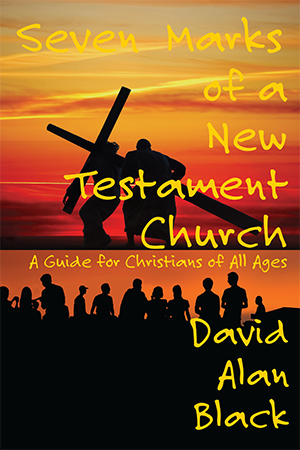
    … salvation of necessity leads to service. (Seven Marks of a New Testament Church, p. 43)

    This is the final post of my series on this book, and I’d like to make an observation about the entire enterprise. I’ve become increasingly convinced of two things during this study. First, there is no single form of church organization or structure mandated by the New Testament. Second, there are quite a few principles that should be applied in any church structure that we may choose to use.

    Those may sound like they are at least in tension, but I think any tension is both appropriate and quite possibly intentional on the part of New Testament writers. I also do think that one’s organizational structure can either aid in applying Christ-like principles to one’s church structure or they can hinder us from doing so. Unfortunately, we can turn the best organizational plan into something dangerously hierarchical and lacking in accountability.

    The determining factor in how our churches will function is whether we are prepared to actually be the body of Christ, living under one Spirit (1 Corinthians 12). Unfortunately, many have seen the test of the church as being the power of the miraculous signs that are displayed, when the real message of that chapter (really 1 Corinthians 12-14) is that the test of the miraculous signs is the one Spirit.

    This final chapter of Seven Marks is critical for this reason. It says that we really mean it. Now we can’t neglect the other elements, but the final demonstration is going to be involved in sacrificial living. Note that the title is not “sacrificial giving.” We can give sacrificially without accomplishing anything for the kingdom. When we are emotionally persuaded to give large amounts of money for an unneeded or ostentatious facility or program, we can give sacrificially, while still failing to live sacrificially.

    What does it mean to live sacrificially? I must, of course, recommend reading this entire chapter. But let me suggest that for the Christian, this means putting everything we have and everything we are in God’s hands. It’s not a percentage of giving. It’s not a percentage of our time for worship. It’s a complete commitment of ourselves to being the body of Christ, to act as citizens of God’s kingdom while we are aliens here. (Mixing metaphors is fun!)

    Christianity is not something you tack on to the rest of who you are. Yes, I belong to the ___ club, I’m part of the ____ political party, and as for religion, I’m a Christian. No! Being a Christian is not like a club or political party membership. It defines who you are.

    Bruce Epperly, in Transforming Acts: Acts of the Apostles as a 21st Century Gospel, p. 46 puts it this way:

    As Acts 2 proclaims that the first Christians “devoted themselves to the Apostles teaching, to the community, to shared meals, and to prayers …. All who believed were together and had all things in common; they would sell their possessions and goods and distribute the proceeds to all, as any had need.” They did not separate economics from theology or spirituality. Within the body of Christ, unity of spirit leads to the quest for physical well-being. While there may have been inequalities in income and property, there was no destitution or neglect. Everyone had enough of the Earth’s bounty to have the energy and inspiration to share the good news of God’s life-transforming Shalom. Putting God first lead Jesus’ first followers to generosity and sacrificial living in which the neighbor’s need outweighed property rights and personal comfort.

    Ruth Fletcher expresses the vision and the goal well in her book Thrive: Spiritual Habits of Transforming Congregations, p. 48:

    Those first followers gathered around Jesus’ table in order to be shaped by the values embedded in the story of God’s New Creation. They came together to be equipped with the tools and the courage necessary to make God’s intentions real. Although not large in number, the small bands that followed Jesus began to affect the whole fabric of the culture around them. They were like grains of mustard seed springing up like bushes everywhere. They were like leaven affecting the whole loaf, like salt flavoring the whole pot of soup. They were like light shining from a lamp stand showing what God had in mind for the world.

    Today we look to large church programs with the goal of bringing people into the church. Might we not accomplish more if we became those grains of mustard seed in order to impact the world around us. In order to do that we have to be willing to live sacrificially, not as a momentary impulse, but as a lifestyle.

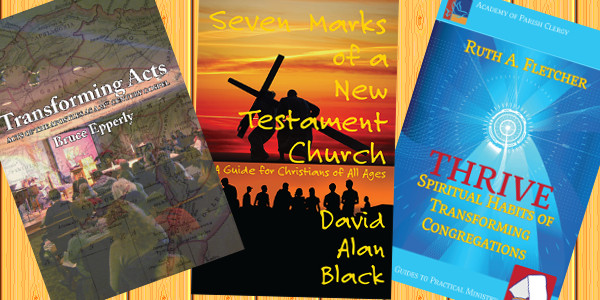
    One last thing I’d like to note about this series is that, while I’ve followed Dave Black’s outline from Seven Marks, I’ve been able to find very similar notes from my other two authors. These three authors come from different denominations and different tradition streams, yet they find many similar principles for how we should live as the church.

    There are many things we can argue about, but I perhaps we can agree that we should be living as a community, caring for one another, and carrying out our witness through caring for the entire world.


  • Nobody Ever Thinks They Are Creating a New Denomination

    Nobody Ever Thinks They Are Creating a New Denomination

    kineso ten luchnian
    Revelation 2:5

    Christopher Ritter is complaining, though only in the nicest, most creative way, about critics of the new Wesleyan Covenant Association. It’s interesting how efforts to reform often end up creating new denominations, even when the leaders don’t intend to do so. Just look at the example provided by Ritter in his post.

    I commend Ritter for his excellent way of presenting his complaint, but at the same time I have to ask whether a movement to reform the United Methodist Church at this point is not also likely to contribute to the division of the denomination. It seems that we require such organizations to deny that they contemplate schism in any way. It’s part of the game. I suspect that the WCA people are entirely sincere in that desire.

    Reality may not be on their side.

    I’m a member of a United Methodist congregation. I would note that when my wife and I discussed the idea of moving to a new church prior to this move, we thought that our next church congregation would not be part of the UMC, but here we still are, and here we will stay as long as we believe God is leading us to do so.

    What I’m not going to do is get stirred up over the survival of denominational structures. My friends sincerely wish to prevent schism, but as a church, we’re the product of a group that broke off from a group that broke off, and that earlier break-off was not very holy, I might note. Not to mention that I don’t see very much Jesus in the structures of any of the above.

    Unless the Holy Spirit changes a bunch of people, the UMC is at an impasse over same-sex marriage and inclusion of LGBT people. We are a divided church. We can claim to be united, but it’s a fake. The question is whether the structures will follow the actual practice or whether we will continue to find ways (and spend large amounts of money) to pretend.

    What is needed is to change our focus to become Christ’s body in the world, Christ’s witnesses, the bearers and proclaimers of Christ’s gospel. We are a church that is apathetic, self-centered, and wasteful. We are more concerned with our buildings and our power than with the gospel of Jesus Christ.

    But that is something that can change. I don’t know about the denomination, but the only person who needs to change in this is me. And you. And you. Each of us.

    Is the church building taking up more money than caring for your neighbors? Get rid of it.

    Do you pay more for Sunday School curriculum than for evangelism or textbooks for needy children? Cut it out of your budget!

    Is your primary concern for your worship service done your way at your time? Drop it. Be concerned about your neighbors.

    If you let the gospel become central, many things that seem critical right now will fade into the background. You may not change church headquarters, but you can change you.

  • A UMC House Church

    A UMC House Church

    nt church booksOne of the points I have tried to make in my series regarding the books Seven Marks of a New Testament Church, Thrive: Spiritual Habits of Transforming Congregations, and Transforming Acts: Acts of the Apostles as a 21st Century Gospel is that one can follow these “Jesus principles” of church leadership under many different formal structures. Some structures may make it harder than others, but I suspect it is more that each structure has different strengths and weaknesses, mostly the result of the fact that all of them involve humans.

    Here’s a video about a house church under the UMC banner. You won’t see anything “non-Wesleyan” here, or violations of the Book of Discipline, but you will see a creative and dynamic living out of the Christian faith. This is certainly a thriving congregation, carrying out transforming acts, and showing marks of a New Testament church!

  • Let the Children Interrupt

    Let the Children Interrupt

    Children under a tree
    From OpenClipart.org

    This past Sunday the lesson was from Luke 18:15-17, Jesus blessing the children. Saturday evening, as I was thinking about this, a local church was promoting their variety of children’s programs and how that showed their care for the children. I know it’s probably unkind of me, but I was not impressed.

    Yes, having children’s programs is better than ignoring the children. Having something for the children to do while their parents carry out the activities of the older folks is better than doing nothing. When we were overseas, my mother was often asked to donate to church building projects. She would always ask to see the plans. Frequently those plans would involve a church sanctuary and no educational rooms at all. She’d ask where was the space for the children’s programs, and was told they could meet under the trees until the church had the money to build their facilities. She’d suggest instead that the adults meet under the trees and that the space be given to the children.

    Yes, it’s good to provide for the children. But the interesting thing that Jesus did is this: He let the children interrupt the activities of the adults. He didn’t appoint a “children’s apostle” or create a children’s “blessing room” where appropriately gifted leaders could work with the children. No! He invited them to where he was, right to the center.

    I think we are too concerned with having our busy routine interrupted. Perhaps if we let the children get involved some of the super-sacred elements of the order of service might be skipped. Perhaps some of the adults would have to listen to something simple and repetitive.

    Those with special gifts for teaching and for connecting with children and young people are to be treasured and  their talents used in ministry. But children need to spend time with the adults as they learn, and not always be separated out into age segregated groups where six-year-olds learn from six-year-olds and teens learn from teens. Church should be a place where they can practice and learn. I’m in favor of having children and teens give testimonies, speak, and even present the message. Where better to learn than in their own community? Of course, all these activities should be done with the help of people of experience who can mentor and guide without controlling and suffocating.

    I was visiting a small house church overseas and was asked to present a children’s story and also the message for the adults. I hadn’t tried a children’s story in many years. But I gave it a try. For the adults message I had carefully taken a passage and prepared an expository message. It was really pretty good since I say so myself! [Yeah, right.] I was uncomfortable with the children’s story. After I had presented both, and was chatting with my translator immediately after our time together, I noticed the head elder copying my illustration from the blackboard (yes, the old-fashioned slate kind). Then he asked me a few questions through the translator, all about the children’s message.

    The children’s story had caught his attention and had met a need in the church. It was clear from our conversation that he was fine with my expository preaching. It just hadn’t connected. The children’s message had.

    Is it possible there isn’t such a difference between our needs as older members and those of the children and young people in our churches?

  • They’re Bad so We’re Good

    They’re Bad so We’re Good

    Conflict
    Credit: openclipart.org

    Recent political discourse reminds me of the parable of the Pharisee and the Tax Collector:

    9 He also told this parable to some who trusted in themselves that they were righteous and regarded others with contempt: 10 “Two men went up to the temple to pray, one a Pharisee and the other a tax collector. 11 The Pharisee, standing by himself, was praying thus, ‘God, I thank you that I am not like other people: thieves, rogues, adulterers, or even like this tax collector. 12 I fast twice a week; I give a tenth of all my income.’ 13 But the tax collector, standing far off, would not even look up to heaven, but was beating his breast and saying, ‘God, be merciful to me, a sinner!’ 14 I tell you, this man went down to his home justified rather than the other; for all who exalt themselves will be humbled, but all who humble themselves will be exalted.”

    The Holy Bible: New Revised Standard Version. (1989). (Lk 18:9–14). Nashville: Thomas Nelson Publishers.

    It has been interesting to read articles by partisans of one party or the other explaining how unelectable the candidate of the other party is, and how that party is truly in trouble and going down in flames. “They’re so bad that we’re good,” seems to be the subtext.

    I’m not primarily interested in the politics, however, but in some things in shows about human nature. These articles and conversations point to a dangerous, perhaps even fatal way of measuring ourselves. We do it in church just like we do it in the broader society. If I can point out enough negatives about a church or a group, I will surely have demonstrated the value of my preferred group or position.

    Thus comes the Pharisee. Now I think we should be careful about how we talk about the Pharisees. In many ways they would make excellent Christians. They were good people trying to fulfill God’s law. Nonetheless they suffered from one of the many failures of the righteous—self-righteousness. It’s interesting that when we look down on the Pharisees for their flaws, we generally are participating in the same ones. We’re not Pharisees. Aren’t we special?

    Jesus is here bringing in a character who will be considered righteous by his audience and putting him up against one who will be considered wicked. Note the prayer. “I thank you that I am not like other people.” Face it! We thank God that we are not like other people on a regular basis. We may pretend to be the tax collector who went home justified. But more often we’re looking for the position of the Pharisee. However much contempt we may put into saying the word “Pharisee,” it’s his position we long for. It’s just that we want to thank God that we “are not like other people … or even like this Pharisee.”

    I believe the root, however, is our bad approach to measurement. We want to be “better than.” We want a church that is less unfriendly, more mission minded, more biblical, better structured. If we can say with any justification, even just enough to convince ourselves, that we are better than the church down the street, then we can be happy. As a Methodist, I can give thanks to God that I’m not the frozen chosen as are the Presbyterians or self-righteous like the Baptists.

    I’ve been on the receiving end of this, as someone points out to me the flaws of the United Methodist Church, which are doubtless legion. How can I be a member of a United Methodist congregation? Surely all of these flaws mean that I should instead be a [Baptist, Presbyterian, Reformed (some variety), charismatic, pentecostal, house church, high church, etc.].

    Here’s what experience has taught me: Don’t look at the church down the street. Ask this question: Am I doing God’s will by being where I am? Where can I best do God’s will?

    Every church I have been in has had flaws. If it didn’t have them before I got there, it definitely did after! One of the most dangerous things we can do is determine our value before God by comparing ourselves to other churches. This works in many ways. The church down the street can provide us with an excuse for continuing to behave badly. My Methodist congregation may be comforting itself by noting that it’s better than the Baptists while the Baptists are comforting themselves that they are doing better than we are. We can follow that spiral right to perdition as our errors give others an excuse for theirs.

    On the other hand, we can become extremely discouraged by comparing our performance to others. If the church down the road is growing by 10% per year, what’s our problem? If they have money to build  a new Family Life Center why can’t we?

    We need instead to take the parable to heart. What is God’s will for us? Let’s seek God’s will and God’s mercy as we work that out.

    Here’s a video of a sermon I preached many years ago. I wonder if it’s still relevant.

  • My Church Preferences

    My Church Preferences

    johnny-automatic-church-300px
    From Openclipart.org, johnny_automatic.

    A few months ago a friend, commenting on my approach to publishing, and really to many other things, said, “It’s hard to be both a prophet and a facilitator.” Now he wasn’t talking about the way a prophet might get his or her words from God, but rather that prophets advocate ideas. Facilitators encourage others to do so and to enter into dialogue.

    He’s absolutely right, and this is demonstrated by my post today on the Energion Discussion Network, Toward a Biblical Church. In it you might say I’m advocating for diversity, or perhaps trying to facilitate discussion of our diverse views of church that we have in the Church. I think Paul does a rather good job of this in 1 Corinthians 12. We often read just the sections that talk about us being one. But Paul is talking about how we can be one body while coming from diverse places and backgrounds, and he doesn’t say all those differences are eliminated, but rather that they cease to be central when we’re in this one body.

    We would do well to study 1 Corinthians, and particular chapters 12-14, regularly in the church. Paul is looking at precisely the sorts of problems we have in many of four churches today, and his prescription in chapter 13, applied in chapter 14, is also still quite applicable. I do note that we can only wish that we had some of the Corinthian problems, such as too many people coming to church filled with excitement and a desire to express what they’ve heard from the Lord. But we do have ample portions of the problems of factionalism and self-centeredness.

    Is there a way to advocate changes in our church organizations, whether at the denominational or congregational level, without also implying that everyone else better do it the same way? That’s what I’d like to do. If you’ve read any of the books I linked in my EDN post, or some of my posts on Seven Marks of a New Testament Church, you’ll know where I got these.

    1. I’d like to see a church where Jesus is acknowledged as the senior pastor. I’m not as concerned about what we write on signs or church bulletins, though I’d be pleased to see Jesus listed there. My problem is that I think we might list Jesus on the sign and then keep on living just the way we did before. “What would Jesus do?” has become a slogan, often used just to claim that Jesus would support what we wanted to do in any case, but it’s also a very good question—if we let Jesus answer it.
    2. I’d like to see a reduction of church facilities. In fact, I like the idea of house churches, and one of the major reasons is that we cease to spend so much money on the physical structure. Some churches rent space temporarily, and for them it’s a stepping stone for the time when they can have a real church in a real church building. Perhaps living without a building should become a way of life.
    3. I like a church with accountability outside of itself. This is why I’m not really a congregationalist. But I could be. It’s quite possible for a church to make itself accountable to others, and to live in an accountable way by being open and honest, especially in finances.
    4. I’d like to see a church that empowers youth. “Empower” is often seen as a buzz word, but it’s a good one if it’s actually put into practice. The church can be a safe place for those who are young or inexperienced to learn. This would involve sharing in all aspects of church life, with appropriate levels of support and supervision. That young person in your church who feels called to a preaching or teaching ministry should have the opportunity to practice.
    5. I’d like to see a church where many people share. Many churches center around the pastor and his or her preaching. That’s what brings people in. How about testimonies, short messages from various congregants, presentations by experienced people other than the pastor, and hearing from those who are learning to share? In a seminar on faith sharing I sponsored, I recall that only a small portion of the people who came to the class felt comfortable talking about their faith. Where better to get comfortable than in church?
    6. I’d like to see a church where members could safely explore ideas. Our focus is often on making sure we have good doctrinal statements. What I’ve found, however, is that few people actually know what those statements say. I honestly don’t think that this problem will be corrected by more talking from the front about the doctrinal statement. People’s minds and will must be involved, and that means allowing exploration.

    None of these things require a particular variety of church organization, though in many cases, existing church and denominational structures will work against them. I’d like to emphasize that even though I have a hankering after house churches, I am a member of a regular United Methodist congregation. I’m not trying to beat up on people in regular churches.

    But the Holy Spirit may be. That’s another story!

  • Church as a Social Occasion

    Church as a Social Occasion

    Or perhaps as the social occasion.

    Thom Rainer has a post titled Seven Things Church Members Should Say to Guests in a Worship Service. It comes complete with a header picture of people who, to me, look like they’re forcing excessive smiles. I probably see it that way because I’m an introvert. I suppose that there is nothing wrong with these seven things, though I must note that I prefer that the restrooms be well-marked with signs so that I don’t have to ask someone where they are, and I’m very likely to be the guy who forgets who you are even though you’ve been down the pew from me for months. In fact, I’d just as soon you let me sit there, think, and pray as come try to make a social occasion out of it.

    There’s nothing wrong with being the social person. There’s very much right with being a friendly person. Yet I’m left with several questions. The most important question is just what it is we’re trying to accomplish.

    It seems to me that all of this is aimed at getting more people to attend your church service. The goal is to make people “church-going” and to make sure that an adequate number attend your church. In order to accomplish this we try to make church a great social occasion with a friendly atmosphere (provided one likes that sort of thing).

    I confess that I may be hypercritical here. But all of these lists, and in fact a huge percentage of the talk about church growth seems to center around how many people we have in church. So if you have a church that is a very strong social club, you’re a successful church.

    But in reading the gospel commission I can’t seem to find the part about making sure large numbers of people attend church once per week. That isn’t even mentioned, much less presented as a goal.

    Someone’s going to say that this is the goal. We get them into church and from there we make disciples of them. But I don’t seem to see as many lists of ways to make disciples out of the people you manage to get to attend your worship service. I don’t see nearly as much about getting the people who are good, church-going people to go out and make those disciples. I don’t see nearly as much about getting those people to observe the things Jesus commands.

    I recall a pastor recently who said to the church: The only excuse for a church to exist is to be a witness to Jesus Christ. I’d refocus that to this: The only excuse for us to have a church service is to help us be and become better disciples of Jesus.

    This means that there is a good reason to get people to attend church, provided that church is about becoming better disciples. As I’m been reading about fellowship, I think there’s much more to the idea of communion as a shared meal celebrated regularly. Our church gatherings are not so much services as training and motivation to become active servants. In order to do that we need to be reminded of who we are and of how we are part of a body.

    Perhaps if we built these times around a common meal where interaction involved more than greeting and attempting to remember names, singing a few songs, and listening to someone lecture, we might be able to build the body of Christ as a community that serves, and in fact embodies Jesus Christ for the world. That might mean we need to break up some of our huge congregations and spread out into the community in smaller groups.

    I’m no expert on church organization or church growth. I’m pretty sure that, despite my own tendency, Sunday morning isn’t designed as a time of individual prayer and meditation for me. I can do that many other times. Yet I can’t help but get the impression that our church activities are centered around that Sunday morning worship service. If singing hymns and listening to a lecture of variable quality doesn’t light up your life, you’re just the wrong type of person.

    But do these worship services really help us to be Christians? Do they carry out the gospel commission? Are the spaces in which we do these activities well utilized in pursuit of the gospel? Despite being a person whose habit it is to be in church every week almost without exception, I’m seeing it as less and less productive.

    Perhaps our problem is that the goal is the wrong one. Filling our church sanctuaries on Sunday morning was never the aim of the gospel commission. Making disciples was.

    Is it?

  • Is There Such a Thing as a New Testament Church?

    Is There Such a Thing as a New Testament Church?

    nt church booksI’m planning to finish resume and complete my blog series on Seven Marks of a New Testament Church with added commentary from the books Thrive: Spiritual Habits of Transforming Congregations, and Transforming Acts: Acts of the Apostles as a 21st Century Gospel. This process was interrupted by SBL, by some bug I picked up in Atlanta that slowed me down for several days and by the time taken to catch up afterward.

    In the meantime, I encountered the following:

    There is no blueprint for churches in the New Testament, and to try to form New Testament churches is only to create another system which may be as legal, sectarian, and dead as others. Churches, like the Church, are organisms which spring out of life, which life itself springs out of the Cross of Christ wrought into the very being of believers. Unless believers are crucified people, there can be no true expression of the Church.”—T. Austin Sparks, Words of Wisdom and Revelation, p. 62, (quoted in Frank Viola, Finding Organic Church, p. 19).

    There’s a great deal of truth in that statement, but there is also a great deal of danger. Let me quote a couple of paragraphs from Frank Viola from just before he uses this quote to illustrate:

    Consequently, the “biblical blueprint” model is rooted in the notion that the New Testament is the new Leviticus. Advocates approach the Bible like an engineer approaches an engineering textbook. Study the structural principles and then apply them.

    But church planting is not a form of engineering. And the New Testament isn’t a rule book. It’s a record of the DNA of the church at work. … (Finding Organic Church, p. 19)

    I would love to spend some time discussing this view of Leviticus, which is, in many ways a record of the DNA of Israel as God’s people at work, but I’ll skip over my perennial annoyance with the way Christians handle the Hebrew Scriptures. And Leviticus is definitely closer to a  rule book than is anything we have in the New Testament, however inadequate the term may be in describing the book.

    Again, I would certainly agree that the New Testament doesn’t provide a “rule book” for your church, though we need to consider our understanding of the term “rule book” as well. Even rule books differ in approach! I would also agree with, and even applaud, the characterization of the New Testament as “the DNA of the church at work.” But there’s a certain negative view of engineering involved here, which is just one of the things I think is potentially dangerous.

    There’s an interesting form of binary thinking that seems to go on with the question of whether and how we apply the Bible to anything. Someone asks whether the Bible teaches a certain thing that we believe, and the pious thing to say is that it does. So we say it. Then we’re left trying to find just where it does say it. Take the doctrine of the trinity, for example. Does the Bible teach it or not? Can I discover anything about the Trinity from the Bible? Well, if you want a doctrinal statement of “trinity,” such as you’ll find in any of the Christian creeds (yes, they differ, but take any one), then you’ll have to admit the Bible doesn’t say that. Yet the pieces, or at least the questions, start from scripture. I think you can say something similar about almost any of our doctrines. They are rooted in scripture to various degrees, but we wouldn’t have so many confessional statements if the Bible clearly said what we wanted it to.

    Having grown up as a Seventh-day Adventist, I confronted this problem early. We were a church that believed in the Bible and the Bible only. Anyone could study the Bible for themselves, and the Bible was sufficient. Well, except that people kept getting the wrong things from the Bible. So we had a doctrinal statement and  baptismal covenant. When I was baptized I publicly affirmed a substantial list of doctrines, all of which the church regarded as biblical. But it was not regarded as sufficient that I affirm the Bible; I had to affirm the list.

    I think humans tend to be somewhat binary in our thinking. On discovering that the Bible doesn’t actually have a full list of the “true” doctrines or the “ideal” rules for governing your church congregation, we decide that there’s nothing at all. Let’s get away from talking about characteristics, habits, marks, or even transforming moments. The true church is the one that is produced by people transformed by the gospel.

    And yes, it is. Transformation by the power of the gospel is where it starts and it is the key. But we still read scripture. We still have to decide to meet somewhere. We still are going to do some things during our church service and not others. We’re still going to choose some activities in carrying out the church’s mission and not others.

    The danger, I believe, is that we do this sort of thing without thinking and consideration. Transformed people will be motivated to carry out the gospel commission, but will they know what to do next? Generally there is someone who leads. I have been in churches that claimed that their worship services were run by the guidance of the Spirit and were very free. No rules.

    Well, on paper. In their rule book it was true. But in practice, there was a definitely hierarchy. Who was a prophet who would speak? Who would give the message, which was as long as, if not as organized as, the sermon in any mainline or evangelical church. The “free Spirit” definitely flowed in the way human beings directed.

    In fact, despite my apparently sarcastic description, it is quite possible that the Spirit was flowing precisely as the Spirit wanted to, having chosen to work through those people. But if so, there was more structure than people were willing to admit. There were leaders in the congregation. They were just not acknowledged as formally as they were elsewhere.

    And it’s in this informality that there is a certain danger. If we do not acknowledge and plan our leadership and our actions, then some form of leadership happens. It may be good or it may not. But very frequently in places where structures are not defined, people with forceful personalities, or even people with negative agendas can take over the process. These persons are very hard to move aside to allow the Spirit to actually move, because they will often deny what they are doing.

    So how do you avoid this? More importantly, how do you avoid this without turning the church into a bureaucracy and the Bible into a procedures manual?

    Well, I think you go back to the source. Not just the New Testament, though that should be our starting place as Christians. And not just the Bible, but rather the Bible combined with our discernment and what we can hear from the Holy Spirit as we listen to the Holy Spirit and discern what we need to do as a community of believers in Jesus. I think this will be a constant process as we look at what is around us, at who we are, at our Lord, and how we can be the body of the Anointed One in the world.

    We can even learn a little bit from engineers in this process. Yes, engineers can be very picky people. I’m reminded of something Jody said as she was about to enter the doctor’s office. She was taking a particular action which she wanted the doctor to note because, she said, “Doctors are very much cause and effect kinds of people.” Engineers likewise. Every time I get into my car and every time I get on an airplane, I am very happy that engineers are cause and effect kinds of people. That’s because I really like the causes to get together and produce the effect of my car staying on the road and the airplane staying in the sky as needed. I flew nearly 7,000 hours in the Air Force relying on that sort of thing.

    One thing an engineer can do is study one thing, see how it works, and duplicate the effect by creating a similar machine. Such principles applied to scripture might include looking at the church in the New Testament and asking what caused the church to grow. Can we duplicate that? Of course times and circumstances have changed. In fact, they changed from one moment to another in New Testament times. Engineers can also take a device and adapt it to different circumstances.

    I have a smartphone, for example, that is water resistant. If I drop it in a puddle, I should be able to pull it back out, dry it off, and go on. I haven’t tried this. The prior model of the same phone didn’t have this capability. Some engineers got together and added new capabilities to the ones the previous model had. I used that previous model, and I like the new one better. There are principles that apply to both.

    And that’s important. It’s nice to say that if our church comes forth from people who have met Jesus and been to the foot of the cross (or one of those other common phrases). That must be the foundation, because church will doubtless not work with people who have not been transformed (or better, are being transformed; we are none of us there yes). But this is a principle I get from reading the New Testament. And it’s not the only principle I get.

    The good engineer knows how to look at principles and apply them to a new environment. The good Bible student knows how to look at the church in action in the New Testament and find out how to apply not every action they took, but the fundamental principles by which they tried to live, to our modern times.

    So Seven Marks of a New Testament Church doesn’t provide you with a rule book. It doesn’t replace the New Testament. It certainly doesn’t replace the gospel. But it shows you what one worker in the vineyard has discerned as principles that can be applied. The other two books, Thrive, and Transforming Acts, are doing the same thing.

    The problem isn’t really thinking like engineers. The problem is bad engineering, engineering that applies rules without understanding. Not inflexible engineering that ignores the complexity of human communities. Engineering that ignores reality is just bad engineering. I, for one, think the church could use some genuine, good engineering.

  • Seven Marks: Genuine Relationships

    nt church booksThe fourth mark of a New Testament church that Dave Black finds in Acts he calls genuine relationships. The early believers devoted themselves to the fellowship, to their community. There are so many words for it.

    9781631990465mIn America today we rarely think of the church as a community and even more rarely as our community. Yet much of the New Testament’s teaching on the church centers around things that relate closely to this idea. We go to church for a “service.” We don’t participate in community. We take our children there for some moral education, not so that they can build relationships for their life. Often we barely know one another.

    I’m not trying to make us all extroverts. I’m an introvert. I tend to make small numbers of closer friendships. I’m not talking about the number of friendships we each make. I’m talking about how we fit together into this larger community, one that includes various personalities, a wide variety of gifts, people who are like us, and also people who are not-at-all like us.

    What we think about our community is going to impact everything else we do. Dave’s first mark is “evangelistic preaching.” That’s proclamation of the good news. But is the “good news” of your church the idea that one can join up, provided they’re not too different and become just like everyone else there? Or is the good news that through God’s Spirit we can all, with our various backgrounds, become one in Christ Jesus, contributing with various gifts, and receiving the salvation and healing that Jesus offers?

    I suggest reading 1 Corinthians 12-14. Don’t skip over chapter 13. So frequently people who want to study about spiritual gifts study chapter 12, those who want to look at church order and how to structure your meetings at the church read chapter 14, and those who want to talk about love read chapter 13.

    But that is to miss what Paul is doing. In this book Paul is looking at the various reasons why there are factions in the Corinthian church. When he comes to the start of chapter 12 he’s looking at the great gifted ones who lord it over everyone else. Genuine love, as expressed in chapter 13 is the key. How can one identify genuine gifts in action? It’s by the way they operate under the direction of that one Spirit and the way they carry out love in the church.

    1 Corinthians 13 is not about marriage but about the church. It gives good advice for a marriage because it tells us how genuine relationships work.

    ThriveHow do followers of Jesus work together when the church meets? Chapter 14 tells us they work for “edification.” That’s building. That building is based on the genuine love that is expressed in chapter 13. So these three chapters work together.

    I heartily recommend Dave’s chapter, but I’m going to quote this time from Ruth Fletcher in the book Thrive: Spiritual Habits of Transforming Congregations. Fletcher defines a difference between “friendliness” and “welcome”:

    Friendliness assimilates newcomers into what already exists; welcome integrates newcomers by helping them know they belong. Friendliness says, “We’re glad you came to our table. We hope you feel at home here eating what we like to eat and doing things the way we like to do them.” Welcome goes beyond friendliness to say, “We want you to bring your gifts to this community. We know when you offer those gifts that we will be changed by your presence among us.” (p. 78)

    Fletcher implicitly provides us with a good description of community. Rather than being a place where the current members give and others receive, it’s a place that welcomes people to become part of the giving, whatever it is that they may have to offer.

    9781938434648s
    Bruce Epperly discusses this in his chapter Faith Without Fences

    One of the critical things we need to look at in the church if we are to be such a community is gossip, judgment and criticism. For us to help one another grow, we need to be able to talk about ways to grow. Serious discussion of spiritual growth will not prosper where there is no trust, and gossip destroys trust. Gossip is always followed by judgment and criticism, and it destroys community.

    Losing this spirit of judgment does not mean that one loses the ability to discern between different options, nor that one cannot recognize sin or destructive behavior. It does involve a change in the way we think and talk about these things. Our talking will be impacted by our thinking. Don’t imagine that you can pretend not to be judgmental and nonetheless deal with issues as a community.

    I’m fairly unreceptive of the complaints of those who think that repenting of gossip, judgment, and criticism (three sins endemic in church life) means that we can no longer reform or call others to repentance. Gossip, judgment, and criticism don’t result from a genuine desire to help others find repentance. They result from our desire to feel that we are better than others and to let others in our inside group know that we are better than others.

    A genuine concern for others will result in talking to them and doing it in constructive way. Note that this isn’t a strategy change. It’s repentance from a sinful approach (judgmental) and a turn to a genuinely constructive  approach (edifying/building). If we have genuinely repented of the need to feel morally superior to others, I think we will generally know the difference. Most of us have been helped to find a better approach to some issue by a more experienced or knowledgeable friend. It feels different.

    One critical point is that it comes from relationship. I have friends who help me with my business decisions who can quite comfortable tell me that some idea would be idiotic. We’ll laugh and go on to a better plan. Why can we do that? Because we have a relationship that comes before the correction. I highly value those friends and that correction. It has saved me from many errors.

    “Genuine relationships” open the way to the various elements of community. If you truly want to help those you think are on a wrong path, establish a genuine relationship with them first. As you do so, you may become aware that you also have things in your life that can be improved by what you learn from them.

    I think back on growing up in my missionary family’s home. You could not visit my parents’ church without getting invited to lunch. Not invited to join us at a restaurant, but to come join us for the family meal. My mother always made sure she had enough to feed guests. One never knew who would be a guest.

    In Mexico, when a mother and son needed refuge from violence, she was invited into our home, even though there was a threat of violence to us involved. She was different from us, of the Chamula people, and only spoke a bit of Spanish, much less any English. But she had a home with us as long as she needed it.

    Think about your own church. Would a visitor be welcome? Any visitor? As you bring in new members do you try to remold them after your own image or do they become a genuine part of the church family with their gifts and their warts? Does anyone in your church invite people home to lunch or dinner? Are your homes open? If someone was escaping domestic violence would they get a referral to a nearby shelter or would someone in your church open heart and home to them? If you see young people in your church without parents do you gather in groups to complain about “this generation” or do you decide to welcome the opportunity to get to know them and even mentor them?

    I think becoming a community built on genuine relationships will require a great deal of repentance on the part of the American church. But if we want to truly be disciples of Jesus, carrying out the gospel commission, this is one mark we can’t afford to lack!

  • Link: Local Church Pastors

    Since I’ve been talking about churches and leadership, I thought it would be useful to point to this article on UMC.org: Local church pastors on the rise. As usual, I think we’re behind. My personal belief is that the whole system of education we’re using, including degrees is well past its prime. If we made use of all the resources available, there would be no reason we couldn’t make better opportunities available for local church pastors to improve their skills.

    But my experience with local church pastors suggests two things: 1) For every local church pastor who has a weakness, there’s very likely an elder who also has a problem, and 2) Local church pastors also have skills in ministry that many of your full elders do not.

    I’m just not that enamored of the wonders of seminary education. But it’s not the education we need to get rid of. What we need to do is restructure the means and time when education is delivered, received and applied.