Threads from Henry's Web

Category: Religion

All posts relating to religion, including those on the relationship of religion to other fields, such as science and politics

  • Book Notes – Hebrews: A Commentary (NTL)

    Book Notes – Hebrews: A Commentary (NTL)

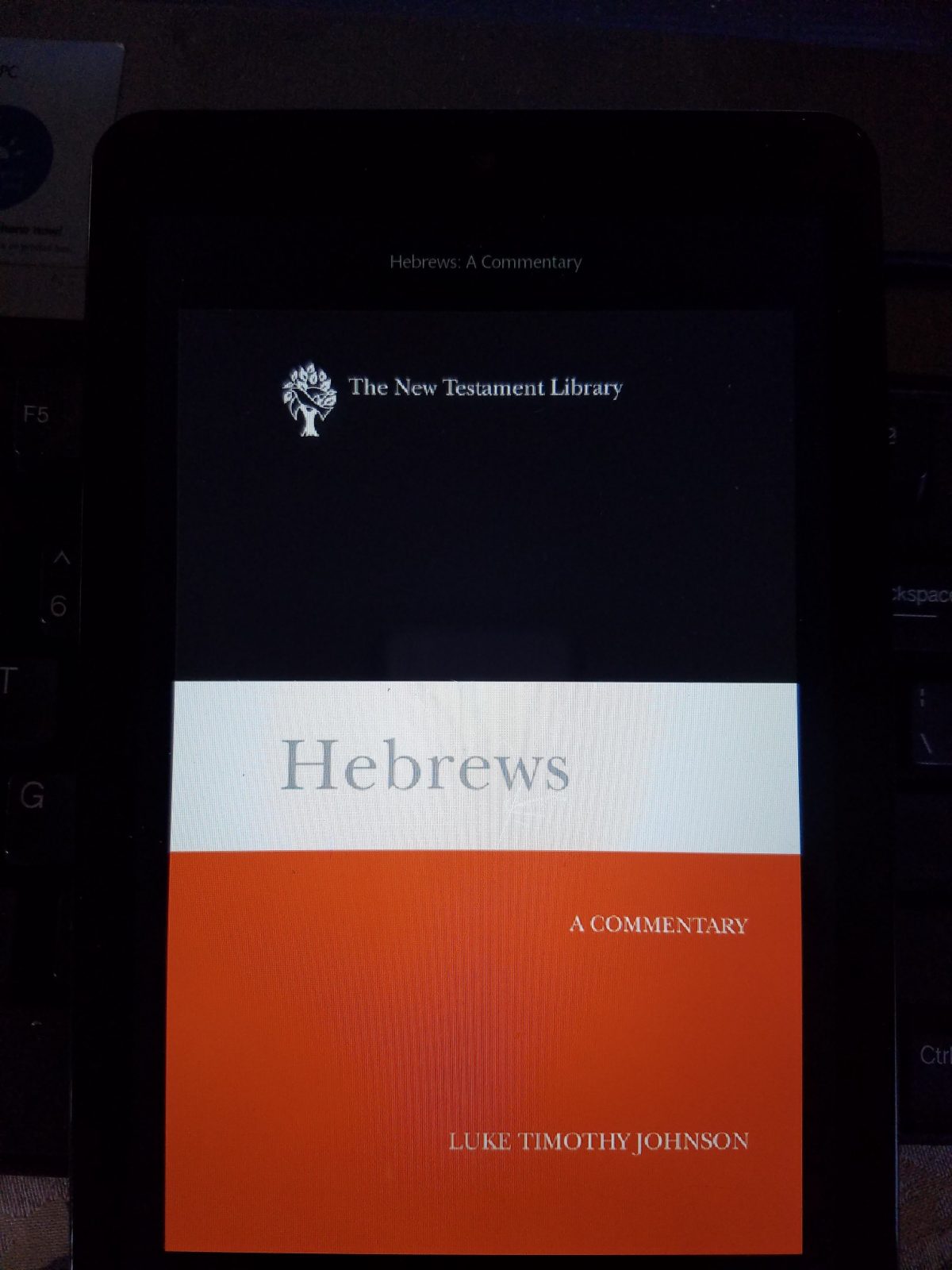
    I recently worked my way through Luke Timothy Johnson’s Hebrews: A Commentary (New Testament Library) along  with the Greek text, and I’m going to write a few notes on the book, which may, or may not, constitute a real review. Time will tell!

    The problem with many blogger book reviews is that they often amount to no more than various length notifications as to whether the author liked the book or not. There are some really wonderful exceptions to this, and you really can find a great deal of information about a title in the blogosphere, but you can also read many words (such as these) which don’t tell you a thing! As an alternative, you get an argument against everything the author wrote in the book, usually without sufficient quotations or references to let you get a feel for what the reviewer is arguing against.

    In my view the ideal review identifies the goal(s) of the book, comments on how successful the book was in accomplishing these goals, has some interaction with the ideas, and finally has a summary evaluation which is based on the stated goals. I recall reading a book about Christian apologetics. I thought it was well written, carefully argued, and thorough. There was one problem, however. The author claimed in the introduction that he would close all the holes in arguments from Christianity and the Bible. He compared the work of others to putting one leaky bucket in another: You slow the leak but you don’t stop it. He was going to stop it. In the end, if I was asked whether I liked the book, I would have to say “yes,” despite (or even because of) the fact that I disagreed in many places. Yet in a review I would have to say that the stated objective was not achieved, and making a claim that one would accomplish such an objective was, shall we say, suboptimal.

    In the case of a commentary, the difficulty is greater than with an ordinary book. There are two key problems: 1) Many people have very fixed ideas of what a commentary ought to do, and little forgiveness for a commentary that doesn’t accomplish their list of goals, and 2) People (particularly scholars) have quite a variety of very fixed ideas. No matter how you choose to write a commentary, no matter how large or small you make it, and no matter how carefully you draw compromises between never completing the task and short-changing the reader, someone will complain.

    I would like you to note here my own inconsistency. I’m writing in prescriptive language about what ought to be in a review, while arguing against prescriptive ideas about writing a book. I will live with this inconsistency.

    Besides, this isn’t a review. Here are my general thoughts.

    I found Hebrews: A Commentary by Luke Timothy Johnson to be the most helpful commentary I have read thus far in terms of stimulating theological reflection. By that I mean that the author doesn’t merely provide a view, but he argues it in such a way that it stimulates new thinking. My personal response to some of his views is that they are perhaps a little too tied to orthodox theology and a little less daring than the book of Hebrews deserves, but that is at the nit-picking level. Johnson knows how to present quite orthodox theology in a way that is challenging and helpful.

    As I studied using this commentary, reading the Greek text and taking second looks at the textual notes, I often found myself reflecting for some time after I’d read my chosen portion for the day. I rarely find that level of stimulation for thought in a commentary.

    This is not David Allen’s volume in the NAC series. Dr. Allen covers everything and references everything. The only negative thing I would say about his commentary is that I have to have some energy built up before I go to consult it. If you want a detailed and complete survey of the topic along with arguments in favor of a particular solution, but all means use David Allen’s work. On the other hand, if you want to get more quickly to the topic for teaching and preaching, use Luke Timothy Johnson.

    I know we don’t like to think that we might shirk some portion of the possible study of a passage we’re going to teach or preach. We’d like to think that we covered everything before we tried to present an exposition to others. But we all face the clock. Brevity is not a sin.

    So when I want to get right to meditating on the text, but with some solid meat to set it up, I turn to Johnson’s commentary.

    Now I haven’t called this a review, yet I’d like to present some interaction. I’d suggest, however, that I’ve already done this in blog posts on Hebrews written after reading material from Johnson’s commentary. You can start with Hebrews and the Problem of Writing Introductions. I could provide a number of links, but the simplest thing to do is to type “Hebrews” in the search box after you get to that article. Nearly everything I wrote on Hebrews after that point references Johnson.

    Note: I read

  • Is It Greek Pedagogy, Learning Skills, or Something Else

    Is It Greek Pedagogy, Learning Skills, or Something Else

    These discussions seem to come up all the time about learning Greek, but the discussion also applies to Hebrew. How one can imagine it’s critically important to learn Greek if one is to preach or teach, but not so much to learn Hebrew, I don’t know. But the degree requirements of various colleges and seminaries reflect just such an attitude.

    That said, I want to make some comments about learning and teaching, but more importantly about goals. Thomas Hudgins has written a good deal about this in a recent post, and he posted some material from Dave Black, which provides me a good link for that as well. Both make some excellent comments on pedagogy and what those of us who teach need from the students.

    On the use of the word “we,” I want to note that my role as teacher is vastly different from Dave’s or Thomas’s. I tutored Greek as a student in graduate school, helping Master of Divinity students get ready for tests. And that was indeed what it was: Getting them ready for the test. None had patience for letting me help them comprehend the subject better. They wanted to make sure they had memorized enough answers to get by on the test. Since then I have occasionally offered classes in the local church or tutored individuals who were trying to learn. The key element here is that people came to these classes because they had a goal, and they pursued the goal.

    And this is why I think we need to look at two other things. I used “learning skills” in the title, but what I really mean is the art and practice of being a student. There’s probably a perfectly good word for it, but short of suggesting you be a good talmid, I can’t bring it to mind. But beyond learning skills there’s motivation, and behind motivation there’s purpose, or perhaps mission.

    That leads me back to graduate school and my graduate advisor, Dr. Leona Glidden Running. I was truly blessed to have Dr. Running as a teacher and advisor. I learned enormous amounts from her in classes in Syriac (which I audited), Akkadian, and Middle Egyptian. From the list of languages you can see that I had the motivation for learning languages. Thus I learned from good teachers and some whose pedagogy may have lacked a bit.

    It was also Dr. Running who got me into tutoring and sent her students to me for help in both Greek and Hebrew. The problem with tutoring points me to what I think is a problem in ministerial education: Students going through language courses in order to check a box. We’re often fairly good at ditching traditions in Protestantism. Just look at the reformation! But folks, that was 500 years ago. What traditions have you ditched lately?

    What I encountered were students who were studying Greek because it was required for the degree, some of whom had been told by ministerial advisers, mentors, and church leaders that the only reason they should learn Greek was to get their degree, and most of whom would serve churches that didn’t care what biblical languages they might have learned. Is it any wonder that they just wanted me to help them through the test? I can’t count the number of times I was called within hours of the test, or late on a Friday afternoon or even working into Saturday with desperate pleas for that help. At this time I was a Seventh-day Adventist and I took my Sabbath seriously. (I’ve recently commented that it’s one thing from my SDA background that I really miss.) But these ministerial students who were supposed to be preparing to shepherd people in that tradition, were quite ready to ditch their Sabbath rest to get past the test.

    I know from reading what others have said that while the details may differ, the attitude is quite similar. Some seminaries have given up on the languages as a requirement. Often those seminaries are ones that have reduced the entire biblical studies requirement to a minimum. So study of biblical languages goes the way of Bible study, and it all happens without that much planning.

    So speaking as someone who thinks biblical knowledge is critical, let me suggest that we need to reexamine this entire process. What is a Master of Divinity degree for? What are our goals? Within that, what are the goals for knowledge of the Bible? Of biblical languages? Once we know what we need—and want—then we need to ask how we get it. Forcing students to take one or two (or whatever number) of semesters of Greek and/or Hebrew doesn’t accomplish anyone’s ultimate goal, at least anyone I know of. Nobody actually hopes that the student will pay tuition, check off a box, and leave with no knowledge that he or she will use (except possibly the university finance department).

    I don’t know about other biblical languages classes, but my teachers taught with the goal of having us learn to read the language. They knew they were only going to accomplish that in a few cases, but they still worked toward that goal. If the assumption of everyone else is that the student will not, in fact, learn the language, then we need to do something about that. That isn’t something that a Greek teacher can fix. He or she can try to motivate more students, to provide as much useful information as possible, but that all constitutes making the best of a bad situation.

    Amongst the possibilities that should be considered are requirements for additional classes in history, cultures, people (sociology/psychology), linguistics, or other topics that helps a person understand a written text. Perhaps, in addition, one might include classes specifically in taking complex ideas and expressing them clearly and simply (to whatever extent possible). Then we can aim the biblical languages classes at people who do actually want to learn to use the material.

    I have to put in my ritual dig at the whole educational system. I think that in the 21st century world the degree system is getting more and more out of date. Something more like the badges system that the Mozilla Foundation is sponsoring may be at least an early pointer toward a replacement. But that moves beyond this post …

    In summary, in languages as in anything else, we need to keep our focus on the mission. That starts with knowing what the mission is.

    And we don’t.

  • Thankful for the Gift of Suffering for Jesus?

    Thankful for the Gift of Suffering for Jesus?

    Because you have been graciously given this on behalf of Christ:
    not only in Him to believe,
    but also for Him to suffer. (Philippians 1:29, excessively literally)

    I’ve been meditating on two texts as the new year begins, Philippians 1:27-30, and Ephesians 5:1-2. I’ve been kind of ignoring this suffering thing so far. But last night listening to music in worship at Freedom Church Pensacola, it suddenly struck me to think: Do we have any songs in which we actually praise or thank God for suffering? There may well be, but I don’t recall one off-hand.

    This is certainly not a criticism of the church I was in at the time I thought it. I don’t recall this sort of thing anywhere. We don’t talk about it in the way Paul does here. In fact, we don’t really want to acknowledge the reality of suffering. Often our singing, praying, preaching, and indeed our living presents the pretense that nothing ever can or will go wrong. Have you ever heard anyone say in church, when a testimony is called for, that they have had a horrible week and just don’t know how they can go on? No! That’s a sign that they’re crazy. The intelligent and sane ones pretend.

    I don’t think Paul is saying here that suffering is wonderful and good in itself. I think the privilege is that the suffering that will come—and despite our desires, it will—is not vain and of no worth, but rather it is suffering on  behalf of the kingdom. It’s not cheering that there is pain, but rather cheering from the pain that whatever happens is not in vain.

    This reminds me of the Battle Hymn of the Republic and the frequent change of the line “as He died to make men holy, let us die to make men free” to “as He died to make men holy, let us live to make men free.” (You can find more on this here.) Those who have served in the military know that dying may be necessary. It’s not what you live for, but many people have faced death for their nation. Many Christians have faced or are now facing death for their faith. It’s a reality, but just as we change the line in the song, we’d rather not talk about it. Certainly, we don’t want to sing about it.

    Conducting ourselves in a way that is worthy of the gospel (Philippians 1:27) may involve annoyance, discomfort, suffering, and even death. God’s gift is that we do it in, with, and through Jesus Christ.


  • Experience, Authority, and Paul (Galatians 1:1-2:14)

    Experience, Authority, and Paul (Galatians 1:1-2:14)

    Last night for my perspectives on Paul series I reviewed what we’ve discussed so far and wrapped up my discussion of Paul’s claim to authority as an apostle. I can summarize this as follows: The Bible records religious experience, i.e., people’s experience of God in one way or another. (Even revelation, such as a vision, is an experience of the divine.) In order to understand, or even better, connect with the same narrative, one needs experience.

    Beyond the summary, let me note that my own personal experience of the moment is not decisive and authoritative. Yet experience does eventually become authoritative within a particular tradition.

    I mentioned some books I worked on at the end of last year as well as others I consulted. Here are some books and notes.

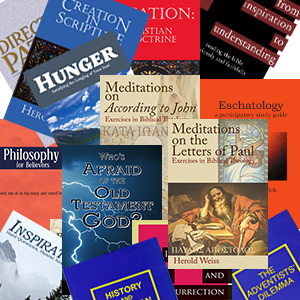
    Philosophy for Believers by Edward W. H. Vick. In particular, chapter 6, “Experience and God.”

    Inspiration: Hard Questions, Honest Answers by Alden Thompson. I was working on this in December. I think one of the key contributions Alden makes to the discussion is to focus so strongly on observing the process of inspiration in progress. One might say, “experiencing the experience.”

    The Ground of God: Contemplative Prayer for the Conteporary Spirit by Donna Marie Ennis. I brought this book in simply because it reflects spiritual experience. Often the intellectual approach reflected by biblical exegesis and systematic theology is contrasted and opposed to a mystical approach. I think an ideal will mix both experience and intellectual study. It was fun to read Alden’s and Donna’s books over the same period of time.

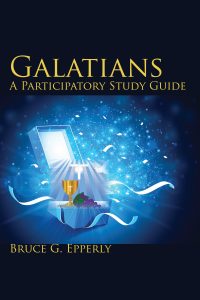
    Galatians: A Participatory Study Guide by Bruce Epperly. Bruce takes a fresh and refreshing approach to Paul. Often progressive writers dismiss Paul while more conservative writers read him in a narrow way. Bruce is a progressive, but he sees Paul as a creative, challenging, and exciting pioneer of theological thought.

    Meditations on the Letters of Paul by Herold Weiss. Herold’s approach to Paul is incredibly helpful with a series of essays on themes Paul addresses. This is his second book subtitled “Exercises in Biblical Theology.” The first was Meditations on According to John. One of the key contributions, I think, is to help bring together biblical exegesis and theological reflection, which are often divorced, unfortunately.

    So here’s the video:

  • Resuming Perspectives on Paul: Starting the New Year

    Resuming Perspectives on Paul: Starting the New Year

    I’ll review a bit of our material and where we are and then proceed with Lesson 2 of Bruce Epperly’s book, Galatians: A Participatory Study Guide.

    As I’ll be talking a bit about interpretation, let me also embed my chat with Elgin Hushbeck, Jr. from Tuesday night (01/03/2017).

  • God Perfected through Suffering

    God Perfected through Suffering

    For it was appropriate for
        him,
            for whom everything exists
                and
            through whom everything exists,
        in bringing many children to glory,
            the pioneer of their salvation
        to perfect
            through suffering

    (Hebrews 2:10, very literal)

    I wouldn’t suggest that any Greek students translate the way I just did, or your Greek teacher may suggest you learn English. I’m trying to bring the focus onto certain things and it’s sometimes hard to gauge what this is going to do for readers of the English text that results.

    I think this text is one of those that we tend to discount, because what it’s actually saying is a bit startling. In his commentary, Luke Timothy Johnson points out that this text forms a sort of envelope with 2:18, and that the verses between are a carefully structured argument. I quite agree, but I want to just bring your attention to the stark initial statement. Johnson emphasizes how outrageous this concept would be in the Greek world. I would suggest it would sound outrageous just about anywhere. When a Bible writer says something that sounds outrageous we have our defensive mechanisms: Discounting (take 20% or 30% off the rough edges), find a balancing text so we can believe that one instead, or just move on to something more edifying.

    In this case I think we tend to focus on the suffering, since we have heard the story of the cross so many times. That was something shocking to those who first heard it, but it has become routine now, not that when we’re called to suffer as Christ did, we take that very seriously. We  tend to think we’re suffering for Jesus every time we have a bad day. No, we’re just living in the world. Some days just aren’t as nice as others!

    But the idea that the Son, described in such majestic terms in Hebrews 1:1-4 is to be made perfect, or perhaps complete, through suffering is a little bit more difficult. Luke 2:52 notwithstanding, we tend to think of Jesus in majesty all the way through. Just look at all the halos around the baby Jesus in art. I suspect not so much halo spotting by Mary. In Hebrews, we’ll hear this theme many times, one of the key ones is 5:9, where “having been made complete he became the means of eternal salvation.

    I’d suggest two points here that we avoid, and we need to affirm and absorb instead:

    1. God is much more involve in and impacted by our lives and situation. The incarnation may have been an event in history, but it’s also an eternal reality. God is much more involved. We sometimes wobble between transcendence and immanence. God has no problem with both.
    2. The suffering and death of Jesus was a necessary part of atonement, in different ways. I do not affirm penal substitutionary atonement as the singular theory expressing the truth of the atonement. It is, in my view, just one metaphor that helps us think about our salvation. But if we think incarnation, to be complete it must be real, and, well, complete. Becoming human and then not facing death would be to become something other than human; rather, it would be a contradiction. So Jesus became complete as the means of our salvation by living and dying as we do.

    As difficult as it is sometimes to keep this in focus, salvation requires both the glory and the suffering. And when we are called to suffer, or even given the gift both of believing in Christ, but of suffering for him (Philippians 1:29).

    I don’t know about you, but I suspect that could involve more than some mild annoyances.

  • Quick Thought: Stewardship

    Preachers and teachers, myself included, frequently talk about how all that you own belongs to God, but most commonly it is in the context of getting more money for a particular church or ministry. Having led a non-profit ministry, I understand the pressures here.

    So: What if we talked about stewardship not less often, but more often, but did so in other contexts, such as:

    • Using and investing your money wisely so that you can carry out God’s mission to your family
    • The needs of other ministries
    • Concern that the way we produce wealth is consistent with being followers of Jesus
    • The realization that this planet and this universe belong to God just as we do
    • Care for those outside our church or ministry
    • Concern for the needs of someone else’s ministry, one that isn’t involved in paying my salary or increasing my prestige.

    Just some thoughts. I believe everything belongs to God and we should use what we have and who we are as God guides. But that is a 365/24/7 topic, not in the nature of a fund drive.

  • A Good Book Review – Running My Race

    A Good Book Review – Running My Race

    A good book review is not one that says nice things about the book, although nice is nice, so to speak. I occasionally read a positive review that makes me wonder whether the reviewer read the book. There are likewise negative reviews that make one wonder. As a publisher, I must take all these in stride.

    A really good review, however, is one that shows the reader read the book and also got from it something the author and publisher had hoped to get across.

    Thus a review of Running My Race (David Alan Black) on The Tired Blog. I was feeling fairly tired today, and then I read this review. It really cheered me up. If I can publish a few books each year that make readers uncomfortable, then I’m doing my job.

    Of course, as publisher I’d also like to note that Running My Race is a good book! 🙂


  • Ignoring the Biblical Teaching about Greed

    Ignoring the Biblical Teaching about Greed

    Credit: Openclipart.org

    On a variety of subjects I regularly hear about how people ignore the plain teaching of scripture. I’d like to take away the phrases “the Bible clearly teaches” and “the plain teaching of scripture” from conservatives, while taking “we don’t take that literally” away from liberals. Then maybe we could get around to discussing the nuances and appropriate social contexts for some biblical materials.

    But one thing that I hear about much more rarely is the sin of greed, surely one of the things Jesus talked about very frequently in a number of different ways. I’d like to nominate “committing all that I possess to God” as a pretty clear teaching of Jesus.

    Nobody is really saying “greed is good” using the word. Instead, we justify greedy actions by ourselves and others. I’d be very shocked to learn that more than a couple of percent of the possessions of the Christians in the United States was committed to God (or the church), and of what’s committed to the church, a significant amount is used in a self-centered manner.

    Perhaps this would be an important topic on which to make a new commitment as we observe commercialism and greed used as a way to celebrate the birth of Jesus, who had no place to lay his head.

    That was all launched as I was looking back through Christmas stories from my fiction blop (The Jevlir Caravansary), and found How Scrooge Got It All Wrong.

    You see, what Scrooge really needed was some good, modern business advice!

  • Why I Publish Books by and for Seventh-day Adventists

    Why I Publish Books by and for Seventh-day Adventists

    This may seem like a simple question. A better one might be, “Why not?”

    Some Prefatory Remarks

    sda booksSeventh-day Adventists (SDAs) are often misunderstood, which complicates the issue. If I had transferred my membership from a Presbyterian church, for example, to a United Methodist congregation, it’s unlikely anyone would ask me why I maintain relationships with Presbyterians. As an ex-SDA, however, I’m often asked questions like the one I’m trying to answer right now. SDAs ask me how I could possibly leave the church. At an SDA church where one of my authors was speaking, a young man exclaimed to me, “How could you possibly have difficulties with SDA doctrine?” If you want to understand why I left the SDA church or how I feel about it, you might try reading The Joys and Sorrows of Being ex-SDA.

    Here’s my key point: While I disagree with the Seventh-day Adventist Church on a number of doctrinal points, especially on issues of prophecy and some applications of the (otherwise valuable) term “remnant people,” I still regard them as brothers and sisters in Christ, in the same way and on the same basis that I regard fellow Methodists, or members of Presbyterian, Baptist, Assemblies, United Church of Christ, independent, or any other Christian congregation. I have disagreements on doctrine with pretty much everyone I know (often including yesterday’s version of myself), and that doesn’t make me deny Christian fellowship.

    But there are always those other questions about SDAs. They’re different, yes, but they’re more different in weirder ways than others. Which reminds me of the church Staff-Parish Relations committee that decided that an SDA speaker, who had also spoken at continuing education events for pastors at the conference level, could not be allowed to speak at their church. Having read something about Latter Day Saints, they were certain they didn’t want an SDA to speak. Surely we should stick to Methodist speakers.

    There are two forms of ignorance here. 1) There’s ignorance of precisely who SDAs are and what they believe, and 2) There’s the ignorance of just how much weirdness we have in mainline denominations. If I need to find a crazy speaker, but am limited to those who are United Methodists, I will have no difficulty at all!

    What I Publish

    So what does this have to do with publishing?

    Very little, actually. It’s just that people expect it to.

    I frequently have to remind people that I am a Christian publisher, publishing books selected for a Christian audience. That doesn’t mean that all our readers are Christians. What’s more, it doesn’t mean that all our authors are Christians. In a blog post titled Why Did You Publish THAT Manuscript? (on the Energion blog), I noted that “We judge manuscripts and not authors here at Energion Publications.”

    To me that is a rather obvious point, but it has raised questions. In order to guarantee the publishing of Christian authors only I would have to first define the boundaries of Christianity, and then make myself the judge of whether someone had met those criteria or managed to fall within those boundaries. I can do that for myself with regard to organizations and systems. It’s a simple matter of definitions and categorization. To do it with persons would be problematic. In fact, I personally simply accept anyone’s self-confession of what their religious view is.

    Further, as publishers have discovered before, it’s much more difficult to determine whether a person is a good person than it is to determine whether a manuscript is a good manuscript. I choose to deal with manuscripts.

    Seventh-day Adventists

    I think my earlier remarks largely answer the question. When a manuscript by an SDA author seems to me to be of interest to my audience, an audience which definitely does include SDAs, I’ll publish it, always provided it meets other necessary criteria. I avoid publishing books that are of interest to only one denomination, for example.

    Here are some specific points:

    • Am I on a mission to convert SDAs and get them out of the SDA church? No. I have no intention of persuading anyone to leave their denomination. In fact, I will state that if you’re leaving any church, including the SDA church, because of anger at the organization, you’re going to find plenty of imperfections wherever you go. If you leave a church congregation or a denomination, do so for positive reasons. I may disagree with some doctrines of the SDA church, and so I moved to an organization that is more doctrinally compatible with my views, but I applaud and highly value the SDA educational and health systems. I also value much of the theological work done by SDAs over the years. I can both disagree with, and value, ideas.
    • What about the seventh day Sabbath? I consider the Sabbath a part of one’s approach to worship and a spiritual practice. Where I have seen it carried out as a spiritual practice, I find the seventh day Sabbath valuable. As with any other activity, it can be converted into a legalistic “work,” but the key here is “any other activity.” Because keeping the seventh day as the Sabbath stands out as unusual, people take it as extraordinary evidence of legalism. But it’s simply one more practice that can be positive or negative. I have said before that I miss the Sabbath as practiced in SDA circles. I have other means of seeing sacred time, but there’s nothing that quite matches taking sacred time together with a community.
    • Don’t SDAs think they’re the only true Christians? Some of them do. So do one or two Methodists. I think this is a problem for the SDA church partly because of teaching about God’s remnant people. But I have no problem with SDAs as a group over it. Most SDAs that I encounter treat me as a fellow-Christian even though I have left the church. There are occasional folks who treat me as an apostate. I believe that could be solved if there were no people in the SDA church. As things are, we’re stuck with it.
    • But SDAs don’t believe we go to heaven when we die! Indeed they don’t. Neither do I. I think the Bible is actually quite unclear about what happens after death, but the balance, I believe, favors soul sleep and a resurrection. I just don’t happen to think it matters. Arguing about this is very time-bound thinking. If I die and go to heaven immediately, there will be one breath here and next (breath? who knows?) on the other side. If I die and sleep with God until the resurrection, there will be one breath here, and the next (whatever!) on the other side. I won’t know the difference. (I publish several books related to this: Eschatology: A Participatory Study Guide, From Here to Eternity, Journey to the Undiscovered Country, and the forthcoming Death, Immortality, and Resurrection. The first and last are by Edward W. H. Vick, an SDA author.)
    • SDAs believe in Ellen G. White, a false prophetess. Got you now! Ellen White did indeed have a great deal to do with the founding of the SDA church, though I find her own view of herself and her mission refreshingly humble. I also find a number of her writings to be excellent devotional works (Steps to Christ, Desire of Ages, etc.). We have a voluminous collection of her writings, including letters that she wrote over a long life. The SDA church has had some struggles over how to view her and her relationship to the Bible. Bluntly, however, I’ve found traditions in local congregations of the United Methodist Church that have more sacred standing, in practice, than her writings do in the SDA church. I would say, rather, that the church as a whole, and the modern Charismatic and Pentecostal movements in particular, would do well to learn from the SDA experience. Speaking of which, I’m in the process of releasing Inspiration: Hard Questions, Honest Answers by Alden Thompson. He deals with issues of Ellen White in connection with discussing biblical inspiration in a work that I think the wider church would do well to study.
    • How do I deal with SDA authors in my catalog and marketing? Like any other author. I’ll advertise their books for their own denomination, but also present them to others for their wider value. And just like any other author, SDAs may write something that’s addressed more to their own church than to others. In that case, they will be more likely to publish within the denomination, again just like any other author might. I neither emphasize nor do I conceal the denominational connections of my authors.
    • Do my SDA authors quote Ellen White in their works? Yes, and no. I tell them to quote Ellen White as they normally would and if it’s necessary, we will add an explanatory note to the book so that others can understand and still benefit. This is a function of the level of controversy surrounding her work, rather than any judgment of it that I might make. Because there is controversy, explanation is helpful. On the other hand, when addressing the larger Christian community, SDA authors often feel it’s best to make their points without reference to an SDA specific source.
    • Are you trying to provoke dissent in the SDA church? No more so than in any other church. I do have some books in my catalog that have gone out of print from SDA publishing houses. The level of controversy in the SDA church has nothing to do with my decision. I still judge the book, not the author, and certainly not any former publisher. But beware! I’m not the arbiter of truth, and certainly not the arbiter of SDA doctrine. If you don’t want your beliefs challenged, then it’s my hope that my books are not for you!

    Conclusion

    I publish SDAs in the same way and on the same basis as I publish anyone else. It’s that simple (he says 1600 words later)!