Threads from Henry's Web

Author: henry

  • Of Isaiah 40 and Grasshoppers

    Of Isaiah 40 and Grasshoppers

    Last night in our Tuesday night group we discussed this rather interesting chapter, one that I believe expresses the basics of the gospel message well.

    Now I don’t mean by this that it mentions the name of Jesus or even directly predicts anything about his ministry. There is some material here that is used of John the Baptist and Jesus, but that is another subject. What I mean is the basic principles. I will express these as: We can’t, God can, God does.

    There are those who find the whole depravity thing in Christian theology somewhat morbid. But there’s a really simple point, and one I think is obvious once you see it. We really can’t!

    Once we accept the fundamental idea of God as creator at all, we accept total dependence and our inherent smallness. As Isaiah calls us, grasshoppers. God looks down from the circle of the earth and the inhabitants (that’s us) are as grasshoppers.

    If we think about it for a moment, not only can we not do good without God, we can’t do anything at all. We can’t exist. We are, before our creator, nothing at all.

    And yet!

    And yet, God is coming to God’s people. God cares, in great detail.

    Here is the Lord GOD; he is coming in might,
    coming to rule with powerful arm.
    His reward is with him,
    his recompense before him.
    Like a shepherd he will tend his flock
    and with his arm keep them together;
    he will carry the lambs in his bosom
    and lead the ewes to water.

    (Isaish 40:10-11, REB)

    God’s greatness is not something that should make us miserable. Face it, we have looked at the universe and it is incomprehensibly large. We are small. Yet we are significant. If God is the creator, as we believe, then God is incomprehensibly large, and we don’t really have anything to offer.

    And yet!

    When I consider your heavens
    the work of your fingers
    the moon and the stars
    which you have put in place,

    What is a human being
    that you take notice?
    A mortal that you seek him out?

    Yet you have made him a little lower than God,
    with glory and honor you have crowned him.
    You have made him rule over what your hands have made.
    You have put everything under his authority.

    Psalm 8:4-7 (my translation)

    Isaiah 40 tells us that while we can’t, God can, and God will.

  • A Morbid and Boring Christianity

    A Morbid and Boring Christianity

    The quote above comes from chapter 1 of S. J. Hill’s book, What’s God Really Like?, and I’d like to spend some time with this, looking at it from different angles. The first angle is one of worship.

    I was in a church committee meeting some years back where a room full of people were discussing young people and the worship service of the church. The question under consideration was why young people weren’t attending our worship services.

    After about 45 minutes of (fruitless, in my opinion) discussion, I asked the question: Might we instead discuss whether we can think of any reasons why the young people would attend our worship service?

    I, and every other person in that meeting, attend church out of ingrained habit. We have done it for years, it’s what we do, and come Sunday morning, come hell, high water, or several feet of snow, we’re going to find a church service and attend it.

    I don’t mean that that’s the only reason I go to church, but it is something I tend to do. If I don’t like one worship service, I’m going to attend another.

    But many people, oddly enough (!), require a reason to get up on Sunday morning and go to church. They want to accomplish something.

    At this point some of my friends start talking about “dumbing down” the worship service, or want something “relevant.” The tone indicates that “relevant” is some sort of weak effort to replace “real worship” which will involve actual pain and require grit and determination.

    “I barely stayed awake through that service,” says the parishioner, looking and sounding holy. Going through a boring worship service is a test of our commitment to God.

    Well, perhaps not.

    As I read passages like 1 Corinthians 14, I see the word “edify,” which is just a churchy sounding word for “build up” or something similar. The worship services at Corinth sound a bit chaotic, and, well, interesting. Paul encouraged them toward order, but in the end, if you apply all his rules, you still have something very different from what we do today.

    Our problem with 1 Corinthians 14 is that we try to apply the solution without having the same problem. We put a straight-jacket on a corpse. The corpse, in case you missed it, is our time of worship.

    Now a morbid, boring, and unattractive Christianity is not just about the worship service, but I think we might start there. You see, I think all those complaints about young people wanting relevant service are just whining. Whining because the young people don’t like what we did all our lives.

    But if you look at the state of Christianity in America today, I think you’ll see evidence that was we did all our lives—and I’m talking to my generation (I’m 61)—hasn’t worked all that well. Perhaps we need worship that is actually relevant.

    Relevant in several ways:

    1. In expressing our relationship with God. (Subtext here — we might need to have a relationship with God and not just a set of theological reflections.)
    2. In preparing us for actual service. (We tend to use the word “ministry” a lot. I think that allows us to separate ourselves from the word. How about “every member serving others” instead of “every member in ministry”?
    3. In help us to build our relationship to God.
    4. In helping us learn to relate to one another. (Hint: sitting in pews listening to a preacher, then heading out to beat the Baptists [or whoever] to lunch doesn’t build your relationships with other people.)
    5. In encouraging us in our lives as they are in this world.
    6. In helping us realize that “worship” doesn’t occur in a “service,” nor does it follow an “order of service,” but is a lifestyle. In fact, it is our lives (Romans 12:1-2).
    7. In helping us learn new and useful things.

    Is that what happens when you go to church?

    This just barely touches on this question. I’d like to discuss it some more. S. J. Hill is definitely right about one thing: The way we think about God is going to impact everything. If we think of God as interesting, involved, and yes, cool, we will thing that interesting and exciting things are part of worshiping God. If we think God is vindictive, we’re going to look for the right set of rituals to appease him.

    If we’ve really forgotten, as I think many of us have, to think about God seriously (serious and joyful are not contradictory!) at all, that’s also going to impact the way we worship.

    If God showed up on Sunday morning, would God enjoy what was going on?

  • Making Theology Accessible

    Making Theology Accessible

    One of my concerns as a publisher is making the material accessible to everyone who is interested. This means learning to communicate ideas about our faith and about God clearly and effectively. I am certainly not a master of this goal, but I believe it’s always worth pursuing.

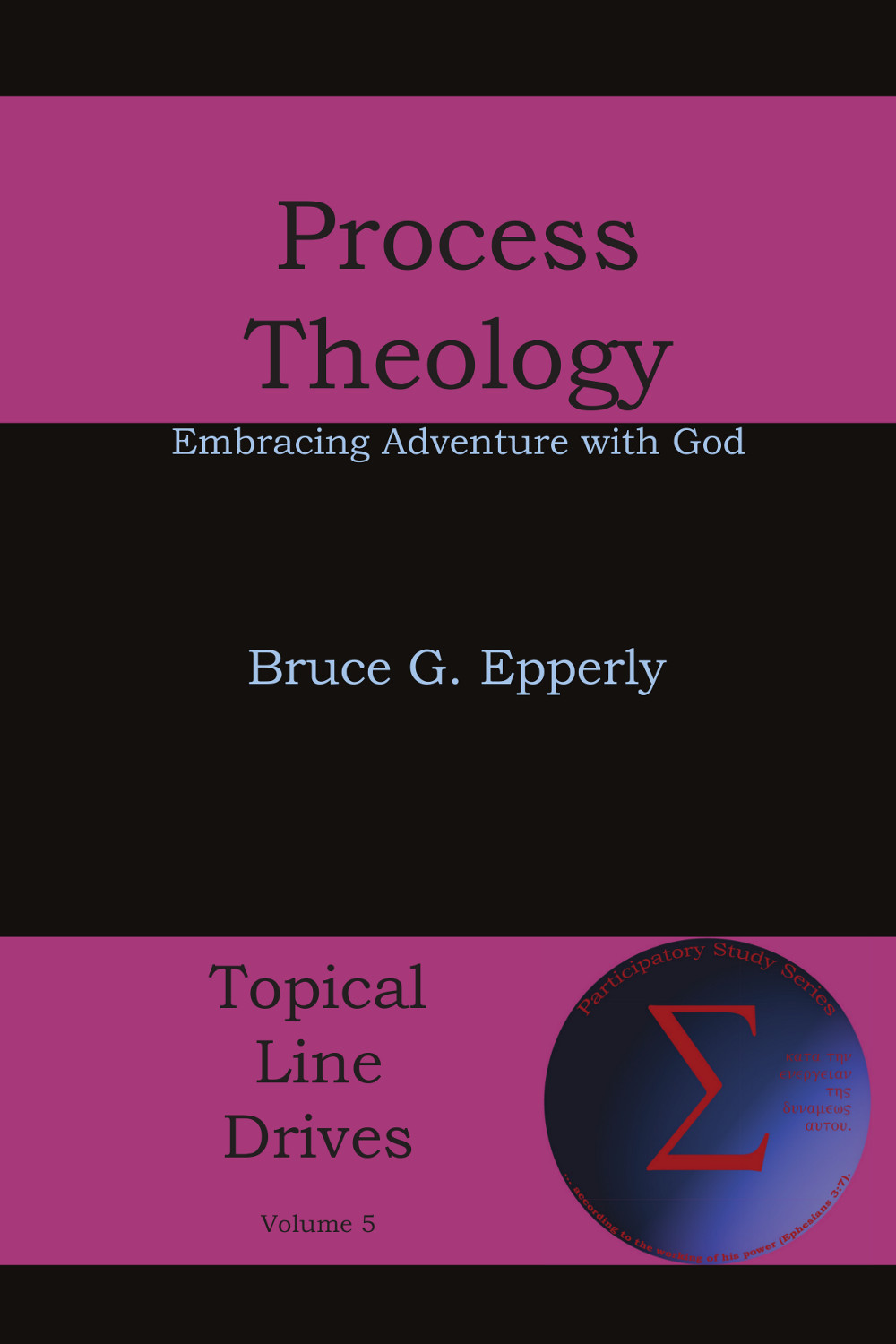
    One person who has mastered it, I think, is Dr. Bruce Epperly, and I recently recorded a series of short videos with him. I particularly asked about the presentation of process theology. Process theology is often looked on as obscure, a pursuit of academics and not of pastors and persons in the pews.

    Some time ago I asked Bruce to produce an introductory book on process theology for Energion’s Topical Line Drives series. This means a presentation in about 12,000 words. Some friends told me this was impossible, but Bruce did it, and it has become one of our more popular books.

    In any case, here is Bruce’s answer about accessibility of theology.

  • On Violence in the Bible

    On Violence in the Bible

    Allan Bevere reviews L. Daniel Hawk’s new book The Violence of the Biblical God.

    I cannot resist calling attention to a much earlier book by my undergraduate advisor and mentor Alden Thompson, which it happens I publish! It’s Who’s Afraid of the Old Testament God?.

  • Link: Expansion of the Universe

    Link: Expansion of the Universe

    How Did The Universe Expand To 46 Billion Light-Years In Just 13.8 Billion Years?

    This relates to one of my favorite statements: Everything is a matter of perspective.

    Not to mention the apostle Paul’s statement: “If anyone thinks he knows something, he doesn’t know it as he ought to” (1 Corinthians 8:2).

  • A Different View on Hezekiah

    A Different View on Hezekiah

    I will now do on my blog what I did last night for my Tuesday night group. Contradict my previous post. Here’s the idea in a Monty Python sketch:

    Watch to the end. I dare you!

    What I did was quote a scholar whom I respect, and in fact who has been my companion through much of my study of the book of Isaiah, Brevard Childs.

    For my part, I am unconvinced that these explanations help in understanding the judgment [the exile-HN]. The very fact that the narrator of the chapter is unwilling to proceed in these directions should check the need for supplying reason. The writer’s emphasis rather falls on establishing a link from one event to another. The judgment that was shortly to occur was not by accident of even directly evoked by the king’s misdeed, but unfolded according to to a divine plan. This theme clearly emerges in the response of Hezekiah to the prophet. Ackroyd (“An Interpretation of the Babylonian Exile,” Studies, 157ff.) has mounted a persuasive case against interpreting it as a smug response that the judgment will not personally affect him. Rather, it is an acceptance of the divine will in which Isaiah’s form of the response (39:8) emphasizes the certainty of divine blessing at least in his lifetime.

    Brevard Childs, Isaiah, Old Testament Library, (Louisville, KY: Westminster-John Knox Press, 2001), p. 287.

    For my part, I am unconvinced that the normal sparseness of Hebrew narrative is an indication of a lack of moral commentary. I admit that I may read this too much in the context of 2 Kings, but I think the Isaiah context supports this adequately. But Brevard Childs is a really excellent commentator.

  • Hezekiah’s Horrible Prayer

    Hezekiah’s Horrible Prayer

    We’ll be continuing our discussion of Isaiah 36-39 tonight in my Tuesday night group, hopefully finishing that section. Last week, we looked at Hezekiah’s prayer for healing.

    For those who may not remember, it’s a short one:

    “Remember now, O LORD, I implore you, how I have walked before you in faithfulness with a whole heart, and have done what is good in your sight.” And Hezekiah wept bitterly.


    The Holy Bible: New Revised Standard Version. (1989). (Is 38:3). Nashville: Thomas Nelson Publishers.

    No confession, no praise. Just “Look how good I am!”

    I’m going to guess that most of us have prayed prayers just like this one. Why is this happening to me? I’m doing ____ and this is what I get?” It’s not unnatural. In fact, it’s very natural. Of the flesh, even!

    So God hears Hezekiah’s prayer and sees his tears. God gives Hezekiah what he desires.

    Is it a good thing or not?

    We tend to see healing as always a good result. In this case, I think it’s worth thinking about the story. During that 15 years we have the visit of the messengers of Merodach-baladan from Babylon, to whom Hezekiah shows everything. Very little is explicitly said, but God clearly does not approve.

    It is not unlikely that this meeting was a plan for alliance, presumably against Assyria, as Babylon was aiming to retake the lead position in Mesopotamia, something they didn’t accomplish until Nabopolassar accomplished it late in the 7th century BCE.

    Did God see this as a denial of the protection God had just promised to Hezekiah and to Jerusalem?

    Then in 2 Kings 21 we see Manasseh, generally considered the worst king of Judah, took the throne at 12 years of age on the death of his father. His birth would have occurred in those 15 years added to Hezekiah’s life.

    I can’t help but contrast this to another answered prayer, as mentioned in Hebrews 5:7. In reference to Jesus’ prayer in the garden, we are told that he was heard because of his reverent submission. Yet the cup did not pass from the hands of Jesus. Jesus went on to the cross.

    Sometimes the best answers to our prayers may not involve us getting what we asked for. Getting what we asked for might not be the best result.

    (Theme Image Credit: Openclipart.org.)

  • Respect, Disrespect, and Conscience

    Respect, Disrespect, and Conscience

    I have seen a number of posts suggesting that those who won’t recite or stand for the pledge of allegiance are disrespectful, or perhaps just badly behaved. Good people, by implication, will say these words and join in the group.

    My view of this is formed by my upbringing. I am a United States Air Force veteran. I was not wounded. I really didn’t feel great fear for my life, but I have the “been there” medals for three different overseas military actions. I am both proud to have served, and believe I did right by doing so.

    My father, on the other hand, was a conscientious objector. He was a Seventh-day Adventist, and believed that taking lives even in war was wrong. He would have served in a medical capacity, but was not allowed that option in Canada during World War II. Some Canadians were accepted into medical roles, but many were not. So he spent World War II planting trees.

    This was not a matter of disrespect for his county. It was a matter of conscience. He believed that training with and then carrying a rifle into combat was wrong. Obviously, I disagree. My participation in the military was without limitations. No, carrying a rifle is not the Air Force thing, but however distant we may be, in war people die partially as a result of our actions.

    My dad also respected my choice, as much as he disagreed with it. He would have preferred that I not go into combat. We didn’t discuss it that much, but we knew the score.

    So when people say that by protesting a war or any policy of the government someone is disrespecting my service, I firmly disagree. One of the things I am proud of is that my service helps defend a country where a conscientious objector can be diverted to service in some other way in war time.

    I also defended a country which has, as one of its founding stories, the revolutionary and protest action of dumping tea—a commercial product of value to its owners—into the harbor in protest of the taxes imposed on it.

    Some of the folks I see commenting today would surely have been incensed at this action. Destruction of public property! Against the law! Disrespectful! Aren’t they grateful for the defense provided by the British troops?

    These protesters, however, felt that this was an important issue, with underlying principles that were worth breaking the existing law in order to protest. They were very, very disrespectful.

    I know there are people who just don’t care for any form of authority. But the majority of cases come from two groups of people: 1) Those who have a reason of conscience for their actions, and 2) Those who believe they have been so badly handled by our society that they need to shake things up to get noticed.

    Like my dad, who believed that in spite of conscription laws, God’s law said he could not fight in the war, some believe that they cannot swear oaths. This might be because Jesus said that (Matthew 5:33-37). Now I have a different interpretation of that passage, but some people believe that this is a specific and literal command. They don’t believe they can take oaths.

    I’m glad that I served in defending a country that makes exceptions for those who do not believe they can swear an oath. There is alternative language that is permitted. I’m glad of that, I support it, and I am glad that I defended it.

    Others don’t believe they can swear allegiance, or even affirm allegiance to any earthly power. Thus, “I pledge allegiance to the flag” is, to them, a denial of the sovereignty of Christ and acceptance of a lesser power. I don’t agree with them, as I believe every claim or affirmation I make falls into a category that is less than my allegiance to God, but that doesn’t change their consciences.

    Again, I am glad to have served to defend a country that allows this right and I am disturbed when people mock them or make fun of them. They are following their conscience and are right to do so. I would say that they need to be “convinced in their own minds” (Romans 14:5, mildly out of context, I think!).

    Further, if someone believes they have been so mistreated by our society that their best recourse is to call attention to the problem through acts of protest, whether or not I approve of their approach, I am not the one who has been treated unfairly. It is not for me to judge the depth of either pain or conviction, or more probably a combination of both, that has led to an act of protest.

    I am again glad to have served to defend a country that will allow such protests. It is important that they be permitted. Don’t complain if the person doing the protest is privileged (yes, think Colin Kaepernick), because that person may well be using a position of influence on behalf of others less privileged.

    Further, I don’t have to approve of the cause. The important thing about freedom of expression is that one is free to express things of which I (or anyone else) disapproves. Freedom of speech or expression is not for the things of which society approves. You don’t need a bill or declaration of rights to protect the things the majority wants to do. It’s there to protect the things that the majority disapproves.

    The cause is separate from the method as well. I don’t have to approve even of the aim of the person protesting to approve of his or her right to protest. That again is why we need a right to freedom of speech. It’s for the things that make us angry. It’s for the people we want to shut up. Those are the people who need, and should have, protection.

    There are religions of which I do not approve. No surprise there! You can note my disapproval because I haven’t joined those religions. But that is what freedom of religion is for. It protects the practice of religions that are not in the majority and may not be approved. And yes, this includes Islam, which, contrary to many assertions recently, is a religion.

    And yes, I extend this to those of differing political views. This continues to apply whether they’re wearing MAGA hats or have Bernie Sanders bumper stickers. It’s most important that we have a free exchange of ideas in our society.

    If this annoys you, just remember this: I also support your right to be annoyed. Enjoy!

    (Theme image from Pixabay.com)

  • Sin and the Church as Community

    Sin and the Church as Community

    In what he confesses is a long post, but is still shorter than my normal post, Dave Black discusses how to translate the Greek word ekklesia, both in terms of an English word (he chooses “community”), and in practice.

    I’ve been discussing this in connection with the question of dealing with sin in the church. Many mainliners don’t want to think about this, or even think we shouldn’t deal with it. It’s part of “not judging.”

    But then you have issues such as sexual abuse which must be dealt with, and we find that we really don’t have any idea what to do.

    In the several cases in which I have had the opportunity to discuss this, I have always come back to this: We cannot adequately deal with sin in the church because the church is not functioning as a community. There are many elements to this issue, including clergy-laity distinctions, or more precisely leadership-followership.

    People have been told not to report evil, because they will damage the reputation of a “good man.” (I suppose it could be a good woman, but I have heard it several times, and only regarding the reputation of good men.)

    We need to be looking at—and implementing—ways of making the church a functioning community. One characteristic (of many) of this would be that we do not excuse abuse by leaders.