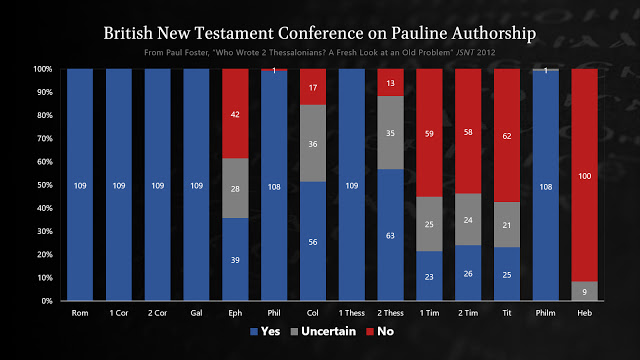
Data collected by Paul Foster at the 2011 British New Testament Conference (Hat Tip to Peter Gurry on Facebook)
While I imagine there might be minor variations in a survey of American scholars, I think the results would be similar.
It’s always fun to see the numbers on Hebrews, since I would describe myself as uncertain (with the nine and not the 100), but also publish the book The Authorship of Hebrews: The Case for Paul by David Alan Black, which argues forcefully for Pauline authorship.
I remain unconvinced of Pauline authorship, but Dave did more to move the needle for me than anyone, and I believe he argues his case in exemplary fashion, which is why I published the book.
Last night in our Tuesday night group we discussed signs and guidance. How does one get and follow the right guidance from God?
We were reading the Matthew 2:1-12, and following my gospel parallels, I suggested a parallel reading of Luke 2:8-20, which we did. You have various signs, a report of scriptural interpretation, dreams, and angels between the two stories. There are some remarkable parallels of content, along with some substantial differences, fitted to the message of each gospel writer.
But being a person who likes to set off discussion I asked about our individual ability to hear from God. How would we feel about the various means of receiving a message from God? How would we discern whether a message really was from God.
Pretty much everyone had experienced the twin claims about hardships. On the one hand people will claim that you’re obviously getting close to something big, and the devil is trying to prevent you from getting there. On the other, there are those who would say that if you’re on the right path, things will be easy, so you should correct course.
The same sign seems to mean two different things.
We mentioned some responses at the time to the fire at Notre Dame cathedral. Any lover of art and architecture can hardly help but be saddened by that fire. Yet it immediately has become a “sign” for many things.
At Energion, we’re releasing a book titled Ditch the Building on May 17. It’s available for pre-order now. It’s definitely not connected. But in some people’s minds, it could be. The fire has been seen as a sign of the times, of disasters to come for our planet. It’s been seen as a sort of judgment on dead religion. My Facebook feed is littered with lessons being learned with varying degrees of actual connection. Well, really very little connection.
No matter whether you are listening to a new idea, a message someone claims to have received directly from God, or the interpretation of a passage of scripture, your individual mind, enlightened by the Holy Spirit, is the final filter to separate sense from nonsense. The last person, and the decisive person, to hear from God is you. Even the firmest believer in the detailed accuracy of the text of scripture will realize that many interpretations of that scripture are nonsense.
… This is the other end of the telephone cord. Inspiration is not just about God. It is about how God communicates with human beings. Thus it is not just about God’s perfection; it is also about humanity’s imperfection. It is not just about God’s infinite perspective; it is also about humanity’s finite capacity to understand.
The human mind is probably the most neglected part of God’s creation….
Loved ones, let’s love one another, for love is from God. Everyone who loves has been born from God and knows God. The one who does not love does not know God, for God is love.
1 John 4:7-8 (my translation)
People often deride “love preachers,” because the message of love is regarded as weak. And there are love preachers whose love is actually weak. But divine love is a very difficult topic, because divine love leads to giving of oneself for others. If that’s easy, you’re probably not doing it right.
Here’s the hard part for me: Loving the person who doesn’t seem to believe in love.
The religious person
The judgmental person
The hateful person
The purposefully ignorant person
The shallow person
The person who thinks my love preaching is weak!
In preaching that we need to love people who are addicted to some substance, or are homeless, are poor, or in some way different (faith, race, nationality, sexuality, etc) it is easy to break into condemnation of those who don’t agree and will not join me in loving my people list.
The people I list need our love as much as, or more than, the others. We do not expect condemnation to help people who are struggling with addiction, for example. Indeed, I don’t believe condemnation helps at all. I have to remember my many imperfections and realize that I also am not helped by condemnation.
The challenge, I think, is to love those who hate, to treat respectfully those who are disrespectful. As Jesus said, “Love your enemies.” I suspect it might be a good strategy.
A few years ago I heard a story about a Methodist District Superintendent who was visiting a church in his district. The church was conducting an afternoon training event. At the height of this event, the superintendent asks the pastor of the church how many people he thought were in attendance. The pastor looked around and replied, “About 400.” The superintendent said, “Oh, how many does this sanctuary seat?” “250,” responded the pastor, unperturbed.
It makes a great joke, backing up the phrase “clergy estimate,” but it also illustrates a problem that we have with the church. We have a fixation on numbers, and we’re often not quite sure what numbers we’re fixated on. We’re reasonably sure, however, that these numbers are supposed to be large.
Thus the clergy estimate. Let’s make it look like we’re doing well, because the appearance of doing well is all-important. What gets lost in the discussion and the paperwork is just what those numbers mean.
I wrote a post about the characteristics of a living church back in 2006, and I don’t see any reason to change anything I wrote then. What I’m looking at here is our tendency to measure. The health of a living church that I noted back then is not that easy to measure.
So perhaps I prefer a small church? Smaller churches have certain opportunities for community and for ministry that larger churches might not. Smaller churches are sometimes perceived as more faithful, more orthodox in their Christian beliefs.
No, not really. My problem is with our measurements of success. I won’t link to the site, but today I saw posts for ebooks that would tell you how to reach the visitors who come to your Easter service and get them to come back to church.
Inadequately impressed by the resurrection? There’s a program for that!
The same site offers to provide you insight into strategic hires to help grow your church. If you follow the directions and hire the right people, your church will grow. You can sell your church service just like laundry soap or hamburgers.
There are those who will say I’m being unfair. Good business practices are good for a church. Yes, good business practices in finance and management are important for an organization. But is a well-oiled, well-running, constantly expanding machine a sign of a spiritually healthy church?
I’m going to suggest that basing our thinking on numbers is just wrong. I hear this often in comparing various movements in Christianity. We’re losing members because of too liberal, too conservative, or just too dry of theological positions. We’re gaining members because we’re preaching “truth,” however that is defined by the speaker.
Challenge one of these claims by pointing to increasing numbers in groups not on the approved group list (an amorphous thing that changes with the individual), and you’ll hear the counter that Christians shouldn’t follow the crowd, that numbers don’t mean everything, and the way to destruction is wide and straight!
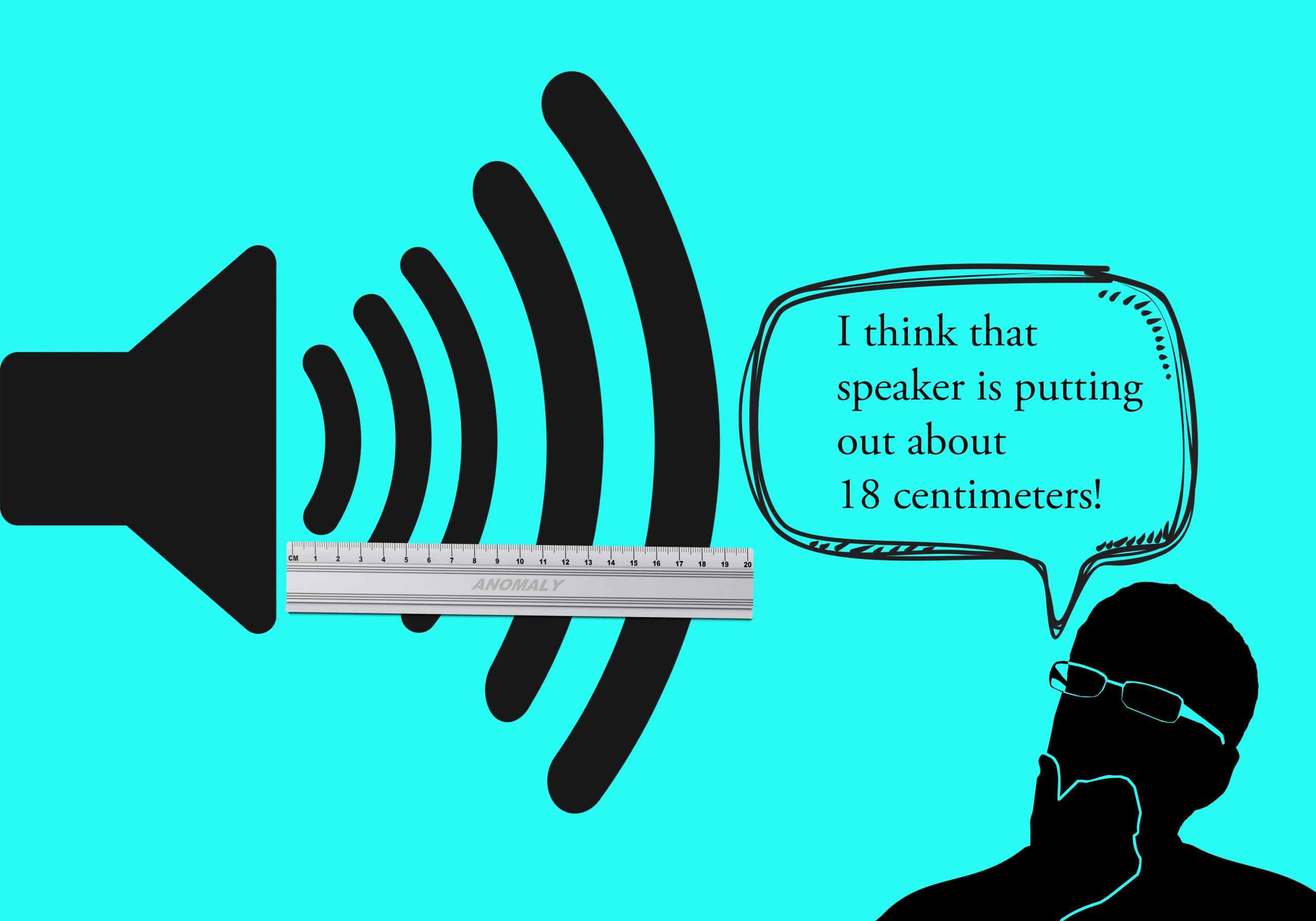
It’s very like my theme picture. We’re measuring things with the wrong tool, in the wrong units. We don’t know where we’re going, but if lots of us get there, we think it’s (probably) a good thing.
The question is this: Are we growing in grace? Are we a healthy community?
Or perhaps more precisely, are we a community at all?
Once we’ve taken that step, we can ask the next question. But once we’re functioning as a real community, we might not really need to ask the question at all. We’ll be too busy being a healthy church to take time to measure the health.
There’s very little checking done of the accuracy of the prediction of pundits, which is a major reason I avoid even hearing what they have to say.
One exception to this rule is Nate Silver and his crew at FiveThirtyEight.com. They’ve just published an analysis of as many of their predictions as possible. It’s worth reading, just for the demonstration of doing an analysis in the first place.
I suspect most readers/viewers of the news find probability hard to understand, and pundits generally don’t do that. People generally don’t want to hear probabilities; they’d prefer certainty. I have not done one, but I suspect a survey would show that people prefer a certain answer to an accurate-but-uncertain one.
So I like the headline: When We Say 70 Percent, It Really Means 70 Percent. Well, actually 71%. The things they gave a probability of 70% to happened 71% of the time. Not all percentages matched that accuracy, but it’s overall quite good.
More importantly, it tends to demonstrate the nature of prediction and the value of having evaluations. This makes me tend away from TV and radio as news sources and toward written sources in which I can check the sources. And, of course, toward written articles that actually cite sources.
In a previous post I discussed how I see the question of whether a doctrine or behavior is Christ-centered and whether it acknowledges Jesus as Lord can determine whether such action is right or wrong for the Christian.
I also noted that I suspected my answer was going to be unsatisfying to many. The reason is similar to problems with the slogan “What would Jesus do?”. If you can imagine Jesus wiping out a nest of your enemies with high explosives, possibly because he drove out the money changers, then you might easily be able to justify your own very violent behavior. Is that an accurate assessment of what Jesus would actually do?
I have rarely encountered someone who believed that practice in worship, or a “manifestation of the Spirit” was something that would anger God. No, they believe, or claim to believe, these are good things.
As I start to discuss this, I simply want to note that there are examples of very bizarre behavior commanded or condoned by God in scripture. Ezekiel, for example, would likely be less than welcome in our modern churches. At the same time I think it is relevant to ask if God would be likely to call someone to do the things Ezekiel did in our modern context.
I will not produce a checklist. I don’t believe one exists. I believe one has to look beyond the external to see whether God is at work. I would also suggest that we all need to be very careful about judging things that might seem odd to us. The problem is that “odd” can be defined by culture and age among many other things.
Physical manifestations are also easy to fake. I would suggest care, and a great deal of withholding judgment. I think Matthew 7:15-20 is a key passage. We’ll know by the fruit. A key to this test is that we may have to wait some time before we can actually inspect the fruit.
Oh, and look up post hoc ergo propter hoc among the logical fallacies when discussing fruit!
I took the opportunity to see this play last Saturday night (March 30, 2019) as part of the SWAN (Support Women Artists Now) program coordinated by PenArts.
At first I didn’t intend a review, because I don’t have much business reviewing plays. My only experience was in high school. I don’t even watch movies or TV dramas that much. But then …
What I do know something about is writing, critiquing, editing, and publishing. More importantly, I know about holding a stage. It’s hard to do without all the extras. “Drama” and “special effects” become synonymous, and so we watch movies to see the next technical trick that will be included. It’s quite easy to lose the story amongst the many things that are there to make the story interesting.
Two people on a stage talking? How can one possibly watch that for going on two hours?
Well, you start with some exquisitely written dialogue. If you don’t know how hard that is, you’ve never actually tried to construct good dialogue, words that fit the character and project what you intend to about that person. This play provides the words. This isn’t a review of the text of the play, however, but of the performance. (Donald Margulies can manage on his own!)
I was there because I know Kayla May, and I was watching her more at first. It was amazing. She took on that character and had me believing the character in minutes. I was no longer seeing Kayla May. I don’t know how you do that. I deal mostly in the printed word. This is something different.
I don’t know Kerry Sandell, so I didn’t have to forget her to see her character, but this was not a one-sided performance. Both performances were outstanding, in my opinion. This is not because I can tell you what these two ladies did. I don’t have a clue. Rather, I can describe what happened. I knew the characters, empathized with them as writers, students, teachers, and people. I could see them change and adapt.
Perhaps here some background in writing helped, but I don’t think it was necessary. They were presented so that you could come to care about the story and what happened to them, even if you didn’t empathize with the insecurities, pretensions, frustrations, and victories of writers.
I went to this play expecting to appreciate it in a polite way. “Not precisely my cup of tea,” I’d say, “but you did whatever it was well.” By the end, however, I’d have to say, “Definitely my cup of tea.”
This is the sort of thing I’m hoping for when I watch a new movie: Good characters effectively portrayed; people you care about by the end of the drama. I don’t mean that all plays should have just two characters; rather, they should have meaningful, well-developed, well-portrayed characters.
Is that too much to ask?
Perhaps. On the other hand, you might find that what’s missing on your TV screen is available in the performances supported by a local arts society. I’m going to be thinking about that from now on.
I mentioned in my post about completing the study of Romans that our next book was Leviticus. This was by choice of the group, but it is surely driven somewhat by the number of references I have made to Leviticus.
While I experienced Leviticus as a child, going to a Christian school where we read—really read—the entire Bible, and memorized a great deal, it never really caught my attention.
Two factors combined to catch my attention:
I changed my view of biblical inspiration
I studied through Leviticus using the three volume commentary on it in the Anchor Bible series by Jacob Milgrom.
Studying with Milgrom
Here’s a key Milgrom quote, and this from a man who does not tend to speak in one-liners!
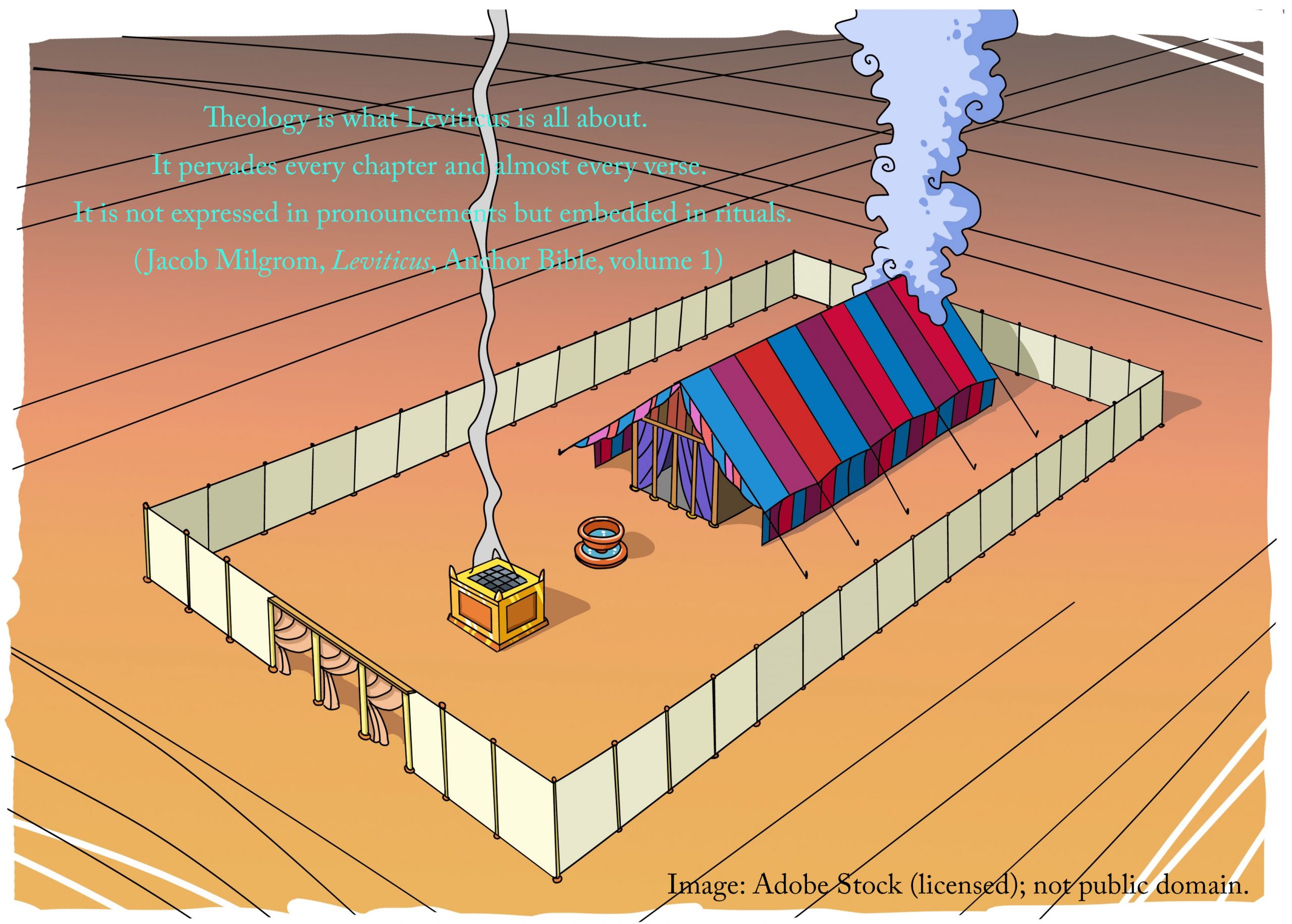
Theology is what Leviticus is all about. It pervades every chapter and almost every verse. It is not expressed in pronouncements but embedded in rituals.
Jacob Milgrom, Leviticus, Vol. 1, Anchor Bible. (New York: Doubleday, 1991), 42. (Link is to my review.)
One of the key lessons I learned in that book is that ritual matters. The way we worship both reflects and creates theology. When we go to church and listen to one person from the front do all the talking, that has an impact on how we see the Christian life, learning, discipleship.
I recall that I was once asked to speak at a church where, unknown to me, people felt they could delegate that task of prayer to the prayer warriors. The pastor who invited me knew I’d say something different.
I would like to say something similar about study to the church as a whole: You can’t leave your study to pastors or scholars. You need to get involved.
Bottom line here is that our ritual matters in many ways.
I asked a question in a previous post:
If God showed up on Sunday morning, would God enjoy what was going on?
The other element is my change was my view of inspiration. There is a single element that is critical. I came to regard the process of inspiration and transmission of scripture as a critical element in our understanding. I see scripture as a compendium of the experience of people with God. It is important to recognize both the divine and human element.
Out of that divine-human story, I see God working with people through scripture. In Leviticus, we see God as educator. Yes, we see the human report of what happened. I’m not trying here to debate details on how human and how divine scripture is; in fact, I think that’s the wrong question. What we’re looking for is the process behind what we have. We want to see God in action.
Is that perhaps arrogant? I don’t believe so. I believe God has left God’s imprint all over creation, and very much in the way in which God’s chosen people were developed and prepared. Looking at this process is even more critical than connecting dots between specific scriptures.
Things I Won’t Be Doing
In focusing on the way ritual expresses theology and develops worshipers, there are two things I will not be emphasizing.
First, I will not be looking for the minor ties between specific scripture prophecies and New Testament events. While I accept predictive prophecy in principle, in practice I find that the detailed interpretation of a prediction/fulfillment is rarely necessary to learn the lessons expressed.
Second, I will not be doing a detailed symbolic connection between elements of the ritual. Those sorts of things (and the resulting debates) are available elsewhere.
I will be focusing on the expression of theology through ritual and the relationship of that ritual to forming God’s people. I hope to learn something about discipleship and instruction/nurture through this book.
(Featured image credit: Adobe Stock #158382143. Licensed, not public domain.)