Threads from Henry's Web

Author: henry

  • Psalm 119:12 – Teach Me

    Psalm 119:12 – Teach Me

    Blessed are you LORD.
    Teach me your statutes.

    Mark Twain said, “Good decisions come from experience. Experience comes from making bad decisions.” Or something like that. I’ve found a number of variations, all attributed to Twain.

    The prayer, “Teach me!” is one that is pretty much guaranteed an answer, positive at least in the sense that learning will take place. The psalmist asks the Lord to teach him.

    It’s a bit of a dangerous request, looked at from one direction, but then from another, you might as well pray this pray, because God’s gonna get you in any case! The universe can be an unforgiving place, and most of us have some pretty clear places where experience came from bad decisions.

    This is where I like to note that the entire created world informs us of its creator. The person who studies quantum physics studies God no less than the person who meditates on theology. Perhaps even more.

    One big reason to be thankful for Torah in the broad sense–God’s instruction–is that it is evidence of God’s care, a gift that teaches.

    And boy do we ever need that!

    (Featured image generated by Jetpack AI.)

  • Ask Them to Implement Their Own Suggestion

    Ask Them to Implement Their Own Suggestion

    Bad Ideas I Learned from Good Leaders #1

    I’m never going to identify which leader I learned these things from, because I have deep respect for all of them. Many of them helped me ditch bad ideas of my own, though doubtless I still have a bunch!

    The bad thing I learned is this: When someone makes a suggestion for some project in the church, you immediately ask them to lead out in executing that idea.

    There is a very good point involved here. Actually two very good points. First, a person who goes to the trouble of suggesting someone is likely fairly passionate about it, and are likely to be diligent in getting it into action. Second, there are numerous people who will tell pastors and other church leaders all the various things they think “the church” should be doing. They have no intention of serving. They just want to complain. “Why don’t you take the lead on that?” will often either slow down the complaints, or in some cases even get someone moving.

    That’s the good side.

    The bad side is this. Your church is probably already an example of the 80/20 principle: 80% of the work is done by 20% of the people. (Well, you might be more like 90/10, but why be negative?) Most of the good ideas, the ones you should want implemented, are coming from that busy 20%. After all, the 80% don’t really want to go to the trouble of meeting with the pastor to present an idea.

    The 80/20 principle is self-sustaining. The 20% are the workers in the church because they’re the ones with initiative and creativity. Some people aren’t like that. Some people are willing to serve, but they don’t have the imagination, the initiative, or perhaps the knowledge of the church to locate a task and involve themselves with it.

    Since the 20% generally have those characteristics in various (but substantial) measure, they tend to imagine that the 80% aren’t serving because they’re lazy, apathetic, or don’t really care about their church. Some of them may have these problems. But more of them likely are waiting to be identified.

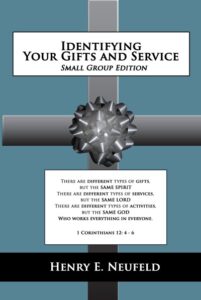
    In my book Identifying Your Gifts and Service (Small Group Edition), I suggest that church members and leaders need to observe one another to learn about gifts and help others find a place to serve that utilizes their individual gifts and also fulfills their needs. Yes, they are serving others, but that service is also of benefit to them, provided they are allowed to use their gifts in positive ways, rather than just being put to work.

    Here’s a summary of the points I make about this in that book:

    1. Listening: Group members identify each person’s gifts based on observations and what they believe the Holy Spirit has revealed. ​ This involves a group discussion where each person shares what they see as the gifts of others. ​
    2. Expressing: Each individual expresses their understanding of their own gifts. ​ This step involves self-reflection and sharing with the group. ​
    3. Examining: A survey is provided to help individuals think about their gifts and areas of service. ​ The survey is designed to stimulate thinking and challenge assumptions about one’s gifts. ​
    4. Fitting: Group members discuss and clarify God’s call on their lives and how their gifts fit into the church’s needs. ​ This step involves prayerful discussion and focus on how to use identified gifts effectively. ​
    5. Unifying: The group examines how individual gifts align with the church’s mission. ​ This step involves the participation of church leadership to help integrate members into appropriate areas of service. ​

    The book emphasizes the importance of listening to the Holy Spirit and to one another, and it provides practical exercises and discussions to help identify and utilize spiritual gifts within the church community.

    A Look Ahead

    One of the key elements in this process is recognizing church members as diverse individuals. They don’t all have the same gifts, goals, personalities, education, or general approaches to life. Learning to recognize these is important. Next week I plan to write about this as a bad idea I learned from otherwise good leaders: Don’t get stuck on expecting one personality type in members of a congregation.

    I will reference there the book PERFECTLY SQUARE. You can get a head start with this lovely little book that’s a quick read.

  • Psalm 119:11 – The Word in My Heart

    Psalm 119:11 – The Word in My Heart

    In my heart have I hidden your Word,
    That I might not sin against you.

    I was introduced to Psalm 119 in elementary school. I had read a fair amount of Bible before that time, but hadn’t read it through. I went to a small Christian school where Bible memorization was a key component.

    We memorized various verses, chapters, and larger sections, such as the Sermon on the Mount, or a lengthy chapter such as Luke 2. And we memorized Psalm 119, all 176 verses of it.

    People have asked me what I thought about that part of my education. Was all that memorization worth it? Didn’t I resent it? I would add that we didn’t just learn the words, and we were not allowed to stumble through our recitation. Our recitation had to be perfect. We had to be able to write the passage perfectly including punctuation.

    I was so steeped in the language of the King James Version that during my first year in college I acquired the nickname “Therefore.”

    Now there are many ways of approaching Bible study. I’m reminded of the story of Dwight L. Moody, approached by a woman who disapproved of his method of evangelism. He asked her how she did it, to which she replied that she didn’t. His response? “I like my method of doing it better than your method of not doing it.”

    I feel the same way about criticism of someone’s way of doing Bible study. If you’re doing it, encourage others, suggest helpful approaches, but don’t be a critic. Would I run a school in the same way? No. But I don’t regret a moment of my Bible memorization there. I’m delighted to be able to find so many passages quickly because I hid them in my heart when I was young. Even though it wasn’t by my choice!

    What’s your way of hiding God’s Word in your heart?

  • With All the Faults and Failings

    With All the Faults and Failings

    One of the things I find most interesting about the Bible is the way that its stories openly–one might even say brutally–cover the faults and failings of the main characters. Nobody manages to come off all that well in the story. Even Moses, author of the Torah, or perhaps receiver of it, is not presented as a perfect man, though his failings seem rather minor. I’m reasonably certain that I would have done massively worse in his situation!

    I was reminded of this aspect of Bible stories when I listened to the story of Jephthah while walking on my treadmill, and then listening to my pastor’s sermon on Sunday, which was taken from Matthew 1. The sermon was focused on the righteous actions of Joseph, but I couldn’t help looking over the genealogy as he spoke.

    We’re introduced to Jephthah as “a mighty warrior” but he was the son of a prostitute. Yet he’s presented as one of the people who saved Israel. In Judges 11:15-28 he gives quite a recitation of the history of Israel, and in verse 29, the spirit of the LORD comes up him. What struck me in reading the story, besides the always disturbing story of his daughter, is that he is otherwise presented as a solid leader in Israel.

    My mind links things in sometimes odd ways, and what struck me in this story was the mention that Jephthah’s mother was a prostitute. It’s sparse and bold, neither covered up nor overemphasized. It was not, as one can gather from the story itself, something that endeared Jephthah to the good and normal citizens of Israel.

    That, in turn, led me to the genealogy of Jesus in Matthew 1. It’s odd, considering the times, that there are four women mentioned here. Tamar, who seduced her father-in-law while acting as a prostitute (Genesis 38), Rahab, the prostitute from Jericho who saved her family’s lives by helping the Israelite spies escape, Ruth the Moabitess (Deuteronomy 23:3), who was quite clearly a chaste woman, but barred from becoming an Israelite by the law, and finally “the wife of Uriah the Hittite,” the victim of David’s lusts.

    It interested me to consider why the Bible emphasizes these people. And I do the authors of these stories as making these folks stand out. Further, they stand out in some of the most powerful stories in the Bible. Genesis 38 hardly seems a necessary part of the story of the patriarchs, yet it is woven in later.

    I think there’s a point to be made here. The Bible is not a story of spiritual superheroes with superior ancestors. The heroes of the Bible do not stem from noble stock, the sort of people from whom we expect great things. Jephthah had become an outlaw with good-for-nothing men gathered around him. Then he got a call and the spirit of the LORD came upon him.

    And here in Matthew we have a close tie to the stories of Hebrew scriptures in these little hints provided in the genealogy. Jesus is the son of David–such noble ancestry! But look! There are some moments in that story that other people might prefer to tell.

    All that stands between you and me and doing great things is that call and that spirit. Good-for-nothing isn’t really in God’s vocabulary. “Nothing” is waiting for God’s “something.”

    (Featured image generated by Jetpack AI.)

  • Psalm 119:10 – Seeking and Finding

    Psalm 119:10 – Seeking and Finding

    With my whole heart I have sought you.
    Don’t let me wander from your commands.

    The word here translated commands is mitsvot, which is often thought of as good deeds, but Jewish commentators use this primarily of the 613 commands in Torah. In this way, the mitsvot can be considered another way to refer to the entire Torah.

    When I read Leviticus alongside the three volume Anchor Bible commentary on Leviticus by Jacob Milgrom I was struck by his comment that the commands of Torah, and in this case specifically commands regarding the temple ritual were clearly intended as a training ground for Israel.

    And history shows us that in at least one way, this training worked. Israel built up an identity that was difficult to destroy. We can still identify Israelites today, unlike the vast majority of the cultures that existed at that time and for centuries before and after.

    There were two aspects to this identity. One is simply those aspects of behavior and lifestyle that identified one as first Israelite, and in later times as a Jew. This identity kept Jews distinct from the surrounding culture. But there is another identity inherent in Torah, which we can infer from many specific statements, such as the opening for the ten commandments. “I am YHWH your God who brought you up out of the land of Egypt, from the house of slavery” (Exodus 20:2). God claimed the Israelites as his own before giving any law.

    In this verse, we have the two sides of this equation, but not necessarily in historical or logical order. The psalmist has sought God with his whole heart, doing everything he can. But he recognizes the part of that identity that can be summarized as “God’s own person/people.”

    If we belong to God, a claim also made by Christians, we need to be identifiable as people who belong to God.

    Set the boundaries, God!

    (Featured image generated by Jetpack AI.)

  • The Tyrrany of Normal

    The Tyrrany of Normal

    I am not normal.

    To the vast majority of humanity, that is not significant. From friends, it tends to elicit one of two responses:

    1. You shouldn’t say that! You are absolutely normal.
    2. Yep! Crazy as a loon and somewhat weirder.

    Photo from Adobe Stock by Jim Cumming
    (not public domain)

    I pause here to look up the word “loon” to be sure it was as I remember it, and to find and provide a picture of an actual loon. Further, I locate for you the history of the phrase “crazy as a loon” and link the phrase to an informative article. I love misusing words, but I like to do so intentionally.


    Growing Up

    I have great sympathy for my parents who had to raise me. They’ve now gone on to glory, but my mother had amazing patience with my weird ideas. I have an early memory, which based on context has to be from when I was 6 or 7, of myself blowing fuses in the house when I put copper wire into the electrical outlet. I was careful to insulate myself. I understood well enough that this could be dangerous and understood insulation. So I just blew the fuses (and pretty much disintegrated the fine copper wire). I didn’t get shocked.

    I explained that I was trying to get heat, and the previously used batteries I had with which to do my experiments did not provide enough power. My dad explained to me about resistance and how a heating element needed adequate resistance. Copper was generally not a good heating element. Who knew?

    By the time I was nine I had turned my closet into a lab to develop film. I recall my mother patiently explaining to some very concerned people that I really did know how to handle the poisonous chemicals involved, and really could produce actual negatives and even prints. All black & white, to my disappointment.

    Explaining things was one of my mother’s hobbies, I think. When I lived in Guyana, South America, people who visited from the US would admonish her that she should make me do more normal things and keep up with schoolwork, provided my correspondence from our denominational school. I shouldn’t just be allowed to do anything I want. She simply told them that when she let me do what I wanted, I read the encyclopedia.

    Abnormal Only in a Smart Way?

    You can see these things as positive, and many of my friends do. I do too. But you should also note that I had few friends my own age. I experienced none of the normal rites of passage, such as proms, high school schedules, and other social events. Most of my friends were older than I was.

    The word “normal” was trotted out frequently. My friends now know me as someone who completed an MA degree concentrating in biblical and cognate languages. At the time my mother had these discussions I was in my teens, nearly ready to leave home, and had less than a semester’s worth of high school credit.

    Living with a GED

    I eventually fixed that by taking a GED test. I cannot count the number of looks of astonishment people give me on learning that I’m a high school dropout. These days, people don’t call me that. “Well,” they say, “you got over that and buckled down and got your degree.”

    But on my first job (managing a health food store) I was a high school dropout. A lot of people were worried about that. I had relatives complaining. I should be heading to finish high school. I was 17 years old with less than a semester of high school! Scandalous! And here I was taking the position as manager (and, for the record, sole full-time employee) of a small business. This was no good for a career.

    I continued to make choices that astonished people and made them question my sanity. If I was going to study religion, I must surely want to be a minister. I should pursue ordination. No. I wanted to be a teacher. I was assured this wasn’t going to happen. All the religion teachers were pastors who had worked in the field before taking a job.

    I ignored them all. Some of them don’t think I ever had a successful life. I have certainly not had a career that one would normally consider successful. I’m past retirement age and I still struggle. I still don’t do things the way others think I should.

    Living with My Own Choices

    Despite my own complaints about myself, which I call “the hazards of being me,” I really wouldn’t have it any other way. I could have given in to any number of other options that would make me more successful to “normal” eyes. Sorry. Despite being potentially more comfortable, these paths are just not attractive enough to me.

    This Is About Everybody

    Now I tell you all this, not to justify my own choices. They are mine and I’m used to ignoring opinions about them. I’m talking about almost every person in the world.

    We think our children need to accomplish a set of prescribed things and do them in a prescribed way. If they are sufficiently dissimilar to this “normal” path, we worry about them and we try to bend them to be normal. We want good children, who conform to the general expectations of such good people.

    As they grow up, we want them to have “good” careers, ones that bring respect. When I was growing up it was minister, doctor (for the guys), nurse (for the girls), or teacher, preferably as a missionary at least to some extent.

    {As a side note, I learned later in life that I inherited some of my approaches to life from my father, who rejected a number of prestigious offers as a partner in a medical practice and resisted titles such as “medical director” even though they were thrown at him. At one time my parents had applied to be foster parents in Georgia. Approval came through but then no children, despite the fact that the county was badly short of foster homes. About a year later, suddenly a social worker showed up with the first child. What was the problem? We were told that the previous social worker had thought my father must be some kind of quack because he was too quiet and humble to be a “real” doctor!}

    We often privilege academic careers that require academic degrees over trades. I can’t count the number of times I’ve heard someone say of my GED, “That’s OK! You went on and got a master’s degree afterward!” What if I’d decided to keep managing the health food store? It was in considerably better financial state when I left than when I took it over. Would that have erased the blot of not having completed a prescribed course of high school?

    In many cases I expect not.

    Does Success Give Value?

    I like to tell the story of my nephew who is on the spectrum and was not expected to make it past seventh grade because he “couldn’t do the math.” He has a PhD in math education and teaches in a university. That’s nice. I am incredibly proud of him and of his parents, particularly my sister, who didn’t expect the limitations others assumed.

    Yet there are others with various differences of personality or who are on the spectrum and don’t have that sort of accomplishment. As much as I am proud of my nephew and his accomplishments, those accomplishments do not give him his value. He, and others I know who are different in various ways, are valuable as whatever they are.

    I didn’t write this just about those who have some diagnosis that can be assigned. I am concerned with those who want to take a slightly different path. I knew a very intelligent man who was incredibly talented with computers in the early days. His parents thought it was more appropriate to become an attorney. It didn’t work. He eventually worked in the field in which he was so talented, but he wasted years pursuing “normal” and “respectable.”

    Some are going to comment that I was very smart, at least as a child. Often they’re the same ones who question the intelligence of my life choices thereafter. But this is not about making opportunities for the gifted. Well, yes it is. We should. It’s deeply stupid for a society not to provide special opportunities for those who can take them and go far.

    But I hate the very idea of “smart” and “stupid” as applied to people. I am not smart. I have particular gifts. Other people have other gifts. That’s good. You don’t want me repairing your car or installing your house wiring. I’m good with the theory of the electricity in the wires, but not so good with the wires themselves.

    I believe everyone is gifted in some way. I have yet to meet someone who I do not regard as gifted. As a Christian I add that there are spiritual gifts and spiritual callings. Everybody has something.

    Don’t Block the Doors

    The guardians of “normal” in our society are responsible for many, many people living frustrating lives and feeling stupid or incompetent, not because they lack gifts, but because these guardians live to close doors to people who just want to be who they are and find a way to work in something they enjoy. They want respectable, which means normal.

    We need to learn to open doors to whatever works best, and facilitate the paths of people who get where they’re going by unconventional means.

  • Psalm 119:9 – Talking about Purity

    Psalm 119:9 – Talking about Purity

    How shall a young man keep to a pure way of life?
    By keeping it in the bounds of your word!

    I have a feeling that some would question the way I translated that verse. It’s OK. Poetry is challenging. In this case I was aiming more for meaning that being faithful to the poetic form. For those who read some Hebrew, let me recommend Psalm 119 as a good way to become more comfortable with these poetic forms.

    There are all kinds of things that we could take from this verse, but through the day today my mind was repeatedly brought back to this: We need to teach sanctification, holiness, integrity in living, truthfulness, and the breadth and comprehensive nature of God’s Word.

    Sanctification is by grace (there’s a big subject), or better, in the words of the Psalm, it’s a path of blessing. I think it’s no accident that Psalm 119 starts with “blessed.” We need to realize that this is God’s work. It’s worked in us, but it is about God both in goal and in method.

    If we don’t talk about living a pure life in the church, people are likely to drift into perfectionism, legalism, arrogance, spiritual pride, and condescension. Those who avoid those issues usually wind up in cynicism and discouragement.

    The one way to go, and I think it is the way of this Psalm, is to recognize that it’s all about God, the creator of all. God sustains us (see Psalm 104, for example) on a constant basis. The way to holiness without arrogance is a profound thankfulness and recognition of blessings received. The best antidote to spiritual pride is to keep our eyes on God’s law.

    That will lead to being blessed and being kept in the pure path.

    For more thoughts about God’s word, see Seven Barriers to Hearing the Word.

    (Featured image generated by Jetpack AI.)

  • Psalm 119:1-8 – Wrapup

    Psalm 119:1-8 – Wrapup

    As I’ve meditated on these first eight verses of Psalm 119, I’ve opened up a number of topics. Let’s put them together, sort of!

    1. Being blessed is a fairly broad and comprehensive thing. It doesn’t necessarily mean that we have everything we want, or accomplish everything we want. It’s being under God’s watchful eye, and that’s positive (God has a purpose/God believes in us), and also negative (if we go off track, there is God). Perhaps we need to redefine “negative.”
    2. God’s law is a great deal more than a list of rules. God’s law is God’s self-revelation. We see this in Judaism in the centrality of the Torah, one of two broad words used in Psalm 119. (The other is Word/words.) When the Psalmist celebrates the law, as many English translations render it, he is celebrating being chosen as one of God’s people and God’s immanence in the self-revelation of the law. This carries over into Christianity (John 1:1-18, Hebrews 1:1-4) with Jesus as the Word, God’s message in human flesh.
    3. There is a joy that shines through the text. This is not poetry written by someone who felt he was obliged to praise God for the Torah. He loves it. He’s thankful for it. He finds joy in it.
    4. We start with blessing, and that’s important. Our temptation is to do things to seek blessing. The reality is that the ability to do and the motivation to do is itself a blessing, from which acts follow. Lead with the blessing!
    5. Sometimes it’s OK to shout “Help!”

    I hope you’re enjoying this journey as I am. Tomorrow morning, I’ll be posting the first verse in the second section.

    (Featured image generated by Jetpack AI.)

  • Psalm 119:8 – I’m Going to Do It; Help!

    Psalm 119:8 – I’m Going to Do It; Help!

    I will observe your statues.
    Don’t completely forsake me!

    Sometime we’re so busy looking for the really holy things and the absolutely correct commands in scripture that we fail to see the human element. But to miss that human element really misses much of the message of scripture. Scripture speaks in the way it developed and was preserved, as well as through the nature of its human authors, as much or even more than it does in propositions.

    This verse is very human. It’s the cry of most religious or spiritual people, or rather those who aspire to be such. I’m going to do this. Here’s my plan. Here are the spiritual practices I’m going to carry out. These practices will help me be truly spiritual, holy, and generally a better person.

    At the same time, there are those moments when we realize we need all the help we can get. Consider my idea of taking Psalm 119 a verse at a time, meditating on it for a day, and then writing a post that evening to be published the next morning. Yes, I’m blogging, but this blogging is based on me carrying out a spiritual practice, simple in structure, and personal.

    Then there was the day when I realized in the middle of the afternoon that I couldn’t even remember the words of the verse I was supposed to be meditating on. Things had gone multiple directions and I don’t handle that well. I had to pull out the text and remind myself.

    Or I could talk about right now. It’s later than I planned to write this. Suddenly I thought, Oh no! I have to write something about that verse. It was another of those scattered days.

    So I’m coming to my computer sort of like the Psalmist to his writing. Lord, I have a plan. Don’t give up on me completely.

    It may not be the best theology in the world, but it’s very human.

    (Featured image generated by Jetpack AI.)

  • Psalm 119:7 – Praise with Integrity

    Psalm 119:7 – Praise with Integrity

    I will praise you with an upright heart
    When I learn your righteous judgments.

    What does learning about God’s righteous (right) judgments have to do with praise?

    If we think of this Psalm as expressing joy over a list of rules, this might be a good question. If you haven’t yet, please read my earlier post on what “law” means in Psalm 119. To summarize, in Psalm 119 we heard one of God’s people praising God for God’s revelation in Torah. The various words for law direct us to the varied things that are present in this revelation of God.

    This is important in terms of praise. Genuine praise results from looking at God’s self-revelation. We look at what God has done and the response is in praise. This is genuine praise.

    There is also praise that is manipulative. “Lord, I praise you, and I want …” There is false praise. “Lord, I’m praising you because otherwise you might wipe me out. I hope you don’t notice that I don’t really mean it.”

    This doesn’t mean that praise somehow results from knowing everything there is to know about God. We’re never going to do that this side of eternity. What it does mean is that genuine praise from us results from our observation of God’s revelation.

    The more we observe, the more we praise. Not because God needs it, but because it flows from that knowledge.

    (Featured image generated by Jetpack AI.)