
Threads from Henry's Web

Tag: statutes

  • Psalm 119:155 – Far from Rescue

    Psalm 119:155 – Far from Rescue

    Far are the wicked from rescue,
    for they do not seek your statutes.

    I have translated a key word in the passage “rescue” though it can be translated “salvation.” I’m reading the verse as speaking about rescuing someone from trouble or a bad situation.

    This passage reminded me almost immediately of working in computer security. Some of my clients may think I’m talking about them, but what I’m about to say comes from dozens of experiences.

    I find myself on the phone with someone who is actually in contact with a scammer. Sometimes this is via text to me, and sometimes it’s using a different phone. I’m telling the person to hang up on the scammer and don’t follow any more of their instructions.

    “But they sound so professional and knowledgeable …”

    “But they told me my computer is compromised …”

    “But they say that if I hang up my data will be destroyed …”

    “But they say they’re providing me with a secure connection …”

    “But they knew the name of my bank …”

    There are all sorts of reasons to consider talking to the scammer. All of these reasons are overcome by one simple rule: Don’t ever give any information to, or take any instructions from anyone you can’t identify with certainty. Another version says, for example, don’t give any information over the phone unless you called your bank using their established number, not one you got on your answering machine.

    Statutes. Rules. Things that will help keep you safe.

    In these conversations I will be saying, “Hang up. Shut down your computer. I’ll come look at it.”

    Statues.

    Then there’s the situation where someone has paid me for coverage of their computer needs for a period of time. There’s no added expense to picking up the phone and asking me about something. “Is this email safe?”

    And sometimes someone doesn’t check, doesn’t call. The only expense is a few moments of time, yet they open the door to a scammer.

    They don’t even seek the statutes. They seek the convenience.

    And they get inconvenience, or worse.

    Life is very much like that. Sometimes we are too busy going in whatever direction feels right to us at the moment. We don’t have time to give consideration to whether that direction is right, or whether we’ll actually accomplish our goals.

    There’s another thing I tell people about computer security: I can’t save you from yourself. That applies to these conversations with scammers, but it also applies to ordinary computer usage. If the person insists on installing questionable software, or visiting unsafe websites even after getting a warning from security software, or ignores signs that something may have gone wrong, rescue is far off.

    I recall two different customers who got attacked by ransomware. In one case, the early signs were ignored. I caught it because I was working on another issue. The computer user had been too busy and simply kept working. They were only able to because their main management system used file types that the ransomware didn’t encrypt. It took 12 hours to clean up. Fortunately, I had seen to it they had current backups kept isolated from any such attack.

    Another customer was attacked by ransomware and on the first sign of an issue, they shut down the computers and called me. Within an hour (counting my travel time) they were using their computers again, and within two hours I was able to clear everything for use.

    They followed the statutes.

    How often are we praying to God for rescue while we’re diligently avoiding the rescue? God’s grace is sufficient, but sometimes the path isn’t much fun!

    How can you cooperate with your rescuer today?

    (Featured image generated by Jetpack AI, and it did an exceptional job this time, I think!)
  • Psalm 119:135 – Shine

    Psalm 119:135 – Shine

    Let your face shine on your servant;
    teach me your statutes.

    I have tended to stick with more formal translation, but the first line here could be translated, “Look on your servant with favor.” Part of that favor includes teaching statutes.

    I’ve said a few times that we don’t really tend to look at rules as a blessing. What’s very interesting is that we will look at stability that favors us as a blessing, while often ignoring the fact that it is a set of rules that provides that stability.

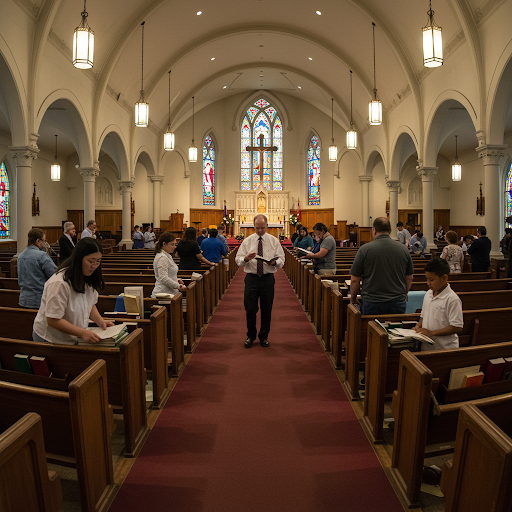
    In church, this frequently comes up when we want the freedom to worship or to accomplish whatever goals. We chafe at rules that prevent us from operating freely and creatively. Then when someone goes too far out of our church’s traditions, we get upset. “They can’t do that in our church,” we say. Then we pull out the rule book and hopefully find a rule that will keep them in line.

    We also tend not to notice when our rules get in the way of other people. This contributes to the widespread complains about Home Owners’ Associations. You can easily find reams of complaints about HOAs online. Yet there are HOAs all over the place. Personally, I suspect I would avoid a neighborhood with an HOA. I don’t like that type of thing.

    But what makes HOAs so common, while also making complaints about them ubiquitous? Well, we each have our own taste in what makes a home look friendly, good, or respectable. The HOA gets together and makes rules that they think will keep property values up and make their neighborhood look attractive. I drive through such neighborhoods and think, “I’d really hate to live here. Everything looks the same.”

    This illustrates how we look at rules. Often we don’t even consider the rules until they get in our way. Then we are suddenly irate about them. But one of the reasons other people were able to make rules that annoy you is that you weren’t paying attention when the rules were made.

    It’s important to know what God’s rules are. This is not just so we know the rules to keep, but also so that we know what are not God’s rules, but rather matters of choice and preference. As Christians, we often have a set of rules that are unwritten, but that “everyone knows.” When someone new comes to church, they learn by experience, often unpleasant experience, what the church requires.

    At the same time many members think their own preferences are the equivalent of Divine rules. Dress and behavior in worship is one area. The line from Paul, “Let everything be done decently and in order” is a scripture that has been applied in many inappropriate ways. People use it to forbid clapping in church (it’s irreverent), or to suggest that the pastor has to carefully follow every word of the bulletin.

    Those are not God’s rules. They’re rules we make and then blame God for. In fact, when we make our own rules, in any case where we are not simply applying a Divine rule, we’re violating God’s rules, claiming God has spoken when God has done no such thing.

    My prayer would be that all believers would take this verse to heart. Let’s aim to know what God’s statutes are, and thus what God’s statutes are not.

    In what ways can you avoid imposing your preferences as rules?

  • Psalm 119:117 – Sustain

    Psalm 119:117 – Sustain

    Sustain me and I shall be saved,
    And I will continually meditate on your statutes.

    The Message gives a nice feel for this verse:

    Stick with me and I’ll be all right;
    I’ll give total allegiance to your definitions of life.

    Psalm 119:117, The Message

    Now this translation has the problem that many do, which is that it’s clearer than the text it translates. One of the features of poetry is expression which evokes meaning and feeling, but does not lay it out blow by blow. Nonetheless, a translation like The Message can sometimes force us to look for the boundaries of a text.

    One thing I prefer over The Message on this verse is the idea of meditation. The verb used in Hebrew can cover a lot of ground, such as “gaze at,” “pay attention to,” and yes, “meditate” or “keep/observe.” The precise point in that range of meanings that the author intended is difficult to say for certain. My view is that in poetry, the intent is often to evoke broader meaning. When we narrow such a verse to just one set of precise meanings, we can lose the intention of the verse.

    And that’s the thing about meditation. An attorney needs to know more than simply the textual content of the law. In our legal tradition, they need to know the history of interpretation in the form of previous court rulings. Once they know that, they also need to be able to understand the story into which they have been drawn in order to know how they can apply all that material to their particular situation.

    It is similar with God’s law. God could have inspired a compendium, carefully cataloged and containing just the specific ordinances. But that’s not what we have. If you’d like to see what that would look like, consider passages such as Exodus 22 & 23 or the Hammurabi Code. These are codes of law, but in the case of those chapters of Exodus, the code is contained in history, and the foundation of that code of law is in the actions of the lawgiver.

    Is it any wonder that the psalmist can spend 176 verses expressing his joy in the law? He can see his God in that law, and in the way in which that law was presented. He knows that the reality behind the law is the creator-redeemer God. The word used here for “saved” as I uncreatively translated it, can also be translated with words like “be rescued” or “be victorious.”

    The God revealed in the law is the God who saves. When one meditates on the law, one learns about the lawgiver who also rescues, supports, and sustains to the end.

    I again find this verse to be an encapsulation in two short lines of the message of the Psalm.

    Live today as a child of the Creator who sustains you. Always!

    (Featured image credit: Viktor Aheiev. Licensed via iStockPhoto.com.)

  • Psalm 119:80 – Blameless

    Psalm 119:80 – Blameless

    Let my heart be steadfast in your statutes
    so I will not be put to shame.

    If you immerse yourself in this Psalm, you’ll lose any sense of boastfulness and self-sufficiency. There are claims before God to being a commandment keeper, but they are well-balanced by those passages that ask the Lord to accomplish this work. There is praise of God’s self-revelation in his instructions (Torah). There is gratefulness for God’s work. There is also reliance on God for everything.

    A verse-by-verse meditation, such as I am doing, has its own hazards. It is very easy, and not entirely contrary to my purpose, to discuss things that are far from the particular verse, yet my mind was started in that direction.

    As I read this I can think of any number of doctrinal discussions that one might launch from right here. But I think this verse expresses the heart of the psalmist quite well.

    I have noted before that using the word “law” as a translation of the Hebrew torah is misleading. We think of “law” as a collection of commands. But as indicated by the name, torah is much more than law. Yes, there is a focus on the laws contained there, but there is also the story of God’s action with regards to God’s people. We hear about call,, choice, and going back further, creation.

    It’s easy for people who have an adversarial view of rules to misread this focus on law as automatically legalism, dry legalism, even. It’s possible for someone to separate the legal portion, statutes, from the rest and use them unhelpfully. This is not a mistake our psalmist makes. In the broad story of torah we have the God who creates, who chooses, who calls, who protects and guides, who rescues, who instructs, and yes, who makes rules.

    The rules are the innermost part of this structure. They’re a burden taken out of their natural environment. They’re a burden when asked to accomplish something they are not designed to do. But torah seen properly is the message of that creator, guide, protector, savior, teacher, and lawgiver.

    I’m not rejecting the teaching in Christianity that the law cannot save. The law does not make you holy. In soteriology, the law functions to tell you you’re not making it. But when in Christ, when inside those important protective layers, the law becomes different.

    I hear the psalmist saying that he would like to be identified by a wholehearted pursuit of God’s statutes. That is his prayer. That is his hope. That is the way he can avoid shame. His identity is God’s person, whom God is making anew. One might recall the words of Psalm 51:12, “Create in me a clean heart …” That’s the creator doing in you what he has done everywhere.

    What is your identity? Whose are you?

    (Featured image was generated by Jetpack AI and slightly enhanced with Photoshop.)

  • Psalm 119:8 – I’m Going to Do It; Help!

    Psalm 119:8 – I’m Going to Do It; Help!

    I will observe your statues.
    Don’t completely forsake me!

    Sometime we’re so busy looking for the really holy things and the absolutely correct commands in scripture that we fail to see the human element. But to miss that human element really misses much of the message of scripture. Scripture speaks in the way it developed and was preserved, as well as through the nature of its human authors, as much or even more than it does in propositions.

    This verse is very human. It’s the cry of most religious or spiritual people, or rather those who aspire to be such. I’m going to do this. Here’s my plan. Here are the spiritual practices I’m going to carry out. These practices will help me be truly spiritual, holy, and generally a better person.

    At the same time, there are those moments when we realize we need all the help we can get. Consider my idea of taking Psalm 119 a verse at a time, meditating on it for a day, and then writing a post that evening to be published the next morning. Yes, I’m blogging, but this blogging is based on me carrying out a spiritual practice, simple in structure, and personal.

    Then there was the day when I realized in the middle of the afternoon that I couldn’t even remember the words of the verse I was supposed to be meditating on. Things had gone multiple directions and I don’t handle that well. I had to pull out the text and remind myself.

    Or I could talk about right now. It’s later than I planned to write this. Suddenly I thought, Oh no! I have to write something about that verse. It was another of those scattered days.

    So I’m coming to my computer sort of like the Psalmist to his writing. Lord, I have a plan. Don’t give up on me completely.

    It may not be the best theology in the world, but it’s very human.

    (Featured image generated by Jetpack AI.)