Threads from Henry's Web

Tag: Revelation

  • Psalm 23:6 – Pursued

    Psalm 23:6 – Pursued

    Surely goodness and lovingkindness will pursue me all the days of my life,
    and I will love in the LORD’s house forever.

    Well, this is the last verse of Psalm 23. It’s a bit shorter than Psalm 119!

    So which is better? A lot more people quote Psalm 23, and with good reason, but there is value both in something comprehensive and something compact and evocative. That’s why we have different kinds of literature in the Bible. It’s also why we all love different kinds of literature ourselves.

    So what is the impact of the ending of this Psalm? For me, it comes in the second half of the verse. I’ll live in God’s house forever. But I chose the first half to provide my title. I am pursued by God’s goodness and lovingkindness. It reminds me of Psalm 119:176. I may have gone astray like a lost sheep, but I cry out for God to seek me. When I do, I discover that God has been pursuing me all the time.

    Many times, the result of prayer is not a change in circumstances, but rather a change in perspective.

    After crying out to God in my trouble, I hear a voice that says, “Look the other way.” When I do, there God is. God has been there all the time. I can’t get away from God’s mercy and love.

    But the second half of the verse gives me another perspective. I’m going to live in God’s house forever. There are a number of view of this, each of which can help us understand God’s love for us.

    I’m going to look at three.

    First, we can think of this as the privilege of being in God’s presence in a place and time of worship. There is pleasure and comfort in being in God’s presence in such a place at such a time. Often this involves the enjoyment of our relationship to other people as well as our relationship to God. Conceive of a time of peace and joy and then think of that never ending.

    There’s a saying that we can’t live our lives in a spiritual retreat, and that we can’t stay forever on a spiritual high. Psalm 23:6 suggests that this is going to change down the road.

    Second, we can think of this eschatologically, meaning at the end. Yesterday, in writing about the heavenly banquet, I looked at some passages from Revelation. But if you look carefully you’ll see that Revelation is built with sanctuary imagery. In the Israelite temple you had a courtyard, then the holy place, and finally the most holy place, in which the ark of the covenant was kept. It represented God’s presence.

    That presence was separated from the people by that courtyard and earlier room, the holy place. Access was more limited the closer one got to the throne. But in Revelation, starting with chapter 4 and the command to John to “come up here,” we start to see sanctuary imagery all around, and the center of the action is around the throne of God, right in the Most Holy Place.

    Access was limited. Access will be unlimited. We will dwell in God’s house forever.

    But there is a third. If we jump just one verse to the next Psalm, we can learn what it is:

    To the LORD belongs the world and everything in it;
    The inhabited land and everyone living in it.
    For He established it upon the seas,
    Upon the streams he made it firm.

    Psalm 24:1-2, my translation

    You may think you have to wait, but God’s house is here now. You’re living in it. Your house is in God’s house. All your stuff? That’s God’s stuff. You? You’re God’s person.

    Now.

    What we all need is a change of perspective, a new understanding of what belongs to God. I frequently note what I believe is Jesus’ humor when he says, “Render to Caesar the things that are Caesar’s and to God the things that are God’s.” Just what is it that actually belongs to Caesar? There’s some practical advice for life in the saying, but there’s also a pointer to something greater.

    Just as you can turn, look, and find that God is already there seeking you, and was doing so before you called, so you can turn any direction, look, and see God’s house all around you. The change is in you. God was there all the time and will be there forever.

    You live in God’s house, because God owns all the houses and all the stuff.

    Live in God’s house today!

  • Psalm 23:5 – A Table

    Psalm 23:5 – A Table

    You prepare a table for me in front of my enemies;
    You anoint my head with oil;
    My cup is overflowing.

    The imagery of this verse is vigorous and encouraging. All the elements of being cared for by someone else at a meal or social occasion are presented.

    As is often the case, there are many directions one can go in meditating on a passage as rich as this one. For example, one might discuss the importance of all this blessing and care happening in sight of one’s enemies.

    But it occurred to me how this verse illustrates a great deal of scripture.

    At creation, God puts the human he has created in a garden, and in Genesis 2:16 lets him know that all this is prepared for food. The fellowship of God with people centers here not around a meal, but rather around the full supply of all humanities needs.

    Here’s a description from the book Take and Eat by TK Dunn:

    In Genesis 1 and 2, God made humanity in his image and likeness to be his regent over creation, exercising a delegated authority over the created order to ensure that each animal knew its place and had what it needed to survive. God had, in the garden, promised to provide sufficient food for all of creation, and Adam and Eve were told to enjoy it and “take and eat” of his bountiful supplies so that they would have the energy and ability to fulfil their work and tasks in the garden. No matter where they went, there were plants and trees with sufficient nutritiousness for their daily needs. God’s provision was more than enough: It was plentiful. And it was varied so that there would be different tastes, textures, and concoctions to delight the tastebuds and entice the senses. Eden was more than a sinless paradise; it was to be a chef ’s paradise. And God, as a smiling, doting, compassionate father,
    looking down at the creation he deemed “very good” said to Adam and Eve, “take and eat.”

    TK Dunn, Take and Eat, p. 61

    I picture this verse as describing the same sort of relationship between God and humanity, and the same sort of care, comfort, and security.

    Of course, Genesis 2 is followed by Genesis 3, and people find themselves less aware of God’s presence and more seriously impacted by the hardships of life.

    This is one reason I deeply appreciate the sacrament of Holy Communion. In it we are reminded that God is the provider and invites us to partake with him in this meal. It points backward to what we were.

    It also points forward to what we will be.

    Revelation 20 introduces us to the Marriage Supper of the Lamb. We come from a time when we had close fellowship with God in a garden, and we are heading toward a feast.

    You may be wondering about the tie-in to the garden, but just as in the Garden of Eden there was a tree of life so Revelation 22 introduces us to the new Tree of Life.

    In the meantime, we serve a God who prepares a table and offers fellowship.

    Keep looking up today!

  • Psalm 119:15: Looking at God’s Ways

    Psalm 119:15: Looking at God’s Ways

    On your precepts will I meditate;
    I will look at your ways.

    There’s a big difference between meditation and biblical exegesis. I tend to use exegesis to refer to extracting the meaning from a text in the narrow sense of what a particular author meant by a particular statement or passage. Hermeneutics generally refers to the broader process of interpreting and applying scripture. This usage is not universal; frequently you will hear hermeneutics and exegesis used interchangeably.

    But meditation lacks these narrow boundaries. As I read these verses, one per day, while I do some of the work of exegesis, such as looking at the words in a good lexicon and checking other uses and reading the context of that particular verse, I really am letting my mind roam through scripture and experience and also asking what the passage suggests to me. I think poetry is particularly well attuned to this kind of thinking, and Psalm 119 even more than most. The author draws in words for God’s instruction that direct us to think of the law/instruction in the broadest possible sense. It is the entire Word that God has for us that is brought into view through the vocabulary.

    The root word for “precepts” used here goes back to a root word that is often translated “visit.” A visit can be many things. It can be a time of inspection, a time of reward, a time of fellowship and relationship, or a time of judgment. Now it’s not a good idea to determine the meaning of a word by its etymology, i.e., the forms from which it is derived. I’ve already commented on how the use of the various “law” words in Psalm 119 tend to direct us away from being too specific on a single concept. (Bob MacDonald’s post on this Psalm features consistent translations of the terms so that you can see them scattered through the Psalm.)

    But in this case, whether it’s a good idea or not, the etymology of the word for “precepts” led me to think of visiting and relationship (good and bad!), and God in action, rather than as a static lawgiver. After all, the God who said, “I am YHWH your God who brought you up out of the land of Egypt …” (Exodus 20:2) is a God of relationships and actions, with creative and saving/restoring acts featured.

    As we go through the time of advent, symbolizing in our worship the wait for God to be with us as Immanuel, we can certainly relate to this thought. The God who becomes incarnate in a manger is a God of action, of relationship.

    I tend to fellow loosely joined trails in my thinking, and I followed this by focusing on the second half of the verse, looking at God’s ways/actions/behavior. There are many ways to do this. We often approach scripture to discover correct doctrine. There’s nothing wrong with that, but that’s not the whole story. I like to look at scripture for the stories of God’s interaction with people into which we fit these various theological propositions.

    For example, another part of my reading today was from 1 Corinthians, in which we have Paul making a huge number of statements that are turned into theological propositions, sometimes in contradiction to the story that surrounds them. Speaking of the stories of scripture after evoking incidents from the Exodus, Paul says, “These things were written to admonish us” (1 Corinthians 10:11). He has just referenced a number of stories.

    Thus, I’d add to trying to understand to propositions of scripture a need to understand the stories. I think as we understand those stories, we will often find that we’ve been looking at propositions from entirely the wrong perspective. (A favorite example of this comes from 1 Corinthians 14, and worship that is “decent and in order.” I’ve heard this quoted to criticize a pastor for deviating from the bulletin!)

    But there’s another layer or more to go. How about the way in which scripture was composed. There are hints all through scripture of various sources that have been brought together, including the frequently referenced “chronicles of the kings of Israel and Judah” cited as sources in 1 & 2 Kings. Interesting that God provides inspired scripture through someone compiling material from official court chronicles and providing commentary.

    Then there’s the natural world. Some make great efforts to assure us that special revelation, written scripture, is the more reliable source. Nature, they say, is too easily misinterpreted. Sometimes they even attempt to force the natural world to match their interpretation of scripture.

    But the natural world is a direct product of God’s word just as is the written word. I don’t want to detract from the written word, but I think we need to elevate what can be learned from God’s creative activity. The physicist studies some of the most direct products of the mind of God. Or so I suspect!

    I’ve wandered far away from what is explicitly stated in the text of the verse. But in the spirit of this Psalm, I think the author might have understood my thinking, should he have had an opportunity, or at least the spirit behind it.

    Where does thinking about God’s ways lead you?

  • Psalm 119:7 – Praise with Integrity

    Psalm 119:7 – Praise with Integrity

    I will praise you with an upright heart
    When I learn your righteous judgments.

    What does learning about God’s righteous (right) judgments have to do with praise?

    If we think of this Psalm as expressing joy over a list of rules, this might be a good question. If you haven’t yet, please read my earlier post on what “law” means in Psalm 119. To summarize, in Psalm 119 we heard one of God’s people praising God for God’s revelation in Torah. The various words for law direct us to the varied things that are present in this revelation of God.

    This is important in terms of praise. Genuine praise results from looking at God’s self-revelation. We look at what God has done and the response is in praise. This is genuine praise.

    There is also praise that is manipulative. “Lord, I praise you, and I want …” There is false praise. “Lord, I’m praising you because otherwise you might wipe me out. I hope you don’t notice that I don’t really mean it.”

    This doesn’t mean that praise somehow results from knowing everything there is to know about God. We’re never going to do that this side of eternity. What it does mean is that genuine praise from us results from our observation of God’s revelation.

    The more we observe, the more we praise. Not because God needs it, but because it flows from that knowledge.

    (Featured image generated by Jetpack AI.)

  • Making an Image to the Beast

    Making an Image to the Beast

    I’m working on the 2nd edition of my study guide to Revelation, and I’ve been meditating on Revelation 12 & 13, and especially 13:14-15.

    By the miracles it was allowed to perform in the presence of the beast it deluded the inhabitants of the earth, and persuaded them to erect an image in honour of the beast which had been wounded by the sword and yet lived. It was allowed to give breath to the image of the beast, so that it could even speak and cause all who would not worship the image to be put to death.

    Revelation 13:14-15 (REB)

    I don’t want to spend a great deal of time discussing the approach I take to reading and understanding Revelation. I wrote a study guide for that purpose. The short version is simple. I think we miss a great deal of the message of Revelation when we spend our time looking for specific historical referents for the symbols. It’s possible to come up with a plausible scheme. In fact, many sort of plausible schemes have been proposed. But nobody has managed something truly definitive.

    I lean closest to the allegorical approach, but more precisely I believe that through imagery that is worked into a tapestry Revelation presents us we a number of principles which are very broadly applicable. I describe this in terms of a theme park in my study guide. It’s not a sequential story; rather, it’s an interacting set of scenes.

    In this passage we can work with a number of questions, such as who is the dragon and the beast that comes up out of the earth. Those questions are good, but I’m skipping over them to this one: Why does the beast that rises up out of the earth want to make this image? The beast is performing miracles, and through this miraculous power, he creates an image, which in turn does other things.

    Let’s take the simple answer: If you’re a beast, you want an image.

    We tend to think of the image as a statue or some other sort of representation of what a person or thing is. But an image can also be something deceptive, something that helps you think more favorably of what that image represents. The image of the beast is less beastly than the beast itself. That is its value.

    In an age of political operatives and media manipulation, we should be able to feel this one in our bones. A politician has his or her own personality, but then through political operatives he or she can also have an image. Polish up the image but leave the reality tarnished. Or for the reverse, one’s opponents or enemies can create a false negative image. In either case, the “beast” doesn’t look like its “image” and vice versa.

    So what image do we display through our churches? When someone looks at the reality, is the beast behind the image, or the lamb?

    How’s that for jumping the rails?

    I think it’s a valid jump. Paul tells us that we are the body of Christ. Jesus told the disciples that they would be known as His disciples by their love for one another.

    Many people are going to form their opinion of who Jesus is by viewing Him in us. There can be a lamb behind the image just as well as there can be a best. An image can be transparent, letting people see the reality, just as it can conceal the beast that’s behind it.

    If you read Revelation 12 & 13 you’ll get some good ideas about what beast-like behavior is, and why this 2nd beast needs an image to do its will.

    The question is whether we will allow Christ to be seen through us and through the way we “do church.”

    I think I’ll follow this up with a post on ways in which our churches can take on the image of the world around, to the detriment of our witness.

    Featured image AI generated via Jetpack

  • Link: Revelation, We Have a Problem

    Link: Revelation, We Have a Problem

    Scot McKnight discusses the problem with the popular understanding of Revelation.

    I recall guest teaching a Sunday School class on Revelation from the study guide I wrote (currently not available as I revise it). The major question from the class was when I was going to talk about the seven-year tribulation and whether I was pre, mid, or post-trib. When I said, “None of the above,” they still insisted that I teach a session on the tribulation.

    Note that I believe there will be time(s) of trouble, what I do not believe in is the seven year tribulation and rapture separate from the second coming.

    The revisions of my study guide include illustrations and putting a bit more explanation rather than just scripture and study questions, which was my original approach. I prefer studying scripture directly as much as possible. For a marketable study guide, I need a bit more explanation.

    In the meantime, check out Scot McKnight’s notes.

  • The Wrath of the Lamb

    The Wrath of the Lamb

    Sometimes the process of preparing to teach Sunday School takes interesting turns, at least for me.

    I’m currently teaching from the Sermon on the Mount, and I was thinking about the transition from the beatitudes to the discussion of fulfilling the law. Sometimes we get so used to the way Scripture passages read that we don’t really notice the impact they would have had. “Blessed are those who hunger and thirst after righteousness …” transitions to “unless your righteousness exceeds the righteousness of the scribes and Pharisees.” We’re used to thinking of Pharisees as bad guys, and we can immediately translate that statement mentally into something less than it would have been to those who first heard it.

    It’s easy to suggest that the Sermon on the Mount does not represent some singular sermon, and that perhaps the beatitudes and the teaching on the law contained in Chapter 5 weren’t really run together that way when Jesus taught them. Indeed, the different settings for portions of the sermon in Luke might suggest that we have compilations of sayings rather than complete sermons.

    But, and it’s an important ‘but’, someone thought these two things went together. I love form, source, and redaction criticism and believe they provide important insights, allowing us to learn from the prehistory of the text in front of us, but in a case like this, they just kick the ball down the field a bit. We still should ask just why the passages go together.

    Let me skip my own answer, which I already had in mind, and go with the experience of thinking about the passage. I like to read what I’m going to teach very early, usually the Sunday afternoon after the previous lesson, and then think about it through the week.

    In this case, I had just gotten a new audio Bible (NRSV) for Audible (unfortunately it is no longer available). I wasn’t actually intending to think about the passage, and I just let the audiobook continue from where I had last left it, which happened to be in Revelation 6. I got to 6:16, and heard the words “the wrath of the lamb.” Or “hide us … from the wrath of the lamb.”

    Now here’s another phrase that doesn’t always have full impact. It takes on that “scriptury” sense in which we imbue it with holiness and piously let the jarring nature of the statement slip by.

    So picture a cute, wooly, harmless lamb. Now picture crowds of people calling for mountains or large rocks to fall on them — splat! — to save them from the wrath of, well, that fluffy bundle of cuteness. For Monty Python fans, let me note that it calls to my mind vorpal bunnies.

    So we go back a bit in Scripture to Revelation 5:5-6:

    (5) One of the elders said to me: ‘Do not weep; the Lion from the tribe of Judah, the shoot growing from David’s stock, has won the right to open the scroll and its seven seals.’ (6) Then I saw a Lamb with the marks of sacrifice on him …

    Revelation 5:5-6a

    I could spend all kinds of time on this, but I’m just looking at one thing: The Lion is the Lamb. Of course, if you read the texts I first reference in context, you’d also note that the fear of the wrath of the lamb was combined with fear of the one sitting on the throne.

    In this case, we have a direct literary relationship. In chapter 6, John is doubtlessly connecting referencing this lamb, who is also not just a, but the Lion. Slightly more intimidating than the wooly lamb I evoked earlier.

    So this turned my mind to something I get from orthodox theology, in this case the incarnation. Jesus is presented as totally human and totally divine. Compare Hebrews 2:17-18 to Hebrews 7:26-28 display a combination of incompatible features. One plus one equals one. Not normal logic.

    I like to distinguish belief in three ways. There is believing that. One can believe that something is true without absorbing it or responding to it. I believe that an aircraft is airworthy and safe, but I stay on the ground. Then there is believing in. In this case belief leads to a trust in the thing in which we believe. I believe that the aircraft is airworthy and safe, so assuming the crew is good as well, I get on board and fly. Then there is believing through. That is when I use one belief to impact the way I understand and respond to other things. In the case of the aircraft analogy I now learn to put reasonable trust in things in which it is reasonable to have confidence.

    In Christian terms, I go from believing that Jesus rose from the dead, to putting my trust in “the pioneer and perfecter of our faith,” and from there to living a life defined by not just by the hope of the resurrection but of the character and power combined of one who gave himself to death and arose. There is some room here to live in hope. The hope comes from seeing other things in the light of my belief in the resurrection.

    Now back to the incarnation, and lions, and lambs.

    There are many things that thinking conditioned (transformed?) by the incarnation can be, many of them at the same time. One is that we lose the binary sense. To take us back to Revelation 5, we can see in one person the Lion and the Lamb. We can see gentleness and sacrifice on the one hand and wrath on the other, all in the form of a wooly lamb, one that someone already sacrificed. That’s seeing these things through our belief in an orthodox doctrine. I have heard folks argue forcefully for an orthodox statement of doctrine, but seeing it only as a thing that must be affirmed to be true, and not something that impacts the rest of our lives.

    I maintain rather that if you really believe in something like the incarnation, it will reshape your thinking all over the place. Constantly. Irrevocably.

    I recall hearing Deanna Thompson, author of the Deuteronomy volume in the Belief Commentary series. She is a feminist and a liberationist. She recalled wondering why she should be the one to write a commentary on Deuteronomy. But she said that as she wrote the commentary, she realized that “a God without wrath will never liberate anybody.” A God such as the one presented in Deuteronomy.

    The Lamb is the Lion. They are not incompatible.

    And then another thing came to mind. I recently watched the movie “Aristocats” again. It’s a favorite of mine. It includes a song with the line:

    Everybody! Everybody! Everybody wants to be a cat!

    Aristocats

    At this point I imagine you’re thinking I’m a bit odd in the things I connect. I also assure you that I like cats.

    But if you look around church, everybody wants to be a cat. That is, we want to get to the Lion part of the act, or the rider on the white horse. We long (as the readers of Revelation did) for the avenging God who does nice things for the good guys (surely this includes us!) and gets all the bad guys. If possible, we want to skip over all the lamblike stuff, and definitely that “slain” stuff.

    So I wind back toward my original topic again, as I know you’re wondering what all of this has to do with Matthew 5? And indeed, in listening to Revelation I had every intention of not working on my Sunday School lesson.

    But Matthew 5 challenges us in a similar way. Jesus is here both the lamb who has humbled himself and is living as one of us, the “gentle Jesus, meek and mild,” and also the one who says our righteousness must exceed that of the scribes and Pharisees (remember that the audience would see that as a high standard), that we must be perfect, and that even being angry or insulting a brother can lead to hell.

    The Lamb is the Lion. Love and wrath work together. It’s not either-or, but both and.

    Featured image by Catherine Stockinger from Pixabay

  • Eschatology: Finally and Final Tonight

    No, it’s not the end of the world. It’s the end of my series. I went into my hiatus in presenting these studies one episode short of completing the series, so tonight I’ll be wrapping up the eschatology series and preparing for my next series which will be looking at Paul’s letters and their background, especially in Hebrew scripture.

    Here’s the embed:


  • Eschatology: Daniel to Revelation

    Eschatology: Daniel to Revelation


    Sunburst in clouds with faint Christ figure emanating from center

    Tonight I’ll be bridging the gap between these two very commonly associated books and doing a look-ahead to my several week study of Revelation. This study will conclude my series on Eschatology.

    Amongst the small but diligent group that watches these, are there suggestions for continuation? I will doubtless keep talking, even if the audience is small!

    Google+ Event Page

    YouTube:

  • Same-Sex Marriage, Moving Candlesticks, and the Judgment of God

    Same-Sex Marriage, Moving Candlesticks, and the Judgment of God

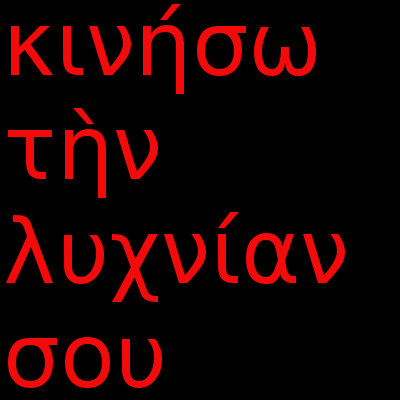
    kineso ten luchnianMy instinctive reaction when I disagree with people on major issues is to come out swinging. Despite this instinct, I believe I am called to be a facilitator, to try to help people talk intelligently and communicate effectively about controversial topics.

    So if you’re looking for a statement about what I believe regarding same-sex marriage, you’re going to be disappointed. If that’s what you’re here for, go for the “Back” button, mutter about click-bait, and go on to more productive activities. In fact, I’ve been criticized this very day, and on a few others, for not taking a stand on the topic. By “not taking a stand” people mean that I will publish material on either side of the same-sex marriage debate along with a number of other issues.

    Do I have an opinion? Yes I do. Will I make it public? No I won’t. [sarcasm]I will restrain myself from benefitting the world with my great wisdom.[/sarcasm] I will, instead, follow what I believe is my calling. Face it, folks! While there is a great deal that has not been heard on this topic, it’s not because it hasn’t been said. In case you missed it in the previous couple of paragraphs, I believe I am called to be a facilitator. As a friend of mine recently pointed out, it’s difficult to be a facilitator and a prophet at the same time.

    Just after I finished reading my dose of blogs and social media this morning, I joined in a conversation and Bible study, and I was asked an important question. We were looking at some interpretational issues in Revelation 2 & 3, the letters to the churches. There are a number of places where judgment is threatened. I was asked about Revelation 2:5, where the NRSV translates “remove your lampstand from its place.” It sounds a bit harsh. The question was, just what did this mean?

    My answer is that I believe it is symbolic, but only at one remove.

    1. The lampstand is a church.
    2. The church does not repent.
    3. The church is removed.

    I think we likely have many “removed” churches. They’re still sitting there occupying space, but the light has gone out. God is not there. The glory has departed. It’s harsh, but I think it’s true.

    You see, I believe in the judgment of God. In fact, because of the way in which I believe God’s judgment works, I believe God’s judgment can be quite implacable. Mercy holds the door open while there is an opportunity for repentance, for change, but eventually the door shuts. I believe the door shuts, or the voice ceases, when we cease to listen. I would commend Hebrews 6:4-6 (or really, it would be better to read 6:1-12; or hey, just read the whole book!) on this. There comes a time when we no longer hear the call to repentance.

    So my answer was that a church can fail. It can essentially lose its place because it does not listen to God. I think this is important. I’m not a universalist. I believe that God’s freedom gives us responsibility, and with responsibility comes the consequences of our actions. This means that we have a choice. The choice has a result. That result fits the choice.

    I further believe that God has sent the Holy Spirit to guide us and the church. Yes, we start in scripture, but we read and interpret that with the help of the Holy Spirit. This may not result in agreement, but the most important part is the listening. As long as we are listening for the voice of the Holy Spirit, and willing to hear and to do, we have that opportunity to repent, to change direction. Once we are no longer listening, when we no longer have ears to hear, we will no longer hear what the Spirit says to the churches. America is filled with churches that affirm doctrinal statements and action plans, yet do not do what they know.

    As I facilitate discussion, I let many things pass. People seem to get tense mostly about abortion, homosexuality, and evolution. I find myself restraining myself on many other topics, including immigration, care for the poor, spreading the good news of God’s grace, carrying out the mission of the church, and training and empowering our young people (to do all of the above, of course!), all of which I consider of critical importance for the church today.

    Not all of you are to be facilitators however. I can leave definitions undone in a publishing company, but if your church is to do ministry you have to make decisions, and to make good decisions you need to listen for the voice of the one who walks among the lampstands (Rev. 1:9-20).

    Please do listen. “I will remove” is a very harsh phrase.

    But I think it’s very real.