Threads from Henry's Web

Tag: publishing

  • Why I Publish Books by and for Seventh-day Adventists

    Why I Publish Books by and for Seventh-day Adventists

    This may seem like a simple question. A better one might be, “Why not?”

    Some Prefatory Remarks
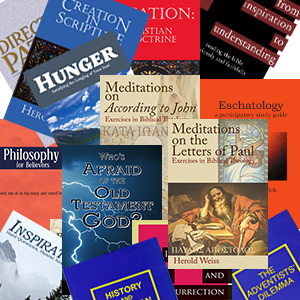
    sda booksSeventh-day Adventists (SDAs) are often misunderstood, which complicates the issue. If I had transferred my membership from a Presbyterian church, for example, to a United Methodist congregation, it’s unlikely anyone would ask me why I maintain relationships with Presbyterians. As an ex-SDA, however, I’m often asked questions like the one I’m trying to answer right now. SDAs ask me how I could possibly leave the church. At an SDA church where one of my authors was speaking, a young man exclaimed to me, “How could you possibly have difficulties with SDA doctrine?” If you want to understand why I left the SDA church or how I feel about it, you might try reading The Joys and Sorrows of Being ex-SDA.

    Here’s my key point: While I disagree with the Seventh-day Adventist Church on a number of doctrinal points, especially on issues of prophecy and some applications of the (otherwise valuable) term “remnant people,” I still regard them as brothers and sisters in Christ, in the same way and on the same basis that I regard fellow Methodists, or members of Presbyterian, Baptist, Assemblies, United Church of Christ, independent, or any other Christian congregation. I have disagreements on doctrine with pretty much everyone I know (often including yesterday’s version of myself), and that doesn’t make me deny Christian fellowship.

    But there are always those other questions about SDAs. They’re different, yes, but they’re more different in weirder ways than others. Which reminds me of the church Staff-Parish Relations committee that decided that an SDA speaker, who had also spoken at continuing education events for pastors at the conference level, could not be allowed to speak at their church. Having read something about Latter Day Saints, they were certain they didn’t want an SDA to speak. Surely we should stick to Methodist speakers.

    There are two forms of ignorance here. 1) There’s ignorance of precisely who SDAs are and what they believe, and 2) There’s the ignorance of just how much weirdness we have in mainline denominations. If I need to find a crazy speaker, but am limited to those who are United Methodists, I will have no difficulty at all!

    What I Publish

    So what does this have to do with publishing?

    Very little, actually. It’s just that people expect it to.

    I frequently have to remind people that I am a Christian publisher, publishing books selected for a Christian audience. That doesn’t mean that all our readers are Christians. What’s more, it doesn’t mean that all our authors are Christians. In a blog post titled Why Did You Publish THAT Manuscript? (on the Energion blog), I noted that “We judge manuscripts and not authors here at Energion Publications.”

    To me that is a rather obvious point, but it has raised questions. In order to guarantee the publishing of Christian authors only I would have to first define the boundaries of Christianity, and then make myself the judge of whether someone had met those criteria or managed to fall within those boundaries. I can do that for myself with regard to organizations and systems. It’s a simple matter of definitions and categorization. To do it with persons would be problematic. In fact, I personally simply accept anyone’s self-confession of what their religious view is.

    Further, as publishers have discovered before, it’s much more difficult to determine whether a person is a good person than it is to determine whether a manuscript is a good manuscript. I choose to deal with manuscripts.

    Seventh-day Adventists

    I think my earlier remarks largely answer the question. When a manuscript by an SDA author seems to me to be of interest to my audience, an audience which definitely does include SDAs, I’ll publish it, always provided it meets other necessary criteria. I avoid publishing books that are of interest to only one denomination, for example.

    Here are some specific points:

    • Am I on a mission to convert SDAs and get them out of the SDA church? No. I have no intention of persuading anyone to leave their denomination. In fact, I will state that if you’re leaving any church, including the SDA church, because of anger at the organization, you’re going to find plenty of imperfections wherever you go. If you leave a church congregation or a denomination, do so for positive reasons. I may disagree with some doctrines of the SDA church, and so I moved to an organization that is more doctrinally compatible with my views, but I applaud and highly value the SDA educational and health systems. I also value much of the theological work done by SDAs over the years. I can both disagree with, and value, ideas.
    • What about the seventh day Sabbath? I consider the Sabbath a part of one’s approach to worship and a spiritual practice. Where I have seen it carried out as a spiritual practice, I find the seventh day Sabbath valuable. As with any other activity, it can be converted into a legalistic “work,” but the key here is “any other activity.” Because keeping the seventh day as the Sabbath stands out as unusual, people take it as extraordinary evidence of legalism. But it’s simply one more practice that can be positive or negative. I have said before that I miss the Sabbath as practiced in SDA circles. I have other means of seeing sacred time, but there’s nothing that quite matches taking sacred time together with a community.
    • Don’t SDAs think they’re the only true Christians? Some of them do. So do one or two Methodists. I think this is a problem for the SDA church partly because of teaching about God’s remnant people. But I have no problem with SDAs as a group over it. Most SDAs that I encounter treat me as a fellow-Christian even though I have left the church. There are occasional folks who treat me as an apostate. I believe that could be solved if there were no people in the SDA church. As things are, we’re stuck with it.
    • But SDAs don’t believe we go to heaven when we die! Indeed they don’t. Neither do I. I think the Bible is actually quite unclear about what happens after death, but the balance, I believe, favors soul sleep and a resurrection. I just don’t happen to think it matters. Arguing about this is very time-bound thinking. If I die and go to heaven immediately, there will be one breath here and next (breath? who knows?) on the other side. If I die and sleep with God until the resurrection, there will be one breath here, and the next (whatever!) on the other side. I won’t know the difference. (I publish several books related to this: Eschatology: A Participatory Study Guide, From Here to Eternity, Journey to the Undiscovered Country, and the forthcoming Death, Immortality, and Resurrection. The first and last are by Edward W. H. Vick, an SDA author.)
    • SDAs believe in Ellen G. White, a false prophetess. Got you now! Ellen White did indeed have a great deal to do with the founding of the SDA church, though I find her own view of herself and her mission refreshingly humble. I also find a number of her writings to be excellent devotional works (Steps to Christ, Desire of Ages, etc.). We have a voluminous collection of her writings, including letters that she wrote over a long life. The SDA church has had some struggles over how to view her and her relationship to the Bible. Bluntly, however, I’ve found traditions in local congregations of the United Methodist Church that have more sacred standing, in practice, than her writings do in the SDA church. I would say, rather, that the church as a whole, and the modern Charismatic and Pentecostal movements in particular, would do well to learn from the SDA experience. Speaking of which, I’m in the process of releasing Inspiration: Hard Questions, Honest Answers by Alden Thompson. He deals with issues of Ellen White in connection with discussing biblical inspiration in a work that I think the wider church would do well to study.
    • How do I deal with SDA authors in my catalog and marketing? Like any other author. I’ll advertise their books for their own denomination, but also present them to others for their wider value. And just like any other author, SDAs may write something that’s addressed more to their own church than to others. In that case, they will be more likely to publish within the denomination, again just like any other author might. I neither emphasize nor do I conceal the denominational connections of my authors.
    • Do my SDA authors quote Ellen White in their works? Yes, and no. I tell them to quote Ellen White as they normally would and if it’s necessary, we will add an explanatory note to the book so that others can understand and still benefit. This is a function of the level of controversy surrounding her work, rather than any judgment of it that I might make. Because there is controversy, explanation is helpful. On the other hand, when addressing the larger Christian community, SDA authors often feel it’s best to make their points without reference to an SDA specific source.
    • Are you trying to provoke dissent in the SDA church? No more so than in any other church. I do have some books in my catalog that have gone out of print from SDA publishing houses. The level of controversy in the SDA church has nothing to do with my decision. I still judge the book, not the author, and certainly not any former publisher. But beware! I’m not the arbiter of truth, and certainly not the arbiter of SDA doctrine. If you don’t want your beliefs challenged, then it’s my hope that my books are not for you!

    Conclusion

    I publish SDAs in the same way and on the same basis as I publish anyone else. It’s that simple (he says 1600 words later)!
  • Sending out Rejections

    As an editor and publisher, I often have the joy of telling an author that their work will become available to the public, because I have decided to invest in it and publish it. That’s very enjoyable.

    Then there are the times that I have to reject manuscripts. There are more of these than acceptances. Often I hope that some other editor will decide that the manuscript is worth publishing. Today I sent a rejection notice out for a book with which I agreed almost totally, but which simply seemed to be repeating things that had already been said. Another was simply longer than the subject matter, and readers, would bear.

    As one who has written many, many superfluous words, and who can’t even claim to have discarded them gracefully, I want to tell these authors to stick with it. Don’t let a rejection stop you. Many books, and not a few bestsellers have been rejected by publishers.

    I try to explain my decision in reasonable detail. If you get a note that gives you advice, take it seriously. Don’t follow it slavishly. I know it’s a shock, but editors are not always right. Another editor may disagree. Give your manuscript a serious look, add some more polish, fix any problems you find, and send it to someone else.

    If the editor who rejected your manuscript suggested it might be acceptable with a few changes, then by all means consider making the changes and submitting the manuscript again.

    I would like to address one other class of authors, those who don’t read the submission standards. If you’re one of those, you need to take finding a publisher at least as seriously as you took producing your masterpiece. When an editor receives either a generic submission, or one that shows the author clearly did not read what information was available, he or she will often just reject the manuscript out of hand.

    As a writer, you don’t just write. You have to market. If you don’t, you might as well not have written.

  • Would I Publish a Creationist Book?

    Would I Publish a Creationist Book?

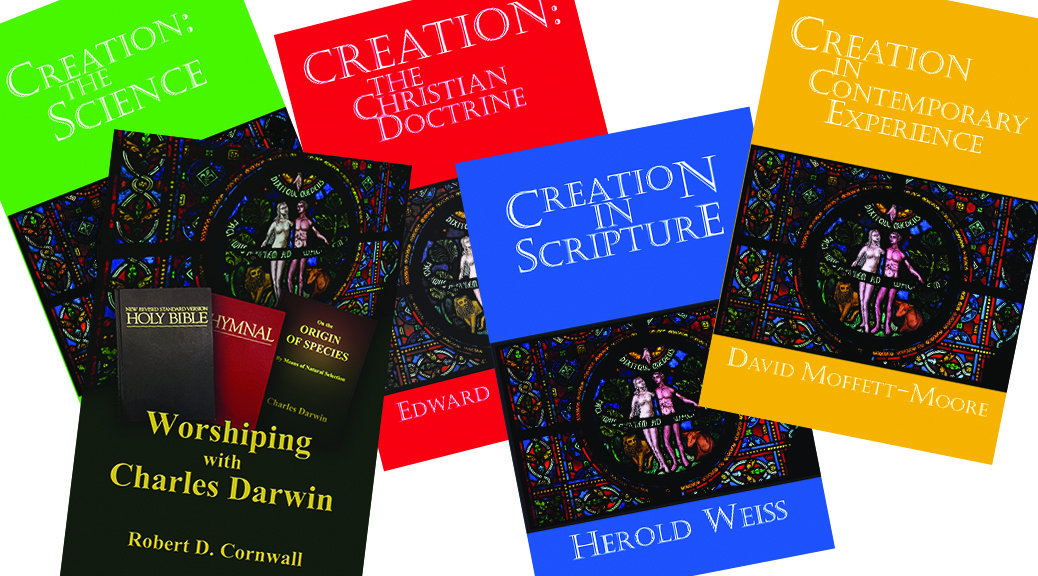
    creation-5I’ve been promoting the creation book set from my company, Energion Publications. The authors of this set of books all support the theory of evolution. In fact, the contribution made by these books, I think, is that they are talking about how we should live in light of a belief that the “how” of creation, at least with respect to life, is by means of biological evolution. (This could have been a post over on the Energion company site, but since it’s also so much about my own beliefs, I thought I’d post it here.)

    Here’s a clip:

    Herold Weiss is a biblical scholar and is talking about creation and creationism from the biblical and theological point of view. It was his book Creation in Scripture that got the book set started.

    “For creationism I have no use.” I publish that. I’m also a known advocate of excluding creationism from the public school classroom. I’m a board member of Florida Citizens for Science. So we know where I stand on the issue. I’m a theistic evolutionist, though I don’t like that term.

    So would I publish a creationist book?

    Short answer: Yes.

    Now for the longer answer.

    I’m often asked this question by people who wonder just how far to the liberal side of the spectrum I’ll go in terms of publishing. In this case, considering how strongly I’m identified with one side of the issue, we have the opposite question.

    The easy way to figure out the general answer to this question is to read the company’s short doctrinal statement. As you read that statement, remember several things:

    • Energion Publications is not a church. Nobody is asked to sign or affirm this statement
    • We judge manuscripts, not authors. I have been asked about things an author said on his web site and whether they “fit.” That’s not my concern.
    • There are many issues of definition in even that short doctrinal statement. For example, amongst our authors we have quite a number of definitions of what the word “inspired” means with relation to scripture.
    • It does provide a general guide to let us focus on an audience

    Having said that, if a book falls within that statement, we’ll consider it. Does creationism fall within those parameters? Absolutely.

    So the longer answer is again, yes. But remember that this openness to publish covers a large number of other issues as well.

    Why are all our books on creation written by those who accept theistic evolution? Again, a simple answer. Those are the ones that were submitted and accepted.

    Aha! A snag! What our hypothetical questioner would probably like to know is whether this manuscript, the one he or she has in hand, expending from days to decades, would be considered for publication and what its chances would be. Would the fact that I have a firm position on the issue prejudice me against that manuscript?

    Without doubt my beliefs influence what I do. But one of my beliefs is that the best thing to do with theological disagreements is to discuss them, entering into genuine dialogue. I consider creationism to be a very live theological debate and one on which we should be having dialogue in the church. I think actual dialogue on this subject is rather rare, but I’m ready to promote it.

    In fact, I see myself as a publisher in the role of an advocate for advocacy. So if I publish a book on creationism I will also put every effort into marketing it.

    That doesn’t mean that I will bend over backwards to accept the first manuscript on the topic that I get. I have been studying this subject since I first learned to read, and so I have a very good feel for the literature.

    Let me provide an example. Dr. Kurt Wise, who earned his PhD under Stephen Jay Gould at Harvard, is a creationist. He wrote the book Faith, Form, and Time. The link provided is to my review. It’s a good book. I disagree with practically every word in it. I don’t see those two statements as contradictory. I consider it the best statement of a Christian creationism as is available for a popular audience. Wise starts from the premise that Genesis teaches a young earth and a literal creation week, so we must follow from that point and discover the science that proves God right. I disagree with that premise.

    If you can send me a manuscript that is as good as that one (good luck!) I’m bound to publish it. And there are lots of other manuscripts that would be good. For example, looked at from the point of systematic theology, how does a young earth or a literal creation week (or both) fit into a doctrinal pattern? What other pillars of the faith lean on those concepts? One could write some excellent systematic theology in that area, and consequently argue with our existing volume, Creation: The Christian Doctrine, which argues that those are not important. It happens I agree with the latter book, but that won’t prevent me publishing a rebuttal!

    Now if I had a category for science, which I don’t, I would require that material in it be reviewed by qualified scientists. That would be another matter. I don’t think modern creationism has yet earned a place at the scientific table, and I’m not the one to offer that place. It must be offered by scientists who are active in their disciplines. I’d have a team of them as readers if I were a science publisher. But the biblical, religious, and theological debate is very relevant and active.

    For those who are interested, I didn’t become convinced that the earth wasn’t young or that the creation week wasn’t literal by studying biology. In fact, I never took a college course in biology. I’m not going to judge one’s biological pretensions. Well, unless they violate elementary principles, that is. It was through study of the scriptural material that I became convinced it was not possible that God was intended to provide either the “how” of creation or the timeline of earth’s history.

    There’s a great deal of open territory for studying biblical studies and theology involved in that!

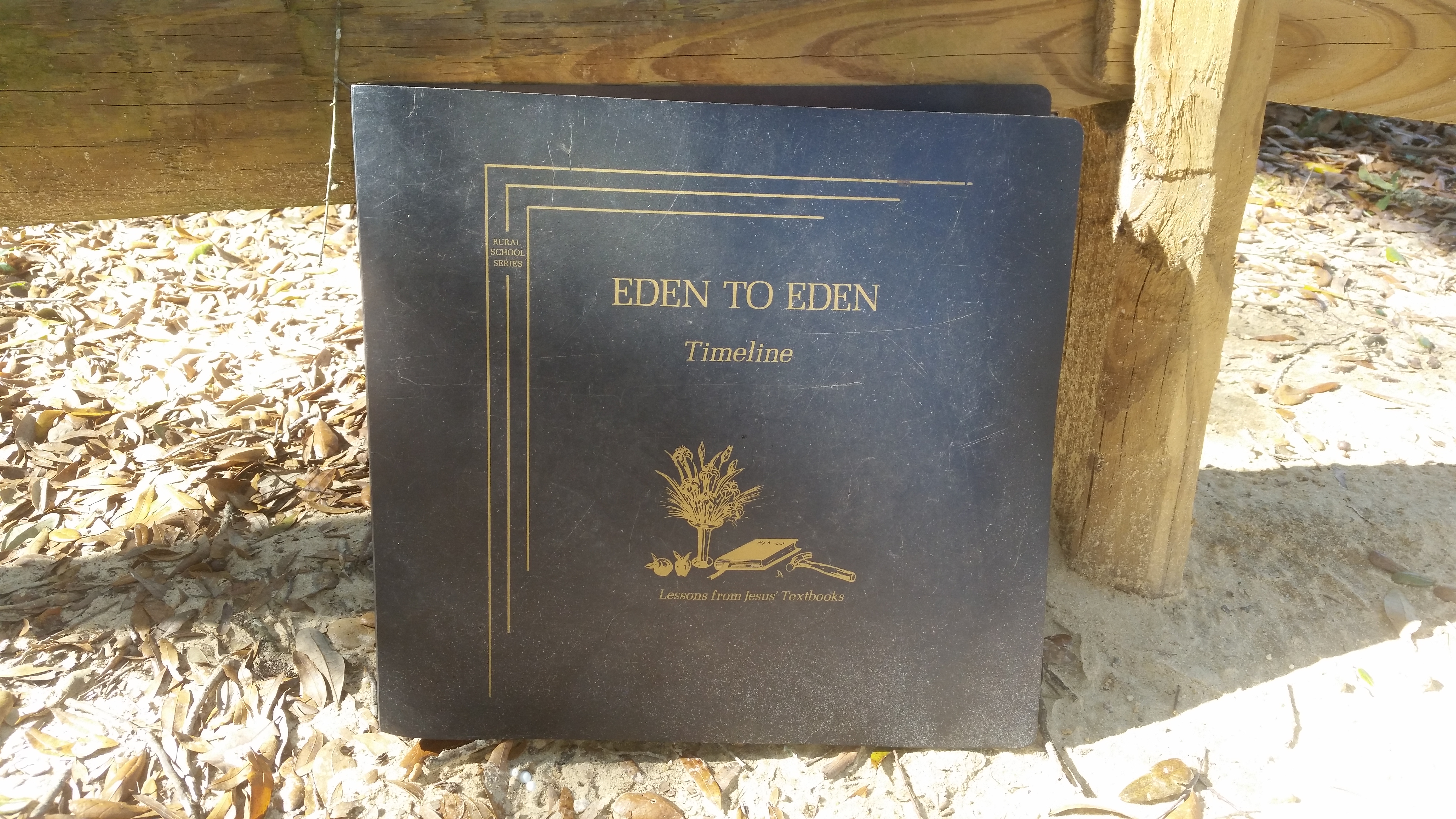
    I can’t help but finish with some pictures that illustrate how thoroughly indoctrinated a creationist I was. These are pictures of the “Eden to Eden Timeline.” You can see in the second image that we were taught that the date of creation was 3957 BC, a correction of the more common 4004 BC. Students added pictures and colored maps as we worked our way through the Bible, entirely guided by this timeline.

    Eden to Eden Timeline
    The title indicates the topic. It starts with creation and ends with recreation. Everything is on a timeline, though the time of the final events is left open.
    Eden to Eden Timline - Antediluvian Period
    You can see the date of creation represented here and also the proposed date for the end of this period with the flood.
    Timeline - Antediluvian period
    This shows how the timeline spread out. I did this outside by the fence, so it’s a bit scraggly. In our classroom we had the whole thing stretched out around the wall. Click on it for high resolution.
  • The Ethics of Publishing

    One of our authors sent me a link to Christianity Today’s article Is Buying Your Way onto the Bestseller List Wrong?

    In the interest of honesty—and that’s what this is really about—let me note that I’m not playing in the same league as the folks referenced in this article as a publisher. I do work with publicity campaigns. I do market books. But the best I’ve done is to get a book temporarily onto the Amazon.com bestseller list for a very narrow category. That wasn’t even my goal in those few cases, but it happened. So I should be clear that few temptations of the level described here are ever presented to me. Nobody has offered to put one of my books on the New York Times bestseller list, and the costs involved simply reinforce what I already said: As a publishing enterprise, I’m not in this league.

    But the ethics of the situation seems rather simple to me. It doesn’t matter what the “everyone” is doing in the industry. It doesn’t matter if it’s standard practice. The tobacco companies had “standard practice,” and while it was legal at the time, it wasn’t ethical. It doesn’t even matter if the New York Times bestseller list is a game. What matters to me, and what should matter to any Christian writer or publisher, is whether our own actions are true and honest. We don’t live according to other peoples’ standards.

    When you write publicity copy, there’s always the possibility that one can disagree on what is honest. What does “the best book on ____” mean? I have even seen such hyperbolic claims in the prefaces to Bible translations. I try to avoid that kind of statement, both because of the question of truthfulness, but also from consideration for my own credibility. Even if I think I’ve found the best book on a subject, such subjective judgements are empty claims at best. I should think what I publish is good, but I can say that without resorting to empty statements or falsehoods. Even though we can disagree, I think that in most cases we do know what is right and wrong, and we know when we are rationalizing the thing we want to do.

    Ethicists have to study questionable instances in order to develop the proper principles. People in those equivocal situations need that kind of nuance. Rationalizers do the same thing, but for a different reason. They want to make simple look questionable. If you can make a truly simple decision look doubtful, that gives you cover.

    As Christians we should instead be looking for “whatever is true, whatever is honorable” (Phil. 4:8). When we find we have strayed off the path, we need to acknowledge and correct the error. I confess it would be nice to be a large enough player in the industry to have to worry about these things. I hope that if that happens, I will be able to uphold the appropriate standards, by God’s grace.


  • Can Liberal and Conservative Christians Meet Anywhere?

    Can Liberal and Conservative Christians Meet Anywhere?

    One of my goals as a publisher is to see people from various streams of Christianity talk to one another and learn from one another. I used the labels “liberal,” “charismatic,” and “evangelical” in the home video I made early in the history of my publishing company, Energion Publications. I’m embedding it here for those who haven’t seen it.

    That video should answer the most common question I’m asked: Why do you publish books you don’t agree with? It’s not a question that comes up with the big boys, companies like HarperCollins, Zondervan, and so forth. (Oops! Come to think of it, Zondervan is now part of HarperCollins!) With those big companies, one expects that the editorial policy will be cover a bit of ground.

    But Energion Publications is owned by one person, and that person (yours truly) is also the chief editor. So what is my goal? Why wouldn’t I look for and try to publish the TRUTH?!

    I suppose I could get into epistemology and tell you that while I believe in truth, I do not believe that we, as humans (finite), ever get to know that. Rather, we make our best, and I think often quite workable, attempt at the truth. But my real reason is that I believe we need dialogue. We need sharpening by others. We need that to go on continually, not just in some starting point.

    Early in my time online I was in conversation with someone on the Compuserve Religion Forum. I’m pretty sure at the time I was still accessing this by dial-up, but my memory isn’t clear on the timing. Another Christian asked me if, when engaging in dialogue with non-Christians, I were to discover I was wrong, would I change my mind. Let’s ignore the fact that “discovering I was wrong” implies that I already changed my mind. My answer was, of course, “yes.”

    “Then you aren’t a real Christian,” he told me. If I was a real Christian, he explained, I would be unable to contemplate the possibility of being wrong. Now I’m a quite convinced Christian. My experience of God suggests to me that while the details may vary, my ultimate faith in God is not in question. It’s not unstable. I’ve seen it challenged. I’ve lived through times that made me question, and that faith is still there. I’m not that strong of an individual. If my faith has held up this long, it becomes evidence to me that there’s something behind it.

    But dialogue means listening, and if I listen, I must consider. If I hear something that is better than what I know already, I must accept that. To do anything else would be dishonest with myself and even with the God who is the Object of my faith. Or, well, beyond object, ultimate concern, and so forth.

    So I’m an advocate of dialogue because I think it’s both a critical part of how we discover truth and also of how we keep on trying to discover truth. Sharing and listening are important.

    So when I decide whether to publish a book, and later when I edit that book, my question is never whether I agree or disagree with the author, but rather it is how well the author has expressed his or her position and how well supported it is. I may disagree profoundly. But is this something that should be considered and discussed? I do place boundaries on what I publish, but that is because a small publisher has to have some definition of what is and is not within its publishing scope. I have rejected manuscripts that I have then, in turn, urged others to read when another publisher released them.

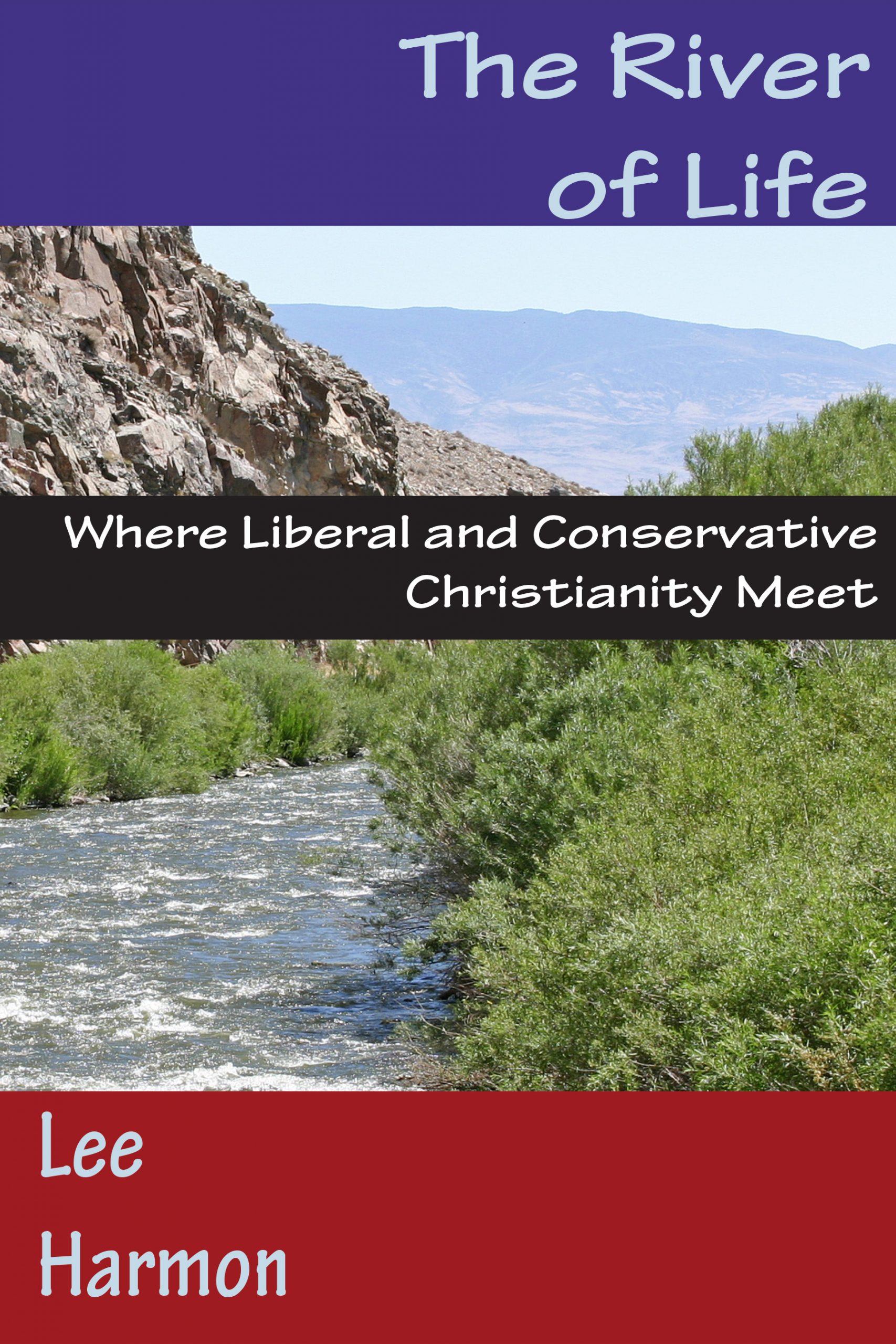
    9781631990915Most of these books advocate one position or another. But my company has just released a new book that is advocating dialogue, precisely the kind of dialogue I established this company to promote. That book is titled: The River of Life: Where Liberal and Conservative Christianity Meet. I’m not trying to say that I like this book better than any other book I publish. To be fair to my authors I must be as strong an advocate for each of them as I can. But I’m highlighting this one on my blog because it speaks to the core of my goals.

    Do I agree with every word in this book? I’d like to think nobody would ask me that. My normal answer is that I can’t even say that with confidence about the books I have written myself. In fact, Lee Harmon’s liberal Christianity is more liberal and less charismatic than mine. You can see my book Not Ashamed of the Gospel: Confessions of a Liberal Charismatic to catch the differences.

    Here is a sample from the introduction:

    I am also a liberal Christian, living in a conservative world. Most of my family and friends are conservative Christians. Conservatives consider apostolic tradition of utmost importance, meaning they seek to emulate the first-century church as best they know how. This is a noble goal, but it can lead to stringent intolerance for diluted beliefs. It’s the right way or the highway. Liberal Christians, on the other hand, find the creedal requirements which develop from such strictness stifling and contrary to observation and experience. We see God in many people and places, not just in Christian circles. This can lead liberals to a violent condemnation of narrow doctrine. Intolerance is intolerable.

    And round and round we go. As a liberal Christian, I have both stooped to verbal aggression and felt the sting of attack. Both sides care so dang much that we can’t help squabbling, but this hardly puts a good face on Christianity. If the two sides could merely take one step backward, digging back to the Jesus we both adore, perhaps there could be a unity of purpose. Even though there can never be agreement about religious belief, the Kingdom could nevertheless advance. That is my hope in writing this book. (pp. 1-2)

    I know, of course, that not everyone will agree with Lee on what the key points are. Not even all liberals are likely to agree on that. But that’s a good opening point for discussion. In that discussion we can all hope that we’ll hear our Master’s voice and learn to love a little bit more and show a grace that’s just a bit wider and deeper.

  • A Temperate Comment on the Mark Driscoll Controversy

    I like the tone of this article by Andy Crouch in Christianity Today. I’m concerned about the concentration of Christian thinking, preaching, teaching, and writing in the hands of Christian celebrities. I think Crouch makes some good points.

    As a Christian publisher myself (Energion Publications), I don’t intend to comment on the details of this case. I would note that it is incredibly easy to make mistakes and very hard work to find them. There have been a number of times when someone I work with says, “I don’t see how anyone could make (or miss) that mistake” only to do something similar (or worse) by mistake down the road. I do not say this to excuse wrongdoing or carelessness, but to make us think twice before throwing stones at others.

    When we do make a mistake, the correct response is not defensive. It is to say simply, “I made a mistake. I’m sorry. I’ll correct it.” I’ve been there any number of times.

    I hope that in my own publishing work I am managing to distribute the work of a broad range of people. As a small publisher, these people will rarely be celebrities. To me, however, they are stars. Why do I say that? I have authors who donate their royalties to various causes. I have authors who have refused royalties on certain books in order to help me reduce the price and allow wider distribution. Every author I publish is active in service in a variety of ways. I have encountered no authors who are not extremely anxious to give credit to everyone who contributed in any way. I have even had to suggest that authors cut down the acknowledgments section in a couple of cases.

    That’s what I took away from Andy Crouch’s article. There’s a church filled with people who can contribute. I want to give as many as I can a voice. The church needs to hear them, and not just the folks who can get a manuscript accepted with one of the big presses. The church needs to realize the breadth and depth of the talent available to it.


  • On the Future of Information Technology

    I’ve posted some thoughts as it relates to my company, on the company blog.

  • On Publishing a Conservative Book

    First, let me alert all my readers that this is about my business even though this is a personal blog. Second, for those who read my business blog, it will be, to a certain extent, repetitively redundant.

    Several months ago I decided that I would expand my publication efforts into the area of politics, though I continue to look for a faith overlap in what I publish. This is simply a new category; nothing so dramatic as a new imprint. In doing so, of course, the new political book would be from some perspective or another. If it had been a liberal book, I would want to write a post on publishing a liberal book, and even if it were a moderate book, this might be titled on publishing a moderate book.

    What I have found before, and has inevitably come up again, is that people assume that I started publishing in order to publish books with which I agree. I have probably helped nurture this idea by publishing my own books through my company. That is something I will just have to live with, because the sales of those books have been an essential part of growing this business in a very competitive market. None of my books are massively popular, but all of them have helped the bottom line.

    Thus I was led to write a post on publishing books with which I disagree a couple of months ago, and now I’m writing this one. The first instance of this problem came up when I responded to a post suggesting that Christian publishers needed to publish “the truth”. This goes way back to 2006, but I find that the posts are still there so one can examine the discussion at the time.

    I do, in fact, regard my business as a ministry, or to put it in secular terms, a service. I have specific goals and a specific audience I hope to reach. My interest is in broadening Christian education for what I call the “broad Christian center” and especially in mainline protestant churches. Education doesn’t involve hearing just one set of ideas, and neither does my publishing effort.

    In order to accomplish that, I’m seeking to publish books that are both challenging and dialogue-seeking. What I mean by that is that they express their viewpoint well from within their particular perspective and also reach out to communicate with those from other perspectives. I’m not seeking the literature of compromise, i.e. people who water down what they actually believe in order to build dialogue. I posted a view on this, which can be found here.

    In connection with this new book on politics, this issue has come up in two ways, first by people who assume that since I’m publishing and marketing it, I must agree on all points. While I don’t feel the call to fight with my own authors, I have no need to agree with everything they say. Second, I hear it from people who question why I would publish a book with which I don’t agree fully.

    That leads back to the question of publishing “truth.” Should I limit my publications to those that express precisely the view that I hold on each and every topic? If I did, I would have to remove books of my own from the market each and every time I change my mind on a detail. What about a broader level of truth? No, not so much. What I look for in manuscripts–and trust me, getting good manuscripts that fit my goals isn’t easy–is a point of view that is worth hearing expressed in a way that it can be heard.

    If my company were not individually owned I would have less trouble with this. Large companies are expected to produce a variety of ideas. But as it is, many people are surprised each time I publish a book that doesn’t entirely agree with what I have said or written.

    So what is this conservative book that I’m publishing? It’s Preserving Democracy, and it’s by Elgin Hushbeck, Jr. I’ve published two books and two study guides by Elgin dealing with Christian apologetics (Evidence for the Bible and Christianity and Secularism. I like Preserving Democracy, because Elgin has done thorough research, referenced the book extensively, and has argued his points well, in my view.

    No, I don’t agree with everything in this book, but that is really not the relevant point. I think this is a book that expresses ideas that should be considered. If you don’t agree, you should know why, and be able to support your position.

    It’s possible this sounds like damning the book with faint praise. Not true! I’m extremely delighted to have it as the first Energion Publications title in the Politics category. I hope it will challenge people, start debate, and create action. One course of action might be proposals or manuscripts. (Are you interested in the approach I’m taking? Do you have a manuscript or an idea for one? Contact me.)

    But I’m also using it to establish my brand identity, so you may hear me talk a bit about my ideas here from time to time. Conversation between people expressing clear, uncompromised ideas can be a powerful force.

    Elgin expressed this in his book:

    A good healthy democracy depends on a healthy debate that includes both pros, cons, and ramifications of each side and their proposals. But when debate exists primarily in slogans, bumper stickers, and thirty second TV spots, true honest discussion and debate is impossible.

    Furthermore, with so many outlets for information, groups are increasingly becoming more insular. Democrats talk primarily to Democrats, Republicans to Republicans, and Libertarians to Libertarians. Each group looks to its sources and insulates itself from others, effectively becoming self-reinforcing, feeding on their own rhetoric rather than on reality. (pages 165-166 in advance copies)

    I think he is absolutely right. I believe his book is a step in the right direction. Many more are needed, but you can’t take a second step until you have taken the first. It’s my first step toward strengthening the political debate as a publisher.

    Note: If you are interested in reading an advance copy, and you are a blogger, involved with other social media including Twitter, or a political leader, please e-mail me at pubs@energion.com. There are still a few advance copies available, and I’d be delighted to send you one while they last.

  • A New Kind of Publishing

    When I was persuading by my wife and daughter to get a 21st century cell phone, my now indispensable Palm Centro, my friends were amused but not surprised that I soon had Bible software on it.

    I must confess that the one time I used that Bible in church I got some really suspicious looks.  “That guy’s using his cell phone during the church service!”  No, but I was checking out a passage the preacher was using in the ESV, which is the version I have on the phone.  (No, the ESV is not my favorite, but it’s quite usable for me.)

    At the same time, I’m dealing with the fact that in my own publishing work I’m finding that many more people want content that is accessible online, and you simply don’t get to talk to them if you don’t make things available now, and don’t make them interactive.

    David Ker relates these new realities to Bible publishing, and notes some of the potential problems as well.  I have found the same problem he has with devotional time.  I can often work Bible reading and study time into my electronically herded day, but prayer, meditation, and listening to the Holy Spirit are substantially more difficult.  For those I have to cut myself off from the world.

    There is a problem, as I noted tangentially in my post about church yesterday, with equating the technology we use to solve problems with the problems and/or the solutions themselves.  For example, the problem of keeping in touch with one another during the week so that we can spur one another to good works is not solved by employing technology as such; rather, technology can help us do what needs to be done.  It’s also excessively easy to equate social trends with the technology on which they feed; I’m certainly guilty of that.  But all these things do interact.

    I think the basic question will remain whether our tools control us, or we will control our tools.  The new interactivity can provide many new opportunities.  One element of the method of Bible study I teach is sharing.  By sharing I mean hearing from others as well as speaking to others, and testing what you think you heard from God against what others think and hear.  Technology, and particularly the number of voices we can hear will either help or hinder that process, depending on how we use them.  We can now interact with many more people, from many more points of view, but will we interact with them effectively and seriously, or will it be superficial contact?

    The potential is tremendous.  I congratulate David for getting us all thinking about this.  How do we use both social trends and the technology that accompanies or feeds them to improve our Bible study and our spiritual lives?