Threads from Henry's Web

Tag: preaching

  • Psalm 119:157 – Persecutors

    Psalm 119:157 – Persecutors

    Many are my persecutors and my enemies,
    yet I have not swerved from your testimonies.

    I have discussed previous statements such as this one in this series. It can be (and has been) read as a boast, as a determination, or simply an observation of the current status. So I’m going to depart from my own title. This is all you’ll hear about persecutors!

    Today as I was thinking about this, I started to think about the value of repetition. One of the complaints people make about Psalm 119 is that there is so much repetition. You could cover the independent topics in a few verses. So what’s the point of all the repetition?

    Our feelings about repetition vary greatly according to circumstances. For example, at a sports event of just about any variety, you’re going to hear slogans repeated dozens, perhaps hundreds of time. Here the repetition is part of the emotional connection of the fans as a group and also with “their” team. Nobody complains that we haven’t found a new, more creative cheer. Likely, the same thing will be repeated through the next similar event and nobody complains.

    In teaching, repetition can be quite useful. My mother taught me that in order to memorize a passage I should first read it through 12 times, and then begin to work on memorizing it line by line. The repetition serves to ingrain the passage in the mind. I use a similar method for Bible study in which I read a passage 12 times before digging into the details, making sure that my mind is aware of the greater context of any detail I choose to study.

    I have used this in preaching. I’ve told in this series before about a sermon I preached based on the passage “There is a way that seems right to a man, but the end thereof are the ways of death.” I built my sermon around getting lost, and each time I would describe a new error in my route, a new turn that I thought was right, but wasn’t, I’d repeat that statement. This goes back to what one of my undergraduate instructors told me about sermons. He said you write a three point sermon, but the first point sets up what you want to say, the second point is what you want to say, and the third point restates what you want to say. Then there’s the introduction that leads up, and the conclusion, which again applies this point. He said it was unlikely you were going to get more than one point across to the congregation in such a way that they’d remember.

    We complain in church about repetitive choruses, but then there’s a rather old hymn that starts “Holy, holy, holy.” This repetition of “holy” three times is presented in Revelation 4:8, where the four beast around God’s throne have no rest day or night from saying, “Holy, holy, holy, Lord God all powerful / the one who was, and is, and is to come.”

    Repetition is a common part of so many of our activities, and in this Psalm, repetition is part of the process of painting a larger picture of divine law. In some ways, I’m doing violence to that by writing meditations on each verse, one at a time. The Psalm is a tapestry, and cannot be fully scene by looking at individual threads.

    Think about repetition today. What repetitive activity is essential and helpful to you?

  • Using Greek from the Pulpit

    Using Greek from the Pulpit

    David Alan Black, Greek professor and author of a number of books on languages, suggests you don’t use Greek from the pulpit.

    Speak emancipating truth in a way that all can understand, and we will thank you for it. 

    Dave Black Online

    I agree, and add the fact that in most cases when I’ve heard Greek referenced from the pulpit it is referenced incorrectly. Use your Greek or Hebrew to enhance your own study, but bring it to the people in their language.

    I confess that I usually do use a Greek word (one, unless it’s in a language context), because people expect it of someone whose degrees are in biblical languages and not in theology. But I introduce it with a caveat, and tell people why I’m doing it.

    Then again, I’m usually teaching small groups and only rarely preaching.

  • Are Sermons of Value?

    Are Sermons of Value?

    I have very frequently spoken disparagingly of sermons. I prefer more interactive activities in smaller groups as a way of learning and passing on information. It’s commonly said that a pastor is lucky if, on a Sunday, any congregants remember the topic of the previous week’s sermon, much less what was said about it.

    On the other hand I remember stunning Dr. James Londis, who was pastor of the Sligo Seventh-day Adventist Church when I was an 18-year-old college student and a member. His first sermon there had to do with applying the Laodicean message to his new congregants. Accurately, I might add. I mentioned this memory to him about 40 years after he had preached that sermon. For some reason he was surprised!

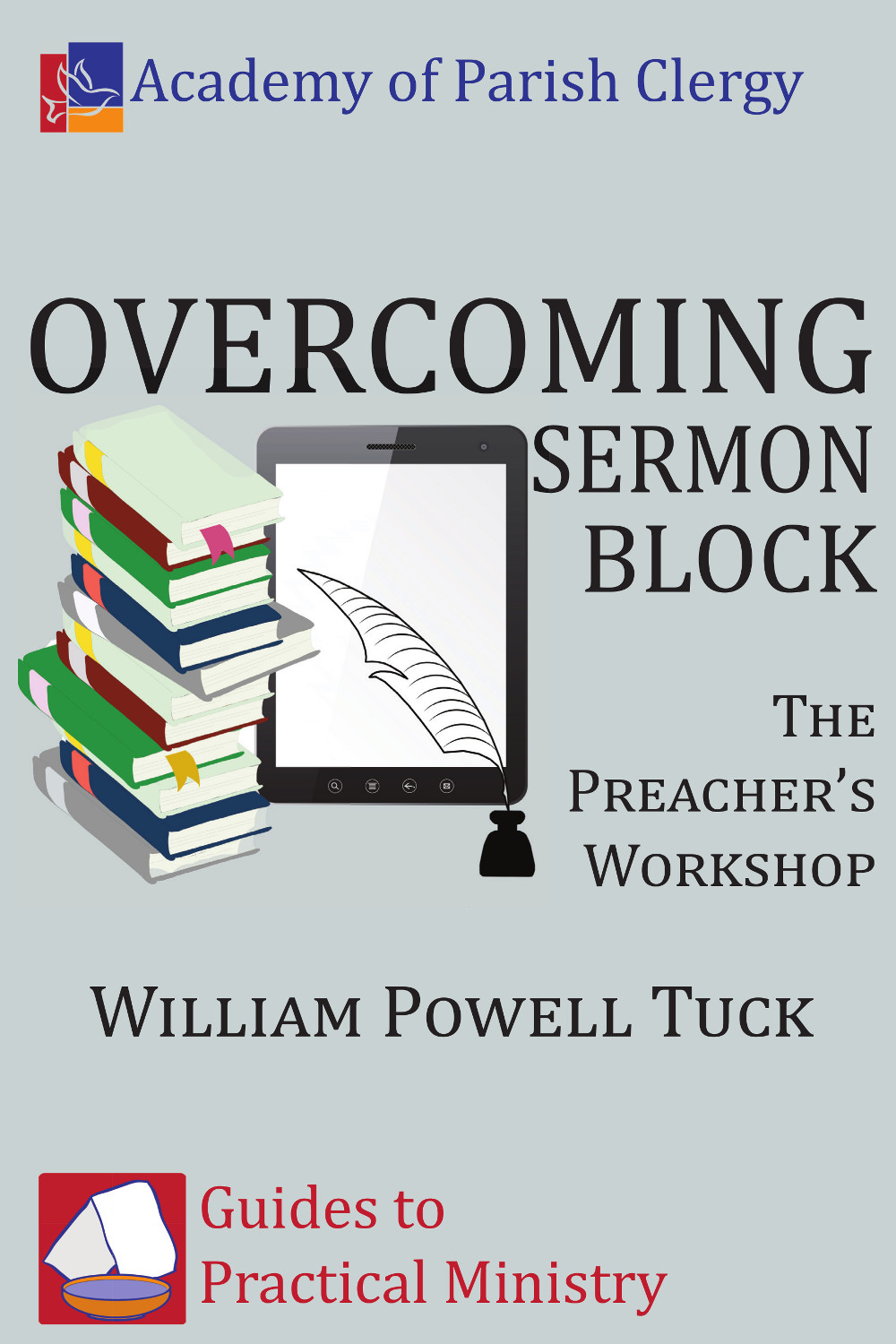
    Nonetheless, I publish one book on how to preach (Overcoming Sermon Block), and a number of sermon collections (So Much Older Then … [Bob LaRochelle], The Character of Our Discontent [Allan R. Bevere], A Positive Word for Christian Lamenting, The Forgotten Beatitude, and Holidays, Holy Days, and Special Days. Most of these books are by Dr. William Powell Tuck, who has a few others as well. One of my criteria for publishing a sermon collection is that it is useful for reading as an essay collection as well.

    Bill Tuck, when I interviewed him on the topic, said very simply that a major reason that sermons are looked down on is that so many of them are so bad. They are often poorly prepared, poorly presented, lack evidence of thought and reflection, lack depth, and so forth. I’m going to put the video of my interview with him at the end of this post.

    A problem behind the problems is the lack of time spent in preparation. There is, of course, preparation of the sermon. But there is also preparation of the person. Bill Tuck says this in Overcoming Sermon Block:

    One of the most important disciplines a minister has to maintain is his spiritual or devotional life. If we are too busy for our own personal devotion, we are simply too busy. We have to keep our priorities right. Our personal spiritual nurture is absolutely essential. To fail here is not a  minor shortcoming but neglect in a critical point of our own relationship to God. How can we guide others to worship and serve Christ if we neglect our own spiritual development? Our spiritual development affects our preaching as well. As we “labor” at our spiritual nurture, the amazing thing is that we are not only fed spiritually, but often sermon ideas arise out of our own devotional study and reflection. That is not our main purpose but it happens nevertheless. (p. 18)

    That contains some excellent advice for everyone. I am only rarely called to preach, but I find that when I am called to share, my devotional life is most critical. Sunday School teachers take note.

    Here’s the interview:

  • Preaching: Value and Practice

    Tonight I’ll be interviewing Dr. William Powell Tuck about the practice and value of preaching. Here’s the viewer.


  • Resources for Progressive Preaching: Pastor2Pew

    Resources for Progressive Preaching: Pastor2Pew

    One of the least accurate characterizations I hear about progressive Christians is that they don’t care about the Bible. Now it’s hard to get a single image of the average or perfect progressive Christian, so generalizations are hard to make, but let me note that the generalization that progressive Christians in general disrespect the Bible, is not accurate.

    One conservative response to this is a list of biblical positions on doctrine, as held by the same conservatives, which progressives do not espouse. If progressives fail to see these very clear teachings of Scripture, how can they possibly be regarded as anything but disrespectful? On the other hand, progressives sometimes point out conservative doctrines on things like money and the treatment of others that they feel—equally strongly—are violations of scriptural teaching. Rev. Steve Kindle even wrote a book about all this, titled I’m Right and You’re Wrong: Why we disagree about the Bible and what to do about it. Clearly it’s a book containing the answers to all of life’s questions, including the meaning of life. (No, not really, but it will help you understand why you don’t have those answers.)

    Now Steve has set out on another project, designed to help progressive pastors find commentary on the Lectionary passages. He acknowledges the difficulty that not all pastors, progressive or otherwise, follow the Lectionary, but you have to start somewhere. In searching for resources Steve found that the material one could use in speaking to one’s congregation in a relevant way was embedded in a mass of material that used approaches that were not nearly so helpful. So he started Pastor2Pew.org. On Tuesday night, I interviewed him for our Energion Tuesday Night Hangout. Here’s the video:

    My title, “A Progressive Christian Preaching Scripture” may sound snarky. In fact, it may be snarky. But ask yourself this: Who am I being snarky about? What I’m really trying to do is emphasize my own point here: There are many progressive Christians who study Scripture, write about it, preach from it, and believing, as strongly as any fundamentalist, that they are living it. They are just finding different things there.

    I don’t know precisely what to say about the people Steve is interviewing, except that I didn’t find anyone there so far that I don’t want to hear. I mention Walter Brueggemann above. Steve also interviews Energion author Bruce Epperly. Bruce spends a great deal of time studying Scripture and doing the homework that means he deserves to be heard, not only by other progressives, but those in other streams.

    I strongly recommend Pastor2Pew as a resource both for progressives, and for others who would like to get some challenging and different approaches to the text. Even if, in the end, you reject them, I think you’ll find that your understanding deepened as you did so.

    PS: Check out our Energion “Church Health” category, including Steve’s book Stewardship: God’s Way of Recreating the World.

  • Preaching from the Old Testament

    Preaching from the Old Testament

    violence and scripture booksNo, I’m not going to do it, but I’m going to ask Dr. Bob Cornwall some questions about it. He’s currently preaching a series in his church from 1st & 2nd Samuel. Bob is one of my Energion authors (see his book list here), and is editor of the two book series we publish in cooperation with the Academy of Parish Clergy, Conversations in Ministry and Guides to Practical Ministry. You can find more information about this event on its Google+ event page.

    I’m going to ask Bob how he handles the authority of the text he is preaching from, and especially whether he will deal with some of the more violent passages and how he will preach from them. There are quite a number of passages in the books of Samuel that could be very troubling to a 21st century conversation.

    This morning, I was reading one of those: 1 Samuel 15. You can read the whole thing if you want to get a general picture, but let me just summarize here. God tells Samuel to pass the order to Saul, King of Israel, that he should go and wipe out the Amalekites. He is supposed to designate them as herem, meaning that they are devoted to destruction, every person, every creature, every thing is to be destroyed. And lest we be tempted to soften the story, we are told that this included men, women, and even nursing babies.

    Saul disobeys God and doesn’t kill everyone. The best of the animals are preserved, and the king is taken captive. Saul blames this on the people. God blames Saul and says he has cut Saul off (or at least Samuel says God says this) from being king over Israel. This story opens the cycle of stories about the conflict between David and Saul, which ends with Saul’s death in battle and David’s accession to the kingdom.

    I have heard this story handled in a number of ways:

    1. Get a modern lesson from it, ignore the gory details, and hope nobody notices. I remember hearing it in my early years taught as a story about obedience. When God tells you to do something, you better do it. When I did ask about the killing, I was told that it was God, so it was OK.
    2. Emphasize the gory details. We’ve all become too cowardly to truly uphold God’s will in the world. (Yes, I’ve actually heard this.) We can just hope folks like this aren’t too serious.
    3. Some things in the Bible are less inspired than others, and this is one of the less inspired. Bloodthirsty people did bloodthirsty things and blamed God.
    4. When people lived in a violent world God worked within their context. So things that might be commanded then could be forbidden now, not because God has changed but because he is staying the same, and working with us where we are.
    5. The Old Testament God was violent. That’s why we stick with the New Testament. (If you take this approach, you should likely avoid texts like most of Revelation and Acts 5:1-11.)
    6. Let’s never read this in church and hope nobody notices.

    I could probably come up with some more given time. I’ll be interested to see how Bob Cornwall handles the text. He’s both a good preacher and accomplished scholar, so I expect his comments to be helpful.

    In the meantime, two things. Following a challenge on a similar text, I wrote two blog posts. The first was a story/dialogue discussing the text, titled The God-Talk Club and the She Bears, on my Jevlir Caravansary fiction blog. (In the God-Talk Club series I write dialogue without any intention of expressing my own point of view. It’s sort of an exercise for me in trying to express several views on a topic.) The second was a homily on the same passage, titled Real Guy Interpretation.

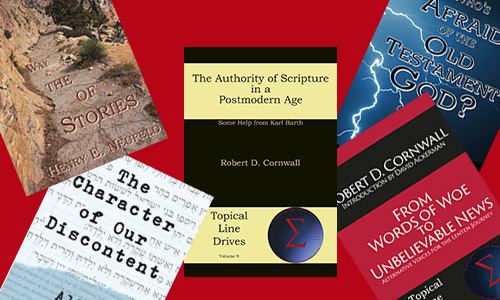
    Finally, I recently interviewed two authors, Allan Bevere, author of a book based on a series of Old Testament sermons he preached titled The Character of Our Discontent, and Alden Thompson, author of Who’s Afraid of the Old Testament God?. I’m embedding that video below.

  • Two Old Testament Books (or Preach More from the Old Testament)

    My company is offering special prices on all our books related to the Old Testament. I decided to blog a bit about the books we’re offering. So if you don’t want to hear about books that are for sale, this one isn’t for you. On the other hand, I promise to be wordy, tell stories, and fail to get to the point for paragraphs at a time. As usual! And by the way, this got started because we’ve put Ecclesiastes: A Participatory Study Guide, the first in the series on an Old Testament book, on pre-order. Look for it in mid-November. I’ll talk about it later in the week.

    This morning I was thinking about two books, because they relate so closely to my own Christian experience and to a weakness I see in the church and the way we teach the Bible. The first is by one of my college professors, Dr. Alden Thompson. He guided me through my second and third year of Hebrew as well as any number of questions that arose. I never did take an introduction to the Old Testament, though I took several Old Testament courses other than Hebrew, but I did dig into the theology enough to keep the discussion lively.

    Alden is primarily concerned with getting Christians to study the Old Testament more, and with letting people know that you can find God’s story of grace there as well as in the New Testament. His book, Who’s Afraid of the Old Testament God?, was released after I graduated, but I read it with great interest, and when I was invited to teach later in a Methodist church, I found it was no longer in print. I got some remaindered copies from him, and then later got permission to issue two different comb bound editions. These got me through a number of classes, but we referred to one of them as the “unfortunate edition.” This was also before Energion Publications had come into existence.

    We issued a fourth edition, properly printed and bound, though the printer did not produce the best quality work. I purchased several thousand of those books from another organization I’d been working with and used that as the starting point for Energion Publications. So Who’s Afraid of the Old Testament God? (now in its fifth edition) is a key part of the history of the company.

    Alden’s focus can be found in two stories, I think. When I first contacted him about his book, some 20 years after we had last talked, his first question, before he wanted to talk about books, was this: “How are things with your soul?” Authors tend to care about their books, especially if there’s an opportunity to get them reprinted. But that was his first thought. Later, when he came to teach at Pine Forest United Methodist Church here in Pensacola, he told the group that the measure of his success as a teacher would be whether he left them loving God and one another more than when he came. I like that.

    The book itself can be mildly (or more than mildly) controversial, as one would expect of a book that has chapters covering Judges 19-21 (read it if you don’t understand why), and another on the Messianic prophecies. It’s easy to generate an argument on those topics. But I’ve seen a lot of people spending more time with their Old Testaments after hearing Alden speak about it. If nothing else, his enthusiasm for the topic draws people in.

    The second book is related, though it comes more from my present than my past. It’s written by Methodist pastor and seminary professor Allan R. Bevere. It’s based on sermons he preached from the Old Testament. Now there are those who are turned off by collections of sermons. I like them, provided they are good sermons that serve a purpose, and that they apply to a broad audience. The book is The Character of Our Discontent, I think this book has not gotten the attention it deserves. The vast majority of times that I hear sermons from the lectionary, the text is from the gospel lesson. Now I don’t have any problem preaching from the gospels. But I don’t think people will understand the whole story if they don’t get the background to the gospels by learning from the Bible Jesus used.

    So I’d see two purposes to this book. First, it can be read for devotional reading. I’d take an essay at a time. You’ll find your spiritual life growing when your devotionals don’t just come from the Sermon on the Mount, but also take in characters like Samson and texts from books such as Leviticus or Ezekiel. But second, if you’re a pastor, consider looking at this pattern of presenting material from the Old Testament.

    And unlike Alden Thompson, Allan Bevere is a New Testament scholar. Just because you specialize in the New Testament doesn’t mean you can’t include preaching from the Old. You may even have some special perspective.


  • Claims and Actions about the Bible

    The surest sign that somebody doesn’t read the Bible that much is that they claim to do everything it says. Now there are lots of ways to nuance that statement, but I’ve found that in general those who make the claim are unaware of many commands of the Bible, and don’t have an explanation for why they don’t follow those commands. (There are plenty of commands given in the Bible that don’t apply to you.)

    Unfortunately many people regard claiming to follow the Bible or do all the things it says is a sign of piety, so whether or not they know what the Bible says they make the claim.

    Via Twitter I found this post at Coram Deo, in which some such ignorance is documented. I think Matt makes many good suggestions for dealing with this Biblical ignorance.

    I would add two things:

    1. Address controversial issues in the church, rather than sticking with questions that permit “Sunday School answers”
    2. Remember those commands in the Bible that deal with honesty and integrity, and don’t claim to value the Bible if you don’t actually read and study it.

    Check out Matt’s entire post.

  • On Etymological and Anti-Etymological Fallacies

    Clayboy has an excellent post on preachers who say “What the Greek really means…” or words to that effect.  I was drawn to this one because of my own experience.

    My wife tells me that when we first got married she quickly got used to watching me during sermons.  I need to tell you that my wife is extraordinarily observant and will catch people–especially me–trying to conceal feelings and reactions.  She told me that I was very good at concealing my reaction, but she would see me get a certain fixed expression on my face whenever a preacher said “What the Greek really means …”  (They rarely do it with Hebrew, but for what it’s worth, the comments on Hebrew are generally less accurate than those on Greek.)

    Often the preacher is simply replacing he word in his English translation with one that is possible, though not necessarily probable, but which better supports his point.  Besides the inaccuracy, I dislike the implication that someone with a couple of years of Greek can correct the work of translation committees in such an authoritative fashion.

    I also, however, understand the reservations expressed by Bob MacDonald in the comments in reminding us that etymology has value.  It can be useful in studying the history of words or in suggesting meanings for derived forms for which we have too few examples in the literature.  Of course, the context of the word in actual used, studied as synchronically as possible, governs, but the etymology can be very useful.

    I’ve encountered a few people who have heard of the etymological fallacy, and some of the very careless uses of etymology, especially in ancient near eastern studies, and have therefore determined that any use of etymology must be a fallacy.  There are legitimate uses.

    My suggestion to preachers and teachers has always been to use whatever skills they have in the original languages for they’re worth in preparing to teach, but to avoid making the sermon into a language lesson.  There are, after all, many factors other than the structure of language in understanding a text.

    I recall one professor I had in graduate school who was incredibly good at the structure and vocabulary of a language.  I took readings in Biblical Aramaic from him and I value highly the time I spent in his classes.  But while he could analyze the nuts and bolts better than anyone I have encountered, before or after, I would not rely on him for the exegesis of a passage.  The only thing he cared about were those nuts and bolts.  Which is fine–I’d build on his foundation any day.

    The problem, as I see it, is that when we use the language to give a single word for “what the Greek really means” or provide a few synonyms, we imply that getting the right gloss for the word is what using Biblical languages is all about.  It’s much better to learn to express the result in good English–assuming that’s the language in which we’re preaching.

  • Mounce on What the Greek Says

    Bill Mounce, author of the wonderful Basics of Biblical Greek, which I have used in teaching, has a post at Koinonia titled <em>Matthew 7:26-Is a moros a moron</em>, with the very proper answer–NO!

    There are two things I’d like to call attention to in this post.  The first is an excellent illustration of the false allure of etymology or seeking cognates.  This is more for the serious Hebrew student, but while sometimes one must look for ideas for a “hapax legomenon” in cognate language, one should be aware that the cognate provides ideas, not proof of a new meaning.  Context provides the final judgement, and if a word occurs once, that means that humility is called for regarding that final judgment.

    The second is the sprinkling of “what the Greek says” (or Hebrew) into sermons, especially by those who don’t really know, which is the vast majority of times I’ve heard this used.

    Mounce says:

    I know it is tempting to show a little Greek knowledge and try to create a helpful word picture, but unless you are absolutely confident that your Greek is absolutely right, I strongly urge you not to display your Greek knowledge.

    Which brings me to the general point. I encourage my students to never say, “In the Greek ….” Why would you do that? To impress the audience with your academic acumen? To convince them that you are right when you can’t prove your point with biblical logic? Perhaps I am being a little harsh, but I am sensitive to pastors claiming to be an authority and putting themselves up on a pedestal. That’s not where servants belong.

    Just so.  I have rarely been privileged to quote two paragraphs from a blog post with which I agree more completely.

    PS:  You’ll have to read Mounce’s whole post to discover more about morons!