This is the unintentional third part of my discussion of this topic. Last week I talked a bit more about the initial statement of the gospel in Galatians and then began looking at how Paul talked about the gospel elsewhere, first in 2 Corinthians 5 and the ministry of reconciliation. I’ll be moving from there to Romans 1 (and a few other references in that book). I’m including those books whose authorship is controversial, though I’ll note each one as I make use of it.
Here’s the embedded viewer for tonight:
Remember my resource page on Paul. I will continue to expand on those references with some comments.
This is the unintended second part of last week’s discussion, since I didn’t even come close to completing the material. We’ll be launching from Galatians 5:6-9, but I had already discussed the content of those verses. Now we’ll be looking through Paul’s letters, including those attributed to him, but disputed by scholars, looking for the nature of the gospel according to Paul, and what might “another gospel” be.
Apocalyptic background – flash and lightning in dramatic dark sky
Well, I’ll be starting from the word “church” and going forward to “gospel.” With only a half hour, I’m not sure how far we’ll get. Scripture is still Galatians 1:1-10, and you can add the first chapter of Herold Weiss’s book Meditations on the Letters of Paul, “My Gospel.”
I’ll start at 7:00 pm central time and the session lasts 1/2 hour. Live chat will be enabled for those who would like to comment or ask questions.
I’ve been having an interesting time preparing for my study tonight, and I’m feeling the boundaries of a 1/2 hour study. Most people will probably be glad. In order to make this work, however, you’ll need to read the material suggested. In this case, the “Introduction” from Meditations on the Letters of Paul by Herold Weiss and “Becoming Galatian: Spiritual Practices for Reading Galatians,” and Lesson 1: Introduction and Background,” from Galatians: A Participatory Study Guide by Bruce Epperly. The scripture passage will be Galatians 1:1-5, but it would be a good idea to read the entire book—it’s only 6 chapters—and also read and compare the introductions to other letters of Paul, whether disputed or not. Just start at Romans and read the first verse or two of each book until you get to Hebrews.
I’m finding the idea of posting two or three times on this topic during the week difficult, but that’s not a reason to abandon it. It’s important to allow topics to percolate, and one of my bad habits is to study the material on Thursday morning. In this case, I have looked at it some before today, but not enough, and I intend to change that.
But for tonight we’re going to look broadly at what is contained in the reading material and then focus on what made Paul an apostle, what made his letters authoritative for the church, and the nature of these letters as evidence. I’ll also touch on why I’m using Galatians, besides the fact that I think Epperly’s study guide is the right sort of challenging material to get us out of a rut on how we read the book. I think Herold Weiss similarly challenges our standard approaches (read his article Paul Did not Teach Righteousness by Faith), but he does son on a broader basis. We’re going to use Epperly’s more focused book to get to Weiss’s broader understanding.
Note here that I don’t mean that we will necessarily agree with either one. Rather, I’m looking at the focus and at ways of getting us each to let Paul’s writings speak to us. We will never completely discard our background. Yet we can try to give the scriptures the greatest possible chance to change us. That is the goal of this study.
Paul was impacted by his mystical experiences and the intervention of God by a vision of light. (Source: Adobe Stock [licensed]).Tonight I begin my new series of Thursday night studies on the apostle Paul. My approach will be a bit different than usual. I’m more interested in developing the background, particularly in Israelite religion and Judaism and looking at the way Paul draws from his theological sources.
I’ll also introduce my approach to the subject. I’ll be working first with material from Energion Publications authors. I publish these materials and I’m acquainted with them. More importantly, I wouldn’t have published them if I didn’t consider them valuable.
I’m going to use Galatians as my basic guide. That wasn’t my first choice. I’ve often felt that Pauline scholars spend excessive time in Romans and Galatians and neglect books like 1 Corinthians or Philippians in developing their view of Paul’s theology. But I have come to believe instead that what I saw as deficiencies in building a picture of Paul from these letters is more a result of misreading Paul than of choosing the wrong letters. Of course, I will still maintain that in order to understand Paul and his theology, one needs to consult everything he wrote, but I doubt anyone actually disagrees with me on that point. It’s rather a matter of emphasis.
In studying Galatians, I’m going to start from a foundation of reading the book with Bruce Epperly’s study guide in the Participatory Study Series, titled creatively Galatians: A Participatory Study Guide. (The title is not Bruce’s fault. It’s standard for the series, and therefore my fault.) Besides the fact that I publish the book, my reason for choosing this is that it is written by a progressive theologian, also a process theologian, who is nonetheless very favorable to Paul’s writings. I would like to create a conversation here between evangelical and progressive approaches to interpretation and also to take a look at the way our existing theology impacts our reading.
As part of the resources for this study, I’m going to be interviewing scholars from our Energion Publications author list with a variety of perspectives. Because I’m using Bruce Epperly’s study guide, I’m starting by interviewing him. I completed it this morning, and I’m excited by the results and what he had to say. Bruce is always entertaining. He’s the first of several. I hope you will listen to (or watch) all of them. Here’s the video:
It’s not necessarily a bad thing for our theology to impact our reading. In fact, I think it would be quite shocking if it didn’t. I am only reading the Bible because I grew up in a Christian home and have a theology that suggests that this book is useful. My existing theology is also going to have an impact on the way I place the content of the book. In turn, Paul is himself impacted by his own background and theology. This doesn’t suggest that interaction with the book doesn’t have the potential to change or even totally revolutionize our existing thinking. Paul encountered God in a new and different way on the road to Damascus and his theology was revolutionized. Yet one can still see his background in his destination.
It’s easy to separate Paul from his own background. In fact, it’s easier to do so than not. So I’m going to emphasize the background. Now I’m not in search of some undiscovered country where I hear Paul 100% as he was. My theology will be in tension with his as I learn, and I hope yours will be there as well.
It’s my hope to provide additional video notes and some blog posts each week. Just as we have with the Energion Publications Tuesday Night Hangouts I’ve changed these to a half hour each. I also hope that you will pick up a copy of Bruce Epperly’s book and do a study of Galatians at the same time as I do.
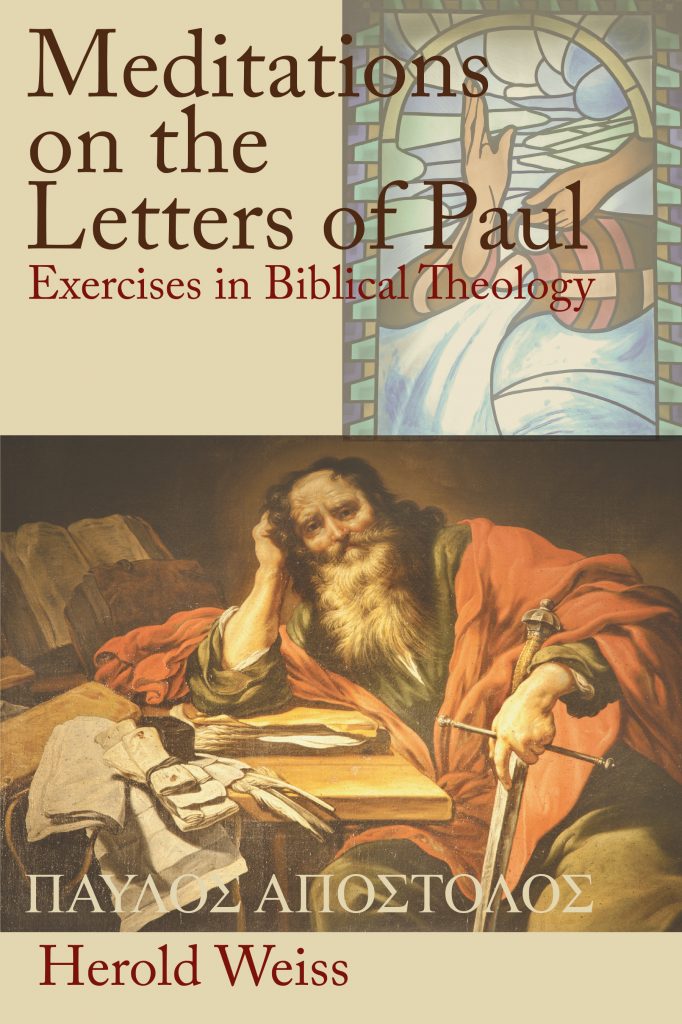
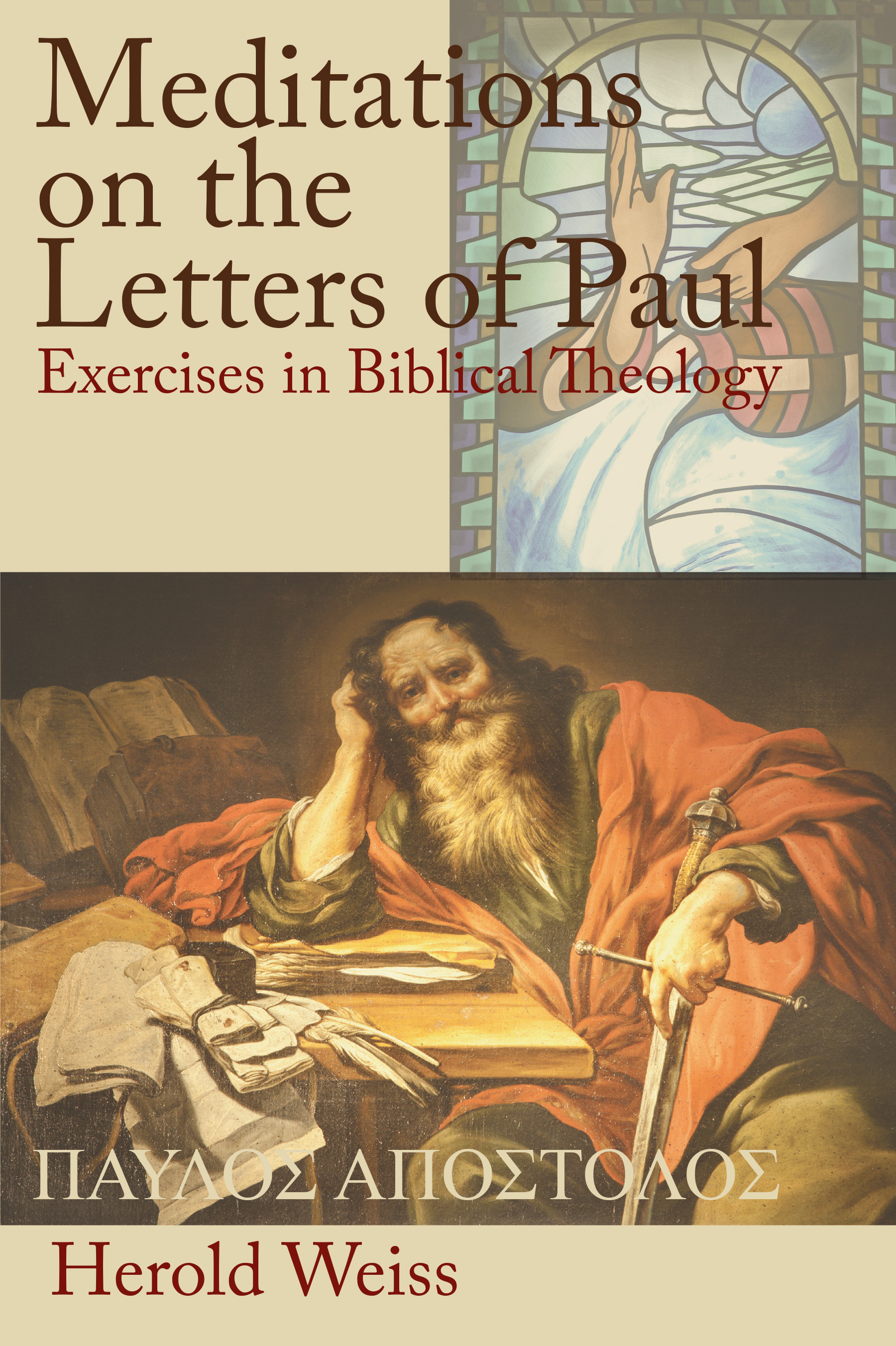
I will be consulting the other books listed, and also providing a resource page with a list of available books. But another book will be with me for the entire study is Herold Weiss’s book Meditations on the Letters of Paul. Herold brings some impressive scholarship to his reading of Paul, and I will be making full use of his material. As a suggestion, pick up copies of both of these books and follow along. And yes, I will be interviewing Herold as part of my series asking “Who was Paul?”
Here’s the viewer for tonight’s presentation:
Note that if you want to participate in live chat you will need to go to my YouTube channel and watch there. I will be watching the live chat for questions and comments. Note that I have put the books involved on sale on Energion Direct. You will be able to see them on the home page.
On Thursday night I’ll be interviewing Dr. Herold Weiss, author of Meditations on According to John and the forthcoming Meditations on the Letters of Paul, to be released this week. We’ll be talking about Paul’s eschatology and how critical it is to understanding Paul’s theology.
I’m fighting a cold and will not try to talk for an hour on the hangout on air. I’ll announce one for next week when we’ll continue the study of Daniel.
Also, Dr. Herold Weiss has agreed to join me again for an interview on Paul’s eschatology. We will shortly be releasing his new book Meditations on the Letters of Paul.
This morning Dave Black posted some things about reading Hebrews from the Good News Bible (TEV) and also on authorship and canonicity. I’m not posting to enter into a debate on this point, but rather to note an attitude.
Dave says:
The undeniable reality is that questions of canon and authorship matter. Of course, both sides demonize the other. Proponents of Pauline authorship are dismissed as obscurantists, while proponents of Hebrews’ non-Paulinity are accused of succumbing to the spirit of the age. But why should we tolerate this kind of judgmental divisiveness? Maybe we need another conference on campus to discuss the issue!
Good points! I am deeply concerned when people who are treated with intolerance by one group, move to another, and then treat their former group with intolerance. Is there justification for some reaction? I know many people personally who have been treated badly and many of them have been deeply hurt. There’s some justification here for anger. I publish books by authors who have lost their jobs over theological positions.
But is the justification enough? I don’t think so. Our response to intolerance needs to be greater tolerance. That doesn’t mean we have to accept and approve behavior. What it means is that we need to look for a freer exchange of ideas and better treatment of people.
There are those who wonder why I publish a book like Dave’s The Authorship of Hebrews. Not only do I publish that book, but I requested it. Dave didn’t push it on me. I don’t accept Pauline authorship of Hebrews. I don’t believe we can know the author’s name with any confidence. Yet Dave’s work on this topic shifted my position from one that excluded Paul from the list of possible authors to accepting that his authorship is a possibility. More importantly, Dave demonstrates how to challenge an academic consensus—with detailed, careful scholarship.
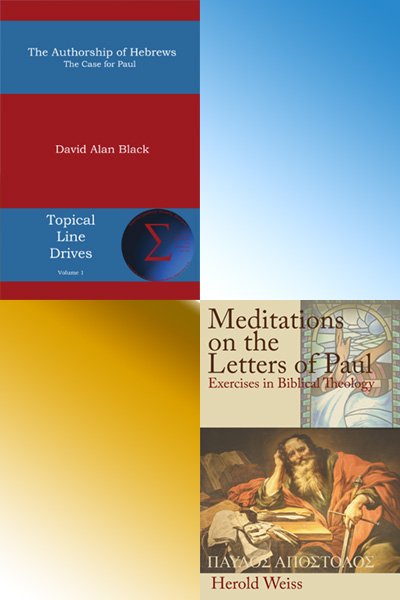
Now let me provide a contrast and a comparison. In the lower right of my little graphic today we have the cover for the forthcoming book from Dr. Herold Weiss, Meditations on the Letters of Paul, which I’m currently editing. First, the contrast. Contrary to Dave Black’s acceptance of Pauline authorship of Hebrews, not to mention the pastorals, Dr. Weiss accepts a minimal Pauline corpus. He even rejects Colossians. So his meditations are on a substantially smaller set of writings that Dr. Black’s would be. Now for the similarity: Besides the fact that I enjoy and have learned much from both writers and both books, neither of these men has ever asked me to accept something because it’s in their tradition, or just because they said so. They are both willing to debate and discuss.
I can give you numerous reasons why I publish books from a variety of perspectives, and I’ve done so before. But there’s a personal reason. I like them and I benefit from them. I have published some books that I really wish had been better. I do not claim any sort of editorial infallibility. In fact, I would claim feet of clay. But I have learned from and benefitted by reading each and every book I have published.
Let me suggest a response to Dave’s little book. How about looking at some of the vocabulary comparisons excluding the pastorals, or even working from a minimal Pauline corpus? I’d like to play with that. I don’t know if it would be meaningful, but somebody could look at it.


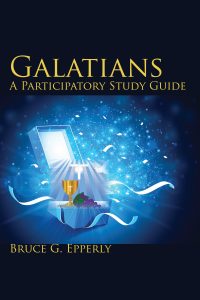 I’m going to use Galatians as my basic guide. That wasn’t my first choice. I’ve often felt that Pauline scholars spend excessive time in Romans and Galatians and neglect books like 1 Corinthians or Philippians in developing their view of Paul’s theology. But I have come to believe instead that what I saw as deficiencies in building a picture of Paul from these letters is more a result of misreading Paul than of choosing the wrong letters. Of course, I will still maintain that in order to understand Paul and his theology, one needs to consult everything he wrote, but I doubt anyone actually disagrees with me on that point. It’s rather a matter of emphasis.
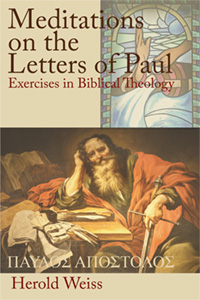 It’s not necessarily a bad thing for our theology to impact our reading. In fact, I think it would be quite shocking if it didn’t. I am only reading the Bible because I grew up in a Christian home and have a theology that suggests that this book is useful. My existing theology is also going to have an impact on the way I place the content of the book. In turn, Paul is himself impacted by his own background and theology. This doesn’t suggest that interaction with the book doesn’t have the potential to change or even totally revolutionize our existing thinking. Paul encountered God in a new and different way on the road to Damascus and his theology was revolutionized. Yet one can still see his background in his destination.