Threads from Henry's Web

Tag: Grace

  • Psalm 119:29 – Grace Me with Your Instruction

    Psalm 119:29 – Grace Me with Your Instruction

    Deceitful ways turn aside from me
    and graciously give me your instruction [Torah].

    It’s hard to read this verse when we use “law” as the English gloss for Torah. Graciously give me your rules? Graciously let me live in your rules?

    But that none of those are actually bad translations. Law or instruction, and the Torah as instruction includes lots of rules, is a gracious gift of a gracious God. Further, any ability to walk in those laws is also a gracious gift of a gracious God.

    There is no plan for people, Jews or gentiles, in scripture that does not include the creation at some point of a holy people. Our problem is in trying to approach law without grace. Law seen as a hurdle, as the means by which we somehow work our way into God’s favor, is always negative. It shows us up, makes us feel bad, discourages us, and eventually destroys us.

    But God offers another way, which is simply to allow the operation of God’s grace in our lives.

    The Psalmist recognizes this. Repeatedly he talks about what he is trying to do. But also repeatedly he asks God to help him, or even to make him do it right. He has joy in the law only because he also has joy in the God of Israel.

    In New Testament terms, I could quote Philippians 2:12-13, “Work out your own salvation with fear and trembling. For it is God who works in you, both to will and to do his good pleasure.” I think the spirit there is much like the spirit of the psalmist.

    Another New Testament passage is also important. It’s quoted frequently by Wesleyans, but I translate it differently. “[L]et us go on unto perfection …” (Hebrews 6:1) is the KJV reading. But the verb is passive (or might be regarded as middle in meaning, which the KJV and many other versions do. I take it as passive: “Let us be carried on to perfection.” Perfection is the goal, but the route is different. The law is still the standard and still challenging, but instead of a hurdle to jump in one’s approach to God, it’s a glorious goal toward which God, in power and grace, is carrying us.

    I challenge you (and myself) to rest in God’s grace. It’s not that it’s the easiest or the fastest way. It’s the only way.

    (Featured image generated by Jetpack AI.)

  • Psalm 119:27 – From Precepts to Wonders

    Psalm 119:27 – From Precepts to Wonders

    Explain to me the way of your precepts
    and I will tell of your wonderful acts.

    We tend to think of particular rules or principles for living as fairly boring, somewhat annoying, and often unreasonably restrictive. We seem to live in a debate between what we ought to do and what we actually do. Even the most law and order oriented people I know have rules they don’t feel they need to keep.

    As Christians, we come at law largely from the perspective of salvation. Our works cannot save us. Yet many of us are so oriented to law that we have to work that back into the equation again, such that eventually our Christian lives are taken up by the question of how to keep the rules and what might happen if we don’t. Some of the loudest voices I have heard with regard to grace and justification by grace through faith turn to the worst sort of works as they attempt to produce–and urge others to produce–the supposed fruit of that faith. (Hint: You can’t. God can.)

    Christianity becomes for so many of us a process of producing “good church-going people” who are “pillars of their community” and as such good people are surely going to heaven because they are keeping up with all the things their culture believes are the proper things to do.

    Well, right until these pillars fall down because they really aren’t such examples of everything that is good and right.

    And then we, as Christians, announce that the Hebrew scriptures are all about law and empty of grace because we can find examples in Israelite history of just such pillars of the community, and we can find rules that look a lot like they might describe the behavior of good “temple-going people” who are pillars of their community.

    Like David.

    Oops! For those who actually read the Hebrew scriptures (in translation is OK!), this image really doesn’t work. Not if you pay attention.

    I’m currently listening on Audible to the translation of the Hebrew Bible by Robert Alter as I walk on the treadmill. (I moved my after-dark walks and too-cold walks to the treadmill!) Tonight I was listening to the story of David and Bathsheba (2 Samuel 11-12). If David was a man after God’s own heart, I would imagine some grace was involved.

    But as we look at this passage, we are again looking at a much broader understanding of “law.” Note that in Psalm 119, we have at least two more general terms for law, Torah (instruction), and Word, as in God’s Word. Translating these as “law” gives modern English readers the wrong impression. As I read, I see in the term “Torah” a depiction of God’s guidance and interaction with people, i.e. an extended story of relationship. It’s about who God’s people are. In “Word” I hear the creator of the universe who is revealed in word and deed. Neither of these terms describes a code of law, such as Hammurabi’s code, or your state’s traffic code.

    What they do describe is a very deep relationship and an identity, God’s people, that becomes the key identity for those to whom it applies.

    In the New Testament book of Hebrews we have this same nature and identity, both Torah and Word, wrapped into the person of Jesus. I think it is worthwhile for us to know as Christians that when a Jew affirms loyalty to Torah, this is no more (or less) an affirmation of loyalty to a set of rules than ours is when we affirm loyalty to Jesus.

    Now Jews and Christians can both be legalists, forgetting Who it is they serve, and getting stuck on details, but this shouldn’t be blamed on scripture. We humans are like that. We like to get tangled up on the little things that we can understand and handle. Or at least that we think we can.

    But God is above and beyond that. God has a purpose for us that is so far above any of our thoughts that we can’t even imagine it.

    I’m drawn back again to Isaiah 55:

    For my thoughts are not your thoughts,
    nor are your ways my ways.
    This is the word of the LORD.
    But as the heavens are high above the earth,
    so are my ways high above your ways
    and my thoughts above your thoughts.

    Isaiah 55:8-9 (REB)

    And here in Psalm 119:27 we have the psalmist asking God to help him understand God’s precepts, and the result will be that he will speak of God’s wonderful acts. The reason is that everything God has to say points to God as God the creator and the author of all that is wonderful.

    And it all starts with trying to understand the little things, the precepts. Baby steps. Trembling, unstable, stumbling, hands reaching out along the path to wonder and amazement.

    What’s your next step?

    (Featured image generated by Jetpack AI.)

  • Psalm 119:22 – Reproach and Contempt

    Psalm 119:22 – Reproach and Contempt

    Remove from me reproach and contempt
    for I have guarded your testimonies.

    Meditating on a single verse each day means I often get somewhat out of context. But while context is important, literature can easily suggest other lines of thinking. Folks in various classes I’ve taught have called me the king of the rabbit trail because I’m so quick to jump on ideas that are suggested by the text and not necessarily taught.”Meditating on a single verse each day means I often get somewhat out of context. But while context is important, literature can easily suggest other lines of thinking. Folks in various classes I’ve taught have called me the king of the rabbit trail because I’m so quick to jump on ideas that are suggested by the text and not necessarily taught.

    Psalm 119 certainly presents God’s commands as instructive, and keeping them as a good idea. So the connection of keeping and some sort of blessing is appropriate.

    But this passage reminded me of a frequent form of prayer, one that combines a reminder to God of all the good things we have done, and based on those things there’s a risk. “Because I’m good, bless me!” It’s a bargain with God.

    The problem, of course, is that it’s very difficult, indeed impossible, to make God owe us something. Why? Because as our creator, and the creator of all that is around us, we both exist, and live inside, gifts of God.

    I’m amused by suggestions that God is or has been inactive for various periods of time. If God was actually inactive, existence would end.

    Still, I think this is a natural, and even honest sort of prayer. It’s where we’d like to be. We want to approach someone for help who has some reason to help us. And I think that God honors such prayers, while hoping will come to understand God’s love and grace better.

    Spoiler alert: The Psalmist gets this completely, as indicated in the final verse. He asks that God seek him, even though he’s gone astray. He doesn’t really have a claim, except to ask God for what God does. God seeks.

    Of course, he still reminds God that he hasn’t forgotten, but in many ways I think that’s the thought of a lost sheep who wants to let God know he hasn’t forgotten the home pastures, the sheepfold, and the Shepherd.

    Do you remember your spiritual home?

    (Featured image generated by Jetpack AI.)

  • Psalm 119:17 – Order of Operations

    Psalm 119:17 – Order of Operations

    Deal fully with your servant,
    So I may live and keep your word.

    There are numerous translation questions, including differences of opinion about precisely what the word I translate “deal fully with” actually means in this context.

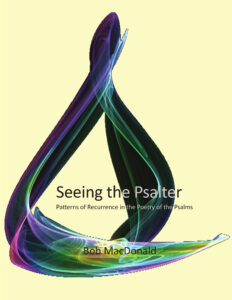
    Another good option is what Bob MacDonald does in Seeing the Psalter:

    Grow your servant
    I will live and keep your word.

    Bob MacDonald, Seeing the Psalter, p. 381

    Again, let me remind you that I’m writing meditations, not expositions on these passages. There are many things one could get from a verse like this, especially considering the larger work that contains it.

    There’s an order of events in scripture that’s important to keep in mind, and it’s reflected in this verse. God grows, completes, matures, blesses, and the result is both life in the physical sense, and a good life, both produced by this initial action of God.

    It is often thought that Hebrew scriptures focus on human action, in which people keep rules, and God’s blessing follows. And there is a natural order that says that living in certain ways results in blessing. The world in which we live works that way. But Hebrew scriptures emphasize the power and action of God, prior to human action.

    “In the beginning God …” and then when there is a world and a garden, people are invited to live within certain parameters. I would suggest that the tree of the knowledge of good and evil represents the ever available option of take the suboptimal path. The fruit metaphorically represents that option. But God’s gift of the whole creation, of the garden, and of life precedes the limitation.

    At Sinai, God comes on the scene as the deliverer from bondage before becoming also the lawgiver.

    Gift comes before requirement; grace before law.

    Are you remembering that gift?

    (Featured image generated by Jetpack AI.)

  • Stephen S.J. Hill on Our Much Loved Identity

    Stephen S.J. Hill on Our Much Loved Identity

    S.J. Hill Interviewed by Barry Adams

    It is very difficult to get me to watch any video. Yes, that’s true, even though I create videos and do online interviews on multiple subjects. It’s not my medium of choice. Getting me to watch an hour extends into the impossible.

    But I watched this one …

    I recommend that everyone, but especially those involved in ministry, whether pastoral, teaching, missions, or any other service activity, listen to this and take it in. I have dealt with this myself.

    When are you good enough?

    Change the question!

    Note: As the owner of Energion Publications, I am the publisher of S.J.’s book What’s God Really Like?. I recommend the book as well!

  • Love Is All You Need

    Love Is All You Need

    Starting on Martin Luther King’s birthday, we have seen a number of quotes advocating love. I intended to post something that day, but as I frequently do I got diverted.

    I wrote something about this long ago. It’s unfortunate that love has become a sort of cliche for a benevolent feeling combined with inaction. We can post comments about love and unity, and then go on doing what we were going to do anyhow.

    I wrote about this back in 2006 in a post titled On Being a Love Preacher. I still am.

    But love isn’t easy. I fail at it on a daily basis. That’s why I’m also a grace preacher. Grace deals with our failure to love.

    The next error follows quickly after. Grace is not an alternative to sanctification. It isn’t a way to get out of being transformed. It’s not grace vs holiness. Rather, grace is the one means by which sanctification can happen. Wesleyans call it “sanctifying grace.” But all too often we pretend that sanctifying grace is something other than grace. It’s nice to have all those labels for grace applied in different ways at different times. But we can also forget that some of them are grace.

    Sanctification is God working in you. It begins with God’s love and spreads through you. It is very active. It is not easy, any more than love is.

    I hope that we don’t just comfort ourselves with quotes about love in action, but rather begin to see others through God’s work in us. Recognizing our limitations and failures and the way God has worked with us, we let grace sanctify the way we see our neighbors.

    In the incarnation, God crossed the greatest gap possible, from the infinite to the finite, indeed miniscule on the scale of the finite. Your differences with your neighbor cover much less ground than God already covered.

    The same gap crossing God can work in me, and in you.

    Featured Image by Pexels from Pixabay.

  • Psalm 19 for Sunday School

    Psalm 19 for Sunday School

    I’m teaching Sunday School this coming week, and the class uses the Daily Bible Study from Cokesbury. The first scripture for the week is Pslam 19:1-6.

    The lesson focuses on creation, so it’s not surprising that only the first six verses are used. Some scholars believe that Psalm 19 is two separate compositions. These first six verses talk about the glories of God’s creation, yet the purpose of the Psalm is not simply to assert God’s glory as seen through what God has made.

    In fact, I would suggest that the key to the purpose of the Psalm is found in verse 13, ending with being innocent of the “great transgression” or “grave offence” (REB). Dahood (and others, see Anchor Bible on this passage) maintain that this is the sin of idolatry. At the same time, Dahood suggests the first part of the Psalm is adapted from a hymn to the sun. If so, it was adapted rather vigorously and with malice toward its intended purpose.

    The heavens declare the glory of YHWH, and it is made clear that YHWH sets the course of the sun. The sun, often seen as a god of justice in the ancient near east, is placed subordinate to the Creator. Similarly, the law is shown as subordinate to the lawgiver, who can give this law because He is the one who created all and put the sun on its course.

    There is some tendency amongst Christians to see the Hebrew Scriptures as presenting a legalistic approach to righteousness, which is negated and replaced with grace in the New Testament. So here, in verse seven, we have the law “converting the soul” (KJV) or “reviving the soul” (REB). One might contrast this with Paul’s view of the law in Romans 6 & 7, but I don’t think this is accurate.

    In fact, worship of the law would also be idolatry as would worship of the sun. That is the parallel between the first six verses and the remainder of the Psalm. Verses 12 & 13 remind us who is the one who can keep us from wrong.

    I’m reminded of Paul Tillich’s definition of idolatry as treating something that is not ultimate as our ultimate concern. The law is important and so is the sun, but neither replace the one who gave the law or created the sun. As an instrument of God’s work in us, the law has a place (thus Matthew 5:17). Yet when we replace God and God’s power with anything less, we head into failure.

    Psalm 19 is a reminder that God gives (grace) before he legislates (law), i.e., grace comes before law. Law can, in fact, be good news, in that it not only shows God’s requirements (which we cannot accomplish), but shows the glory of the purpose God has for us. God intends to make each of us something that we cannot even imagine. When we try to accomplish this through a reading of the law or through our own efforts to fulfill its requirements, we choose to take something less and make it ultimate.

    It is because it takes our concern away from the ultimate that idolatry is so dangerous. Good things can be idols. If I do mission work in order to earn God’s favor or in order to be seen by others as a good person, then I’m settling for less than the ultimate. It has to be God working in me or it’s leading me down the wrong path. The wrong path leaves me short of the glorious purpose God has for me.

    Psalm 19 also talks about God’s revelation, which is part of God’s grace given to us. God’s grace is shown by the gift of the sun to give light. Yet if we say that this is sufficient, and grab hold of that alone, we will fall short of God’s purpose for us. Similarly if we take our conception and understanding of the law, it will always be less than what God demands, but in the same way that God’s law is demanding, so it is a sign of the glory planned for us.

    We can see this in God’s creation, in studying God’s actions. This is sometimes called general revelation, God’s Word without words. But we also have God’s instruction, which is God’s Word in words.

    To many, the general revelation is less important. I would suggest that it is rather important in different ways. Through science we can study God in action. We have the danger of thinking we have somehow eliminated the need for God because we understand God’s creation so well. That is considered the weakness. We can misunderstand it, and use it to replace God.

    But the same problem exists for God’s Word in words; for God’s law or instruction. We can try to let us replace God, not with God’s real law, but with our limited and limiting understanding of it. It is God alone who can keep our sins from ruling over us, and it is God alone who can sanctify us, and even glorify us, but God is the one with the glory; the real glory.

  • Video Interview for Quit Christianity

    Their title may not tell you precisely what they’re up to, but I’ll let you figure that out by visiting.

    I was asked to answer a few questions for a video, with a key text of Romans 4:3. Here’s the video. It’s nice when someone truly skilled puts the final result together!

    https://youtu.be/jEsyvEGeCu4

    There’s lots of interesting stuff on their channel, which you can find by clicking through on the video link.

  • Grace and the Book of Hebrews

    Grace and the Book of Hebrews

    In my experience, Hebrews has provided a wealth of texts for sermons that call for works and human effort. Pride of place, perhaps, should be held by the Wesleyan doctrine of Christian perfection, for which one of the central texts is Hebrews 6:1. No matter how many times Wesley affirmed Christian perfection as a gift of grace, he was unable to prevent this becoming a basis for performance based salvation, judgment, and self-righteousness. (While I believe in sanctification, and will mention it below, I don’t accept the idea of perfection in this life.)

    Hebrews 6:4-6 follows, which is often treated as teaching that if we commit some particular sin or other, we will lose our salvation for doing so. I’ve written about this recently, and I disagree, but I’ve heard it preached.

    Then there’s Hebrews 10:26-31, starting with the warning against continuing in sin and ending with what a terrifying thing it is to fall into the hands of the living God.

    Or Hebrews 11, so often preached as a litany of great accomplishments and presented against the lack of accomplishments in the congregation. We must, of course, become faithful like these heroes of ancient times and hold up our end of the deal. After all, God needs us and demands our service.

    Hebrews 12 starts with the clouds of witnesses, which I’ve heard preached as the “encouragement” of having all these wonderful people watching you from heaven, so you had better not mess up. Don’t want all these holy people watching you mess up, do you?

    Of course, you aim to accomplish all of this in fear of the God who is a devouring fire (12:29).

    James may be seen as an epistle of works (not an accurate portrayal, in my view, but Hebrews may well have been the source of more sermons on performance righteousness.

    But is this approach justified by the text of the letter itself? I don’t think so.

    Let me make a couple of assertions that I’m not really going to justify. Knowing that I believe these may help you understand the rest of what I’m saying. The first is that there was never a plan for salvation presented in scripture that did not have as its goal the creation of a holy people. From the invitation to the first couple to walk in the garden with God, to the call in Leviticus to be holy as God is holy, to Jesus asking disciples to follow him, to Paul inviting everyone to put their faith in Jesus, the anointed one, all the plans are part of one plan aiming at that point. The second is that grace is one of the, of not the, most difficult things to accept, because if grace is true, we are not in control. We humans like to be in control.

    Hebrews is a book about God making a holy people, and it’s a book about how none of us are in control.

    Hebrews starts with the description of God’s gracious gift, himself, in the person of Jesus. Hebrews 1:1-4 lays out this presentation. The one who is sent is sufficient to the task. As we move through the book, we see Jesus presented as one of us, tested as we are, and sharing in our experience. I have been asked whether I see Hebrews as teaching substitutionary atonement. If this is a question of whether Jesus died for us and for our sins, then the answer is surely “yes.” But if we mean “penal substitutionary atonement,” as in Jesus taking our punishment in a judical context, I think the answer is “no.”

    In Hebrews, Jesus is presented as becoming one of us. The necessary elements of the sacrifice is that it must be perfect, i.e., fully connected to God, and also fully ours. Then the form of “dying for” is incorporation. We are in Christ who is our king, our parent, and our priest, and we are incorporated in his death. He dies and we die “in him.” It is not a judicial substitution, but rather that the one dies for the nation (John 11:50) as one of the nation, indeed, as the king. The key here is that we become incorporated into that kingdom, that community, and are thus buried in his death and raised into his life (Romans 6). I think Hebrews is closely aligned with this Pauline theological presentation. Everything we are called to accomplish in the book is accomplished in Christ. That’s why Christ is presented first in the book and his superiority is established. (Refer again back to my post on Hebrews 6:4-6 for some backup for this idea.)

    So when we are called to perfection, we are called to be carried on to perfection. This is not the perfection of a person who lives a perfect life, and certainly not something we accomplish on our own. That’s clear through the arguments on why Jesus is the perfect high priest. In order to make that argument, one must establish that we are not capable of this on our own. The perfection to which we are called and to which we are carried is not ours, but the perfection of Jesus (Hebrews 5:9). He, Christ, is the source of salvation.

    Of course it is a terrible thing to fall into the hands of the living God, but we can instead be in the hands of the living God through the high priest who is sympathetic to our weaknesses. Of course, there is no more sacrifice for sin. If Jesus has opened a “new and living way” (Hebrews 10:19-20), then the only options are to go through it or not. If we are offered complete access to God and incorporation into his redemption and sanctification, what other option is needed? What other option could possible work?

    Then there’s Hebrews 11, which I think provides the key to the view of the message of Hebrews I’m presenting here. Contrary to those who preach Hebrews 11 as a triumph of the saints, it is, in fact, a triumph of grace in action. We err if we read this without adequate consideration of the stories from the Hebrew scriptures of these great heroes. Moses doesn’t fear the wrath of the king in Hebrews 11, but he flees in terror in Exodus. Sarah is rewarded for faith, but in Genesis she laughs. These people were not those who tried to obtain perfection, but those who were carried on to perfection. In 11:40 we are told that God’s plan was that they should attain perfection “with us.”

    That perfection, I believe is found in Jesus, and only in Jesus.

    These are the witnesses of Hebrews 12. We are being watched as we are carried on by those who have been carried before us. The question is truly simply whether we will truly be carried on. We can miss this both by thinking that we are going to do it ourselves, or by missing that it needs to be done at all. I’ve used the metaphor of a train for the theme of Hebrews. Get on the right train and stay on it until it reaches its destination. You can equally fail by sitting at the train station by never getting on the train, or if you set out to run alongside the train on your own power. Neither one will work. But if you get on the train you’ll move forward. (As with all metaphors, this one has its weaknesses!)

    In this view of grace, it is not put against faith. It is not faith vs. works, as though there were two approaches and one was better. It’s not a balance between faith and works. No amount of running, even combined with train-riding attempts, is adequate. But sitting in the station is also not a real option.

    What I think Hebrews makes clear is that the grace is available. Jesus opens the way to God. This is grace in action. But rather than being the enemy of true works, works of faith, grace is what opens the door and makes any works, any holiness, and any approach to God possible. Sanctification occurs only on the train, i.e., only when we are being carried on toward perfection in Jesus, our brother, our sacrifice, our high priest, and our king.

    That’s why I see grace as the critical key to the entire book of Hebrews, but I also see the book as providing a critical view of grace, a grace that is active, even more, that is God’s action taken in our lives.

    In this post I have not provided nearly enough scripture and logic to back this up fully. This is just an introduction. My recommendation is that you consider these ideas while reading the entire book to see what you find.

    (Feature image credit: Openclipart.org.)

  • Some Problems with Prayer

    Some Problems with Prayer

    I’ve co-authored a book about prayer, published several more, taught numerous classes, and led seminars about prayer. One thing I believe is that one should teach primary from experience, meaning that often you are teaching about your own weaknesses. In this case it it just so.

    So here are some problems. I share in each one. Each one can devastate your prayer life and your Christian experience.

    1. I don’t pray when I should. My first response to a problem is to look for what I can do to solve it. I’m a pretty smart guy and pride myself on being able to solve problems. People call me to help solve their problems, especially with computers or language. Somehow I suspect God is smarter and wiser! A friend of mine said (and I think he was quoting, but I don’t recall who), “Nothing is a substitute for prayer, and prayer isn’t a substitute for anything.” It’s not bad to work, but prayer will transform your efforts. “‘Not by might, nor by power but by my Spirit,’ says the Lord” (Zech. 4:6).
    2. I pray after rather than before. I know God can handle the “before they call” thing, but the problem here is that I make decisions and then ask God to bless them, rather than asking God to guide and then listening.
    3. I pray prayers of direction. By this I mean that I tell God how to solve problems. I don’t know the origin of the saying, but it’s unfortunately true: Many people want to serve God, but only in an advisory capacity.
    4. It’s more important to me that people know I’m praying for them than it is to actually pray. It may be a shock to some people, but you can pray without informing people. This doesn’t mean you should never tell someone you’re praying. I am deeply encouraged each time someone lets me know they’re praying for me. But the proclamation can be either a lie or a weapon or even both.
    5. I spend more time talking than listening. See also #2 and #3.
    6. Despite knowing all of this, these are still failings.

    Fortunately for all of us, God says,  “My grace is sufficient for you, for power is made perfect in weakness.” (2 Cor. 12:9). I pray for greater grace in my prayer life.