
I’m continuing with the dream of Daniel 2 and hopefully connecting it to the golden image of Daniel 3. I’m grotesquely short of time, so will spend it both reading and doing what has to be done!
YouTube:
I’m continuing with the dream of Daniel 2 and hopefully connecting it to the golden image of Daniel 3. I’m grotesquely short of time, so will spend it both reading and doing what has to be done!
YouTube:
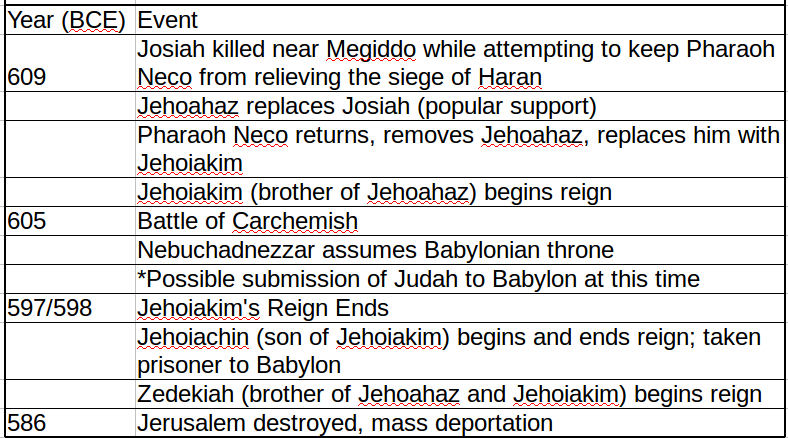
For those who hold to the historicity of the story of Daniel and generally to an early dating, Daniel 1:1 is a critical text that presents some problems. As I proceed with my eschatology series, and starting going through the book of Daniel verse by verse, I’m trying to keep all the options in mind and explore interpretation based on the different views.
As I talked about this last night (February 4, 2016; video embedded at end of post), I thought I was being confusing, and at one point said “Nebuchadnezaar” when I should have said “Pharaoh Neco.” I want to clarify the people and dates and how they apply to the text in question.
First, here is a chart of the most critical dates. Note that you will find reference sources that differ on these dates by a year. It is beyond this post to discuss the different calendars and accession year vs non-accession year dating. The sequences involved are adequately handled by the dates I’m using.
Biblical sources for this time period may be found in 2 Kings 23:29 – 25:30 and 2 Chronicles 35:20 – 36:23.
Now for Daniel 1:1, my translation:
In the third year of the reign of Jehoiakim, King of Juday, Nebuchadnezzar King of Babylon came to Jerusalem and put it under siege.
Here is a list of the problems:
The question here is how you evaluate the evidence. One critical element would be one’s determination on other grounds that the Book of Daniel is or is not historical. As an historian one would look for the most probable reconstruction of the evidence. Most scholars tend to support the later dating, even evangelicals, but you can find other arguments regarding dating via my Dating of Daniel Resources page.
I’ll discuss dating and historicity further in my series, but for now I think this will clarify the issues discussed in the video.
Tonight will be my first session on the book of Daniel. I’ll be starting with chapter 1 and going as far as I can. I expect the whole book to take some time, though the first several chapters should go more quickly than the later ones.
YouTube:
I’m going to skip over a good deal of introductory material (though not all of it!) in order to move forward. There are a couple of reasons for this. Most importantly, introductions are often wasted when introducing the topic. That may sound strange, but the reason is that if those reading the introduction aren’t fairly well acquainted with the text, they won’t follow the arguments. How can you know whether you think Daniel is a literary unity, rather than a collection of materials if you haven’t read it? Secondly, I want to use multiple perspectives in interpretation and let us work this out as we move forward.
To make up for this seeming lack, I recorded an introductory video on the dating of the book, and also created a resource page. The video is embedded on the resource page.
 Tonight I’ll be finishing my preparatory studies for eschatology as I look at a few more visions, especially from Zechariah, and then at a bit of chronology in preparation for studying the book of Daniel on a more verse by verse basis starting next week.
YouTube:
While I titled the event Eschatology: Mark 13, Matthew 24, and Luke 21, I will be focusing on the first. I will be mentioning the parallels and likely working directly from gospel parallels. I’m embedding the YouTube viewer first, then I’ll make a few comments.
I had hoped to post more earlier, but the work load this week prevented it. I also hope to post something more this afternoon, giving some background for what I’ll be saying. It is obviously impossible to do a detailed exegesis of Mark 13 in an hour, so I’ll be looking at some key points.
First, yes, I won’t be able to resist. I’ll mention some elements in the parallels that could play into arguments over Markan vs. Matthean priority.
Second, I want to talk about my overall view of biblical eschatology, and how I read that in Mark 13. Note that this is, to a certain extent, eisegesis. My overall view is the result of my study of many eschatological and apocalyptic passages, and not a derivative from Mark 13. Yet I will use it. I had planned to wait to present this overview, but I think it’s better for me to give my “mini-eschatology” first and then develop how I connect it with much broader and deeper eschatological views as I move forward.
Third, I want to focus on just what the disciples would have expected when they heard or encountered this material. Thus I’ll discuss the debates on whether this is original to the gospel (as a whole), whether certain elements were added later, and also just when this was written.
All of that leads to the point where I—finally—talk about “this generation shall not pass,” which has provided fodder for biblical and theological debate for the last two millenia. How was it understood in the past and how shall we read it now?
In studying eschatology from a biblical perspective, it is important to realize that one needs to resolve a broad range of questions nearly every time one wants to resolve one question. For example, the way in which one understands Daniel 9:27 impacts how one will understand “the abomination of desolation” and how one understands the vision of Daniel 7 will impact how one understands the son of man coming in the clouds. Not to mention whether one is certain those particular references are in view. Deciding how to understand those chapters involves a range of decisions regarding the text of Daniel as well as its historical and cultural context. Those decisions involve a number of issues regarding how one dates literature.
I say this because I expect to circle back to many of these passages after we’ve studied others. I think it would be useful to read Mark 13 again after we have done further study of Daniel. Jesus did not live in a cultural or theological vacuum either. Certainly his disciples did not. How might they have drawn these passages into their understanding of the words in the gospels? It is possible that what you or I decide in studying Daniel might be the correct historical understanding, i.e., we might be right about when it was written and how it would have been understood by its original audiences, but that the understanding we get there might not be the one the disciples would naturally draw in as they studied the words of Mark.
Complicated? Indeed. Fun? I think so!
 October 22 probably doesn’t mean much to most of my readers, but for someone who grew up as a Seventh-day Adventist (SDA), it has great significance. It was on October 22, 1844 that early Adventists (before they were Seventh-day Adventists) expected Jesus to return. It was actually the second time they had expected that. first came what is known as the “lesser disappointment” of 1843, when they had not set a specific date, but had set a deadline of a season. Of course, the day ended, and nothing happened.
But as often happens with failed prophecies, after thought, consideration, and some manipulation of Bible texts, the Adventists decided that something had happened, it just wasn’t something visible here on earth. Adventists made a firm decision to set no more dates for the actual Second Coming, but they continued to preach that Jesus was coming “soon.”
In an overall doctrinal sense, this is no longer the sort of thing I consider central. But it did play a pivotal role in my decision to leave the SDA church. First was my reading of Daniel. I studied Daniel at Andrews (the SDA Theological Seminary) under a professor who strongly supported the traditional SDA understanding of the passage. People often think those who change their beliefs in college or seminary do so because liberal or unbelieving professors brainwash them. My professor made every effort to convince me that the SDA interpretation of Daniel 8:14 (the famed 2300 day prophecy) made sense. But in the context of Daniel it did not make sense to me.
Having decided that the time prophecy element was completely unfounded I turned to Hebrews and eventually decided that the very concept of an investigative judgment was also not good theology. Having spent a considerable time outside the Christian community, it was this second element that made it relatively certain that I would not return to an SDA community. People expect the seventh day sabbath to be the problem, but while I don’t agree with much of the supporting doctrine (the idea that it is the distinctive characteristic of the remnant, for example), I wouldn’t have a problem making the seventh day a sabbath. (That isn’t at all what SDAs mean by this, of course.)
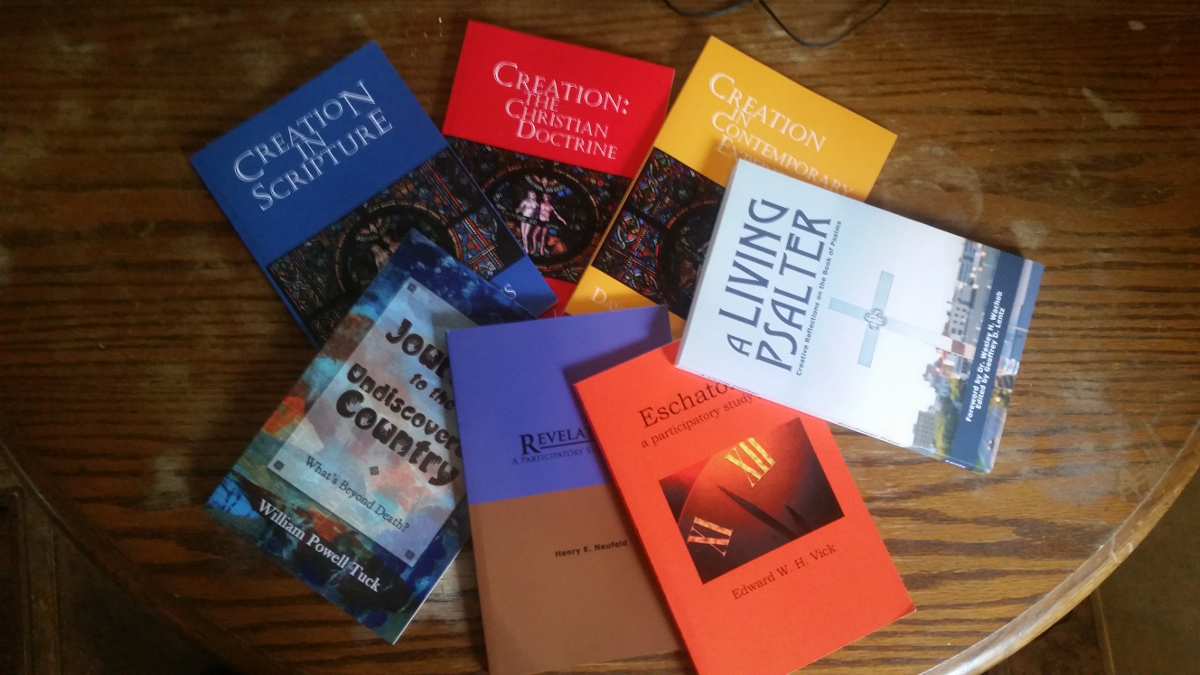
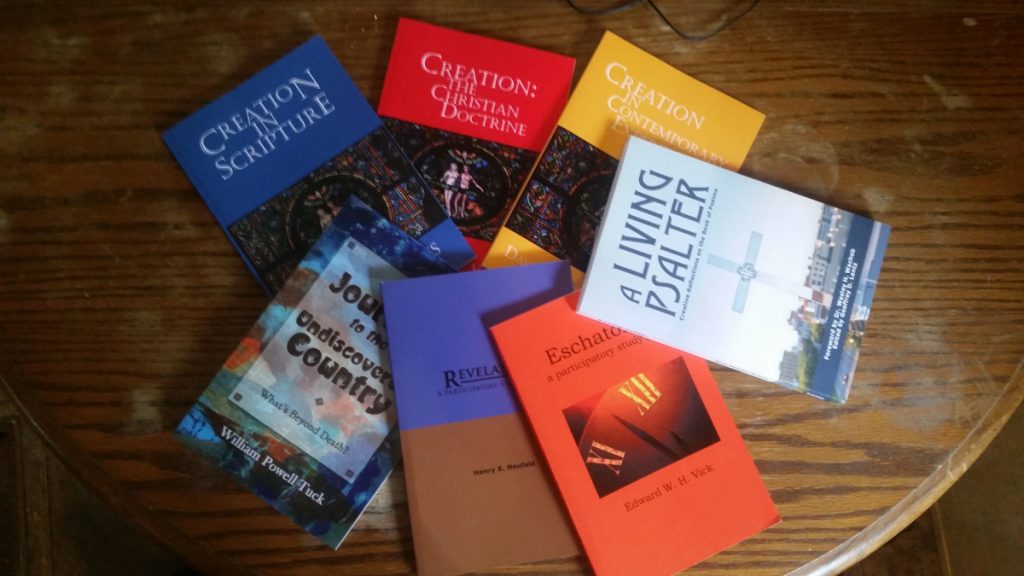
What’s interesting right now is that I have just completed proofs for a new book, Eschatology: A Participatory Study Guide, by Edward W. H. Vick, who would see similar problems with these various elements to the ones I do, but is a former professor at Andrews University. In addition, my company distributes his book The Adventist’s Dilemma, regarding the use of the word “soon” by Adventists. I had once thought these controversies were in my past. Now I’m editing and marketing books about them.
October 22 can cast a long shadow!
I noticed something in my reading time this morning that has presumably been staring me in the face through many readings of the passage. In fact, this is the 14th morning in a row that I’ve read this as part of this week’s lectionary, so I’ve had plenty of opportunity. The passage is Matthew 3:13-17, and specifically verse 15.
But suddenly as I was thinking about just why it was that Jesus should get baptized it occurred to me first that if it was his Father’s will that he get baptized, even though he had no sin in need of forgiveness, and then didn’t get baptized, well, obviously that would have been sin. But I thought that was just a tricky way of stating what was obvious from the start.
Then I thought. “appropriate for us.” Who is “us?” John and Jesus? Jesus and the crowd around who didn’t participate? What about everybody, us, including me? In the sense that we are all called to be baptized, surely that’s true. But then it occurred to me that Jesus is here identifying himself with us in our baptism. When we are then baptized, we identify with him in ours. He’s so much a part of us that he does everything that we’re doing.
It struck me that one of the difficulties I see in intercessory prayer on behalf of a congregation is that often our 21st century psyches don’t really identify with the congregation. We do “identificational repentance” without really identifying with the ones we pray for. When Daniel prays for Israel in Daniel 9, it is clear that he is part of Israel, and repents for sins for which he feels the guilt as part of his people. When we pray for our churches or nations, it is often with a sense of praying for their sins, because we haven’t (in our view) contributed.
It was there all the time, but this morning I received a new blessing of feeling just how much Jesus identifies with us lowly folk way down here. At the same time I was challenged to identify more with my brothers and sisters in prayer, thought, and action.
A post by Peter Kirk over on Speaker of Truth, titled Deborah and a woman from Bethlehem, and some interesting comments made there suggests to me some more writing about my favorite topic: the SHARING stage of Bible study. (For an outline of my method, see The Participatory Study Method. Some of the foundation for this is contained in my essay Interpreting Stories.)
The difficulty I address in my main essay on interpreting stories is the fact that the Bible writers do not present only heroes, and do not gloss over the weakness of their characters. In modern storytelling we tend to prefer clear villains and heroes, and I find that most of the time when Christians recommend a book or a movie, that is one of the characteristics. We like to have people in our stories that fit in well with either “I’d like to be just like him/her” or “I hope he/she gets it in the end!”
But that’s precisely what the Bible doesn’t give us. Often we take our lead in retelling Bible stories from Hebrews 11, and make them all into heroes in retelling their stories. But we should consider the goal of the author of Hebrews before we decide that this is the one and only, or even the best, way of retelling these stories. His point here is to focus totally on faithfulness. No matter what has happend, no matter what the weaknesses, the one key is to remain faithful to God throughout. And in that characteristic, all of the heroes mentioned in Hebrews 11 are truly heroes. But if you look at their broader stories as told in scripture, they come out as very human, with weaknesses and failings. In fact, they make very suitable examples.
This leads me to a key point: Heroes can be destructive as well as challenging. The Proverbs 31 woman is a good example. There are some women out there who are encouraged by the way in which their role is honored in that passage. Others live in misery because they can’t live up to what they see as the Biblical standard on a daily basis. Jesus is an excellent and challenging example to us, but I find myself relating to Peter a lot better sometimes. Jesus may have been tested in all ways as I have been, but it was “without sin.” Jesus walked on the water; Peter took a plunge; I’m more like Peter! Now don’t get me wrong here. I believe in asking “what would Jesus do?” on a regular basis. But I also believe that there’s a reason Peter is in the Bible. When I try to walk on water and find myself in an unplanned deep sea dive instead, I can look back and say, “Peter was a leader amongst the disciples, and he had bad days too!”
So role models don’t always have to be heroes in the sense that we use that term in modern times. As far as I can see, the Bible never whitewashes its lead characters. We can learn both from their good decisions and from their bad. The most important thing to note is that just because a Bible character does something, even if that character is a good person, does not mean that we should do likewise.
Now let’s connect this to the simple issue of role models for girls. Anyone who can count can tell that there are less overt examples of female role models in the Bible than there are male. Because of that we tend to look carefully for the few really good role models that there are, and this can lead us to whitewash certain people even more. Some would say that the scarcity of female role models in scripture simply indicates that women are to be less active. But I would simply ask if everything that was common behavior in Bible times should be regarded as normative. There are many things we do not follow as norms today, including the fairly common occurrence of plural marriage, arranged marriages, forbidding marriage between Jews and gentiles, absolute monarchy, and on and on. Just because it happened doesn’t mean it’s a model for now.
In addition, there are hints that more may be going on behind the scenes. For example, we have Huldah the prophetess who suddenly pops up in 2 Kings 22:14. Why would a group of leaders go to her with a question if she hadn’t already been exercising the prophetic office? So here we have an indication that women may have a public role, though in the patriarchal society their role was limited in scope.
“But,” says some reader, “You still leave us with few role models for women!” And you are right. Now, I’m going to get to my point. The scriptural basis for this is found in Psalm 78, which I regard as an excellent charter document for religious education:
1(A Wisdom Song by Asaph)
Open your ears to my instruction
Turn your ears toward the the words I speak.
2I will open my mouth in a teaching song.
I will speak hard sayings from ancient times.
3Words which we have heard and known,
and our ancestors have told us.
4We will not hide them from their children,
speaking YHWH’s praises to a later generation,
His strength, and the wonderful things he has done.
5And he raised a testimony in Jacob,
and set instruction in Israel,
Which he commanded our ancestors
to teach to their children.
6So that the later generation might know,
The children to be born would rise up,
and teach them to their children.
7That they might set their hope in God,
And might not forget his mighty deeds,
But might observe his commands. — Psalm 78:1-7 (TFBV)
Grab your favorite “easy reading” Bible version and read the whole chapter. The story of God’s activities has not stopped. We are responsible to pass that story from generation to generation and in turn, “put our trust in God” which itself will add to the story, just as the Psalmist is adding to the story through some of the incidents he relates.
So my suggestion is to start your search for role models in the Biblical stories, but don’t stop there. My first set of sources is actually in the apocrypha. How about Susanna or Judith? Again, you need to read all stories with due consideration for the weaknesses of any human example. But even more than this, you need to continue through Christian history and into the present, telling the stories of faith.
When I first returned to the church after my 12 years of “wilderness wandering” after graduate school, and started teaching, I was looking for this type of story. I found that the idea of telling our own stories about how God has worked in our lives was a bit foreign to the congregation of which I was a member. Stories of faith were about people in the Bible, and maybe on good days about people a few generations back, but never about today.
So I got on the phone with my mother. Why? Because my mother told us stories of faith in her own life. Lots of stories of faith. When I wondered whether God could or would work in our lives, I wasn’t merely, pointed to the red sea or Elijah on Mt. Carmel or the resurrection, though my parents believed and taught those stories. I was referred to things in our own present life. So I asked my mother to write them down so I could use some as examples. She did, and the result was the booklet Directed Paths, stories of her life as a missionary nurse along with my father, who was a missionary doctor. As I write this my father is in intensive care after surgery, though the prognosis is good. He’s 85 years old, and as my mother and I talked before the surgery, all we could say was that if this was God’s time to take him, we knew that he had run a good race. I can say the same thing of my mother. But the key thing here is that she told me about God’s work in her life. Because she testified, she can serve as a role-model of faith.
Now I publish the booklet I mentioned above, and I won’t deny that I’d love for you to buy and read it, but that isn’t the point of bringing it up. What you need to do is look at your own life, and the lives of your parents and other family members, discover those stories of God’s working, and tell them. Do what my mother did and make yourself a part of the ongoing story of God, in a sense part of the Bible story. You can find sources in the Bible, in the history of the church and communities of faith, and finally in the history of your own family. This is sharing and becoming a part of the story. If you don’t share it, you can’t be part of it. You’ll find that there are more and more stories of people that girls can use as role models as time moves forward.
Of course, then there’s the hard part:
11But they conquered him by means of the blood of the lamb,
and by means of the testimony they spoke,
And they did not love their lives even up to death. Revelation 12:11 (TFBV)
We commonly quote the first two lines, but the last one is a bit harder. Getting to be a part of the story can involve hardship and can even involve death. My mother’s story includes a time of running for our lives in the middle of the night, and a time when I nearly died as a child due to circumstances involved in her ministry. I know of missionaries overseas and here at home who have lost more. But there are plenty of stories to work with.
Become a part of the story!
This is a follow-up to my post Information or Conversation, and it would probably be a good idea to read that entry first.
One element of God’s method of revealing himself to people is that he chooses specific people to accomplish specific missions. I want to look at the time of the exile, and three of God’s messengers, Jeremiah, Daniel, and Ezekiel. Now there will be those who accept a later date for Daniel and will question my using him in this part of the story. Let me simply state that I do believe that the stories of Daniel, though not likely the entire book, date from the time of the exile,were later written down and collected in what we now have as the Aramaic portions of Daniel. For more discussion see Dating the Book of Daniel.
At the time of the exile there were three distinct situations, three distinct groups of people to whom God needed to communicate his message. The first was the people of Judah who were rapidly heading toward exile and destruction. The second group was those who were already exiled and living in Babylon. The third was the Babylonian court, both the Babylonian king and officials for whom God had a mission, but also the exiles who were living in a state of privelege and facing the temptation to compromise away their faith.
The inhabitants of Judah were living in a dreamworld of security, based on the belief that the presence of the temple, and thus God’s presence, protected Jerusalem no matter what. The exiles in Babylon generally felt abandoned by God and either waited expectantly for their soon return or began to simply give up. At the same time the king of Babylon took the view that he was favored of the gods because of his successes, and those who lived in his court faced the constant danger of compromise of their principles in order to gain power and favor and even permanence in their new situation. Any of these attitudes presented a barrier to God’s plan.
God’s response was not merely to protect the facts. The facts were that the exile would be long but temporary, and that in the end the people would return. Jerusalem would be destroyed, but it would be rebuilt. Nebuchadnezzar was a great king and conqueror, but he also was limited and temporary and the way to success for the Jewish young people who found themselves there was faithfulness, not compromise. But even if they suffered for their faithfulness, the consequences of compromise would be even deeper.
Those were the facts, but God still needed messengers. None of the audiences actually wanted to listen, but there were ways to make things clear.
For Judah, there was Jeremiah, the weeping prophet. Not only one who could speak the message, but one who could weep the message, whose very life symbolized God’s love for Judah and his unwillingness to give up his people. God’s sorrow was expressed in the form of a prophet who spoke, suffered, cried, and was ignored, but who never gave up, who kept speaking until there was nothing left.
Ezekiel was himself an exile, capable of understanding the situation of the exiles. His inaugural vision (Ezekiel 1) reassured Ezekiel that God was still with the exiles, that in spite of judgment there was hope. The message became a part of Ezekiel. But the presentation was different from that of Jeremiah. Ezekiel was not allowed to mourn his own wife’s death (Ezekiel 24:15-27). Both his visions and his methods of expression were powerful and creative.
Daniel was one tempted to compromise in the court of the king. He had every opportunity to go over to the side of the winner, and to accept Nebuchadnezzar as the once and always king of the world. But he stood quietly for God and for faithfulness to his message.
Three messengers with similar messages, but different audiences, and different means to present that message–God involved in the daily activities of human beings, a microcosm of God acting in the flesh.