Threads from Henry's Web

Category: Politics

  • As Everyone Trades Scripts

    I commented on Monday that there was no possibility I’d be happy with the result after election day. (Considering my previous post on probability, perhaps I should have said <0.1%!) I can now tell you that I’m approximately as unhappy as I expected to be. My unhappiness will probably have dissipated to ordinary levels by the time I complete this post.

    One of the things I find very frustrating is the way people change scripts. We saw it happen with who liked and who hated FBI director Comey during the election. (FWIW, I think the man is to be admired.) We’ve seen it as the senate and presidency changes hands with regard to confirming justices. Before Tuesday, it was very bad for the Senate to block judicial appointments according to one party. I’m guessing that it will still be bad to do so, but now that will be according to the other party. Trade scripts.

    Here’s what I would like to ask. I’ve lived through a few presidents, and I have friends of very different political persuasions. During the George W. Bush administration, my more liberal friends disrespected then President Bush. After that, for eight years, my conservative friends disrespected President Obama. In both cases, I have done my best to refer to the office and the person holding it with respect, even when disagreeing vehemently with that officeholder.

    Is there any chance that we could do that with President-Elect Trump, to be President Trump following the inauguration? As I said above, I was unhappy with the choices, and could hardly be anything but unhappy with the result. I will very likely criticize policies espoused by President Trump. I disagree vigorously with him on a wide variety of topics, and will doubtless say so. But I hope to always refer to him respectfully when I do so. I may not be feeling very respectful. I certainly do not respect many of the policies he has proposed during the election.

    There is one president of the United States. Those who say, “Not my president,” are not simply wrong, they are part of the problem. Another script that will be swapped will be which party is the party of “no.” Someone has to be first in trying to work together.

  • Vocabulary Word of the Day: Probability

    Vocabulary Word of the Day: Probability

    Picture Credit: Openclipart.org
    Picture Credit: Openclipart.org

    I know headline writers need their splashy headlines, but as the media is filled with word of a stunning upset, we should remember the number of times that one candidate or the other was “destroyed” or “finished,” or the election was declared “over.”

    A poll takes a snapshot of part of the electorate which is extrapolated to the whole. It will have a margin of error, generally something like 2.5% to 3.5%. (Why that is can be a project for research.) That means that a candidate who is at 50% in that poll might actually be as low as 46.5% and as high as 53.5% if the error margin is 3.5%. If we’re thinking of two candidates, the other, let’s say showing at 45%, could be anywhere from 41.5% to 48.5%, an overlap of 2%. Now that’s using a margin for candidate A of +5%. The average for Clinton was around +3.5% the day before the election. Now not all polls were at that value, and also not all polls have a 3.5% error margin.

    Now there’s an additional percentage involved, which is a probability, variously 90-95%, that the poll itself is within that margin. So in the poll above, if the figure is 95%, for example, 95 out of 100 times the election being polled would reflect a result within that margin for error. Otherwise it might be anywhere. I’m not making any effort here to keep these details realistic — if you read up on the topic you can learn how these numbers relate, but more importantly, if you read the data on a poll, you can find what these numbers are for that particular poll.

    There is no set way to combine polls into an aggregate, and there is no established error margin for polls that are combined. That’s because not all polls are created equal. On the eve of the election, Nate Silver and crew were giving something near a one in four chance that Trump would win the election, i.e., according to their analysis, if you had a good enough sample, one in four elections run where the data looked like this would go to Trump. Three in four would go to Clinton. The election doesn’t make them wrong. That’s a probability.

    Let’s look at that. If I flip a coin, the probability is one in two that it will come up heads an one in two that it will come up tails. So I flip the coin, and it comes up heads. Was my projection wrong? Not at all. Similarly, the FiveThirtyEight people aren’t wrong either. If they had said, “Clinton will be the next president of the United States,” then they would have been wrong. What they said was that there was around a 78% chance it would be Clinton an a 22% chance it would be Trump.

    They were critiqued by Sam Wang of the Princeton Election Consortium, and several people wrote on FiveThirtyEight to defend their methodology. Dr. Wang gave a 99% chance that it would be Clinton. Both Nate Silver (and an unknown number of members of his crew) and Dr. Wang are much more skilled at this than I am (in the same sense that an MLB player is more skilled at baseball than I, considering I have never picked up a baseball bat for a game, is better at baseball than I am). I spent some time with their data and couldn’t really find a way to understand fully how they got their probabilities and why they differed so much. (On your mental flowchart, create a box and label it “Lots of Statistical Figuring.”) But my intuitive feeling was that Nate Silver was getting the better of the argument. It seemed to me that there was insufficient data on which to base that high a level of confidence in the aggregation of these polls. We haven’t been polling presidential elections for that long.

    Why don’t we have neat numbers for the aggregate values? Let me note, first, that any time one uses a phrase like “the polls show,” one is doing some sort of aggregation, however loose. Folks like Sam Wang and Nate Silver do it in a very scientific way. (I’ll let them argue over which is more scientific, and they do so with some vigor.) We all do it when we look at polls and make a generalization. The reason there isn’t a neat x% margin of error an y% probability that the poll will, in fact, fall within that margin is that polls use different methodologies. If you average the number of apples an oranges you have, you don’t get a better value each for apples an oranges. It might be better to say that if I average my Gala apples an my Golden Delicious apples, I don’t get an accurate picture of what type of apples I have available. One set of those apples Jody wants to bake into a crisp, and the other I’m going to slice up and eat. I’m afraid I’ll have to look at the actual apples.

    Again, my inexpert intuition is that aggregation needs more experience and testing to get more accurate, even as I think that Nate Silver’s work is the more promising. In the meantime, what is quite certain is that nobody in the media has a clue about any of this. Alternatively, they don’t care, and just want to write headlines to sell papers, whether they reflect actual data or not. I suppose that’s possible.


  • I Blame Us

    I Blame Us

    Anger
    Picture Credit: Openclipart.org.

    It’s election day here in the United States, and though I will shortly head to my polling place and cast my vote, I’m not going to say who it is in any of the races. What I would like to call for is moderation, in the sense I define it when talking about religion. I know it’s odd to take such a common word and then define it in perhaps eccentric ways, but I believe both that my definition falls within the semantic range of the word as commonly used and that it is the word closest to what I want to say. In my view, a moderate isn’t always in the center, but rather is one who looks at the entire spectrum as openly as possible (perhaps from a center starting point), and allows solutions that come from a variety of perspectives. I do hold in common with most moderates I know the idea that extreme solutions often create new extreme problems while often failing to solve what they set out to solve.

    With that lengthy note out of the way, why is it that I blame us?

    Simple: Because today.

    We get to vote. Yes, there are technicalities, but they aren’t all that incredibly difficult. If you want to know how the electoral college works (or doesn’t), you can learn. If you want to learn about the candidates for all the various offices, the information is out there. If you want to know how similar solutions have worked in the past, that information is available too.

    It’s easy to blame the media. They fed us all the wrong sort of information. Quite possible, but each voter has a brain. It used to be harder to do, but now you can look up data very quickly. For some reason people think misinformation started with the internet. No, the internet just made it easier to spread misinformation. But it has also made it easier to get good information. The one factor that has remained the same? How willing are you to evaluate?

    I find that quite frequently one can find enough information to debunk a story right within that story. Just look at their source information and how they cite it. Many, many stories actually have no facts cited to first-hand sources at all. Some people read just headlines and early paragraphs, which is a formula for being deceived. Headlines are hard to write. You want to be accurate, yet you don’t want the headline to be too long.

    It’s easy to blame the politicians. But politicians are elected and re-elected by us. It’s interesting how popular many representatives are while congress as a whole is quite unpopular. In a way, we’re saying that we don’t like the people elsewhere in America. We like the idea of electing non-politicians, but despite the claim, you can’t really do that. By the time someone is on the ballot, they’re a politician. The question is, how good of a politician are they?

    It’s easy to blame corporations. But corporations get their money from us when we buy their brands and in turn they influence elections and politicians by spending money, whether it’s a bribe in the legal sense or not. You can find out how much money the politicians you support are taking from corporations. But more importantly, if you watch what the politician does, you can see what the result is. Oh, but that’s too hard. We want it to be simple. Well, it’s not simple. We talk about the responsibility to vote. How about the responsibility to know what you’re voting on?

    I believe it all comes back to us. The tools are available for us to study and to make intelligent choices. We don’t have to be misled. We don’t have to be manipulated.

    Here are some ways you can be manipulated:

    • Fear, and its extreme buddy panic. Decisions made out of fear are often bad. Have you ever noticed how an animal will often run straight ahead in front of a car? I have to watch when entering my driveway because there are a few cats who will sleep right out there and then when they wake up and see the car coming, run directly in front of the wheel. Even when something justifies the fear, that fear is not a good basis for decisions. Motivations? Sure. Reaction? Not so much.
    • Anger. Angry actions are often dangerous actions. Anger spawns those extreme solutions that often create new extreme problems. There is such a thing as righteous anger, but it is much rarer than claimed.
    • Social herding. The fact that all your friends are doing something doesn’t justify it. Your mother probably told you something of the sort. But it’s easy to do.
    • Apathy. Do you know why political campaigns try to manipulate stories to make their chances look better (or in some cases worse)? In either case, it’s to build enthusiasm in their voters. Getting out the vote is a major factor in elections. Why? Because many of us will become apathetic and not get up the energy to cast our vote. Politicians (all of them, even the so-called non-politicians) would like their voters to be enthusiastic and energized and the other side to be discouraged. I have noted this year that those who are leading in the polls talk about polls, and those who are losing in the polls talk about crowd size. I don’t mean that winners talk about polls and losers talk about crowd size. Rather, I mean that a politician will talk about the thing that makes him or her look best.
    • Hate. Give it up, or it will kill you. Disapprove. Reprove. Approve. But give up hate.

    I’m sure someone is thinking they don’t have time for all this. All I can say is that a whole bunch of people had plenty of time to fill my Facebook feed with complete garbage. No, I’m not talking about one side or the other, I’m talking both. Yes, there were thoughtful people and thoughtful posts, but those were a distinct, almost extinct, minority.

    So if you’re angry tonight as the results come in, be angry at us. Make it an inclusive “us.” You (if you’re a U. S. citizen) and I are both part of the people, and the people will be speaking.

  • The Daily Show Explains ACA Price Hikes

    Sometimes you need to go to comedy to get some clarity! I’m not sure the embed below will work (checking on it), but you can use the link.

  • I’d Like to See an End to Christian Politics

    I’d Like to See an End to Christian Politics

    christian-flag-over-usWhen I first set out to join a United Methodist congregation, I asked the pastor for definitive information on United Methodist beliefs. With much trepidation, he provided me with a United Methodist Discipline. I read the first hundred or so pages, not being too interested in the details of the church’s committee structures, including the statements of belief and the social principles. On returning the book I asked him whether I was expected to affirm the social principles. He said, “No.” Good answer!

    I don’t mean that Christians should have no political involvement. I both comment on issues and vote. I vote in every election for which I’m eligible, even if there’s only one or two items on the ballot. What I mean is I’d like to see an end to a specific set of political principles that someone, anyone, claims form “Christian politics.” Sorry, UMC, I have never warmed to the social principles, even the ones I agree with. I would only truly like social principles that said how I should behave toward my neighbor, not ones that say how I should carry that behavior into the political sphere.

    I’d like to suggest that Christians argue for political positions they believe to be right, moral, appropriate, effective, or whatever other good adjective you find, because the policies are all those good things, not because they are the right thing for Christians to propose.

    Here are some of my reasons:

    1. In the United States we live in a secular society. I think it’s appropriate to make political arguments that can be understood by my neighbors of any faith, and those who profess no faith at all.
    2. Politics leads us to careless and even intentional falsehoods (for the greater good, of course). When we attach the word “Christian” to that behavior, we blaspheme Christ.
    3. Politics leads us to violate the golden rule, treating others as traitors, scum, demonic, evil, or otherwise corrupt, simply on the basis of their affiliation. That’s sinful.
    4. Politics leads us to take God’s name in vain and engage in false prophecy, as when we preface our own opinions with a “thus saith the Lord.” Ezekiel 22:28 applies.
    5. Politics, especially partisan politics, leads us to carelessness.
    6. Politics leads us to fear, panic, and unwise actions.
    7. When we try to express modern political positions as somehow scriptural, we tend to look amateur in our exegesis, in our theology, and in our political theory.
    8. Politics leads us to depend on human authority and power rather than on God’s power and the Gospel.

    The last one is one I regard as a great danger, one into which I believe most of the American church has already fallen.

  • Replace Strategic Voting with Strategic Living

    I’m not a fan of strategic voting. It seems to me that various arguments, such as voting in the other party’s primary, splitting one’s vote for president and for down-ballot candidates (an effort to guarantee divided government), or the ubiquitous “lesser of two evils” arguments generally amount to one thing: An attempt to persuade someone to vote their way.

    In this election, I’ve been told that a vote for a third party candidate, usually Gary Johnson is a vote for Clinton. Or a vote for Trump. It just depends on who’s making the statement. Statistically, it appears that any impact one way or the other is within the margin of error. So votes for Johnson, Stein, or McMullin don’t appear to be all that likely to shift the final result in any case. Of course, one can’t be certain of that either.

    I like to put my vote in context in two ways. First, my vote in the presidential election is just one vote I will cast on November 8. (Yes, I’m an election day voter.) As I noted earlier today, there are many other important races and issues on the ballot. Further, and even more important, as important as my vote is, it is only one thing I will do to try to influence society and to improve the country I live in.

    If you are concerned with the nature of the election, consider that the events of the election grow out of our culture and the way we deal with one another. Just as the presidency is magnified in importance, so the election tends to emphasize and reveal the things that are or are not working well in our culture generally.

    A more important question that who you will vote for in this election is this: What will you do to make this country and this world a better place? Will you work to break down barriers and open dialogue with other people or will you foster more anger and frustration?

    When we look with horror at people’s behavior during the election we should consider that people were treating one another badly all the time. All the election did was put more of it on TV.

    We’ll be reminded by candidates and others that our vote is important. It’s one little vote in a large pool, but that’s how major things are accomplished. Let’s remember at the same time that everything we say and everything we do is also just one small action but that the sum of these actions becomes our culture. What is our contribution to that whole?

    That’s why I’d rather walk into the voting booth and vote for the person I think would be best, not the lesser of two evils. That’s also why I don’t even consider electability. I’ve been told that this is a selfish act and that I do so just to make myself feel better. (Note that I have not announced who I am voting for. It might just be a major party candidate; but my choice won’t be limited to the major parties.) If it does make me feel better, then I simply hope that I will, in turn, be more cheerful in my dealings with the next person and thus raise the “cheer” level just a tiny bit.

    We like to argue the importance of one vote. I agree. It is important. Let me, in turn, argue the importance of one word, one smile, one good deed.

    And let me proclaim the importance of a life lived with integrity. To the best of one’s ability.

  • Please Remember: The Election is about More than the Presidency

    Please Remember: The Election is about More than the Presidency

    ballot-woman-300pxI’ve read recent stories that speculate that Donald Trump’s problems may depress Republican turnout and make a problem for down-ticket candidates. On the other hand, I’ve read that lack of enthusiasm for Clinton may depress Democratic turnout and be bad for the chances of down-tick Democrats.

    These things disturb me in a completely non-partisan way. It is unfortunately that off-year elections have lower participation as do local elections. A substantial amount of the policy you have to live with is made by local authorities such as your county commission, your city council, and your school board. In Florida we have judicial elections and retention votes as well. Even if the national candidates make you want to put a clothespin on your nose before going in to vote, there are plenty of things that are important for you to vote on, perhaps even more important than who sits in the White House. Oh, I didn’t mention issues, did I. Those too!

    In national terms we will be deciding control of the Senate. In theory we could be deciding control of House as well, though it’s very unlikely that will change hands. Nonetheless, considering that party discipline is very weak in Congress, every representative counts.

    So even if you decide to write in Mickey Mouse for president, as a more qualified candidate than those on offer, please pay some attention to these other races, study your choices, and vote. I’ll have looked up every single space on my sample ballot and found what I can find in order to make the most informed decision possible.

    My suggestion: consider all candidates for all offices. They’re important.

  • In Which I Agree with Jim West. Vigorously.

    Here. Read this!

    Hard to choose a line to quote, but …

    Conformed people can achieve nothing.  Transformed people can be the instruments of God and hence the instruments of change.

    Go read the rest. Unlike me, Jim is quite succinct.


  • We Need to Quit Blaming the Media, Politicians, or the Infernal Them

    I call this group of (people | entities | circumstances) the infernal “they” or “them.” They are the people who cause all the problems. They have no moral compass. They are disruptive. They lie. They are apostates, perverts, stupid, deplorable, weak, losers, socialists, libertines (sometimes intended to include libertarians!). Disgusting, all of them. They are doing it to us.

    This is one of the unfortunate results of individualism. There are many fortunate results as well. I am not one who wishes we’d get back to some sort of day when the individual didn’t really matter, and everything was about the collective. Like most “old days,” the reality of the old days is somewhat less [whatever we wanted it to be] than our imagination makes it. There has always been a balance between a view that values the society above all and one that values the individual. The emphasis varies; the elements are still there.

    One problem with western individualism, however, is that we can so easily use it to find ways to blame someone else while separating ourselves. I am not responsible for anything but the things that I, personally, have done. I take no responsibility for what my ancestors did (though I’ll cheerfully benefit from their actions). I take no responsibility for the wrong actions of my church, my party, my social club, or my industry. I, personally, am blameless. In this, I am wrong.

    In politics right now it’s popular to blame the media. Despite the fact that media outlets come from many perspectives, and you can find one as liberal or conservative, libertarian or authoritarian as you might desire (ain’t the internet wonderful), somehow, the collective media is responsible for whatever it is that I think is bad. They have lied and propped up one candidate, they have lied and trashed another. Within the same day I can read about how they have both completely destroyed and totally built up the same candidate.

    This they, a “they” of which the speaker is not a part and does not carefully define, is the infernal they. It is the “they” that commits all evil acts. Besides being infernal it is also highly mobile. It is very hard to find this “they” and cause them to change or take responsibility for “their” actions.

    I’m aware that neither you nor I are responsible for everything. But here’s a suggestion: Drop out of the game of assigning blame for the stuff you didn’t do and take responsibility for what you have done and can do something about. In addition, if you are—and remain—a member of a group, take responsibility for that group. Yes, you can distinguish what you support and don’t, but you are a part of what the group does. This means Republicans, Democrats, Libertarians, United Methodists, Baptists (of whatever variety), and so forth.

    I would like to demote the word “they” in my vocabulary and promote the word “we.” The media is producing material that people watch and that produces sales for their sponsors. Yes, there are some things that the people in media want themselves. But there is little that motivates so effectively in our culture as money. For the media, readers, viewers, and listeners mean money. That’s the “we” I’m talking about.

    We need to be more discerning in our viewing and listening. We need to be active in letting the media know what we do and do not want to see and hear.  But, you say, you can’t really change that whole mass of “them” out there. Don’t worry about it. Change you. Turn your TV off. Visit a different site. Read a good book instead (says the publisher!)

    Try to find the “we” before you utter that critical word. What I can say for myself is that I am often much too fascinated by the seamier side of the world. It is too easy to persuade me to give views to a web site that is saying things that I really shouldn’t support. I can make the excuse that I am “checking out the other side” or “keeping informed,” but it really is just the receiving side of gossip, and the one who listens to gossip is just as responsible, I believe, as the one who speaks it. After all, if every time the gossiper said, “Do you know what widow Jones did?” the response was “No, and I don’t want to know,” gossip would die.

    Wrong needs to be challenged, but let’s start with the wrongs we can challenge using the word “we.” Let’s take our example from the biblical Daniel. I’m reminded of his prayer in chapter 9. By all biblical accounts Daniel was a righteous man. No act worthy of blame is recorded of him. Yet as he begins praying (Daniel 9:5-6a), there is a powerful litany:

    We have sinned, we have done wrong, we have acted wickedly, and we have rebelled, turning aside from your commands and your judgments. We have not obeyed your servants the prophets …

    Yet Daniel had done none of those things. It was not a matter of feeling or being guilty; you can drown in the guilt of others. What he did was he spoke for his people as one of them.

    I think our prayers would be more powerful and our actions more effective if we learned his approach.

  • The Flawed Way People Read Polls

    The Flawed Way People Read Polls

    Source: Openclipart.org
    Source: Openclipart.org

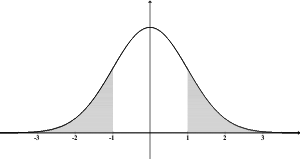
    Here’s your illustration. Liberals loved Nate Silver because he calculated that Barack Obama would win the presidency, among other things. Conservatives didn’t like him so much. Now conservatives are pointing to the poor odds, though 60-40 is a ratio many politicians would covet.

    I love Nate Silver not because of who he supports but because he shows his work, admits his mistakes, and has a pretty good track record. If I want to disagree with him, I can find the data in his own material. No, I don’t think he’s always right. The good thing is that he doesn’t think he’s always right.

    People on both sides of the political spectrum try to make polls say what they want, or they cherry pick the poll that suits them. Newspapers tend to represent polls in whatever way will sell the most papers. It causes me to remember the book Lies, Damn Lies, and Statistics. There’s no better way to lie to people than to combine two factors: 1) Tell them what they want to hear and 2) Put some numbers in it.