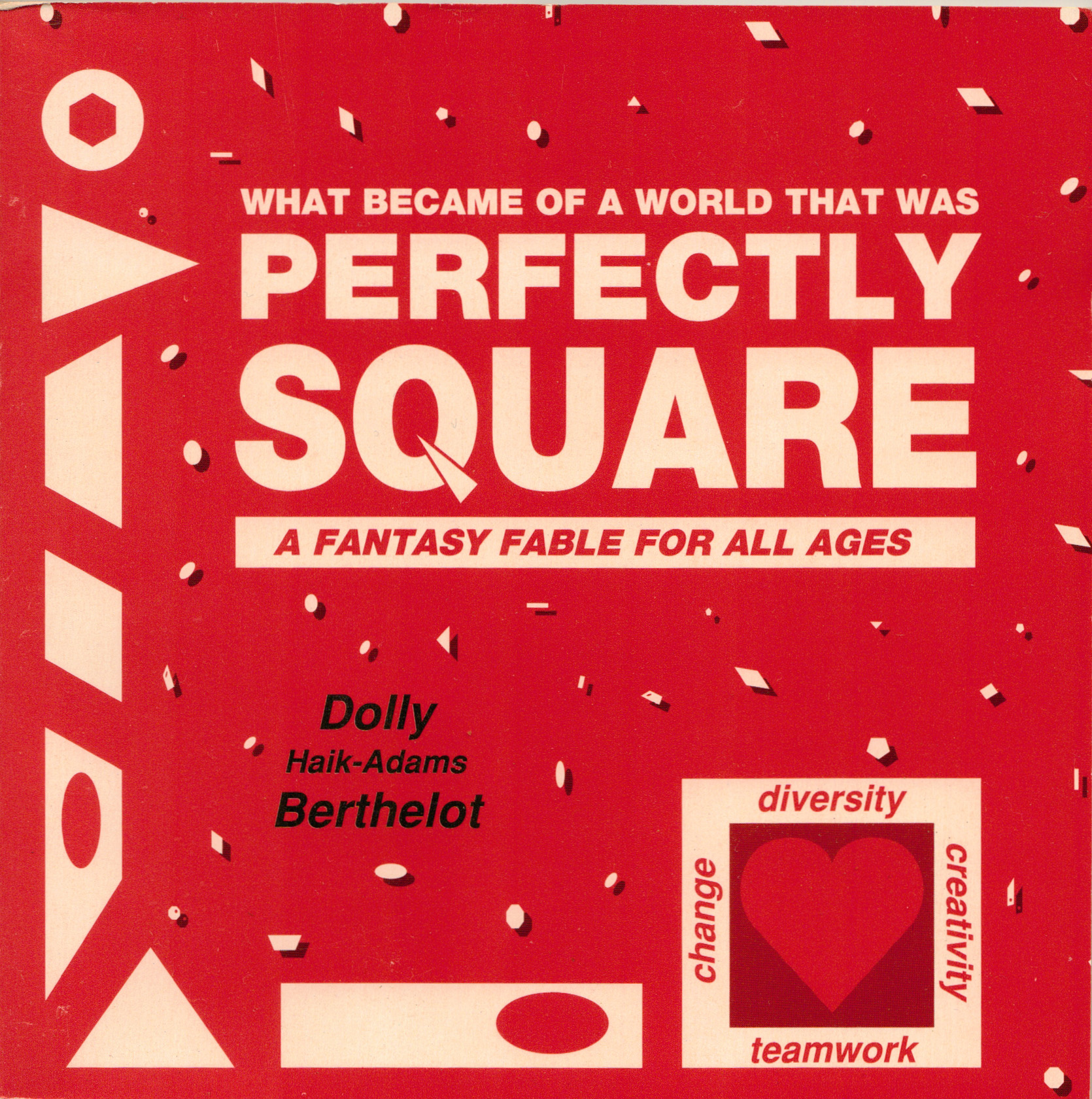
There’s a new blog, Dr. Dolly’s Musings … and I want to recommend it highly. Dr. Dolly Berthelot is an author with Energion Expand (an imprint of my company) with titles PERFECTY SQUARE and Scars to Stars. She has also been a friend and partner in various diversity and dialogue programs over the years. I consider PERFECTLY SQUARE to be one of the best approaches to understanding and managing the value of diversity.
My company, Energion Publications and all its imprints were founded with a key value and mission of publishing diverse voices and helping to generate more dialogue between very different voices. This value and mission remains.
I believe you will learn a great deal from Dr. Dolly’s Musings …. But don’t think this will be dry facts. Dolly is one of the most versatile users of words and imagery that I have every encountered. Just when you think she’s found the limits of her imagination, she’ll surprise you.
We differ in background and some beliefs, but we share the desire to see people learn to work together and produce great value for all of us, not just economic value, but community as well, which is a value beyond price.
I had an interesting experience in the checkout line at the grocery store. The customer-facing display was off-color, in the sort of way that indicates some color data is not making it through. I commented on this fact, saying, “Either there’s something wrong with that monitor or it has a damaged or loose cable.”
The young man doing the bagging says, “Oh,” and turns the monitor slightly, which suddenly corrected the color issue.
“Most likely the cable in that case,” I said. Then I explained that I have worked IT for many years.
“We got that!” says the young lady who was ringing up the groceries. Then she commented that her dad worked with carpet installation and he would always notice and comment on issues with the carpet.
“It sort of changes the way you look at things, doesn’t it?” I commented.
To which both young people agreed.
That incident reminded me of one from long ago. Jody and I were at church, I believe shortly after we got married, and she mentioned something about a particular woman. Jody described the woman’s appearance and clothing. It took me some time to place her in my mind. Then I replied, “Oh, the one who was carrying the wide margin NIV Study Bible.” (I made up the particular Bible edition, which I don’t remember. But I identified the Bible she had been carrying in detail.)
We notice different things. I didn’t remember the woman’s appearance or her clothes. She could have passed me on the street the next day in the same outfit and I would likely not have recognized her. But I would have recognized the distinctive Bible edition she was carrying.
I think there’s an important reminder her. When we look at someone, we tend to see those things that are most important to us. Not to them. To us. A good deal of what we see in others we see because of who we are, not who they are. In a way, we don’t see them at all. Just the parts that fit us.
Let me suggest a few situations in which this is important.
As a church leader, do you see a new member only for how they’ll fit into existing jobs you need to fill?
When you meet someone is your main thought how they can be of use to you?
Do you see someone as defined by one aspect of their identify, such as sexual identity, religious persuasion, political affiliation, or social class?
I suspect most of us do one or another of these things. I know I do from time to time.
Perhaps it’s time to start really seeing other people instead of just seeing our reflection in them.
To help you see others better
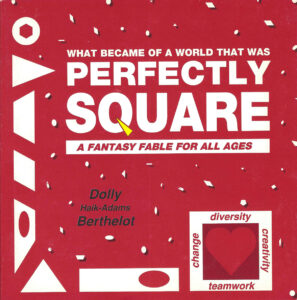
PERFECTLY SQUARE provides a way of thinking about differences and learning to value them. Learning about the world that was perfectly square and what happened to it may help you make your own world less square by recognizing others more fully.
I’m never going to identify which leader I learned these things from, because I have deep respect for all of them. Many of them helped me ditch bad ideas of my own, though doubtless I still have a bunch!
The bad thing I learned is this: When someone makes a suggestion for some project in the church, you immediately ask them to lead out in executing that idea.
There is a very good point involved here. Actually two very good points. First, a person who goes to the trouble of suggesting someone is likely fairly passionate about it, and are likely to be diligent in getting it into action. Second, there are numerous people who will tell pastors and other church leaders all the various things they think “the church” should be doing. They have no intention of serving. They just want to complain. “Why don’t you take the lead on that?” will often either slow down the complaints, or in some cases even get someone moving.
That’s the good side.
The bad side is this. Your church is probably already an example of the 80/20 principle: 80% of the work is done by 20% of the people. (Well, you might be more like 90/10, but why be negative?) Most of the good ideas, the ones you should want implemented, are coming from that busy 20%. After all, the 80% don’t really want to go to the trouble of meeting with the pastor to present an idea.
The 80/20 principle is self-sustaining. The 20% are the workers in the church because they’re the ones with initiative and creativity. Some people aren’t like that. Some people are willing to serve, but they don’t have the imagination, the initiative, or perhaps the knowledge of the church to locate a task and involve themselves with it.
Since the 20% generally have those characteristics in various (but substantial) measure, they tend to imagine that the 80% aren’t serving because they’re lazy, apathetic, or don’t really care about their church. Some of them may have these problems. But more of them likely are waiting to be identified.
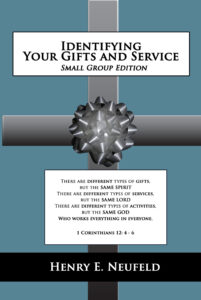
In my book Identifying Your Gifts and Service (Small Group Edition), I suggest that church members and leaders need to observe one another to learn about gifts and help others find a place to serve that utilizes their individual gifts and also fulfills their needs. Yes, they are serving others, but that service is also of benefit to them, provided they are allowed to use their gifts in positive ways, rather than just being put to work.
Here’s a summary of the points I make about this in that book:
Listening: Group members identify each person’s gifts based on observations and what they believe the Holy Spirit has revealed. This involves a group discussion where each person shares what they see as the gifts of others.
Expressing: Each individual expresses their understanding of their own gifts. This step involves self-reflection and sharing with the group.
Examining: A survey is provided to help individuals think about their gifts and areas of service. The survey is designed to stimulate thinking and challenge assumptions about one’s gifts.
Fitting: Group members discuss and clarify God’s call on their lives and how their gifts fit into the church’s needs. This step involves prayerful discussion and focus on how to use identified gifts effectively.
Unifying: The group examines how individual gifts align with the church’s mission. This step involves the participation of church leadership to help integrate members into appropriate areas of service.
The book emphasizes the importance of listening to the Holy Spirit and to one another, and it provides practical exercises and discussions to help identify and utilize spiritual gifts within the church community.
A Look Ahead
One of the key elements in this process is recognizing church members as diverse individuals. They don’t all have the same gifts, goals, personalities, education, or general approaches to life. Learning to recognize these is important. Next week I plan to write about this as a bad idea I learned from otherwise good leaders: Don’t get stuck on expecting one personality type in members of a congregation.
I will reference there the book PERFECTLY SQUARE. You can get a head start with this lovely little book that’s a quick read.
On the various Energion Publications web sites, we have been emphasizing listening in commemoration of Pentecost. This Sunday is Pentecost Sunday, but we’re going to continue the topic for a few weeks into what’s called “ordinary time” in the church calendar. It’s precisely in ordinary time that you need to remember the lessons of receiving and listening to the Spirit.
We need to continue listening even when we can’t see the flames of fire or hear God’s voice, or detect other signs of God speaking. God speaks in many ways, sometimes yes with thunder and lightning, but at other times God speaks through those who are around us.
Hearing God in Others
One element of listening that we often neglect is listening as the Spirit speaks to us through other people.
This was a lesson I started to learn in Guyana, South America, where I lived as a teenager. My parents went there as missionaries with my father assigned as Medical Director of Davis Memorial Hospital in Georgetown. Thus I spent a good portion of my teen years among people of a different culture.
I would often get rides to various places with the hospital’s driver, Brother Carr. (Note that when I was growing up as a Seventh-day Adventist, I was taught to address my elders as “brother.” That was so ingrained that I can’t actually remember his first name.) There was another gentleman who worked security and also some other functions around the hospital, and was occasionally a backup driver.
I recall discussing world events with these two men. Different country, different race, different culture, different perspective on just about everything. Those conversations have stuck with me. One day one of these men took me to the seawall which keeps the Atlantic Ocean from flooding Georgetown. After explaining the history, starting with settlement by the Dutch, we turned to current events, which at the time involved Mainland China replacing Taiwan in holding China’s permanent seat on the security council of the United Nations. Elements of that conversation have stuck with me.
Why do I bring up all of this now?
Very simply, there are good reasons to not only read books, watch videos, and listen to sermons/lectures on a variety of subjects. It’s important to learn about these things from more than one perspective. This can involve expanding your circle of friends. Intentionally expanding your circle so that you meet more people who are not exactly like you.
Difference can include:
Differences of faith, including those with a secular or humanist view as well as those of other religious groups
Differences of race, even beyond those we talk about most
Differences of nationality, to include people from countries that are less like our own
Differences of theology within our own faith tradition, such as Reformed, Wesleyan, or Open/relational or progressive, moderate, and conservative
Differences in levels of wealth and privilege (While some object to the term “privilege,” I openly confess to being privileged. It was a foregone conclusion I would go to college and if I wanted, to graduate school. I have never feared starvation. My life is filled with reasons for thanksgiving!)
Differences in geography, such as living in an urban, suburban, or rural area
There are certainly many more, but these are some of the many things that I think many of us don’t interact with enough. For example, I sometimes give money to someone who is homeless, but it’s much harder to get me to say hello. (I publish two books, The Vicar of Tent Town and The Fringe, both of which challenge stereotypes of what it means to be homeless.)
Some Books
And now for a short commercial … well, not really. Some thoughts!
I was thinking about four books that I publish, all by African-American authors. I’m writing about them here, rather than on my company blog because these thoughts are my own, apart from any marketing plan. (No, I don’t deny wanting to sell the books, but if I was writing marketing text, I’d do it in “company” space!)
I want to recommend these four books for specific things in which they can give you a different perspective. In the case of three of the books, the reason I’m listing them here is not the central reason the author wrote the book, nor the reason I published it.
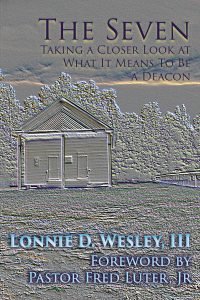
The second book in this list is not written to address any of the issues I’m discussing here, but it does. It’s The Seven: Taking a Closer Look at What It Means to Be a Deacon by Dr. Lonnie Davis Wesley, III. This is, unsurprisingly, a book about the ministry of deacons in the church, and it’s written by someone who pastors a large Baptist church in Pensacola, Florida, Greater Little Rock Baptist Church. As an aside, if you live in the Pensacola area, visit this church. I strongly commend it.
The reaons I’m talking about the book here, however, is because of the background it gives you about the black church in America. It will teach you things about deacons in the church. It will develop your understanding of the early church and what led to their being deacons. If you’re dealing with problems of church polity, you will find scriptural ideas in here that just might help. But it will also help you look at all these things with new vision.
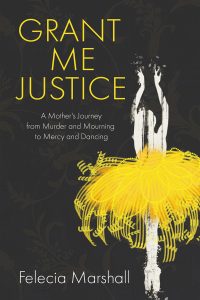
The third is Grant Me Justice: A Mother’s Journey from Murder and Mourning to Mercy and Dancing. This book deals with grief, anger, and the search for justice, but it also tells an important story, the story of a mother and what gave her perspective on what was happening. It’s a story also of grace. And it’s a story that will help many see things from a very different perspective.
An important lesson to learn in reading this book is that hearing the stories of others can provide so much help to each of us in understanding our own journey of faith. God’s grace is high and wide, and its sufficient. God doesn’t have a perspective problem. Stepping into the shoes of a grieving parent as you peruse the pages of this book can change you in many wonderful ways.
Last, but not least (these books are in no order of precedence), I have a children’s book. The book is What Color Am I? It’s the 8th book in the Kamden Faith Journey series. This entire series is about a grandmother helping her grandson in his faith journey. It provides an opportunity for parents to read with the children and discuss important topics with them. In this book Kamden sees a Black Lives Matter protest and asks his Nana for an explanation. What are they doing? Why are they angry?
The response is gentle, faithful, and powerful. I wonder if you, reader, have looked at these various issues from the perspective in this book. It brought tears to my eyes as I created the book layout.
Conclusion
Whether it’s with these books or others and whatever the subject or your situation, try to find an opportunity to listen to someone whose perspective differs greatly from your own. It may benefit them, but it will definitely benefit you.
Note: Featured image for this post was generated using Jetpack AI as a test.
Well, perhaps, “choosing” should be “recognizing.” Weird? Doesn’t make sense? Read on!
In the late 1990s I participated in a program here in Escambia County called CommUNITY Dialogues, led by a creative and interesting communications specialist (and I had not, up to that time, used “creative” or “interesting” with regard to such people!) named Dr. Dolly Berthelot.
It was a great program, and I learned a great deal. The reason I’m writing about it, however, is that it was the first diversity training program I’d experienced that I considered personally valuable.
While I valued and value diversity, I felt that many interfaith and diversity programs negated their own value by asking people to give up their own beliefs on entry. The result was a debate largely centered around whether divesting oneself of one’s own “diverse” views was a good idea or not.
What Dr. Dolly did was invite us to explore our beliefs and those of others and to look at ways in which we could understand one another and work together by celebrating and taking advantage of our differences. I have always believed that this would be valuable, but in my experience people of strong convictions tend toward excluding others, and those advocating diversity want to diminish the value of one’s own values.
You may, in fact, decide to change your belief on some topic as a result of dialogue, but eliminating the differences before they are experienced and understood is, in my view, suboptimal. (I like that word!)
I say all of this to bring us to the present, and some of the work of Dr. Dolly Berthelot. I publish her book PERFECTLY SQUARE™, and I have spent some time looking at a training program she has developed, SELFSHAPES™. She has developed a simple quiz based on this program, and I have implemented it on our web site.
I’m not going to discuss it in detail here, because it is best experienced first. I have commented before that I have found things I’ve learned about human nature, including sociology and psychology, and definitely about different personality characteristics more helpful in Bible study and teaching than learning biblical languages. (I in no way regret learning the languages. I say this to emphasize the extreme value of learning to understand people for biblical studies and theology.)
And, of course, for life.
So head on over to the Energion Publications retail site and check out the quiz. It’s called Dr. Dolly’s SELFSHAPES™. There are no pop-ups, and very little advertising. At the end we offer you the opportunity to share on social media and to sign up for an e-newsletter to keep up with developments.
So the disciples decided to send help to the brothers and sisters living in Judea, as each one was able. They carried out their plan, and had Barnabas and Paul deliver their gift. (Acts 11:29-30)
This is a short verse, but I think it’s very sweet. As the story of Acts progresses, we’re entering the phase of controversy between those who are welcoming gentiles to the church (without their first becoming Jews) and those who don’t wish to do so. It will get quite heated as Paul’s ministry gets going.
But here there’s a simple pause. The believers in Antioch send what they can to the believers in Jerusalem. Nobody is asking which side of the controversy they’re on.
Here’s the principle: In controversy, build community.
I get a daily (most days!) e-newsletter from Rabbi Evan Moffic. I find his thoughts inspiring and helpful. I want to quote his letter today in full. You can learn about some of his books through his Amazon.com author page or my Aer.io page for him.
Henry, My grandfather passed away in 2007 at age 95, but in college I recorded several conversations with him. He talked about the Depression and the desperation he and many Americans felt.
He talked about learning to box so he could defend himself against the neighborhood bullies who called him a Polish Jew. He talked about sneaking into gatherings in 1930s Milwaukee of a group called the The Bund, which were American Nazi sympathizers.
What happened in Charlottesville last week would not have surprised him. He lived through it once before.
But it did surprise me. I grew up with little antisemitism. My application to seminary said the age of persecution was over, and Jewish life needed to focus on more positive engagement and inspiration.
I was naive. Antisemitism has reared its ugly head again. The Nazi symbols and signs proclaiming in Charlottesville “Jews will not replace us” scared me and my children.
I thank God for you—my readers and friends—who are committed to a different world. A world we can worship and live in freedom and respect. Our task is to help preserve that world our children and grandchildren.
Do we have grounds for hope? Well, our ultimate hope rests in God.
But I also take comfort from the Book of Genesis. It begins with an angry murder. Cain kills Abel. Later Jacob steals the birthright from his older brother Esau. Then Joseph’s brothers sell him into slavery.
Yet, at the end of the book of Genesis, Joseph and his brothers reconcile with one another. They forgive. They live in peace.
My hope is our country follows our similar path. What can you do now? Join this Facebook group to keep up with ways of fighting antisemitism. It is called, fittingly, Christians and Jewish Fighting Antisemitism and is the first of its kind.
Probably as the result of the political correctness debate—well, perhaps not debate; more brouhaha—I hear or read frequent complaints about an expectation of courteous speech as though it’s an imposition. In order to cater to someone’s excessively fragile sensibilities, the argument goes, one is expected to deny the truth in favor of “political correctness.” In this case, political correctness is in quotes, because it tends to refer to even the mere suggestion that one might change one’s approach to presenting a viewpoint.
I do believe there is such a thing as political correctness. You identify it by taking note of the term political. It’s an officially imposed form of courtesy, carried out by policies such as speech codes. I’m vigorously opposed to speech codes in any sort of public institution. I think they are generally problematic in private institutions, though privately owned organizations should be able to make their own policies. As a publisher, I certainly maintain standards for what I will publish.
But the term “political correctness” has come to be applied to any expectation of courtesy, not just a code enforced by law or authority. Having hundreds or thousands of people disapprove of your speech does not censor you or deny you free speech. It merely means that those hundreds or thousands of people will disapprove of what you say. Which is their right.
Here’s an illustration of how to distinguish these ideas. Reasonably shortly after I turned 21 I realized that my driver’s license, by proving my birthday and thus my age, gave me the power to go see an X-rated movie. So, lacking good taste at the time, and apparently having money to waste, I found an “adult” cinema, showed my license, bought my ticket, and headed it to enjoy this privilege of age. Within five minutes I left again, never to return. I’m not totally prudish. I’ve watched some pretty hard “R” movies. I just insist on a story. One that the writers received more than pocket change to produce.
In that way I exercised an appropriate form of censorship on pornographic movies. I never again provided them with my hard-earned cash.
The alternative would be to go on a crusade to ban their product. I know many people who would do precisely that. I don’t plan to debate that issue in this post. What I want you to see is the difference.
An expectation of courtesy is not the same thing as a requirement that you be courteous. When a public university says that you must use certain terms in discussion, then that becomes a legal requirement. I call that political correctness. Why do I specify public? Because the university is taxpayer supported. I generally oppose speech codes in private schools as well, but in that case it is a matter of my support for genuine dialog, which requires genuine expression of a participant’s uncensored views, rather than an opposition to a public policy.
So what does this have to do with courtesy being for the other person?
Well, remember those hundreds, thousands, and I might add millions of people who may demand courtesy of you? The question for you is whether you prefer to just annoy them, or if you would like to get a hearing for your ideas. If you wish simply to annoy them, go ahead. Be my guest. You probably won’t be welcome as theirs. But if you have ideas that are important to you, ones you want to express truthfully and with vigor, you will need to consider your goal. If you want to get a hearing, you’ll need to combine “vigor” with “courtesy” or they will exercise their freedom and ignore you. Or, as often happens, abandon courtesy and treat you with the same contempt you show for them.
This applies to any discussion, including both religion and politics. Frequently I hear things that are claimed to be arguments for Christianity against atheism or some other viewpoint that are actually simply ways to make Christians feel better about themselves. Taunting atheists with “The fool has said in his heart, ‘there is no God’” (Psalm 14:1) is a good, simple example. To you it is “truth” and you are just exercising your human freedom and “telling it like it is.” You can then slap the back of laughing fellow-Christians or fist-bump, or whatever you want, congratulating yourself on the point you’ve made by telling the truth.
But you have likely simply made it harder for the next Christian who would like to engage that atheist in actual dialog about matters of faith.
“But I’m just quoting the Bible,” you say.
“Out of context,” I reply. Nowhere does the Bible tell you to taunt unbelievers by calling them fools. In fact, it says something quite different (Matthew 5:22).
We taunt fellow-Christians in similar ways. I remember a class I led some years back. Some of the participants had been spoken of in a negative way by other members of their church. They went around the group talking about the unfairness and how inappropriate it was to treat them this way. I couldn’t resist asking this: “Have you treated any non-believers as you have been treated by fellow church members?” Many admitted that they had.
I hardly need to provide examples of how we taunt people who disagree with us politically. Then quite frequently we taunt them again if they don’t want to stay around and listen to us taunt them.
If you want to isolate your ideas and grow your contituency only by raising new members from infants (and beware of them leaving!), then by all means, treat courtesy as an imposition. Regard it as something that keeps you from letting people know how things really are.
But if you’d like your ideas to spread, learn how to express the truth in a courteous manner.
Oh, and a note to all. Disagreeing with you or thinking you’re wrong isn’t discourteous. It’s a matter of the way things are expressed.
When Jody and I began our courtship we were treated to quite a lot of advice. One of the things we heard quite frequently was that we were too different to make a good couple. Just what those differences were, well, differed according to the observer. Underlying this type of advice was the assumption that we needed a certain sameness in order to be compatible.
Jody and I are not the same. Not even close. She loves change and adventure. She wants excitement. I like things to stay the same. I’m pretty good about discussing exciting ideas. I’m less likely to be there when the creative ideas make me change my routine. She makes decisions quickly and intuitively. I tend to spend days tearing apart every little detail. So, yes, we’re different.
Differences do cause conflict. Thus there are many people who think that if we just clear up the differences we will have peace, tranquility, and comfort. And perhaps this is so.
But with the peace, tranquility, and comfort come stagnation and even a bit of boredom. Jody hates boredom. I’m OK with it, but only within limits.
There are several ways you might imagine a marriage such as ours to work. We could compromise on everything. She makes a decision in 30 seconds, I take four days. Easy! Give it two days to simmer, and then make the decision. I like Bach and Haydn. She likes contemporary praise music. Again, easy! Find a compromise service that uses elements of both. I like a lengthy, topical sermon that deals with the details. She likes a vigorous call to action. Surely we can find a preacher who mixes those elements!
Alternatively, we could go the conversion route. Either I convince her that decisions require more time and cogitation, or she convinces me that fast action is essential. She persuades me that in order to worship properly one must have active, exciting, “now” music, or I convince her that worship truly occurs only with the traditional and time-tested. We file down one another’s rough edges and try to become mirror images of each other.
Or …
We could consider the fact that we have different approaches to just about everything to be a strength, and embrace it. Or perhaps not merely embrace it, but celebrate it and nourish it. Are there moments when Jody’s fast, intuitive decision making is just what we need? At those moments, I need to listen to her. This decision needs to be made quickly. On the other hand are there times when an idea needs thorough consideration? Indeed there are.
It’s not easy to recognize which is the best approach at any given moment. The starting point is for me to recognize that quick decision making is a gift, a positive point, and for her to recognize that serious deliberation is also a gift. Notice that we do not give up our gifts in favor of the other’s, nor do we compromise and become something between. Rather, as a couple, we become capable of responding to a greater range of situations with a greater range of responses.
Tonight I’m going to interview author Bob LaRochelle about his forthcoming book A Home United, which is designed to help couples who come from different faith communities work through and benefit from their differences. Even those who come from very different faith communities can benefit from his advice, questions, and exercises.
For us, for example, the perception was that we would have difficulties just because we attended different worship services at the same church. There were definitely differences, but they were not problems. Rather, they were opportunities. And we continue to face these opportunities as we move along. It’s easy to see problems, and to hope the problems go away. If, instead, you are patient enough to discover how the differences can benefit you, you’ll reap great rewards.
Join me tonight at 7:00 pm central time (June 23, 2015) for this interview using the viewer below.
After we had been married for some years, we became partners in business as well. I remember friends asking me to make sure who is in charge so that we don’t have problems making decisions. This suggests that in the business relationship, one of us works for the other.
There are areas in which one of us rules. In terms of organizing events, scheduling, how much we can take on, and things that are related to that, Jody takes the lead. In terms of editorial practice (what format, punctuation, and grammar rules we enforce, for example), I take the lead. On any particular project, one or the other of us will be the lead editor. These areas are divided between us.
But on the big decisions we use a simple approach that has also worked in our marriage: Two yesses, one no. It’s consensus or we don’t take a move. If we’ve published your book, you should know that neither of us said, “No.” We don’t take on one of these major projects without agreeing. That doesn’t mean that we both like each book equally. Absolutely not! But we choose not to say that “no” unless we think it is really necessary. So there are “Henry” books and “Jody” books to go along with “both of us” books.
That’s three sets of strengths: Mine, hers, and the ones that result from the combination.
One little book that helped me understand how this works is PERFECTLY SQUARE™. I encountered this book before we were married, and just recently we’ve begun to distribute it. In the following video, you can hear author Dr. Dolly Berthelot do some readings from it and explain the basic concept. I think the “shapes” idea, especially when you think about combining shapes, helps understand how all this works.
And if you’re wondering how it is that so many of our books tend to fit what I want to talk about in blogs, I’ll admit that I’m often thinking about the subject of books I’m editing, so it’s not entirely unnatural that I want to write a few notes about it. That’s one of the benefits of my business! At the same time, one of the things that determines whether we’ll publish a book is the importance of its subject matter to people who are trying to live their lives and make things work.
Let’s get the commercial part out of the way first. This book was first published in 1994, and its message is still relevant, possibly even more relevant, today. In fact, I suspect that in another 50 years, its message will still be on point and up to date. So I’ve taken up distributing the book. You can find the Energion catalog page at the link above or by clicking on the cover picture.
And while we’re at it, you can find the interview tonight (7:00 pm central / 8:00 pm eastern) via the Google+ Event page, or you can use the embedded viewer here.
With that out of the way, let me tell you about Dolly Berthelot. I encountered Dolly through the CommUNITY Dialogues™ program she offered through the Human Relations office here in Escambia County Florida. I believe I got involved through mutual friends at the Unitarian-Universalist Church of Pensacola (then Pensacola Unitarian-Universalist Fellowship).
My view of diversity programs at the time was negative, to say the least. I had attended a number of these programs while in the USAF and also some with civilian organizations, and they were uniformly boring and generally useless. I remained committed, however, to the idea that we could learn to reap great benefits from our differences by listening to one another.
I’d say that the key failures of diversity programs that I attended were rather straightforward. First, they had a tendency to tell you what a few differences were and basically explain that you had to get along anyhow. Then they’d attempt to make all the diverse people in the room drop all their differences, or treat them as unimportant, so they could get along. It appeared that the diversity trainers really didn’t like diversity. Their hope was that everyone would cut off the rough edges and get along, or just not mention anything that might be controversial.
In CommUNITY Dialogues™, things were quite different. Dolly taught (and encourages) unity in diversity. We are all different, and this isn’t a problem to be solved, but an opportunity to be grasped. We need to make the most of our diversity because it’s a great thing.
So now, 20 years after the book was first released, and quite a number of years after I enjoyed that dialogues program, I’m taking up distributing this book. For various reasons (I’ll get her to explain tonight), Dolly hasn’t been as active. But she’s passionate and ready to go with the message of unity in diversity. Join us!