Category: Christian Mission
-
Last Night on the Tuesday Night Energion Hangout: Stewardship

 Pastors and church leaders cringe at the “s” word, because so many members don’t want to hear about it. Sometimes they blame the members for not wanting to dedicate their wallets to the Lord. But is that precisely what we should be asking church members to do?
I think the resources to carry out the gospel commission already exist. Those resources are tied up in our individual wallets, bank accounts, and possessions at the individual level. At the church level they are tied up in buildings and supplies, things we’re sure we have to have. But do you know that there are thousands of churches around the world that get along without the things that we, in American churches, absolutely have to have?
Come to think of it, am I aware that there are people who do without things that I count on every day?
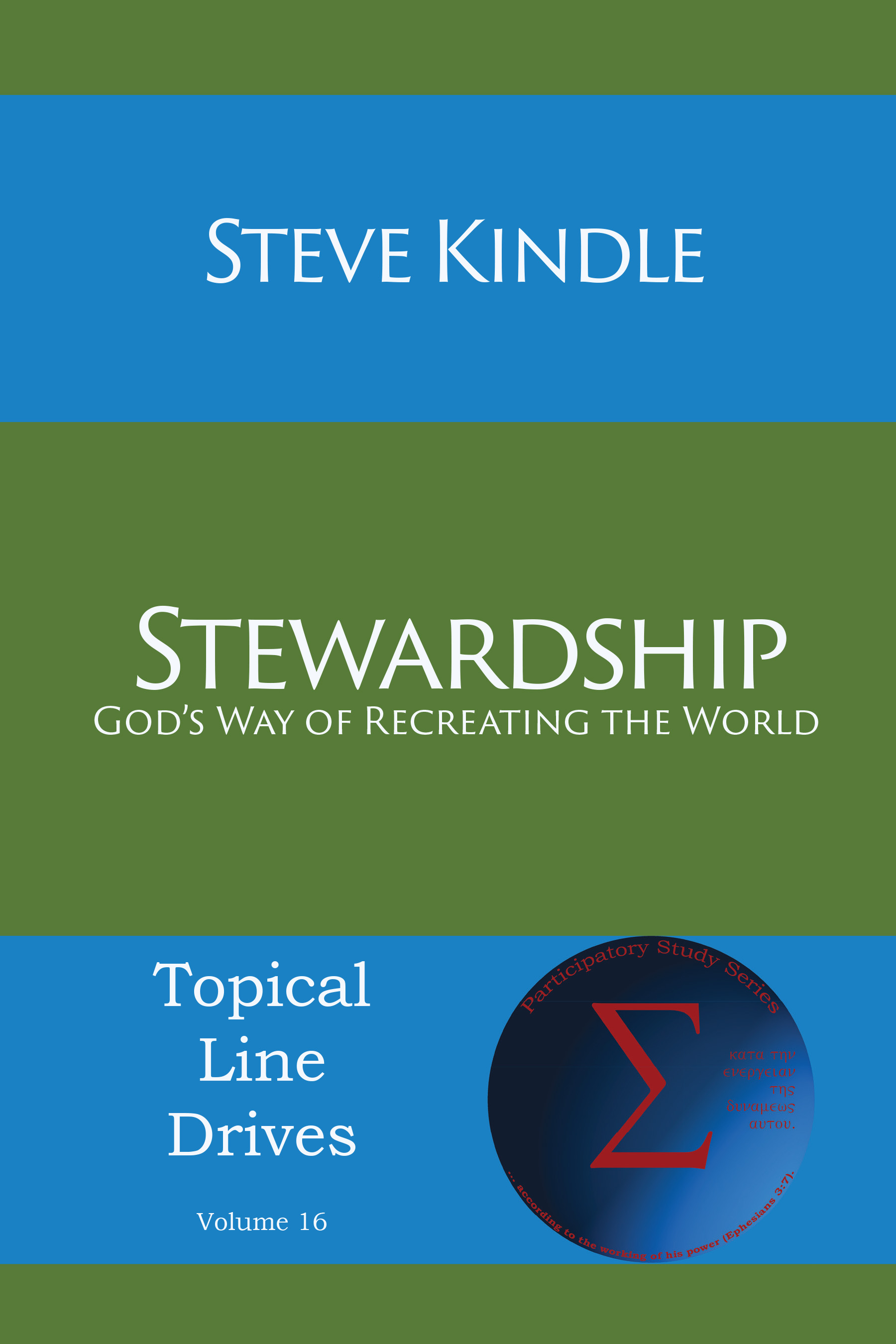
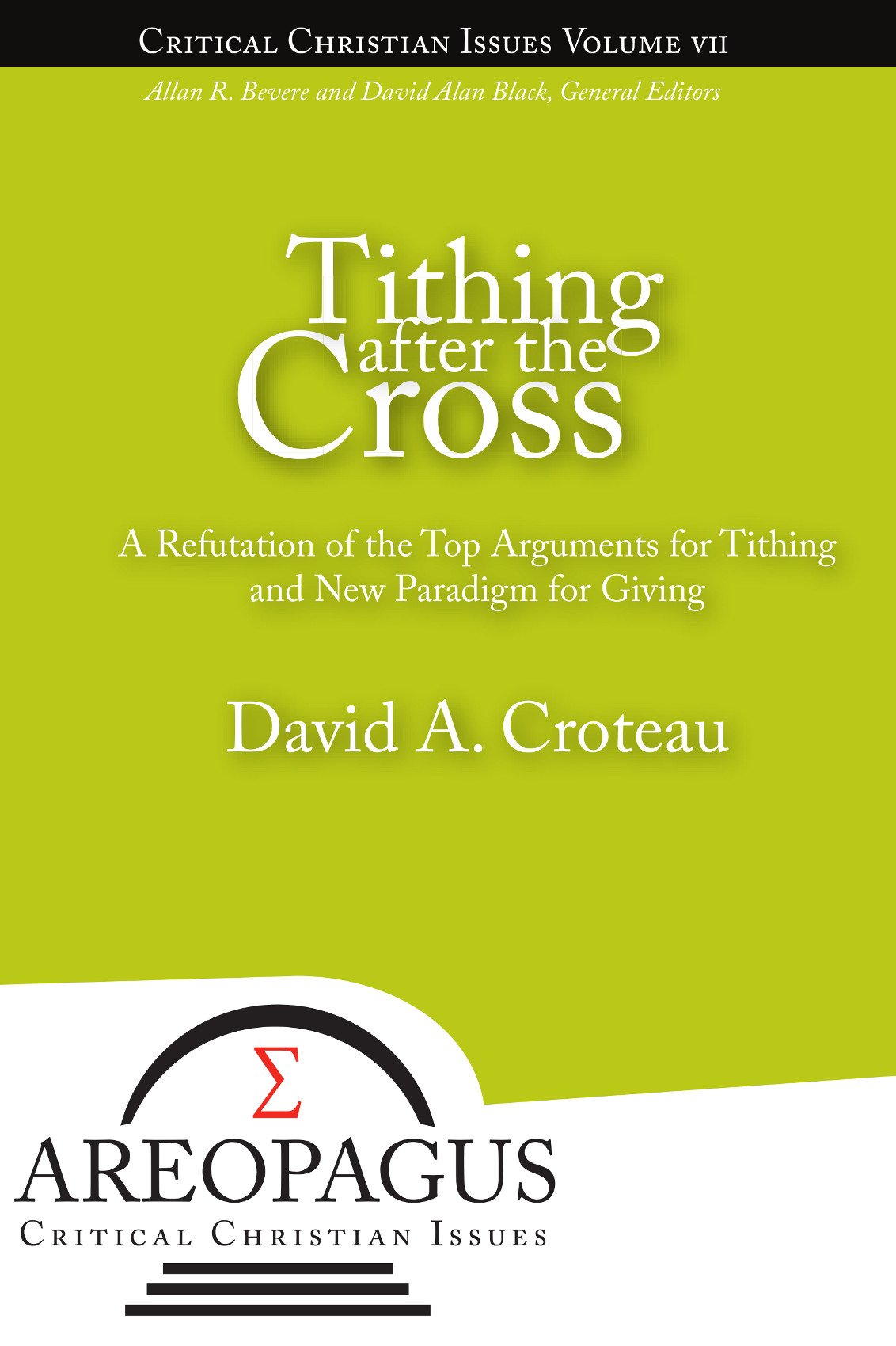
My guests were David Croteau, author of Tithing after the Cross and Steve Kindle, author of Stewardship: God’s Way of Recreating the World. They come from different denominational and theological backgrounds and belong to different generations. Yet in looking at what the Bible says about stewardship, they both come to the same conclusions. You’ll be amazed at the level of agreement.
I have heard many of my fellow Americans say that the government needs to get out of charity and let the church do it. You know what? How about if the government could spend way less on social welfare programs because the church was doing its job? I don’t just mean giving out money; that’s part of it. But giving out money results from letting the gospel change our priorities so that we give ourselves to the Lord (2 Corinthians 8:5), and everything else results from that.
Just think! We might even turn the world upside down (Acts 17:6)!
Here’s the video:
Earlier today Dave Black commented on this as well.
-
Dave Black on the American Dream
 I just extracted a post from Dave Black’s blog and put it on The Jesus Paradigm. For those unacquainted with Dave’s blog, I do this so that I can get a permanent link, and I have his permission to do so.
Dave asks some important questions. How do our values impact the way that we live and the way that we serve? I often hear my generation telling the next one how they ought to be careful and make sure that everything is properly cared for before going into service.
On the other hand, my parent’s went overseas to serve in remote areas with all their worldly goods in a station wagon and small trailer, along with four children in the car. Was it risky? No doubt it was. Did they believe they were doing the right thing? Absolutely! I never heard them say that they would have had it any other way. They believed God had called them and they answered.
My mother tells her story in her little book Directed Paths. I’m going to offer a free copy of her book to a randomly selected commenter on this post. I’ll close the contest on Monday. Just make enough of a comment that I know you’re asking for the book and that it’s not spam.
-

When Fear Drives
Recently the topic of risk and danger has come up in several discussions of Christian Ministry. Shauna Hyde, who I interviewed along with Chris Surber, has spent the night in tent town with homeless folks and earned the informal title “vicar of tent town.” People have told her she’s crazy. But she manages to live the gospel and build relationships that wouldn’t happen any other way.
Chris Surber, involved in the same interview, is headed to Haiti with his young children. There are folks who claim he is crazy for doing so. He describes some of the comments in his forthcoming book Rendering unto Caesar.
Back in the days when I had a newspaper route (annoying work, but it happened at night, which was convenient), I would regularly stop to help people in the “bad” neighborhood in which I worked. I recall one Sunday morning when I stopped and just kept my headlights on a man who was changing his tire. He was very grateful. When I mentioned this in my Sunday School class it derailed the discussion as people informed me how I shouldn’t risk my life in this way.
Such, I think, would have been the Sunday morning conversation had the Good Samaritan been a Sunday School teacher and reported on his stop on the road to Jericho. His stop, I think, was much more dangerous than my sitting in my car with the headlights on.
In an interview regarding hospitality, the subject of danger came up again. Chris Freet has written a book titled A New Look at Hospitality as a Key to Missions. As soon as we began to discuss hospitality, we had to discuss danger. Strangers actually invited into our home? Perhaps we need to rethink this and use some central location with proper regard for security. After all, in the 21st century we have sexual predators and various violent types among the broad category of people classified as “strangers.”
I have to ask myself whether the 20th or the 21st century is more packed with dangerous people than any previous period in history. I really doubt it. As Christians we claim to be followers of Jesus. It was not entirely safe to do these things when Jesus commanded them. We can’t claim that additional dangers in the 21st century have rendered these commands null and void.
My parents were always hospitable. Many, many times we had guests at the dinner table. You could not visit my parents’ church without receiving an invitation to lunch afterward. My parents would never have considered allowing you to leave unfed. They just never did it. We did this when we were overseas as well. We took people into our home. It was something I felt was normal. How likely are you to get invited out to lunch in a 21st century American church?
And it was not without risk. Once when my parents sheltered a woman and her child in our home the result was that we had to flee as angry people approached intending to kill us. This was eventually settled and we returned to our homes, but there was certainly risk.
We have story after story of missionaries risking their lives and the lives of their children. I was allowed to go on mission trips into the mountains of Chiapas, Mexico when I was eight and nine years old. We’d travel through the mountains, accept the hospitality of the villagers, and conduct clinics. (My father was an MD and my mother an RN.) My task was to carry out the garbage, get supplies and deliver them where needed and to carry messages. Was there risk? Of course there was! What would happen if one of us was injured in these isolated areas? After all, the reason we were there was because medical help was not readily available.
My mother tells a story about me. It embarrasses me a bit. Don’t think that I was some sort of extraordinarily spiritual child. What I’m interested in here is her actions. This is extracted from her book Directed Paths, pp. 51-52.Even a child is known by his doings, whether his work be pure, and whether it be right.
Proverbs 20:11
While we were in the Chiapas mountains, a measles epidemic broke out in the nearby village of Rincon. Many were dying. They sent to our clinic for help. Although nurses and helpers were in short supply, we sent as many as we could to give penicillin and help with treatments. Our older children, Betty Rae and Robert had returned to the states for school. Patty, who was twelve at the time, went to Rincon every day to help. She wanted to be a nurse and this was a great experience for her. The need was so great, the nurses taught her to give shots and helped her to learn how to do treatments. At the time, Henry was only eight but he begged for permission to go help. I knew he could be useful in helping to carry food, water and run errands, but he had never had the measles.
He kept saying, “Mama, please let me go. Patty is helping and I want to help, too.”
“But, Henry, Patty has had the measles. You haven’t. I don’t want my little boy to die.” I told him.
His answer stunned me, “Jesus gave His life for me, and why shouldn’t I give my life for the Chamulas?”
I had no answer to that. The next day, Henry went with the group. He was a great help. He also got the measles which made him extremely ill. We thought he truly was going to give his life for the Chamulas. We provided nursing care, treatments and penicillin, but Jesus did the healing. Henry made it and the glory goes to God.
I believe that many 21st century folks would be horrified by her actions, because I see them react with horror at so much less risky actions. It’s possible some would consider this child abuse. We admire the courage of missionaries at a distance, but are otherwise somewhere between concerned and horrified. I’ve heard the same responses to the idea of people going to help with the Ebola outbreak. Close everything off. Don’t let there be any risk.
Can followers of Jesus say that? I think not! I think the same force of the love of God that had Jesus reaching out, touching, and healing the lepers should drive Christians. The fact of risk is not a reason to quit carrying out the gospel commission nor is it a reason to quit actively loving and helping our neighbors. And it is no reason to allow ourselves to be shut down.
What is right remains just as right under threat of death as it ever is when we’re in complete safety. I know it’s a great deal easier to say that than it is to put it into practice. I don’t proclaim myself a paragon of virtue. I can name so many people who have done or are doing bolder things than I have even considered.
But the call remains the same as it was when Christians faced the lions. Will the American church be driven by fear or by the gospel commission?
-
From My Editing Work: Our Global Kingdom Citizenship
 Two paragraphs from Rendering unto Caesar:
The most obvious conflict with the fusion of Christian and American identity is that it denies the universal nature of the Kingdom of God. When our allegiances are too strongly aligned with any kingdom of this world, be it the relatively benevolent kingdom of America or a malevolent kingdom like Nazi Germany, it takes away from our ability to reflect the unique beauty of Christ in the world through our lives. Discipleship is costly. It costs us the identity that we had before Christ broke into our lives and snatched our affections away from this world for Him.
In order to glorify God, we need a Gospel that preaches everywhere. Our Gospel needs to preach in Beverly Hills and the hills of Haiti. Our Gospel needs to preach to Liberal and Conservative. Our Gospel is for the lost, of which we are all a part. In the hearts of many American Christians there is a subtle and sometimes overt bitterness for the rest of the world. We are Americans. We want to keep our money local. We want to keep the American economy strong. We have fused our identity as Americans with our identity as Christians and consequently we miss the reality of our global Kingdom citizenship. (p. 8)
This little book (Topical Line Drives, 42 pages) is headed to the printer. Pre-order price is $3.49. Regular price will be $4.99. If you order three of them, or order another book or so, you’ll get free shipping as well.
-
Author Interview: Christopher J. Freet on Hospitality as a Key to Missions
Tonight in our Tuesday night hangout series, I will be interviewing Christopher J. Freet, author of the newly released book A New Look at Hospitality as a Key to Missions in the Areopagus Critical Christian Issues series regarding the topic of hospitality. We are open to audience questions. You can view this event on the Energion Publications Google+ page or use the embedded YouTube viewer below.
-
Not Looking for the Perfect Church, but …
Via Allan Bevere I located this interview with Scot McKnight, in which McKnight makes a number of interesting statements. The one that caught my attention most was:
… A proper kingdom theology leads people to the middle of the church, not away from it. So it makes a difference when church is on the decline and people are saying they are committed to the kingdom but not so much to the church. You can’t have kingdom without church.
First let me note that I am a very churchy fellow. Except when I was not a (practicing) Christian, I have been a member of a church congregation, and those congregations have largely been deonominational. I’m the sort of person who finds a church in the phone book when traveling on a weekend, and goes and worships with a local congregation. I’m a member of First United Methodist Church of Pensacola, who, I am sure, would rather not be blamed for what I say! First UMC is not a perfect church. I’m sure that can be said of all the First UMC of ____ congregations around. Nonetheless the gospel is preached there, and much good ministry is accomplished.
Second, Allan Bevere is a friend, and co-editor of the Areopagus Critical Christian Issues Series published by my company, Energion Publications. I like Allan. What’s more, I agree with him on many things, especially what he said about this topic.
Third, I found very little that I disagree with theologically in Scot McKnight’s comments.
My problems are largely practical. It’s all well and good to tell people to connect with the church. I’ve been doing that myself. In fact, I find that most people who are struggling spiritually have one thing in common—they’ve lost that connection.
But here are some of the reasons I’ve heard just recently for not connecting with local churches:
- The church lacks convictions. Face it, fellow Methodists (I’ll leave the rest to check their own surroundings), we’re not a church of terribly strong convictions. When I was looking at joining a United Methodist congregation I was told by one pastor that he didn’t care what I believed. If I wanted to “enjoy their fellowship” I could join. I’m not sure whether he wanted me to abstain or lie during the membership vows.
- The church has convictions, but people can’t live with those convictions. I’m not referring to any particular issue or any side of any particular issue. I’ve heard this from people across the theological spectrum. Really!
- The church is so little oriented toward kingdom work of any variety (any of the five elements to which McKnight refers) that the person doesn’t how he or she could work for both the kingdom and the church.
- The church is so fractured, that people have a hard time identifying what is actually Church.
- The church behaves as though it is a kingdom in the throes of a civil war.
- The king is, at most, a figurehead.
I could go on, but I won’t.
I have personally felt elements of all of those things. Of course the kingdom and the church should overlap, but sometimes I feel that the theologians and preachers are hammering the people who are trying to accomplish something for the kingdom, as problematic as that may be outside of the church, while the churches (to be distinguished from Church) continue to fail to make it possible to accomplish much of anything. It often sounds like people should be able to find and identify a good church, one that will truly be part of the kingdom, without any particular guidance. When they get there, the reason they should stay is that they need the church, whether or not it is functioning for them.
Now I’m sure readers are going to get all tense about the phrase “functioning for them.” I believe that the primary issue in finding a local congregation is discovering the place where, and from which you can best serve Jesus. This is necessary because we don’t have a single church. Paul didn’t write to the Corinthians about our sort of problems, because we’ve gotten much worse. Not only do we have divisions; our divisions are institutionalized. So I have to locate a church congregation where I can be part of the Church, and thus carry on kingdom work. The followers of Cephas, Apollos, Paul, and Christ have separated themselves into different buildings with signs and trademarked logos.
Once I find this congregation, I’m as likely as not to be pushed into various congregational or denominational programs to make sure that I’m properly socialized to the way that particular congregation does business. I recall being pursued early in my time in the United Methodist Church by folks from the Lay Speaker program. I needed to be certified before I spoke. I needed to coordinate before I spoke anywhere, because I might be seen as representing the UMC. But I wasn’t being invited to speak for Methodism. I had other things going on. Once I’ve checked off the boxes, the congregation wants to make sure I’m doing things for that congregation. Perhaps we should recognize that people gain skills in other churches, other denominations, and even in their secular occupations.
Now because I am fully convinced of what Allan and Scot are saying, I will find that congregation and I will be a member, and I will make my kingdom work part of Church. What I won’t do is find myself stuck with that congregation or denomination. If I can get together with other parts of the Church irrespective of denomination, I’ll do so. But we get back to “functioning for them.”
I’m seeing a great deal of hostility to any notion that a person should get something out of church. But the fact is that if you don’t get something out of church, you’re not going to be doing any ministry from church. No, you shouldn’t be self oriented. You should look for a place where you can serve. But a church congregation (and the whole church), should be a place where we serve one another. We give and we receive. And if we don’t receive, we won’t be giving for long, I don’t believe.
That’s one of the problems with our expectations of pastors. The actual job description for our pastors—I mean what you’d get by following them around and describing what they actually do, not the paperwork lies we use—is both ungodly and stupid. Nobody can do the job. We put men and women into a place where nobody can truly succeed. Those who do succeed at all remold the job. I do not mean to denigrate the many fine pastors I know who are doing wonderful kingdom work from their church congregations. The problem is that we require them to be paragons just in order to succeed. We make every effort to destroy them. That’s the extreme of giving but not receiving.
(Yes, Jesus said it’s better to give than to receive. But if we have an entire Church of people giving, there will be a lot of receiving going on as well!)
It isn’t wrong for a couple with children to want to see that the church congregation they join will help them raise and nurture their children. It’s not wrong for a person who is ill to hope to be visited, encouraged, and prayed for. It’s not wrong for missionaries to want a home base that will actively support what they do and who will want to listen to their stories when they return. It is not wrong for the elderly members to expect that they will be helped and respected in their declining years. All of those things involve the congregation “functioning for” various people. If I want to support children’s ministry, the elderly, service to the sick or imprisoned, or engage in social action, why would I join a congregation that shows it’s intention not to do those sorts of things?
But, object many of my fellow churchy folks, there are good congregations out there. People should be more determined. They should seek out the right congregation. They should find a way to serve! They can start those ministries!
And here you’re expecting the non-theologically trained, non-church-oriented, ordinary people who just want to get about doing good to fix your church first. If the church is spending 70% or more of its budget just maintaining the machine, why would someone who really cares about the poor, for example, decide to join up and handle the problem before they do what they are called to do? That’s what we ask of many of them. We are dedicated to the buildings, to the structure, to the programs, and to the traditions, so they should come on board and be satisfied with just a tiny percentage of the effort and money of the church going to the sorts of ministry to which they are called.
I don’t believe that the solution to our church problems will come by persuading this generation that they need to come on board and solve our problems before they can do kingdom work. Those of us who are in the church need to be prepared to be radical. Sometimes one must acquire buildings, but very frequently one must get rid of buildings. If a church is failing, it may well be time to shut it down.
I’m not opposed to paid staff. But our paid staff should be people who help get the rest of us out doing ministry. For example, I would be very sorry to see a scholar-pastor such as Dr. Wesley Wachob at my home church in a bi-vocational ministry. I think the best use the church can make of him is in a full-time teaching role. But his job (and I’d be surprised if he doesn’t understand it this way, but don’t blame him for my words!) is to get another 3,000+ of us out there doing ministry, not as paid ministers, but as every member ministers. (Every member in ministry is a good Methodist program. Too bad “every” is such a small number in so many cases.)
Do I have a solution or is this just a rant? Well, I admit it is somewhat of a rant. But I do believe that each of us who are in the church can make a difference by being different. Have convictions. If you don’t know what they should be, study. Learn. Be prepared to stand aside and see things done differently, even in ways you don’t think will work, as new people come in the door. See the church everywhere believers may be found, and not just in your congregation.
And for the 21st century in particular, realize that social relations are different now. I hear moaning in church about a decline in people knowing one another as aging church members (and I must admit these aging church members are my age!) talk about how social media is ruining everything. They ought to be in church or at our Sunday School party, but they’re on Facebook. Yes, indeed! They’re on Facebook. And that’s part of their social circle and how they connect. And because I want to be able to connect with the current generation and those between, it’s one of the ways I connect. Many of my closest friends now I met through electronic media, some long before it was called social media or the internet became so universal.
For example, I met Elgin Hushbeck, Jr. on the CompuServe Religion Forum in the days when I had to dial-up a CompuServe outlet in order to connect. Elgin is now one of my authors. He spoke some years ago at a pastor’s conference I was coordinating. It all started through non-traditional media. It was through Elgin that I met Dave Black, who I now count as one of my closest friends. They’re part of the Church, I am connected to them, and it didn’t start in a church fellowship hall.
Then there’s Allan Bevere, who I know is committed to the church and is committed, I believe to all the types of ministry I’ve discussed and more. Further, he’s willing to be in the heart of the fray. I met him via blogging. In fact, I think our earliest exchange involved him telling me I didn’t know what I was talking about! We’ve met in real life since, but it all started among the blogs. He, in turn, introduced me to Bob Cornwall, a Disciples pastor in Michigan, who is also one of my authors and the lead editor for a series I publish. My point here is not to invoke these people in support of my views. Rather, I’m pointing out that there’s a whole new way of congregating in the 21st century, and we churchy folks need to get used to it. It may not just be an adjunct to what we consider “real” socializing. It’s more likely a new reality.
All of these people are in the Church with me, as I see it.
I don’t think the concept of the church is out of date. The media may change, but the idea is there. What we need to do is truly practice being the body of Christ in whatever place and by whatever means there are at hand. In doing so, we need to be radical, in the sense of pulling up by the root those things that keep us from doing what we need to do. Our theology on the importance of the church won’t bring these people in. I hope it will convince us that we need to get real about the message and practice of the gospel.
-

The Book I Can’t Give Away
If you don’t know I own a publishing company (Energion Publications) by now, I’d be pretty surprised. It’s not as though I don’t talk about it regularly.
One of the things I find interesting about blogging is to discover which blog posts actually catch people’s attention. There are times when I have put my heart and soul into a post, writing about something I consider extremely important, and there’s no response. At other times I write something quickly just because I feel I haven’t blogged enough, and I get comments, links, or e-mails that indicate it has really touched someone’s life. This unpredictability is great fun!
As a publisher, however, the idea is for me to figure out what people will actually read, because I will be investing money in producing the book, and I need someone to buy it in order to stay in business. Now I say I run my business as a ministry, i.e., the primary mission is more to educate and to build the Kingdom (to use the Christianese expression) than it is to make money. If I simply put my entire time into using my IT skills, I’d make more money. Yet at the same time, it is a business and so it does have to make money. As such, part of my job is to determine whether people will buy a book before it is released.
It’s interesting how often these goals collide. There are manuscripts I know people would buy, but I don’t consider them of any great value. No, I don’t place my judgment over the popular judgment. There will always be somebody to publish popular things. I’m not depriving you of them! But what about the things that say that becoming a Christian is not a matter of guaranteeing that you will be healthy, wealthy, and wise? What if they say that you may die of cancer rather than be healed? What about books that talk about martyrdom, persecution, and sacrifice? Who publishes those books?
Such books do get published, and I do not claim to be the only one to do so. But I do think it is part of my duty to make such books available to people. And I’m not just talking about books about the negatives of becoming a Christian. (And quite frankly, in the United States, being a Christian can be quite good for business. Where I live, a common question in business networking is: “Where do you go to church?” It’s a good idea to have a “safe” answer that makes people feel you’re a part of the community.) I’m talking about books that challenge our prejudices, that ask us to think about things we might rather avoid, and that ask us to take action rather than just deal in theory.
Let’s face it. A lot more of us talk about various reforms than are willing to take actions.
Do you believe in house churches? Are you ready to get out there and start one, or join a group that is doing so?
 Every member in ministry (a good UMC slogan)? Are you involved? If you’re a pastor or other church leader, are you willing to give up some of your power and control so more people can get involved? Are you willing to go look for people and challenge them to get involved rather than waiting for them to volunteer?
Are you mission oriented? If so, are you ready to back that up with, again to borrow a United Methodist phrase, are you ready to support that goal with your prayers, your presence, your gifts, and your service? (Now if you answered “yes” there, please check to see how much of your church’s budget is going to support outreach ministries.)
Which brings me to the book I can’t give away. The cover is pictured over to the left. Will You Join the Cause of Global Missions?
It doesn’t sell very well. In fact, there’s a very specialized book by the same author, The Authorship of Hebrews. It quotes Greek words and phrases, and deals with a very technical issue of interest to a relatively small number of people. It’s not precisely a bestseller, but I sell more copies of it than I do of Will You Join the Cause of Global Missions?
I know that many Christians are not too happy with the word “missions.” As I said in the description for another book I’m soon to release, also on the subject of missions:
Many Christians have grown up with a very limited concept of “missions” and “missionaries.” In this view a missionary is a person who goes and preaches to lots of people, often in primitive lands, and explains the theology of the gospel. The natives are convinced and become Christians. Thus the gospel commission is fulfilled.
Actual missions have not been carried out in this way very much….
This sort of mechanical view has damaged the concepts of both evangelism and missions and made them bad words with many people. But a church without a mission is very dead. A church with a mission that is all internal is likely dying. I haven’t been going out and speaking at many churches lately. I spend most of my time in front of this computer. But I used to tell pastors I could gauge the health of their churches by asking a few members what the mission of the church was. In a healthy church, people will be able to answer quickly and clearly.
“But evangelism,” someone says, “that refers to holding boring meetings in a tent trying to convince people to give their hearts to Jesus.” No, not so. Evangelism is spreading the good news.
Let me give an example. My parents were missionaries, and they carried out evangelism. Neither of them ever conducted a tent meeting. My dad was an MD, and my mother (who is still active at 96 years old) was a nurse. They operated clinics. They cared for people. They prayed with people personally. When you visited their church, you would be invited home to lunch. I hear people taught to make visitors welcome by speaking to them and getting to know them. Good! Let’s do it. (Though I have a problem in that I’m a member of a 3500 member church and I often can’t tell who’s a visitor and who’s not. That may be another problem!) But for my parents making someone welcome meant making sure they had time to get truly acquainted, making sure that person was fed, and if they had needs, that those needs were met. I wonder how many people in our churches would be willing to take that on today?
I suspect that many people simply don’t want church to change the fundamental way in which they live quite that much. That’s getting way too much into other people’s business. We don’t want to do that.
The thing is, that sounds to me much more like the way the gospel was spread in New Testament times. I’m fully aware that times have changed. The church needs to adapt.
So let’s ask this: Is the way we’ve adapted working?
And so we return to the book I can’t give away. I’ve tried to give Will You Join the Cause of Global Missions? away in various places, from academic gatherings down to personal meetings with people. It’s not quite true to say that I can’t give it away at all, though at one academic gathering it was the only book from my book table of which I had the same number on my return as when I’d left. I’ve never run out of them. I’ve tried. I’ve offered free copies for people to use in study groups or to give away in church.
Maybe it’s because the author is Southern Baptist, and I approached people of other denominations. Maybe it’s because he’s conservative, and I talk to people all across the spectrum. But this book doesn’t tell you what your theology has to be. It tells you what to do with it. It tells you the level of commitment that God calls for. I know plenty of people moderate or progressive theology who would not disagree with those points. Besides, how do people know when they haven’t read the book yet?
My real challenge here is not to buy this particular book, though I’d be delighted if you did. What I hope you’ll do, however, is look at what you believe and then check out your actions. Do you believe you should be out doing social action, yet you’re sitting in the pew instead? Then get up and go! I’m not trying to define your mission. That’s up to you, hopefully as you discern God’s leading. Whatever it is, do it!
I didn’t intend to when I started this post, but I just noted that I have 16 copies of this little book on my office shelf. This book talks about mission, it talks about martyrdom, and then it asks you to commit yourself to it. Let me know in the comments. Tell me how many you need and up to what I have on my office shelf I’ll send them to you free of charge. No shipping or handling either. Just ask. If you need ten copies for a church group, tell me that. First come, first serve, until they’re gone.
Don’t worry about whether your mission, as you understand it, is the same as Dave Black’s. You aren’t called to Dave Black’s mission. You aren’t called to mine. You’re called to yours.
If you need more than 16, or you want some after I’ve given those away, I’ll work out a price that will cut this as close to my cost as I can manage. I can’t afford to lose money, but I can live with making pennies on the book. Just email me (henry@energion.com) and ask.
-
About Giving (and Receiving) Money for Mission Trips
I appreciate Dave’s comments today on giving money when approached by family or friends to give money for a mission trip. He suggests asking that the recipient match dollor-for-dollar from their own money. I had the policy, when I was leading such trips, that we never gave “full ride” scholarships. When someone donated money to help people join a mission, we would use that to cover up to half.
But at the same time I want to remind people to give due consideration and listen to the Holy Spirit. I recall one summer when I had led a team to Eastern Europe and had already spent several thousand dollars. When I returned someone asked me if I could join another trip to serve as part of a teaching team. I told them I was financially already tapped out because of the trip I’d already completed. They asked if I would go if the money became available. Knowing both that the likelihood of someone donating the entire cost was low, and that the policy of the team leader was that nobody should go without making a personal commitment to the trip, which I clearly was not, I said, “Sure. If that happens I’ll go.”
Famous last words … a couple of weeks later I was told that someone had donated the full cost of the trip for me and that the team leader had approved. So I was stuck! Then just before I left, as though God wanted to underline the “don’t doubt what I can arrange!” message, someone handed me a $100 bill, saying that he thought I should have more pocket money than I was likely to carry on my own initiative.
So off I went on a second trip that summer. Oh, and the first one had been nearly a month, so it was not only money but a fair amount of time away from work.
-
Are Seventh-day Adventists Christians?
This question, which I’ve written about before, was brought to my attention again both through reading and through some conversations. As an ex-Seventh-day Adventist, I’m often asked whether I believe my former denomination is truly Christian, or whether it is some sort of cult. Ignoring what I consider the hopeless muddle in the usage of the term “cult,” I suppose I could divide this question into two, neither of which I actually like. I’m going to use Methodists throughout as the foil for this discussion, because I am a member of a United Methodist congregation. Note that I prefer to call myself a Christian who is a member of a United Methodist congregation rather than a “Methodist” or “United Methodist.”
The first would be to ask whether the Seventh-day Adventist Church is a Christian denomination. I dislike this question, because I think “denomination” is largely an extra-Christian idea. I’m not going to throw out all concepts of denominations simply because they can provide accountability to congregations, something lacking amongst independent churches. Both independent churches and denominational churches have their share of problems, but neither reflects the kind of connections that I believe a Christian congregation or assembly should have. I would like to be held accountable by my brethren in Baptist churches as well as in the United Church of Christ. As for Seventh-day Adventists, I would say the same thing. They suffer from all the problems of being a denomination, but they also are brethren to which I would like to be connected, and in a sense, accountable.
The second option would be to ask if members of the Seventh-day Adventist Church are Christian. I think this is worse. It identifies membership in the body of Christ with membership in a particular human organization. However, my answer would be that it is about as likely for a Seventh-day Adventist church member to be a Christian as a United Methodist church member. Probably a bunch of people in each are not.
That leads me to a question I was asked regarding evangelism. If I was discussing Jesus with people, and this led to the idea of getting involved in a local assembly of believers, would I be willing to refer someone to a Seventh-day Adventist congregation? Hmmm! Now the rubber meets the road. Do I really mean it when I call SDAs Christian brethren? The answer here is that I’d do so on the same basis as I would refer someone to a Methodist congregation, with the additional note that I’d be specific about SDA distinctives. In other words, it would depend on the congregation. I know plenty of Methodist churches to which I would not refer a seeker. I know quite I number to which I would. The same issues would be in play. Where I think I might have more questions about an SDA congregation would be in whether the distinctives of the denomination got ahead of the gospel. But that is not a problem that is exclusive to SDAs. Any denomination, in fact, any independent church, is quite susceptible to replacing the gospel with its own distinctives, and even viewing the gospel as synonymous with its traditions.
Now there’s a certain arrogance to this post. Who am I to decide who is a Christian and who is not? Nobody. Absolutely nobody. It’s not my job. What I do have to decide, what I think I have scriptural warrant to decide, is how I will help connect others to the body of Christ, and to do that I must discern. If I believe that I am referring someone to a place where they will be torn apart by judgment rather than led to join fellow overcomers, then I must choose some place else. But God is the only one who knows what’s on the inside, i.e. who is a “true” believer.