Threads from Henry's Web

Category: Bible Commentary

  • Psalm 23:5 – A Table

    Psalm 23:5 – A Table

    You prepare a table for me in front of my enemies;
    You anoint my head with oil;
    My cup is overflowing.

    The imagery of this verse is vigorous and encouraging. All the elements of being cared for by someone else at a meal or social occasion are presented.

    As is often the case, there are many directions one can go in meditating on a passage as rich as this one. For example, one might discuss the importance of all this blessing and care happening in sight of one’s enemies.

    But it occurred to me how this verse illustrates a great deal of scripture.

    At creation, God puts the human he has created in a garden, and in Genesis 2:16 lets him know that all this is prepared for food. The fellowship of God with people centers here not around a meal, but rather around the full supply of all humanities needs.

    Here’s a description from the book Take and Eat by TK Dunn:

    In Genesis 1 and 2, God made humanity in his image and likeness to be his regent over creation, exercising a delegated authority over the created order to ensure that each animal knew its place and had what it needed to survive. God had, in the garden, promised to provide sufficient food for all of creation, and Adam and Eve were told to enjoy it and “take and eat” of his bountiful supplies so that they would have the energy and ability to fulfil their work and tasks in the garden. No matter where they went, there were plants and trees with sufficient nutritiousness for their daily needs. God’s provision was more than enough: It was plentiful. And it was varied so that there would be different tastes, textures, and concoctions to delight the tastebuds and entice the senses. Eden was more than a sinless paradise; it was to be a chef ’s paradise. And God, as a smiling, doting, compassionate father,
    looking down at the creation he deemed “very good” said to Adam and Eve, “take and eat.”

    TK Dunn, Take and Eat, p. 61

    I picture this verse as describing the same sort of relationship between God and humanity, and the same sort of care, comfort, and security.

    Of course, Genesis 2 is followed by Genesis 3, and people find themselves less aware of God’s presence and more seriously impacted by the hardships of life.

    This is one reason I deeply appreciate the sacrament of Holy Communion. In it we are reminded that God is the provider and invites us to partake with him in this meal. It points backward to what we were.

    It also points forward to what we will be.

    Revelation 20 introduces us to the Marriage Supper of the Lamb. We come from a time when we had close fellowship with God in a garden, and we are heading toward a feast.

    You may be wondering about the tie-in to the garden, but just as in the Garden of Eden there was a tree of life so Revelation 22 introduces us to the new Tree of Life.

    In the meantime, we serve a God who prepares a table and offers fellowship.

    Keep looking up today!

  • Psalm 23:4 – With Me

    Psalm 23:4 – With Me

    Even though I’m walking in a deadly dark valley
    I will fear no evil, for you are with me.
    Your scepter and your staff give me comfort.

    The words are few, but the message is deep. Even with God guiding us, we will find ourselves going through times of trouble and darkness. We will be in places where we will wonder what happens next. Journeying with God is not a constant triumphal parade in which everything that happens to us appears and feels glorious.

    God’s scepter and staff (rod and staff – KJV), meaning is authority and his support and presence give us the ability to live through the times of deep darkness and the fear of the shadow of death. God is there.

    This is a message (I think the message) in the book of Job. When God appears, 38 chapters in, God provides no answers to Job’s questions. God dismisses everything from the third through the 37th chapter.

    “Who is this that darkens counsel by words without knowledge?” God asks Job. Then he proceeds to ask Job questions. When the speech is done, Job responds,

    I had heard of you by the hearing of the ear,
    but now my eye sees you;
    therefore I despise myself,
    and repent in dust and ashes.

    Job 42:5-6 (NRSV)

    But even there, God changes the tune as he tells Job’s friends that they have not spoken of him in the right way, as his servant Job has done.

    It’s knowing that God is there that satisfies Job.

    In that deep valley, we can know that God, who, through Christ, is acquainted with our every trial and weakness (Hebrews 2:10-11 & 4:14-16). Like Job, we will try to find reassurance that God is actually hearing us and aware of our situation, but we have the assurance.

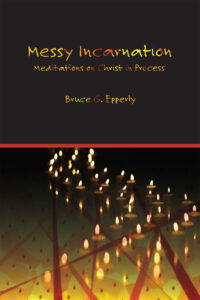
    I like the description of God, originated by process philosopher Alfred North Whitehead, as the “fellow-sufferer who understands.” There’s some more to this view of God, however. Let me quote Bruce Epperly, author of the book Messy Incarnation, which I publish:

    God is the fellow sufferer who understands and the joyful heart who celebrates. God cries along with the Bethlehem mothers, mourning the slaughter of their children. God experiences the hopelessness of parents separated from their children to fulfill the campaign promises of a self-interested political leader. God feels the terror of a child running for his life in a war-torn land and the panic of an adult on the streets of Minneapolis, Minnesota, crying for mercy, “I can’t breathe.” God places you on God’s knees in prayerful embracing. God never places God’s knee on your spiritual neck!

    Bruce Epperly, Messy Incarnation, p. 37

    I would like to emphasize here that God suffers with all sufferers, not just those we manage to care about. God loves the world and feels the pain brought about by evil. God’s caring is not limited and conditional as ours so often is.

    Yes, God can even care for me,. one who so often forgets, fails to recognize, and lives as though caring was optional and occasional. Even while writing this, there was a call to care, and it annoyed me. I acted, but not with grace. Yet God still cares and walks with me.

    Who is God calling you to care more for today?

  • Psalm 23:3 – Back to Life

    Psalm 23:3 – Back to Life

    He revives me.
    He leads me in the right paths,
    for his name’s sake.

    I would like to frame this verse between two others.

    So the LORD God formed the human of dust from the ground, and breathed into his nostrils the breath of life, and the human became a living being.

    Genesis 2:7, my translation

    And …

    You hide your face and they are confounded.
    You take back their breath and they perish,
    and the return to their dust.
    You send out your breath [spirit] and they are created,
    and you renew the face of the ground.

    Psalm 104:28,29, my translation

    There are some words that are very much parallel here, and some that are slightly different. Let’s start with what the human became: A living being. In Hebrew, loosely transliterated, nephesh chayyah. This word nephesh is what is to be renewed or revived in Psalm 23:3.

    The word for “breath,” or wind or spirit is neshama in Genesis 2:7, but ruach in Psalm 104. This word harks back to Genesis 1:2, where the ruach of God is blowing over the waters as the starting point of creation.

    In Ezekiel 37, that ruach is called upon many times, and invited to come in and revive the dry bones (see especially 37:9). This is, of course, a great revival.

    Further, in Psalm 104, the word for “they are created” is bara’, the key word for God’s creation throughout Genesis 1.

    Now I’m not claiming that the Psalmist is quoting or alluding to any of these other passages. But these words would bring certain thoughts to someone who is well acquainted with Hebrew scripture.

    In “he revives (or restores) my soul,” or just “he revives me” God’s creative and sustaining power is invoked. The shepherd is the creator of the universe. The creator of the universe is involved in the details of life, and cares about you.

    Then you are led in established paths. The word suggests tracks or even ruts produced on a wagon trail, a path that is well traveled. He does this for his own sake.

    Now I could say, “not for yours,” but in a very real way, when it’s for God’s sake it is for yours, because as your creator God, a good craftsman, cares about the entire creation, including you. God’s direct involvement is all through Scripture.

    Where is God guiding you today?

  • Psalm 23:2 – Green Grass and Quiet Water

    Psalm 23:2 – Green Grass and Quiet Water

    He makes me lie down in grassy pasture.
    He leads me by quiet water.

    It’s interesting as I translate this for myself to realize that not only will everyone else continue to hear and remember it as it is in the King James Version. I’ll do the same thing. I was repeatedly reminded of that simple fact as I thought about this verse today. No matter what I might be thinking regarding the particular words, those are the words I come back to.

    There is great value in a well-known, traditional passage. We can easily remember it in difficult times. It can come to us when we are distracted. It’s part of our lives and of our being.

    In Deuteronomy 32:2, poetry attributed to Moses, we have a related metaphor:

    2 May my teaching drop like the rain,
    my speech condense like the dew;
    like gentle rain on grass,
    like showers on new growth.
    3 For I will proclaim the name of the LORD;
    ascribe greatness to our God!

    The Holy Bible: New Revised Standard Version (Nashville: Thomas Nelson Publishers, 1989), Dt 32:2–3.

    The “gentle rain on grass” echoes the same word as in this Psalm. Now don’t get the idea that I consider this Psalm primary a metaphor for spiritual things. It is, indeed, a metaphor, portraying God’s care for us as the care of a shepherd who finds good pasture for his flock. But it represents something concrete: God’s general care for our needs.

    How can these words fall on us like light rain on grass?

    Only if we let them, and many others become familiar, just like the words of this Psalm. God’s word, in many forms, requires more than a few moments of our time, yet is also something that can be with us at any time in a gentle, natural way.

    If you haven’t memorized any verses of scripture, this Psalm is a good place to start. With the word embedded in your mind, it can fall like that gentle rain. “Green pastures” can mean so many things, starting with a time to just sit down on some actual grass and actually rest.

    Where will you find a moment in green pasture, by quiet waters today?

  • Psalm 119:176 – Seek Me

    Psalm 119:176 – Seek Me

    I have strayed like a lost sheep.
    Seek your servant,
    for I do not forget your commands.

    We have come to the last verse. For me, that’s 176 posts in as many days, each a meditation on one verse of Psalm 119.

    This verse serves as an excellent conclusion to the Psalm, though it doesn’t really introduce a great deal that is new.

    I think there are two critical points that are emphasized by its placement at the end, and its message.

    First, we are again reminded that this is not a Psalm of self-sufficiency. It is not about telling God how wonderful you are, and how you, on your own, are going to get everything right. Sometimes verses from this Psalm are taught in that way, but if seen in the framework of the entire Psalm, the message is clear. The law is of great value. Keeping it is a good thing, but the life giver, and the one who makes righteousness possible is the one who gave the law.

    “I have gone astray like a lost sheep,” says the poet of the law, much like the ordinary human acknowledges, “I have not kept my New Year’s resolutions” in the middle of January. In neither case does it mean the resolutions were bad or that it wouldn’t have been a good idea to keep them. It’s just that we’re all human. We all fail. We all need someone to seek us.

    The Psalmist of the Law, knew who that was. It was the same God who gave the law in the first place. The lawgiver is also your savior and protector.

    Second, we are again reminded of the value of the law itself. While the law cannot replace the lawgiver in any way, it is not a bad thing. In fact, it is a great thing.

    I thought about whether the Psalmist might be saying that God should look for him because he did not forget. But it seems to me more likely that he’s indicating why he would pray that God would seek him. He doesn’t forget God’s commands. He is grateful to the lawgiver. He wants to be found.

    We have a tendency to diminish the law in a number of ways. One way is to imagine the law can take the place of the lawgiver, that just keeping the law is all we need. Oh, it’s a tall order, but even if we could manage to keep all the law for a day, this would still not mean we reached God’s glorious purpose. It would, in fact, be the pursuit of an idol.

    “What!” you exclaim.

    Setting something less than God as an object of worship is idolatry. God has so much more than the accomplishment of a checklist for us. Putting the law in place of God is to worship mediocrity. In fact, all idolatry is worshiping and pursuing something less than what God has in mind.

    It’s our most common form of wandering.

    As you go forward today, pray the prayer of this verse. “Seek your servant!”

  • Psalm 119:175 – Let Me Live

    Psalm 119:175 – Let Me Live

    Let me live so I can praise you,
    and let your judgments help me.

    This is an interesting expression, especially as we come to the end of this Psalm. The entire Psalm is giving praise for the order brought to human existence by God’s actions-instruction, law, judgment, precept, testimony, statute. These various expressions combine to give praise for who God provides order in the universe and also order in human lives.

    The Psalm is anything but legalistic if you pay attention to it as a whole. If you base an accusation of legalism on the number of references made to the law, you are missing the poetic effect. The Psalmist praises God for all this and he also determines to keep all these laws, but then he’ll mention the fact that he knows he fails and ask God to be with him.

    In this next to last verse, we have the expression of praise for a God who gives life. “Let me live,” is the cry of many. Even if you are feeling very self-sufficient, there will be moments of disease, or impending disaster, of simple awareness of all the things that could go wrong. At such moments, you will likely cry out, whether to God or into the void, “Let me live!”

    The second line of the verse fills this out with another hope, that all of God’s judgments will be in our favor. This is again a common cry in scripture, because we know that we often slip up and need mercy. There is a famous “sinner’s prayer” which is a prayer for salvation. But there is an even better sinner’s prayer: “Lord, be merciful to me, a sinner!”

    This is a theme that is woven all through scripture. We may fail, but God’s mercy does not.

    The steadfast love of the LORD never ceases,
    his mercies never come to an end;
    they are new every morning;
    great is your faithfulness.

    Lamentations 3:22-23 (NRSV)

    This is a very famous verse, constantly quoted, but it comes from a book justifiably titled “Lamentations.” Let’s look at a couple of verses just a bit before:

    The thought of my affliction and my homelessness
    is wormwood and gall!
    My soul ccocntinually thinks of it
    and is bowed down within me,
    But this I call to mind,
    and therefore I have hope:

    Lamentations 3:19-21 (NRSV)

    What follows, of course, is the passage I quoted earlier.

    When trouble comes, when you’re burdened by affliction, homelessness, or maybe just besetting doubt, remember this:

    It is the LORD who gives you life, and the LORD’s judgment is going to favor you because you are God’s child.

  • Psalm 119:174 – Delight

    Psalm 119:174 – Delight

    I long for your salvation, LORD,
    and your instruction is my delight.

    Salvation is a word with varied meanings. One can be saved from a simple misstep by some good advice. One can be saved from death by a rescuer. One can be saved from poverty by some job training and the offer of a good job. Or, as we often use the term in Christianity, one can be “saved,” meaning that they’re going to heaven.

    This last, very common usage of the term is rarely the primary meaning in scripture. Yes, scripture talks about going to heaven, about the resurrection and about new life, but this is not isolated from other things. We can become children of God, but being God’s children is itself an experience of change and growth.

    I often think about the kingdom of heaven as simply God making the Divine presence manifest in the entire universe. If you are ready for that, it’s heaven. If not, it’s hell. Let me be clear that this is a way of thinking, and not a proposal about how reality actually works.

    Still, in scripture, becoming more like God in holiness is always a part of the package. God’s salvation, and delighting in God’s instruction go right together. God has never had a plan that didn’t involve making a holy people.

    It’s important for us to pay attention to the combination of the divine empowerment with human thought and action. Note that I do not mean that salvation is a shared effort, in which the human person contributes part of the power. This is because we start at zero, with every ability we have as a divine gift.

    Wesleyans talk about prevenient grace. What is that? It is simply God’s grace that goes before everything else. You don’t delight in God’s law on your own. That too is God’s gift. You don’t long for God’s salvation on your own. That longing is prevenient grace in action.

    We long for many things along the way, for salvation from physical dangers, from poverty, and from disease. But all these things are the small and limited examples of salvation that prepare us for, and help us to understand the ultimate salvation which is to have the full divine image restored in us.

    When we long for God’s salvation and take delight in God’s instruction, it is two different ways of looking at the whole. We long to reach the destination and we rejoice in the content, in what that destination means.

    Is that longing and that delight driving you today?

  • Psalm 119:173 – Help!

    Psalm 119:173 – Help!

    May your hand help me,
    for I have chosen your precepts.

    There’s a long and hard road between a choice and an accomplishment.

    Psalm 119 is a carefully crafted pattern that, among other things, brings together the idea of doing better, of doing one’s best to keep God’s law, and also the need for God at all times. Because the Psalmist has chosen God’s precepts, he will need God’s help.

    This theme reminds me of Deuteronomy 8:17-18, words which follow mention of the troubles of the wilderness through which God has guided the people of Israel:

    Lest you say to yourself, “I have acquired this wealth [or power] through my strength and through the effectiveness of my own hand.” You will remember the LORD your God, for it is he who has given you the strength to make wealth [or be powerful], so that he can establish his covenant which he swore to your ancestors, just as he does this day.

    My translation

    The word here translated “wealth” has a quite broad semantic range, and I see it as referencing both the existence wealth and possessions and the strength it takes to acquire those possessions and preserve them.

    I made sure to translate one piece literally, the idea that “my own hand” has accomplished this. I did that to contrast this with the view in our passage, which is that is is precisely when one is determined to behave ethically, to live according to a high standard that one must be most aware of how much one needs an outside power.

    This is a very important point to keep in mind, because this is the turning point where one can choose to worship the LORD or go for idolatry, especially the worship of oneself. Self-worship, self absorption, is a primary form of idolatry. Even the worship of other gods, actual images, comes from this point–the selection of a god who is suitable for us.

    Paul Tillich uses the term “conceptual idolatry.” This refers not to bowing down to an image erected in a temple, but rather to an image of God/god we create in our own mind. It’s very easy to worship a lesser god, one not so demanding, one with lower standards. One, most importantly, who will let us worship ourselves through the mental image we make of that god.

    Those who seek power for themselves are easily convinced that they have attained their power by themselves. But even more, they can create a mental image of a God who approves of each and every thing they do.

    The idols need to be smashed. That includes the idols in our minds that approve of everything we do, even if it is wrong.

    If you’re trying to follow God, you’ll find that you need to pray the Psalmist’s prayer. “LORD, let your hand be there to help me!” Without that, quite literally, you don’t have even a prayer!

    At what point today will you acknowledge that everything is in the hand of God?

    (Featured image generated by Adobe Firefly.)

  • Psalm 119:172 – Sing Some More!

    Psalm 119:172 – Sing Some More!

    I will sing praise of your word,
    for all your commands are righteous.

    Though I did not translate literally in either case, I will note that there is a succession of terms used here. Verse 171 has the lips doing the praising, and in this verse, it’s the tongue.

    Why do we praise laws?

    In general, I’d say, we’re inclined to praise laws that prevent other people from doing things we don’t like, but to chafe at laws that restrict our freedom to do what we want. A law is “righteous” if it applies to others, and oppressive if it applies to us.

    The Psalmist describes all God’s judgments as righteous. As I’ve noted before, the Psalm does not specific authorship, but if we look at the traditional Psalmist, David, we can see that while he might not recognize his own guilt easily, when confronted with it by God’s messengers, he was able to acknowledge it. He was a king, but he was also subject to the will of God. (For an example, see 2 Samuel 11, the familiar story of David and Bath Sheba.)

    The problem that many of us have in relating to laws is very simply a lack of empathy. We cannot imagine ourselves in someone else’s circumstances, and thus we often miss what various actions and rules might mean to that other person.

    One of the critical elements of God’s laws is the need to be concerned for others. In Leviticus 19:18, the Israelites are commanded to love their neighbor as they love themselves. Jesus picks this up in his statement of the two laws.

    One cannot carry this law out without empathy. One has to have some understanding of how to apply love to one’s neighbor if one is to actually love that neighbor. When Jesus gives the golden rule, “Do to others as you would have them do to you” (Matthew 7:12), he makes empathy even more important. You again have to be able to think about what your neighbor might want in order to carry out this law.

    Some leave out this empathy in expressing how to fulfill this law. They figure that if they would like something particular done to them, that must be good for their neighbor too. But if you think about it for a moment, you’ll realize that what you’d like is for your neighbor to do to you something that you would like done. That means that to reciprocate, you need to look for something your neighbor would like done and do that.

    Let me illustrate with a simple case. My wife and I are very different. When we were setting out to get married 25 years ago, many thought it would never work. It has. There are several reasons for this, but the key reason is that we recognize and celebrate our differences.

    Jody likes to make a big deal of birthdays. She likes lots of people around. She wants them to have fun. She wants to be part of the crowd. It’s a big show. I like to try to arrange as much of that as I can. Why? Because she likes it. That’s it. I don’t need any other reason. She enjoys that celebration.

    You may imagine that I also enjoy such a celebration, but you’d be wrong. If I could, I’d keep my birthday secret. I don’t mind a few greetings, and appreciate that friends notice, but I don’t want a party or any large gathering of people. I find the idea of getting a bunch of friends together for a meal with cake and all that stuff to be rather annoying. Please, leave me alone and let me enjoy my birthday!

    Jody recognizes what I like, and she will keep things toned down and low key. I really appreciate this.

    This is an example of doing to something else what we would want done to us. Step one is finding out what the other person would like, just as you would prefer that they find out what you would like.

    Let me bring this back to our text. All God’s judgments are proclaimed to be right, and that is praiseworthy. Those who don’t care about someone else wants only laws that work in their own favor. Those who do care, those who have empathy, want laws that work for the good of all.

    Leviticus expresses this “good of all” approach in 19:15, “Do not twist justice in legal matters by favoring the poor or being partial to the rich and powerful. Always judge people fairly.” Fair judgment requires seeing the whole context, something not possible to the self-centered and unempathetic.

    How about trying to really understand what one other person wants today?

    (Featured image generated by Jetpack AI.)

    I want to call attention to two posts on empathy from Energion authors. Idea Summary: Empathy is drawn from the book The God of the Growing Edge by Dr. Bruce Epperly. Empathy is Essential is by Dr. Dolly Berthelot. Both look at empathy and its impact on our actions in society. Dolly is also the author of PERFECTLY SQUARE, a fantasy fable about dealing with change and diversity, something that also requires empathy.

  • Psalm 119:171 – Sing Praise!

    Psalm 119:171 – Sing Praise!

    Let my lips sing your praise,
    for you have taught me your statutes.

    The underlying theme of Psalm 119 is praise to God for the law. The law is righteous. The law is good. Good things come of keeping the law, even though we have to ask God for the strength to do so.

    I find the relationship of may Christians to the law quite interesting. There quite an interesting theological/biblical discussion between various groups, particularly Lutherans, Calvinists/Reformed, and Wesleyans about the relationship between the law and gospel. As an introduction, let me commend the article on Wikipedia on Law and Gospel, though doubtless many, myself included, would pick at various points.

    In practice, however, we tend to simultaneously declare that we are saved by grace through faith, but then only apply this to the moment of salvation, of becoming part of God’s family. At that point, most of us would say that we are not saved by keeping the law. So we have a distinction here, because law is not the agent, even though law definitely has a role.

    But we turn from that and, whatever we may proclaim, we become people of rules. We want the ten commandments in schools, as though better morality will be achieved because of a display of the ten commandments.

    We aren’t really praising God for the law through all this. Rather, we’re considering that we have to have a stick to use to beat people into proper order. We ditch gospel and grace and become another behavior modification program.

    This is exemplified by the plea I have heard frequently from parents and friends, “Help me get my child/friend back into church.” The goal is to get them into the church structure and organization, such that their behavior can be made more … I’m not sure if it’s more Christlike or more Churchlike.

    I recall having this discussion in a church my mother attended, which she called, to their face, the church of the gottas. You gotta do this, you gotta do that. Having been saved by faith, or rather having been shoved across the starting line by grace received through faith, you gotta get busy running the race and making sure you get everything right.

    My own experience with teaching about tithing is an illustration. Is tithing a command applicable to Christians? For a long time I struggled with the fact that I couldn’t see that it was, yet as part of the leadership team of a church, I was afraid to say so, lest people give even less. I was already irritated by people who spoke of “tithing” 1% or 2%. “Tithing” refers to 10%, though 10% of what is subject to some controversy. But if you’re giving 1%, you’re not tithing.

    My concern, or to be honest, fear, was that if tithing was not a rule, then people wouldn’t give, and then programs of the church that I hoped would be well funded, such as children’s ministries and missions, would suffer.

    It took me a long time to realize that grace was the only thing that was ever going to bring sanctification, including sanctification of our wallets, doubtless the least sanctified of our possessions.

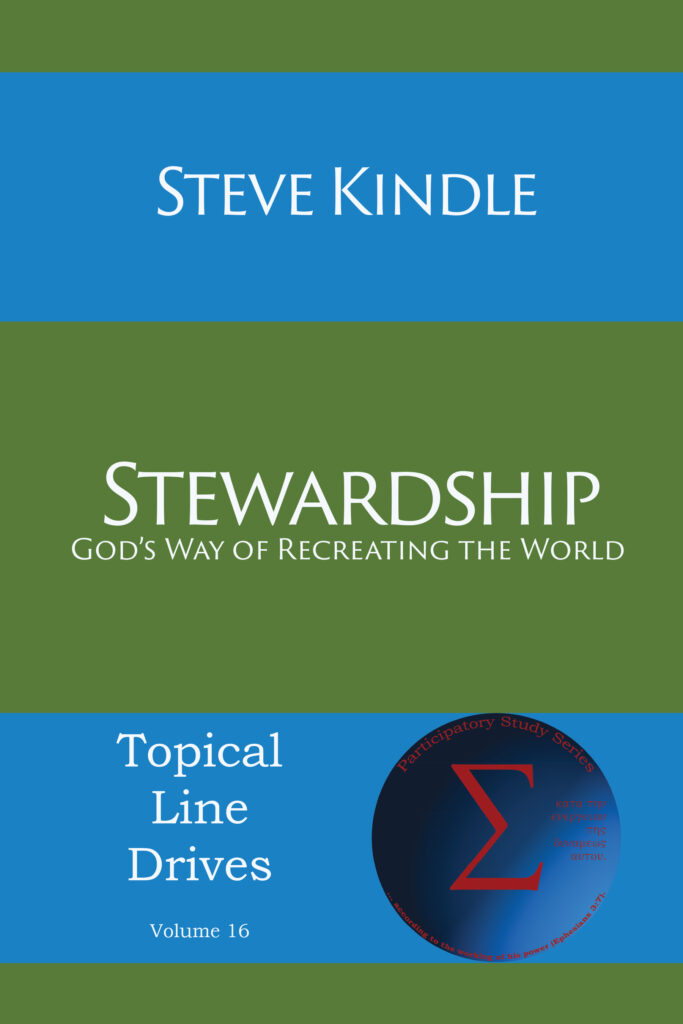
    The bottom line was that in Christ, everything is dedicated to Christ and we make our decisions on spending and giving based on that fact. I had come to this conclusion, but hadn’t expressed it all tat well until I read as an editor, and published the little book Stewardship: God’s Way of Recreating the World by Steve Kindle.

    Here’s a selection from page 25:

    The questions around how much to give are too often reserved for “Stewardship Drives.” So we compartmentalize our giving and tuck it away for another year. In all the talk of stewardship, seldom
    does it go much beyond the pocketbook. Whenever stewardship is reduced to a program, something is terribly wrong, and congregations and individuals continue to struggle.

    The apostle Paul revealed to us the key to successful fundraising in his appeal to the Corinthian congregation to assist in the collection he was taking up for the Jerusalem church. His formula:


    3For, as I can testify, they voluntarily gave according to their means,
    and even beyond their means, 4begging us earnestly for the privilege
    of sharing in this ministry to the saints— 5and this, not merely as we
    expected; they gave themselves first to the Lord and, by the will of God,
    to us,… — 2 Corinthians 8:3-5

    The Macedonians, in spite of their poverty, begged to give to the Jerusalem church—even beyond their means—because they first gave themselves to the Lord. Sure, it is possible to raise a lot of money using sophisticated methods based on psychological triggers and emotional appeals. These are too often resorted to as substitutes for the Macedonian way. A congregation that first “gives themselves to the Lord,” recognizes their stewardship partnership, and everything they do springs from that commitment. So let’s not encourage tithing, that’s about money. Let’s encourage
    seeing all we have as God’s and act accordingly.

    Steve Kindle, Stewardship: God’s Way of Recreating the World, p. 25

    This same approach applies to everything about Christian living, and it’s something we should pay attention to. If we could focus on that connection to God, and the motivation of love that is involved with it, better behavior, empowered by the Holy Spirit, would be the result.

    When we see the law in this way, as a gift, and as a description of what might be and what God is, we can receive it with praises. If it is a club to make people look and act like us, to be “churchy,” then it will always be a negative thing.

    But if we don’t focus on that core of being as the source of all we do, we will inevitably get back to a picky, rule-by-rule attempt at behavior modification, which is sure to fail in the end, not to mention causing a great deal of fiction along the way.

    How can you find joy in being and doing today?

    (Featured image is from Adobe Stock. Licensed, not public domain.)