Threads from Henry's Web

Author: henry

  • Psalm 119:97 – Loving the Law

    Psalm 119:97 – Loving the Law

    How I love your instruction!
    All day long I meditate on it.

    Most translations will use the word “law” where I’m translating “instruction.” That is a traditional translation that goes back to the Septuagint (LXX), which uses the Greek word nomos. This focus on the “law” aspect, rather than the broader aspect of “instruction” can give us a skewed idea of what the Psalmist and other readers and writers of Hebrew scripture are discussing.

    But, as Christians, we also have a tendency to strip out and ignore the actual rules that are contained in Torah, which would more traditionally be regarded as law. You will miss something if you read Hebrew scripture, especially the first five books known as Torah or the Pentateuch, while ignoring any of these aspects. When the Psalmist celebrates, he is celebrating the whole, not some subset.

    So what do we have to celebrate in the law?

    Let’s start with something we may not enjoy, but which is very important. Law tells us where we are wrong. This may not be fun, and we may rebel or be angry, but it can be important. Let me give an example.

    In my mind I picture driving out of Monteagle, Tennessee, along I-24, out of Monteagle pass headed east toward Chattanooga. It was worse before the interstate went through there, but even now the road can be deceptively difficult. When you see a warning sign giving the speed limit, it’s good to pay attention. When another sign gives a safe speed for a corner ahead, it’s a good idea to heed it. I have failed to do so in the past, and had a few frightening moments.

    As I come upon one of those signs, if I want to keep moving and get to my destination quickly, I’m not inclined to be happy with the law. It’s easy to say the highway engineers have been over cautious. I can go a lot faster than that and still be safe. I really don’t like that law. It’s making me slow down when I want to go fast.

    But a significant number of motorists have discovered that “there is a [speed] that seems right to a man, but the end thereof are the ways of death” (paraphrased from Proverbs 14:12). I may grate under the limitations of law, but the law is good in the warning.

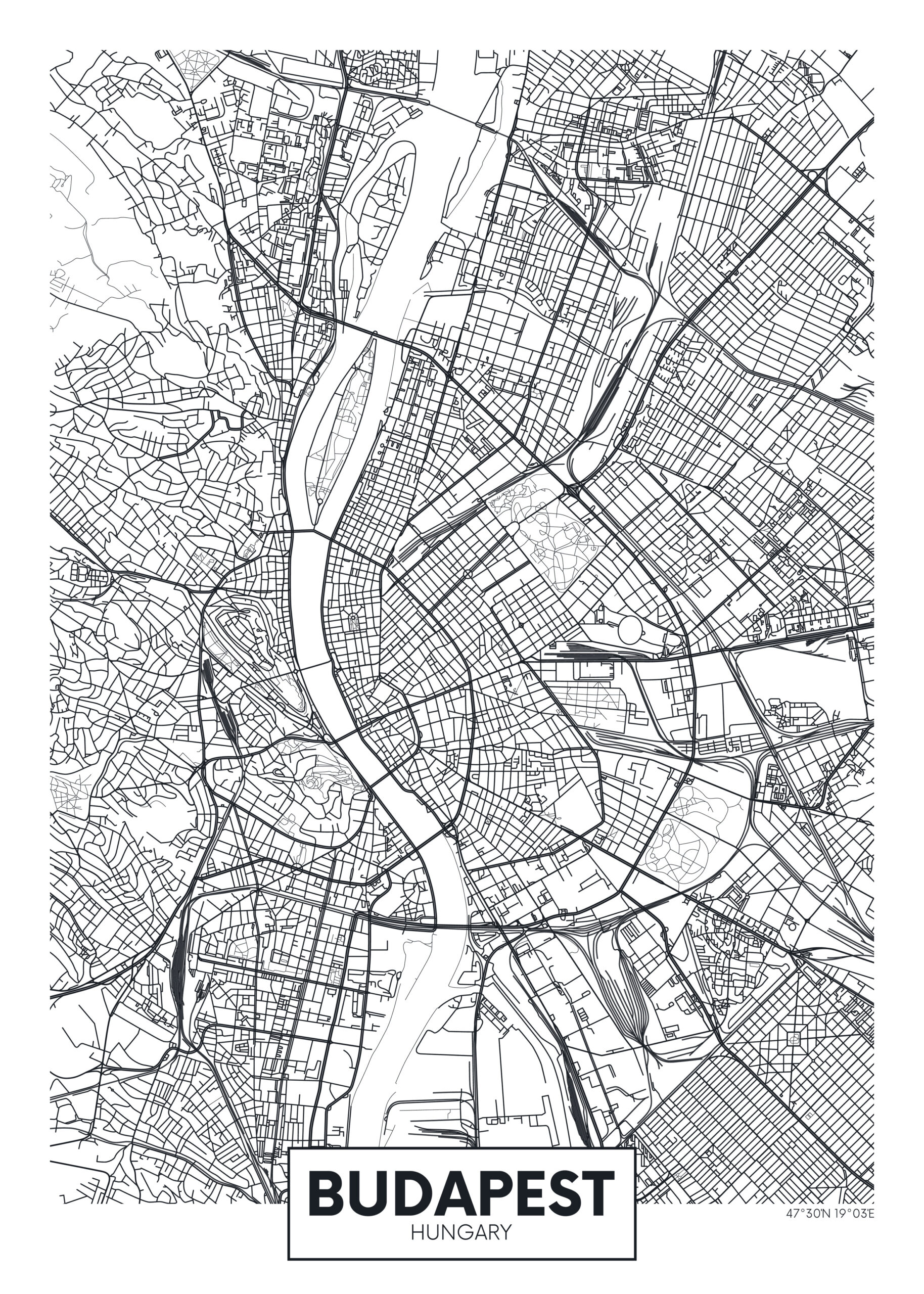
    You can have the vehicle and the road but lack at least part of the law. I discovered this in Budapest, Hungary. I was leading a mission team headed out to provide a children’s camp in eastern Hungary, and due to a poorly scheduled connection, I was stranded for several hours in Atlanta waiting for another flight. I was expecting to pick up a rental car in Debrecen, close to where we would work, but since this delay meant I would miss our welcoming committee and the ride from Budapest to Debrecen, I had to reschedule a planned rental car for pickup in Budapest, then spend the night at a hotel there, and proceed to catch up with the team I was “leading” the next day.

    I asked the travel agent to get me a hotel near the airport and to the east of the city. That’s because that was the direction I was going to go. I didn’t want to find my way through Budapest at night. That was not what happened. The travel agent got me a hotel that was north and a bit west, though still on the eastern side of the Danube.

    Now I know at least some of a number of languages, but Hungarian is not one of those languages. I had looked at a word book, and figured out perhaps a dozen words, though the pronunciation of Hungarian is difficult enough for a native speaker of English that it’s hard to be sure you’re getting it close enough to be understood.

    What was worse is that road signs were unfamiliar and some traffic patterns were different than what I was used to. The agent at the rental counter was enthusiastic and explained to me that the route to my hotel was very easy, that I couldn’t miss it and would have not trouble. Welcome to Hungary!

    “You can’t miss it” is a very fateful statement. Never, ever believe it.

    Twenty minutes later, about the time I should have been at the hotel according to my directions, I was looking out the window from a bridge at the waters of the Danube. Now if you’re a tourist in Budapest, this is something you want to do, but if you are 36 hours into a 12 hour journey, it looks less friendly. Especially if you’re aware that your destination is on the side of the river you are leaving.

    Well, I can’t make the story short at this point, but I’ll shorten it some. Two hours and several conversations with helpful Hungarians I could not understand later, I actually found my hotel. The problem here is that there were rules of the road, directions, traffic flow patterns, and signs, all of which could have helped, but I couldn’t comprehend them. I might have found signs annoying when they said I needed to be in a certain lane, or go a particular speed or a particular direction, but it was much more annoying not to know.

    Proverbs 14:12 rattled around in my mind that night, and I preached on it a couple of times, to a great deal of laughter from my Hungarian friends. And I must note that even complete strangers during that two and a half hour experience were extremely friendly. We just couldn’t communicate because I didn’t know the language.

    As annoying as it can be, law is a value.

    As you go through your day today, ask yourself what rules are helping you get done what you need to do.

    (The featured image is a map of Budapest, Hungary, credit max_776, licensed via Adobe Stock. If I recall correctly, I was crossing the bridge across the Danube that you see at the bottom of the map (south), headed west when I realized I had lost my way!)


  • Psalm 119:96 – Ends

    Psalm 119:96 – Ends

    I have send the limits of all perfection,
    but your command is very broad.

    I have rarely seen as many different possible translations for a verse. Dahood (Anchor Bible Psalms) turns the words for “end” and “broad” into epithets for God. If I were to translate more loosely, I might, at this point suggest something like, “I have seen that everything in our world has a limit, but your commandment exceeds all of those.”

    But my project has been to meditate on the verse, not resolve all language and translation issues. Of course, getting a sense of what the verse means is important to that. Who knew?

    In fact, the verse may give a good example of the meaning I’m seeing in it. There’s an end to my ability to come up with a translation of which I can be certain!

    I recall just after I had received my BA, with a major in biblical languages, I was traveling with my brother to where I would attend graduate school. I stopped for a church service in Yellowstone park near the visitor center at Old Faithful. Inevitably, as a bunch of travelers gather for church we exchanged information on why we were there and where we were going.

    I told them what I had been studying and that I was traveling across country to go to graduate school in the same subject. Following the service a gentleman approached me to ask a question about the translation of a verse that had been bothering him. I talked to him for a bit and then my brother and I headed out walking around the geyser.

    It suddenly hit me and I started laughing. “What?” my brother asked. “Do you realize I just talked to that guy for 10 minutes and I never gave him an answer to his question?” “Well, what was the answer?” “I actually have no idea!”

    One of the problems of studying and learning is that you can forget along the way that there is an end to your knowledge. You can lose the ability to say, “I don’t know.” The best scholars I have known, and the best experts in any topic, are the ones who know their limits and can admit those limits.

    This is true whether you’re a biblical scholar, an auto mechanic, a farmer, or anything else. It’s a wise person who knows what he or she has and has not mastered.

    I think theology is one of the most tempting fields, because we want to be certain. We don’t want to be limited, and because there are so many things in theology that you can’t pin down like a lab result, we are often vastly more certain than our actual knowledge can justify.

    Did this meditation really come from the verse I quoted and (mis?)translated? To the best of my knowledge, yes. But I have seen the end of the best of my knowledge. Or at least I hope I have!

    Can you recognize your limitations? Can you still be joyful and fulfilled?

    (Featured image credit:Orla. LIcensed from iStockPhoto.com)

  • Psalm 119:95 – Consider

    Psalm 119:95 – Consider

    The wicked wait for me to destroy me,
    but I consider your testimonies.

    What do I think about when you realize that wicked people are after me?

    It’s an interesting question. Recently, we had some temporary residents move onto a property near us. I know the owner, who was doing what he regarded as the right thing: helping people in need find a temporary place to live. Though there were complaints around the neighborhood, I agreed with him about Christian duty.

    Then a few items normally left outside disappeared. Nothing expensive, but we live in an area where you can normally leave things out and expect them to still be there the next day. I started leaving outside lights on at my office (a separate small building) and on both porches. We didn’t have further trouble.

    My friend who owned the neighboring property did have more trouble, and eventually some people had to be removed from the property. Through all of this, that property owner remained a positive. His concern? Some people who behaved badly had made it impossible for him to help others.

    I like his example. Often we allow the way others behave to change who we are. We become bitter. We can even become angry and ruin our own lives because of what other people have done.

    This verse points to another approach. Even when others are treating you badly, keep your eye on God and on something better.

    I see this sometimes among Christians who feel that their faith has been disrespected by others. They become afraid to speak publicly or admit who they are. I always have to confess when I talk about this that I’m saved from this issue by an occupational hazard. As a publisher of Christian books, it’s hard for me to hide even if I wanted to. But it’s easy to isolate ourselves or perceive ourselves as outcasts when that’s not what people are thinking at all. We’ve just worked our way into a prison of our own thinking.

    In various television shows or movies and even in the news, I see stories of people who imagine a complete relationship with someone that doesn’t exist. Someone may do this with a celebrity, for example.

    Ray Stevens has a humorous song about this phenomenon.

    We laugh, but people get messed up by imagined situations. Then, of course, there is the reality of real danger, real hostility.

    What to do?

    I think this verse provides a most excellent antidote. Meditate on the good stuff. Meditate on what God has done. Meditate on what’s right. That will help you recognize the real danger and understand how to respond to various threats. Don’t spend your time in the first half of the verse.

    Let God’s word be your anchor in a potentially dangerous world.

  • Two Mountains

    Two Mountains

    (Featured image generated by Jetpack AI.)

  • Psalm 119:94 – I’m Yours

    Psalm 119:94 – I’m Yours

    I’m yours! Save me!
    For I have searched out your precepts.

    It’s good to remember that “save” has quite a number of meanings other than the common Christian understanding of salvation from sin and for eternity. Salvation could be from whatever threat the one offering the prayer might experience.

    But I think the greatest impact of this verse is in the first two words, either in Hebrew or as I’ve translated them. “I’m yours.” Everything follows from that initial claim, the claim made by God, that the human person is a child of God.

    It may be tempting to regard this as applying only to Israel. It does, in fact, apply to Israel in a special way. Similarly, Christians might view this as applying especially only to Christians. Again, there is a sense in which we, as the body of Christ, can say we belong to God.

    But one of the messages that comes through clearly in the Old Testament is that God is sovereign over and cares for all the nations. Thus one could truly say that all the nations are God’s, but Israel is God’s in a particular way.

    The Psalmist has searched out God’s precepts, and among those precepts are commands to care for the stranger, the foreigner, and those less fortunate. Right from the beginning, when God calls Abram, he blesses him and tells him he is to be a blessing.

    There are exclusive groups and inclusive groups. In an exclusive group, you are designated as someone special, someone who can be a member of a select group, because of your birth, your attainments, or even because of random selection. People in an exclusive group are supposed to help keep the walls secure and the doors shut.

    In an inclusive group, anyone is invited. The only thing special about the people on the inside is the fact that they’ve heard the invitation and accepted it. This is Christianity, or should be. The mission is to invite others into the grace which we have received.

    Some wonder if the Jews can still be the chosen people from a Christian perspective. Of course they can. They have been chosen by God and given a mission. It was never an exclusive club in the sense of being the only people God cared. for. It was exclusive in terms of the call to mission, a call going back to Abraham.

    I can say to God, “I’m yours.” I always have that privilege. I do not have the privilege of saying, “I belong to God and that other guy doesn’t.”

    Who can you treat as a child of God today?

    (Featured image yy ana. Licensed from Adobe Stock.)

  • Psalm 119:93 – You Have Given Me Life

    Psalm 119:93 – You Have Given Me Life

    I will never forget your precepts,
    because by them you have given me life.

    There are two directions I’d like to go based on this verse, and I think both are important.

    First, there is the order of events. “Remembering precepts” comes after “you have given me life.” This is a foundational order in scripture. God’s gifts come before our actions. This is very clear in Genesis 1. We can’t possibly respond to God before God has breathed that breath of life into us (Genesis 2:7). Nonetheless it is easy for us to forget.

    We tend to look for ways to obligate God to do nice things for us. The fact is that this is impossible, and always have been. God’s action precedes our own. The order of the universe, which gives us the opportunity to make any choices and get any good results at all comes by God’s gift.

    This is reflected in Psalm 119:1:

    Blessed are those blameless in their living
    Who act according to God’s instructions.

    That verse also leads us to the second point, which is the value of gratitude. You may not, on first glance, see gratitude here, but there are two elements reflected. The first is memory. If you forget those who have benefited you, those who have taught you or given you a boost, it’s not just a matter of being rude. You may also forget the route to your destination.

    I remember just in the last couple of days I encountered an issue, and the answer to the question came from something a professor told me in class in my freshman year of college. I both remembered that professor with gratitude, and mentioned him to the person who had asked me the question. There are other people who have taught me that I quote or mention frequently. Why? Because it’s important to remember how I’ve gotten where I am. It was not a process of figuring out all the answers for myself. Many people contributed.

    i was discussing financing of education with somebody in Sunday School class. Never mind how we got there. It’s that kind of a group! I remembered my parents’ contribution to my college and graduate school expenses. I’m grateful for that contribution. Now you may think I’m just talking about them paying tuition. They did contribute. But they also made it a condition of them contributing that I would hold a part-time job through school. Both of those factors have become part of my life. I haven’t forgotten them.

    Having gratitude is important. In this case, gratitude also leads me to remember good principles on which to base my life. I have been blessed through the years by that.

    Psalm 119 is both a petition and a thanksgiving. Guide me Lord! Thanks!

    What are you grateful for today?

    (Featured image credit:Vadym Pastukh. Licensed from iStockPhoto.com,)

  • Psalm 119:92 – Delight

    Psalm 119:92 – Delight

    If your instruction had not been my delight,
    I would have perished in my affliction.

    There was a time when my pursuit of Bible study was a matter of duty, or perhaps even more a “good work” by which I would find the inside track with God. Besides hearing God’s voice in the registration line (another story), my reason for getting to know more and more about the Bible was to get to know the real truth, not filtered through any other people.

    Surrounding an actual desire to know God was the desire to know God better than other people did, and to do so without relying on those other people. I wanted to find the truth for myself. I was out of graduate school before I began to realize that I knew many things about God, but that I did not actually know God.

    More importantly, however, I resisted the God that I could potentially have known, had I been willing to go there. I didn’t like that God, who did do things according to my will, and demanded a full commitment. I fled from that knowledge.

    When, in God’s own time, I was drawn back, it was not a change of technicalities in my mind. I didn’t suddenly find God easier to believe in. I found no new proofs of God’s existence. What I found first was that I did, in fact believe. Then I surrendered to the God I had found years before and found that there was a new freedom on the other side.

    God’s word, which I passionately pursued in order to make divine favor points, became a delight. This was not something I accomplished. It happened to me. Nothing that I did got me to that point.

    But in extremely difficult times since then I began to realize that I was making it through because of the delight brought to me by God’s word. Time in scripture has become an activity that energizes me and helps me do all the other things I need to do. it is the foundation.

    Now unlike what many recommend, I don’t have a specific time of the day set aside to study scripture. There have been periods of time when I take that approach. For example, I aim to check the next verse of Psalm 119 before I go to bed, and then review it multiple times over the next 24 hours in order to write these meditations. But most of the time, my Bible study is scattered through my day.

    You could take this verse as a call to a certain effort you should take, a formula for survival. “If I just read enough scripture, and I put on a convincing happy face while I do so, I’ll make it through whatever I’m facing.” That’s not it.

    It’s the realization that you have an anchor, that you have an identity, and that you have a mission. All of that is based on a relationship with the creator of everything who can take care of you in all cases.

    Can you take hold of that today?

    Featured image credit: Patricio Nahuelhual, Licensed from iStockphoto.com.

  • Psalm 119:91 – Servants

    Psalm 119:91 – Servants

    By your ruling they stand firm today,
    For all things are your servants.

    I’m using “ruling” for the Hebrew word mishpat which I usually render “judgment” because I believe what is in view here is the determination, the result of the judgment, not the process of judgment. God faithfulness/truth and God’s word stand firm because that is God’s will.

    Law here is a reflection of God’s character, who God is. Psalm 119 is not just a long ode to law and order, as it is sometimes seen, but rather it is a song of praise to God’s self-revelation in law, in creation, and in care for God’s people.

    Often we try to absolve God of the problems that we observe in the universe. One of our key methods for doing this is free will. “God wouldn’t have wanted that, but what can God do? Free will!” I’m a believer in free will. But to whatever extent we do have free will, that freedom is also a gift, a ruling if you will, of God. If you make a decision, God sovereignly decided to let you do it.

    I form light and create darkness.
    I make wholeness (shalom) and create evil.
    I, YHWH do all these things.

    Isaiah 45:7 (my translation)

    Now there are a variety of translations, particularly of the second line. Shalom can rightfully be translated in a number of ways, but in general we should see it as reflecting God’s ideal, and that which is not. One of the Dead Sea Scrolls reads tov here, generally translated “good.” That would match the tree from which Adam and Eve are not to eat, the tree of the knowledge of good (tov) and evil (ra).

    It seems clear to me that God is taking responsibility for everything in the created universe, as the one who created it. Everything is God’s servant, whether it wants to be or not.

    Within all that, we are still called to choose. Knowing that God is sovereign does not excuse us from action. We are to do good and resist evil.

    In what way are you God’s servant?

    (Featured image generated by Jetpack AI.)

  • Psalm 119:90 – Established

    Psalm 119:90 – Established

    Your faithfulness extends from generation to generation.
    You established the earth and it will stand firm.

    Why can you trust God? Because gravity works.

    God’s authority as lawgiver, and his ability to offer grace and salvation is based directly on God’s creative power. This verse parallels God’s faithfulness to those who trust in God’s power, and it bases that on God’s creation.

    This is a common theme in scripture, but it is one we often ignore. We think of creation as something in the past. Yes, God did it, and we believe it, because we’re supposed to. But do we apply it to current reality?

    Psalm 104 expresses the present nature of God’s creation:

    These all look to you
    to give them their food in due season;
    when you give to them, they gather it up;
    when you open your hand, they are filled with good things.
    When you hide your face, they are dismayed;
    when you take away their breath, they die
    and return to their dust.
    When you send forth your spirit, they are created;
    and you renew the face of the ground.

    Psalm 104:27-30 (NRSV)

    You can read my translation and notes on Psalm 104 here.

    Psalm 51 alludes to this creative power in verse ten, when the psalmist asks God to create in him a clean heart. It’s reflected in the New Testament in 2 Corinthians 5:17 – “If anyone is in Christ, there is a new creation.”

    When we doubt what God can do in our lives, we are denying God’s creative power. On my own, I can do no good thing. But I am not alone. God can work things through me that I can’t even imagine.

    A friend of mine signs every email “Practice Resurrection!” It’s a good idea. How about “Practice creation!” That’s good too.

    When discouragement threatens, try to remember that God’s creative power is at work in you. God created galaxies. Perhaps God has enough power for your life.

    (Featured image generated by Jetpack AI.)

  • Psalm 119:89 – Word in Heaven

    Psalm 119:89 – Word in Heaven

    Forever, LORD, your Word
    is established in heaven.

    This is an important verse to start the next section (Lamedh), and also the second half of the psalm.

    Too often we diminish the idea of God’s Word by making it the equivalent of the written words that we have. This is sometimes presented as great respect for those written words, making them more important, but I believe the effect is the opposite.

    In scripture (that written word), we have a much broader, deeper, and higher idea of what God’s word actually is. I have been seeing in various verses in this Psalm the idea that the law, as understood in this psalm is a presentation to us of who God really is. The word/words we have here are derived from that heavenly word. The instructions God gives through story, poetry, and yes, laws, are derived from who God is.

    If we extend this to points made more directly in other psalms, that the Word is all-encompassing. Psalm 33:6-9 tells us that the worlds were made by God’s Word.

    Psalm 119 can be seen as a celebration of the creator of the universe, expressed in the form of God’s various ways of relating to us in that universe. In ancient near eastern thought, one of the key elements of creation was bring order to chaos, making things work in a way that would allow life, even good life. Chaos was the product of God’s enemies.

    In Genesis 1, this order is produced by God speaking. That symbolism is important. God’s simple command brought order. God’s authority is presented as the result of God’s creative power, and after that from God’s redemptive power, which is also an aspect of God’s creative power.

    Try meditating today on the fact that each thing you have is a gift. Be grateful!

    (Featured image generated by Jetpack AI.)