Threads from Henry's Web

Tag: Worship

  • Thoughts from the Energion Tuesday Night Hangout: Stewardship and Worship

    Thoughts from the Energion Tuesday Night Hangout: Stewardship and Worship

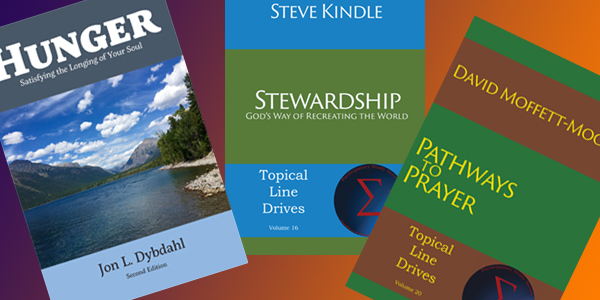
    books tuesday 020216I enjoyed interviewing three different Energion authors last night. The first was Rev. Steve Kindle who talked about stewardship and the importance of starting from an understanding that everything belongs to God. Steve provided some practical steps that a church can use in caring for all of God’s creation. Steve’s book goes into this somewhat more: Stewardship: God’s Way of Recreating the World.

    At about 7:30 pm, a half hour into the program, Dr. Jon Dybdahl joined us. Jon is the author of a newly released book Hunger: Satisfying the Longing of Your Soul. When he experienced this longing as a young missionary he started to pursue the presence of God and co-taught a class in college in spirituality. Jon’s PhD is in Old Testament, but he has a passion for serious worship.

    For the last 15 minutes, he was joined by Dr. David Moffett-Moore. Dave is author of Pathways to Prayer, and has two doctorates, both a PhD and a DMin. It was interesting and challenging to hear two men with so much education of the mind nonetheless tell us that the intellectual paradigm of religion was not enough. Prayer is an essentially. Coming to know the reality of God’s presence and power is essential.

    When I asked Dr. Jon Dybdahl how one would start this in a church as a pastor or other church leader he said the best way was to see your own need and start practicing it yourself. People will sense when your activities in leadership are powered by prayer and time with God whether you’re telling them all about what you’re doing or not. He also suggested a change in terminology that struck me, suggesting we might use “lead worshipper” rather than “worship leader” to take away the separation of the one on the platform from the ones in the pew.

    The video is embedded below:

  • Church as a Social Occasion

    Church as a Social Occasion

    Or perhaps as the social occasion.

    Thom Rainer has a post titled Seven Things Church Members Should Say to Guests in a Worship Service. It comes complete with a header picture of people who, to me, look like they’re forcing excessive smiles. I probably see it that way because I’m an introvert. I suppose that there is nothing wrong with these seven things, though I must note that I prefer that the restrooms be well-marked with signs so that I don’t have to ask someone where they are, and I’m very likely to be the guy who forgets who you are even though you’ve been down the pew from me for months. In fact, I’d just as soon you let me sit there, think, and pray as come try to make a social occasion out of it.

    There’s nothing wrong with being the social person. There’s very much right with being a friendly person. Yet I’m left with several questions. The most important question is just what it is we’re trying to accomplish.

    It seems to me that all of this is aimed at getting more people to attend your church service. The goal is to make people “church-going” and to make sure that an adequate number attend your church. In order to accomplish this we try to make church a great social occasion with a friendly atmosphere (provided one likes that sort of thing).

    I confess that I may be hypercritical here. But all of these lists, and in fact a huge percentage of the talk about church growth seems to center around how many people we have in church. So if you have a church that is a very strong social club, you’re a successful church.

    But in reading the gospel commission I can’t seem to find the part about making sure large numbers of people attend church once per week. That isn’t even mentioned, much less presented as a goal.

    Someone’s going to say that this is the goal. We get them into church and from there we make disciples of them. But I don’t seem to see as many lists of ways to make disciples out of the people you manage to get to attend your worship service. I don’t see nearly as much about getting the people who are good, church-going people to go out and make those disciples. I don’t see nearly as much about getting those people to observe the things Jesus commands.

    I recall a pastor recently who said to the church: The only excuse for a church to exist is to be a witness to Jesus Christ. I’d refocus that to this: The only excuse for us to have a church service is to help us be and become better disciples of Jesus.

    This means that there is a good reason to get people to attend church, provided that church is about becoming better disciples. As I’m been reading about fellowship, I think there’s much more to the idea of communion as a shared meal celebrated regularly. Our church gatherings are not so much services as training and motivation to become active servants. In order to do that we need to be reminded of who we are and of how we are part of a body.

    Perhaps if we built these times around a common meal where interaction involved more than greeting and attempting to remember names, singing a few songs, and listening to someone lecture, we might be able to build the body of Christ as a community that serves, and in fact embodies Jesus Christ for the world. That might mean we need to break up some of our huge congregations and spread out into the community in smaller groups.

    I’m no expert on church organization or church growth. I’m pretty sure that, despite my own tendency, Sunday morning isn’t designed as a time of individual prayer and meditation for me. I can do that many other times. Yet I can’t help but get the impression that our church activities are centered around that Sunday morning worship service. If singing hymns and listening to a lecture of variable quality doesn’t light up your life, you’re just the wrong type of person.

    But do these worship services really help us to be Christians? Do they carry out the gospel commission? Are the spaces in which we do these activities well utilized in pursuit of the gospel? Despite being a person whose habit it is to be in church every week almost without exception, I’m seeing it as less and less productive.

    Perhaps our problem is that the goal is the wrong one. Filling our church sanctuaries on Sunday morning was never the aim of the gospel commission. Making disciples was.

    Is it?

  • Energion Google Hangout on Air Tonight – Creation and Christianity

    creation-5Tonight at 7:00 pm central time for the weekly Energion Google Hangout on Air I’ll be moderating a panel of four authors. You can find the event information on our Google+ page.

    The participants are:

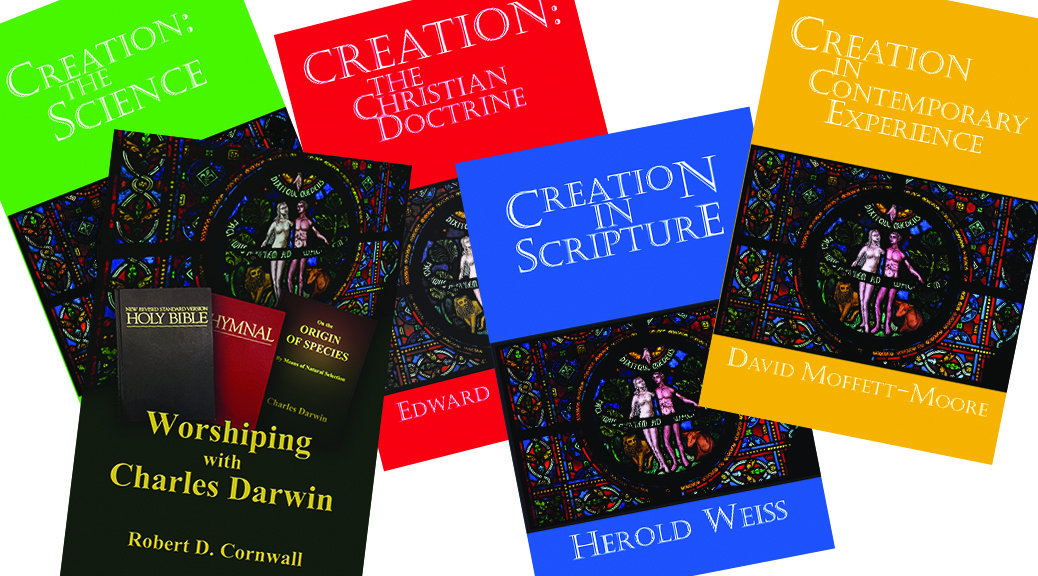
    This event is not a debate about creation and evolution. While I vary the content from hangout to hangout, I avoid outright debates. Each of these authors accepts the theory of evolution but also believes that God is the creator. Dr. Herold Weiss started the series, which also includes Creation: The Christian Doctrine by Dr. Edward W. H. Vick, who is unavailable for this panel. What I have asked them to do for this panel is talk about how their beliefs about creation impact the way the read scripture, teach, worship, and live.

    The YouTube embed to view the event is below. If you want to ask questions of the panel using the Q&A App, you’ll need to sign into Google+. There should be a link on the YouTube viewer at the time the event starts for you to do so.


  • Dance Floor Worship

    I have been working on cleaning up some of my old web site articles and reposting them were appropriate. I found one I forgot I’d written, titled Dance Floor Worship. I said regarding a moment looking out over the Gulf of Mexico:

    I can call this a secular moment, and wonder when I will be in church so that I can experience the presence of God. But God is not nearly so bound as I am. God doesn’t need me to wait.

    I’d like to remember this idea of seeing the sacredness in every moment, rather than waiting for the special, sacred ones. I need to do it more often!

  • Of Resources and and Mission Priorities

    I received two requests for help today. One was from a pastor overseas. He didn’t ask for money. He asked for prayer. I happen to know he needs money. But his most earnest desire is that Jody and I pray for him.

    I also got another request in the mail. It comes from an organization that does much good. They are raising money for a substantial building project that will make things more convenient, even much more convenient, for people in this country who are preparing to be missionaries. The amount is in the hundreds of thousands of dollars, maybe a thousand times the amount that would relieve the pastor’s need.

    What am I to do? I am not naming any organizations, because I don’t want to criticize them. I don’t know what the needs are or whether the kingdom will be built by this particular expenditure. But I do have to look at where I put my very limited resources. (In case you’re wondering, being in the Christian publishing business, at least in the manner in which I practice it, is not the road to great personal wealth!)

    But it’s not just this particular project that concerns me. It’s the proportion of our resources that go to providing for our comfort, for making it easier for us to do whatever we do, as opposed to the amount we put where it’s needed. I think of this when I see large recreation centers attached to churches that are empty most days of the week. Now I understand the need for places for sports and social interaction. In fact, a great deal of ministry can be carried out by providing a place for young people. But I know of more than one church that closes its facilities to outsiders. They want to avoid “those people” getting in there and perhaps damaging things or causing an increase in their insurance rates.

    I understand liability issues. I really do. But I don’t recall Jesus saying to do good to the least of these only when there was no risk. As a matter of fact, the gospels record that Jesus did it at a rather great risk. So many times we have facilities built that are just to entertain those who are already in the church.

    Again, I understand that people need rest and recreation. The church does need to provide for its members. But the ultimate purpose of providing for members is building the kingdom, and that means getting those members to go out and serve others.

    And so we come to church sanctuaries. In many churches the only use of the sanctuary is for a worship service on Sunday morning. That has to make it the most wasted piece of architecture around. One or two additional meetings a week may make it a little bit better, but it’s still underutilized space, space we pay a great deal of money to have.

    This isn’t the complaint of someone who doesn’t appreciate church architecture. I really like a majestic church sanctuary. I enjoy being in it. I enjoy sitting in the pews. If it has stained glass, it’s even better. A pipe organ? I’m in ecstasy. Just play it and let me look at the windows.

    But that’s the problem. I like it. It’s for me. The question is, just how much money should go to pipe organs and stained glass as opposed to feeding the hungry. I’m not saying we should put an end to all church music, or eliminate all church architecture, but what are the priorities? Where is the balance?

    In doing ministry in southern Mexico in the 1960s, my parents lived in a building with rough concrete floors (just try to sweep them), with a tin roof and walls that were not solid, so rain could blow in. My dad was a doctor (MD), and my mother a registered nurse. They could have had a great deal more, if they’d chosen to go to work in Canada (their home) or in the United States. But most of the time they didn’t, and when they did, they sought underserved areas. There were many things they wanted that they could not have. My own life is not without its problems, but I keep comparing it to theirs. What were their priorities? What are mine?

    I have had wonderful times of worship in fine church buildings, but I’ll never forget worshiping with a small Gypsy congregation in eastern Hungary on the first mission trip I led there. I was to speak. I had been a bit disoriented, because while I had been overseas before both as a child and young person with my parents and on mission trips, I had never been to a country where I couldn’t speak a word of the language. My Hungarian was such that the couple of words I had learned were potentially dangerous. I didn’t understand what people were saying.

    The room was small, too small for the number of people. The floor was concrete. The building was not beautiful. They had a small electric keyboard that would have been discarded had it been in one of our churches here, or probably even in a home as a child’s toy. Someone started playing it, and the people started singing. I didn’t know the words, but I felt the Spirit that was in that place. In fact, I have rarely felt the presence of the Spirit more than in that particular meeting.

    They didn’t need the things that we all think we “need.”

    Do we?

     

  • Of Creation, Evolution, and Worship

    There are few topics that get Christians more angry at one another than the subject of evolution. Those who accept a young earth (or young age for the universe) tend to think that those who accept the theory of evolution do it simply because they lack the faith to believe the Bible. To them, this is the first step toward rejecting Christianity and becoming an atheist. Those who accept the theory of evolution often think the young earthers are ignorant, perhaps willfully so. (All of this ignores the broad sweep of views between young earth creationism and a purely materialistic view of origins. There are many nuances on the line between the two. But that is a subject for another blog post.)

    I disagree with both those viewpoints. Irrespective of my own beliefs (and I’ll get to those in a moment), I have met too many dedicated Christian believers whose faith is nurtured by Scripture and also accept evolutionary science to imagine that acceptance of evolution is necessarily the first step on the road to unbelief. I have also met too many intelligent and capable individuals who accept a young earth to believe that they are all ignorant or stupid. As a matter of principle, I never want to imagine someone is stupid because of their view on a single issue, nor do I want to think them immoral because of their view on one moral issue. Someone who is intelligent, competent, and functional, and yet believes something I find ridiculous, does not thereby become generally stupid.

    As an example, my dad was a doctor (MD), and an excellent one. Yet he believed in a young earth and a literal creation week his entire life. I’m not going to go down the route of believing that he was somehow less capable of carrying out his profession in a competent fashion, which he did all his life, because of one issue. There’s the family connection there, but I know a number of other people in similar situations.

    In spite of this, I  am not arguing a middle of the road position. I have a firm position on creation and evolution. I was raised with young earth creationist literature. I devoured the literature written by George McCready Price and Frank Lewis Marsh, icons of my Seventh-day Adventist upbringing, as well as many others. I did not begin to doubt this view because of studying science. In fact, I changed my position through a study of Scripture. It all started when I wrote a college paper examining the text of the genealogies of Genesis 5 & 11 and looking at the resulting chronology. Archeology did enter into it, as I looked at the dating of events that would be required to match that chronology, but characteristics of the text itself first suggested that we did not have literal history there. Nothing I have studied since has changed my mind on that point.

    9781938434723mBut I’ve written on this subject many times before. Just try typing “evolution” in the search box. I’m writing this because I’ve just sent a book off to the printer titled Worshiping with Charles Darwin. That’s a provocative title. Carol Everhart Roper designed a provocative cover to go with it. That was intentional. It’s not actually the most controversial book I’ve published, even on this topic, but I’ve focused on the controversy. That’s marketing, but it also comes from conviction.

    I look at this from two perspectives. First, as a Christian and a church member, I believe that this is a non-essential. That God is creator is an essential. How God created is not. I think we should have tolerance and respect in the church on this issue. But my belief in tolerance and respect does not mean that I don’t have a firm position on the issue myself. I believe that God is the creator of heaven and earth and that through the study of the world by the methods of the natural sciences we can learn how creation was accomplished and how the physical world functions. I believe we are in error both in theology and in science when we try to impose our theology on the findings of science. It’s bad theology because to claim that what we learn from the natural world is not reliable we make God a liar. It’s bad science because it imposes a conclusion prior to the data.

    Thus I would be called a theistic evolutionist, though I object to the label. I am a theist, in that I believe in God. But my theism is not a characteristic of my acceptance of the findings of evolutionary science. Though I am strictly an amateur in any scientific endeavors, I do not modify the findings of science by saying “and God.” This is not because I do not see God in the natural world. It is rather because I see God everywhere in the natural world and not more so in one place or another. I do not see God more in my cat’s purr than I do in a pencil falling. Both things result from God. Science tells me how. Science does not discover God at some specific point. Science is studying God through studying God’s handiwork. But science does not improve its study of the handiwork by trying to pretend to find God at some specific point. That is why I don’t like linking the word “theist” to “evolutionist.”

    But I also object to the word “evolutionist.” Evolution is not my philosophy. It is not my religion. It is not an article of my religious faith, though the fearless pursuit of accurate knowledge is. I am not an evolutionist any more than I am a gravitationist. I believe that gravity functions as science describes. I believe that evolution functions as science describes. I believe we will discover more about how each of these works. Neither gravity nor evolution is an object of my faith or trust. My trust in science is based on the method, a method that has proven functional repeatedly. It is not a matter of perfection either. Science will produce new results and alter previous understandings. But it has proven effective at correcting its own errors.

    Now people who believe what I do about evolutionary science have tended either to keep quiet in church or to simply say that we believe the Bible teaches that God is the creator and the how doesn’t matter. I don’t agree with these approaches. What I think we need to do is think about how the discoveries of natural science impact what we believe about God and how they change how we tell the story of God the creator. Genesis 1 & 2 told the story to the ancients. We can listen in to that story and learn theology and generate our own liturgy. But I think to tell the story as faithfully as it was told so long ago we need to tell the story of the creator in the light of what we know about cosmology and origins. Belief that God has used evolution as the means of diversifying life here on earth, and presumably elsewhere in the universe, is not a withdrawal from an area of faith. Rather, it is a new look at the expanding story of God and our knowledge and experience of God. We need to tell that story faithfully and vigorously.

    And this brings me back to the title of this recently released book. We could pretend that the discussion doesn’t matter, but that would not be faithful to the search for truth or to the integrity of the way we proclaim the gospel. I know of people for whom this issue has been a stumbling block. It’s time to talk about it openly. We’ve been arguing about it vigorously, but that’s not what I mean. We need to start looking at the implications and talking about how we tell the story of the gospel faithfully in the world God created and is creating. I think that is something worth celebrating.

    Bob Cornwall has taken up one part of that task. I hope the conversation continues to grow.

  • Worship Music Criticism Criticized

    … by Lisa Robinson. And she does a good job of it.

  • The Only Worshiper Who Got It

    At today’s church service there was something I wish I had caught on camera. I’m not really quick, even though I have a reasonably good camera in my cell phone.

    Our pastor, Geoffrey Lentz, was preaching the final sermon of his Summer in the Psalms series, this time from Psalm 150. He talked about exuberant praise, and suggested that if we could really get a vision of God’s grace we would doubtless be ready to sing and dance ourselves. He’s been using musical styles with his sermon, and today’s style was jazz.

    As is our custom, the offering comes immediately after the sermon. The offertory was jazz, with quite a catching rhythm. I was sitting near the back and looking across a congregation sitting quietly in their seats while the band rocked the house; well, would have rocked it had it been movable. And no, this is not about me. I was sitting in my seat like the rest.

    But a few rows ahead of me, close to the center of the sanctuary, there was a little girl, perhaps two years old. She was quite noticeable in a bright red dress. She was standing on her chair, dancing, waving her hands above her head, and clapping (mostly) to the music.

    I think she was the only one who got it!


    Enhanced by Zemanta
  • Hallelujah: The Soundtrack of Life

    This is an introductory sermon to the current “Summer in the Psalms” series at my home church, First United Methodist Church of Pensacola. It was presented by Rev. Geoffrey Lentz last week, but I missed it. So many members of the congregation commented on it, I had to go back and listen to what I had missed.

    Geoffrey is editing the book I mentioned in my previous post.