Threads from Henry's Web

Tag: vision

  • Psalm 119:141 – Despised

    Psalm 119:141 – Despised

    Though I am small and despised,
    I do not forget your precepts.

    There are two times when it is difficult to stay on the right track: When things are going well and people are praising you, and when things are going badly, and people look down on you. Either of these can make you turn away from the right path.

    Well, then there’s the third option, which is that things are going moderately well. Well enough for you to be comfortable, but not so well that people are coming and praising you. Then there’s a major temptation to apathy, to contentment with things being not so bad.

    In real life, we may be confronted with any of these situations. We can find that ridicule prevents us from doing what is right or speaking of what is right. Or when things are going well, we find pride taking over, and we start to think too well of ourselves, and often speaking too highly of ourselves to others.

    Then there is the way that is simple, but very hard. That is to think of ourselves as we ought to. Paul speaks about this in Romans 12:3 —

    I tell all among you through the grace that has been given to me that you shouldn’t think of yourselves as better than you are, but you should think of yourselves properly {or wisely}, each according to the wisdom God has measured out to them.

    This verse doesn’t tell you that you should always think of yourself poorly. You don’t have to say that you are small and despised as did the psalmist. It’s likely you’ll feel that way sometimes, but that’s not some type of “holy” goal. Nor should you consider yourself more important than others. Rather, you’re supposed to think of yourself as you really are, as God sees you.

    This invites a change of vision, a change of perspective. And the psalmist tells us where we need to be. We need to be looking at what is right. He speaks of God’s precepts, as he has elsewhere spoken of God’s word, God’s testimonies, God’s statues, God’s judgments, and God’s commands.

    That’s all the long version of saying, “What’s right.”

    That is often our problem. We aren’t concerned with what’s right, but rather with what other people think of us. That is never a good place to be. Sometimes the person whose opinion matters to you is himself out of sync with what is right, and may be despising you for the things you won’t do in order to get ahead.

    How are you going to look at yourself today?

  • Do You Really See Other People?

    Do You Really See Other People?

    I had an interesting experience in the checkout line at the grocery store. The customer-facing display was off-color, in the sort of way that indicates some color data is not making it through. I commented on this fact, saying, “Either there’s something wrong with that monitor or it has a damaged or loose cable.”

    The young man doing the bagging says, “Oh,” and turns the monitor slightly, which suddenly corrected the color issue.

    “Most likely the cable in that case,” I said. Then I explained that I have worked IT for many years.

    “We got that!” says the young lady who was ringing up the groceries. Then she commented that her dad worked with carpet installation and he would always notice and comment on issues with the carpet.

    “It sort of changes the way you look at things, doesn’t it?” I commented.

    To which both young people agreed.

    That incident reminded me of one from long ago. Jody and I were at church, I believe shortly after we got married, and she mentioned something about a particular woman. Jody described the woman’s appearance and clothing. It took me some time to place her in my mind. Then I replied, “Oh, the one who was carrying the wide margin NIV Study Bible.” (I made up the particular Bible edition, which I don’t remember. But I identified the Bible she had been carrying in detail.)

    We notice different things. I didn’t remember the woman’s appearance or her clothes. She could have passed me on the street the next day in the same outfit and I would likely not have recognized her. But I would have recognized the distinctive Bible edition she was carrying.

    I think there’s an important reminder her. When we look at someone, we tend to see those things that are most important to us. Not to them. To us. A good deal of what we see in others we see because of who we are, not who they are. In a way, we don’t see them at all. Just the parts that fit us.

    Let me suggest a few situations in which this is important.

    • As a church leader, do you see a new member only for how they’ll fit into existing jobs you need to fill?
    • When you meet someone is your main thought how they can be of use to you?
    • Do you see someone as defined by one aspect of their identify, such as sexual identity, religious persuasion, political affiliation, or social class?

    I suspect most of us do one or another of these things. I know I do from time to time.

    Perhaps it’s time to start really seeing other people instead of just seeing our reflection in them.

    To help you see others better

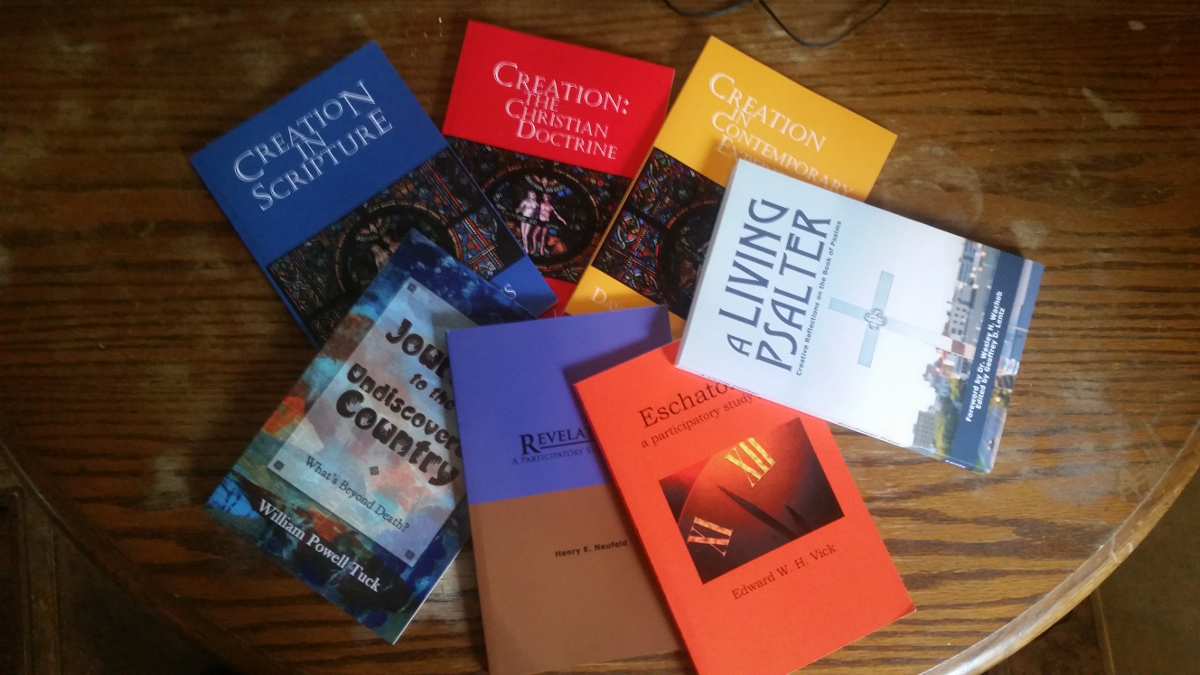
    PERFECTLY SQUARE provides a way of thinking about differences and learning to value them. Learning about the world that was perfectly square and what happened to it may help you make your own world less square by recognizing others more fully.

  • Eschatology: Prophets, Symbols, and Time

    Eschatology: Prophets, Symbols, and Time

    Some Eschatology SourcesTonight I’ll be finishing my preparatory studies for eschatology as I look at a few more visions, especially from Zechariah, and then at a bit of chronology in preparation for studying the book of Daniel on a more verse by verse basis starting next week.

    Google+ Event Page

    YouTube:

  • Brannon Howse and Justin Peters Dissing Visions

    The following video comes from Worldview Weekend, and is a conversation between Brannon Howse and Justin Peters. What’s interesting about this post is that pretty much every accusation they make against modern people who claim visions of or visits to heaven could be made against various Bible writers.

    In fact, they run into this difficulty in the middle of the video, just after 8:00, when they are criticizing Jess Duplantis for referring to God as having fingers. Suddenly they remember that the Bible also refers to God as having body parts, so they bring out the metaphor defense. Of course, that is a very good defense — it is metaphorical language. But why can’t Jesse Duplantis use metaphorical language?

    They refer to Paul’s statement that he heard things he couldn’t speak of when he was taken up into the third heaven, and thus suggest no modern person should do so. Can anyone say, “Revelation?” Yes, they notice Revelation as well, but apparently don’t notice the problem.

    The fact is that if you want to find weird things, you can find plenty of them in the Bible itself. My intent isn’t to defend everyone who claims a vision of heaven. I just don’t see any reason to exclude such modern visions if one accepts, as these men do, that such visions were ever possible.

    I’m putting the video below the fold to keep it from autostarting on views of the home page.

    (more…)

  • A Sense of the Spiritual

    I once met a woman who claimed that Jesus had come to her in her kitchen and spoken to her. The reaction of friends, neighbors, and even family to this story was fairly negative. She was regarded as a bit odd, and finally quit talking about it. It was only with some hesitation that she told the group of which I was a part.

    Now I see no particular reason to doubt that she saw precisely what she saw. It was, I believe, a visionary experience, and she would have no objection to its being described as such. But the general reaction to such an experience varies between tolerance and avoidance.

    That story came to mind as I was reading the lectionary text from Genesis 28:10-19, which tells the story of Jacob’s dream of the ladder at Bethel. Jacob has a dream. Note that like the lady I met, he doesn’t try to claim some sort of physical presence. Yet his reaction (v. 17) is that “this is none other than God’s house, and this is heaven’s gate.” For him the presence of God was a profound reality, even though it was manifested in something as simple as a dream.

    If someone said they saw Jesus in a dream, we would have a more positive reaction than people did to the visionary experience. We expect dreams. But we wouldn’t generally respond as Jacob did, considering the experience a profound spiritual event.

    One of the things I suggest in trying to understand stories in the Bible is that we come as close as we can to understanding the way in which the characters in Bible times would have reacted. Otherwise we will fail to get the full impact of the story.

    Spiritual things were very near, and God’s presence, even in a dream, was deeply sacred.