

Threads from Henry's Web

Tag: unity in diversity

  • On Listening to One Another

    On Listening to One Another

    On the various Energion Publications web sites, we have been emphasizing listening in commemoration of Pentecost. This Sunday is Pentecost Sunday, but we’re going to continue the topic for a few weeks into what’s called “ordinary time” in the church calendar. It’s precisely in ordinary time that you need to remember the lessons of receiving and listening to the Spirit.

    We need to continue listening even when we can’t see the flames of fire or hear God’s voice, or detect other signs of God speaking. God speaks in many ways, sometimes yes with thunder and lightning, but at other times God speaks through those who are around us.

    Hearing God in Others

    One element of listening that we often neglect is listening as the Spirit speaks to us through other people.

    This was a lesson I started to learn in Guyana, South America, where I lived as a teenager. My parents went there as missionaries with my father assigned as Medical Director of Davis Memorial Hospital in Georgetown. Thus I spent a good portion of my teen years among people of a different culture.

    I would often get rides to various places with the hospital’s driver, Brother Carr. (Note that when I was growing up as a Seventh-day Adventist, I was taught to address my elders as “brother.” That was so ingrained that I can’t actually remember his first name.) There was another gentleman who worked security and also some other functions around the hospital, and was occasionally a backup driver.

    I recall discussing world events with these two men. Different country, different race, different culture, different perspective on just about everything. Those conversations have stuck with me. One day one of these men took me to the seawall which keeps the Atlantic Ocean from flooding Georgetown. After explaining the history, starting with settlement by the Dutch, we turned to current events, which at the time involved Mainland China replacing Taiwan in holding China’s permanent seat on the security council of the United Nations. Elements of that conversation have stuck with me.

    Why do I bring up all of this now?

    Very simply, there are good reasons to not only read books, watch videos, and listen to sermons/lectures on a variety of subjects. It’s important to learn about these things from more than one perspective. This can involve expanding your circle of friends. Intentionally expanding your circle so that you meet more people who are not exactly like you.

    Difference can include:

    1. Differences of faith, including those with a secular or humanist view as well as those of other religious groups
    2. Differences of race, even beyond those we talk about most
    3. Differences of nationality, to include people from countries that are less like our own
    4. Differences of theology within our own faith tradition, such as Reformed, Wesleyan, or Open/relational or progressive, moderate, and conservative
    5. Differences in levels of wealth and privilege (While some object to the term “privilege,” I openly confess to being privileged. It was a foregone conclusion I would go to college and if I wanted, to graduate school. I have never feared starvation. My life is filled with reasons for thanksgiving!)
    6. Differences in geography, such as living in an urban, suburban, or rural area

    There are certainly many more, but these are some of the many things that I think many of us don’t interact with enough. For example, I sometimes give money to someone who is homeless, but it’s much harder to get me to say hello. (I publish two books, The Vicar of Tent Town and The Fringe, both of which challenge stereotypes of what it means to be homeless.)

    Some Books

    And now for a short commercial … well, not really. Some thoughts!

    I was thinking about four books that I publish, all by African-American authors. I’m writing about them here, rather than on my company blog because these thoughts are my own, apart from any marketing plan. (No, I don’t deny wanting to sell the books, but if I was writing marketing text, I’d do it in “company” space!)

    I want to recommend these four books for specific things in which they can give you a different perspective. In the case of three of the books, the reason I’m listing them here is not the central reason the author wrote the book, nor the reason I published it.

    Let’s start first with Dr. Terrell Carter’s book I Have to Live with Them?: Understanding How Black and Brown Christians Navigate Their Relationships with White Christians in the American Church. This is the one book of the four that is precisely intended to help readers understand the dynamic of race relations in the church. It’s written by an African-American pastor who pastors a predominantly white congregation. This one is in the Energion Publications Topical Line Drives series, which means it’s short and to the point. It’s not meant to break major new ground. It’s meant to get you to the starting gate. Dr. Carter has two other titles with Energion as well, which you can find on his author page.


    The second book in this list is not written to address any of the issues I’m discussing here, but it does. It’s The Seven: Taking a Closer Look at What It Means to Be a Deacon by Dr. Lonnie Davis Wesley, III. This is, unsurprisingly, a book about the ministry of deacons in the church, and it’s written by someone who pastors a large Baptist church in Pensacola, Florida, Greater Little Rock Baptist Church. As an aside, if you live in the Pensacola area, visit this church. I strongly commend it.

    The reaons I’m talking about the book here, however, is because of the background it gives you about the black church in America. It will teach you things about deacons in the church. It will develop your understanding of the early church and what led to their being deacons. If you’re dealing with problems of church polity, you will find scriptural ideas in here that just might help. But it will also help you look at all these things with new vision.
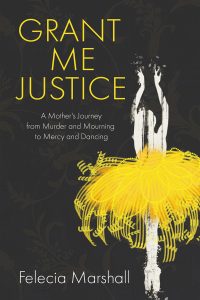

    The third is Grant Me Justice: A Mother’s Journey from Murder and Mourning to Mercy and Dancing. This book deals with grief, anger, and the search for justice, but it also tells an important story, the story of a mother and what gave her perspective on what was happening. It’s a story also of grace. And it’s a story that will help many see things from a very different perspective.

    An important lesson to learn in reading this book is that hearing the stories of others can provide so much help to each of us in understanding our own journey of faith. God’s grace is high and wide, and its sufficient. God doesn’t have a perspective problem. Stepping into the shoes of a grieving parent as you peruse the pages of this book can change you in many wonderful ways.


    Last, but not least (these books are in no order of precedence), I have a children’s book. The book is What Color Am I? It’s the 8th book in the Kamden Faith Journey series. This entire series is about a grandmother helping her grandson in his faith journey. It provides an opportunity for parents to read with the children and discuss important topics with them. In this book Kamden sees a Black Lives Matter protest and asks his Nana for an explanation. What are they doing? Why are they angry?

    The response is gentle, faithful, and powerful. I wonder if you, reader, have looked at these various issues from the perspective in this book. It brought tears to my eyes as I created the book layout.


    Conclusion

    Whether it’s with these books or others and whatever the subject or your situation, try to find an opportunity to listen to someone whose perspective differs greatly from your own. It may benefit them, but it will definitely benefit you.

    Note: Featured image for this post was generated using Jetpack AI as a test.

  • Would You Like a World that Was Perfectly Square?

    Would You Like a World that Was Perfectly Square?

    Not sure? Tonight you can find out!

    0964440601On the Energion Hangout tonight I’ll be interviewing my friend Dr. Dolly Berthelot, author of PERFECTLY SQUARE: A Fantasy Fable for All Ages, and an all around great person.

    Let’s get the commercial part out of the way first. This book was first published in 1994, and its message is still relevant, possibly even more relevant, today. In fact, I suspect that in another 50 years, its message will still be on point and up to date. So I’ve taken up distributing the book. You can find the Energion catalog page at the link above or by clicking on the cover picture.

    And while we’re at it, you can find the interview tonight (7:00 pm central / 8:00 pm eastern) via the Google+ Event page, or you can use the embedded viewer here.

    With that out of the way, let me tell you about Dolly Berthelot. I encountered Dolly through the CommUNITY Dialogues™ program she offered through the Human Relations office here in Escambia County Florida. I believe I got involved through mutual friends at the Unitarian-Universalist Church of Pensacola (then Pensacola Unitarian-Universalist Fellowship).

    My view of diversity programs at the time was negative, to say the least. I had attended a number of these programs while in the USAF and also some with civilian organizations, and they were uniformly boring and generally useless. I remained committed, however, to the idea that we could learn to reap great benefits from our differences by listening to one another.

    I’d say that the key failures of diversity programs that I attended were rather straightforward. First, they had a tendency to tell you what a few differences were and basically explain that you had to get along anyhow. Then they’d attempt to make all the diverse people in the room drop all their differences, or treat them as unimportant, so they could get along. It appeared that the diversity trainers really didn’t like diversity. Their hope was that everyone would cut off the rough edges and get along, or just not mention anything that might be controversial.

    In CommUNITY Dialogues™, things were quite different. Dolly taught (and encourages) unity in diversity. We are all different, and this isn’t a problem to be solved, but an opportunity to be grasped. We need to make the most of our diversity because it’s a great thing.

    So now, 20 years after the book was first released, and quite a number of years after I enjoyed that dialogues program, I’m taking up distributing this book. For various reasons (I’ll get her to explain tonight), Dolly hasn’t been as active. But she’s passionate and ready to go with the message of unity in diversity. Join us!


  • What Would a Successful UMC Look Like?

    Ex-UMC, now megachurch pastor Craig Groeschel offers six suggestions for the United Methodist Church, packaged in six brief blog posts. I think that there is much worth considering in his suggestions, though I don’t think they are generally all that new.

    There’s something that bothers me in the whole discussion, however. In practically every debate about reviving the Methodist church with which I’m acquainted, it seems that we assume that we know what the church should be, what “success” would look like, and then we discuss from there. There are two problems with this approach. First, we may be wrong about what success would look like. Second, we may be discussing without agreeing on the success we seek.

    It is assumed that the pastor of a megachurch obviously has something of value to tell the rest of us because he is so obviously successful. Now I have nothing whatsoever negative to say about Pastor Groeschel’s church. That’s not my point. My point, rather, is to question whether we can identify what needs to change without understanding precisely what we are trying to accomplish.

    On this, I think that Groeschel’s 6th point is actually one we should discuss first, because the message we offer is, I believe, somewhat more important than the structures through which we offer it. But I will nonetheless address that issue last as well, since that is the order in which the suggestions were presented. As I write I will try to lay out the basis on which my own critique is made, wrapping up with the 6th point.

    Groeschel’s first point is well-taken. Why is it well-taken? Because an emphasis on branding one’s denomination is much less important than the power of the gospel in one’s churches. We would hardly need to explain on Television just how welcoming we are if we were, in fact, welcoming people all over the place. United Methodist Churches are ubiquitous. Our problem is not a lack of name recognition. Our problem is more based on what happens after people come into church. No matter what you advertise on TV, if the witness of your church interior is negative, the campaign will tend to fail. Spending $20,000,000 on the denomination’s image doesn’t seem right to me.

    At the same time, I wonder about the millions spent on some of our larger church structures. If I were to look for a New Testament church, a church following Jesus, I think I’d tend to look more in the direction of the home church or even a very small church that doesn’t spend money on a separate building. There are many ways to spend money poorly!

    Groeschel’s second point is a critique of the itinerant system. Here I think we need to think very carefully about what the real problem is and just how to remedy it. I don’t believe that organizational structures are the main problem in our church’s ministry. That may seem astounding to some people, especially those who have heard me criticize those same structures. But that isn’t the root.

    I have seen many different structures that have cases in which they work, and others in which they fail. There are elder-led congregations that have dried up and know nothing but tradition (usually defined as something like a generation) and simply drift along as an ark for the comfortable. I have seen United Methodist congregations where the laity had the kind of leadership one would expect in a congregation led by elders chosen by the Holy Spirit. I have seen other United Methodist congregations that, despite all the rules provided authority to lay leadership, were led by a dictator-pastor.

    Churches that choose their own pastor often simply perpetuate the errors already existing in the church and have no means of correcting course. There is limited accountability quite often. It’s very hard to keep such a church from drifting off under the right circumstances.

    Having itinerant pastors corrects for this sort of inbreeding, but at the same time introduces its own set of problems. I watched one church go from more than 20 prayer groups meeting during the course of any particular week down to single digits because the pastor changed. Both the outgoing and incoming pastors were men of prayer, but their leadership style was different. One would turn up at multiple prayer groups, some as early as 5 AM, while the other thought prayer groups could function without him. I’m not calling either man wrong, but in the change, the church members didn’t know how to keep things going themselves, and that was a tragedy.

    I would also say that in my few years in the United Methodist Church (I first joined a United Methodist congregation in 1994), there have been many cases when it’s hard to believe that the bishop and cabinet had a firm grasp of the needs of all the local congregations. But that must be taken not with a grain of salt, but with a whole saltshaker. How much of a grasp did I have of the needs of those congregations? Which leads back to a congregation choosing a pastor for itself. How effective is the search procedure? How good of a fit results? How many pastors miss their calling because they never heard of the church where they could serve? I have known cases where I thought the bishop was crazy when I heard of an appointment, but the result was good.

    I say all of that because I don’t think the process is the most important thing. I believe the most important thing for church organization is our theology of the church and of church leadership. We need pastors and laypeople who understand what servant-leadership is. (While I may disagree with some points of church structure, I heartily recommend The Jesus Paradigm by Dr. David Alan Black, which my company publishes. After all, I’ve just said that those structural differences are less important than the theology of leadership.)

    If we have the right view of leadership, no matter how a pastor gets in place, and no matter where he or she is recruited from, that leadership will emphasize equipping the saints for ministry (Ephesians 4:11-12), not taking over the organization.

    And while we’re at it, let’s ditch the incredibly stupid concept of the pastor’s job. If we wrote down the real job description, what the congregation actually expects the pastor to accomplish, and then tried to recruit someone to fill that position, only fools would apply. Our expectations set up pastors to fail. One equation that I believe is wrong is that pastor equals preacher. My wife and I were discussing last week two ordained ministers we know who really don’t need to be preaching. They are good at teaching in a small group setting. They have good ideas. They are able to equip. Their problem is that their speaking in a sermon setting is, to put it kindly, soporific.

    Other pastors are great preachers but wouldn’t get a job managing a hot dog stand. Yet others are good at visitation, ministering to the sick, counseling, or encouraging. Now you can justly question whether all of these people should be titled as pastors, but I think the main problem is that we expect one man to carry too many gifts. Why should the congregation expect the pastor to preach 48 weeks out of the year, as I recall one congregation’s covenant with their pastor? The jobs can be divided up between the lay people with a few better trained people given specialized jobs equipping the others.

    The third point is the ordination process. I’d relate this back to my comments on point #2. If we were preparing pastors for a reasonable job description, then we might be able to prepare them more reasonably.

    The problem I have here is that I think many of our existing pastors are under, rather than over prepared in their scriptural understanding. I think some of this results from the quantity of different topics we expect a minister to cover in seminary so as to be preacher, teacher, counselor, business manager, conciliator, prayer warrior, comforter, and social mainstay of the community.

    In order to solve this, however, I think we need to change the superficial level of study at the local church level. More and more in the world at large, education is coming to where people are as we realize that there is so much to learn and one can’t always dedicate years and years just to learning it. The seminary will need to break free of its walls and start to do more education of people in the churches. It is my personal belief that a young person should be able to prepare for ministry almost entirely in the local church, though I would strongly recommend that part of that preparation happen at churches other than his or her home church, and would suggest some time spend in an academic environment, though much less than we do now.

    Again we have to ask ourselves just what the purpose of a pastor is. I would suggest that the primary role of the pastor is to equip the saints for the work of serving, and that this service, as a whole, provides the witness of the church congregation in the community.

    Point 4 is about apportionments, a favorite United Methodist target. Can one discuss reforming the church without taking on apportionments? I have even said before that if I ever left the United Methodist Church, you can be certain that the way apportionments are spent would be part of the reason.

    Yet here I think we need to refer back to the first point. The main issue is not a sort of profit-loss statement for larger churches. Why become larger when you’re going to be hit with higher apportionments? Is that not appropriate? Is that not, in fact, a mission? I know that there are many smaller churches that are smaller because they are stuck in the mud and doing nothing, and that doesn’t seem like a mission field, but that is only one small part of what the apportionments do. Further, many of these small churches are sparks of light in their communities around the nations. In my view, they often show us precisely what a successful United Methodist Church should look like.

    I would suggest that rather than the idea of apportionments as such (and the system could stand reform, I suspect), the real problem is what happens to the money. Is it being used for missions or to promote structures? That, to me, is the real question, and it goes back to my most basic question: What does success look like?

    Part 5 I actually like pretty much as is. I think the multi-site church is a good compromise between destroying the small community church and the staffing and expense problems of totally separate congregations. Certain facilities and certain staff positions could be shared, and many activities could be coordinated. Of course, much of this could be done if local churches in a region simply decided to talk to one another and work together. Nonetheless, officially encouraging such activity or creating some sort of structure to make it easier to organize would be helpful. Then more money could be spent on the work of the gospel.

    Finally, we get to a key point, Groeschel’s #6. I must make a personal note here. If the United Methodist Church split as Groeschel suggests, I wouldn’t like either portion. That makes it hard for me to comment on the split without personal bias.

    At the same time, I think this point goes to the core of the problem. What is it that we are proclaiming in our churches? Whether or not we are preaching a genuine gospel message is, I believe, much more important than any number of structural changes we might make. By “proclaiming a genuine gospel message” I do not mean to separate the explicitly spoken message from the activities that go with it. Proclaiming good news to the poor and outcasts is important.

    In the United Methodist Church as a whole I don’t think we know where we are going with the message. We try to be all things to all people, and end up being not much to not many. I suspect that both liberals and evangelicals in the denomination would have a solution–their set of beliefs and emphases. But the problem I see on both sides is the tendency to go from defining nothing, the effect of our current conflicts, to defining everything.

    I do not distinguish here between what evangelicals desire to do and what liberals prefer. I don’t have statistics on how welcoming each group is of the other, but I do know of enough cases of both evangelicals made unwelcome by liberals and liberals made unwelcome by evangelicals that I know I would find either group’s exclusive possession of the lines of authority unacceptable.

    An organization needs to have some sense of distinctives in order to function as an organization. In this case, I would hope that those distinctives would be the defining elements of the gospel, both in doctrine and in practice. Note that I am not discussing who will be saved or lost, but rather who will be part of a particular organization.

    I think we have gone to the point in the United Methodist Church where we no longer have enough essentials to be coherent. While we think this makes us open and accepting, it actually makes us incoherent, confused, and confusing. There are, perhaps, some folks who should belong to a different organization.

    I discussed this previously in my post Unity, Diversity, and Confusion. Let me reproduce the illustration I used in that post:

    Church member attitudes toward doctrine and diversity
    Click the image for a larger view

    I think Pastor Groeschel has pointed us in some important directions, but unless we can clarify our message and what makes us a church, a congregation of saints following Jesus, I don’t think the structural changes will help. It’s a cliche, but rearranging the deck chairs on the Titanic comes to mind. What we need to do is identify and plug the whole. Unlike the Titanic, I believe we still have the opportunity to do so.

    What would it look like? It would look like disciples of Jesus joining together to accomplish his mission. I have a long way to go in describing that, but I think it would involve less money spent on ourselves and more on others. It would involve fewer facilities and more people going out. It would involve more people equipped for and involved in ministry and fewer stars.

    (HT: John Meunier)