Threads from Henry's Web

Tag: Tithing

  • Two Books in New eBook Channels

    Two Books in New eBook Channels

    Credit: Openclipart.org
    Credit: Openclipart.org

    I don’t write that much about my day to day life on this blog, but here’s a snippet and a bit of good information combined with advertising.

    Energion Publications keeps me busy, and it’s growing. It never grows as fast as I’d like to do, but even so I have to balance finances and time, and it’s not always easy. Let’s rephrase that. It’s really never easy.

    Right now I have five new books in the final stages, from page layout to proofs to finalizing everything for print. You can keep your eyes open for Running My Race by David Alan Black, for which I also wrote the foreword, The Gospel according to Mark: A Participatory Study Guide by Bob McKibben, Holy, Dark Place by Daniel MacGregor (the latest volume in the Areopagus Critical Christian Issues series), A Cup of Cold Water by Chris Surber (the next Topical Line Drive), and The Ground of God by Donna Ennis. Only the first two are in the catalog, but they’re moving along.

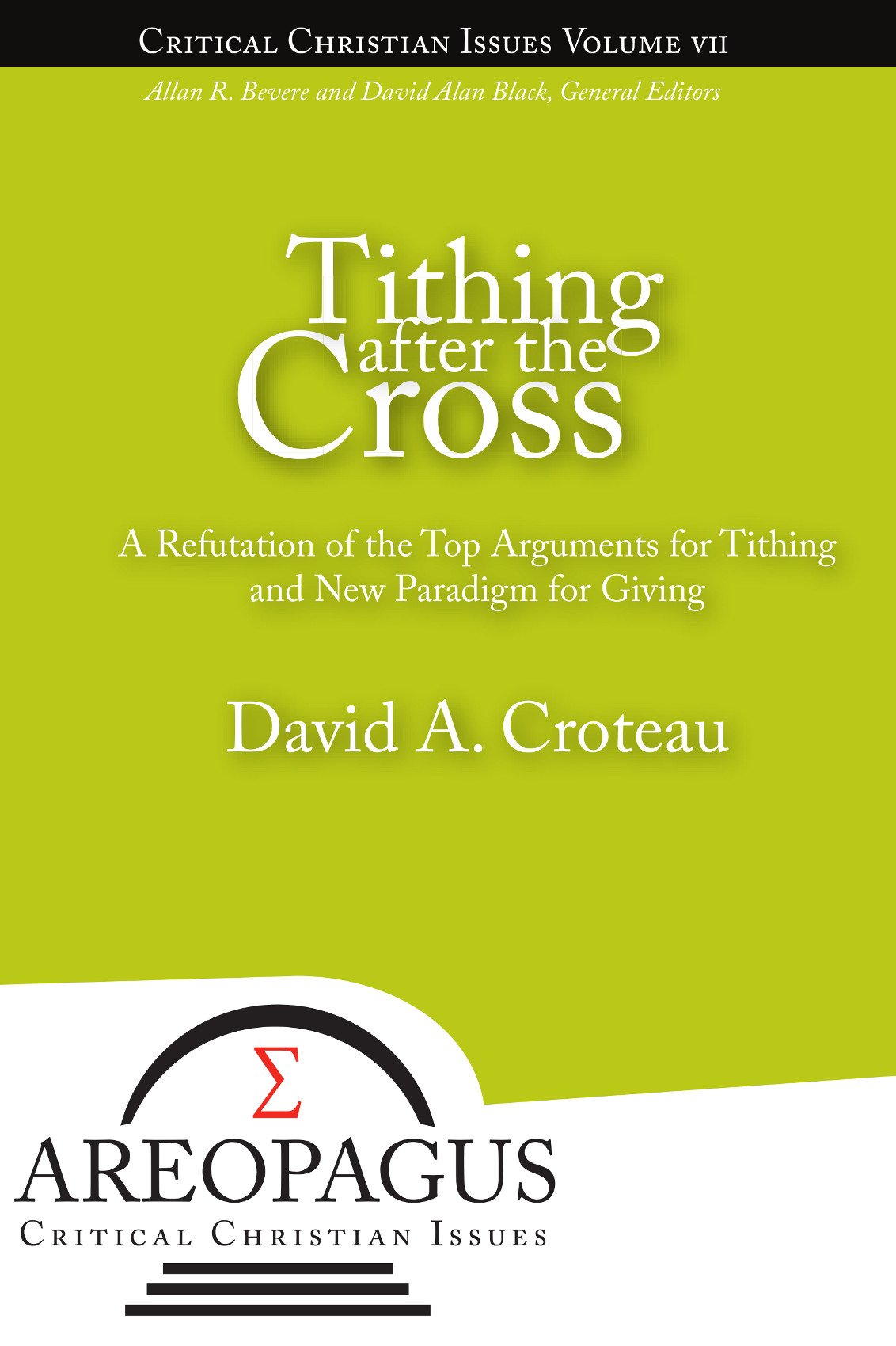
    At the same time, we’re trying to catch up on ebook production, which is also largely something I do. We publish ebooks for iTunes (iBooks), B&N Nook, Kindle, Google Play, and an assortment of less popular outlets. Today, I prepared several editions of Tithing after the Cross and Seven Marks of a New Testament Church. I just uploaded those books to iTunes and they should become available in the next day or so. They are both already available on the Kindle store. You can find out more about our ebook offerings on Energion Direct. You can find all our Kindle books in our Kindle aStore.

    I’m going to write a bit about Seven Marks later today as I finish up my series of blog posts on that book, but I wanted to comment on Tithing after the Cross. As I prepared it for publication in epub format (what iBooks and most outlets other than Amazon.com use), I was struck again by the thoroughness of author David Croteau in dealing with a variety or arguments for and against tithing. But he doesn’t leave it there. In just 94 pages he really does get to what the subtitle calls “a new paradigm for giving.” That latter part is what is important. May think, as I once did, that we have to cling to the idea of tithing, even if it’s a truncated form that just means some type of regular giving, even if that’s 2%. In many churches, people are urged to move toward a “full tithe,” which means 10% of their income. David argues that this is not the New Testament basis for giving.

    We have another book, Stewardship: God’s Way of Recreating the World by Steve Kindle. It also starts the discussion of stewardship in a completely different place than your standard stewardship sermon. I’m embedding below the video of my interview with David and Steve on this topic. I think you’ll find it enlightening.

    And now back to trying to get a few more things done in the publishing business!


  • Why Not to Tithe

    Why Not to Tithe

    9781938434129The word “tithing” has undergone quite a substantial change in meaning over the course of my life. Growing up as a Seventh-day Adventist, it meant giving precisely 10% of one’s income to the church. This money had a special use in the SDA church, supporting pastors. For my parents, the tithe was just the starting point of their giving. They put aside an additional 10% and gave that to various other activities of the church. They called this offering. They had an additional fund, I believe around another 10%, that they used to help people personally.

    When I started attending Methodist churches, I found that the term “tithe” had a somewhat different meaning. I think I ran into this first in a stewardship campaign, in which people were encouraged to begin to “tithe” at 2%. The idea of a “2% tithe” was somewhat puzzling to me, as I knew the Hebrew word was derived from “10” and was used pretty much exclusively in that sense. (Not 10%, as not every instance of 10th turned out to be precisely 10%, but always related to 10.)

    So tithing had the meaning of giving, rather than a specific type of giving, and the number was no longer considered relevant. There was a sort of goal at 10%, but the other amounts were still considered tithing. If one needed to distinguish them, one might say “full tithe” but I rarely heard that.

    In my own view, however, there was no obligation for Christians to follow the tithing laws from the Pentateuch, and even SDAs were not doing so. There was a more substantial effort on the part of SDAs to translate, but it nonetheless was not the same thing. It was not that Christians should be less generous. It was just not a law addressed to us. At the time, however, I was afraid to say that I didn’t believe in tithing. Why? I was afraid people would start giving even less, and the giving in Methodist churches (and many others) is rather dismal as it is.

    In other words, I didn’t really believe in grace. I didn’t trust grace.

    I believe that tithing can be a good starting point or guideline. I don’t believe Christians are called to give less. Rather, we are called to give more. I also don’t believe that we are necessarily called to give all to our local church. But we are called to give it to the kingdom of God, whether in the form of helping our neighbor in trouble, feeding the homeless, carrying out acts of love and mercy, supporting missionaries and all who are working in service to God and others. I believe this should be a response to grace, not a price we pay or a duty we fulfil. All giving, whether to support your local church, your local food pantry, or world missions, should be a joyful response to God’s grace.

    Recently I had the opportunity to publish a small book on tithing, titled Tithing after the Cross by David A. Croteau. He says boldly what I failed to say, and backs it up with a large amount of additional research. While he has written larger works, in this book he distils it into a short volume that anyone can read. Don’t worry! He didn’t “dumb it down.” He made a concise version.

    This afternoon he’ll be on the Janet Mefferd show with an interview on the topic. Show time is 4:00 PM eastern time. I invite you to listen and then check out his book, Tithing after the Cross, on Energion Direct.

  • Will Tithers Have Medical Expenses?

    Pat Robertson puts his foot in his mouth so frequently that it almost seems unfair to go after him for it, but in this case he makes the type of statement that simply must be corrected. I know quite a number of people who would be susceptible to what he says here, and then would be disappointed, and possibly blame themselves, when they continued to have health expenses despite their tithing. Now Right Wing Watch might have taken this out of context (though I don’t know what the context would be), but those few sentences are very damaging.

    I’ve heard this type of thing much more regarding financial affairs. Pastors and teachers say that if you tithe you won’t have financial difficulties, won’t go bankrupt, or will even become wealthy. All the while real people pay tithes and nonetheless struggle.

    Here’s an extract from a book my company recently published (note that the first sentence is presented as an argument to be refuted by what follows):

    9781938434129sGod has significantly blessed those who have faithfully tithed. This blessing demonstrates that tithing is his method for giving in the current period.

    In fact, some ministries have offered to give “refunds” if after a certain period (like ninety days) they are not in a better financial situation after giving tithing a try. Other preachers have stated that no one ever has financial trouble if they are tithing. I’ve even heard one preacher say that no one has ever gone bankrupt while tithing!

    Has anyone who faithfully tithed gone bankrupt? Absolutely! There are many news stories on the internet explaining how certain individuals have gone bankrupt while tithing. While the situation of Evander Holyfield might seem like the exception, the reality is that so many have had this issue of going bankrupt while tithing that the federal government has been wrestling with how to adjudicate this situation. President Clinton signed the Religious Liberty and Charitable Donation Protection Act in 1998 to allow those who are bankrupt to continue tithing. But a 2005 law overturned that decision: the Bankruptcy Abuse Prevention and Consumer Protection Act. The fact that the federal government has had to monitor this so much demonstrates that this is not a rare situation. To give my own “anecdotal argument,” I’ve had a friend who was giving about 18 percent of his income, and his financial situation continued to deteriorate more and more. Finally, in order to go to seminary, he filed for bankruptcy. He declared how good God was in taking care of him, but really the federal government bailed him out. (David A. Croteau, Tithing After the Cross, [Gonzalez, FL: Energion Publications, 2013], 51-52, italics mine)

    Neither David Croteau nor I are arguing against giving or generosity. Rather it is the manipulation of people for purposes of getting them to give money. We should certainly discuss issues of stewardship in the church, and not just of money but also time and ability. But we must be careful not to force or manipulate. Certainly we must never make obviously false and hurtful claims.

  • This Headline Says It All

    Tithing Hits Record Low; Churches Spend More to Make Congregants Happy.

    While I don’t believe tithing is a command binding on Christians, my problem is not that it would demand too much, but rather that it demands too little, does so in the wrong way, and for the wrong reasons. But that’s another topic.

    And I can’t resist noting that the word “tithing” used to refer to giving 10%, not 2.38%, though I know the word has changed meaning. Still, if you’re going to call it a biblical command, it might be better to stick with the biblical meaning, or a close approximation.


    Enhanced by Zemanta
  • Opinions, Interpretations, and What the Word of God Says

    There’s one use of the phrase “just your interpretation” that implies that no interpretation is better than any other.  This is often used by people who have no idea how a particular text should be interpreted, but nonetheless feel like rejecting your interpretation in particular.  Either they think all interpretations are equal–a common idea these days–or they are just tool lazy or uninterested to bother to check.  (I wrote about this some time ago on my Threads blog.

    But today I’m writing about the opposite use — the idea that you can get past opinions and interpretations to something that is just “what God’s word says.”  For example, this morning a reader named Bryon commented on a post on tithing, and began thus:

    In regards to tithing, the question is not what is someone’s opinion or interpretation of Malachi 3:10. The question is what does the Word of God say about Malachi 3:10 and other scriptures concerning the tithe? …

    (I’ll provide him a link in my reply to his comment, so he can respond here..)

    Now it happens that I agree with most of the interpretations and opinions contained in his post, but they are his opinions of how to interpret those passages and apply them.  My agreement is my opinion as well.  There’s nothing wrong with interpreting or with having opinions.

    Some people think that claiming something is just God’s word is a matter of humility.  If you attribute it to God then you’re not claiming authority for your own opinion.  I happen to disagree.  It is my opinion that not taking credit for your own interpretations and opinions is really rather arrogant.  They are still your opinions; now you’re just letting people think that somehow God is speaking directly through your words.

    For example, Malachi 3:10 does not tell us whether tithing applies to Christians or not.  Clearly it is addressed to the Jewish people after the exile, but there are other commands that are addressed to specific groups of people that many, many Christians believe apply to everyone everywhere.  Determining the person(s) to whom a command applies is a matter of interpretation.

    Now my opinion is that Bryon is right and this command applied to Israel at the time and stewardship is different for Christians.  But that remains my opinion of how the text should be interpreted.