Threads from Henry's Web

Tag: Stewardship

  • Psalm 119:171 – Sing Praise!

    Psalm 119:171 – Sing Praise!

    Let my lips sing your praise,
    for you have taught me your statutes.

    The underlying theme of Psalm 119 is praise to God for the law. The law is righteous. The law is good. Good things come of keeping the law, even though we have to ask God for the strength to do so.

    I find the relationship of may Christians to the law quite interesting. There quite an interesting theological/biblical discussion between various groups, particularly Lutherans, Calvinists/Reformed, and Wesleyans about the relationship between the law and gospel. As an introduction, let me commend the article on Wikipedia on Law and Gospel, though doubtless many, myself included, would pick at various points.

    In practice, however, we tend to simultaneously declare that we are saved by grace through faith, but then only apply this to the moment of salvation, of becoming part of God’s family. At that point, most of us would say that we are not saved by keeping the law. So we have a distinction here, because law is not the agent, even though law definitely has a role.

    But we turn from that and, whatever we may proclaim, we become people of rules. We want the ten commandments in schools, as though better morality will be achieved because of a display of the ten commandments.

    We aren’t really praising God for the law through all this. Rather, we’re considering that we have to have a stick to use to beat people into proper order. We ditch gospel and grace and become another behavior modification program.

    This is exemplified by the plea I have heard frequently from parents and friends, “Help me get my child/friend back into church.” The goal is to get them into the church structure and organization, such that their behavior can be made more … I’m not sure if it’s more Christlike or more Churchlike.

    I recall having this discussion in a church my mother attended, which she called, to their face, the church of the gottas. You gotta do this, you gotta do that. Having been saved by faith, or rather having been shoved across the starting line by grace received through faith, you gotta get busy running the race and making sure you get everything right.

    My own experience with teaching about tithing is an illustration. Is tithing a command applicable to Christians? For a long time I struggled with the fact that I couldn’t see that it was, yet as part of the leadership team of a church, I was afraid to say so, lest people give even less. I was already irritated by people who spoke of “tithing” 1% or 2%. “Tithing” refers to 10%, though 10% of what is subject to some controversy. But if you’re giving 1%, you’re not tithing.

    My concern, or to be honest, fear, was that if tithing was not a rule, then people wouldn’t give, and then programs of the church that I hoped would be well funded, such as children’s ministries and missions, would suffer.

    It took me a long time to realize that grace was the only thing that was ever going to bring sanctification, including sanctification of our wallets, doubtless the least sanctified of our possessions.

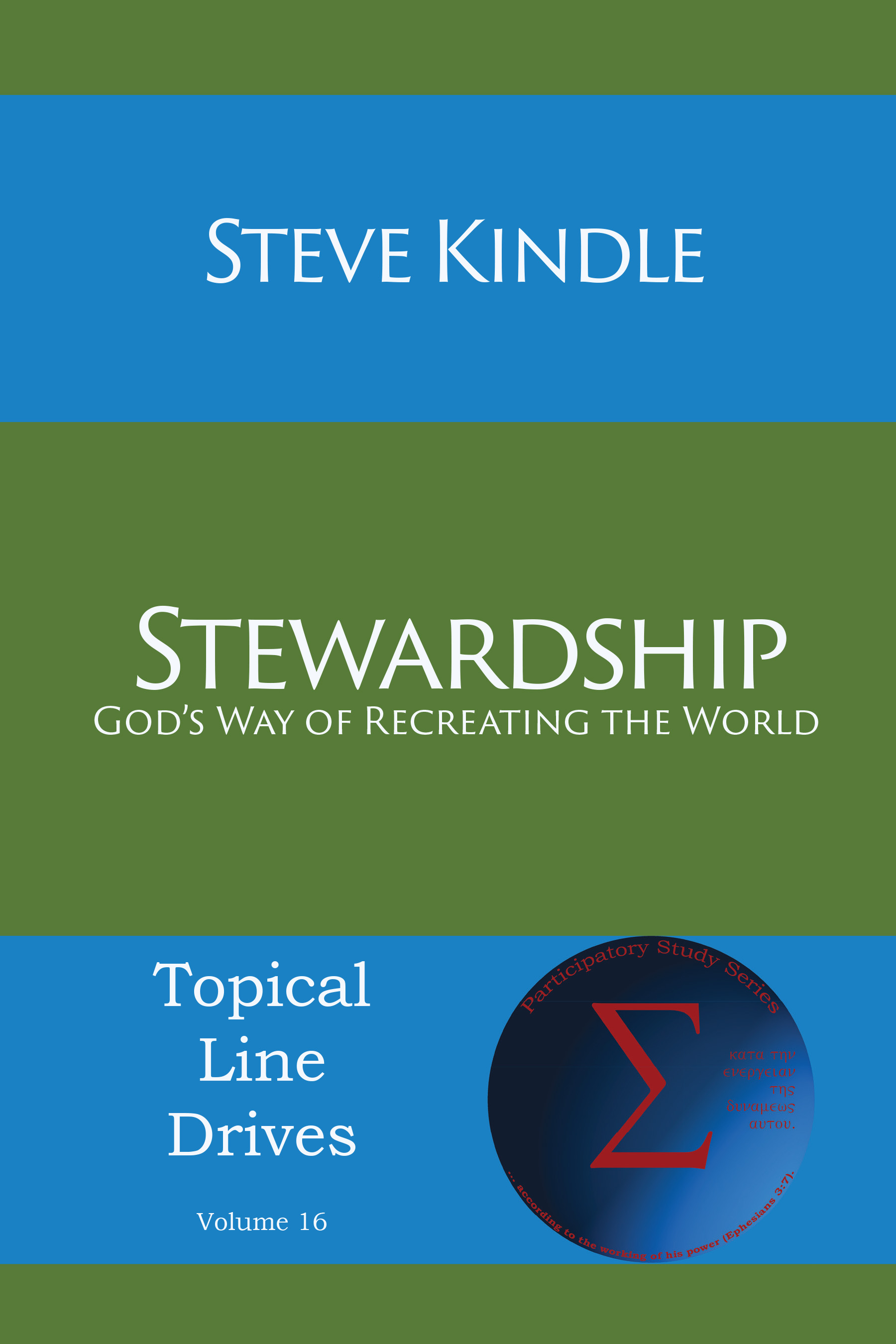
    The bottom line was that in Christ, everything is dedicated to Christ and we make our decisions on spending and giving based on that fact. I had come to this conclusion, but hadn’t expressed it all tat well until I read as an editor, and published the little book Stewardship: God’s Way of Recreating the World by Steve Kindle.

    Here’s a selection from page 25:

    The questions around how much to give are too often reserved for “Stewardship Drives.” So we compartmentalize our giving and tuck it away for another year. In all the talk of stewardship, seldom
    does it go much beyond the pocketbook. Whenever stewardship is reduced to a program, something is terribly wrong, and congregations and individuals continue to struggle.

    The apostle Paul revealed to us the key to successful fundraising in his appeal to the Corinthian congregation to assist in the collection he was taking up for the Jerusalem church. His formula:


    3For, as I can testify, they voluntarily gave according to their means,
    and even beyond their means, 4begging us earnestly for the privilege
    of sharing in this ministry to the saints— 5and this, not merely as we
    expected; they gave themselves first to the Lord and, by the will of God,
    to us,… — 2 Corinthians 8:3-5

    The Macedonians, in spite of their poverty, begged to give to the Jerusalem church—even beyond their means—because they first gave themselves to the Lord. Sure, it is possible to raise a lot of money using sophisticated methods based on psychological triggers and emotional appeals. These are too often resorted to as substitutes for the Macedonian way. A congregation that first “gives themselves to the Lord,” recognizes their stewardship partnership, and everything they do springs from that commitment. So let’s not encourage tithing, that’s about money. Let’s encourage
    seeing all we have as God’s and act accordingly.

    Steve Kindle, Stewardship: God’s Way of Recreating the World, p. 25

    This same approach applies to everything about Christian living, and it’s something we should pay attention to. If we could focus on that connection to God, and the motivation of love that is involved with it, better behavior, empowered by the Holy Spirit, would be the result.

    When we see the law in this way, as a gift, and as a description of what might be and what God is, we can receive it with praises. If it is a club to make people look and act like us, to be “churchy,” then it will always be a negative thing.

    But if we don’t focus on that core of being as the source of all we do, we will inevitably get back to a picky, rule-by-rule attempt at behavior modification, which is sure to fail in the end, not to mention causing a great deal of fiction along the way.

    How can you find joy in being and doing today?

    (Featured image is from Adobe Stock. Licensed, not public domain.)
  • Not Just Money

    Not Just Money

    On New Year’s Day this year I was struck by two texts and decided to make them a kind of theme texts for living during the year. I didn’t really make a plan or a resolution. I was just impressed to keep these two texts available and look at them. I’ve found that I actually end up looking at them at random times. They are Philippians 1:27-30 and Ephesians 5:1-2. At some point I’ll talk about the phrase “be imitators of God” in Ephesians 5:1, which I find challenging, or perhaps intimidating would be more the word.

    Today, however, I read on after the end of chapter one into the first four verses of chapter 2. Here Paul challenges the Philippians to do nothing from selfish ambition or contentiousness (two  closely related ideas!) or from vanity (we could spend a day meditating on that word), but to count others as greater than oneself with humility. Again, we could talk about the latter. Have you ever experienced someone counting something else greater than himself with no humility at all? “Look how great I am! I count even this lowlife failure as more important than I am!”

    But then there’s verse 4: “Don’t look out for your own interests, but for the interests of others.”

    Now there’s the one. If the church should have a key verse, this would be it, I think. It contrasts to the world’s value, expressed to me once by someone advising me on my business: Ain’t nobody cares about your business like you do!

    Now you see how my thinking turns toward business and the making of money. I have nothing against those things, but it’s actually quite easy to be generous with your money and to be contentious and vain with everything else. Thousands of brass plates on church pews, stained-glass windows, and other objects designated for “spiritual” use testify to the fact that there are people quite generous with their money while satisfying their vanity. If you don’t believe me, try removing one of those labeled pews or swap out the stained glass window. Even worse, leave the pew or the window there but remove the name plate. Vanity will jump up and slap you in the face!

    Looking after our own interests crops up everywhere. Why is the color of the church carpet a very contentious thing? We all have colors that we’d like to look at, and colors that we don’t find pleasing. How many times have you heard people argue carpet color on the basis that it would serve someone else better?

    What about a misspelled name in the bulletin when someone serves on Sunday morning? Have you ever heard the complaints about that? The church secretary ought to be fired!

    I don’t mean to list all the ways we can be contentious, as they are so numerous, and so many of them do not have to do with money.

    “Look out for the interests of others,” says Paul.

    One of the great problems with our witness in the American church is that we are so much like all the people we’d like to witness to. We want to explain all the theology to them and get them all straightened out. But what we really need to do is look out for the interests of others.

    And to be a good witness, we need to extend that action outside the church community as well.

    On page 25 of his little book Stewardship: God’s Way of Recreating the World (Topical Line Drives), Steve Kindle quotes 2 Corinthians 8:3-5. I’m just going to highlight one clause: “they gave themselves first to the Lord.” That’s the foundation of stewardship. It’s also the foundation of living in Christian community, and it’s the foundation of being an actual witness (not just a nuisance) to those outside the community. Looking out for God’s interests, perhaps. God is very interested in God’s children, in God’s creation.

    Who is welcome in your church? How will they live with you? How will you live with them? Do you give yourself to God first and then look out for the interests of others instead of your own?

    If you’ve followed me this far, let me suggest a question to think about. If a man and a woman entered your church this Sunday and the woman was wearing a hijab, while both clearly looked middle eastern, what would your reaction be?


    (Featured image credit: Openclipart.org.)


  • Quick Thought: Stewardship

    Preachers and teachers, myself included, frequently talk about how all that you own belongs to God, but most commonly it is in the context of getting more money for a particular church or ministry. Having led a non-profit ministry, I understand the pressures here.

    So: What if we talked about stewardship not less often, but more often, but did so in other contexts, such as:

    • Using and investing your money wisely so that you can carry out God’s mission to your family
    • The needs of other ministries
    • Concern that the way we produce wealth is consistent with being followers of Jesus
    • The realization that this planet and this universe belong to God just as we do
    • Care for those outside our church or ministry
    • Concern for the needs of someone else’s ministry, one that isn’t involved in paying my salary or increasing my prestige.

    Just some thoughts. I believe everything belongs to God and we should use what we have and who we are as God guides. But that is a 365/24/7 topic, not in the nature of a fund drive.

  • Two Books in New eBook Channels

    Two Books in New eBook Channels

    Credit: Openclipart.org
    Credit: Openclipart.org

    I don’t write that much about my day to day life on this blog, but here’s a snippet and a bit of good information combined with advertising.

    Energion Publications keeps me busy, and it’s growing. It never grows as fast as I’d like to do, but even so I have to balance finances and time, and it’s not always easy. Let’s rephrase that. It’s really never easy.

    Right now I have five new books in the final stages, from page layout to proofs to finalizing everything for print. You can keep your eyes open for Running My Race by David Alan Black, for which I also wrote the foreword, The Gospel according to Mark: A Participatory Study Guide by Bob McKibben, Holy, Dark Place by Daniel MacGregor (the latest volume in the Areopagus Critical Christian Issues series), A Cup of Cold Water by Chris Surber (the next Topical Line Drive), and The Ground of God by Donna Ennis. Only the first two are in the catalog, but they’re moving along.

    At the same time, we’re trying to catch up on ebook production, which is also largely something I do. We publish ebooks for iTunes (iBooks), B&N Nook, Kindle, Google Play, and an assortment of less popular outlets. Today, I prepared several editions of Tithing after the Cross and Seven Marks of a New Testament Church. I just uploaded those books to iTunes and they should become available in the next day or so. They are both already available on the Kindle store. You can find out more about our ebook offerings on Energion Direct. You can find all our Kindle books in our Kindle aStore.

    I’m going to write a bit about Seven Marks later today as I finish up my series of blog posts on that book, but I wanted to comment on Tithing after the Cross. As I prepared it for publication in epub format (what iBooks and most outlets other than Amazon.com use), I was struck again by the thoroughness of author David Croteau in dealing with a variety or arguments for and against tithing. But he doesn’t leave it there. In just 94 pages he really does get to what the subtitle calls “a new paradigm for giving.” That latter part is what is important. May think, as I once did, that we have to cling to the idea of tithing, even if it’s a truncated form that just means some type of regular giving, even if that’s 2%. In many churches, people are urged to move toward a “full tithe,” which means 10% of their income. David argues that this is not the New Testament basis for giving.

    We have another book, Stewardship: God’s Way of Recreating the World by Steve Kindle. It also starts the discussion of stewardship in a completely different place than your standard stewardship sermon. I’m embedding below the video of my interview with David and Steve on this topic. I think you’ll find it enlightening.

    And now back to trying to get a few more things done in the publishing business!


  • Thoughts from the Energion Tuesday Night Hangout: Stewardship and Worship

    Thoughts from the Energion Tuesday Night Hangout: Stewardship and Worship

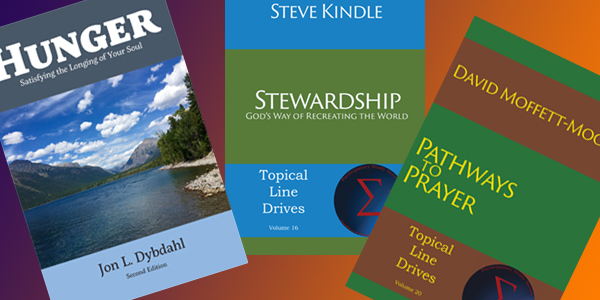
    books tuesday 020216I enjoyed interviewing three different Energion authors last night. The first was Rev. Steve Kindle who talked about stewardship and the importance of starting from an understanding that everything belongs to God. Steve provided some practical steps that a church can use in caring for all of God’s creation. Steve’s book goes into this somewhat more: Stewardship: God’s Way of Recreating the World.

    At about 7:30 pm, a half hour into the program, Dr. Jon Dybdahl joined us. Jon is the author of a newly released book Hunger: Satisfying the Longing of Your Soul. When he experienced this longing as a young missionary he started to pursue the presence of God and co-taught a class in college in spirituality. Jon’s PhD is in Old Testament, but he has a passion for serious worship.

    For the last 15 minutes, he was joined by Dr. David Moffett-Moore. Dave is author of Pathways to Prayer, and has two doctorates, both a PhD and a DMin. It was interesting and challenging to hear two men with so much education of the mind nonetheless tell us that the intellectual paradigm of religion was not enough. Prayer is an essentially. Coming to know the reality of God’s presence and power is essential.

    When I asked Dr. Jon Dybdahl how one would start this in a church as a pastor or other church leader he said the best way was to see your own need and start practicing it yourself. People will sense when your activities in leadership are powered by prayer and time with God whether you’re telling them all about what you’re doing or not. He also suggested a change in terminology that struck me, suggesting we might use “lead worshipper” rather than “worship leader” to take away the separation of the one on the platform from the ones in the pew.

    The video is embedded below:

  • Last Night on the Tuesday Night Energion Hangout: Stewardship

    Last Night on the Tuesday Night Energion Hangout: Stewardship

    97816319917389781938434129Pastors and church leaders cringe at the “s” word, because so many members don’t want to hear about it. Sometimes they blame the members for not wanting to dedicate their wallets to the Lord. But is that precisely what we should be asking church members to do?

    I think the resources to carry out the gospel commission already exist. Those resources are tied up in our individual wallets, bank accounts, and possessions at the individual level. At the church level they are tied up in buildings and supplies, things we’re sure we have to have. But do you know that there are thousands of churches around the world that get along without the things that we, in American churches, absolutely have to have?

    Come to think of it, am I aware that there are people who do without things that I count on every day?

    My guests were David Croteau, author of Tithing after the Cross and Steve Kindle, author of Stewardship: God’s Way of Recreating the World. They come from different denominational and theological backgrounds and belong to different generations. Yet in looking at what the Bible says about stewardship, they both come to the same conclusions. You’ll be amazed at the level of agreement.

    I have heard many of my fellow Americans say that the government needs to get out of charity and let the church do it. You know what? How about if the government could spend way less on social welfare programs because the church was doing its job? I don’t just mean giving out money; that’s part of it. But giving out money results from letting the gospel change our priorities so that we give ourselves to the Lord (2 Corinthians 8:5), and everything else results from that.

    Just think! We might even turn the world upside down (Acts 17:6)!

    Here’s the video:


    Earlier today Dave Black commented on this as well.

  • From My Editing Work: What is Stewardship?

    9781631991738I’m editing the manuscript for a new Topical Line Drives volume, Stewardship: God’s Way of Recreating the World, by Steve Kindle. It’s currently scheduled for the end of May, but I’m hoping we’ll get it out a bit earlier.

    Here’s a taste:

    The apostle Paul revealed to us the key to successful fundraising in his appeal to the Corinthian congregation to assist in the collection he was taking up for the Jerusalem church. His formula: 3For, as I can testify, they voluntarily gave according to their means, and even beyond their means, 4begging us earnestly for the privilege of sharing in this ministry to the saints— 5and this, not merely as we expected; they gave themselves first to the Lord and, by the will of God, to us, …

    2 Corinthians 8:3-5

    The Macedonians, in spite of their poverty, begged to give to the Jerusalem church—even beyond their means—because they first gave themselves to the Lord. Sure, it is possible to raise a lot of money using sophisticated methods based on psychological triggers and emotional appeals. These are too often resorted to as substitutes for the Macedonian way. A congregation that first “gives themselves to the Lord,” recognizes their stewardship partnership, and everything they do springs from that commitment. So let’s not encourage tithing, that’s about money. Let’s encourage seeing all we have as God’s and act accordingly.

    The book isn’t laid out yet, so I can’t give you the page this will be on. I will tell you that I had to choose between several good quotes to use here. This book also looks at stewardship much more broadly than money, including our stewardship of the world we live in.

    We’ll also be hearing from Steve Kindle tonight in his conversation with Elgin Husbheck, Jr. on the topic Lent: Season of the Resurrection.

  • Guard Your Mind

    20My child, pay attention to my words,
    Listen closely to my sayings.

    21Don’t let them escape from your sight,
    Guard them deep in your mind.

    22For those who find them find life,
    They bring healing to the whole person.

    23Above everything guard your mind*,
    Because from it flows your life.

    24Turn your mouth away from crooked speech,
    And keep lying speech far from your lips.

    25Keep your eyes looking straight down the path,
    And gaze only at what lies ahead.

    26Clear the path your feet must follow,
    and all your ways will be firm and safe.

    27Don’t turn to the right or the left,
    Keep your feet away from evil. — Proverbs 4:20-27 (my free translation)

    * Literally heart. In this case the seat of thoughts, wisdom, and rational processes.

    One of the things that I notice in American culture, and particularly in the church is that people are not discriminating in what they read, hear, and watch. I’m not pushing censorship, or heavy limitations on what you give a listen or look to, but rather with how you listen or look.

    Ads on television, for example, are designed to leave you with an impression. If you actually watch most TV ads, and analyze the words and the information content, you’ll find that there is very little there. A certain insurance company informs you that by spending 15 minutes on their web site, you could save 15% or more on your insurance. Now you really haven’t learned that much new, have you? It didn’t say you would. It couldn’t. The company doesn’t know how much you’re currently spending. But their intention is to leave you with the connection between their brand name and saving money. I don’t object to them doing that–it’s what advertising on television is about, and they’ve been very successful at it.

    Political and church ads are very similar. An ad from my denomination (United Methodist) informs viewers that our hearts, our minds, and our doors are open. What exactly does that tell you? Really very little. Again, the idea is to place in your mind a connection between the church and welcoming. In practice you will find somewhat varying levels of welcome in different United Methodist churches, which should be no surprise. Methodist churches, like all others, have people in them, and people aren’t always the same.

    Political ads are very much the same. Have you noticed how hard it is to find concrete information on a candidate? You have to go to a variety of issue related web sites, various journalistic sites, and so forth, then you have to evaluate your various sources, because they each have their own agenda, and finally, if you put in the effort, you may be able to get a substantial picture of a particular politician.

    Why is this? The politician is counting on a large enough number of voters not checking them out thoroughly. They want to create a particular impression. Why is it that negative political ads tend to work, even though substantial percentages of voters claim not to like them? Because the impression is left. Normally we take breaks during television ads. We see them out of the corners of our eyes, and we don’t concentrate on them. “Who could?” you say. True, but by looking but not thinking, we allow the impression the ad maker desires to get into our minds. The handsome candidate in front of his church with his perfectly angelic kids is giving us the impression that he’s a family man with family values. His opponent might show his image with various other scenes along with it–scenes of guys with cards in a smoke filled room, of money being exchanged in a furtive way, or of other negative images. It won’t matter if the man is really the someone who launders money and makes shady deals in smoke filled roooms, nor whether or not he actually is a church-going family man. The point is that his image is associated with that particular image in enough people’s minds. And believe me, if you don’t actually give full consideration to the candidate and factual information about him or her, you will be influenced by the image.

    I refuse to vote based on my image at the time. I look up each and every candidate and find as much hard data about him or her as I possibly can. I make lists. Then my wife and I sit down and compare notes. Sometimes one of us will have found information that the other missed, or will see a flaw in some plan that the other didn’t notice. We sit down with the complete sample ballot and look at each item. Sometimes we find we’re going to vote different ways. Sometimes we change our minds. But we guard our path carefully and keep focused on the right way, looking for the truth to the best of our ability.

    Christians face another trap–the piety trap. By this I don’t mean that you want to avoid candidates who tell you they are Christian. But as the saying goes you can walk into a garage, but it doesn’t make you a car, and you can walk into a church, but it doesn’t make you a Christian. Even further, we know that being a Christian does not make you perfect, and we have many fallen Christian leaders as examples. We also have many Christian politicians who have not behaved in an exemplary fashion. Claims and associations do not guarantee good character.

    I have seen this come up in business as well. I once was contacted by a man who was creating a Christian business directory for the area. He told me he thought that Christians should give their business to other Christians. He was quite put out when I told him I was all about being in contact with people who were not Christians. I had no problem doing business with people of other faiths or of no faith at all.

    But I’m most concerned with the reverse. There are many fads and scams out there, and they offend me, because they prey on people in need. Just join our marketing scheme, they tell you, and you will become healthy, wealthy, and wise. I do not mean to disparage all business opportunities for all people. You need to exercise judgment here as well. There might be that business opportunity that is just right for you. But check it our very thoroughly. Talk to other businessmen. Check small business support organizations in your area.

    What does this have to do with Christianity? Well, some scam artists know very well that there are vulnerable Christians who are in need, and if they just suggest that this is God’s plan, and that they are simply fine Christian people sharing God’s blessings with you, they will seem very safe. But many, many people have lost huge sums of money by investing it in supposedly “Christian” scams. The claim of being a Christian is not proof that one is honest; it is even less relevant to the claim of being wise.

    Don’t go with the impressions! Seek the facts. Apply wisdom. Let God’s wisdom into your heart and guard your paths. The book of Proverbs is in the Bible for a reason. God has given you a brain. Use it!

  • The Right Type of Accountability

    I’m an advocate of accountability, especially in church matters and our spiritual lives. I think it makes for wiser decision making and greater likelihood that we will carry out our goals. Accountability can come in many forms, from very formalized, such as an accountability group that meets regularly in which you question one another’s spiritual life, or simply telling friends and family what it is that you’ve determined to accomplish. The value of these types of accountability varies, of course.

    The Washington Post has an article on accountability, which quotes experts to tell us a number of things about accountability that may seem like common sense, but in government at least we don’t seem to follow them. Perhaps having a few PhDs say these things will help!

    This article quotes Jennifer Lerner, now moving to the Kennedy School of Government, as saying that the wrong type of accountability can produce the opposite effect to what was intended, and notes,

    What she and numerous other experts have found is that particular types of accountability are needed for particular situations. Get the nuances wrong, and accountability backfires on you.

    In particular candidates in either party may be drawn to the left (Democrats) or the right (Republicans) by the voters who will get them nominated, and then feel accountable to those voters once elected. Thus they may do things that please that constituency, to whom they are accountable, rather than what they actually believe is right.

    Accountability may also make the decision maker favor things that are easier to explain, even when those things are not necessarily better. The article cites medical decisions, in which a physician may choose the course of action that would be easiest to explain in a lawsuit, for example, over what he or she truly believes is the best choice. From my own experience with the medical profession I suspect this would result in favoring a traditional, well-established course of action over something newer but potentially more effective.

    Of course it should be no surprise that accountability that kicks in before and during the decision is more effective than accountability that kicks in afterwards. We needed a good deal of research to figure that one out! But it is something we don’t always notice. Once a decision has been made, we’re more likely to spend our time justifying what we have done than in reflecting on what we may have done wrong. Questioning often simply hardens our stance on that matter as we get defensive.

    To relate this directly to church, consider the conflict between a forward looking ministry team and a hard-headed finance committee. We have the faith versus sight debate in full swing, with the ministry folks assuring the finance folks that they are following God’s leading and that God will provide for their need, and the finance folks pointing to the budget. Where is wisdom? I think each being accountable to the other is a good thing. There isn’t a one-size-fits-all answer.

    But that kind of decision is not limited to the church. In a business you would have a similar conflict between the creative folks and financial officer. Is this product worth investing in? Do we have the money to produce it? All the while the creative people are pointing out how sales will quickly bring in the necessary support. Or something like that . . .

    Accountability is good, but needs to be combined with the courage of our convictions and the humility to reconsider of favored ideas.