Threads from Henry's Web

Tag: shepherd

  • Psalm 23:1 – The Shepherd

    Psalm 23:1 – The Shepherd

    The LORD is my shepherd,
    I shall not lack anything.

    This initial verse is very compact in Hebrew, and the poet uses that to effect. It is, in fact, just four words. It tells us who is watching over us, and the result, not lacking anything.

    I spent some time looking at and thinking about the two parts. The key word in the first part is “shepherd.” Yes, the name of God is there, but the focus is on just who the LORD is in this case.

    This reminded me of a passage from Ezekiel:

    14 I will feed them with good pasture, and the mountain heights of Israel shall be their pasture; there they shall lie down in good grazing land, and they shall feed on rich pasture on the mountains of Israel. 15 I myself will be the shepherd of my sheep, and I will make them lie down, says the Lord GOD. 16 I will seek the lost, and I will bring back the strayed, and I will bind up the injured, and I will strengthen the weak, but the fat and the strong I will destroy. I will feed them with justice.

    The Holy Bible: New Revised Standard Version (Nashville: Thomas Nelson Publishers, 1989), Eze 34:14–16

    .Ezekiel is given a message to speak against the shepherds of Israel, those who allowed Israel to go astray, or even themselves led them astray. These words are spoken from the exile in Babylon, the result of this straying.

    The shepherds were put in place precisely to prevent this sort of thing, and the LORD calls them out for their failure. The solution? The LORD himself will take over the job of shepherding the people to make sure that they are, in fact, well cared for.

    I read this Ezekiel passage in two senses. One is of comfort. Despite the failures of human beings everywhere and all the time, God will find a way to care for those needing care. At the same time, I hear the message to the shepherds, to those who have a responsibility of giving care. What happens when you neglect those duties?

    Then there is the question of what happens when the sheep fail to follow the shepherd. As we learned from our final study on Psalm 119:176, that is the time when the call is for God to seek the straying sheep.

    And then we come to the idea of “want” or “lack.” In modern English we tend to use “want” less for the sense of things we lack, and more for stating desires. I play on this in a short free verse post on my Jevlir Caravansary blog. We’re always wanting something, but what is it that we really lack?

    I was interested in the variety of things one might lack. Uses of this word occur in Ecclesiastes 10:3 for someone who lacks sense. Have you ever considered that with the Lord as your shepherd, you won’t lack for good sense? Doubtless you’ll have times when you don’t use it, but good sense (and wisdom [James 1:5]) are available.

    As show in 1 Kings 17:14 & 16, the widow’s oil never lacked while Elijah was staying with her. The same word is used. The Hebrew word, much like its English counterpart, can be used for a variety of types of lack. Do we consider who our shepherd is when our lack is emotional?

    The shepherd is the shepherd of our souls and our bodies, and is with us through everything.

    What do you lack?

  • Introducing Psalm 23

    Introducing Psalm 23

    Who needs an introduction to Psalm 23? It’s one of the most familiar passages in the Bible. That’s likely why my wife suggested it as a starting point. With that challenge, I’ll be continuing the process I used for Psalm 119, and doing a post on one verse per day.

    Overview

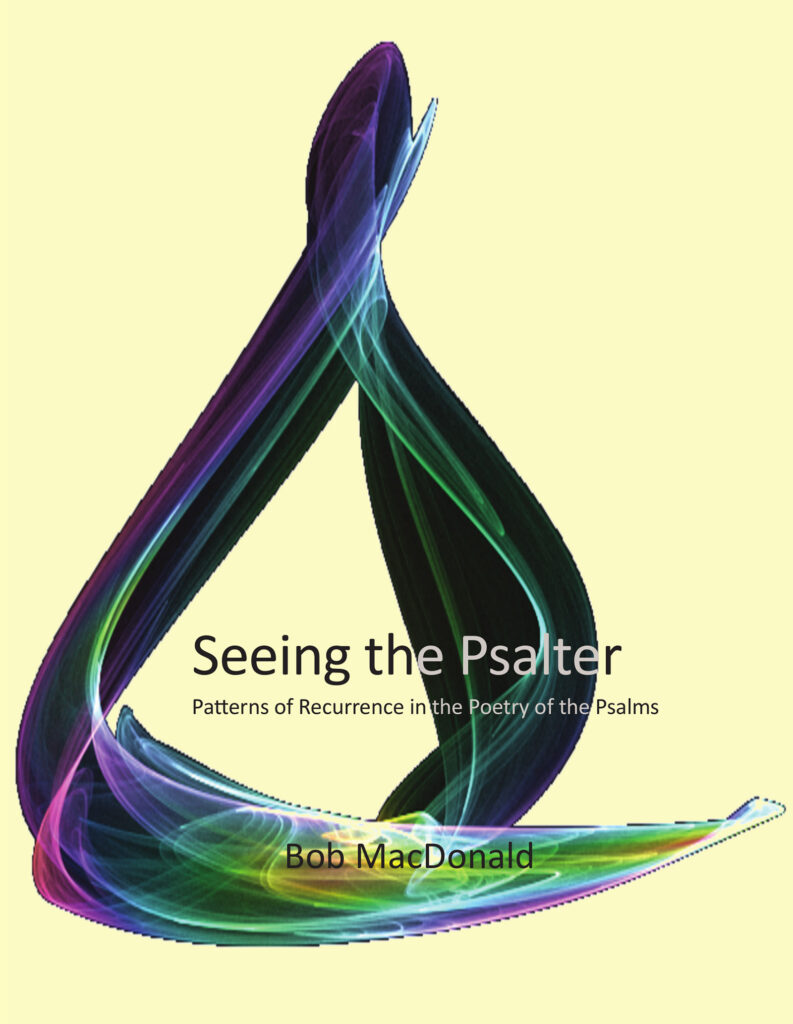
    Bob MacDonald, in Seeing the Psalter, specializes to some extent in seeing Psalms in the context of the Psalter. I like his comment on Psalm 23.

    After the theophany of Psalm 18, the warmth of Psalm 19, the prayer of Psalm 20 and its response (Psalm 21) and the turmoil of Psalm 22, what does the tension and resolution of Psalm 23 tell us? The gift of the shepherd acting in leadership and correct is, we may say, satisfactory.

    Bob MacDonald, Seeing the Psalter, p. 84

    Psalm 23 is one of the more settled and peaceful Psalms, rejoicing in God’s presence and protection, and filled with assurance. Many Psalms are set in troubled times, so that we hear the distress before we hear an affirmation of God’s care, if we hear that at all.

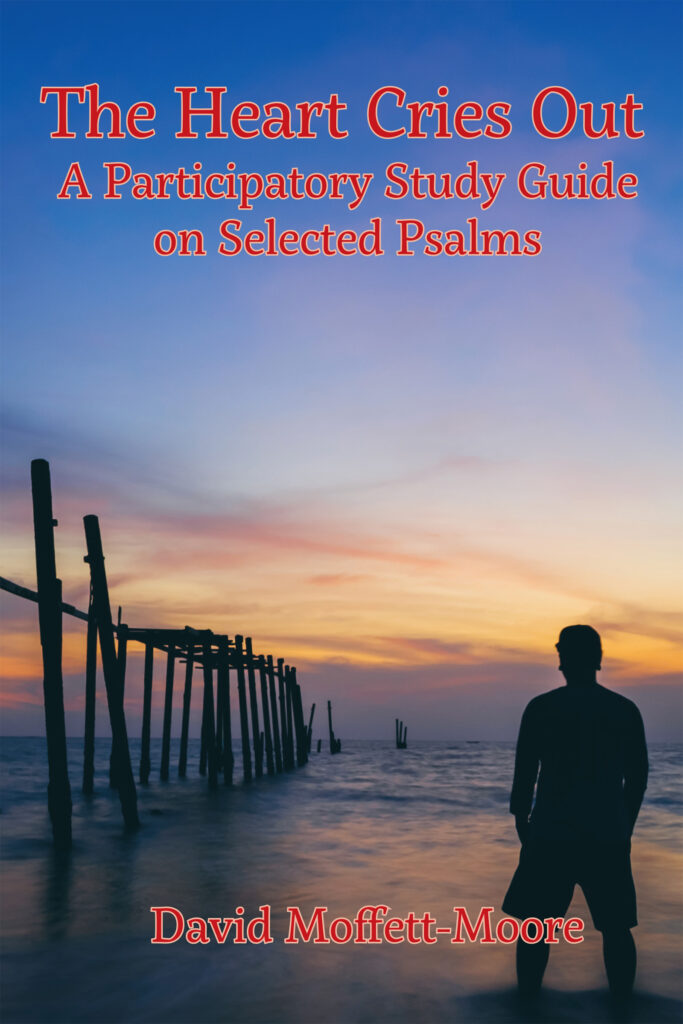
    Another book I publish, The Heart Cries Out, says of Psalm 23,

    The 23rd Psalm epitomizes our ideal relationship with God. We want God to be our good Shepherd, guiding us through green pastures and calling us beside still waters. We want God to be with us as we go through that dark and lonely valley, even the shadow of death. Moses was a shepherd, tending the flock of his father-in-law Jethro, when he encountered the burning bush and heard the voice of God. Young David was a shepherd tending his father’s flock when the prophet Samuel called him to be king of Israel and the slayer of Goliath. Rulers and leaders of Israel are challenged to be shepherds of their nation. Jesus is the Good Shepherd, laying down his life the sake of his sheep. The title “pastor” comes from the Latin word for shepherd. We want this Psalm to be our psalm.

    David Moffett-Moore, The Heart Cries Out, p. 25

    My own introductory thoughts are not so historical, nor do they reflect experience as a shepherd. Well, some experience with animals, yes, but not as a shepherd. There have been books written by actual shepherds. I like reading that sort of thing, but it’s not my own approach. In fact, I like what I read in the International Critical Commentary on the Psalms (Charles Augustus Briggs and Emilie Grace Briggs, published by Charles Scribner’s Sons in 1906). They suggest that only the first four lines of the Psalm are about a shepherd, and that the remainder switches to a trail guide and then to a host.

    The experience that came to mind for me was of my goats back when I was about 12 years old. I had four goats. I milked them and sold the milk, but they were also pets and even friends. Out of these goats my special friend was named Carraway.

    The goats would all follow our family if we went for a walk. We lived on a campus where it was possible to do this. It was one of the unusual sights of the place, a family walking with four goats, a dog, and occasionally a cat.

    Now there were some places where I liked to take a rougher path over a hill and meet the family on the road on the other side. Three of the goats, the dog, and (if applicable) the cat, would go with the rest of the family. But no sooner would I separate from the group than Carraway would break away as well and follow me up whatever hill or over whatever fence. She was really good at getting over, under, or through fences.

    We talk about the shepherd and the sheep, and how the shepherd hunts for the lost sheep. But there’s also the way in which the sheep follow the shepherd, much like Carraway followed me. There is a value in sticking close to the one who takes care of you. There is great benefit likewise for us in doing our best to stay close to the shepherd.

    As we read at the end of Psalm 119, we have gone astray like lost sheep, and our hope is in the shepherd finding us. But spiritual growth involves doing what we can to follow, even on the harder paths. There will be steep hills and fences, but those are things to overcome, not to stop us.

    So, ignoring metaphors like the sheep and the goats, in which the goats get a bad rap, my Psalm 23 starts with following the example of Carraway the goat.

    I sure do miss her even now!

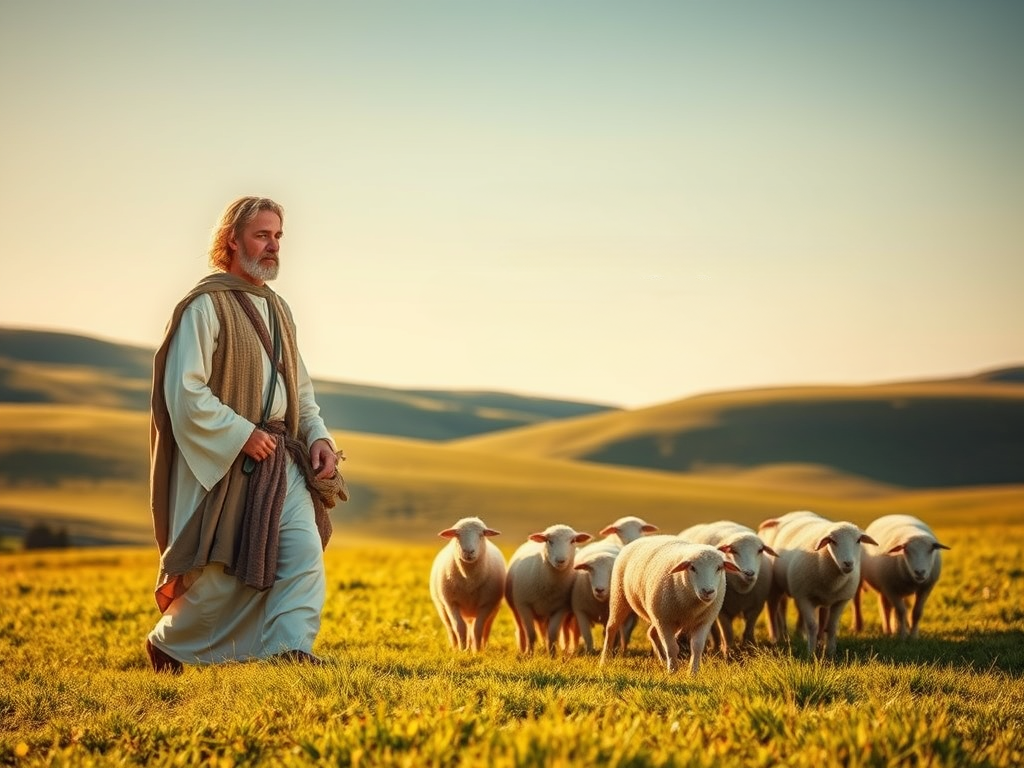
    (Featured image generated by Adobe Firefly.)