
Threads from Henry's Web

Tag: Seventh-Day Adventist Church

  • Why I Publish Books by and for Seventh-day Adventists

    Why I Publish Books by and for Seventh-day Adventists

    This may seem like a simple question. A better one might be, “Why not?”

    Some Prefatory Remarks
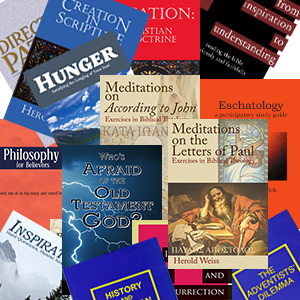
    sda booksSeventh-day Adventists (SDAs) are often misunderstood, which complicates the issue. If I had transferred my membership from a Presbyterian church, for example, to a United Methodist congregation, it’s unlikely anyone would ask me why I maintain relationships with Presbyterians. As an ex-SDA, however, I’m often asked questions like the one I’m trying to answer right now. SDAs ask me how I could possibly leave the church. At an SDA church where one of my authors was speaking, a young man exclaimed to me, “How could you possibly have difficulties with SDA doctrine?” If you want to understand why I left the SDA church or how I feel about it, you might try reading The Joys and Sorrows of Being ex-SDA.

    Here’s my key point: While I disagree with the Seventh-day Adventist Church on a number of doctrinal points, especially on issues of prophecy and some applications of the (otherwise valuable) term “remnant people,” I still regard them as brothers and sisters in Christ, in the same way and on the same basis that I regard fellow Methodists, or members of Presbyterian, Baptist, Assemblies, United Church of Christ, independent, or any other Christian congregation. I have disagreements on doctrine with pretty much everyone I know (often including yesterday’s version of myself), and that doesn’t make me deny Christian fellowship.

    But there are always those other questions about SDAs. They’re different, yes, but they’re more different in weirder ways than others. Which reminds me of the church Staff-Parish Relations committee that decided that an SDA speaker, who had also spoken at continuing education events for pastors at the conference level, could not be allowed to speak at their church. Having read something about Latter Day Saints, they were certain they didn’t want an SDA to speak. Surely we should stick to Methodist speakers.

    There are two forms of ignorance here. 1) There’s ignorance of precisely who SDAs are and what they believe, and 2) There’s the ignorance of just how much weirdness we have in mainline denominations. If I need to find a crazy speaker, but am limited to those who are United Methodists, I will have no difficulty at all!

    What I Publish

    So what does this have to do with publishing?

    Very little, actually. It’s just that people expect it to.

    I frequently have to remind people that I am a Christian publisher, publishing books selected for a Christian audience. That doesn’t mean that all our readers are Christians. What’s more, it doesn’t mean that all our authors are Christians. In a blog post titled Why Did You Publish THAT Manuscript? (on the Energion blog), I noted that “We judge manuscripts and not authors here at Energion Publications.”

    To me that is a rather obvious point, but it has raised questions. In order to guarantee the publishing of Christian authors only I would have to first define the boundaries of Christianity, and then make myself the judge of whether someone had met those criteria or managed to fall within those boundaries. I can do that for myself with regard to organizations and systems. It’s a simple matter of definitions and categorization. To do it with persons would be problematic. In fact, I personally simply accept anyone’s self-confession of what their religious view is.

    Further, as publishers have discovered before, it’s much more difficult to determine whether a person is a good person than it is to determine whether a manuscript is a good manuscript. I choose to deal with manuscripts.

    Seventh-day Adventists

    I think my earlier remarks largely answer the question. When a manuscript by an SDA author seems to me to be of interest to my audience, an audience which definitely does include SDAs, I’ll publish it, always provided it meets other necessary criteria. I avoid publishing books that are of interest to only one denomination, for example.

    Here are some specific points:

    • Am I on a mission to convert SDAs and get them out of the SDA church? No. I have no intention of persuading anyone to leave their denomination. In fact, I will state that if you’re leaving any church, including the SDA church, because of anger at the organization, you’re going to find plenty of imperfections wherever you go. If you leave a church congregation or a denomination, do so for positive reasons. I may disagree with some doctrines of the SDA church, and so I moved to an organization that is more doctrinally compatible with my views, but I applaud and highly value the SDA educational and health systems. I also value much of the theological work done by SDAs over the years. I can both disagree with, and value, ideas.
    • What about the seventh day Sabbath? I consider the Sabbath a part of one’s approach to worship and a spiritual practice. Where I have seen it carried out as a spiritual practice, I find the seventh day Sabbath valuable. As with any other activity, it can be converted into a legalistic “work,” but the key here is “any other activity.” Because keeping the seventh day as the Sabbath stands out as unusual, people take it as extraordinary evidence of legalism. But it’s simply one more practice that can be positive or negative. I have said before that I miss the Sabbath as practiced in SDA circles. I have other means of seeing sacred time, but there’s nothing that quite matches taking sacred time together with a community.
    • Don’t SDAs think they’re the only true Christians? Some of them do. So do one or two Methodists. I think this is a problem for the SDA church partly because of teaching about God’s remnant people. But I have no problem with SDAs as a group over it. Most SDAs that I encounter treat me as a fellow-Christian even though I have left the church. There are occasional folks who treat me as an apostate. I believe that could be solved if there were no people in the SDA church. As things are, we’re stuck with it.
    • But SDAs don’t believe we go to heaven when we die! Indeed they don’t. Neither do I. I think the Bible is actually quite unclear about what happens after death, but the balance, I believe, favors soul sleep and a resurrection. I just don’t happen to think it matters. Arguing about this is very time-bound thinking. If I die and go to heaven immediately, there will be one breath here and next (breath? who knows?) on the other side. If I die and sleep with God until the resurrection, there will be one breath here, and the next (whatever!) on the other side. I won’t know the difference. (I publish several books related to this: Eschatology: A Participatory Study Guide, From Here to Eternity, Journey to the Undiscovered Country, and the forthcoming Death, Immortality, and Resurrection. The first and last are by Edward W. H. Vick, an SDA author.)
    • SDAs believe in Ellen G. White, a false prophetess. Got you now! Ellen White did indeed have a great deal to do with the founding of the SDA church, though I find her own view of herself and her mission refreshingly humble. I also find a number of her writings to be excellent devotional works (Steps to Christ, Desire of Ages, etc.). We have a voluminous collection of her writings, including letters that she wrote over a long life. The SDA church has had some struggles over how to view her and her relationship to the Bible. Bluntly, however, I’ve found traditions in local congregations of the United Methodist Church that have more sacred standing, in practice, than her writings do in the SDA church. I would say, rather, that the church as a whole, and the modern Charismatic and Pentecostal movements in particular, would do well to learn from the SDA experience. Speaking of which, I’m in the process of releasing Inspiration: Hard Questions, Honest Answers by Alden Thompson. He deals with issues of Ellen White in connection with discussing biblical inspiration in a work that I think the wider church would do well to study.
    • How do I deal with SDA authors in my catalog and marketing? Like any other author. I’ll advertise their books for their own denomination, but also present them to others for their wider value. And just like any other author, SDAs may write something that’s addressed more to their own church than to others. In that case, they will be more likely to publish within the denomination, again just like any other author might. I neither emphasize nor do I conceal the denominational connections of my authors.
    • Do my SDA authors quote Ellen White in their works? Yes, and no. I tell them to quote Ellen White as they normally would and if it’s necessary, we will add an explanatory note to the book so that others can understand and still benefit. This is a function of the level of controversy surrounding her work, rather than any judgment of it that I might make. Because there is controversy, explanation is helpful. On the other hand, when addressing the larger Christian community, SDA authors often feel it’s best to make their points without reference to an SDA specific source.
    • Are you trying to provoke dissent in the SDA church? No more so than in any other church. I do have some books in my catalog that have gone out of print from SDA publishing houses. The level of controversy in the SDA church has nothing to do with my decision. I still judge the book, not the author, and certainly not any former publisher. But beware! I’m not the arbiter of truth, and certainly not the arbiter of SDA doctrine. If you don’t want your beliefs challenged, then it’s my hope that my books are not for you!

    Conclusion

    I publish SDAs in the same way and on the same basis as I publish anyone else. It’s that simple (he says 1600 words later)!

  • Guest Post: Thoughts on the SDA General Conference Decision about Ordination of Women

    I thought about commenting on the recent vote by the Seventh-day Adventist General Conference on allowing it’s divisions to choose whether to ordain women. As an ex-SDA, however, and one who works with people on both sides of this issue, I thought it might be a bit rude.

    I just received the post that follows from an SDA young person, thoughtfully responding to the vote. I think there are elements here that should be considered by people of all denominations. If you change the issue, don’t the underlying problems nonetheless remain? – HN


    On Wednesday the 2015 General Conference of Seventh-day Adventists made a historic decision on the topic of women’s ordination. On Wednesday, the General Conference stopped representing me.

    I am a 20-something male who could be considered a “card-carrying” SDA: raised in the church, attended an SDA academy and university, and am even a lifelong vegetarian. I’m not a pastor, though at one point I nearly became one. I have worked in Adventist summer camps for over 5 summers, and am involved in music and technological ministry. But what right do I have to speak on women’s ordination? Not much. This vote, however, was not about women’s ordination.

    To make my stance perfectly clear: I am fully supportive of women being ordained in the SDA church and given full privileges in ministry, with no limitations or compromises. I am not a theologian, though, and my intention is not to add to the body of arguments already made for or against it. To me, the deeper, more sinister strain beneath this vote is the clear expression of mistrust that the delegates of the world church have demonstrated towards its members who are called to the ministry of the Gospel. As a church that advocates that all members are ministers, this means that the governing body of my church no longer trusts me.

    Let’s look at the actual measure voted upon:

    “Is it acceptable for division executive committees, as they may deem it appropriate in their territories, to make provision for the ordination of women to the gospel ministry?”

    The delegates voted 1,381-977 against the measure, but what does that mean? Perhaps more importantly, what does it not mean? A ‘yes’ vote would not mean that a division would ordain women. To me a ‘yes’ says that, given an issue to which there are clearly multiple theological and cultural interpretations, regions would have the right to take into consideration the needs of their members and the path that would be most effective in spreading the message of Christ to the world. A ‘yes’ vote, then, could be conscientiously given by a delegate who did not themselves agree with the ordination of women in their division, but wanted to extend that right to those in other divisions.

    The 1,381 ‘no’ votes, however, did not leave room for debate or choice. The GC delegates were under no illusion as to which way the vote would have gone had it been about directly approving ordination without regards to gender across the entire world church. Given a global GC approval was virtually impossible with the current body of delegates, a ‘no’ vote sent a clear message that their interpretation of this issue is the only valid interpretation, and this should be imposed on the global church body. Look at any major tweets or article about the ordination vote and you will see many well-meaning yet inconsiderate replies praising God for keeping His church together or making His will clear through the vote. Meanwhile, the disenfranchised received an ‘official’ slap in the face from the very organization to which they have dedicated their careers and service.

    As someone who can still be considered a (barely) young person in the Adventist church, my global church has told me they do not trust me to think for myself. More insultingly, they have told me I should not regard my close female friends who are dedicated ministers in the church, pastors or otherwise, as highly as the men, independently of the quality and sincerity of their service. In this same GC session, mission has been emphasized, and reports have been given on young people leaving the church. Countless discussions throughout the years have tried to ascertain why this is. Well, as a ‘biased sample’ of those young people, I will answer that to them right now: It’s because you don’t trust us. You won’t empower us. You want us to be nominally part of your mission, but you want us to walk, talk, and sing like you. Yet we see right through your facade. We were attracted to this church because we believe that Jesus is coming soon, and because we want to do our part to get the world as excited as we are. Then we found out that you won’t let us, and we wonder if this mission we were ready to give our lives for was really the mission that you represent at all. Then we ask questions you won’t answer, or that you answer too quickly. Then we doubt. Then we leave.

    Fortunately, not all is lost. Some unions within divisions of the church, such as the Pacific Union, have courageously approved ordination of women within their union. These rights may not extend beyond those unions, but they shine as little lights that will not stand for inequality within the body of Christ. We (of all denominations) need to stand for those who want to spread the light of Jesus but have been discouraged, disenfranchised, or belittled. In my (and I still consider it my) church, I need to stand by the women who are fighting to serve in a church that does not always acknowledge that fight, and I will not blame those who for these reasons feel compelled to leave. Personally, my fight is still from within. I believe that being an ‘Adventist’, one who hopes for the second coming of Jesus, is something far beyond what a large, fragmented, human governing body can define it to be. This is evident in the many accepting local churches and wonderful individuals in the Adventist church of all genders, races, and cultures. Even if I cannot be represented fully by the General Conference of Seventh-day Adventists, I am represented wholly by Christ and His advent. My mission as a Christian and a Seventh-day Adventist is a reflection of Christ’s mission: to reach all the world, without prejudice or compromise.

    I’d like to end with a quote from one of the founders of the Adventist denomination, founded about 150 years ago. Her writings have been used and abused on both sides of this issue and many others, so I will simply leave you this paragraph unabridged and without personal commentary. God bless you, whatever you believe, and thank you for reading.

    Then as the children of God are one in Christ, how does Jesus look upon caste, upon society distinctions, upon the division of man from his fellow man, because of color, race, position, wealth, birth, or attainments? The secret of unity is found in the equality of believers in Christ. The reason for all division, discord, and difference is found in separation from Christ. Christ is the center to which all should be attracted; for the nearer we approach the center, the closer we shall come together in feeling, in sympathy, in love, growing into the character and image of Jesus. With God there is no respect of persons.

    Ellen G. White, 1st Selected Messages, pg. 259

  • Seventh-Day Adventist vs Methodist on Family Guy

    As an ex-SDA who is now Methodist, I just have to share this video:


    Now my experience amongst Methodists is that most will just shrug their shoulders about worship on Saturday. They get a little more tense about soul sleep.

    I have encountered a few Methodists who are like the one in the video, generally those who really have no idea what SDAs believe.

    On the other hand, I’ve gotten some very interesting reactions from SDAs who discover I’m ex-SDA and now Methodist. At one meeting where I had brought one of our Energion authors who is SDA, I was cornered by someone at the book table afterward who said he simply couldn’t understand how one could ever have doctrinal disagreements with the SDA church. Take it from me—it’s really quite easty! It’s only fair to point out that our hosts at that church were embarrassed and apologized to me for his behavior, though I actually didn’t mind.


    (HT: Spectrum)

    Enhanced by Zemanta
  • An End-Timely Dilemma

    A couple of months ago my company, Energion Publications, began distributing two previously published books by Edward W. H. Vick. As I normally do, I planned to publish my reflections on these books here. Time has been in short supply recently, and I haven’t gotten to them.

    The Adventists Dilemma

    But fortuitously, one of the books is The Adventists’ Dilemma, and relates to the end times, so what better day could I have to publish some notes on the book than May 21, 2011, the day on which Harold Camping says the rapture will occur. Now as I write this, it’s already past 6 pm in many places, and thus Camping’s prediction is, predictably, failing.

    As usual, this will be more my reflections on the topic of the book than a formal book review. In fact, it won’t resemble a formal book review at all. Since I now distribute the book in question, and thus have an interest in selling it, you should also not consider this unbiased. It is, however, a subject in which I have great interest.

    I grew up in the Seventh-day Adventist Church, which is also Dr. Vick’s background. There’s even a family connection. He replaced my uncle, Don F. Neufeld, as Greek teacher at Canadian Union College, now Canadian University College. Seventh-day Adventists have a very strong emphasis on eschatology. Indeed, the word “Adventist” in their name refers to their belief that Jesus will return soon.

    The church came out of the Millerite movement in the 1830s to 1840s, which resulted in two disappointments, the first in 1843, and then the second–the Great Disappointment–on October 22, 1844. Those who are predicting Camping’s response to his disappointment today might consider the Adventist response at the time. One of those responses became the investigative judgment doctrine in Seventh-day Adventism, which maintained that October 22, 1844 was an important prophetic date after all, but that the event which took place was in heaven and thus we couldn’t see it. The time was right, but the event was wrong. (For those interested, this all came about through interpretation of Daniel 8:14, badly out of context in my view.)

    But Adventists generally, and particularly Seventh-day Adventists, decided they had been wrong to set a date for the second coming, and so the dilemma I reference in the title is not based on setting dates. Rather, it has to do with the idea of proclaiming the “soon” coming of Jesus Christ. To quote from the book description of The Adventists’ Dilemma,

    If you use ‘soon’ in the ordinary sense, you can’t go on saying that the Advent is soon. If you say that the Advent is ‘soon’ in a qualified sense (meaning ‘in the unknown and indefinite future but not long into that future’) the claim is meaningless. So the claim that the Advent is soon is either false or meaningless.

    But, you may ask, doesn’t the Bible speak of the return of Jesus as “soon?” Doesn’t this same dilemma apply to the New Testament writers? Dr. Vick believes it does, they noticed, and they dealt with it. Since he spends three chapters on it, I’m only going to quote two snippets in summary:

    Jesus as a Jew spoke to his generation. Jesus’ message to that generation was, Your opportunity is here and now. It must now be seized. It will pass. Jesus’ words sponke again to the early church. Your opportunity is here and now. You must seize it. It will pass … (123-124).

    …Whatever the struggles ahead, the assurance of triumph, God’s triumph, makes the present full of meaning and full of hope (125).

    The one weakness I see in this book is simply that Dr. Vick takes a very long time dealing with the issue of the meaning of “soon” and many who are not Adventists as such will find the material on the movement’s history and on recent Seventh-day Adventist responses on eschatology to be excessive. On the other hand, for those interested in those topics, the weakness is a strength.

    I have shown little interest in Camping’s predictions, because they are so obviously wrong. But my question is whether we don’t both leave some Christians vulnerable to this sort of thing, and also provide an unnecessary opportunity for ridicule by failing to deal sensibly with eschatology. Some people will be concerned with end times whether we like it or not.

    I went from growing up in the SDA church where eschatology was king, we all could quote verses from Daniel and Revelation to support our beliefs about the end, and the soon coming of Jesus was a firm conviction, to the United Methodist Church, where very few people had a clue. Now you may justifiably point out that I regard the Adventist “clue” as wrong. The problem on the Methodist side was not incorrect eschatology, but rather an eschatological vacuum. One Methodist minister even told me about inviting an SDA minister to teach Revelation to his congregation because, he said, “they know so much about it.”

    But the issue here is not SDA or non-SDA, but rather just what your congregation will believe about eschatology in the absence of some good teaching. If you ignore Revelation, what will your congregation believe? In my experience, the answer is that those who care will follow someone on TV or in popular books, and that means the “left behind” eschatology.

    I remember the first time I was invited to teach a Methodist youth group. This was a seminar offered on a day off from school, and the young people were selected–the most interested. I was to teach them about Bible backgrounds and Bible translation. I completed my presentation and opened it up for questions. What did they ask? Was I pre-trib, mid-trib, or post-trib.

    Now most of their parents couldn’t have defined the terms, but these kids had heard them. They were quite surprised to find out I didn’t believe in either the rapture or the tribulation (in the sense of a seven year period of tribulation), and discussion died. I must not know much about Revelation!

    But I found the same thing with the adults. People either knew nothing of eschatology, or they had absorbed popular culture on the topic. To them, Revelation was the left behind series. They had no idea there was any other way to look at things.

    And there is where we mainliners have failed, I think. In the absence of sound discussion of the available scriptures and evidence, people will jump on just about anything that is confidently asserted and clearly proclaimed. While most Methodists are unlikely to go with a particular date, many are going to ride the “soon” bandwagon right off a cliff.

    There is a sense in which imminence trumps immanence. We lose the motivation to live our lives for Jesus based on the fact that he is present with us now, because we’re too concerned with when he’ll return and end everything. We sing “soon and very soon, we’re going to see the king” when we should be sing “now and truly now, we always see the king.”

    God’s ultimate triumph is our hope, but God’s presence now connects us to that hope and should motivate us to proclaim that presence and kingdom, the one that is with us while the earth continues.

    I’d like to suggest that we need to make sound eschatology a regular part of teaching and preaching. I don’t mean by this responses to predictions like Camping’s. Explaining how wrong other people are, even if they are indeed very wrong, still leaves a vacuum. What we need to do is proclaim the positive message of eschatological passages. While we’re doing that, let’s put the emphasis on the good news, which is not how many people will be left behind or how many will burn in hell, but rather how many people we, as the body of Christ can reach with God’s grace and help acting as Christ’s body.

    Enhanced by Zemanta
  • Seeking Sinless Perfection

    Stripped image of John Wesley
    Image via Wikipedia

    Because I have some online watches for names of Energion Publications authors, I found the post In Search of Sinless Perfection, which quotes Alden Thompson. This comes from a Seventh-day Adventist background, but I must mention that I have been surprised by how much from my own SDA background simply translates into Methodism. One may easily underestimate the impact of the fact that Ellen White, early SDA leader viewed as having the prophetic gift, was a Methodist before she joined the Adventist movement.

    In any case, Ellen White quotes aside, Loren Seibold, author of the article gives a number of the reasons I have for questioning the idea of sinless perfection. Certainly the Wesleyan doctrine as actually taught by Wesley (try here for more, though you may find the account less plain than you imagined) seems less problematic than its various descendants.

    I love the introductory story, which ends:

    Then the perfect man hung up on me.

    Perhaps not the ending one imagined for a conversation with a perfect man!

    I too am a believer in sanctification. Where I must get off this particular train, however, is where one gets a personal knowledge that one is perfect. I just can’t see how that would work.


    Enhanced by Zemanta
  • UMC Rather than SDA – Again

    This was brought to my attention when I read the text of Ted Wilson’s address to the SDA General Conference. (I listened to he first 10 minutes as well, but preferred reading.) Why am I interested in the sermon presented by the new president of the General Conference of Seventh-day Adventists? I am, after all, a member of a United Methodist congregation.

    There are three reasons. First, I was raised SDA, and one’s upbringing tends to stay with one. In this case I’m not at all sorry about my background. I received an excellent education in SDA schools and being homeschooled using SDA materials. I had many wonderful experiences as a member of the SDA church. Second, I still have friends and colleagues who are SDA, and I appreciate their friendship and their ministry. Finally, I still hear the question pretty regularly: “Why are you no longer a Seventh-day Adventist?”

    I should note that there is another common question that arises in connection with the first, which is to ask just why I’m not an angry ex-SDA. It seems that there are so many of those. I’d simply like to point out that one can disagree with the positions an organization takes and can determine that one should not be a member of that organization without also hating that organization, or even thinking that organization is negative on balance.

    From the other side I get the question of why I will not more forcefully distance myself from “that cult.” The reason for that is that while I disagree vigorously with certain positions of the SDA church, I do not believe it is any more or less likely that a member might be a true Christian or not. I could hardly give statistics since I don’t believe it is up to me to judge. What I am concerned with is mission and ministry.

    Before I give a brief response to the question of why I am now a member of a United Methodist congregation, rather than still being SDA, I want to look at some quotes from Ted Wilson’s sermon. (You can find the complete text here, so you can put these into context. I provide page numbers.)

    As I read this text I felt a concern for my many friends who are members of the Seventh-day Adventist Church. At the same time I feel a concern for what I see as the potential blessing that the SDA church could be to the broader Christian community.

    Let’s look at some quotes:

    This church is not just another denomination; it is a unique, heaven-initiated movement with a mission of salvation to the world that must continually go forward in the humility of Jesus. pp. 3-4

    In my view, the “unique, heaven-initiated movement with a mission of salvation to the world” is not the SDA church but the universal Christian church. This is a critical point for me. If Seventh-day Adventists believe they have a message for the rest of Christianity, I think that is a positive thing, and they should be heard, not relegated to the status of a “cult.” But that line puts a single denomination in the position in which the church universal should be placed. I think it would be difficult to find a scriptural warrant for such a thing. This quote figures in the most critical reason I’m not SDA.

    Go forward, not backward…….Do not succumb to the mistaken idea, gaining support even in the
    Seventh-day Adventist Church, of accepting worship or evangelistic outreach methods merely because
    they are new and “trendy.” We must be vigilant to test all things according to the supreme authority of
    God’s Word and the council with which we have been blessed in the writings of Ellen G. White. Don’t
    reach out to movements or megachurch centers outside the Seventh-day Adventist Church which promise
    you spiritual success based on faulty theology. Stay away from non-biblical spiritual disciplines or
    methods of spiritual formation that are rooted in mysticism such as contemplative prayer, centering
    prayer, and the emerging church movement in which they are promoted. Look WITHIN the Seventh-day
    Adventist Church to humble pastors, evangelists, Biblical scholars, leaders, and departmental directors
    who can provide evangelistic methods and programs that are based on solid Biblical principles and “The
    Great Controversy Theme.” p. 7

    That’s a longer quote, even though it carries a great deal of baggage. It is, I believe, a call to look inward. I would point out that this impulse is not exclusive to Seventh-day Adventists. My wife was in a curriculum meeting in a United Methodist church in which a piece of curriculum was criticized for being “too Baptist” and having “too much Jesus.”

    If you have to look only within your own denomination in order to keep people on the road to truth, I have to question whether it is truth you are protecting. In both Wilson’s paragraph, and the remarks made in that curriculum committee, what is being protected is power, not truth. Truth can withstand examination.

    Go forward, not backward! Stand firm for God’s Word as it is literally read and understood. p. 8

    All I can say is that this statement and its many variants is probably the worst advice on Bible study that is commonly given–and unfortunately believed by many. Even in reading a vision, such as the book of Revelation, people are told to think literally. Bad advice! Very bad advice!

    This unbiblical approach of “higher criticism” is a deadly enemy of our theology and mission. This approach puts a scholar or individual above the plain approach of the scriptures and gives inappropriate license to decide what he or she perceives as truth based on the resources and education of the critic. p. 9

    Yet whenever we read scripture we interpret. This criticism of higher criticism does nothing more than reject it because one disagrees with the results. There are problems with higher criticism, just as there are problems with reading everything literally. These are problems that require thoughtful responses. I would reject a version of higher criticism that stands on purely naturalistic assumptions. But such a foundation is unnecessary to find value in many of the tools provided.

    While the Bible is paramount in our estimation as the ultimate authority and final arbiter of truth, the Spirit of Prophecy provides clear, inspired council to aid our application of Bible truth. It is a heaven-sent guide to instruct the church in how to carry out its mission. It is a reliable theological expositor of the Scriptures. p. 9

    I would simply point out that this issue stands out as one of the milestones on my own departure from the SDA church. If you treat Ellen White as a definitive interpreter of scripture, you are placing her above scripture, whether you like it or not. I recognize that Wilson didn’t use the word “definitive,” but I think the intentions are clear. As a Christian, I do not reject the idea of a modern prophet, but I do reject he idea that any person can be the definitive interpreter, denying me the opportunity of full examination, discussion, and disagreement.

    So having responded to some key points in the sermon, what does this have to do with my own departure from the SDA church?

    I think it highlights it rather well. Let me begin by noting that my key issues with Adventism were not the standards of the seventh day Sabbath, legalism, or the state of the dead, which seem to stir people up so much. Let me be clear: I disagree with SDA positions on the Sabbath and somewhat on the state of the dead. They just are the critical issues for me.

    The state of the dead doctrine is trivial in my view. I really don’t care how much time elapses between death and going to be with Jesus–eternally. There is no time lapse which will matter, in my view. I think there are some scriptural arguments on both sides, but I don’t care that much about the answer.

    I envy Seventh-day Adventists the doctrine of the Sabbath, even though I don’t accept it. What it did for many SDAs of my acquaintance–and still does–is give them a much stronger sense of sacred time than I find in other churches. Time stewardship in Christianity is in poor shape, and this is something the broader community could learn from SDAs.

    But at the same time we see legalism. Those in the SDA church who worship on Saturday for legalistic reasons also often miss the valuable blessings it can have. I don’t think such legalists are in the majority; my experience was of many Adventists truly refreshed by the Sabbath rest.

    The critical element for me was eschatology. I find the SDA approach to Daniel and Revelation almost completely wrong. The interpretation of Daniel 8:14 is completely unjustified by the text. The doctrine of the investigative judgment also runs contrary to any number of other orthodox Christian doctrines. But I’ve written about that before.

    Even that disagreement is not necessarily a deal breaker. I know any number of United Methodists who believe things about eschatology that I find profoundly troubling, yet I can be a Methodist.

    The problem comes in the doctrine of the remnant. Again, I must specify that I do see a doctrine of the remnant in scripture, but it’s specifically the identification of the remnant with an organization that I would call the critical deal breaker.

    When SDAs ask me why I left the church they often respond to my early, brief remarks by noting that the United Methodist Church also has problems. Their assumption seems to be that I left the SDA church because it was imperfect and have found the church in the UMC. But that isn’t the case.

    The SDA church is imperfect. So is the UMC. But nobody (that I know of) in the UMC expects me to equate my membership in that organization with my Christianity or my salvation. It doesn’t make me part of a special remnant. That membership means that I choose to find fellowship in my UMC congregation, to find accountability there, and to serve as part of the body of Christ there, i.e. to find my place of ministry there.

    When I said I would uphold the UMC with my prayers, presence, gifts, and service, I did not also affirm that I would regard the UMC as better than all other churches, much less as the one organization representing what Christianity ought to be.

    I believe that my disagreement with the SDA church on a number of doctrinal issues means that I do better not to be a member. But combining those doctrines into a core set of beliefs defining the one true organization out there is the most critical element.

    Love, appreciate, enjoy, yes. Join, no.

  • La Sierra Board Makes a Statement

    I would say it’s a statement on creation and evolution, but I’m not quite sure what it is.

    Earlier (Seventh-day Adventist Education and Evolution) I wrote about the concerns about the teaching of evolution in biology classes at La Sierra University, a Seventh-Day Adventist school in California. (I was raised in the Seventh-Day Adventist Church and educated in its schools, though I am no longer SDA.)

    The Spectrum blog has a link to the Board of Trustees statement (PDF), which does not seem to me to answer any questions. After declaring “whole-hearted support” for the SDA statement of beliefs, which includes an article affirming a literal seven day creation week, it includes the following two paragraphs:

    The Board of Trustees is committed to a spirit of open inquiry and discussion in the university’s classrooms and laboratories. The Board intends that when varying viewpoints are raised they will be heard with due respect.

    In its commitment to the integrity of the university’s mission, the Board of Trustees is dedicated to inspire, challenge, encourage and support the faculty in their sacred academic work. Further, the Board embraces its responsibility for ongoing evaluation and assessment.

    These paragraphs, including phrases like “spirit of open inquiry and discussion” and “support the faculty in their sacred academic work” sound to me like a certain amount of support for the science faculty. In the end, one still has to wonder just what the faculty will be expected to teach and how this will be evaluated. “ongoing evaluation and assessment” seems to indicate the board will be watching (as they should) but doesn’t really tell anyone just what they’re supposed to do.

    It will be interesting to see how this works out in practice. It appears to me that the board has given the ball a vigorous kick down the field without any obvious destination in sight. This may be more comfortable for them, but it is very uncomfortable for students and faculty.

    (Note: My interest in this case may appear odd. There are two reasons for it. First, I follow issues in creation and evolution closely. Second, besides my own education in SDA institutions, family members have taught at La Sierra University and currently do teach in other SDA institutions.)