
Threads from Henry's Web

Tag: school prayer

  • There Are Plenty of Opportunities to Pray

    There Are Plenty of Opportunities to Pray

    School is starting, and so we have the regular drumbeat of comments about prayer in school. One of the most common, used at my church today, is the comment that as long as there are exams, there will always be prayer in public schools. Which is, of course, quite true. Also, largely irrelevant.

    Opponents of public school prayer aren’t trying to prevent students from saying, “Jesus help me!” as they start a test. (Well, I should make the “nut” proviso — I’ve discovered that there is really no idea so stupid that there isn’t a nut somewhere who will support it.) No serious opponent of school prayer is concerned with prayer before tests. What they’re concerned with is publicly sponsored prayer. The child is required to be there. The teacher operates with the power of the government. The prayer is sponsored by political authority.

    It’s not my intention, however, to discuss the politics, or to examine from the state’s side whether it’s a good idea for prayer to be prescribed or permitted when led by someone with official authority.

    My concern is with prayer by Christians, or even more with talking about prayer and promotion of prayer by Christians. What we say about prayer and what we do about prayer is important. My observation is that there are a lot more people talking about prayer and advocating prayer than are actually praying. This makes me wonder about the issues we choose to make central.

    During the course of a day I find that I can pray in my bedroom, my living room, my office, my car, walking on the sidewalk, sitting in a restaurant, meeting with a client … Hmmm! Come to think of it, there really are no places or times when I can’t pray in one way or another. The way in which I pray may be constrained. It might not be best to suggest a time of prayer with every client, though honestly most of them would say “yes” if I asked. Each circumstance may require a different approach to prayer, silent, aloud, head bowed, or not, brief, or longer, kneeling (rare for me), or lying down in my bed.

    If I complain that I can’t pray in a public place, I’m really complaining that I cannot make it clear and public that I am praying in that public place. If I’m willing for my prayer to be between me and God, the only ones who can block it are God and me.

    I’m leaving out of this discussion the question of whether it is good as public policy to allow some sort of officially sponsored prayer at public events. Personally, I prefer prayer to be individual or part of a voluntary community. But regardless of this issue, the opportunity exists.

    If your child or grandchild is going to public school, let me ask a few questions:

    1. Will you be praying with that child (if they are in your house) before they leave for school?
    2. Will you be praying for that child irrespective of what anyone at school is doing?
    3. Will you and your church be praying for your children and those of the community?
    4. Will you be modeling a life of prayer for your child or grandchild that makes spirituality inviting?

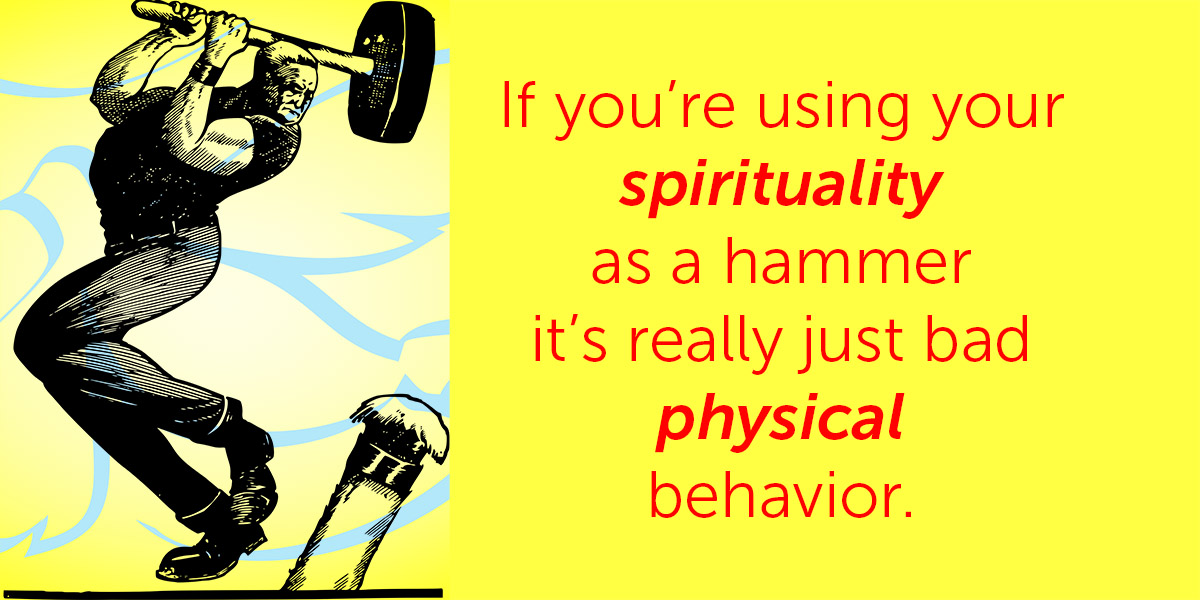
    I’m sure you can find many other opportunities and ways to proceed with prayer. Too often our underlying concern, as evidenced by our actions, is more with the public display of our spirituality than with the spirituality itself. This doesn’t mean that I believe that if you advocate for teacher led prayer in public schools you are somehow less spiritual. But if you do so without taking the opportunities that are available, it may be time for some self-examination.

    Come to think of it, even if you, like me, advocated for only voluntary prayer, your (our!) primary concern should be what we’re doing with the opportunities we have to pray every moment of every day.

    (Energion books on prayer.)

  • How to Keep Religion in the Public Square

    Every so often there’s another outburst of complaints about how religion is being suppressed in this country, and how it no longer has its place in the public square. And there are the occasional really silly incidents that actually support such a claim. I note, for example, that our local public library here in Pensacola, Florida refuses to permit religious groups to conduct meetings, which is simply a lawsuit waiting to happen.

    On the other hand, many, and I suspect most, of the complaints arise more from inconvenience, and the legitimate requirements that people use some kind of etiquette in the way in which they use the public square. The complaint of suppression is frequently actually a complaint that one is not getting the proper strokes, or that the government is not funding one’s favorite religious cause.

    WorldNetDaily has an article complaining that a clause forbidding the use of stimulus money to build buildings whose main use is religious. For example, you can’t build a seminary with the money. (HT: Dispatches.) They do this with the ridiculous headline, Stimulus to ban religious worship. Yeah, right. Either from the church or the state side, I very much do not want the government constructing buildings for religious purposes.

    But if we Christians do not have what we think is our proper place in the public square, why is that? Is it because of suppression? Christianity is, after all, the majority religion. I do note, however, that when this is limited to True ChristiansTM, no matter who gets to make the definition, the number drops substantially.

    But it seems to me that we’re so busy complaining about the opportunities we don’t have (and I’m not prejudicing the issue of what privileges we should have) that we aren’t really taking advantage of the privileges and opportunities we do have.

    If you are a parent who complains that children can’t pray at school, let me ask a couple of questions. Did you take the time to pray with your children before you sent them out to the bus stop? Will you pray with them when they get home? Will you take time out of your schedule today to pray for your children during their time at school? And even more, have you investigated just where and when at school your children can pray? Have you taught them how to pray for themselves?

    If you are complaining that our young people aren’t getting enough Biblical education, again let me ask you a few questions. Have you read your Bible today? Have you chosen a passage and really studied it, so that if someone referenced it in literature you’d “get” it? Have you or will you take time with your children to study the Bible or something about your faith? Do you encourage your children to read the Bible? Do you see to it that they know something about their church community?

    And more importantly, have you let that life of prayer and Bible study impact the way you act in the public square? When you ask “what would Jesus do?” does it come out to something other than your own inclinations? Do people who meet you know you’re a Christian? If they find out you’re a Christian will their opinion of Christians improve?

    If you don’t relate to many of the things I’m suggesting, I think you should reconsider complaints about being restricted in your religious activities. You aren’t taking advantage of the many opportunities that are available.

    If you or your children aren’t praying enough or studying the Bible enough, is it the fault of the much maligned ACLU? Or is it a result of your desire to have somebody else take care of your children’s religious education because you don’t actually care enough to take the time to do it yourself?