Threads from Henry's Web

Tag: sacraments

  • High View of the Sacraments or Not?

    High View of the Sacraments or Not?

    I want to briefly reflect on the sacraments. This is not so much a general theological reflection as a personal comment, expressing my own position on this. As I said a couple of days ago regarding hearing the voice of God, in a spiritual movement there is much listening, much hearing, and much creativity. Structure comes in to resolve this chaos into a tighter community, but structure also often works to kill it. Thus we have a closed canon. None of us can be spiritual in a New Testament sense precisely because we have a New Testament, or even more precisely because we have a New Testament regarded in this manner. Both structure and freedom (even chaos) have value in community, but they also are at war with one another.

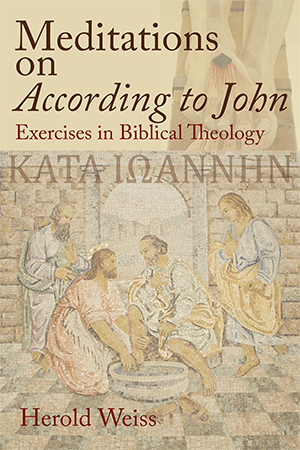
    Herold Weiss, in his book Meditations on According to John, makes this comment (p. 152):

    The sacraments were established toward the end of the first century when Christianity was becoming institutionalized and starting to create official channels through which the Holy Spirit could flow under ecclesiastical control.…

    This is structure fighting the chaos that results when people listen to God for themselves, or think they are doing so. God’s presence when two or three are gathered is a nice thing, but the organized church much prefers that God’s presence be manifested in groups of two or three hundred, or perhaps thousand, led by an ordained minister, supported by an adequate staff. Breaking out the bread and wine at lunch with a couple of friends, praying over it, sharing it (along with, say, a nice dish of pasta), and feeling the presence of Jesus is not sanctioned by church law.

    In thinking about this I think I have a very high view of the sacraments in that I believe that Jesus is really present, that there is something different about communion or the Eucharist than about our common meals. Where I differ from the normal high view, I think, is that I don’t really think God cares that much about our church laws. If two or three friends shared their food and drink with the intention of truly inviting Christ to be present, I think he will be, regardless of ritual, ordination, or the structure in which it takes place. It can happen in a bar as you share beer and pretzels.

    Indeed, if someone accepted Christ and a totally unordained person dips them under the water, baptizing them in the name of the Father, the Son, and the Holy Spirit, I think they have been buried with Christ and will come up in newness of life.

    I suspect that the same actions in some of our buildings, performed by persons chosen and ordained for the purpose, sometimes fail to accomplish anything. People just get wet or take a morsel or bread or wine. It depends on the hearts, I think, which God truly sees, and I do not.

    I’m not planning to go on a crusade of sacraments outside the church. The reason for this is not the success of the sacrament itself in mediating God’s presence. Rather, I think that God’s call is to community. I would ask the folks with beer and pretzels to find more people with whom they can share the presence of Christ. I would ask them to build bonds and form communities.

    Contrary to the idea that the communion meal should remain separate from our secular meals, however, I believe God’s intent is that the communion meal take over from the secular, that more and more of our lives become sacred. We learn to distinguish, as Leviticus says, the holy from the common, but we do so not in order to segregate them, but in order to allow the holy to draw into itself the common until all is holy.

    I believe that’s about as high a view of the sacraments as one can have.


  • A Note on Sacraments and Sacramental Acts

    Meditations on According to JohnI’ve generated a bit of surprise by my agreement with Dr. Herold Weiss (Meditations on According to John, chapter 18) in last Thursday’s video study from the gospel according to John (not to mention my Sunday School class), that the gospel is not attempting to institute or to teach sacraments.

    As a foundation to this brief note, you might want to either read Weiss’s chapter (pp. 151-158), watch my video (about 1 hr, embedded below), or both. I’m just going to follow up on a couple of items here. I suspect not that many people will watch an hour of me talking, so I will try to make these notes self-contained.

    First, the video:

    My view of the sacraments is simple: I think that there are public actions and rituals that we take that reflect what is happening spiritually. I do not believe that the presence of Jesus in these activities is dependent on having ordained clergy to preside. I don’t believe that the rituals in themselves are valuable.

    The value of sacramental acts is that they help us recognize and participate in the spiritual reality that is behind, in, and through them. Thus if I partake of communion, a shared meal, and then spend the following week withholding food from those in need, or cutting off fellowship from people I don’t like for various reasons, my act of communion has become a dead ritual.

    Weiss discusses the difference between footwashing and communion in his chapter. One has become a sacrament and one a sacramental act, the latter rarely performed. I could perform the ritual act of footwashing, which rarely has the same impact or feeling that it would have had in Jesus’ time, and then go out and refuse to place myself in the service of others. In that case, the act of footwashing would be a dead and empty ritual as well.

    In the video I relate the experience of my own baptism, at which time we celebrated, as Seventh-day Adventists do frequently, by washing one another’s feet. I was partnered with a Chamula gentleman (this occurred in the mountains of Chiapas, Mexico when I was nine years old) who had walked for days to be at this event. We were both newly baptized. He laughed when it came time to wash my feet because I had shoes, while he had but sandals, and I had walked a half mile or so as opposed to days. Washing his feet was meaningful to me and has stuck with me.

    Despite my views, however, I don’t go out offering formal services of the Eucharist as an unordained person. Despite the fact that I don’t think the presence of an ordained pastor should be required, this is an act that is, by nature, done in community. As a member of a United Methodist congregation, part of my duty is to act in community.

    At the same time, I believe that I can and should make every meal a sacramental act. The greater joy I get from the celebration of communion in the church congregation is not that I believe God is more present there, but rather that it is an act I perform in community and covenant. Sometimes in order to be in community, we have to do things the way the community does them, whether we think these things are special or not.

    At the same time I have become fully convinced of the concept of open communion, and by this I mean fully open. I have long accepted the notion that when Paul, in 1 Corinthians 11, talks about taking this “unworthily” he is talking about the way in which the celebration is done, not about the character of the person receiving it.

    By nature of its source, in the shared meal, and its institution, which included offering it to Judas as he prepared to betray Jesus, I think this sacramental meal is intended to invite and not to exclude. It is reaching out, not commemorating our special status as members of some inner circle. Thus communion should be offered to all both in church and when we share our meals with others. I question the idea of a Christian sacrament that celebrates membership in the club.

    But, you might say, what about baptism? Surely baptism can’t be for everyone!

    Yes, baptism is different, yet it is different by its very nature. It is the testimony, the ritual representation of our dying with Christ and being raised with him to new life. It is a singular (generally) event. It does not celebrate how we have become special, but rather how we have chosen to give ourselves up and become part of a community, a community that, in turn, reaches out to draw others in.

    And even here we invite anyone who wishes to testify to that, anyone who wishes to become a servant.

    I think this becomes a problem when we see these events as a sort of initiation, bringing us into the club of the special, in which there are other special rituals in which only other special people can take part. The “in group” view of the people of God that many of us have, consciously or not, leads us to misread scripture. The Jews weren’t chosen by God to sit around and be special. They were chosen to be a blessing. Sometimes being chosen isn’t much fun. There’s the great line in “Fiddler on the Roof” when Tevye wonders if God couldn’t choose someone else for a while.

    Christians, who are often anxious to appropriate the promises made to the Jewish people, are not nearly as often anxious to appropriate the calling, the tasks, and the negative responses of others. Being chosen, being “in” with God isn’t necessarily a picnic.

    In conclusion, I suppose I could say that I have a high view of sacramental acts, and that I consider sacraments to be no more and no less. My high view says God is present and active in sacramental acts. The Holy Spirit works in and through them. But just as the rituals of tabernacle and temple didn’t magically accomplish forgiveness and reconciliation, but rather accompanied God’s actions, so these sacramental acts are filled with God’s presence when done “worthily.” (Note: I’m indebted to Jacob Milgrom, author of the Anchor Bible volumes on Leviticus among many other works, for my view of the relationship between ritual and divine action. Milgrom sees this presented, in contrast to some of the surrounding religions, in the way rituals are presented in Torah.)