Threads from Henry's Web

Tag: Psalm 23

  • Psalm 23:6 – Pursued

    Psalm 23:6 – Pursued

    Surely goodness and lovingkindness will pursue me all the days of my life,
    and I will love in the LORD’s house forever.

    Well, this is the last verse of Psalm 23. It’s a bit shorter than Psalm 119!

    So which is better? A lot more people quote Psalm 23, and with good reason, but there is value both in something comprehensive and something compact and evocative. That’s why we have different kinds of literature in the Bible. It’s also why we all love different kinds of literature ourselves.

    So what is the impact of the ending of this Psalm? For me, it comes in the second half of the verse. I’ll live in God’s house forever. But I chose the first half to provide my title. I am pursued by God’s goodness and lovingkindness. It reminds me of Psalm 119:176. I may have gone astray like a lost sheep, but I cry out for God to seek me. When I do, I discover that God has been pursuing me all the time.

    Many times, the result of prayer is not a change in circumstances, but rather a change in perspective.

    After crying out to God in my trouble, I hear a voice that says, “Look the other way.” When I do, there God is. God has been there all the time. I can’t get away from God’s mercy and love.

    But the second half of the verse gives me another perspective. I’m going to live in God’s house forever. There are a number of view of this, each of which can help us understand God’s love for us.

    I’m going to look at three.

    First, we can think of this as the privilege of being in God’s presence in a place and time of worship. There is pleasure and comfort in being in God’s presence in such a place at such a time. Often this involves the enjoyment of our relationship to other people as well as our relationship to God. Conceive of a time of peace and joy and then think of that never ending.

    There’s a saying that we can’t live our lives in a spiritual retreat, and that we can’t stay forever on a spiritual high. Psalm 23:6 suggests that this is going to change down the road.

    Second, we can think of this eschatologically, meaning at the end. Yesterday, in writing about the heavenly banquet, I looked at some passages from Revelation. But if you look carefully you’ll see that Revelation is built with sanctuary imagery. In the Israelite temple you had a courtyard, then the holy place, and finally the most holy place, in which the ark of the covenant was kept. It represented God’s presence.

    That presence was separated from the people by that courtyard and earlier room, the holy place. Access was more limited the closer one got to the throne. But in Revelation, starting with chapter 4 and the command to John to “come up here,” we start to see sanctuary imagery all around, and the center of the action is around the throne of God, right in the Most Holy Place.

    Access was limited. Access will be unlimited. We will dwell in God’s house forever.

    But there is a third. If we jump just one verse to the next Psalm, we can learn what it is:

    To the LORD belongs the world and everything in it;
    The inhabited land and everyone living in it.
    For He established it upon the seas,
    Upon the streams he made it firm.

    Psalm 24:1-2, my translation

    You may think you have to wait, but God’s house is here now. You’re living in it. Your house is in God’s house. All your stuff? That’s God’s stuff. You? You’re God’s person.

    Now.

    What we all need is a change of perspective, a new understanding of what belongs to God. I frequently note what I believe is Jesus’ humor when he says, “Render to Caesar the things that are Caesar’s and to God the things that are God’s.” Just what is it that actually belongs to Caesar? There’s some practical advice for life in the saying, but there’s also a pointer to something greater.

    Just as you can turn, look, and find that God is already there seeking you, and was doing so before you called, so you can turn any direction, look, and see God’s house all around you. The change is in you. God was there all the time and will be there forever.

    You live in God’s house, because God owns all the houses and all the stuff.

    Live in God’s house today!

  • Psalm 23:5 – A Table

    Psalm 23:5 – A Table

    You prepare a table for me in front of my enemies;
    You anoint my head with oil;
    My cup is overflowing.

    The imagery of this verse is vigorous and encouraging. All the elements of being cared for by someone else at a meal or social occasion are presented.

    As is often the case, there are many directions one can go in meditating on a passage as rich as this one. For example, one might discuss the importance of all this blessing and care happening in sight of one’s enemies.

    But it occurred to me how this verse illustrates a great deal of scripture.

    At creation, God puts the human he has created in a garden, and in Genesis 2:16 lets him know that all this is prepared for food. The fellowship of God with people centers here not around a meal, but rather around the full supply of all humanities needs.

    Here’s a description from the book Take and Eat by TK Dunn:

    In Genesis 1 and 2, God made humanity in his image and likeness to be his regent over creation, exercising a delegated authority over the created order to ensure that each animal knew its place and had what it needed to survive. God had, in the garden, promised to provide sufficient food for all of creation, and Adam and Eve were told to enjoy it and “take and eat” of his bountiful supplies so that they would have the energy and ability to fulfil their work and tasks in the garden. No matter where they went, there were plants and trees with sufficient nutritiousness for their daily needs. God’s provision was more than enough: It was plentiful. And it was varied so that there would be different tastes, textures, and concoctions to delight the tastebuds and entice the senses. Eden was more than a sinless paradise; it was to be a chef ’s paradise. And God, as a smiling, doting, compassionate father,
    looking down at the creation he deemed “very good” said to Adam and Eve, “take and eat.”

    TK Dunn, Take and Eat, p. 61

    I picture this verse as describing the same sort of relationship between God and humanity, and the same sort of care, comfort, and security.

    Of course, Genesis 2 is followed by Genesis 3, and people find themselves less aware of God’s presence and more seriously impacted by the hardships of life.

    This is one reason I deeply appreciate the sacrament of Holy Communion. In it we are reminded that God is the provider and invites us to partake with him in this meal. It points backward to what we were.

    It also points forward to what we will be.

    Revelation 20 introduces us to the Marriage Supper of the Lamb. We come from a time when we had close fellowship with God in a garden, and we are heading toward a feast.

    You may be wondering about the tie-in to the garden, but just as in the Garden of Eden there was a tree of life so Revelation 22 introduces us to the new Tree of Life.

    In the meantime, we serve a God who prepares a table and offers fellowship.

    Keep looking up today!

  • Psalm 23:4 – With Me

    Psalm 23:4 – With Me

    Even though I’m walking in a deadly dark valley
    I will fear no evil, for you are with me.
    Your scepter and your staff give me comfort.

    The words are few, but the message is deep. Even with God guiding us, we will find ourselves going through times of trouble and darkness. We will be in places where we will wonder what happens next. Journeying with God is not a constant triumphal parade in which everything that happens to us appears and feels glorious.

    God’s scepter and staff (rod and staff – KJV), meaning is authority and his support and presence give us the ability to live through the times of deep darkness and the fear of the shadow of death. God is there.

    This is a message (I think the message) in the book of Job. When God appears, 38 chapters in, God provides no answers to Job’s questions. God dismisses everything from the third through the 37th chapter.

    “Who is this that darkens counsel by words without knowledge?” God asks Job. Then he proceeds to ask Job questions. When the speech is done, Job responds,

    I had heard of you by the hearing of the ear,
    but now my eye sees you;
    therefore I despise myself,
    and repent in dust and ashes.

    Job 42:5-6 (NRSV)

    But even there, God changes the tune as he tells Job’s friends that they have not spoken of him in the right way, as his servant Job has done.

    It’s knowing that God is there that satisfies Job.

    In that deep valley, we can know that God, who, through Christ, is acquainted with our every trial and weakness (Hebrews 2:10-11 & 4:14-16). Like Job, we will try to find reassurance that God is actually hearing us and aware of our situation, but we have the assurance.

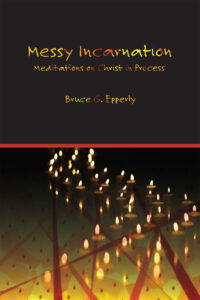
    I like the description of God, originated by process philosopher Alfred North Whitehead, as the “fellow-sufferer who understands.” There’s some more to this view of God, however. Let me quote Bruce Epperly, author of the book Messy Incarnation, which I publish:

    God is the fellow sufferer who understands and the joyful heart who celebrates. God cries along with the Bethlehem mothers, mourning the slaughter of their children. God experiences the hopelessness of parents separated from their children to fulfill the campaign promises of a self-interested political leader. God feels the terror of a child running for his life in a war-torn land and the panic of an adult on the streets of Minneapolis, Minnesota, crying for mercy, “I can’t breathe.” God places you on God’s knees in prayerful embracing. God never places God’s knee on your spiritual neck!

    Bruce Epperly, Messy Incarnation, p. 37

    I would like to emphasize here that God suffers with all sufferers, not just those we manage to care about. God loves the world and feels the pain brought about by evil. God’s caring is not limited and conditional as ours so often is.

    Yes, God can even care for me,. one who so often forgets, fails to recognize, and lives as though caring was optional and occasional. Even while writing this, there was a call to care, and it annoyed me. I acted, but not with grace. Yet God still cares and walks with me.

    Who is God calling you to care more for today?

  • Psalm 23:3 – Back to Life

    Psalm 23:3 – Back to Life

    He revives me.
    He leads me in the right paths,
    for his name’s sake.

    I would like to frame this verse between two others.

    So the LORD God formed the human of dust from the ground, and breathed into his nostrils the breath of life, and the human became a living being.

    Genesis 2:7, my translation

    And …

    You hide your face and they are confounded.
    You take back their breath and they perish,
    and the return to their dust.
    You send out your breath [spirit] and they are created,
    and you renew the face of the ground.

    Psalm 104:28,29, my translation

    There are some words that are very much parallel here, and some that are slightly different. Let’s start with what the human became: A living being. In Hebrew, loosely transliterated, nephesh chayyah. This word nephesh is what is to be renewed or revived in Psalm 23:3.

    The word for “breath,” or wind or spirit is neshama in Genesis 2:7, but ruach in Psalm 104. This word harks back to Genesis 1:2, where the ruach of God is blowing over the waters as the starting point of creation.

    In Ezekiel 37, that ruach is called upon many times, and invited to come in and revive the dry bones (see especially 37:9). This is, of course, a great revival.

    Further, in Psalm 104, the word for “they are created” is bara’, the key word for God’s creation throughout Genesis 1.

    Now I’m not claiming that the Psalmist is quoting or alluding to any of these other passages. But these words would bring certain thoughts to someone who is well acquainted with Hebrew scripture.

    In “he revives (or restores) my soul,” or just “he revives me” God’s creative and sustaining power is invoked. The shepherd is the creator of the universe. The creator of the universe is involved in the details of life, and cares about you.

    Then you are led in established paths. The word suggests tracks or even ruts produced on a wagon trail, a path that is well traveled. He does this for his own sake.

    Now I could say, “not for yours,” but in a very real way, when it’s for God’s sake it is for yours, because as your creator God, a good craftsman, cares about the entire creation, including you. God’s direct involvement is all through Scripture.

    Where is God guiding you today?

  • Psalm 23:2 – Green Grass and Quiet Water

    Psalm 23:2 – Green Grass and Quiet Water

    He makes me lie down in grassy pasture.
    He leads me by quiet water.

    It’s interesting as I translate this for myself to realize that not only will everyone else continue to hear and remember it as it is in the King James Version. I’ll do the same thing. I was repeatedly reminded of that simple fact as I thought about this verse today. No matter what I might be thinking regarding the particular words, those are the words I come back to.

    There is great value in a well-known, traditional passage. We can easily remember it in difficult times. It can come to us when we are distracted. It’s part of our lives and of our being.

    In Deuteronomy 32:2, poetry attributed to Moses, we have a related metaphor:

    2 May my teaching drop like the rain,
    my speech condense like the dew;
    like gentle rain on grass,
    like showers on new growth.
    3 For I will proclaim the name of the LORD;
    ascribe greatness to our God!

    The Holy Bible: New Revised Standard Version (Nashville: Thomas Nelson Publishers, 1989), Dt 32:2–3.

    The “gentle rain on grass” echoes the same word as in this Psalm. Now don’t get the idea that I consider this Psalm primary a metaphor for spiritual things. It is, indeed, a metaphor, portraying God’s care for us as the care of a shepherd who finds good pasture for his flock. But it represents something concrete: God’s general care for our needs.

    How can these words fall on us like light rain on grass?

    Only if we let them, and many others become familiar, just like the words of this Psalm. God’s word, in many forms, requires more than a few moments of our time, yet is also something that can be with us at any time in a gentle, natural way.

    If you haven’t memorized any verses of scripture, this Psalm is a good place to start. With the word embedded in your mind, it can fall like that gentle rain. “Green pastures” can mean so many things, starting with a time to just sit down on some actual grass and actually rest.

    Where will you find a moment in green pasture, by quiet waters today?

  • Psalm 23:1 – The Shepherd

    Psalm 23:1 – The Shepherd

    The LORD is my shepherd,
    I shall not lack anything.

    This initial verse is very compact in Hebrew, and the poet uses that to effect. It is, in fact, just four words. It tells us who is watching over us, and the result, not lacking anything.

    I spent some time looking at and thinking about the two parts. The key word in the first part is “shepherd.” Yes, the name of God is there, but the focus is on just who the LORD is in this case.

    This reminded me of a passage from Ezekiel:

    14 I will feed them with good pasture, and the mountain heights of Israel shall be their pasture; there they shall lie down in good grazing land, and they shall feed on rich pasture on the mountains of Israel. 15 I myself will be the shepherd of my sheep, and I will make them lie down, says the Lord GOD. 16 I will seek the lost, and I will bring back the strayed, and I will bind up the injured, and I will strengthen the weak, but the fat and the strong I will destroy. I will feed them with justice.

    The Holy Bible: New Revised Standard Version (Nashville: Thomas Nelson Publishers, 1989), Eze 34:14–16

    .Ezekiel is given a message to speak against the shepherds of Israel, those who allowed Israel to go astray, or even themselves led them astray. These words are spoken from the exile in Babylon, the result of this straying.

    The shepherds were put in place precisely to prevent this sort of thing, and the LORD calls them out for their failure. The solution? The LORD himself will take over the job of shepherding the people to make sure that they are, in fact, well cared for.

    I read this Ezekiel passage in two senses. One is of comfort. Despite the failures of human beings everywhere and all the time, God will find a way to care for those needing care. At the same time, I hear the message to the shepherds, to those who have a responsibility of giving care. What happens when you neglect those duties?

    Then there is the question of what happens when the sheep fail to follow the shepherd. As we learned from our final study on Psalm 119:176, that is the time when the call is for God to seek the straying sheep.

    And then we come to the idea of “want” or “lack.” In modern English we tend to use “want” less for the sense of things we lack, and more for stating desires. I play on this in a short free verse post on my Jevlir Caravansary blog. We’re always wanting something, but what is it that we really lack?

    I was interested in the variety of things one might lack. Uses of this word occur in Ecclesiastes 10:3 for someone who lacks sense. Have you ever considered that with the Lord as your shepherd, you won’t lack for good sense? Doubtless you’ll have times when you don’t use it, but good sense (and wisdom [James 1:5]) are available.

    As show in 1 Kings 17:14 & 16, the widow’s oil never lacked while Elijah was staying with her. The same word is used. The Hebrew word, much like its English counterpart, can be used for a variety of types of lack. Do we consider who our shepherd is when our lack is emotional?

    The shepherd is the shepherd of our souls and our bodies, and is with us through everything.

    What do you lack?

  • Introducing Psalm 23

    Introducing Psalm 23

    Who needs an introduction to Psalm 23? It’s one of the most familiar passages in the Bible. That’s likely why my wife suggested it as a starting point. With that challenge, I’ll be continuing the process I used for Psalm 119, and doing a post on one verse per day.

    Overview

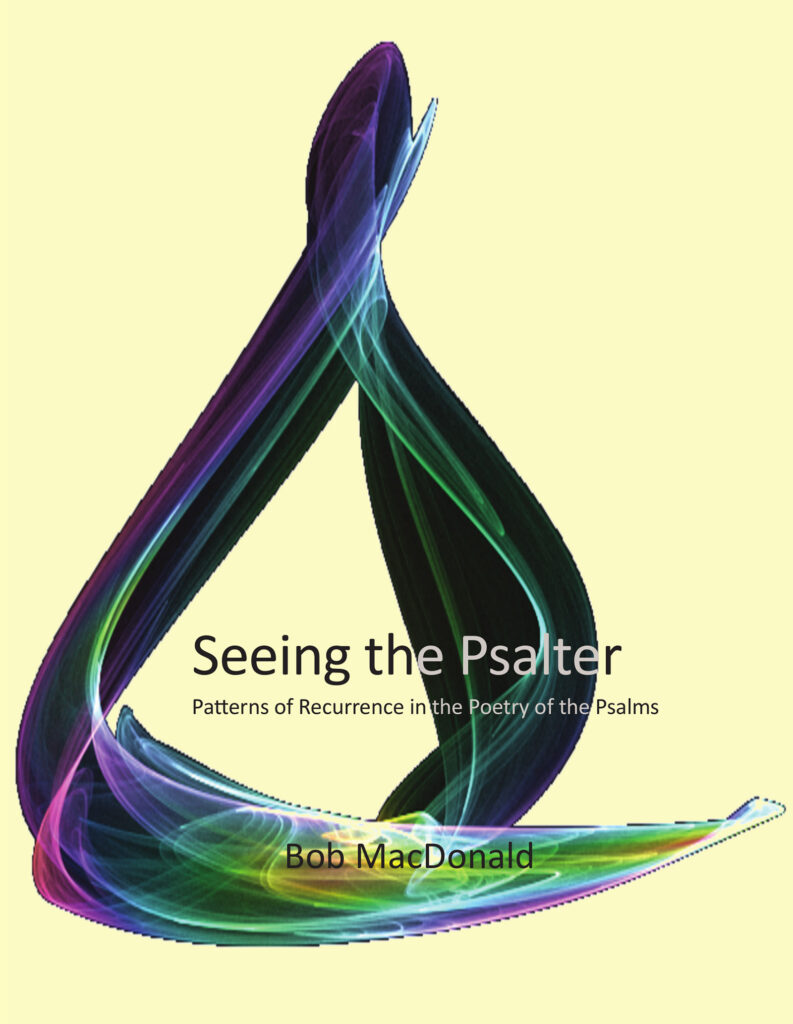
    Bob MacDonald, in Seeing the Psalter, specializes to some extent in seeing Psalms in the context of the Psalter. I like his comment on Psalm 23.

    After the theophany of Psalm 18, the warmth of Psalm 19, the prayer of Psalm 20 and its response (Psalm 21) and the turmoil of Psalm 22, what does the tension and resolution of Psalm 23 tell us? The gift of the shepherd acting in leadership and correct is, we may say, satisfactory.

    Bob MacDonald, Seeing the Psalter, p. 84

    Psalm 23 is one of the more settled and peaceful Psalms, rejoicing in God’s presence and protection, and filled with assurance. Many Psalms are set in troubled times, so that we hear the distress before we hear an affirmation of God’s care, if we hear that at all.

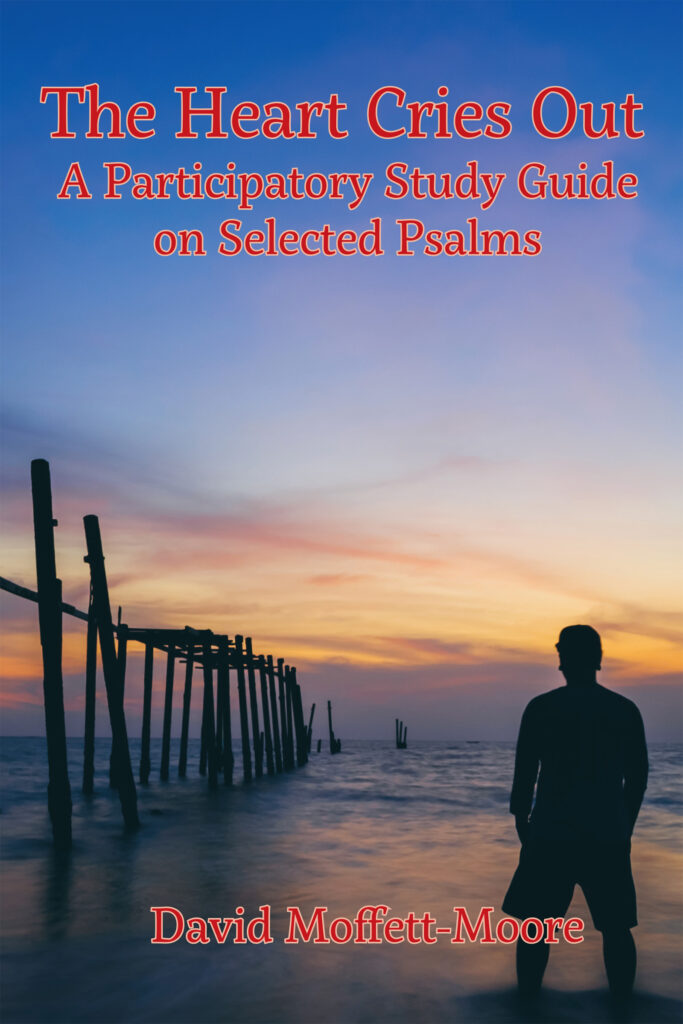
    Another book I publish, The Heart Cries Out, says of Psalm 23,

    The 23rd Psalm epitomizes our ideal relationship with God. We want God to be our good Shepherd, guiding us through green pastures and calling us beside still waters. We want God to be with us as we go through that dark and lonely valley, even the shadow of death. Moses was a shepherd, tending the flock of his father-in-law Jethro, when he encountered the burning bush and heard the voice of God. Young David was a shepherd tending his father’s flock when the prophet Samuel called him to be king of Israel and the slayer of Goliath. Rulers and leaders of Israel are challenged to be shepherds of their nation. Jesus is the Good Shepherd, laying down his life the sake of his sheep. The title “pastor” comes from the Latin word for shepherd. We want this Psalm to be our psalm.

    David Moffett-Moore, The Heart Cries Out, p. 25

    My own introductory thoughts are not so historical, nor do they reflect experience as a shepherd. Well, some experience with animals, yes, but not as a shepherd. There have been books written by actual shepherds. I like reading that sort of thing, but it’s not my own approach. In fact, I like what I read in the International Critical Commentary on the Psalms (Charles Augustus Briggs and Emilie Grace Briggs, published by Charles Scribner’s Sons in 1906). They suggest that only the first four lines of the Psalm are about a shepherd, and that the remainder switches to a trail guide and then to a host.

    The experience that came to mind for me was of my goats back when I was about 12 years old. I had four goats. I milked them and sold the milk, but they were also pets and even friends. Out of these goats my special friend was named Carraway.

    The goats would all follow our family if we went for a walk. We lived on a campus where it was possible to do this. It was one of the unusual sights of the place, a family walking with four goats, a dog, and occasionally a cat.

    Now there were some places where I liked to take a rougher path over a hill and meet the family on the road on the other side. Three of the goats, the dog, and (if applicable) the cat, would go with the rest of the family. But no sooner would I separate from the group than Carraway would break away as well and follow me up whatever hill or over whatever fence. She was really good at getting over, under, or through fences.

    We talk about the shepherd and the sheep, and how the shepherd hunts for the lost sheep. But there’s also the way in which the sheep follow the shepherd, much like Carraway followed me. There is a value in sticking close to the one who takes care of you. There is great benefit likewise for us in doing our best to stay close to the shepherd.

    As we read at the end of Psalm 119, we have gone astray like lost sheep, and our hope is in the shepherd finding us. But spiritual growth involves doing what we can to follow, even on the harder paths. There will be steep hills and fences, but those are things to overcome, not to stop us.

    So, ignoring metaphors like the sheep and the goats, in which the goats get a bad rap, my Psalm 23 starts with following the example of Carraway the goat.

    I sure do miss her even now!

    (Featured image generated by Adobe Firefly.)