
This is an extract from a longer interview, which I will also embed. I think Dr. Dunn has some valuable comments on the relationship of scripture and what it means for our study.
And here’s the full interview from which that was extracted.
This is an extract from a longer interview, which I will also embed. I think Dr. Dunn has some valuable comments on the relationship of scripture and what it means for our study.
And here’s the full interview from which that was extracted.

Turn my mind to your testimonies,
And not to ill-gotten gain.
How about some alternatives.
Hearten my mind to your testimonies
Bob MacDonald, Seeing the Psalter, 382
and not to extortion.
Dispose my heart towards your instruction,
Psalm 119:36 (REB)
not towards love of gain.
Christians frequently speak of the Hebrew scriptures (the Old Testament) as a book of all about law, and even sometimes as a book of legalism, in which salvation is to be earned by energetic keeping of God’s law(s). They contrast this to the New Testament, which is a book of love and of grace received through faith.
I keep wondering whether those who believe this have actually read either. The Hebrew scriptures are filled with God’s grace, and constantly portray God as the one who acts first, while the New Testament speaks a great deal about action, things to do. Paul goes on about salvation by grace through faith, and then goes into a list of good things to do.
The issue in both cases is the role that these things play in our relationship to God. This verse is a prime example. The Psalmist asks God to incline his heart (or mind) to do what God says. He then says the same thing in reverse. Incline me away from ill-gotten gain. Or from just the stuff.
God does the inclining first, and we are inclined away from one sort of actions toward another. God’s action precedes and leads to our action. Scripturally, it is always this way. In fact, the very desire to ask for that inclination is the result of divine action.
This verse points just a bit further than that to what I would say is the most common manifestation of idolatry, and that is the drive to acquisition. I’m not talking about getting things that one needs to live, or carrying out useful and productive work, or even investment. The question is what is the driving force. Why am I doing what I’m doing.
You see, idolatry keeps our vision low. It makes us short-sighted. Do I want to acquire money so that I can accomplish good things with it? Or do I want money or other stuff just to make myself more important? Please don’t read this as merely wanting money for charitable purposes vs for business activities. I include productive activity, including investment, as accomplishing good things.
This can go astray in a couple of ways. First, I can gain things by cheating. Cheating takes many forms, but it usually involves a form of manipulation, such as an employer convincing an employee that they will never get anything better, and that their only hope is to accept what that employer has to offer. Or it could be a worker who manipulates the work situation so as to appear more valuable that he or she really is.
Second, this can take the form of pure acquisition for the sake of possession. I’ve often thought that Ebenezer Scrooge was more to be pitied for the fact that he did not actually enjoy any of his stuff than looked down on for his business practices. He manipulated people in order to acquire, and didn’t even enjoy the possession.
If the stuff drives the bus, it’s going in the wrong direction.
We often fail to see the value in things that God commands, whether through the written word, or simply through the nature of the world in which we live. As humans, we regularly try to live in ways that are not sustainable. We can see this in history time after time, yet we are inclined to act as though the consequences won’t catch us.
Rules are hard to enforce on people who are not inclined to keep them. Just check out the traffic laws and observe the speed and other driving practices taking place on the road. We are inclined to take what shortcuts we think we can get by with. But if we change our inclinations our actions can change. And as the Psalmist demonstrates here, God is the one to ask for that change.
What are you inclined to do? Would you like to see it change?
(Featured image generated by Adobe’s Firefly in Adobe Express.)

I’ve been working my way through Ezekiel with my Sunday School class, at their request, since I have frequently said that Leviticus, Ezekiel, and Hebrews are the books most formative of my own theology. When this is done, I will have been through all three books with this group.
One major difficulty in teaching through Ezekiel is that it is a rather dismal book. There are long passages promising and explaining judgment. There are various passages about the hardships Ezekiel endures as a prophet. At the same time, there are brief looks ahead toward a time of redemption, that the judgment is not intended to destroy and put an end to God’s people, but rather to restore and rebuild after a cleanup.
One temptation in interpreting Ezekiel and many other books of Hebrew Scripture (which I refer to as the Old Testament when understood as part of Christian scripture) is to see the failures of Israel as theological and ritual. Theological in the sense that they are believing wrong stuff. Ritual in the sense that worship is going astray. This meets a frequent Christian assumption that the Israelite religion was largely about ritual.
This is a mischaracterization of Israelite religion. Ritual was intended to teach. What is condemned by the prophets is not ritual as such, but rather the performance of ritual while failing to learn from the moral, ethical, and indeed spiritual lessons of such ritual. In modern terms, this is much like the Christian who goes to church and carries out whatever rituals are expected, but then heads out to be something quite different from what those rituals represent.
As an example, we can participate in the ritual of the Eucharist, or communion as many protestants prefer to call it, and then fail completely to put the unity that this illustrates into practice. “The body of Christ broken for you and for many” is shared because we are all in Christ, and Christ is in all of us. To go out and be denominationally competitive after receiving the body of Christ is to miss the point of the “one body.” To go out and abuse those less fortunate than we are, no matter what our reason is for looking down on them, is to miss the lesson of that broken body. Just before his body was broken, Jesus said to “love one another as I have loved you.” Then he went and died for us. Skip all the arguments about the reason for this. He died. For us.
The problem that Ezekiel is busy proclaiming is often expressed as idolatry, but then is brought home in the failure to care for those in need. In fact, when accusing Judah of sharing in the sins of Sodom, the lead point is: “She and her daughters had the pride that goes with food in plenty, comfort, and ease, yet she never helped the poor in their need” (Ezekiel 16:49 REB).
The problem with idolatry is not that you walk the wrong way or go to the wrong place, or that the ritual is performed incorrectly. Rather, it is a matter of lowered standards. I like to use a definition of idolatry cribbed from Paul Tillich: “Making something ultimate that is not ultimate.” As soon as you start worshiping something less than God, you start looking lower. When the potential goal is lowered, less is done.
This is the problem with using grace to deny law. The standard still needs to be there. I am a publisher. I am quite certain I have never produced the perfect book. But as soon as I dismiss the idea of a perfect book from my mind, knowing that I will not attain it, I will start working toward a lesser standard, and will, in turn, fail to meet that. Having failed, I lower the standard again, and fail to meet that.
One of the key points in Ezekiel 24 is blood guilt. If we go back to Deuteronomy 21:1-9, we’ll see the extreme importance the Torah places on life, and on the unlawful and unjustified taking of life. There the people are given a ritual for dealing with someone who is killed, but without witnesses, there is no way to assign guilt. The nearest community takes on the task of atoning. Ezekiel is addressing this blood guilt. The people are not dealing simply with erroneous theology. They are killing one another. They have not just worshiped other gods. They have destroyed other people.
Let me add a side-note here. I really, really don’t like the line “good in theory but bad in practice.” It is not that all theories work, but rather that a theory that cannot be put into practice is not a good theory. Similarly, I dislike having theology and doctrine lined up in opposition to how we treat people. “If you’re putting your doctrine above people, forget doctrine.” Rather, if your doctrine is one that justifies you in mistreating other people, reexamine your doctrine, because it has problems. Jesus says that all the law and the prophets hangs on the two laws, loving God and loving your neighbor. If it won’t hang there, it’s not a good doctrine.
But it is not the idea of “doctrine” that is bad. The idea that loving one’s neighbor is central is itself doctrine, and I believe good doctrine. Replace your bad doctrine with a good doctrine, one that fits with what Jesus made central.
Again, back to Ezekiel 24. I tend to jump around a bit. We don’t always go straight from the passage we’re studying to the way in which we will live for the following week.
Here are some key points:
I’ll close with a short quote from Bruce Epperly’s book, Walking with Whitehead, in which he builds on a well-known quote from Whitehead:
God is the fellow sufferer who understands and the intimate companion who celebrates.
Bruce G. Epperly, Walking with Whitehead, p. 39
This interview is excellent, though in some ways frightening, and in all ways challenging.

Many years ago, more years than I will admit to, I went into a Jewish book and supply store and requested a copy of the “Hebrew Old Testament.” I recall vividly the look on the store clerk’s face, and I apologized, but it’s not an error that you can recover from easily. To a Jew, of course, it’s the Bible, not the first part of it that must be finished with another text in another language.
Many Christians are unaware, or only vaguely aware of how their faith relates to the Hebrew scriptures, and thus it is very easy to be offensive in one’s language without intending to. Unfortunately, there are those who will be intentionally offensive.
Over the years I changed my terminology. I didn’t actually abandon the term “old testament,” but I took up a somewhat complicated usage, one I have to explain regularly. That doesn’t bother me, as I believe that in explaining it, I invite my Christian audiences to think about things they may not have considered before.
That’s what I’m going to do here. First, the terms.
Some would suggest either that Jewish or Christian interpreters have the right process of interpretation and application, while the other fails. Now it’s likely that various of us are wrong about some things and right about things, and I believe in objective truth, but it is difficult to call things right or wrong without also considering the community of faith that’s involved. We would have to talk about whether a whole community was right or wrong, and that’s even more difficult!
Some Christians may be wondering at this point whether I believe in evangelism and disciple making. I do. I just don’t believe that those things are about intellectual persuasion. Rather, conversion is an act of God, not an act of persuasion. Saul on the road to Damascus did not encounter an intellectual argument. He had a powerful encounter with the one he would call Lord and Savior. Other experiences may take more time and be more subtle, but I think no less an act of God.
A key note here: Christian witness must come from Christian community. This is a major problem for the church today. In fact, the community of faith is central to interpretation, application, and therefore to witness.
When I started my studies in biblical languages and literature, it was my expectation that I would learn the history, determine the historical context of any verse or story, and the intended lesson, which would allow me to correctly and objectively apply that lesson to my time and situation. The reality? Not so much!
As an example, I often use two texts from Leviticus in teaching about hermeneutics to lay audiences. The are:
The results are often interesting with current American audiences. I’ve been using these two verses for years and I have seen no real change, other than differences based on the demographics of the audience I use it on. There will be people who are willing to accept both, but there are only a few of those. There are many who want Leviticus 18:22 to be applicable but not Leviticus 19:33-34, and those who want 19:33-34 to be applicable but not 18:22. Those who have thought through that application and provided a hermeneutic that can be consistently applied to texts are few and far between.
Doubtless among my readers there are those who have thought these verses through and can explain their use of one, both, or neither in determining modern theology. If you have done so, you are engaging in hermeneutics, and you most certainly have been influenced by your faith community.
For example, many Christians will claim that Jesus or other New Testament authors have reaffirmed one text or the other. Others may feel that one fits with Christian values better. Others may try to discuss cultural applicability.
Yet others will say, “The Bible says it, and I believe it.” That, of course, is problematic in Leviticus, especially for Christians. We don’t do most of what Leviticus tells us to do. If you doubt me on that, read Leviticus 11 & 13. There are many more examples, but that one will do. In this case, though different filters are used, Jews don’t expect gentiles to keep all of those rules. They have a very limited set that come from outside this portion of the Torah that would apply to us. Christians have a different filter. The key here is that we both have a filter.
Thus my goal was not realistic. The process of study was, however, quite useful. There is a value in historical study. It just doesn’t convert without difficulty into application.
So working in reverse, I look at the term Jewish Bible.
The key element here is Judaism as a community of faith. I don’t mean that we try to tell just what is correct Judaism. I have found great value in works from quite different branches of Judaism. I continue now, many years after I did the study, to consider studying Leviticus with Jacob Milgrom’s commentary in the Anchor Bible Series as the most profound spiritual experience of my life. But I have benefited from discussions with Reform and Orthodox scholars and from reading their books. Nahum Sarna’s works, and particularly the JPS Torah commentary series which he edited is another extremely valuable source. (You can find many of these titles and others in the Energion retail store page on Torah.)
We need to read the Hebrew Bible as a Jewish book because …
There are a couple of fundamental points we need to keep in mind in studying the Hebrew Bible as the Old Testament of Christian scripture. First, we need the other views. It is impossible to understand where people were in the first century as Christianity came into being without looking at how those people would have seen it. Second, because our scripture is so seriously rooted in Hebrew scripture—even the term “New Testament” comes from the Old—we need to understand these roots.
Regarding the first point, I am often annoyed by Christians who make remarks such as, “Jesus is so clearly taught in the Old Testament! How can the Jews not see this?” And yes, the Apostle Paul can get on my nerves. He should remember that he had to be pretty much struck by lightning to change his mind. He shows the zeal of a convert on this point. But those of us who have not been struck by lightning should be aware of the interpretive problems, and also of what Jewish interpretations are. Besides the Jewish commentaries I use, I keep a copy of the Jewish Study Bible from Oxford University Press at hand for quick reference.
Those who use Paul’s writings in an antisemitic sense should both be aware of his own attitude at the time and also of the difference between our time and his. That is also hermeneutics. “Paul did it, so I can,” is not a safe statement in a world that has changed. Paul spoke to a group that had not truly separated from Judaism at the time. We speak to a world in which persecution of the Jews has been rampant and vicious. What might he say regarding his “brothers and sisters, his fellow countrymen according to the flesh” (Romans 9:3)? Or how might Jesus address descendants of the Pharisees in the light of what his self-proclaimed followers have done in the meantime?
At the same time, I read the whole Christian Bible, including both testaments as Christian scripture and as the core of my faith. As one of my Energion authors, Edward Vick noted, (see Creation: The Christian Doctrine), the key to something being a Christian doctrine is that it centers in Christ. He makes that statement even clearer in his book Seventh-day Adventists and the Bible when he said:
God’s decisive revelation is in the events the Bible records and in the life, death and resurrection of Jesus Christ. All Christian revelation has Jesus Christ as its point of reference, since God’s revelation in Jesus Christ is the event from which Christians interpret all history and all experience. The problem for the Seventh-day Adventist church is to make Jesus Christ central and primary in this way in its doctrine. The problem for the theologian and for the framers of church doctrine is to interpret the Bible, life, practice, doctrine, so that the centrality and primacy of Jesus Christ comes decisively and clearly to view…. (p. 5)
He is addressing his own denomination, but the point applies to any Christian group, I believe.
Thus I read the Bible unabashedly Christocentrically as a Christian. My doctrine forms around the person, mission, and teachings of Jesus. At the same time, I have no need to deride other approaches, nor should I be unable to discuss those other elements from a compatible point of view. Someone who does not accept Christ, as I do, is unlikely to be interested in the “centrality and primacy of Jesus Christ.” Yet we can discuss the text.
Failure to recognize differences in our approach to hermeneutics is at the root of many of our most fierce and least constructive discussions.
At this point, I need to make a note regarding thinking people are wrong. Any time one thinks one is right, one necessarily thinks those who disagree are wrong. We get into problems because we then look down on those who disagree with us, holding positions contrary to our obvious truth. I think this sort of behavior is both unnecessary and does not indicate confidence, but uncertainty.
In all areas of life, I think there are two goals: 1) We must seek truth in some sense, and 2) We must be able to maintain community (faith, local, national, and world) while still disagreeing. I think it is unfortunate when we feel we have to smooth over our differences in order to get along. We should instead celebrate our differences and dialogue about them so that we can improve.
I consider efforts to force change to be counterproductive. The best way of constructively changing anyone’s view on anything is respectful dialogue. Being respectful doesn’t mean abandoning your principles. It means listening attentively and courteously and clearly explaining your viewpoint. Contrary to popular option, it is not the noisiest who are firmest in their convictions. Only one who is confident in what he or she believes, including sufficient confidence to recognize and admit the unknown, can get the most out of dialogue.
The problem with the word “old” is that we tend to see it in negative terms such as out of date, obsolete, and requiring replacement. That is whenever we’re not fantasizing about a golden age that never actually existed. In the case of the Old Testament, Christian theology works against making it a golden age. Why would we have a new testament if the old one was a golden age?
I’ve discussed this extensively with reference to the book of Hebrews, which has the statement, rather unfortunate when taken out of context (as it usually is), that “what is becoming old is soon to disappear” (8:13) is sometimes used to suggest that the Old Testament is no longer applicable and in some cases hardly worth studying. If it’s obsolete, why red it?
I’m not going to go into a study of Hebrews, but let me simply say that if the author of Hebrews thinks the Old Testament (as a collections of books) is obsolete, he has cut the limb off behind him, as he bases all his arguments on texts from that same Old Testament. He has other concerns.
And that is my first problem with the term “Old Testament.” The books of the Hebrew scriptures do not constitute a covenant or testament. They contain more than one such covenant. So if Hebrews, or any other passage of the New Testament refers to the passing of the “old covenant,” they aren’t referring to all the books of Hebrew scripture.
The division of the Christian Bible into Old and New Testaments tends to create some errors. I should note that it also presents an important division. What did we borrow from someone else and what did we add? That’s a good distinction. It might be more accurately presented in other ways.
It would help if Christians recognized the Jewish divisions, Torah, Prophets, and Writings. The covenant with Israel is stated in the Torah, and a great deal of the rest is dedicated to discussing how to keep that covenant, or proposing God’s new covenant (yes, I mean new). “New covenant” (or testament) is not a New Testament idea. Jeremiah 31:31-34. This proposed new covenant differs from the old one largely in the enabling grace given to people to keep it. The main problem with the old one, a problem that might be seen to make it obsolete, is the failure of Israel to keep it.
Which leads to another Christian problem. We often look at the experience of Israel with disdain. How could they be so unfaithful? Why didn’t they just keep the covenant God had given them? Why turn to other gods? We do all of this while we turn away from God and ignore what God has commanded ourselves. We would be well advised to heed Paul’s command in Romans 11:20, “put away your pride and be on your guard,” which he gives precisely in reference to this attitude of superiority.
My next problem is simply with the view of “old” that we often hold, as though God’s later acts are better than his former acts. People and circumstances change, but I believe that God’s aims stay pretty much the same. The covenant with Israel expresses accurately God’s desire for his chosen people, Israel. That doesn’t mean we can’t learn from it, but we should remember who it was addressed to. I would suggest that one of the key elements of that covenant was to establish an identity for Israel, an identity that was necessary to allow them to carry out their mission. I would suggest that goal was carried out with great success. More than 3000 years later we hear the echo of this in Tevye’s remark in Fiddler on the Roof, “I know, I know. We are Your chosen people. But, once in a while, can’t You choose someone else?” The Jews have a very strong identity.
While we may not be subject to the same regulations, we still need an identity as God’s people. There is a history here that we need to learn. The covenant is, in a sense, as old as the hills and as new as tomorrow, because God is still looking for ways to get his message out to the world.
So the Old Testament needs to be seen not as a single entity that has become obsolete or been replaced, but as the witness to God’s activity which has been continued in other ways. If we pay attention to this, we may be able to better understand some of the goals of the New Testament.
But even further, the New Testament itself doesn’t come in a single package. It is also a collection of books that looks at the witness of Jesus, the witness to Jesus, and the vision of the future of God’s world. Without understanding this background, we are unlikely to understand what New Testament writers were up to, because we don’t know where they are coming from.
Despite my wordiness, I have left much untouched.
How old is the Old Testament? As old as the hills and as new as tomorrow.
How old is the New Testament? As old as the hills and as new as tomorrow.
Both are rooted in and lead to eternity.
We ought not to discard either.

Earlier today I posted links to a video by Andy Stanley and a response by Michael Brown. Some people have commented on this issue indicating that it was unfair to “attack” Andy Stanley about his views. (These were not on my blog post or its Facebook link; the controversy is widespread.) I have a few comments on this.
I believe it is very important to discuss theology, and discussion involves the assertion that some things are less right than others. The idea that we can never point out what we believe is an error in the teaching of another is ludicrous. Now if we arrogate to ourselves the ability to judge someone’s salvation or their standing with God, that’s another matter. But to assert that some things are true is by nature to assert that others may be less accurate or perhaps untrue.
In this issue, I actually go farther than I perceive Michael Brown is going. I don’t believe there is a singular, straightforward distinction between the Hebrew Scriptures and the Christian New Testament. I believe that there are many cases of God changing the way in which he relates, as God carries out God’s plan to save humanity. Thus the Christian Bible, consisting of the Old and New Testaments should be read as a single story. There are points of distinction, but they occur in a variety of ways and are usually envisioned ahead and then their interpretation grows afterwards.
I object to simply dismissing a portion of scripture. You have accomplished nothing of value, I believe, by unhitching the New Testament from the Old, first because they are connected by much more than a hitch. There is an earth-shattering change with the incarnation, the life, the death, and the resurrection of Jesus, but this takes place in the midst of a growing understanding of God and his actions in the Hebrew Scriptures, and we struggle to understand this completely millenia later.
As an example, many—I suspect the vast majority—of those who heard Jesus may have been surprised by his attitude toward the gentiles, and may have similarly been concerned by the church’s mission to the gentiles. Indeed, the gospels and Acts record that many were. But Isaiah (2nd/3rd Isaiah, 40-66) would not have been so shocked. One may point to differences, yet I think Jesus appears no more radical in his look at the law than Isaiah 56. So if the audience was shocked, they were missing some of the lead-up story. I think they may have been less shocked than modern people imagine. There were many viewpoints in Judaism at the time.
And if Isaiah 56 wasn’t radical enough, then perhaps Ruth or Jonah would take the place of radical scripture. Or, if we really wanted to get down to it, we might note Genesis 12:3, Genesis 17:5 (from Abram’s call and covenant).
There are certainly things that are hard to deal with in the Hebrew scriptures/Old Testament. There are also some of those in the New. My problem with a dismissive solution, broadly stated, is that the texts are still there. God has been working with people for a very long time and people have been interpreting God’s actions for a very long time.
So let’s disagree, critique, and grow. A bit of love and generosity would be good as we do so.
(Featured Image Credit: OpenClipart.org.)
I struggled with the title, as this is almost entirely links, and the issues raised cover so much ground. I’m posting these particularly for my Romans study on Wednesday nights.
In both the current class and my previous series on Hebrews I maintained that the New Testament was not intended to set aside the Old, or the Hebrew scriptures. In fact, I refer to the idea that Hebrews is doing that is an author climbing out on a limb and then cutting it off behind himself.
On the Charisma Magazine web site Dr. Michael Brown responds to a video by Andy Stanley.
I would suggest listening to Andy Stanley and see if you can hear some of the approaches to the Old Testament I mentioned. Michael Brown provides what I consider a good response. I’m glad to note he sent Andy Stanley a copy of his critique (see Brown’s article), but I do not accept that they are not that far apart, as Stanley says. Note that the majority of the issues are in the first five minutes of the video, but I think it then pervades the rest in more subtle ways, then comes out more strongly at the end.
Anyone who has heard me teach will know my view on this.
Here are a couple of related books I publish.

I believe that it’s easy to let our theology keep us from reading the Bible, especially the narrative parts. The Bible is filled with stories. One example is the story of the flood. When Genesis 6 says (using the KJV), “It repenteth me that I have made man,” the first reaction is to try to explain how God didn’t really repent, thus preserving doctrines of omniscience expressed particularly in foreknowledge. A vigorous desire to preserve one’s theology can prevent one from hearing the story as it is actually told.
Jonah is just such a story. It’s very easy to make this a story about obeying God. The story was explained to me when I was a child as an illustration of the bad things that could happen to you if you went against God’s will. Another lesson, often taught at the same time, is that God can and does work miracles. Many people have seen belief in the whale (really more like “great fish”) as a test of one’s belief in the truth of scripture.
But to spend our time on the reality of the great fish, whether to disparage the idea or uphold it, is to stray from the story.
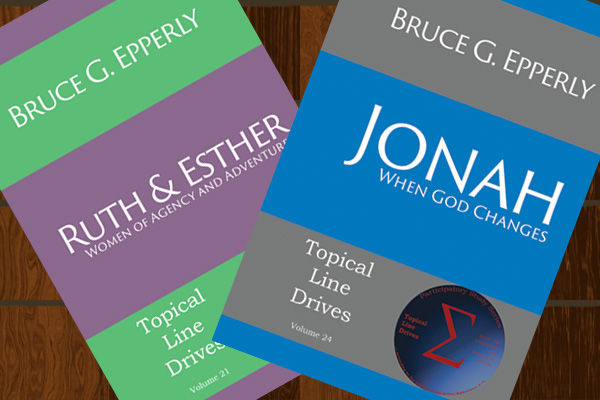
I’ve been delighted to publish a couple of books by Bruce Epperly that deal with Bible stories from a less theologically defensive position. Bruce tends to let the stories speak and as such he gets lessons from them that we might otherwise miss. A few months ago we released Ruth and Esther: Women of Agency and Adventure. I commend that study to you.
This week we released another book about stories, Jonah: When God Changes. Just the subtitle is likely to unsettle a few people. I think it’s good to be unsettled. I think that Jonah was unsettling when it was first written and it was intended to be.
We often have to work hard to love and care for people who are actually very similar to us. We tend to discount the command of Jesus to love our enemies. But in Jonah we have a call to love people we now hate—and with good reason!—and to take God’s message to them. While Jonah’s message sounds like a “fire and brimstone” sermon, it becomes a call to salvation, just as Jonah feared it would (read the last chapter)!
Bruce really works this little book and calls to our attention things we might normally miss in pursuit of theological comfort. I suggest that you give up that comfort and read the book!
We’ll have it for $4.19 pre-order pricing (even though it’s already printing) on Energion Direct. We’ll keep that up through Labor Day. Find a couple of other books to go with it so your order is at least $9.99 and you’ll get free shipping.
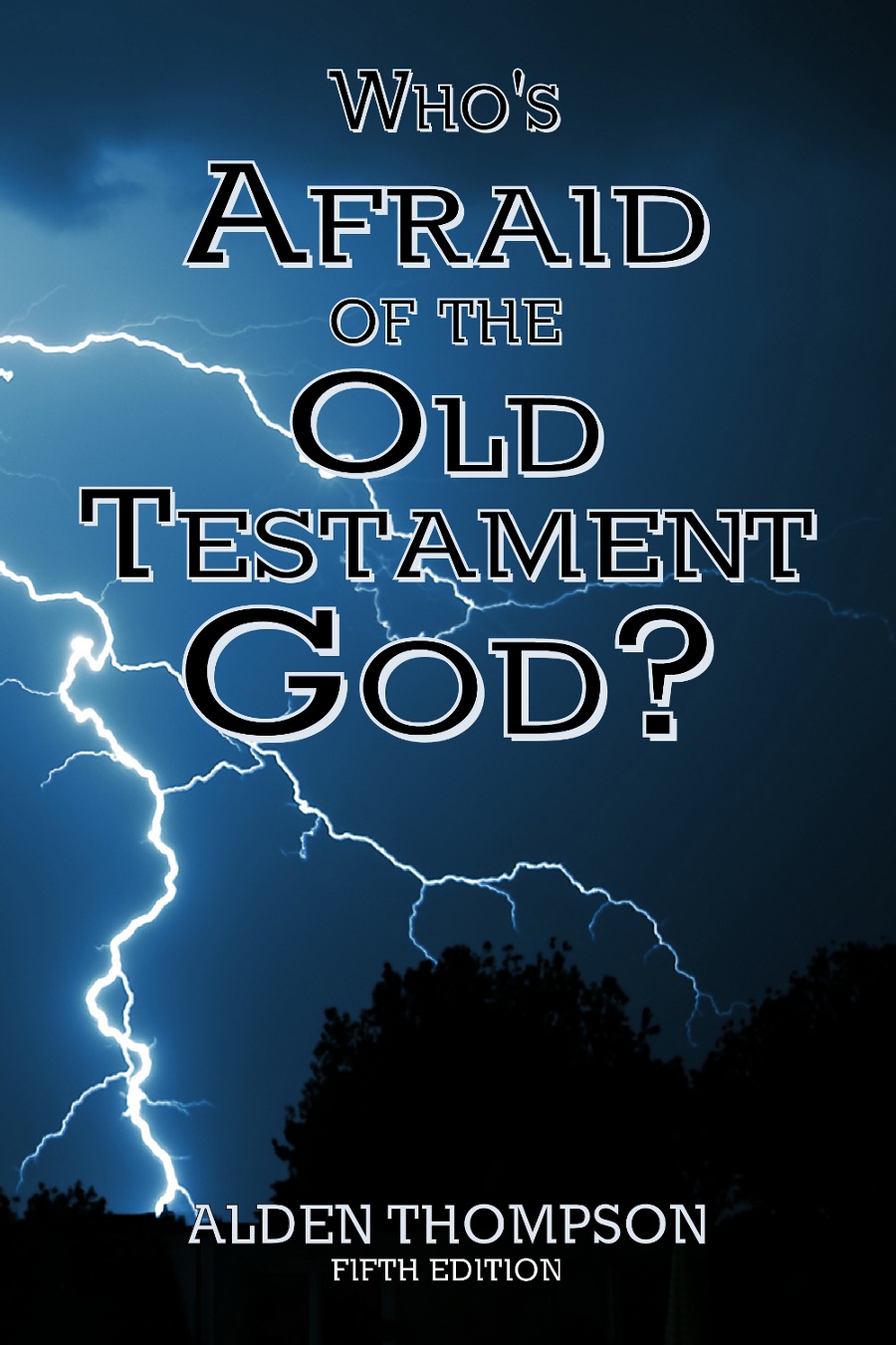
I ran across this while looking for something else. Dr. Alden Thompson was the author of the first book sold by Energion Publications, though it was published before I bought and renamed the company. We’ve now published a 5th edition, and this is overall our best selling book.
In this presentation Alden using a number of Adventist specific references, but I think the message comes through. There are a variety of responses to the violence in the Old Testament. One of the keys to Alden’s approach is his insistence that it is all inspired, even the parts we don’t like very much, and he makes that claim in the video. Alden’s teaching at Walla Walla University was quite formative of my theology and I still enjoy working with him. We’ll be releasing a second edition of his book Inspiration: Hard Questions, Honest Answers later this year, as the publisher of the first edition allowed it to go out of print.
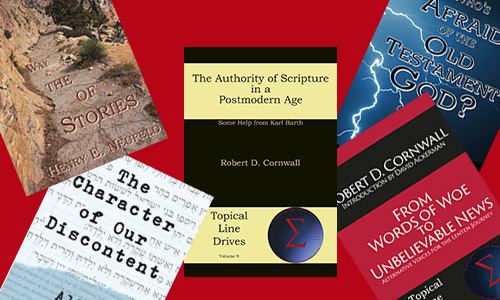
No, I’m not going to do it, but I’m going to ask Dr. Bob Cornwall some questions about it. He’s currently preaching a series in his church from 1st & 2nd Samuel. Bob is one of my Energion authors (see his book list here), and is editor of the two book series we publish in cooperation with the Academy of Parish Clergy, Conversations in Ministry and Guides to Practical Ministry. You can find more information about this event on its Google+ event page.
I’m going to ask Bob how he handles the authority of the text he is preaching from, and especially whether he will deal with some of the more violent passages and how he will preach from them. There are quite a number of passages in the books of Samuel that could be very troubling to a 21st century conversation.
This morning, I was reading one of those: 1 Samuel 15. You can read the whole thing if you want to get a general picture, but let me just summarize here. God tells Samuel to pass the order to Saul, King of Israel, that he should go and wipe out the Amalekites. He is supposed to designate them as herem, meaning that they are devoted to destruction, every person, every creature, every thing is to be destroyed. And lest we be tempted to soften the story, we are told that this included men, women, and even nursing babies.
Saul disobeys God and doesn’t kill everyone. The best of the animals are preserved, and the king is taken captive. Saul blames this on the people. God blames Saul and says he has cut Saul off (or at least Samuel says God says this) from being king over Israel. This story opens the cycle of stories about the conflict between David and Saul, which ends with Saul’s death in battle and David’s accession to the kingdom.
I have heard this story handled in a number of ways:
I could probably come up with some more given time. I’ll be interested to see how Bob Cornwall handles the text. He’s both a good preacher and accomplished scholar, so I expect his comments to be helpful.
In the meantime, two things. Following a challenge on a similar text, I wrote two blog posts. The first was a story/dialogue discussing the text, titled The God-Talk Club and the She Bears, on my Jevlir Caravansary fiction blog. (In the God-Talk Club series I write dialogue without any intention of expressing my own point of view. It’s sort of an exercise for me in trying to express several views on a topic.) The second was a homily on the same passage, titled Real Guy Interpretation.
Finally, I recently interviewed two authors, Allan Bevere, author of a book based on a series of Old Testament sermons he preached titled The Character of Our Discontent, and Alden Thompson, author of Who’s Afraid of the Old Testament God?. I’m embedding that video below.


