Threads from Henry's Web

Tag: mission

  • From My Editing Work: Our Global Kingdom Citizenship

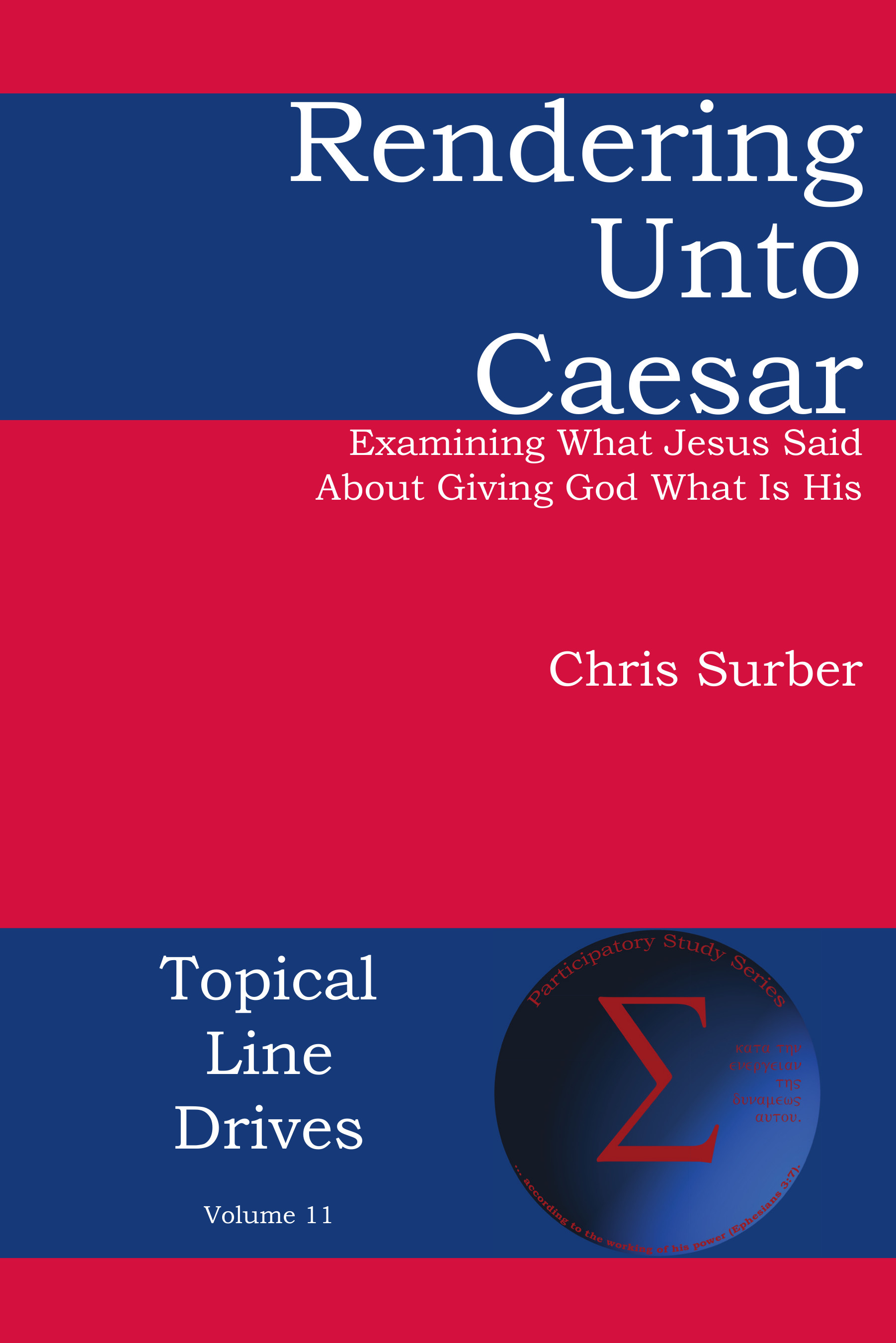
    9781631990670Two paragraphs from Rendering unto Caesar:

    The most obvious conflict with the fusion of Christian and American identity is that it denies the universal nature of the Kingdom of God. When our allegiances are too strongly aligned with any kingdom of this world, be it the relatively benevolent kingdom of America or a malevolent kingdom like Nazi Germany, it takes away from our ability to reflect the unique beauty of Christ in the world through our lives. Discipleship is costly. It costs us the identity that we had before Christ broke into our lives and snatched our affections away from this world for Him.

    In order to glorify God, we need a Gospel that preaches everywhere. Our Gospel needs to preach in Beverly Hills and the hills of Haiti. Our Gospel needs to preach to Liberal and Conservative. Our Gospel is for the lost, of which we are all a part. In the hearts of many American Christians there is a subtle and sometimes overt bitterness for the rest of the world. We are Americans. We want to keep our money local. We want to keep the American economy strong. We have fused our identity as Americans with our identity as Christians and consequently we miss the reality of our global Kingdom citizenship. (p. 8)

    This little book (Topical Line Drives, 42 pages) is headed to the printer. Pre-order price is $3.49. Regular price will be $4.99. If you order three of them, or order another book or so, you’ll get free shipping as well.

  • The Book I Can’t Give Away

    The Book I Can’t Give Away

    If you don’t know I own a publishing company (Energion Publications) by now, I’d be pretty surprised. It’s not as though I don’t talk about it regularly.

    One of the things I find interesting about blogging is to discover which blog posts actually catch people’s attention. There are times when I have put my heart and soul into a post, writing about something I consider extremely important, and there’s no response. At other times I write something quickly just because I feel I haven’t blogged enough, and I get comments, links, or e-mails that indicate it has really touched someone’s life. This unpredictability is great fun!

    As a publisher, however, the idea is for me to figure out what people will actually read, because I will be investing money in producing the book, and I need someone to buy it in order to stay in business. Now I say I run my business as a ministry, i.e., the primary mission is more to educate and to build the Kingdom (to use the Christianese expression) than it is to make money. If I simply put my entire time into using my IT skills, I’d make more money. Yet at the same time, it is a business and so it does have to make money. As such, part of my job is to determine whether people will buy a book before it is released.

    It’s interesting how often these goals collide. There are manuscripts I know people would buy, but I don’t consider them of any great value. No, I don’t place my judgment over the popular judgment. There will always be somebody to publish popular things. I’m not depriving you of them! But what about the things that say that becoming a Christian is not a matter of guaranteeing that you will be healthy, wealthy, and wise? What if they say that you may die of cancer rather than be healed? What about books that talk about martyrdom, persecution, and sacrifice? Who publishes those books?

    Such books do get published, and I do not claim to be the only one to do so. But I do think it is part of my duty to make such books available to people. And I’m not just talking about books about the negatives of becoming a Christian. (And quite frankly, in the United States, being a Christian can be quite good for business. Where I live, a common question in business networking is: “Where do you go to church?” It’s a good idea to have a “safe” answer that makes people feel you’re a part of the community.) I’m talking about books that challenge our prejudices, that ask us to think about things we might rather avoid, and that ask us to take action rather than just deal in theory.

    Let’s face it. A lot more of us talk about various reforms than are willing to take actions.

    Do you believe in house churches? Are you ready to get out there and start one, or join a group that is doing so?

    9781893729186Every member in ministry (a good UMC slogan)? Are you involved? If you’re a pastor or other church leader, are you willing to give up some of your power and control so more people can get involved? Are you willing to go look for people and challenge them to get involved rather than waiting for them to volunteer?

    Are you mission oriented? If so, are you ready to back that up with, again to borrow a United Methodist phrase, are you ready to support that goal with your prayers, your presence, your gifts, and your service? (Now if you answered “yes” there, please check to see how much of your church’s budget is going to support outreach ministries.)

    Which brings me to the book I can’t give away. The cover is pictured over to the left. Will You Join the Cause of Global Missions?

    It doesn’t sell very well. In fact, there’s a very specialized book by the same author, The Authorship of Hebrews. It quotes Greek words and phrases, and deals with a very technical issue of interest to a relatively small number of people. It’s not precisely a bestseller, but I sell more copies of it than I do of Will You Join the Cause of Global Missions?

    I know that many Christians are not too happy with the word “missions.” As I said in the description for another book I’m soon to release, also on the subject of missions:

    Many Christians have grown up with a very limited concept of “missions” and “missionaries.” In this view a missionary is a person who goes and preaches to lots of people, often in primitive lands, and explains the theology of the gospel. The natives are convinced and become Christians. Thus the gospel commission is fulfilled.

    Actual missions have not been carried out in this way very much….

    This sort of mechanical view has damaged the concepts of both evangelism and missions and made them bad words with many people. But a church without a mission is very dead. A church with a mission that is all internal is likely dying. I haven’t been going out and speaking at many churches lately. I spend most of my time in front of this computer. But I used to tell pastors I could gauge the health of their churches by asking a few members what the mission of the church was. In a healthy church, people will be able to answer quickly and clearly.

    “But evangelism,” someone says, “that refers to holding boring meetings in a tent trying to convince people to give their hearts to Jesus.” No, not so. Evangelism is spreading the good news.

    Let me give an example. My parents were missionaries, and they carried out evangelism. Neither of them ever conducted a tent meeting. My dad was an MD, and my mother (who is still active at 96 years old) was a nurse. They operated clinics. They cared for people. They prayed with people personally. When you visited their church, you would be invited home to lunch. I hear people taught to make visitors welcome by speaking to them and getting to know them. Good! Let’s do it. (Though I have a problem in that I’m a member of a 3500 member church and I often can’t tell who’s a visitor and who’s not. That may be another problem!) But for my parents making someone welcome meant making sure they had time to get truly acquainted, making sure that person was fed, and if they had needs, that those needs were met. I wonder how many people in our churches would be willing to take that on today?

    I suspect that many people simply don’t want church to change the fundamental way in which they live quite that much. That’s getting way too much into other people’s business. We don’t want to do that.

    The thing is, that sounds to me much more like the way the gospel was spread in New Testament times. I’m fully aware that times have changed. The church needs to adapt.

    So let’s ask this: Is the way we’ve adapted working?

    And so we return to the book I can’t give away. I’ve tried to give Will You Join the Cause of Global Missions? away in various places, from academic gatherings down to personal meetings with people. It’s not quite true to say that I can’t give it away at all, though at one academic gathering it was the only book from my book table of which I had the same number on my return as when I’d left. I’ve never run out of them. I’ve tried. I’ve offered free copies for people to use in study groups or to give away in church.

    Maybe it’s because the author is Southern Baptist, and I approached people of other denominations. Maybe it’s because he’s conservative, and I talk to people all across the spectrum. But this book doesn’t tell you what your theology has to be. It tells you what to do with it. It tells you the level of commitment that God calls for. I know plenty of people moderate or progressive theology who would not disagree with those points. Besides, how do people know when they haven’t read the book yet?

    My real challenge here is not to buy this particular book, though I’d be delighted if you did. What I hope you’ll do, however, is look at what you believe and then check out your actions. Do you believe you should be out doing social action, yet you’re sitting in the pew instead? Then get up and go! I’m not trying to define your mission. That’s up to you, hopefully as you discern God’s leading. Whatever it is, do it!

    I didn’t intend to when I started this post, but I just noted that I have 16 copies of this little book on my office shelf. This book talks about mission, it talks about martyrdom, and then it asks you to commit yourself to it. Let me know in the comments. Tell me how many you need and up to what I have on my office shelf I’ll send them to you free of charge. No shipping or handling either. Just ask. If you need ten copies for a church group, tell me that. First come, first serve, until they’re gone.

    Don’t worry about whether your mission, as you understand it, is the same as Dave Black’s. You aren’t called to Dave Black’s mission. You aren’t called to mine. You’re called to yours.

    If you need more than 16, or you want some after I’ve given those away, I’ll work out a price that will cut this as close to my cost as I can manage. I can’t afford to lose money, but I can live with making pennies on the book. Just email me (henry@energion.com) and ask.

  • Soup Kitchen for the Soul or How I Learn from Authors

    9781893729797I am frequently amazed by our authors at Energion Publications. I suppose that other editors and owners are likewise amazed, but I think we have a very special group. Just the other day I received notice from an author that he had signed his contract, but that he wanted to donate his royalties to our literature fund, a fund we use to send books overseas or to people who can’t afford them. I hadn’t asked. In fact, I don’t ask for funds to support that project. We’re not a non-profit. It’s just one of the ways we try to give back.

    The thing that impresses me most about our authors, however, is the way they live what they believe. I don’t know of any of our authors who doesn’t in some way embody the books they have written. When I hear what they are actually doing, it’s what I would expect based on what they wrote in their books. And that’s a great thing.

    Way back when … well, actually in 2010 … we were contacted by a potential new author who had a story to tell. I like books that tell a story, particularly when that story is a testimony. This was Renee Crosby and her life and vision had been changed by a seminary assignment. She had been asked to serve a certain number of hours in the community as part of an assignment. She spent that time in a soup kitchen. Now as the book will tell you, Renee had become extremely busy in church. She was an active Christian. But that activity was generally in church. When she reluctantly went out to complete her assignment, she encountered Jesus in a new way, right there in the soup kitchen.

    So she wrote her book Soup Kitchen for the Soul to invite other people to this same discovery. I was hooked immediately. I have frequently visited churches that are busy, filled with active members. But if you review their church bulletin or newsletter, the vast majority of what they do is designed to serve the members. It’s people in the church doing things for people in the church. Now there’s nothing wrong with that. People in the church should be doing things for one another, caring for one another, building one another up. But we should also be “provoking one another to love and good deeds” (Hebrews 10:24), and those good deeds should serve those outside the church as well.

    This is a book with a great message. It deserves to be read much more than it has. It deserves to be studied.

    But Renee is now experiencing the next phase of her testimony. As she explains in the video below, she is in treatment for breast cancer. But she’s not taking it lying down. Instead, she’s trying even more to provoke others to love and good deeds.

    We’re also going to donate 5% of our proceeds in addition to what Renee donates as our way of supporting her in this endeavor. In addition, the book is now 30% off with the use of the pink30 coupon. To use that coupon, you need to enter the coupon code on your shopping cart on checkout from Energion Direct. If you need some more help with the coupon, you’ll find it here.

  • Losing Our Sense of Mission

    When it rains it pours, so I’ve been seeing a lot of posts about mission lately, and here’s another one that raises some very interesting points. (HT: Kouyanet).

    Having served on and led short-term mission teams, grown up with long-term missionary parents, and served on mission committees, I find that a great deal of this resonates with me. Read it all and give it serious consideration. This is to be a series. I intend to follow it.

    One thing that strikes me is that minor changes in the details are not the solution to the various problems (see Of Resources and Mission Priorities and Worship, Service, and Mission). Our problem is that we don’t view ourselves as on a mission in the first place. We view the church as a way to provide a moral education to our children, a place for networking, and in some cases a route to salvation.

    Perhaps our committees, agencies, and denominations lack a sense of mission because our members lack a sense of mission. Perhaps that lack of a sense of mission comes from a lack of understanding the basic gospel message.


  • Of Resources and and Mission Priorities

    I received two requests for help today. One was from a pastor overseas. He didn’t ask for money. He asked for prayer. I happen to know he needs money. But his most earnest desire is that Jody and I pray for him.

    I also got another request in the mail. It comes from an organization that does much good. They are raising money for a substantial building project that will make things more convenient, even much more convenient, for people in this country who are preparing to be missionaries. The amount is in the hundreds of thousands of dollars, maybe a thousand times the amount that would relieve the pastor’s need.

    What am I to do? I am not naming any organizations, because I don’t want to criticize them. I don’t know what the needs are or whether the kingdom will be built by this particular expenditure. But I do have to look at where I put my very limited resources. (In case you’re wondering, being in the Christian publishing business, at least in the manner in which I practice it, is not the road to great personal wealth!)

    But it’s not just this particular project that concerns me. It’s the proportion of our resources that go to providing for our comfort, for making it easier for us to do whatever we do, as opposed to the amount we put where it’s needed. I think of this when I see large recreation centers attached to churches that are empty most days of the week. Now I understand the need for places for sports and social interaction. In fact, a great deal of ministry can be carried out by providing a place for young people. But I know of more than one church that closes its facilities to outsiders. They want to avoid “those people” getting in there and perhaps damaging things or causing an increase in their insurance rates.

    I understand liability issues. I really do. But I don’t recall Jesus saying to do good to the least of these only when there was no risk. As a matter of fact, the gospels record that Jesus did it at a rather great risk. So many times we have facilities built that are just to entertain those who are already in the church.

    Again, I understand that people need rest and recreation. The church does need to provide for its members. But the ultimate purpose of providing for members is building the kingdom, and that means getting those members to go out and serve others.

    And so we come to church sanctuaries. In many churches the only use of the sanctuary is for a worship service on Sunday morning. That has to make it the most wasted piece of architecture around. One or two additional meetings a week may make it a little bit better, but it’s still underutilized space, space we pay a great deal of money to have.

    This isn’t the complaint of someone who doesn’t appreciate church architecture. I really like a majestic church sanctuary. I enjoy being in it. I enjoy sitting in the pews. If it has stained glass, it’s even better. A pipe organ? I’m in ecstasy. Just play it and let me look at the windows.

    But that’s the problem. I like it. It’s for me. The question is, just how much money should go to pipe organs and stained glass as opposed to feeding the hungry. I’m not saying we should put an end to all church music, or eliminate all church architecture, but what are the priorities? Where is the balance?

    In doing ministry in southern Mexico in the 1960s, my parents lived in a building with rough concrete floors (just try to sweep them), with a tin roof and walls that were not solid, so rain could blow in. My dad was a doctor (MD), and my mother a registered nurse. They could have had a great deal more, if they’d chosen to go to work in Canada (their home) or in the United States. But most of the time they didn’t, and when they did, they sought underserved areas. There were many things they wanted that they could not have. My own life is not without its problems, but I keep comparing it to theirs. What were their priorities? What are mine?

    I have had wonderful times of worship in fine church buildings, but I’ll never forget worshiping with a small Gypsy congregation in eastern Hungary on the first mission trip I led there. I was to speak. I had been a bit disoriented, because while I had been overseas before both as a child and young person with my parents and on mission trips, I had never been to a country where I couldn’t speak a word of the language. My Hungarian was such that the couple of words I had learned were potentially dangerous. I didn’t understand what people were saying.

    The room was small, too small for the number of people. The floor was concrete. The building was not beautiful. They had a small electric keyboard that would have been discarded had it been in one of our churches here, or probably even in a home as a child’s toy. Someone started playing it, and the people started singing. I didn’t know the words, but I felt the Spirit that was in that place. In fact, I have rarely felt the presence of the Spirit more than in that particular meeting.

    They didn’t need the things that we all think we “need.”

    Do we?


  • Link: The Gospel and Social Justice

    T. E. Hanna (discovered via Facebook) has a guest post by Dana Bruxvoort titled Why the Gospel Without Justice Isn’t the Gospel. While the title caught my attention, phrases like “filling in the holes in my gospel” and “doing nothing was no longer an option.”

    Missions not optional? Let’s spread that idea far and wide!


  • Two Things that Lead Toward Christian Unity

    There are two things I’ve noticed in my own life and in the lives of people I know that tend to lead toward less divisiveness and greater Christian unity. These are:

    1) A focus on doing mission

    2) A focus on the study of scripture

    What’s interesting is that people can differ on how to do mission or how to study scripture, but if they’re spending their time doing more than talking, their talking starts to focus less on their differences. Sometimes they do change their point of view on certain theological issues, but more often it’s a matter of focus.

    I wonder what would happen if we simply spent more time going to scripture and then carrying out the mission as we see God calling us to it, and less time correcting one another, that we might find that God will change all of us.

     And all of us, with unveiled faces, seeing the glory of the Lord as though reflected in a mirror, are being transformed into the same image from one degree of glory to another; for this comes from the Lord, the Spirit. — 2 Corinthians 3:18 (NRSV)

    (Note: I do believe both of these things must be done prayerfully.)

  • Self-Quote of the Day

    Is this a new high (or low) in narcissism?

    I’m always interested to see what others quote of what I say. I must confess that normally things I write that impress me don’t impress others (at least based on the number of views), while often something I bat off in a couple of minutes and then forget about draws attention draws in multiples of the views and gets links and retweets.

    In any case, nearly two years ago I wrote a post for my wife’s devotional list, and today she reposted it. It included a paragraph I want to quote:

    … First, the Holy Spirit enabled the disciples to challenge their world. They didn’t call for some little decision, such as going to church once a week, or attending a small group. They called on people to be transformed, and then to transform the world. Second, the power of the preaching involved both the Holy Spirit and the personal testimony of the disciples. They talked about what they knew and what they had witnessed (emphasis mine, but added today).

    I’m wondering if I live up to that. No, that’s not quite it. I’m pretty certain I don’t, but I’d like to.

    What about you?

    Enhanced by Zemanta
  • The Way That Seems Right

    Budapest Parliament.
    Image via Wikipedia

    (This post is written for the One Word at a Time Blog Carnival [Road].)

    The mission trip was off to a bad start. I had unwisely followed some “money saving” advice from a travel agent, which landed me in Atlanta with less than an hour to change planes, and the flights had been booked separately, so the airline had no obligation to make it work. Members of the team had come from various directions, and everyone but me–their leader–was off on the plane for Hungary while I worked the phones to rearrange my flights.

    A mere nine hours later I was on a plane for Paris and then Budapest, living out the saying about a leader catching up with the people who are supposed to be following him. There was a further glitch in the plans. We had a van arranged to pick up the team in Hungary, but it would be long gone by the time I got there. I was to pick up a rental car in Debrecen, which was close to our work area, because our team would be working at two separate locations. So we arranged for me to pick it up at the airport in Budapest. I would then spend the night and drive out to the camp east of Debrecen the next day.

    The travel agent was to arrange a hotel for me as well. I specified one thing–I wanted it to be in the southeastern part of the city which would be right on the road to Debrecen, and thus make it easier for me to find my way. Did I mention that I don’t like driving in unfamiliar places. I’m happy to ride the bus; driving is not a pleasure.

    Well, I landed in Budapest, tired and ready to go to that hotel. I had to call back to the states to get the details. So I took the name of the hotel and found the rental car counter where I asked for directions. It turned out the hotel was on the northern side of the city, fortunately still east of the river, but nowhere near the route to Debrecen. In addition it was a luxury hotel that cost about three times what I had wanted to pay. I got a marked map along with verbal directions. I was told it was easy to get to the hotel, and I took off.

    Now before anyone gets the wrong idea let me say that I love Hungary. The teams I was working with stayed in Hungary and served children from the Ukraine. Our hosts there were wonderful partners in ministry. In addition, the public transportation system is great (see “bus” above!) and the roads are well marked. The problems here have much more to do with me than with where I was.

    I was in a bit of doubt about a couple of turns, but then I got back on what appeared to be the right road. The way seemed right to me, right up until the moment I looked out the right window and down to the beautiful Danube. By the way, it’s a great scene, if you’re not fully focused on finding a bed.

    For two hours I drove around Budapest, both using the map and asking directions. Every time I stopped to ask for directions I was surrounded by people who tried to explain. But my Hungarian vocabulary was around a couple dozen words, fortunately including left, right, and straight, and very few of the folks I met spoke English. In the end, it seemed almost an accident when I ended up in front of the hotel.

    The next morning, somewhat rested, I carefully studied the map and planned my route out of the city. Do you want to guess how many wrong turns started the problem?

    Exactly one.

    I made one wrong turn that took me off the original route. Had I made that one turn correctly, I would have driven past the well-marked hotel entrance about ten minutes later. I was annoyed. I had already lost time on my mission, and I definitely saw no purpose in all that running around. I definitely wasn’t thankful, and I wasn’t rejoicing.

    The next Sunday in the camp near Debrecen I was asked to give the message to the campers at the church service. What would I say to all those kids?

    This text came to mind:

    There is a way which seems right to a man,
    but in the end it leads to death. — Proverbs 16:25 (WEB)

    So I told the story. The kids had a great time laughing at the American teacher lost in Budapest. But they seemed to get the message. I was sure of it when I got to the Ukraine and was again asked to speak to some children, this time in a little house church. Again, the children laughed, and again they got the message. When I got back to Debrecen, nearly two weeks after the initial sermon, several of the kids came up to me and repeated the text. I’m willing to bet that there is no other sermon I’ve ever preached has been remembered by that many people two weeks later.

    There’s a basic lesson in the text, of course. It’s easy to think you’re on the right road, but if you aren’t following the map, you can be headed to the other side of the river, so to speak.

    But for those in ministry, there’s another lesson. There is a way that seems right in preparing sermons. Beautiful quotes, flowing language, fine rhetoric, jokes to relax the audience, serious theology. These are the things that make you look and sound more important than those who listen to you.

    But sometimes, many times, in fact, it is your own experience that’s going to make the difference. It may involve getting laughed at, but where’s the problem in that?

    I have to add one other note. In the Ukraine, when I used the “lost” sermon, I was invited to speak to the adults as well. I spent a good deal of time on what I would say to the adults. I had a great lesson for them. Or so it seemed to me. (There is a way that seems right, no?) When both were done, I saw the head elder of the little congregation copying some stuff down from what I’d said.

    What was he copying? The illustrations on the blackboard for the children’s lesson. Nobody commented on my well-prepared sermon.

    There is a way which seems right to a man,
    but in the end it leads to death. — Proverbs 16:25 (WEB)

    Indeed!

    Enhanced by Zemanta