Threads from Henry's Web

Tag: Miracles

  • Believing Impossible Things

    Believing Impossible Things

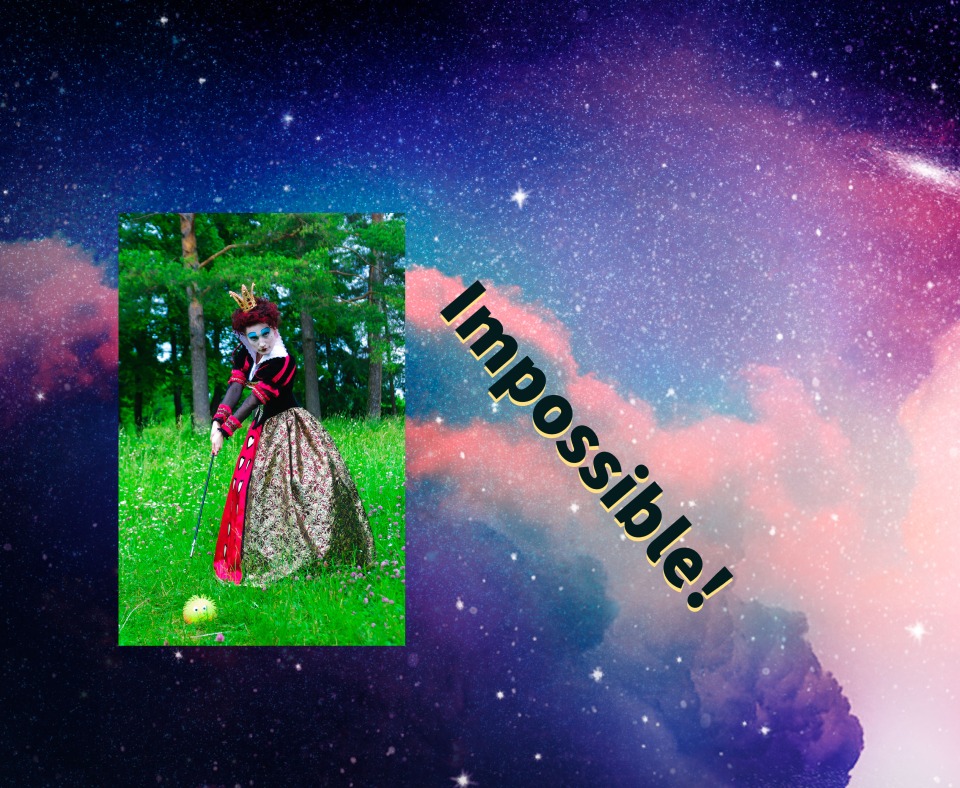
    In Alice in Wonderland, the queen says that sometimes she has believed six impossible things before breakfast. A fair number of years ago, someone told me that in response to points of my Christian faith. The aim was most likely to shock or offend me.

    How did I respond? I don’t recall what I said. It wasn’t terribly memorable. But I do know what I thought. Yes, indeed, I do believe a number of impossible things before breakfast, not to mention after breakfast as well. I have never understood the desire to make so many of the very difficult aspects of the Christian faith as rational as possible. If God can be explained rationally within the incredibly tiny sphere of my personal knowledge, there’s really no point. That’s a mini-god.

    Now I don’t mean here that all aspects of religious faith are irrational. There are things I believe that can be rationally explained. Various arguments for the existence of God can, for example, open up a crack through which some light may shine. The arguments of a historian may create a place in which a virgin birth, or a resurrection might just be hinted at as an explanation for so many things.

    But I believe in a God who created the universe. I was thinking the other day while I gazed at a picture of galaxies seen from the Hubble Telescope in a part of space that looked empty to the naked eye. The space was filled. Now it’s not entirely impossible to suggest that this was created by someone or something. But when you add to that the idea that the entire universe was created by Someone who actually cares about anything that happens to me, you are proposing something patently impossible. If you claim it is possible, other than in one’s imagination, I suspect you of not really comprehending just how far that is out of the boundaries of comprehension.

    As we come up to Easter, we will commemorate a God who became flesh, lived here, and ultimately permitted himself to be tortured and killed. I believe that happened. If you try to reply to that problem with the doctrine of the trinity, let me note that you have responded to an apparent physical impossibility with a logical impossibility, the idea that one person can really be three, and three can be one.

    Yet I believe all of those things. I have disappointed not a few people when I decline to try to make all these beliefs rational. The incarnation (a person being 100% God [whatever we mean by that] and 100% human at the same time) is both a logical and, should we be able to figure out what would be involved, would doubtless also be a physical impossibility.

    People who believe all these things can certainly also believe in a great number of truly rational and reasonable things. I believe in the laws of nature and live my life largely in accordance with them. (Some of that health stuff is overcome by my general desire to enjoy life!) I find often that I agree to a large extent with those who do not believe in God on matters of ethics, politics, and as far as it applies to daily life, rational interaction with the universe.

    But I still believe that God, one capable of creating all those galaxies, well past my imagination already in the physical universe, also, as one member of the trinity (three in one!) became flesh (100% divine and 100% human), died, and rose again from the dead.

    The same God also notices when a sparrow falls.

    Six impossible things before breakfast?

    Trivial!
  • Why I Believe the Laws of Physics Will Continue Unabated

    Why I Believe the Laws of Physics Will Continue Unabated

    It’s hurricane time, as Irma approaches Florida. Note here that I make again the error of many Americans, which is that the hurricane tends to become of interest when it’s arriving at our shores. It has already been quite destructive in a number of places and right now in Cuba.

    Yet the discussion intensifies, and we are, inevitably, confronted with loads of hurricane theology. I think it’s because we get to watch hurricanes approach for such a long period of time. Earthquakes and tornadoes happen quickly more quickly. But we track the hurricane, we pray, and we do theology, generally bad theology.

    I do not here claim to have a corner on good theology. I am quite unabashedly regarding as bad theology any theology that seems particularly bad to me. So there.

    I am not, however, alone. Behold this tweet from author Carol Howard Merritt:

    Now before everyone gets the wrong idea, I do pray, and I do believe in prayer. It’s just that what people believe prayer will accomplish starts to get particularly silly when there’s a hurricane trundling along nearby.

    I’ve even prayed that God would mitigate the storm, or perhaps send it out to the open Atlantic, with due warning to all sailors who might get caught in its path. I have not, however, claimed that this prayer was likely to do a great deal to change the path of the storm.

    So why on earth did I pray it?

    This reminds me of talking with my Dad. My father was an MD, and a missionary. When he was not overseas, he was trying to serve those in need in the U. S. and Canada. He never made any money, and came as close as anyone I know to accomplishing John Wesley’s goal: Dying with only the change in his pocket.

    I occasionally had conversations with my dad about the possibility of going into practice in an area where he would make money. The nice thing about that, from my viewpoint, would be that I could afford more stuff. In my case that would have been books, parts for my radios, chemicals for a photo-lab, etc. (In relation to nothing in particular, I would note that I often feel sympathy for parents of children such as myself.)

    With my dad I would express my interest in such possibilities and how nice it would be to have more money. What I didn’t expect was that he would actually abandon his lifelong calling of service to others and go find a way to make money. I was honest about my desires, but I did not hold the discussion with some kind of expectation of results.

    Why? Because I knew my father. I knew who he was. I knew what he believed. There was as much likelihood that my father would abandon his calling as there is that God will discard the laws by which he has chosen to run the universe.

    Theologians may look upon general revelation, the revelation of God in God’s creation, with a bit of a jaundiced eye. Observation of nature does not easily result in the sort of ethical rules that a “Thou shalt not kill” does. Yet some of the most stable and definite indications of the way God works are displayed in the form of natural laws.

    Air over heated water. The rotation of the earth, the way in which a heated gas (like the stuff in air) will rise. High pressure ridges. Troughs. These are some of the many things that result in the formation of hurricanes and in directing their courses. “He makes his sun to rise on the just and the unjust” and “summer and winter will not cease” are reflections of this nature of God’s action. Of course, we already knew that from observation. Unless, of course, we have not been observing.

    So when I told God it would be nice for the hurricane to head out over the Atlantic, that was fine. But knowing just a bit about God, I wasn’t expecting that God would drop all the laws of physics just to suit me. God has been running the universe according to those laws by an estimated nearly 14 billion years.

    But I tell God in prayer anyhow, because that’s what I do. Then I more seriously pray for the people who are in the way of the storm and that those who can will provide the needed help, that we’ll all give as we are able. There’s the common saying that prayer changes things. Personally I think that’s fairly rare. What it does is actually much harder: It changes me. It changes you.

    And if it does that, it has done well.

    (I wrote a series of articles on this back in 2003, which are also included in my book Not Ashamed of the Gospel: Confessions of a Liberal Charismatic. They are The Hand of God, The Hand of God: Miracles, and The Hand of God: Prayer. I recently published a book by Dr. Bruce Epperly, Angels, Mysteries, and Miracles, which also deals with this subject.)


  • Acts 12: Reacting to Miracles (and Their Absence)

    Acts 12: Reacting to Miracles (and Their Absence)

    Acts 12 is an interesting chapter, both because of what happens and what doesn’t.

    James, the brother of John, is seized by Herod and killed. No comment, backstory, or reaction provided. One short verse and gone. I’ve just said more!

    Then Peter is seized, and they expect him to be killed as well. The whole church prays for Peter. We’ll suppose that the church prayed for James as well, though it’s possible he was seized and killed so quickly the word didn’t get around until he was dead.

    I think the stark presentation of James’s death, followed by the prayer of the church and then the rescue of Peter starkly emphasizes that prayer doesn’t always make things work the way we want it to, provided we haven’t figured that out by reading about Stephen’s death in Chapter 7. Yet the church prays.

    As we watch calls for prayer regarding the aftermath of Hurricane Harvey, and recognize the prayer that went before, we should perhaps note that prayer isn’t a means of steering hurricanes according to our desires, nor of doing the cleanup afterwards. As I once heard preached, prayer isn’t a substitute for anything else, and nothing else is a substitute for prayer. Prayer has its own functions.

    In any case, this time while the church is praying, an angel is off to rescue Peter. It may be just my imagination, but it feels like Peter is kind of an automaton through the first part. In verse 9, we’re told he thinks it’s a vision. He is certainly not thinking, “Oh, yes, here’s the angel I expected come to rescue me.” Once he’s in the street and the angel poofs, he realizes it’s really happening.

    He heads off to where the church people are praying, and here we get a cameo by young Rhoda, who appears in scripture this once to be so happy at hearing Peter’s voice that she doesn’t open the door for him, but rather heads off to tell the other people he’s alive.

    There are a few people like her around today. They want to see a miracle happen, or even something they can imagine to be a miracle, and their purpose is to talk about it. They too can forget to open the door to whatever is happening next.

    The people in the house are also quite normal people. They don’t believe Rhoda. After all, if you knew the security arrangements around Peter, you likely wouldn’t believe he was there either. I’d probably think someone got the guards drunk, stole the key, and then led Peter out of prison. If it was today, I’d think some kind of sleeping substance added to their food. At least they let Peter in off the street.

    Sometimes Bible stories are really sparse. I keep wondering about Peter’s thoughts. He keeps knocking, but I imagine he was a bit put out when they didn’t open the door. Peter’s angel, indeed! (12:15).

    Finally, we have Herod’s reaction. Imagine being one of those guards. I know I go off track, but I kind of feel sorry for the guards. They’re just ordinary guys off serving their country/ruler, and Herod isn’t for a moment going to believe that they were miraculously put to sleep while their prisoner was taken. Honestly, Herod’s reaction is quite rational. The best explanation for the facts he has before him is that the guards either shirked their duty or perhaps even took bribes to let Peter go.

    Peter, who seems a relatively sensible guy in this story goes somewhere else.

    I think if we read this story and let some of the turns sink in, we might away from a mechanical view of prayer and providence. It’s worth a try in any case.

    (Some books I publish that relate: Pathways to Prayer (David Moffett-Moore), Angels, Mysteries, and Miracles (Bruce Epperly), and Directed Paths (my mother Myrtle Blabey Neufeld. Featured image credit, Openclipart.org.)


  • Miracles and Community

    I’ve been reading Mark through as part of preparation to resume my series on the Gospel of Mark for the Bible Pacesetter Podcast. Right now I’m listening to and then podcasting recordings of the radio program from which this developed just before we closed that program down three years ago. It’s an interesting process getting back into a series after a three month break!

    A couple of days ago I was reading the following:

    (1) And he went out from there and came to his hometown, and his disciples followed him. (2) And since it was the Sabbath, he started teaching in the synagogue, and many who heard him were amazed, and said, “Where do these things come from, and what is the wisdom that is given to him, and these miracles that happen through his hands? (3) Is not this the craftsman, the son of Mary and the brother of James, Joses, Judas, and Simon? And aren’t his sisters here with us?” They were scandalized about him. (4) And Jesus said to them, “A prophet does not fail to receive honor except in his own country and among his kinsmen in his household.” (5) And he was not able to perform any miracle, except that he laid hands on a few people and healed them. (6) And he was amazed because of their lack of faith. — Mark 6:1-6

    That’s my working translation that I make as part of my preliminary study, so check it out in your own version. What I was asking myself as I read this was just what it was that prevented Jesus from doing as many miracles at home as he did elsewhere?
    The easy answer, of course, is that the people lacked faith. But then a second question comes up: Why could he heal a few sick people anyhow?

    There is very little said here about the causes of this story, but I often tell folks to learn from the story and not just the text, so I want to think just a little bit about this story. What makes Nazareth different? Jesus has encountered many people who believed in him, and many people who did not. He has encountered opposition as well as support. But here in Nazareth he encounters this wall of unbelief that prevents him from performing miracles, with a few exceptions.

    One cause we can see from the story is familiarity. The people cannot see how God can come to them in the person of a common person that they knew all their lives. It’s the standard problem of the young pastor coming to his home church, and being informed by various people that they changed his diapers when he was a baby. This allows them first to feel very proud of their contribution to making “a fine young pastor” and at the same time to doubt that they can learn anything real from him.

    That would certainly reduce the number of miracles. Less people would ask. Why should that little fellow who used to play in the street be able to heal me? We often diminish what we can receive from God because we despise the channels by which he sends it. God may be trying to send you peace and comfort by means of your dog. Are you ready to receive it? He can be trying to invade your life through the person who comes in and does your yard. Is that OK with you?

    Apparently it wasn’t OK with the people at Nazareth. They weren’t ready for that. But I suspect there was a bigger issue here. You see, Jesus has been preaching the kingdom of God and repentance. Repentance is often not a welcome message. It means that we’re doing something wrong, we have to acknowledge it, and get moving in a better direction. If I’m going to be put straight, I want the correction to come from someone who is both smarter than I am and more spiritual.

    In Nazareth, there was a general rejection of a message of repentance that came from the home town boy. They were amazed at what he had to say, but they couldn’t bring themselves to believe that he was the right person to say it. They couldn’t bring themselves to accept the kingdom of God in that form.

    And that’s where the miracle problem came in, I believe. When Jesus healed people and drove out demons it was a sign of the arrival of the kingdom of God. A new community was on the way, and new way of looking at one another. God was invading history and changing everything around, bringing on a new creation. Reject the kingdom, and what happens to the signs?

    I know of many churches that are longing for God to become active in their congregation and community. How can that happen? It’s the sign of God’s community. Look for the barriers to being the kingdom of God wherever you are. You can’t have the sign without the event. You can’t have the healing power of Jesus without the person of Jesus.