

Threads from Henry's Web

Tag: lies

  • Psalm 119:118 – Deceit

    Psalm 119:118 – Deceit

    You disdain all those who stray from your statutes,
    for in falsehood is their deceit.

    I spent most of my time thinking about translation issues today, because this verse is rather difficult. You’ll notice the second line, which could be literally translated, “for lying is their lie.” Let’s look at some other solutions.

    You reject all who stray from your statutes,
    for their whole talk is malice and lies.

    REB

    You spurn all who go astray from your statutes;
    for their cunning is in vain.

    NRSV

    You treat with contempt all those who revolt against your statutes,
    because their thoughts are crooked.

    LXX (my translation)

    Suspended have you all who stray from your statutes
    for falsehood is their deceit

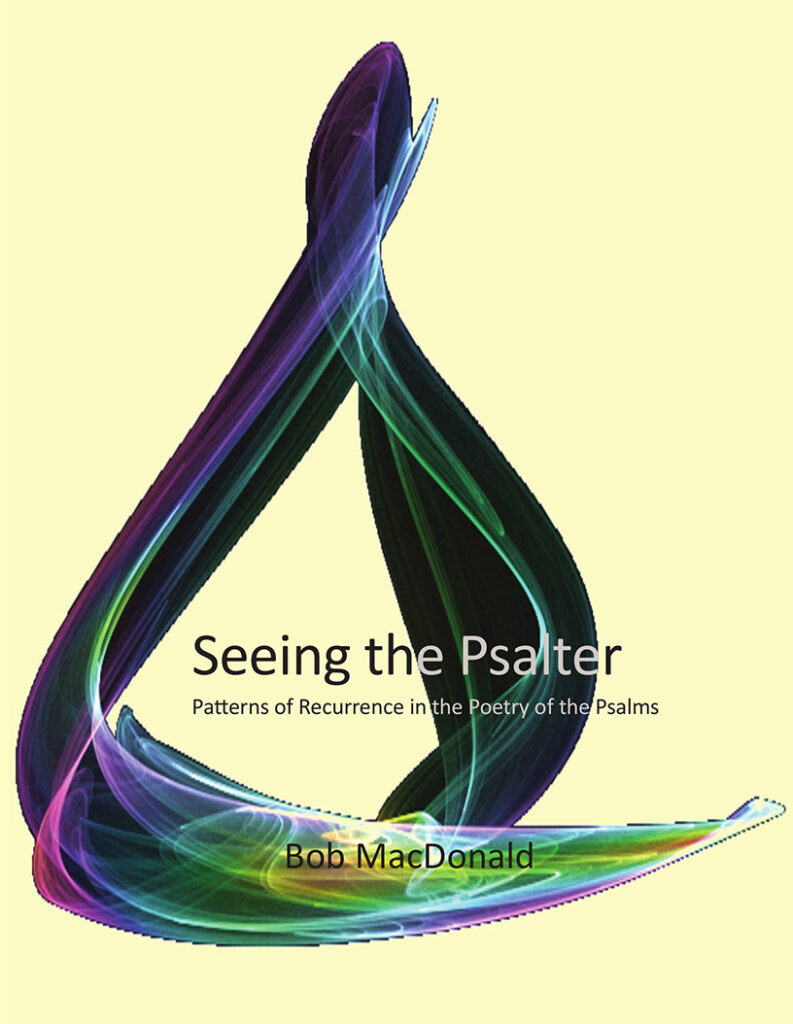
    Bob MacDonald, Seeing the Psalter, p. 386

    Bob provides the following note: “118 suspended, סלה (slh) the same letters as in the untranslatable pause or suspense in a psalm, and used of wisdom suspending in the balance, weighing (Job 28:16).” This is quite a good explanation and a real possibility for the first line. “Falsehood is their deceit,” remains a bit difficult still.

    Mitchell Dahood, well known for creative reconstructions of the text, translates:

    Make a mound of all who stray from your precepts,
    because their idolatry is false.

    Psalms III, p. 168 and note

    Both of these changes, “make a mound” and “idolatry are possible, though I would not regard them as probable.

    The difficulty with a verse like this is that it uses a number of words that have similarly spelled roots to others, and that are not found in the Hebrew scriptures very many times. The most important element in understanding the precise meaning of a word is the context, and in poetry, it’s hard to determine precisely what the intention is, as the context itself is flexible.

    This illustrates why you should be interested, but not worried, if you find footnotes in your Bible that indicate alternate texts or possible translation. This is part of the process of working with translation, and especially with translation of ancient documents where we have some difficulty discerning the intent.

    It also suggests that we should be grateful to those who do this work. The sources I’ve mentioned here each involved significant research and discussion by many people. I benefited by simply having a reference that gave me the results of their efforts.

    And finally, one thing is clear in the text: Rebellion against God’s statutes and deceit and falsehood are not good things.
  • Psalm 119:69 – Smeared

    Psalm 119:69 – Smeared

    The insolent smear me with falsehood,
    but with my whole heart I keep your precepts.

    Meditation on God’s word in all its various forms is useful when you feel that others are smearing you with lies. That is the most direct lesson to learn from this verse.

    But there is a benefit to meditating on the verse and then writing what has come to me–I can talk about a variety of things. And what my mind turned to was how one can be insolent (arrogant is also a possible translation) and smear people.

    You see, we tend to read scripture as one of the good people. This verse is written from the perspective of someone wronged, but steadily sticking to the right path himself. But how often are we in that sort of a “pure” position.

    I’m thinking especially of our behavior in the church community, but this sort of problem can occur when we speak about people in our families, our communities, and even of celebrities. We tend to delight in gossip. We tend to repeat it.

    Any time you pass on negative information you’ve heard about a person to someone who doesn’t need to know it, you are harming that person. Now in the secular world, we consider “truth” to be an adequate excuse for the most part. If it’s true, we think repetition is justified.

    But in the church community, gossip is listed as a sin. And unless you’re following an appropriate path to reconciliation, or engaging in a loving effort to help someone, repetition is hurtful. Matthew 18:15-20 provides a procedure that starts with talking to the person who has offended first, and ends with talking to the whole church. All too often, the entire church has heard before any effort is made to talk directly to the person concerned.

    When we do this, we’re part of the first half of this verse, not part of the second. We need sometimes to read these verses in reverse.

    Now I’m going to add something. Gossip is not a major temptation of mine. This is not a claim to righteousness of my own. It’s just that the ultimate bad guy knows what to tempt me with. What I’m tempted to do is to listen politely, not comment, and then leave.

    But let me suggest to myself and to all of you that listening to gossip in a polite way can itself be smearing someone’s character. You encourage the gossiper. You pollute your own mind with bad things about that other person. You may unconsciously poison your own relationship.

    You can’t stop all lies. There are too many of them. But whenever you can, you need to explicitly say no. When someone says, “Have you heard about what ____ did?” You need to say, ‘No, and I don’t want to.”

    What hurtful speech my you cut off today?

    (Featured image generated by Jetpack AI.)