
Threads from Henry's Web

Tag: Lee Harmon

  • Can Liberal and Conservative Christians Meet Anywhere?

    Can Liberal and Conservative Christians Meet Anywhere?

    One of my goals as a publisher is to see people from various streams of Christianity talk to one another and learn from one another. I used the labels “liberal,” “charismatic,” and “evangelical” in the home video I made early in the history of my publishing company, Energion Publications. I’m embedding it here for those who haven’t seen it.

    That video should answer the most common question I’m asked: Why do you publish books you don’t agree with? It’s not a question that comes up with the big boys, companies like HarperCollins, Zondervan, and so forth. (Oops! Come to think of it, Zondervan is now part of HarperCollins!) With those big companies, one expects that the editorial policy will be cover a bit of ground.

    But Energion Publications is owned by one person, and that person (yours truly) is also the chief editor. So what is my goal? Why wouldn’t I look for and try to publish the TRUTH?!

    I suppose I could get into epistemology and tell you that while I believe in truth, I do not believe that we, as humans (finite), ever get to know that. Rather, we make our best, and I think often quite workable, attempt at the truth. But my real reason is that I believe we need dialogue. We need sharpening by others. We need that to go on continually, not just in some starting point.

    Early in my time online I was in conversation with someone on the Compuserve Religion Forum. I’m pretty sure at the time I was still accessing this by dial-up, but my memory isn’t clear on the timing. Another Christian asked me if, when engaging in dialogue with non-Christians, I were to discover I was wrong, would I change my mind. Let’s ignore the fact that “discovering I was wrong” implies that I already changed my mind. My answer was, of course, “yes.”

    “Then you aren’t a real Christian,” he told me. If I was a real Christian, he explained, I would be unable to contemplate the possibility of being wrong. Now I’m a quite convinced Christian. My experience of God suggests to me that while the details may vary, my ultimate faith in God is not in question. It’s not unstable. I’ve seen it challenged. I’ve lived through times that made me question, and that faith is still there. I’m not that strong of an individual. If my faith has held up this long, it becomes evidence to me that there’s something behind it.

    But dialogue means listening, and if I listen, I must consider. If I hear something that is better than what I know already, I must accept that. To do anything else would be dishonest with myself and even with the God who is the Object of my faith. Or, well, beyond object, ultimate concern, and so forth.

    So I’m an advocate of dialogue because I think it’s both a critical part of how we discover truth and also of how we keep on trying to discover truth. Sharing and listening are important.

    So when I decide whether to publish a book, and later when I edit that book, my question is never whether I agree or disagree with the author, but rather it is how well the author has expressed his or her position and how well supported it is. I may disagree profoundly. But is this something that should be considered and discussed? I do place boundaries on what I publish, but that is because a small publisher has to have some definition of what is and is not within its publishing scope. I have rejected manuscripts that I have then, in turn, urged others to read when another publisher released them.
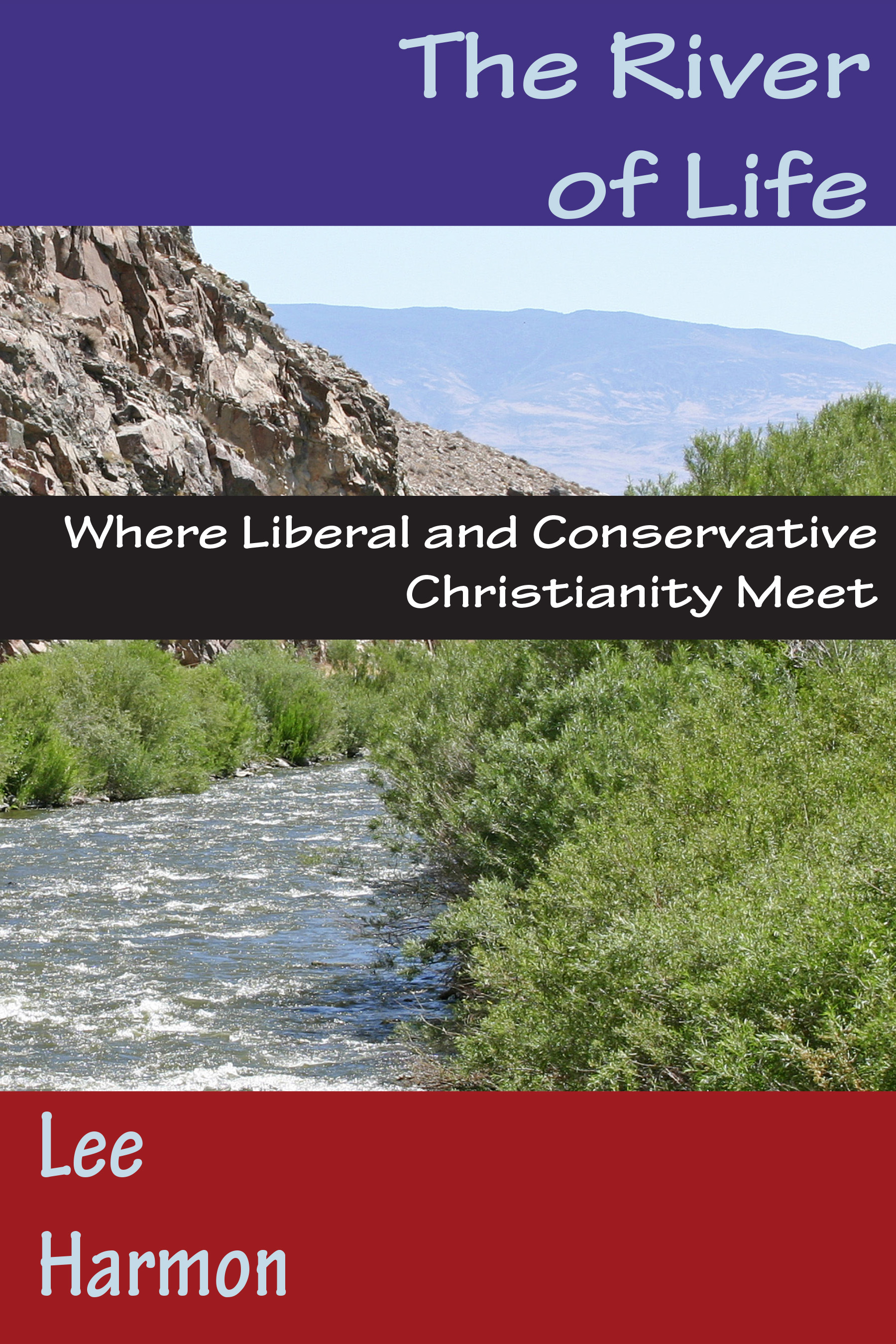
    9781631990915Most of these books advocate one position or another. But my company has just released a new book that is advocating dialogue, precisely the kind of dialogue I established this company to promote. That book is titled: The River of Life: Where Liberal and Conservative Christianity Meet. I’m not trying to say that I like this book better than any other book I publish. To be fair to my authors I must be as strong an advocate for each of them as I can. But I’m highlighting this one on my blog because it speaks to the core of my goals.

    Do I agree with every word in this book? I’d like to think nobody would ask me that. My normal answer is that I can’t even say that with confidence about the books I have written myself. In fact, Lee Harmon’s liberal Christianity is more liberal and less charismatic than mine. You can see my book Not Ashamed of the Gospel: Confessions of a Liberal Charismatic to catch the differences.

    Here is a sample from the introduction:

    I am also a liberal Christian, living in a conservative world. Most of my family and friends are conservative Christians. Conservatives consider apostolic tradition of utmost importance, meaning they seek to emulate the first-century church as best they know how. This is a noble goal, but it can lead to stringent intolerance for diluted beliefs. It’s the right way or the highway. Liberal Christians, on the other hand, find the creedal requirements which develop from such strictness stifling and contrary to observation and experience. We see God in many people and places, not just in Christian circles. This can lead liberals to a violent condemnation of narrow doctrine. Intolerance is intolerable.

    And round and round we go. As a liberal Christian, I have both stooped to verbal aggression and felt the sting of attack. Both sides care so dang much that we can’t help squabbling, but this hardly puts a good face on Christianity. If the two sides could merely take one step backward, digging back to the Jesus we both adore, perhaps there could be a unity of purpose. Even though there can never be agreement about religious belief, the Kingdom could nevertheless advance. That is my hope in writing this book. (pp. 1-2)

    I know, of course, that not everyone will agree with Lee on what the key points are. Not even all liberals are likely to agree on that. But that’s a good opening point for discussion. In that discussion we can all hope that we’ll hear our Master’s voice and learn to love a little bit more and show a grace that’s just a bit wider and deeper.

  • Book Notes – Revelation: The Way It Happened

    When I encountered Lee Harmon in cyberspace, or more precisely he encountered me, and I learned that he’d written a book about Revelation, I was immediately hooked. Besides, Revelation – The Way it Happened is such an interesting and suggestive title. Let me warn you that, as usual, this will be less a review and more thoughts and notes on the book and on the topic.

    I grew up on Revelation. Well, Daniel and Revelation. As a young Seventh-day Adventist I would hear a new series of evangelistic sermons on the topic at least once a year. We’d all go, because we obviously didn’t want to have the venue (often a tent) be empty.

    And each year I heard an updated message. Revelation meant something just a bit different as all the charts and events were rearranged to suit the current news, and the evangelist would explain how precisely current events fit the right moment in the prophecy.

    It took me a few years, but I began to notice the problem. When I decided to leave the Seventh-day Adventist Church, eschatology was one of the key issues, along with the doctrine of the remnant which in turn derives from SDA eschatology.

    There are four major streams of interpretation of Revelation: preterism, historicism, futurism, and allegorical. Preterism holds that all or most of Revelation was fulfilled at the time (or failed of fulfillment). Historicism sees long periods of history represented by the main portions of the book (churches, seals, and trumpets especially). Futurism hold that most or all of the book remains to be fulfilled. The allegorical view comes in a variety of forms, but generally holds that the symbols in Revelation may be used to represent events at many times and places, but are not predictive of specific times and events for the most part.

    SDAs keep historicism alive. The problem is that when the scheme used was first produced, it led nicely through history up to that time (the “great disappointment of 1844), with a relatively short “time of the end” coming immediately afterward. Even after the great disappointment, when SDAs took the position that they had been wrong to set a date and time, but still assumed that the end would come very soon. (To get a more detailed rundown on this issue, in fact a very detailed one, see Edward W. H. Vick, The Adventists’ Dilemma.)

    A similar issue is present for futurists, in that the various players and the details of end time events change as time moves forward, even though they don’t have the problem of a timeline that stretches from the 1st century to the present, and must in turn be stretched further to accommodate continuing history. Futurists nonetheless have to contend that John the Revelator (whoever that was) had a vision of far future events which was attached to a short letter about current events written to contemporary churches, and that there was a gap of at least a couple of millenia between the two. Though Revelation 10:6 proclaims “no more delay” this interpretation proposes a great deal of delay indeed. Of course, once one places the declaration that there will be no further delay into the context of a much delayed prophecy chart, one can avoid the contradiction, provided one is flexible enough.

    So that leaves us with preterism, which has most of the book refer to events contemporary to its author, and the allegorical view, which often doesn’t attach the material to much of anything.

    My own bias is in favor of an allegorical view, but one that is rooted in 1st century events. Thus I see Revelation 12 as an excellent depiction of spiritual (and political) conflict no matter when it happened, but I also accept a historical grounding in the birth of Jesus and the church.

    Having rambled thus far, let’s get to the book. I usually list strengths first and then weaknesses, but so I can get on with the fun, I’m going to list weaknesses first.

    If you pick up this book thinking you’re going to get a scholarly dissertation, complete with full examination of all the views and plenty of footnotes, you’ll be disappointed. It’s a presentation of its author’s interpretation with a few references to other views, and very little in the way of footnotes. There’s a good extra reading section, though I’ll confess it doesn’t match what I’d recommend in many cases. It’s still a good listing. There are many books on Revelation, and it would be shocking if two lists coincided completely.

    On the other hand, if you pick up the book thinking you’re going to be carried gently into understanding the book via light fiction, you’ll also be disappointed. There are multiple threads, one of them a contemporary story within a story (a father telling his son a story), interspersed with commentary and some historical narration. Font and style indicators guide you through all of this, but you’ll probably feel a little bit scattered in the early stages.

    Having said all of that, let’s get to the strengths. The writing is clear and direct. It’s really easy to follow the story lines once you get them straight in your head, and despite my note about a lack of footnotes, there is no lack of references to biblical and other literature from the time.

    One of the great errors Bible students make is that they expect to be able to go read Revelation on its own and come to some sort of understanding. The book is filled with quotations and allusions, some very close, some more distant. But there are very few words in the book that don’t connect somewhere. Harmon does a good job of referencing much of this material.

    I was especially gratified to see the extensive use of the connections with Ezekiel, which often don’t get enough attention from modern futurist commentators. Of course Daniel is also important as is Zechariah but so are many other books. Getting a feel for the symbolism also requires use of other apocalyptic literature, and Harmon provides quite a number of references.

    I have been attracted to the 70s or 80s dating that Harmon uses myself, but I remain unconvinced. I think it’s a possible dating, but my main criticism of the interpretation provided may be an excessively close tie between the imagery and real world events. It’s possible, but I think it is a bit of a stretch.

    Overall, I’d say that while I find several specific theses in the book questionable, it’s a good read and it provides enough references to primary literature to help set you on your way to some rewarding study. My hope would be that readers of this book will turn to those primary sources and help change the way Christians speak about Revelation.

    The fact is that we’ve been proclaiming “soon,” in the send sense of “just around the corner” for so long, that it no longer sounds very convincing. If people did this in any field other than religion, we’d call them liars. There’s a way to understand “soon,” but this isn’t it. If the futurist interpretation of Revelation is correct, one would have to suppose that God lied to those who first heard the words. We need to rethink the way we teach prophecy, and do it less as prediction and more as admonition.

    The purpose of apocalyptic is encouragement at a time of trouble. There is encouragement there that can apply at any time and place. There is also an ultimate hope. But the reason to carry out our mission as Christians, Christ’s body in the world, is not that Jesus may come and end it all at any moment, but rather that Jesus is already near and our own end is always near. And because Jesus is near we can face our own hardships and ultimate passing from this world with hope.

    I believe in the “resurrection of the body and the life everlasting” as the creed says. But I don’t believe that the passage of time is the main issue. Whatever the length of time until the end, God is present.

    In the meantime, you could do much worse with your time than read this book and let it challenge you to further study.