Threads from Henry's Web

Tag: Investigative judgment

  • The Little Horn of Daniel (Again)

    Since I grew up as a Seventh-day Adventist, I almost have to be interested in Daniel 8, particularly 8:14, which is critical to the development of the Adventist movement. For those not acquainted with that history, this is the verse from which the prediction of the second coming of Jesus on October 22, 1844 was derived. In turn, that doctrine developed into the doctrine of the investigative judgment, which I list as one of my reasons for not being an SDA today.

    While at first my objections were exegetical and based on Daniel 8:14, I have come to be more concerned with the soteriology involved. I still hold to those original objections.

    Thus I link to an article from Adventist Today, Why the Little Horn of Daniel 8 Must Be Antiochus Epiphanes. I would note that the author, Winston McHarg, resigned from the SDA ministry in 1978, while I was a student at Walla Walla College, and still a few years before I left the SDA church. For a short article, this one is well-done exegetically.

  • Eschatology: Daniel 8

    Eschatology: Daniel 8

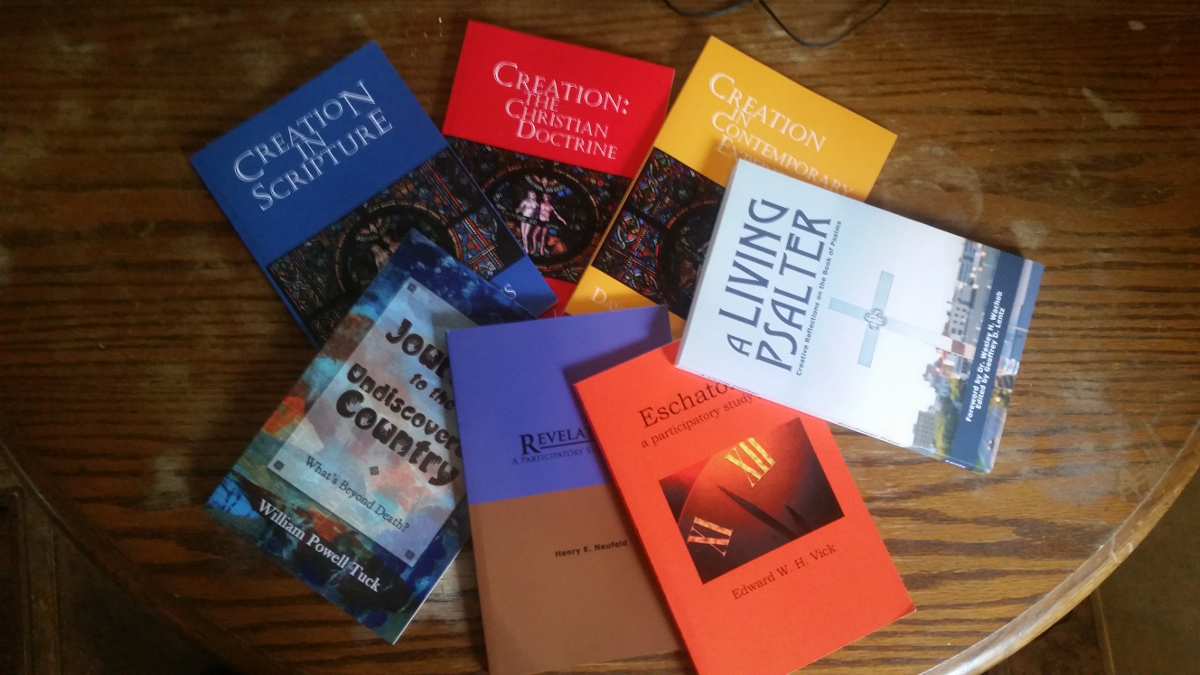
    Some Eschatology SourcesTonight I’ll continue my study of eschatology by looking at Daniel 8. This is a fairly straightfoward chapter to interpret with a great deal of the interpretation provided right in the text. The most interesting element, I believe, is to look at its place in the structure of Daniel and how it impacts our understanding of other visions.

    In addition, as a former Seventh-day Adventist I will look at the Adventist (not just SDA, but advent movement) interpretation of Daniel 8:14. The SDA view of this verse sheds light on a number of significant elements of hermeneutics. In fact, the doctrine of the investigative judgment, which eventually grew up out of the early interpretation of the verse is one of my key doctrinal disagreements with my former denomination.

    As background for this discussion, let me recommend the following two essays by Dr. Edward W. H. Vick, who is also the author the the book Eschatology: A Participatory Study Guide, with which I began this series.

    1. 1844 – 1: Between the Disappointments
    2. 1844 – 2: After the Disappointments

    Here are the links for tonight’s discussion:

    Google+ Event Page

    YouTube:

  • October 22 and Eschatology

    Eschatology: A Participatory Study GuideOctober 22 probably doesn’t mean much to most of my readers, but for someone who grew up as a Seventh-day Adventist (SDA), it has great significance. It was on October 22, 1844 that early Adventists (before they were Seventh-day Adventists) expected Jesus to return. It was actually the second time they had expected that. first came what is known as the “lesser disappointment” of 1843, when they had not set a specific date, but had set a deadline of a season. Of course, the day ended, and nothing happened.

    But as often happens with failed prophecies, after thought, consideration, and some manipulation of Bible texts, the Adventists decided that something had happened, it just wasn’t something visible here on earth. Adventists made a firm decision to set no more dates for the actual Second Coming, but they continued to preach that Jesus was coming “soon.”

    In an overall doctrinal sense, this is no longer the sort of thing I consider central. But it did play a pivotal role in my decision to leave the SDA church. First was my reading of Daniel. I studied Daniel at Andrews (the SDA Theological Seminary) under a professor who strongly supported the traditional SDA understanding of the passage. People often think those who change their beliefs in college or seminary do so because liberal or unbelieving professors brainwash them. My professor made every effort to convince me that the SDA interpretation of Daniel 8:14 (the famed 2300 day prophecy) made sense. But in the context of Daniel it did not make sense to me.

    Having decided that the time prophecy element was completely unfounded I turned to Hebrews and eventually decided that the very concept of an investigative judgment was also not good theology. Having spent a considerable time outside the Christian community, it was this second element that made it relatively certain that I would not return to an SDA community. People expect the seventh day sabbath to be the problem, but while I don’t agree with much of the supporting doctrine (the idea that it is the distinctive characteristic of the remnant, for example), I wouldn’t have a problem making the seventh day a sabbath. (That isn’t at all what SDAs mean by this, of course.)

    What’s interesting right now is that I have just completed proofs for a new book, Eschatology: A Participatory Study Guide, by Edward W. H. Vick, who would see similar problems with these various elements to the ones I do, but is a former professor at Andrews University. In addition, my company distributes his book The Adventist’s Dilemma, regarding the use of the word “soon” by Adventists. I had once thought these controversies were in my past. Now I’m editing and marketing books about them.

    October 22 can cast a long shadow!

  • Repeating Adventist Mistakes

    William Miller
    Image via Wikipedia

    Harold Camping seems to be repeating the mistakes made by the early Adventist movement. While I disagree profoundly with Seventh-day Adventist eschatology, I don’t hold that history against the church. Good and interesting movements can result from mistakes, but only if you correct those mistakes.

    Now consider Camping. He predicted the rapture in 1994, and then decided his math was wrong. Those who know Adventist history will likely recall the 1843 “lesser disappointment.” After Jesus did not return in 1843, William Miller corrected the date and also made it more specific, narrowing it to a single day, October 22, 1844. That day is known in Adventist history as the Great Disappointment.

    Following that event, Adventists decided that, while they had the math right, what had happened was a change in heaven, as Jesus began the investigative judgment, which is still going on now.

    They also, however, acknowledged that they were wrong to try to set dates for the second coming. On this last note, Camping is not following in their footnotes. He appears set to repeat their mistakes, but not follow their example when they did right.

    I see that Spectrum’s Alexander Carpenter has noticed this similarity as well. Amongst the biblioblogs, I would note Peter Kirk and Joel Watts.

    Enhanced by Zemanta