Threads from Henry's Web

Tag: God

  • God as Father

    God as Father

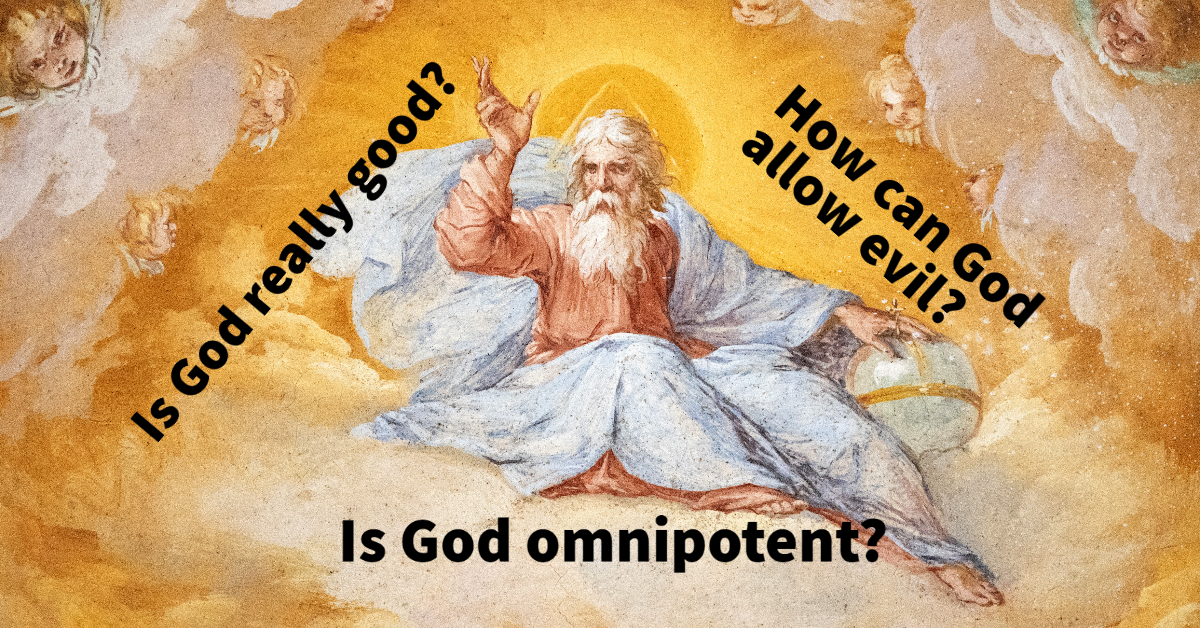
    I intended to schedule this post for Sunday morning, but life intervened. Jody suggested that as my final post for Father’s Day Week, I should look at divine fatherhood overall through scripture.

    She had some difficulty with the concept of God as father, because while she and her father were able to reconcile before his death, she had difficulty thinking of her relationship to Father-God in a positive way. Many people have that very problem due to the way they related to their own fathers in this life.

    And we can expect that any human representative is going to present an imperfect and challenging representation of God. This is an inevitable result of the human condition. When Jesus told people that they knew how to give good gifts to their children, he doubtless knew that there were people in the crowd who truly did not know how to give good gifts. There were likely people who didn’t know how to give at all because they were so self centered.

    But that parental relationship is still a valuable analogy. This works two ways. First, parental love and commitment to children provides one of our better examples of a loving, self-sacrificing commitment. When I talk about good and bad parents, readers have no problem thinking of examples. We may differ on were the boundaries lie, but we do have an image of good parents.

    Second, this works in reverse. We are told in this way that as parents, we are to be the sort of parents who can point the way to God. Being “godly” as a parent doesn’t mean adhering to a set of doctrinal standards. It means having a particular attitude.

    My own observation over the years is that children do well with quite a variety of parents. One critical common characteristics of parents I believe would be called “good” by their children later in life is simply that those parents cared. They were committed to doing right. They may have failed. No, they almost certainly did from time to time. They weren’t perfect, but they tried.

    And so Jesus could point to the idea of a good father as a way to point to God, and people can get an idea of what God’s love means.

    The best way to discover some depth in this view of God is to look at the experience of people with God. I frequently refer to the Bible not as a compendium of doctrine, but as a book of experience. That experience is primarily the experience of people with God.

    Jody spent a year looking at texts about God the Father. I’d suggest just such a project if you want to build your relationship with God. Here are a few key points.

    • God as creator is God as Father. At creation God not only produces human beings, God then goes on to care for them by providing a garden, animals, and companionship.
    • God is not eternally indulgent. God is patient, but there comes a time for trouble. Witness repeated failures of the people, and events such as the flood, slavery in Egypt, the exile, and so forth.
    • God’s parental love is not determined by our being the cutest or best behaved children. Hosea, particularly the first few verses of Hosea 11 or all of Ezekiel 16 (which is some rather rough reading!) emphasize.
    • God’s love is not limited, as seen in John 16 & 17 and many other passages. God keeps loving right up through death on the cross.
    • God’s love is relentless. See Romans 8:31-39.
    • God’s love will win in the end. See Revelation 21 & 22.

    We spend our time worrying about the little things. God’s love is the big thing.

    God is Love!

    (Featured image generated by Jetpack AI.)

  • Psalm 119:167 – Keeping

    Psalm 119:167 – Keeping

    I keep your testimonies,
    I love them greatly.

    The first line here is formally “my soul keeps,” which is a way to refer to oneself. I does have the added connotation of keeping them from the heart out. That goes with the second line that says this comes from the love that the Psalmist has for God’s law.

    I couldn’t help today thinking about the difference in the way the various laws are presented here by the Psalmist. In Christian churches you rarely have positive references to the law as something to love and appreciate. We’ve taken pieces of Paul and used them to build the attitude that the law is very negative, so we want to avoid it.

    We have a major problem, however, in that we want to trot the law out to make other people behave the way we want them to. That again presents the law in a negative way, as we keep saying that salvation is by grace, meaning that “getting into heaven” is by grace, and then detaching that from Christian life.

    As a result we act as though God will take you to heaven, but we still need something to control things on earth before we get to heaven, so we have laws, and we enforce them. That tends to result in a loose and capricious application of standards of behavior, and soon the fires of hell will start sneaking in the other way.

    But both the law and grace come from a loving God. It’s not that grace is a way around the law. It’s more of a way through it. Ultimately, sanctifying grace says that God is going to get you in the end, which does not mean that God is going to discipline you into formal good behavior, but rather God is going to make you holy, and that “holy, just, and good” law will be part of you as well.

    Grace is the gift that keeps on giving. Even in Romans 7, which is often viewed as a “downer” chapter, Paul notes that he’d like to do God’s law, but he finds himself in a battle with the flesh which definitely does not want to keep the law.

    The answer is to live by the Spirit, at which point you do, in fact, love God’s law. You may (and should) still realize how much you fall short, and how much your flesh (to use Paul’s term) is at war with it, but it’s something that tells you where God is going to take you.

    As even the very next verse, which we’ll discuss tomorrow, the only reason anyone goes anywhere with any of this is that God is at work.

    Having trouble with keeping God’s law? Let God’s Spirit do the work.

    (Featured image from Adobe Stock. Licensed, not public domain.)

  • Psalm 119:116 – Supported

    Psalm 119:116 – Supported

    Support me according to your word that I may live
    and don’t let my hope fail.

    As a note on translation, this verse is simply and sparsely expressed in Hebrew, which leaves some work to the translator in choosing precisely how to translate. Yet the overall result doesn’t change that much. Try comparing a number of translations. The words will vary, but the overall meaning remains similar.

    Sometimes we stress too much about translation details. It’s quite possible to get so hung up on precise words that we miss the message, which is unfortunate. I keep quite a collection of Bible translations and editions, and I deeply appreciate the vast majority of them.

    This verse fills an important role in the tapestry of Psalm 119. We find the psalmist grateful, determined, confident, hopeful, and fearful. We find him claiming accomplishments in one verse and calling for God’s help in another. The overall effect is a powerful picture of a person of faith carrying out life as one of God’s own.

    Our verse today covers much of this ground in one poetic couplet. The psalmist calls on God’s support that he may live. He recognizes the dependence on God for his very existence. If the creator and sustainer of the universe doesn’t sustain him, he can’t live. It’s as simple as that.

    At the same time he is expressing confidence. God’s sustaining power will provide life, and let him attain to his hope.

    Sometimes we have that kind of dual feeling. Confident, but feeling the need of support. Sports teams feel it with supportive crowds. The professional athletes are not underconfident. They know what they’re doing, but they’ll still acknowledge the value of that support.

    Sometimes we separate our efforts and what God does, but they are not so easily divided. If we hold that God is the creator, and that God’s creative power upholds the universe (Psalm 104 comes to mind), then we also know that our existence is dependent. At the same time, we know that those laws that God created are reliable enough that we don’t need to be concerned that the will end.

    For the believer, this covers everything, both physical and spiritual. The connection is there. Support me, and I will live. I hope, but I know that you, God, are the real hope, because you are the source and foundation of all hopes.

    Today, try to feel the support that God gives you. Look for ways in which he is taking you toward your greatest hopes.

    (Featured image generated by Jetpack AI.)

  • Psalm 119:55 – Remembering

    Psalm 119:55 – Remembering

    I remembered your name in the night, Lord,
    So I followed your instruction.

    Dahood (Anchor Bible Psalms III) again has an alternate suggested, based on repointing the word translated “And I kept/guarded/followed.”

    I remember your name in the night
    YHWH,
    and during the watch, your law.

    I won’t discuss the arguments for his rendering, which I consider possible, but not the most probable, but it emphasizes the parallel the Torah, and God’s name. God’s character, his reputation, is closely tied to his Torah, which in this case should be read broadly. It’s not just a list of rules, but rather God’s self-revelation.

    But what I thought about most today was remembering, including the fact that I had to go back to the verse multiple times because it slipped my mind. Weakening memory is considered a sign of old age. As we grow older, we often have trouble remembering things. Just today, I went to get something from the pantry and when I got there, I found myself wondering why I was there. On the other hand, I can remember my zip code from a place I lived 50 years ago.

    My memory has been somewhat odd as long as I can remember(!). People might wonder why I remember things that seem unimportant to them, and cannot remember things they deem critical. But I have had this sort of memory for a long time. Many friends have referred to me as a human concordance, because they’ll just ask me where a verse is, and I often know, at least down to the chapter. The reality is that I can locate far fewer verses than I would like, and I find my Bible software very helpful.

    But when I think about what I notice and what I remember, two very closely aligned lists, they don’t seem at all strange to me. I notice the sort of things I really care about. Well, except when I don’t.

    I don’t remember when some other thought pushes the first thought out of my mind. That’s where lists are useful, though sometimes I forget to look at them.

    Relying on my memory, even in areas where I have a reputation for it, such as Bible verses, is suboptimal.

    If I could always remember the things I would like to imitate in life and the sorts of things I’d like to have in my character, I would surely make every effort to live up to them. But my memory is not that reliable.

    That’s why it’s important to look around, look forward, and ask the Lord to remind you of things that need remembering.

    Give some time to thinking of thoughts you may have laid aside. There are likely some gems in there worth another look. If you’re wakeful in the night, that’s as good a time as any!

    (Featured image generated by Adobe Firefly.)

  • Theodicy Interview with Rev. Steve Kindle

    Theodicy Interview with Rev. Steve Kindle

    I posted the video from my interview with Steve Kindle in my theodicy video interview series. The video is embedded below, and you can find out information on this series at Theodicy Interview Series.

    The next interview to be posted is by Steve with me, asking me to answer the questions I’ve set up for this series. Following that, I’ve added an additional author, Dr. Terrell Carter, author now of three books from Energion Publications, and several from others.

  • Thinking about a Crucified God

    Thinking about a Crucified God

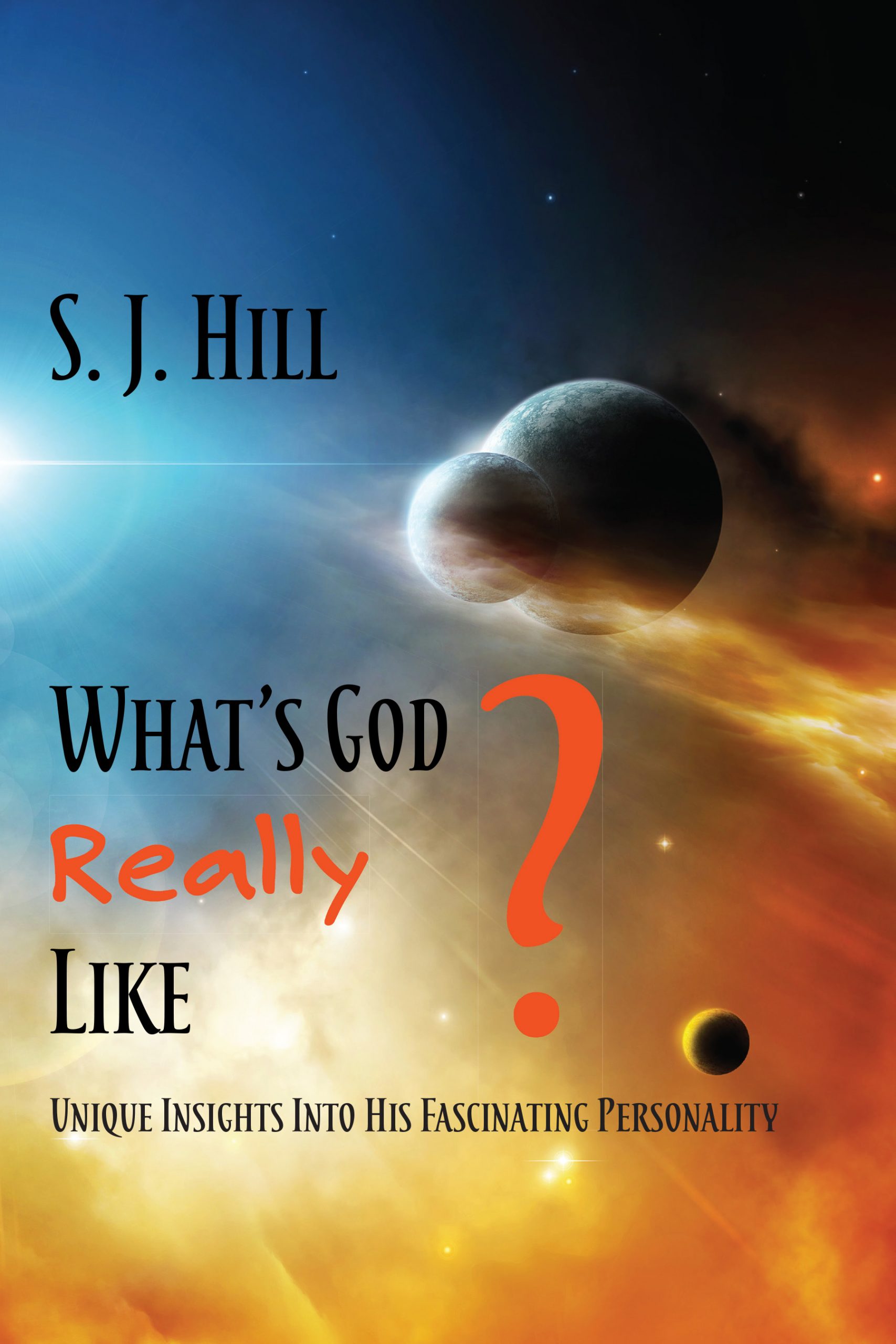
    My company, Energion Publications, recently released a book What’s God Really Like?. It’s endorsed by Brian Zahnd;

    In What’s God Really Like?, S. J. Hill invites us to become fascinated by God and, in that fascination, to move beyond the fear-based themes that have so often distorted our image of God. With a focus on Jesus and Scripture, Hill paints a portrait of a God who is “holy wild” and overflowing with generous love and contagious joy. This book is a welcome and timely remedy to the unworthy portraits of God that have too often haunted our imaginations.

    Brian Zahnd
    Lead pastor of Word of Life Church in St. Joseph, MO
    and author of

    Another Energion author, Allan R. Bevere, posted the following video, a sermon by Brian Zahnd. I think all of these go well together!


  • Bob Cornwall – Revelation of God Embodied

    I’d like to commend Bob Cornwall’s sermon this week to your attention, especially to those who are following my John study. It’s titled Revelation of God Embodied. Thinking about God can be hard work!

  • A Narrow View of the Glory of God

    Engraved from the original oil painting in the...
    Image via Wikipedia

    Peter Kirk links to Roger Olson on why he defends Love Wins. Now I haven’t read Love Wins and it isn’t on my reading list. The reason for this post is to comment on this (Peter quoting Roger Olson):

    I think that is what offends critics of Love Wins–the suggestion that God doesn’t get what he really, perfectly wants.  That seems to them to demean God, to lessen his glory. …

    And yes, I could have gone directly back to Olson’s post for the same quote. I suggest you do so, because Olson covers all this in more depth.

    My major problem with Calvinism could be summarized by saying that it seems to me to force God to want something that humans can understand and accept. What if what God wants is a universe filled with creatures who can choose whether or not to love him? It may turn theologians’ brains into pretzels, but why should it be limiting to God’s glory to want that instead of to want what Calvinists prefer that he want?

    It seems a very narrow few of God’s glory, and frankly strikes me as something more like a desire for God’s simplicity or comprehensibility, than one for God’s glory.

    I can’t understand how a God who can set off the big bang and who knows the end from the beginning can also make creatures with choice. But I suspect he can.


    Enhanced by Zemanta
  • Changing Polls

    No, President Obama’s approval rating; the poll that I have in the right hand sidebar.  It has been there for more than 18 months, and surprisingly enough is still generating interest.  The last comment is dated December 19, 2009 and there have been quite a number.  You can see the results here.

     Who does God hate?  
    Selection   Votes 
    Everyone, because we are all sinners  3% 13 
    Only unrepentant sinners  9% 40 
    All non-Christians  2%
    Those who have never said the sinner’s prayer  0%
    Nobody, God loves everybody  77% 330 
    Other (please comment)  9% 39 
    431 votes total 
    pollcode.com free polls
     

    In case anyone wants to keep this poll alive even further past its sell-by date, I’m including the form as well:

    Who does God hate?
    Everyone, because we are all sinners
    Only unrepentant sinners
    All non-Christians
    Those who have never said the sinner’s prayer
    Nobody, God loves everybody
    Other (please comment)
      
    pollcode.com free polls