Threads from Henry's Web

Tag: gifts

  • Psalm 119:134 – Ransom

    Psalm 119:134 – Ransom

    Ransom me from human oppression,
    and I will keep your precepts.

    Are you oppressed? Do other people have a hold on you that keeps you from being the person God wants you to be?

    This is another verse that I have heard presented as a bargain with God. “Save me from whatever my problem is and in turn I’ll do what you tell me to do.” But I think that’s not the right way to read it. I think the question is whether one can, in fact, do those precepts.

    We tend to think of oppression as a sort of physical restraint or application of force to make us do thinks we don’t want to do, or not do the things we do want to do. Slaves have experienced this over the years. We should always stand for liberating people from that sort of oppression.

    But there are other forms of constraint. For example, there is economic oppression. It connects to the same sort of force, but applied in a more subtle way. A person is forced into an endless, losing struggle by circumstances that prevent them from ever escaping, no matter how hard they try.

    Someone with more freedom will ask why don’t they just break free. But that is not always as easy as it may appear. In fact, we fairly often fail to recognize the kinds of oppression that someone else is suffering due to circumstances beyond their control. In real life, a single mistake can lead to a life of very limited choices.

    There is also psychological oppression. I know someone who became a nurse rather than a doctor, largely because so many people either simply assumed that, as a woman, she would be a nurse, or told her she lacked the academic skills to be a doctor. Now as it was, she became a very good nurse, giving extraordinary service. Her life was by no means wasted. I also don’t consider being a doctor better than being a nurse. It depends on what you are gifted and called to do. But her choice was constrained by a mob of voices telling her, “woman -> nurse.”

    When teaching about spiritual gifts in various churches, I frequently carry out an exercise in which I ask people to name their own gifts. There will inevitably be one or more people who can’t identify any gift that they have. I then ask the members of the group to identify gifts they see in others in the room. Inevitably again, someone will point out a gift that person has that is recognized by others.

    That is a moment of liberation from oppression. A person realizes that they are gifted and called, and they are of value to God and to their community.

    I then call on people to search for and recognize gifts in the people around them and to let people know. Simply thanking a person in a way that lets them know that their gift is of value, and that they themselves are valuable, can go a long way toward liberating someone to carry out the calling God has on their life.

    I work in two areas that people think of as requiring serious brain power: Information Technology and Biblical Languages. It’s amazing what people will think you’re capable of understanding if they know you read Greek. Many times I have gotten on my soapbox and lectured people when they say, “I’m not as smart as you. I don’t read Greek.” It’s probably not helpful when I get irate, but I do. Why? I can’t remember a time when someone spoke to me like that who didn’t have gifts and skills that I can’t imagine doing.

    There’s probably something you do that will amaze other people if they just become aware of it.

    Now I’ve gone far afield. Or have I? There’s another form of oppression, and it’s related. It’s the more generalized chorus of people telling each one of us that we’re less than other people for whatever reason. We’re told that we’re worthless, or useful only for minor, menial occupations. Often those occupations, as we practice them, are part of what keeps us away from God–from all that God has for us in this life. (And note that I don’t believe any occupation is menial by nature. It is only menial if we don’t value it as we should.)

    So how can we be ransomed from a life of failures and regrets? If that “human oppression” is keeping you from getting to the purpose God has for you, God’s precepts as applied in your life, then it is ransoming you need. You need to take your new identify as a child of God, and realize that your horizons are not limited by the thoughts of others, or the limits of your own vision, but by God’s purpose.

    Yes, you can apply the concept of ransom to salvation, and that is appropriate. But I’m talking about God ransoming you from the day to day oppression of an identity as a failure, as someone worth less than you are. You are a child of God. Let that be what sets your goals, and sets, or shatters. your limits.

    What oppression are you going to break today?

    (Featured image credit: chaiyapruek2520 on iStockPhoto.com.)

  • If You’re Nice, Diversity Will Take Care of Itself

    If You’re Nice, Diversity Will Take Care of Itself

    Bad Ideas I Learned from Good Leaders #2

    I’ve heard this one from so many people that I would hardly know who to blame for it if I wanted to blame someone. I’ve been told that if you will just be nice and positive, you can ignore the differences in your congregation and everything will take care of itself.

    This is incorrect. If you ignore the diversity that is present in your congregation, you will likely encounter a number of problems.

    1. You will find that people will have differing definitions of the boundaries and thus create conflict in the church unnecessarily.
    2. Different people offer different gifts, and if you fail to discover these gifts, there will be missed opportunities.
    3. Problems in the surrounding society may cause division in the church unnecessarily.

    If you don’t believe me on any of this, read 1 Corinthians. Here we have a church with division, and Paul tells them that God has brought them together from differing backgrounds, with different talents, and made them into one body with different gifts. Read especially 1 Corinthians 12. As a follow-up, read Romans 14, or even better Romans 12-14. (I’m not a good proof-text person. Read a few chapters!)

    Note here that I’m not talking about some sort of quota system or diversity inclusion. I believe in inclusiveness, but in this case, I’m assuming what I’ve seen in most churches, and that’s a variety of people already present. The problem is that they are carrying out a one-day-a-week religious program because the church has failed to incorporate them into a single body, the Body of Christ, to have an impact on their world.

    To accomplish this, it is necessary to actively acknowledge the differences among the members of the congregation. These differences should be recognized not for the purpose of a select group of individuals asserting superiority over others, but rather to appreciate the diverse gifts that have been gathered, value those gifts, and collaborate effectively by utilizing all available resources.

    Diversity in any organization is valuable. It allows us to accomplish things that none of us could achieve on our own. The problem is that many of us are so focused on our own strengths and weaknesses that we fail to recognize how others operate and what they can achieve.

    This could be as simple as finding the nerdy young person who doesn’t seem to fit in socially, but who, unknown to you, has a talent with electrical systems and would be able to run your sound system better than anyone else. That young person, being socially uncomfortable, is vanishingly unlikely to volunteer. They probably assume they’ll be pushed aside or ignored for no better reason than that they have been pushed aside and ignored over and over.

    This “different” person doesn’t need you to change their personality. They need you to let them be who they are and do what they are gifted to do. To do this, you need to have a clear understanding of what is a moral difference that is a standard for the church and what is a difference of personality. Too often, we treat Christian discipleship as a personality change.

    Don’t figure that you have to make the Jock do lots of hours of detailed Bible study. God may well have called them to a straightforward understanding of their faith and to be a good, kind, fun loving, and active person. And don’t expect the Nerd to be ready to engage in all those physical and social activities that you think are so essential to life.

    Oh, and don’t expect everyone who gets involved to be ready to serve on a committee. They might be quite willing to take direction but not to spend seemingly endless time discussing.

    In addition, there is value in being clear about the core beliefs of your church (or any other organization for that matter). This is not so you can go hunting for heresy. I recommend a short list of essentials, the common beliefs that unite this specific group. The purpose of clarity is to avoid unnecessary misunderstandings.

    Let me recommend a couple of books to help learn about and deal with diversity, whether in the church or in the community. I commend both of these books for making diversity a value rather than a burden to be borne or a duty to be carried out diligently.

    The first I already mentioned in the first post in this series, Perfectly Square by Dolly Berthelot. This book is short, illustrated, easy-to-read, and fun. It’s not particularly directed at churches. That’s a good thing. Your church is not perfectly square either. Church people are people. There are thought questions and discussion topics listed in the book. It’s good for group reading and discussion.

    It is also not a prescription for programs, but rather it is aimed at changing attitudes and opening up new ways of thinking about the differences we find all over.

    The aim is to recognize these differences and profit from them as a community rather than making them a cause of discord and division.

    The second is a book explicitly for church groups. I Know We’re All Welcome at the Table, but Do I Have to Sit Next to You? Now there’s a long title! But this book provides ideas and courses of action that a community group can use to begin to deal with those people we don’t want to deal with. The focus is on people and groups we may already have identified, probably stereotyped in our minds, and determined that we dislike or worse. How can you get back together.

    My suggestion here is that to really lead we need to learn how to work together, and use all of the diverse gifts and resources we have in our congregations in order to impact our communities.

  • Ask Them to Implement Their Own Suggestion

    Ask Them to Implement Their Own Suggestion

    Bad Ideas I Learned from Good Leaders #1

    I’m never going to identify which leader I learned these things from, because I have deep respect for all of them. Many of them helped me ditch bad ideas of my own, though doubtless I still have a bunch!

    The bad thing I learned is this: When someone makes a suggestion for some project in the church, you immediately ask them to lead out in executing that idea.

    There is a very good point involved here. Actually two very good points. First, a person who goes to the trouble of suggesting someone is likely fairly passionate about it, and are likely to be diligent in getting it into action. Second, there are numerous people who will tell pastors and other church leaders all the various things they think “the church” should be doing. They have no intention of serving. They just want to complain. “Why don’t you take the lead on that?” will often either slow down the complaints, or in some cases even get someone moving.

    That’s the good side.

    The bad side is this. Your church is probably already an example of the 80/20 principle: 80% of the work is done by 20% of the people. (Well, you might be more like 90/10, but why be negative?) Most of the good ideas, the ones you should want implemented, are coming from that busy 20%. After all, the 80% don’t really want to go to the trouble of meeting with the pastor to present an idea.

    The 80/20 principle is self-sustaining. The 20% are the workers in the church because they’re the ones with initiative and creativity. Some people aren’t like that. Some people are willing to serve, but they don’t have the imagination, the initiative, or perhaps the knowledge of the church to locate a task and involve themselves with it.

    Since the 20% generally have those characteristics in various (but substantial) measure, they tend to imagine that the 80% aren’t serving because they’re lazy, apathetic, or don’t really care about their church. Some of them may have these problems. But more of them likely are waiting to be identified.

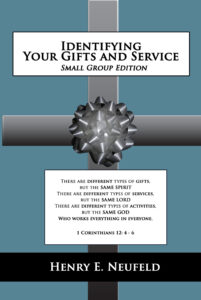
    In my book Identifying Your Gifts and Service (Small Group Edition), I suggest that church members and leaders need to observe one another to learn about gifts and help others find a place to serve that utilizes their individual gifts and also fulfills their needs. Yes, they are serving others, but that service is also of benefit to them, provided they are allowed to use their gifts in positive ways, rather than just being put to work.

    Here’s a summary of the points I make about this in that book:

    1. Listening: Group members identify each person’s gifts based on observations and what they believe the Holy Spirit has revealed. ​ This involves a group discussion where each person shares what they see as the gifts of others. ​
    2. Expressing: Each individual expresses their understanding of their own gifts. ​ This step involves self-reflection and sharing with the group. ​
    3. Examining: A survey is provided to help individuals think about their gifts and areas of service. ​ The survey is designed to stimulate thinking and challenge assumptions about one’s gifts. ​
    4. Fitting: Group members discuss and clarify God’s call on their lives and how their gifts fit into the church’s needs. ​ This step involves prayerful discussion and focus on how to use identified gifts effectively. ​
    5. Unifying: The group examines how individual gifts align with the church’s mission. ​ This step involves the participation of church leadership to help integrate members into appropriate areas of service. ​

    The book emphasizes the importance of listening to the Holy Spirit and to one another, and it provides practical exercises and discussions to help identify and utilize spiritual gifts within the church community.

    A Look Ahead

    One of the key elements in this process is recognizing church members as diverse individuals. They don’t all have the same gifts, goals, personalities, education, or general approaches to life. Learning to recognize these is important. Next week I plan to write about this as a bad idea I learned from otherwise good leaders: Don’t get stuck on expecting one personality type in members of a congregation.

    I will reference there the book PERFECTLY SQUARE. You can get a head start with this lovely little book that’s a quick read.

  • Why I Stopped Carrying My Greek NT to Church and then Started Again

    Why I Stopped Carrying My Greek NT to Church and then Started Again

    There’s an article on For the Church, in which Dr. Andrew King tells students: “Don’t Take Your Greek or Hebrew Bible to Corporate Worship.”

    There are a number of good points in the article, such as the note that if you are not comfortable with the languages, working on them during a sermon may be distracting. It is also important not to suggest to those who do not read the Bible in its original languages that they are less than you, or somehow unable to read and understand their Bibles. Be cautioned by the issues raised here. But I have a slightly different view.

    When I was studying biblical languages as majors both for my undergraduate and MA degrees, I very quickly started carrying my Greek and Hebrew Bibles to church. Since I went well beyond the couple of semesters or the couple of years that many seminary students study, I became quite capable of following the scriptures in a sermon or in a Sunday School lesson with little difficulty.

    During the time that I was a student this presented little difficulty. As far as I could tell, very few people ever noticed. I never became self-conscious about it. I didn’t really care to have people notice, but it was the way in which I enjoyed studying the Bible.

    For me, it became a problem when I was working and teaching in churches, though I was not a pastor. I have written before about not using Greek and Hebrew as part of your sermon. I avoid using the biblical languages as an explanation for something I’m going to say in a sermon. The reason is that I don’t want to suggest that I, an individual student, have discovered something that nobody in all the many translations into the English language, have managed to convey. I have found that a good presentation of the context of the passage, linguistic, literary, historical, and cultural, can convey pretty much anything you need to convey.

    So one of my reasons for no longer carrying my Greek and Hebrew Bibles to church was to avoid the suggestion that one must know the biblical languages in order to read and benefit from the Bible.

    The second was that certain preachers who knew me would try to bring me into Greek or Hebrew comments by saying things like “as Henry would know.” It was annoying, drew attention away from the point the preacher was making, and highlighted me when I had no part in presenting the message.

    So I stopped taking those Bibles to church. It seemed easier and less likely to cause trouble.

    One experience with a very close friend and mentor who is a pastor (though now retired) set me thinking in different ways. I was sitting in a classroom in the church reading my Greek New Testament when he walked in.

    He said, “I am so awed with the way you can read and understand those languages. I just can’t imagine doing it myself.”

    I thought for a minute and said (and I think this was the Holy Spirit helping me), “I’m just so awed by the way you can sit down with a couple and help them heal their marriage. I just can’t imagine doing it myself.”

    Now you might think this is a good reason not to let people know I read Greek and Hebrew by carrying the Bibles with me, but I have come to see it in the opposite way.

    We all have gifts. I personally believe that all gifts are spiritual when they are used as God calls us to use them. We shouldn’t privilege any gift over another. God has gifted me with the ability to read and make use of languages in my study. I’m not a specialist. I don’t work in this field, though I occasionally teach classes in church. But I’m not an academic. I stopped after my MA degree. Nonetheless, I can read substantial amounts of scripture, such as sitting down to read an entire book in a day or so.

    This doesn’t make me a better person than anyone else. It doesn’t make me more spiritual. It doesn’t make me more intelligent. I have a gift that I’m called to use in service to God.

    I have yet to find anyone in the church who is not gifted in some way. The pastor who was one of my mentors had quite a number of gifts that inspired a sense of awe in me. In all the years I knew him, I sometimes disagreed, but I never thought he was not using those gifts for God.

    My wife has an extraordinary gift for organizing difficult tasks and getting different people to work together to accomplish them. I absolutely am unable to understand how she does it.

    Reading biblical languages is not a greater gift than any other. It gives me certain options for study. It doesn’t make me better, nor does it mean I always have the right answer for a biblical question.

    So what I do now is go out of my way to affirm everyone’s gifts, while going ahead and using what works best for me in study. I have had many excellent opportunities to affirm the gifts of others and how they apply to Bible study, church leadership, and ministry.

    There is a danger of pride, but there is in anything we do. Our pride can come out it so many ways. There is also a danger of misleading, but you won’t have solved that by leaving your Greek or Hebrew Bible home.

    But there is also a tendency of some to forget the benefits we all gain from those who engage in a scholarly study of the Bible, from those who study archaeology, to anthropology, business management, human relations, and yes, languages and linguistics.

    You don’t need to hide your gift. Use it responsibly to build the body.

    Oh, and yes, if it’s distracting you from the sermon leave it out. And don’t use it in preaching. Let it deepen your study and then preach in the appropriate language for your congregation.