
Threads from Henry's Web

Tag: church leadership

  • The Most Ungodly Thing in Your Church

    The Most Ungodly Thing in Your Church

    I was sitting in the pastor’s study at his invitation. He had a question for me. “Is mowing the lawn really considered one of the pastor’s duties here?”

    I had to think about that, and then I realized the problem. The previous pastor liked to ride the tractor and do the mowing. It was relaxing and meditating time for him. But there were others in the church who were quite ready to do that job. I was able to point out precisely who to contact. A few days later I was pleased to see a church member, one who also enjoyed that sort of work, mowing the grass.

    That may seem like an extreme case, but it’s also one that had a prompt, happy ending. Over more than two decades in the publishing and public speaking business, I’ve had the privilege of visiting many dozens of local congregations across nearly every denomination you can name. I love the local church, and I have immense respect for the men and women who step up to lead.

    But over those years, I’ve developed a quiet, heavy burden for the pastors I meet.

    So many of them are completely drained. Congregations quietly expect their pastor to be a spiritual giant, a captivating preacher, an expert counselor, a financial expert, a human resources manager, and a tech-savvy administrator—all while keeping up a flawless family life and an uninterrupted smile. (And let’s be honest, most of us would crumble trying to do just two or three of those jobs at once!)

    When visiting a church as a guest speaker, I got into a habit of pulling a few members aside and asking a simple, quiet question:

    “What is the mission of your church?”

    Almost without fail, the answer was a blank stare or a vague guess. Very few had any clear idea.

    These congregations didn’t have bad pastors. They had overworked, overwhelmed pastors. The truth is, the most ungodly thing in many of our churches is the pastor’s job description.

    I don’t mean the official one written on paper by a staff-parish relations committee (or whatever group handles that in your church). I mean the unspoken, heavy stack of expectations stored in the minds of the congregation. We expect our pastors to carry the entire weight of the church on their own shoulders, and then we wonder why so many burn out and walk away from ministry after just a few years.

    Simply preaching a sermon telling the congregation to “get focused” won’t fix this. What pastors and congregations actually need is an operational model that is spiritually grounded, scripturally sound, and practically workable.

    An Unexpected Blueprint
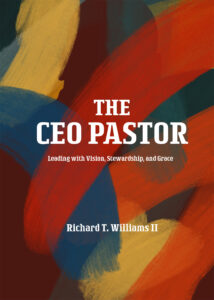
    That is why I want to share a new book that gets right to the heart of this problem.

    As many of you know, my company, Energion Publications, is providing publishing services for a new imprint, New Fire Press, and they have released a title called The CEO Pastor: Leading with Vision, Stewardship, and Grace by Pastor Richard T. Williams II.

    While Energion is not the primary publisher of this book, I want to give it my genuine, wholehearted backing. Having edited and published dozens of ministry handbooks over the years, I can tell you that this one stands out for its practical wisdom and deep respect for the pastoral calling.

    Pastor Williams serves as the Lead Pastor of Metropolitan United Methodist Church in Montgomery, Alabama, and is the Founder and Executive Director of The Beacon Center. He isn’t writing from a quiet academic office; he’s writing from the active, messy, and beautiful front lines of community ministry.

    He addresses the exact tension that paralyzes so many church leaders: the constant tug-of-war between shepherding people and managing an organization.
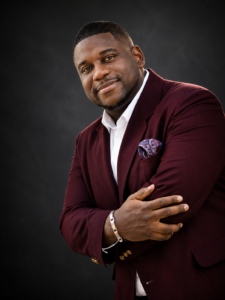
    Rev. Richard T. Williams II
    Rev. Richard T. Williams II

    Reclaiming the corporate acronym, he introduces the Chief Executive Overseer—a leader who faithfully holds the shepherd’s staff of care in one hand and the steward’s keys of administration in the other. In God’s kingdom, good structure and vibrant spiritual life aren’t enemies; they are partners. Stewardship, when done with order and integrity, is a genuine form of worship.

    A Practical, Hands-On Guide

    Rather than offering lofty theories, Pastor Williams provides real-world frameworks, clear checklists, and honest case studies to help church leaders:

    • Cast Vision with Clarity: Moving beyond vague slogans so the congregation actually understands its mission and knows where it’s going.
    • Empower Lay Leaders: Drawing on the biblical wisdom of Exodus 18 (Jethro’s advice to Moses) and Acts 6 (deacons handling administration so apostles could focus on prayer), shifting the church away from unhealthy dependency toward a shared priesthood of all believers.
    • Operate with Integrity: Setting up transparent financial structures and healthy accountability that protect both the pastor and the church.

    Yes, as a publishing service provider, part of my job is helping market books. But my primary, lifelong calling is equipping people for ministry and building the Kingdom of God. I warmly support this book because I believe it offers a realistic path to rescue weary pastors from burnout and help local churches find their calling again.

    Whether you are a solo pastor running on empty, a denominational leader looking to support clergy, or a faithful layperson serving on a church committee, I encourage you to read this book—and more importantly, put its principles to work in your congregation.


    Let’s change those ungodly job descriptions in our churches, and start holding both the shepherd’s staff and the steward’s keys together.

  • Unconscious Traditions Fight Change

    I’ve said quite a few times that I think that the job description we have for a pastor in most churches is ungodly. It’s also inhuman. The pastor can’t do all of that, so many times they fail. Those who succeed do so through extraordinary talents, gifts, and dependence on the grace of God. But it’s very difficult to change.

    That’s because we have a traditional set of responsibilities for a pastor, and usually an additional set for a particular parish or congregation based on the things previous pastors, fondly remembered in their absence, are said to have done. A pastor who fails to accomplish all of these things will likely be accused of not doing his or her job. Many of these traditions are not conscious ones. People simply assume that this is done. Let me give some examples.

    A pastor I invited to speak at a conference had to back out. The reason? He had an out of town wedding he had not expected, and he had made a covenant with his church to be in the pulpit 50 out of the 52 weeks of the year. I do not, of course, want to suggest that the pastor should violate his covenant, but I have to ask why a pastor needs to be the one to preach that often. Of course, it is traditional that we hear only the pastor, or one of the ordained members of the pastoral staff, but why is this?

    On the other hand, recently I have visited the United Church of Christ congregation (a new church plant of theirs) here in Pensacola three times. I have yet to hear the pastor preach. It’s not that he was missing. He was on the front row. But he hears other members of the congregation. I like that. I do hope to hear him preach some day, but he doesn’t feel bound by the tradition that the only time someone else can preach is when the pastor is absent, rarely, of course, and with good excuse!

    Another Methodist church I know of had more than 30 lay speakers, many of them certified lay speakers. You would hear one or two of them preach in a year. If you had lay speakers speak too often, people would think the pastor was lazy. In lay speaker training I was told to expect to speak only rarely, which made me wonder why there was a certification program if the certified speakers were not to speak. I was told this prepared one for more involvement in church leadership. What leadership, nobody said.

    Paul, in 1 Corinthians 14, describes a church gathering. Here everyone comes with something, many of them wanting to speak. The problem is not getting activity, but rather controlling an excess of activity. I think that we fail in following 1 Corinthians 12-14 because we don’t have the same problems as the Corinthian church, but we think we do. We should be so blessed as to have the problems of the church in Corinth. Certainly one needs to solve those problems, but they’re easier to solve than apathy and inaction. Our tradition, the unconscious one, puts a big divide between the pew and the platform/pulpit and puts the activity “up” and inactivity” down. We expect information to flow from the pulpit/platform and are silly enough to think it will be absorbed by those in the pews.

    What would happen if we spread things around? What if we heard from one another during the gathering of the saints on Sunday morning? I’d miss being able to hear my pastor on Sunday. I’m blessed to be in a church with multiple services with good speakers all around. Nonetheless, I don’t think they should be the only ones who speak when the saints gather. They need to equip the saints, all the saints, to study, think, and share.

    Another tradition we have is that trained people think and speak about theology, while everybody else shuts up and listens. This probably feeds into the desire to always have the pastor speak. He’s the one who knows theology, after all. And I believe it’s important for the church to have people who have done serious study of theology and biblical studies to bring information into the discussion. But more importantly, the role of these people should be to guide and train the congregation into how to study and learn more for themselves. We have a hierarchy of knowledge as well as a hierarchy of power.

    And it’s not just (or even mostly) people seeking power in the church that make this happen. It’s not that pastors are power hungry. I know many, many pastors who are not. But when they try to get people to become more involved, those people either don’t want to, or they agree to and then don’t put forth the effort. This is again because our unconscious tradition says that people with theological degrees are the ones who should think and talk about theology. It’s a dangerous tradition, and is one of the reasons so many church members can be swayed so easily on so many subjects.

    I was stopped by a church member in the halls of one church who asked me how it was that people who wrote the notes for study Bibles got their ideas. She explained that she kept looking at the notes, and she figured they must be right, because, after all, those who wrote the notes were experts, but she just couldn’t figure out how. Could I explain? She even had an example ready.

    She showed me her example, and quite bluntly, I thought the note completely emasculated one of the parables of Jesus, making it into a feel-good Twinkie rather than a solid serving of Brussels Sprouts. So I asked her, “Are you sure the note is right?” She was astonished! Now this was an educated, professional woman, but she simply hadn’t considered that she could disagree with the experts. I was able to point out that if she had another study Bible, written from a different perspective, the notes might say something different. Then what would she do?

    I think we need to get rid of these “lessers” and “greaters” in our thinking. This is often referred to as hierarchy, and sometimes if we criticize that, we can be viewed as against order. But the problem isn’t leadership. There are those called to lead, though in Christian communities it should be servant-leadership. But in a “nation of priests” there is some sense in which everyone is called to lead, and everyone is called to follow.

    I’m not talking here about church organizational charts. Some of the best servant-leadership I’ve observed was carried out by a United Methodist bishop. The chart may have said authority, and he was in no way afraid to lead, but his actions put Jesus in charge. I know of independent churches who try to erase the lines of hierarchical authority where nonetheless there is a very clear authority structure. It’s just that nobody admits it. I think that’s a sign of how hard it is for us to take responsibility for our calling and look to Jesus. It’s not so much the formal structure. It’s the attitude of those within.

    It’s these unconscious traditions that need to be brought to light, examined, and discarded if necessary. Tradition can be a good thing. It’s the collection of assumptions about what must happen that gets in the way of doing the right thing.