

Look how much God has beclouded the daughter of Zion in his wrath.
Lamentations 2:1, author’s translation
He has cast the glory of Israel from the heavens to the earth.
He has not remembered his footstool in the day of his wrath.
It’s easy to start thinking that God, or the universe, or circumstances are out to get you when things are not going well. Sometimes we blame “things in general” when back in our own minds, we’re thinking God’s busily out to get us.
Our poet here in the book of Lamentations has already acknowledged the sin in Judah that resulted in their current condition, but even so, you hear that sense of pushing back at God. Why has God thrown Israel down so far? Why has he not remembered his footstool.
If you look for the word “footstool” in scripture, you’ll find it in connection with the temple, such as when Solomon is dedicating the new building (2 Chronicles 6:18). The temple was viewed as a special place of God’s connection with earth, and the Israelites had believed that it was not possible that Jerusalem would be conquered, because God’s presence was there.
The fact that Jerusalem did fall, and the temple was destroyed, was a critical blow to the self-image of Judah, and echos through all that followed for the Jewish people.
But was it God that “got” them?
There is a sense in which we can always say that God does everything. I may be a bit odd in my way of thinking, but this hits me the hardest when I look at a picture of two galaxies colliding. “Lord, what precisely are you accomplishing with all this destruction?”
And at least in my theology of God as creator and sovereign, there is a sense in which God is responsible for everything.
I form light and create darkness,
Isaiah 45:7, author’s translation
I make well-being and create disaster.
I, YHWH, do all these things.
God is not afraid to take responsibility through prophets for what takes place in the universe God created.
But then there’s that individual thing. Is God going out of the way to get me, personally, for my one act?
Scripture often answers this question with a constrained yes. Hebrews 12 informs us that God disciplines those God loves. In the books of Jeremiah and Ezekiel especially, God makes it clear that the tragedy and destruction that befell Judah was, in fact, divine action as a result of sin.
But there’s another way to think of this, and I think it’s often a better one. God has created a universe with laws. Those laws have consequences built in, whether we speak of moral of physical laws. If I am hiking in the mountains, and fall off of a cliff, consequences occur at the end of that fall. I might have been pushed. Moral consequences may well be on the way for the person who pushed me. In neither case is it necessary to think of God making a specific exception for my particular failing. Rather God created order, and I can live in it according to the way that order works, or I can fight it.
Judah fought it. I fight it frequently. Consequences occur.
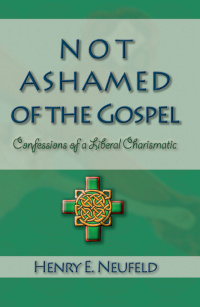
Here’s something I wrote more than 20 years ago about this in my book, Not Ashamed of the Gospel:
Once in a study group one member asked me a question that has stuck with me ever since. “Why couldn’t God just print out his instructions across the sky, so we couldn’t doubt what it said, and couldn’t doubt that it was miraculous?” he asked.
I think the answer lies in the nature of the universe God has created. We may not like choice very much. We may not like things to be ambiguous and decisions to be difficult, but God doesn’t seem to mind. In fact, God seems to like his creatures to have a range of options. He likes us to be able to make choices. Making choices implies suffering consequences. Choice would be rather meaningless of God cleaned up the mess of all our wrong choices miraculously.
That means that when one person chooses to kill, another may well die. Bad things will happen. But that is the price of freedom. At the same time, if God made everything totally clear, and overwhelmed us with his power, we could not exercise that creativity he has entrusted us with. God gives us some of his creative power and he expects us to use it.
The good news is that we can be subject to God, and when we are, we are free to be ourselves.
Henry Neufeld, Not Ashamed of the Gospel, pp. 102-103
Never forget that God is always with you, working for your good. Often, however, your ultimate good is already built into God’s laws of cause and effect.