
Threads from Henry's Web

Tag: belief

  • Believing Impossible Things

    Believing Impossible Things

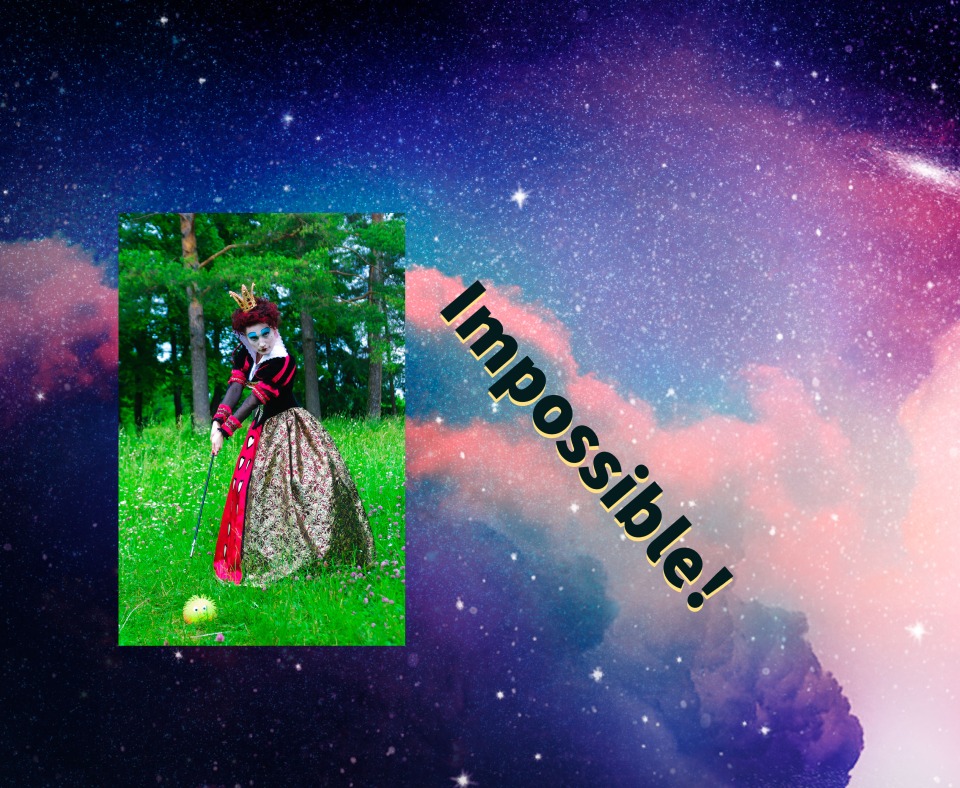
    In Alice in Wonderland, the queen says that sometimes she has believed six impossible things before breakfast. A fair number of years ago, someone told me that in response to points of my Christian faith. The aim was most likely to shock or offend me.

    How did I respond? I don’t recall what I said. It wasn’t terribly memorable. But I do know what I thought. Yes, indeed, I do believe a number of impossible things before breakfast, not to mention after breakfast as well. I have never understood the desire to make so many of the very difficult aspects of the Christian faith as rational as possible. If God can be explained rationally within the incredibly tiny sphere of my personal knowledge, there’s really no point. That’s a mini-god.

    Now I don’t mean here that all aspects of religious faith are irrational. There are things I believe that can be rationally explained. Various arguments for the existence of God can, for example, open up a crack through which some light may shine. The arguments of a historian may create a place in which a virgin birth, or a resurrection might just be hinted at as an explanation for so many things.

    But I believe in a God who created the universe. I was thinking the other day while I gazed at a picture of galaxies seen from the Hubble Telescope in a part of space that looked empty to the naked eye. The space was filled. Now it’s not entirely impossible to suggest that this was created by someone or something. But when you add to that the idea that the entire universe was created by Someone who actually cares about anything that happens to me, you are proposing something patently impossible. If you claim it is possible, other than in one’s imagination, I suspect you of not really comprehending just how far that is out of the boundaries of comprehension.

    As we come up to Easter, we will commemorate a God who became flesh, lived here, and ultimately permitted himself to be tortured and killed. I believe that happened. If you try to reply to that problem with the doctrine of the trinity, let me note that you have responded to an apparent physical impossibility with a logical impossibility, the idea that one person can really be three, and three can be one.

    Yet I believe all of those things. I have disappointed not a few people when I decline to try to make all these beliefs rational. The incarnation (a person being 100% God [whatever we mean by that] and 100% human at the same time) is both a logical and, should we be able to figure out what would be involved, would doubtless also be a physical impossibility.

    People who believe all these things can certainly also believe in a great number of truly rational and reasonable things. I believe in the laws of nature and live my life largely in accordance with them. (Some of that health stuff is overcome by my general desire to enjoy life!) I find often that I agree to a large extent with those who do not believe in God on matters of ethics, politics, and as far as it applies to daily life, rational interaction with the universe.

    But I still believe that God, one capable of creating all those galaxies, well past my imagination already in the physical universe, also, as one member of the trinity (three in one!) became flesh (100% divine and 100% human), died, and rose again from the dead.

    The same God also notices when a sparrow falls.

    Six impossible things before breakfast?

    Trivial!

  • I Believe Some Bizarre Things

    The Sunday School class I currently attend uses a random selection process for the questions we’ll discuss.  Class members put questions in a container, and we draw a question for each week.  Last week the question was:  Why am I such a doubting Thomas?

    As we were discussing how much we doubted, what we doubted, and why, someone commented that what we believe as Christians really is quite bizarre if you haven’t gotten used to it.  Most commonly we would cite things such as the resurrection.  I believe that one person who died about 2,000 years ago didn’t stay dead, but came back to life.  That’s a fairly bizarre thing to believe, or better to base an entire system of belief on.

    The person who made the comment cited the belief that Jesus died for our sins and thus we can have salvation.  I believe that’s equally bizarre.  Who these days would think of such a thing?  The idea of atonement was much more common in the ancient world, but not so much in western civilization today.

    And that brought another question, which seemed to be addressed to me.  Did Christianity seem less bizarre back in the first century.  My answer is “yes,” though different things would seem bizarre and likely in different ways.  As I’ve already mentioned, the atonement would seem more natural, provided one was drawing on a range of ideas prevalent in the ancient world, but there are aspects of it that are odd.  For example, the idea of a single, universal atonement, reconciling the whole world to God, was unique to Christianity, I believe.

    I don’t think it came out of thin air.  There are many, many parallels that come close, but I think the full idea of atonement as expressed especially by Paul, is unique.

    But what first comes to our modern, or even slightly post-modern minds, is generally the question of miracles.  But there is where I think we differ less from the ancients than we generally think.  We imagine that they were much more naive about miracles in general than we are, that they would tend to believe whatever miracle might be claimed.  I see little evidence for this.  In fact, the resurrection was very hard for either Greeks or Jews to believe, and was often a stumbling block, as noted, for example, in Acts 17:32.

    I observe two things.  First, there are quite a number of miracle stories even today, and plenty of people to believe in them.  Second, there is plenty of evidence of ancient people who were quite unwilling to believe miracle stories.  In both cases, such belief tends to be easier regarding miracle stories in one’s own religious tradition than in those of others.  As a Christian, I find it much easier to accept the idea that Jesus ascended to heaven than that Muhammad did.

    I’d suggest that this has a substantial impact on the way I read the Bible, as opposed to how I might read other literature, especially religious literature.   While I look at evidence regarding historical events related to my faith, at some of the most critical points, it is faith, without that much sight involved.

    One important reason to recognize this, I think, is that it will impact the way we relate to other people.  When we understand that, in a sense, one must put on a whole new religious culture before our religious faith makes sense, we may be somewhat more charitable.  I’m afraid I may lean the other way.  I find doubt and even rejection of things I hold dear quite reasonable, despite the depth of my own commitment to those beliefs.

    So I may not believe at least six impossible things before breakfast every morning, I do believe some things that, to someone outside my faith tradition, are bizarre.