I’ve written a short story to (hopefully) help stimulate thought about Lectionary Proper 12A, which we’ll be discussing at our online Bible study on Monday night.
Category: Religion
All posts relating to religion, including those on the relationship of religion to other fields, such as science and politics
-
Next Monday Night Bible Study (Proper 12A)
Jody has already announced this, but our texts Monday night will be:
Lectionary texts:
1 Kings 3:5-12
Psalm 119:129-136
Romans 8:26-39
Matthew 13:31-52Opening question: What is THE treasure?
Or: is the kingdom seeking you or are you seeking the kingdom?
No, not the same question, but they may shed light on one another.
-
The Lively Inspiration of Scripture
A Living Bible. Process theology affirms the lively inspiration of scripture. God was at work in the communities that shaped our written scriptures and in the various writers who penned the library of texts we call the Bible. Profoundly historical, biblical inspiration varies from verse to verse and chapter to chapter. Some biblical messages have universal applicability; others are time bound and, frankly, no longer relevant to our current scientific, ethical, and theological understandings
This is from the material we will be discussing in The Way Sunday School class at First UMC Pensacola tomorrow.
We’ve completed our study of Ecclesiastes, and are moving to the opposite end of the theological spectrum with this new book. We’ll spend two weeks on this small book, and then we’ve decided to continue with a study of my book When People Speak for God.
One of the goals of this class is to look at a variety of viewponts, learn and evaluate.
-
Bible Study Report – July 14
Last night’s Bible study hangout was attended by five people, and I believe enjoyed by all concerned. We discussed the wheat and the weeds along with several other passages, including Psalm 139 (the whole Psalm, not the portions selected for the Lectionary). I’ll be posting our passages and the theme we’ll look for in them some time this afternoon.
I want to thank everyone who participated, and all those who have worked through technical difficulties. We’re still hearing from more people who want to join at some point, though we’d be happy to do this with just four or five people. There’s nothing formal about it. Just come prepared to discuss. There’s no presuppositions about beliefs either.
-
What Do We Judge?
Tonight’s topic for our Bible study on Google Hangouts comes from the parable of the wheat and the weeds (Matt. 13:24-43). To me, this passage is as interesting for the other passages it evokes as it is for what it says. And like many parables, it seems to raise as many questions as it answers.
If I were to summarize the way I hear the parable myself, I’d say: Be patient with all the problems and questionable people because God will sort it all out in the end.
Thus it becomes another “Judge not” passage.
But this is where other passages start parading their way through my mind. There’s Matthew 7:1, yes, and oh so plain. But then there’s also Matthew 7:20, telling us we will know them by their fruit. Know who? Well, false prophets. Is it possible that any of the weeds could be false prophets?
Then there’s Hebrews 5:14, where we learn that mature people have learned to distinguish good from evil. Is this just good vs evil ideas or does it include false prophets, for example. And just how do we get from Matthew 7:1 to 1 Corinthians 5, in which certain people are given to Satan?
Logic I tervenes as well, as I judge each word I write in this post. Ah, but that’s just judging things, right? But I will invite my Google+ circles to our hangout, and not others, demonstrating that I have made judgments there as well.
Perhaps this whole issue of judgment isn’t as easy as we thought. Let’s discuss it tonight! I’ll post a link on my Google+ page and here on this blog.
PS: Remember to read the other lectionary texts as well. I think they speak to this issue in interesting ways.
-
Next Week’s Bible Study
Our first try didn’t go that well. I spent a couple of hours talking to folks about technical issues. You ned to have Google hangouts working. If you want I can test it with you sometime before the study.
This coming week we’ll be studying for proper 11A, and we have selected Isaiah 44:6-8, Psalm 139 (I prefer reading the whole Psalm), Romans 8:12-25, and Matthew 24:24-30, 36-43.
Jody has already posted our lead question:
Can we, and should we, distinguish the weeds and wheat in our lives and experience?
Focus on the meaning of the wheat and weeds in our gospel passage. What do these represent in the parable?
There are quite a number of ways to approach the Lectionary passages in a study. We could choose a specific passage to study, for example. What we’ve chosen to do is to focus on a theme that is touched on in the various passages.
I see some help with our question from Psalm 139. Who really knows? Who really knows who is what? I see a similar theme in Matthew 7:1 and Matthew 7:15-20. Where and when does each instruction apply?
Join us this coming Monday at 7 pm central time. I’ll post an invitation to all my circles on my Google+ page about a half an hoir before we start.
-
New Monday Night Bible Study
My wife Jody and I will be leading a Monday night Bible study via Google Hangouts. Everyone is invited. Jody already posted about it, and her post includes the initial question and the scriptures for tonight.
We thought about many approaches to choosing our texts, and we finally settled on using the current readings from the Revised Common Lectionary. These will be the readings for the Sunday following the study. Jody will list these in her post along with an opening question (or so).
We’re not planning to formally “teach” this. This is a time for people who come from various perspectives and places to study together. Doubtless I will have and express many opinions. For best results, you should read the texts ahead of time and do some of the exegetical work.
I’ll open the hangout a bit before the formal time for the study (7 pm central time), post the invitation to my Google+ page, and e-mail a link to anyone who has requested it. If you follow me on Google+ you won’t need a special e-mail. You can use the Google+ notifications that you normally use.
If you’d like a link e-mailed, just e-mail me at henry@energion.com and request it. I’ll be glad to send you a link.
-
The Problem with Church Debates
It hit me on Sunday as I was listening to a fine sermon for Pentecost at my home church, First United Methodist Church of Pensacola. Rev. Bob Sweet was enumerating a number of things the Holy Spirit might do for us, changes we should all make. A number of his points elicited laughter, because we all felt a bit guilty. Then he hit “stop gossiping.” This time the laughter was loud and noticeably nervous. You know why? Because everyone knew we weren’t going to stop gossiping.
And then it hit me. The real problem with our church debates is that most of us know we’re debating the meaning of divine commands which we have no real intention of obeying anyhow. I’m not talking about things we disagree with, so we don’t do. I’m talking about things we all agree we ought to do, but never get around to doing.
Those are the things I need to look at in my own life. What about you?
-
In the Confessions of Category
 We didn’t plan it this way, but my friend and Energion author Dave Black now has a book with a subtitle that begins with “Confessions of …” So what do I mean “not planned” and why is this significant? Well, I wrote a book several years ago, and the subtitle began with “Confessions of …” Not an earth shattering coincidence, but interesting. But it wasn’t planned. In fact, we held a contest for the book title, so you can blame Mark Stevens, who won a free copy of the book for his winning title suggestion.
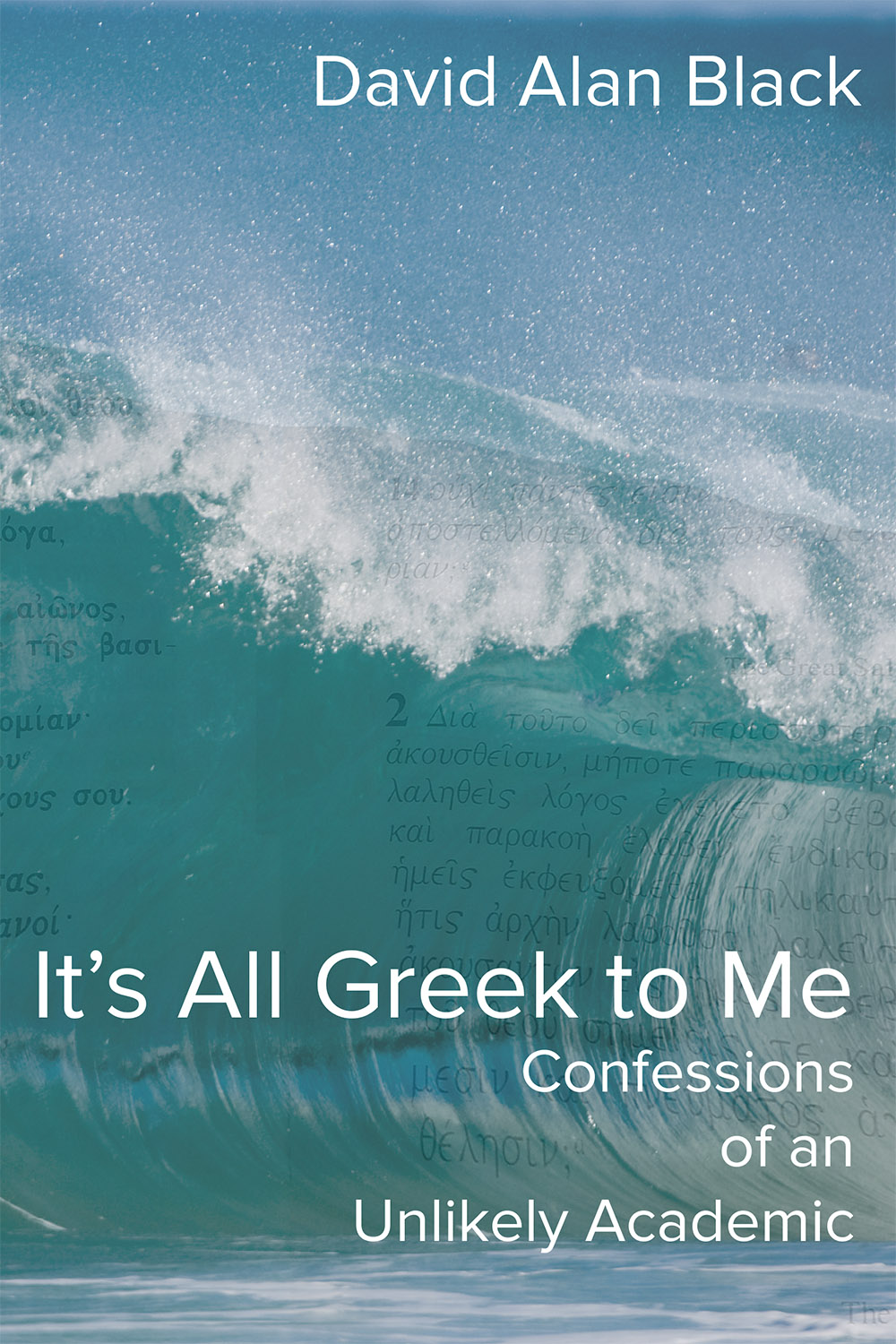
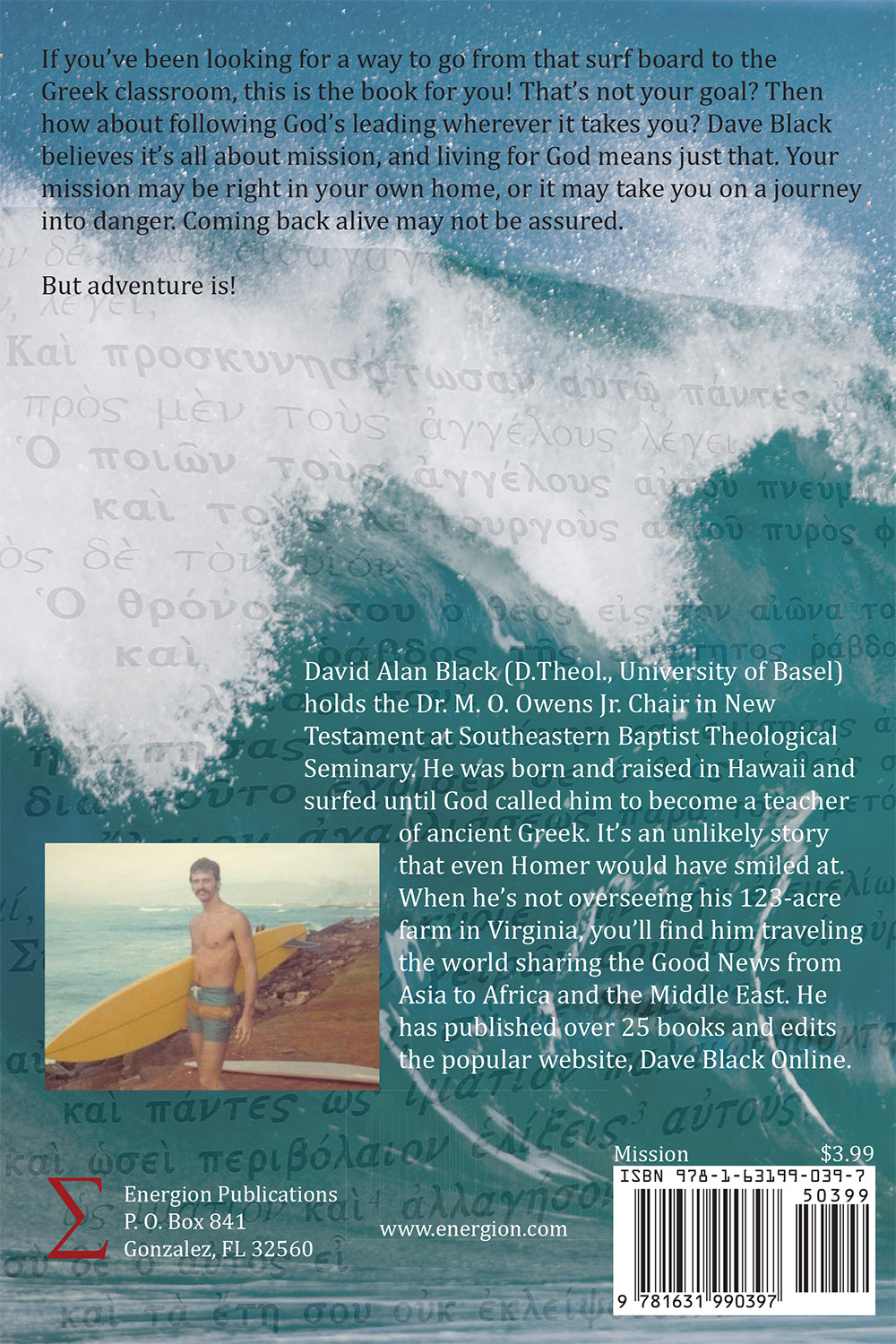
Oh, I forgot. Dave’s book is titled It’s All Greek to Me: Confessions of an Unlikely Academic. Mine is titled Not Ashamed of the Gospel: Confessions of a Liberal Charismatic. Of course, “liberal charismatic” and “unlikely academic” are not all that similar.
I’m going to have to include the back cover below for those of you who want to track down the Greek text that forms the background.
I’ve gotten a few questions as to why I publish this sort of book. “What sort of book is that?” I’m glad you asked! I’m talking about the memoir, or personal testimony sort of book. A book that tells something about how God has led in the author’s life. I’ve even created a new category over on our Energion Direct web site for testimonies. I consider Psalm 78:1-7 a sort of theme text for my own ministry. I learned to love the Scriptures from my parents who studied it. I hope I will pass that love on to my children. I think it is often more important for people to know what sort of person an author is than what they say. I know this sounds odd coming from someone who publishes books that generally argue one or another point of view. But you see it’s more important to me that my authors are writing about things they care about and truly believe in than how well known they are.
But there’s an additional, personal factor with this particular book. Becoming publisher for some of Dave Black’s books was a surprise to me. It started because one of my authors at the time—and I didn’t have very many—had taken Greek from Dave Black. At the time, Dave had written and had published more books than there were in the Energion catalog. But he entrusted his manuscript for The Jesus Paradigm to my little company.
Let me say something about that manuscript. I have a mental list of books that I think should be getting more attention than they have. I regularly wonder what I can do to bring more attention to them. The Jesus Paradigm is one of those books. More people need ot read it. It will challenge the way we organize our lives and the way we do church. One pastor who read it said with some concern, “This guy is trying to run me out of a job!” Just so! Jesus didn’t die so professional Christians could have jobs. I’m not saying here that there should be no Christians paid to do the work of ministry. I don’t know how many should, but one thing I do know. I know that many, many more unpaid Christians should be doing the work of ministry.
Since I published that manuscript Dave and I have become good friends. Many people think it is an unlikely friendship. A Southern Baptist professor and a Methodist who embraces the title “liberal charismatic”? It may seem odd, but it shouldn’t. Dave is one of those many people I know for whom the kingdom of God is central. We have Jesus!
More importantly he’s very transparent, he means what he says, and he’s ready to listen to disagreements. You can have an excellent discussion with him at just about any moment. And for my more liberal friends who wonder, let me note that I’ve never heard Dave respond to an issue of interpretation by citing his own theology or tradition. He always argues facts and the text. You can disagree, but you’re going to have to deal with the data.
I’m not going to try to explain friendship. I like being an unlikely friend and having unlikely friends. I’m just not sure what makes a friendship “unlikely.” I’m even told my marriage is unlikely, but it seems pretty likely to me.
So consider reading this little book. It’s just $3.99, and I had a lot of fun creating the cover. So here’s the back cover. Enjoy!